Find the group your bird belongs to, then compare the species in it. Start with a name you know, or with the shape and behavior you remember, and check that candidate against the place and season. If those clues conflict or you saw the bird too briefly, leave the ID open and use a dedicated identification reference.
How to use this North American bird guide
Know the name? Go straight to the familiar-birds table or the group list. A hawk, chickadee, or other recognizable type leads to the group and comparison entries. With no name, start from the shape or behavior you recall.
Start with familiar species and expand
Start with birds you already know. They make it easier to see what sets the next bird apart. Here are eight.
| Species | What to look for |
|---|---|
| Northern Cardinal | Adult males are bright red with a black face mask; females are mostly pale brown with red accents. Check the crest and the thick bill. |
| Blue Jay | Look for blue, white, and black plumage and a conspicuous crest. Jays belong to the crow family, Corvidae. |
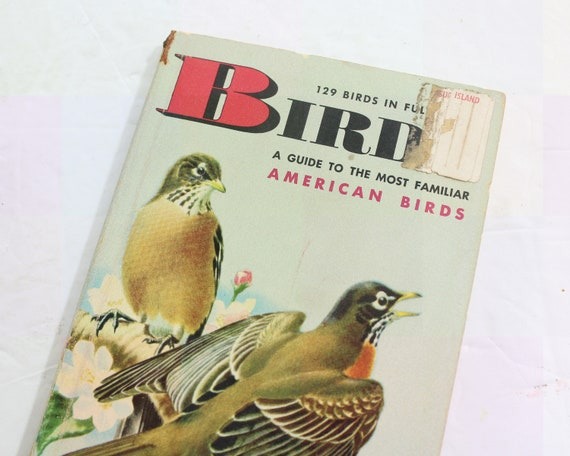
| American Robin | A round-bellied thrush with rusty-orange underparts and a yellow bill; adult males have a relatively dark head. |
| Eastern Bluebird | Adult males are blue above with rusty chests. Females are grayer, with blue in the wings and tail. |
| Mourning Dove | Notice the small head, slender bill, and long pointed tail on this slim-bodied dove. |
| House Sparrow | A chunky bird with a stout bill. Breeding males have gray crowns, white cheeks, and black bibs; females are mostly brown. |
| American Goldfinch | Breeding males show bright yellow and black; females and winter birds are duller. Check the bill and wings too. |
| Carolina Wren | Warm reddish-brown upperparts, a prominent white eyebrow, and a tail often held upward. |
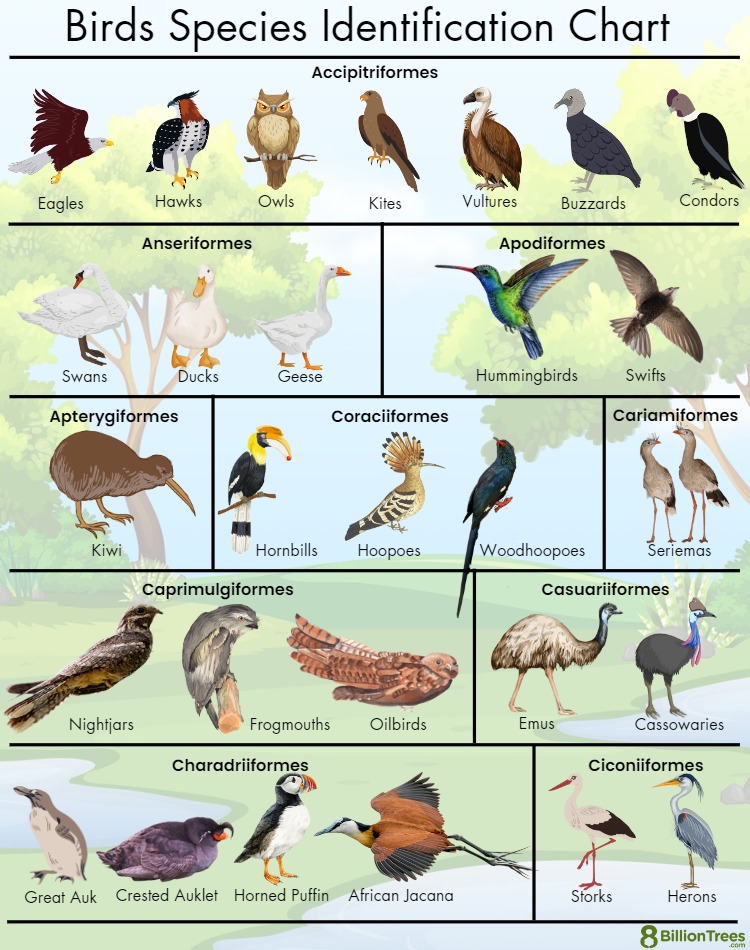
One birdwatcher describes how to build familiarity beyond photographs:
I learned before the days of ubiquitous digital cameras. Which are great, but can distract from learning cues that don’t photograph well – like behavior, movement style, etc. Try not to be overwhelmed. Learn one common small bird – its size, how it looks from all angles, its habitat preference, how it acts, what elevation it tends to stay at, it’s various sounds. KNOW that bird inside and out. As you build out your mental library this way there will be fewer and fewer remaining mystery LBJs and you’ll learn to recognize when something less usual is around (because it’s not in your library).
Birds by group and lookalike pairs
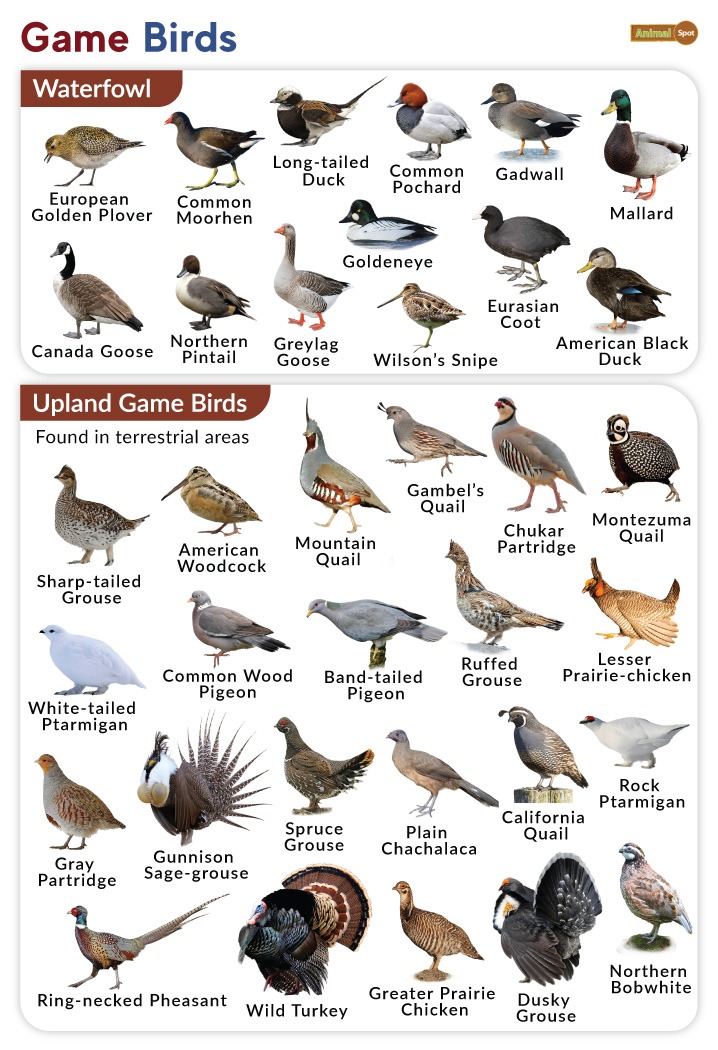
The other ten species sit in groups. The table below the list adds clues for the hawk, chickadee, and crow/raven pairs.
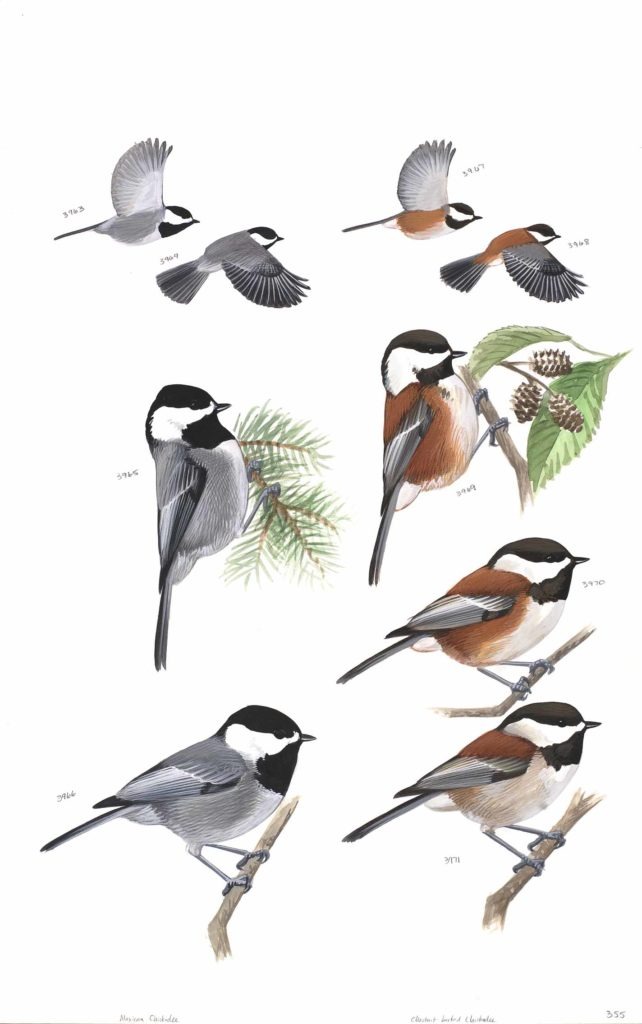
- Chickadees: Black-capped Chickadee and Carolina Chickadee. A brief view makes the two hard to separate.
- Hawks and eagles: Red-tailed Hawk and Red-shouldered Hawk are compared below. Adult Bald Eagles have white heads and tails; younger birds show mottled brown and white.
- Owls: Barred Owl has a round head without ear tufts, dark eyes, and a yellow bill.
- Crows and ravens: American Crow and Common Raven. Tails, bills, and calls are compared below.
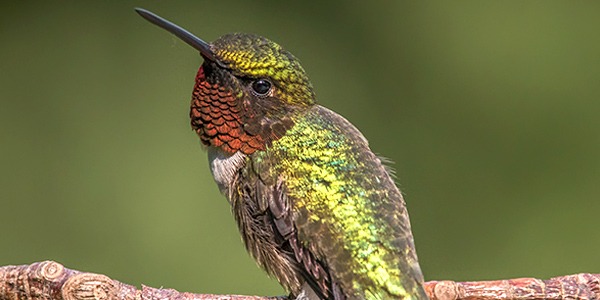
- Hummingbirds: In the Ruby-throated Hummingbird, the adult male’s iridescent red throat can look dark in some light; females lack that red throat.
- Herons and waders: The Great Blue Heron is a very tall wader with a long neck and bill, gray-blue in the familiar plumage.
When two species look alike
| Candidate pair | How to tell them apart | Entries |
|---|---|---|
| Red-tailed Hawk / Red-shouldered Hawk | Compare wing and tail proportions. Red-tailed Hawks have broad, rounded wings and a shorter tail. Red-shouldered Hawks are slimmer with a longer tail. Angle and age change the look. | Red-tailed / Red-shouldered |
| Black-capped Chickadee / Carolina Chickadee | Range decides most cases: the Black-capped is more northerly and the Carolina more southerly. Where they meet, hybrids complicate some IDs. | Black-capped / Carolina |
| American Crow / Common Raven | American Crows have more square-ended tails and give familiar cawing calls. Common Ravens have heavier bills, shaggy throat feathers, and wedge-shaped tails in flight. | Crow / Raven |
If you never saw the distinguishing shapes, run both candidates through the place-and-season check.
Find a bird when you do not know its name
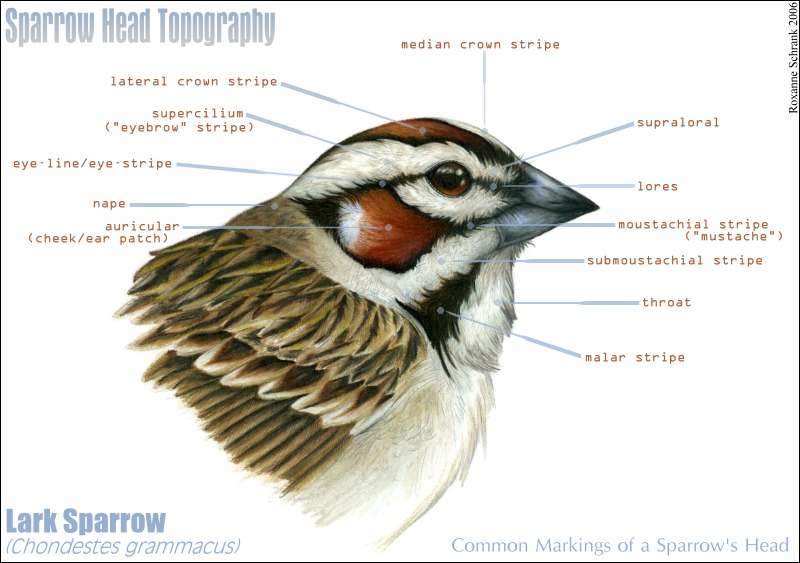
Cornell Lab’s four keys to bird identification say to look at the whole bird before chasing small markings.
- Size and shape: Was it a compact perching bird, a broad-winged soaring bird, or a long-legged wader?
- Color pattern: Where were the dark and pale areas? Their arrangement matters alongside the overall color.
- Behavior: Did it move through shrubs, perch in the open, or circle overhead?
- Habitat: Was it among trees, over open ground, or near water?
If you saw a small bird dart through shrubs, that is enough to start with small songbirds, photo or no photo. It won’t separate a chickadee from a wren yet.
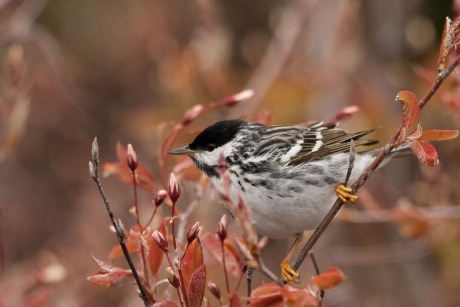
I find them really hard to photograph clearly, and without a decent photo, I struggle to confirm the ID in Merlin. … I really want to get better at recognizing birds without needing a perfect photo every time. Right now, I feel like I see “a bird,” not “a species.” I’d love to train my brain to think more specifically.
Next time, note whichever of the four clues you can remember. A rough shape and habitat are enough to pick a group.
Browse by shape and behavior
Movement helps when shade or distance hides the plumage. Watch long enough to describe what the bird did, then compare that with the group you are considering.
- Among branches: Record whether the bird kept hopping, paused on exposed perches, or stayed close to cover.
- Across open sky: Note continuous wingbeats, bursts of flapping, gliding, or circling.
- Near the ground or water: Remember where the bird moved and whether its legs, neck, or body outline stood out.
- During flight: A call heard in flight can link a sound to a bird you also saw.
Reject a candidate on movement only when its behavior or silhouette clearly conflicts with what you saw. For bill shape, plumage, and habitat, cross-check with how shape, color, behavior, and habitat identify a bird.
Choose an entry using place, season, and appearance
Check any name against region, season, and habitat before you commit to it. A photograph adds detail but can’t show every plumage.
| What you observed | What to compare next |
|---|---|
| A red bird with a crest near a home | The Northern Cardinal entry. Adult males and females look different, so check both. |
| A small chickadee-like bird | Black-capped and Carolina Chickadee ranges, including where they overlap. |
| A hawk seen mainly in silhouette | Wing shape and tail length in the two hawk entries. |
For a starting list by place and time of year, use the Cornell Lab bird guide.
When to leave a bird unidentified
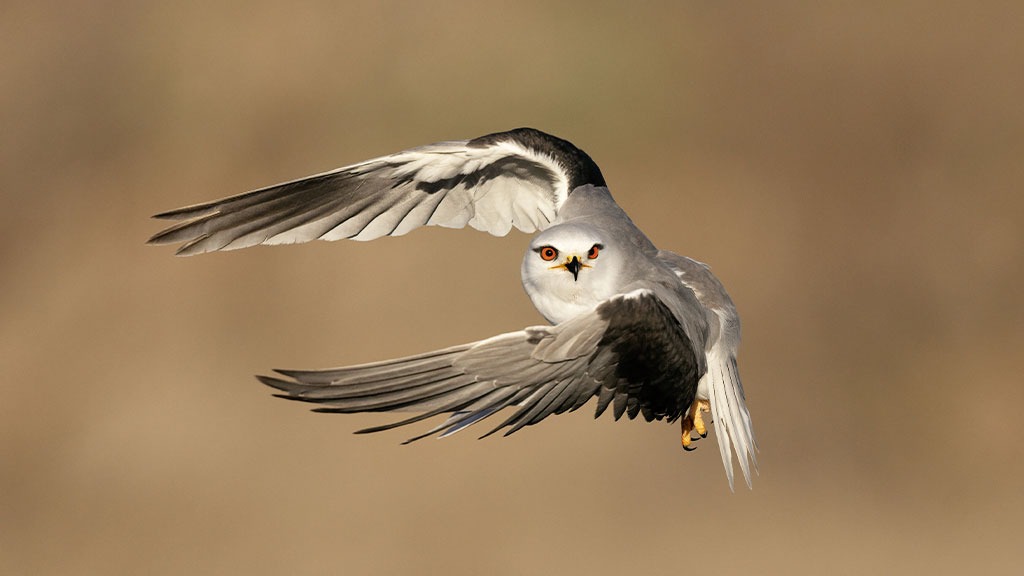
A glimpse through leaves, a brief silhouette, or a sound with no visible source can fit several birds.
A sound that resembles a call might come from something else. Note whether you saw a bird make it.
Unusual species reports get extra scrutiny. The eBird review process flags observations that are unusual for a place or time, along with unexpectedly high counts, and may ask for more documentation. A flag asks for a check of the record and doesn’t mean the ID is wrong.
If the evidence is thin, describe only what you saw, such as “small unidentified bird moving through shrubs.” When you gain another usable clue, return to the place-and-season check above.
What this bird collection includes and excludes
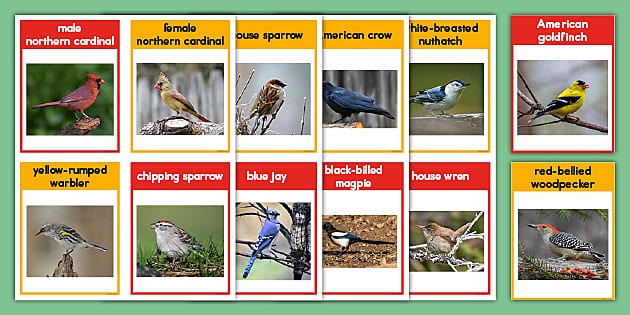
The 18 birds on this page are selected examples for US birdwatchers. A species outside this selection may still occur in your region.
“North American birds,” “birds of the United States,” and “birds counted in the ABA Area” describe different geographic scopes.
The American Birding Association reported 1,161 documented species in its defined ABA Area in checklist version 8.19, dated January 2026. The figure applies to that defined ABA Area, which includes Canada and Hawaii.
Checklist authorities maintain taxonomy and nomenclature, and both change over time. For an exhaustive inventory, use a dated checklist whose geographic area matches your question.