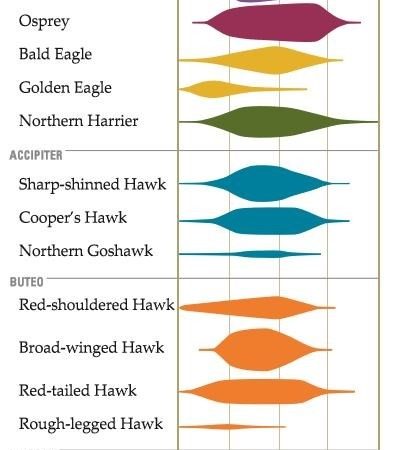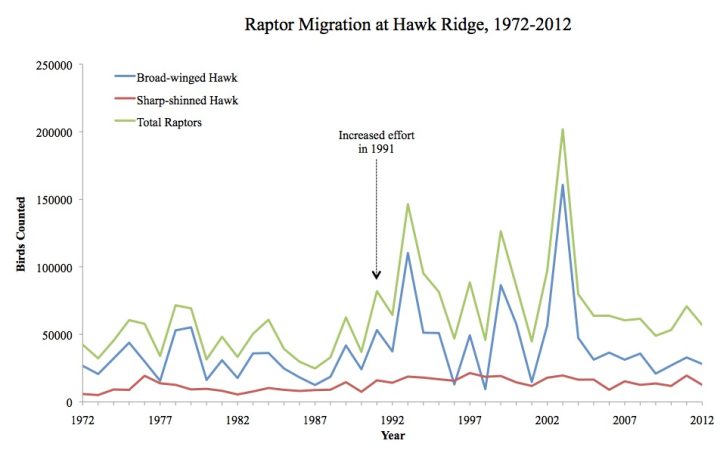
In the contiguous United States, start with the season and your region. Use BirdCast to see how much migration is passing overhead and eBird to check species and nearby sightings, then pick habitat and a day with good conditions. BirdCast’s maps cover the Lower 48 only, so birdwatchers in Alaska and Hawaii need local sources, including eBird. A different species, site, date or weather pattern can change the plan, and no map guarantees a sighting.
What is bird migration, and why do birds migrate?
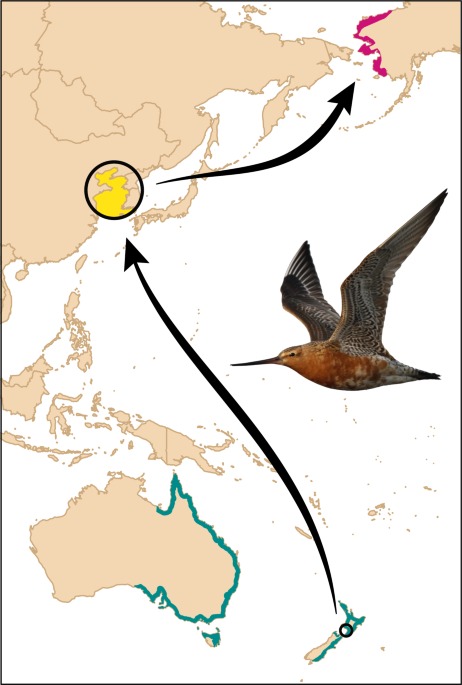
Bird migration is the seasonal movement of birds between breeding grounds and the places where they spend the rest of the year. Some journeys cross most of a continent. Others are short, and populations of the same species can keep different schedules.
Birds breeding in North America use the warmer months for productive habitat, food for their young and a chance to raise a brood. When those resources shrink, they travel to a region where survival is easier. The trip costs energy, exposes them to weather and requires places to rest.
That explains a familiar spring scene: a bird that was absent all winter suddenly sings from a tree or searches through new leaves.
The Cornell Lab’s migration overview describes more than 300 North American species as long-distance migrants.

Weather shapes each journey. Wind and conditions make one night good for flying and another a reason to wait. The broader schedule follows biological timing and food supply, and a warm spell affects departures differently across species.
Birds navigate by the sun, stars and Earth’s magnetic field.
Which birds migrate, and which birds stay?
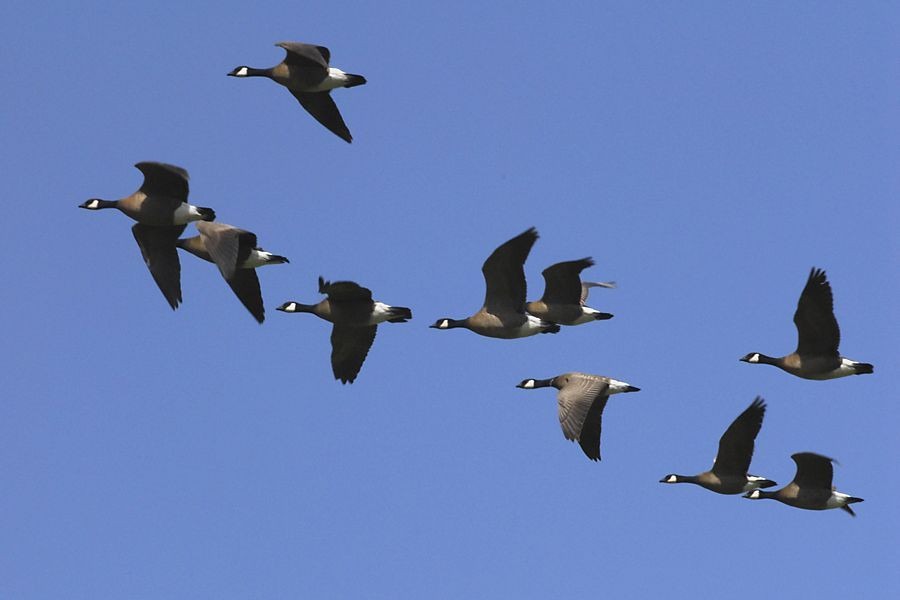
Some birds stay in the same general area all year. Others make short or long seasonal trips. Partial migration adds a third group: individuals or populations of one species can differ in whether they move, how far they go or where they spend a season. A familiar species may live year-round in one region and appear only seasonally in another.
When does bird migration happen in the United States?
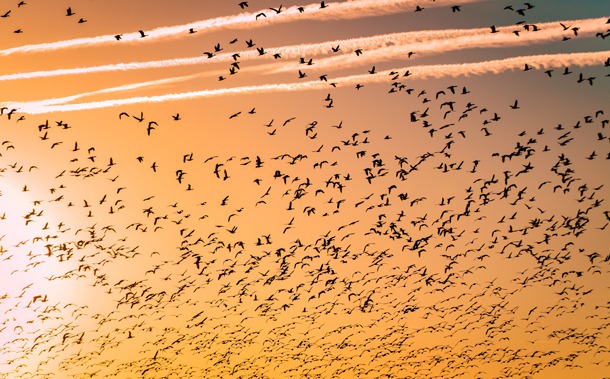
Spring and fall are the main migration seasons for many North American birds. Start dates and peak weeks vary across the country with the species, its route, local conditions and the weather it meets on the way. For fall dates, regional flyways and weather, see fall bird migration: when and where to watch in the u.s.
In spring, birds move north toward breeding areas. In fall, they move toward nonbreeding grounds. A regional peak is a period of heavy movement, though different species pass through your neighborhood at different times.
Species also respond to spring conditions differently. Shorter-distance, more flexible migrants adjust to nearby weather and food. Many long-distance migrants run on a stronger internal schedule, though weather can still delay or redirect stages of the trip.
| Seasonal situation | Broad pattern | What changes locally |
|---|---|---|
| Spring passage | Many migrants head to breeding areas | Arrival and peak weeks differ by species and region |
| Fall passage | Many migrants head to nonbreeding areas | Timing and visible activity differ from spring |
| Outside a main peak | Some species are still moving | The mix of birds changes |
| Favorable or difficult flying weather | Movement increases, pauses or shifts | Numbers overhead change from night to night |
BirdCast’s county peak-period map and table use historical radar data from 1995 to 2018. A county’s peak interval is the shortest span containing 50% of the season’s measured nighttime migration traffic, which gives a broad guide to regional timing.
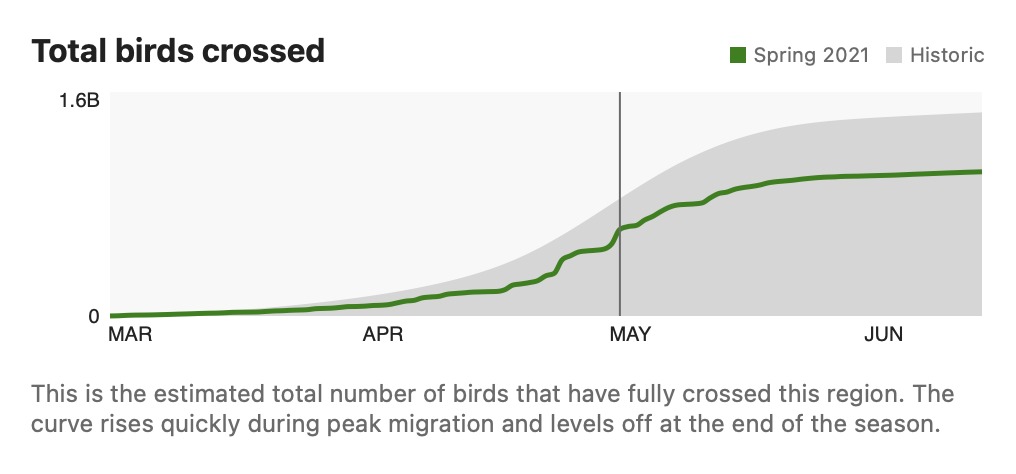
BirdCast’s forecasts, models and seasonal conservation programs run in different operating windows. Those dates belong to the products and programs, and birds also migrate outside the main monitoring windows.
BirdCast’s spring 2026 account describes subdued movement during a Texas cold front on April 18, then a much busier period around April 22 and 23 after the weather changed.
What are the four U.S. bird migration flyways?
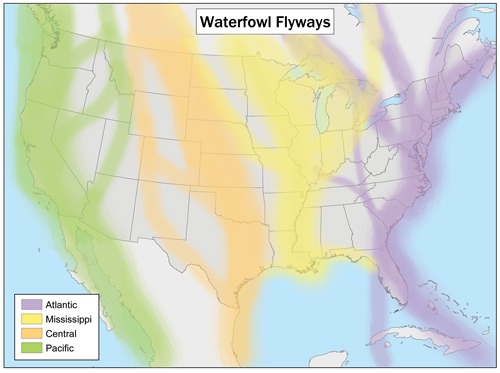
The United States recognizes four major migratory bird flyways: Atlantic, Mississippi, Central and Pacific. The U.S. Fish and Wildlife Service uses them as broad regions for cooperative migratory bird and habitat management.
| Flyway | General geographic orientation | How to understand it |
|---|---|---|
| Atlantic | Eastern North America and the Atlantic coastal region | Management region |
| Mississippi | Central and eastern regions associated with the Mississippi basin | Management region for inland migration |
| Central | Interior North America and the Great Plains | Covers many different species routes |
| Pacific | Western North America and the Pacific region | Covers different western movements |
Individual birds follow their own paths, set by species, season, destination and weather.
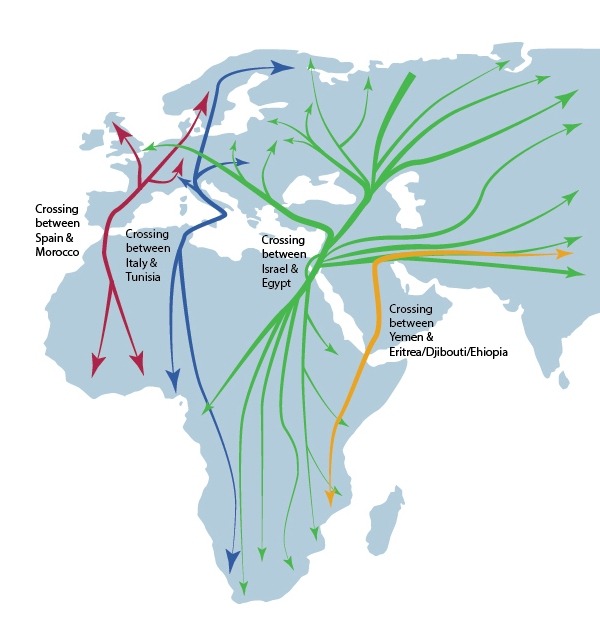
Some species take different routes in spring and fall, a pattern called loop migration.
Do birds migrate at night, and what happens at stopovers?
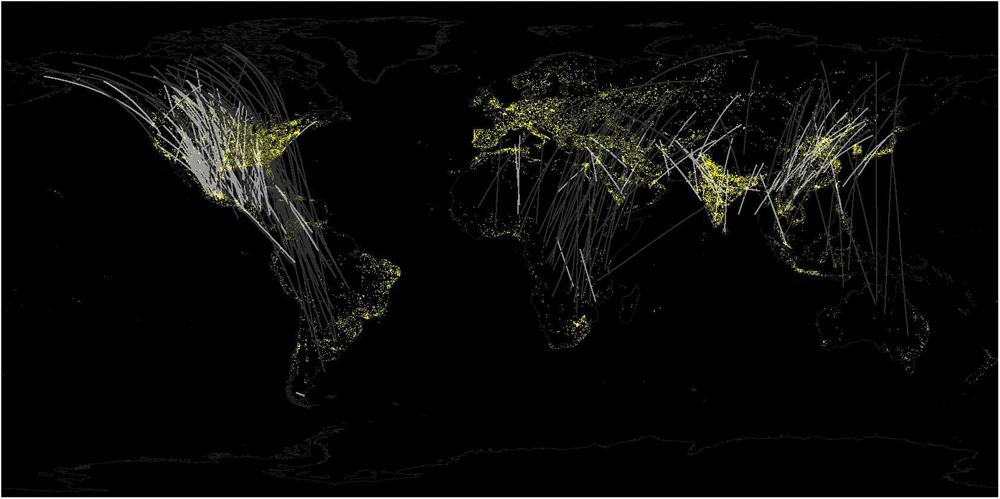
Many songbirds migrate at night. Many raptors, waterfowl and swallows travel by day. That split affects how migration is monitored and when you can watch it.
A small songbird flying overnight needs the next patch of good habitat to rest and refuel. A stopover can mean feeding, taking shelter or waiting for better conditions.
Radar can detect heavy movement overhead while you stand in a wooded park and see little. Some migrants fly on past. Others settle into foliage or distant corners of the habitat where they are hard to spot.
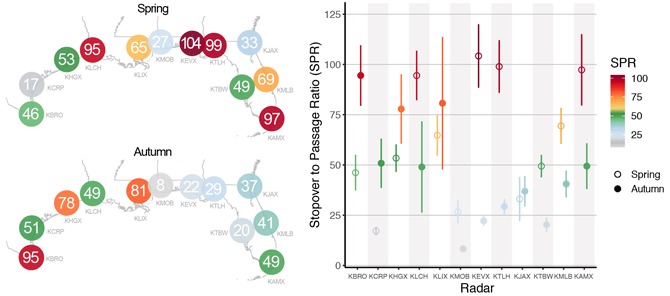
Weather can interrupt migration and sometimes concentrate birds in stopover areas.
BirdCast’s spring 2026 recap describes weather-related migrant concentrations around the Florida Keys and Dry Tortugas on May 3 to 4.
Which migration map should you use: BirdCast or eBird?
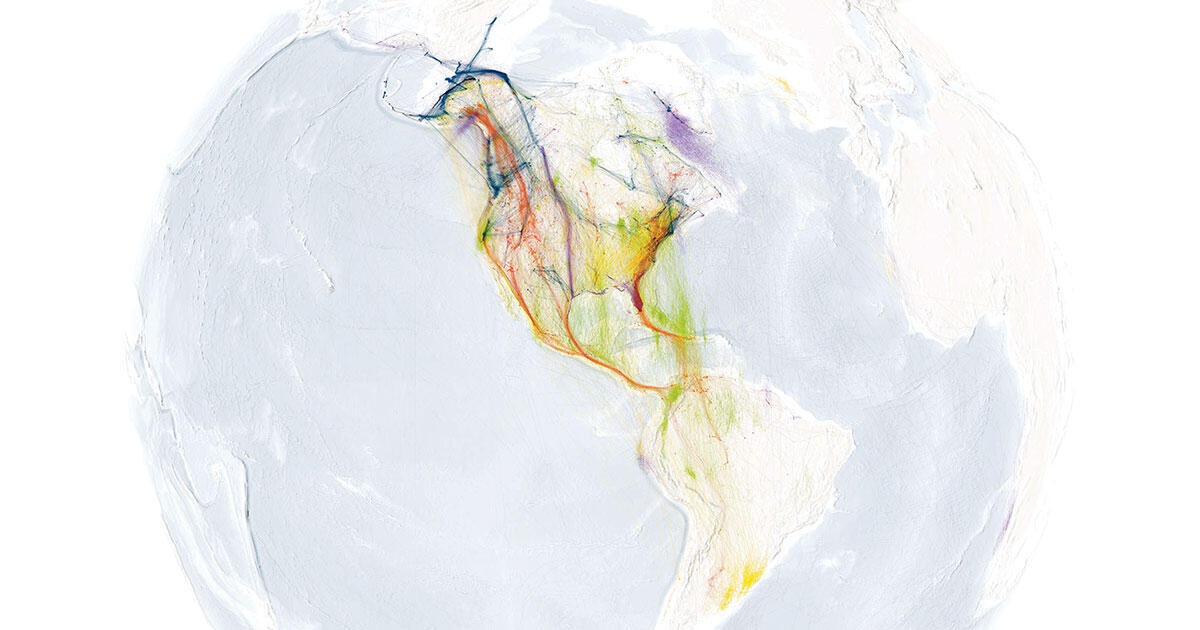
BirdCast offers forecasts and radar-based accounts of aerial migration across the contiguous United States. eBird provides species-distribution models and dated sightings submitted by birdwatchers.
| Your question | Tool or dataset | What it represents | How it helps |
|---|---|---|---|
| How much migration is expected tonight? | BirdCast forecast maps | Predicted nocturnal aerial movement | Shows expected overnight activity |
| Are birds moving overhead now? | BirdCast live migration maps | Radar-derived movement during the night | Shows active movement |
| What passed over my county last night? | BirdCast Migration Dashboard | Estimated previous-night aerial movement | Shows recent regional activity |
| Which named species is seasonally plausible? | eBird Status and Trends | Modeled weekly relative abundance for individual species | Shows geographic and seasonal expectations |
| What has been reported nearby recently? | eBird checklists and hotspots | Dated observations submitted by birdwatchers | Shows local records and locations |
The BirdCast migration forecasts answer the question of expected aerial activity. A modeled eBird Yellow-rumped Warbler weekly abundance map shows the season and geography for a named species.
BirdCast’s maps cover the contiguous 48 states. In Alaska and Hawaii, use eBird species information and local sighting records. To weigh eBird abundance, BirdCast forecasts and seasonal range together, use how to interpret bird migration maps as a cross-check.

In the linked eBird example, relative abundance means the estimated average number of birds detected on a standardized one-hour, 2-kilometer traveling checklist at an optimal time of day. It applies to the model’s stated dataset period and release.
BirdCast numbers need the right units too. Its spring 2026 seasonal analysis reported about 18 billion bird detections across nightly radar peaks, which corresponds to roughly 4 to 5 billion individual birds. One bird crossing the radar network on several nights counts as several detections.
One BirdCast user described a county dashboard that showed a total movement estimate but no species list:
Fall migration technically started on August 1st but BirdCast isn’t working right for me. It shows the estimate of how many birds crossed the county last night but it’s not showing the species. Instead of the species list it says, "Expected migrants cannot be reliably determined for this region on this night." Is this happening to anyone else or is this a me issue?
The date in that post marks a BirdCast seasonal window. On a given night the dashboard can show a county movement estimate even when it cannot determine the expected species.
Why can the woods seem quiet even during migration?

A quiet walk doesn’t mean migration has stopped. Migrants arrive unevenly across places and dates, so a region with heavy migration can still have a quiet trail.
A beginner in the northeastern United States asked whether a quiet fall walk in a park meant changing method or timing:
I’m a beginner birder and I’m noticing the difference between birding in the fall vs the summer. It seems to be a lot quieter and I’m seeing way fewer birds. When I go out birding, I usually walk about 3 miles in 4 hours in a park and I get to the parks about a half hour after sunrise (around 7ish). I was wondering if maybe I should adjust my methods or if it’s really just that quiet during the fall in the Northeast. Am I getting out there too late? Should I just pick a spot and sit there for a while instead of walking a few miles?
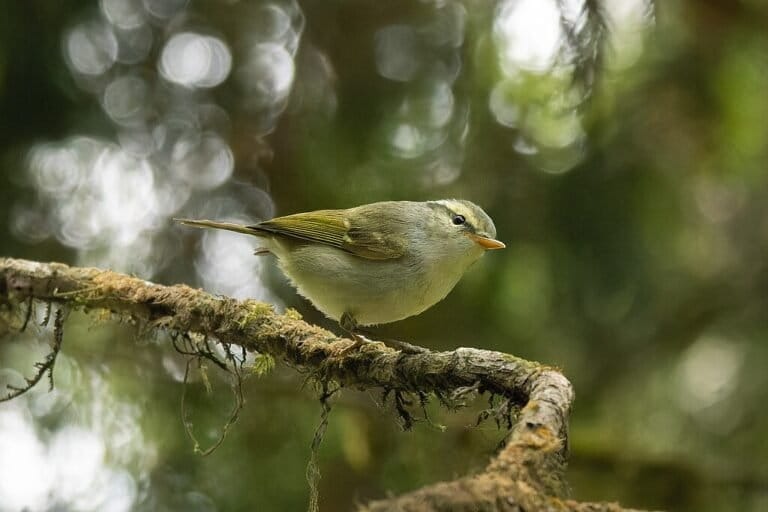
A singing bird on an exposed perch is easier to find than a quiet one in dense foliage. The species also change as migrants arrive, pass through and leave. A spring walk and an autumn walk can feel very different if you’re after warblers or other conspicuous seasonal birds.
Before you decide the migration period has passed locally, compare several visits at similar times of day in similar habitat. That shows whether conditions or the birds you’re after explain the quiet.
What can you look for between migration peaks?
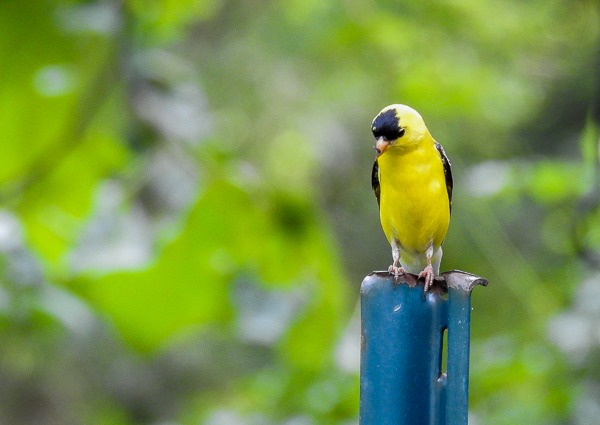
Birdwatching continues between migrant waves. Resident birds give you feeding behavior, habitat use and seasonal calls to watch.
A new Chicago birder, who used BirdCast and eBird to plan outings, asked what to look for after spring migration:
I just got into birding in May after randomly asking two guys at Montrose about a bird I’d never seen before (it was a Magnolia warbler). They told me I happened to be at Montrose during peak migration season. (These guys were very nice, and I’ve since had other good interactions with friendly birders). After that, I’ve gone to the Montrose and Bill Jarvis bird sanctuaries a dozen times and have had a great time photographing and learning new species. Every night I was checking Birdcast for live migration maps and eBird for recent checklists to decide when to go out the following morning, specifically to catch migratory species. I’ve now learned these species aren’t coming through as often anymore and I want to know what to start looking for next.
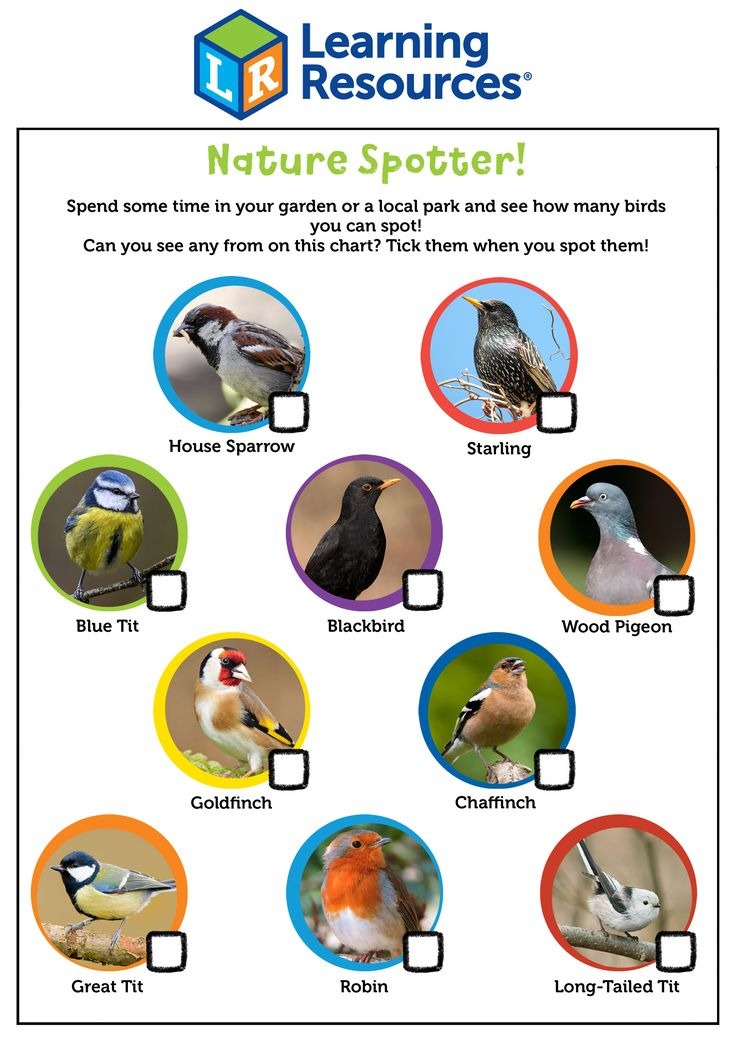
As the season shifts, different birds and behaviors become easy to see. A familiar park still raises questions about foraging, shelter, calls and the use of different vegetation after its busiest migration weeks end. Pick one recently reported species or one behavior you’ve overlooked and follow it through a quiet stretch.
How can people make migration safer for birds?

Artificial light and glass put migrating birds at risk in two different ways. Unneeded nighttime lighting can attract or disorient birds flying after dark and draw them toward buildings. Reflective or transparent windows look like vegetation or open space to birds and cause collisions in daylight too.

For exterior window markers, American Bird Conservancy advises spacing them so no gap is larger than two inches. Installation varies with treatment type, so match this guideline to the product or method you choose.
If you own a home or building, check the outside of reflective windows, add a properly spaced bird-safe treatment where needed, and switch off unneeded lights on migration nights.
How should you plan your next migration birdwatching outing?
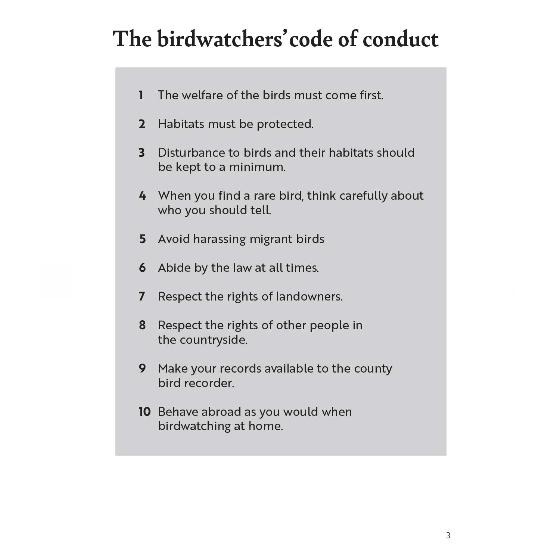
A good migration outing starts with a local question: which birds could pass through this week, and where could you see them? A regional forecast answers the first part. Local sightings and habitat answer the second.
Follow this sequence:
- Choose the region and week. Identify your local season and general peak period.
- Pick the right tool. Use a forecast for expected airborne movement, a dashboard for last night’s passage or species-specific data for a named bird.
- Read recent local checklists. They show which species were reported nearby and where people saw them.
- Choose habitat and conditions. Consider vegetation, shoreline, wooded edges or other habitat your target birds use, along with weather and visibility.
- Keep a field record. Note date, location, birds seen or heard, and identifications you’re unsure of.

Say BirdCast forecasts heavy overnight movement across your county. Recent local checklists list migrant songbirds at a wooded stopover site, but you had planned to watch an open lawn. If you want those songbirds, go to the woods. The visit may still be quiet.