Call it a Red-shouldered Hawk when shape, plumage for the bird’s age, wing and tail pattern, and location all agree. A distinctive call can confirm a bird you never see. A vague sound or an app label alone stays tentative.
A hawk lands above a wooded creek. You catch a reddish chest and a striped tail before it turns away. Or you hear a descending cry from the trees behind your house, and Merlin Bird ID suggests Red-shouldered Hawk. What you saw or heard decides which clue to check next.
How to identify an adult Red-shouldered Hawk
An adult Red-shouldered Hawk (Buteo lineatus) is a medium-sized woodland raptor with broad wings and a relatively long tail. Typical eastern adults show reddish-brown barring across the underparts, boldly checkered dark-and-light wings, and a dark tail crossed by narrow pale bands. Folded feathers can hide the reddish shoulder patch that gives the species its name.
Cornell’s Red-shouldered Hawk identification guide lists a length of 16.9 to 24.0 inches (43 to 61 cm) and a wingspan of 37.0 to 43.7 inches (94 to 111 cm). Size is hard to judge from a distant photo with nothing for scale.
| What you observed | First clues | Next check |
|---|---|---|
| Perched adult | Rusty barring, patterned folded wings, banded tail | Wing and tail pattern |
| Brown, streaked bird | Pale underside with dark streaks and brown upperparts | Juvenile plumage |
| Flying hawk | Wing silhouette, tail bands, translucent wing panels when visible | Flight marks |
| Hawk-like call | Repeated falling notes, possibly an unseen singer | Call and caller |
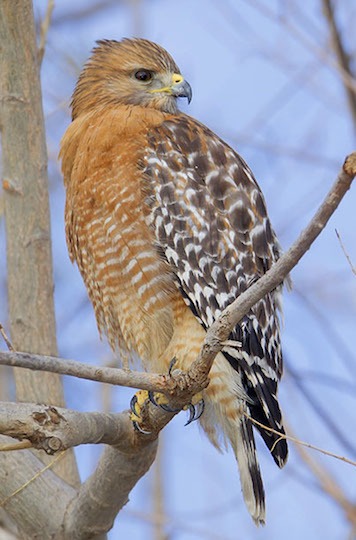
Match your bird against photographs labeled adult.
What a juvenile Red-shouldered Hawk looks like
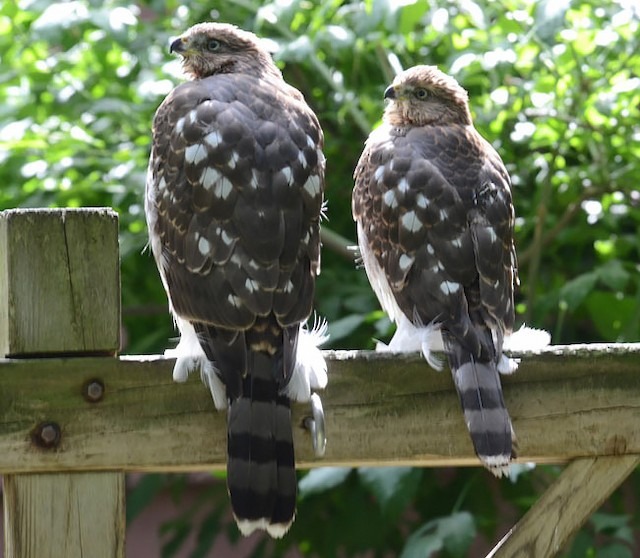
A juvenile Red-shouldered Hawk often looks brown and streaky where an adult looks rusty and barred. Young birds are generally brown above and pale below, with dark streaks on the breast and belly. Their wings and tail can show subtler brown-and-pale patterning than the strong black-and-white contrasts of many adults.
A photograph taken from beneath a young bird can hide much of its upper-wing pattern. The streaking can also resemble that of a young Red-tailed or Broad-winged Hawk.
Recognizing a Red-shouldered Hawk in flight
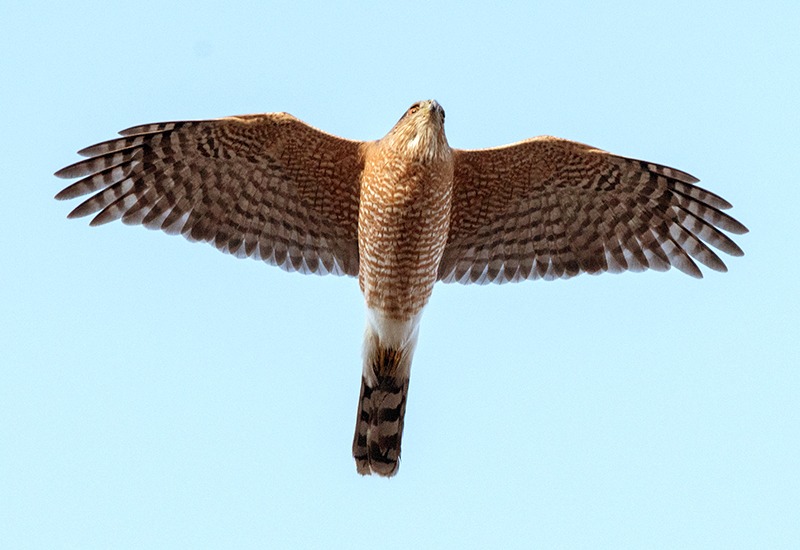
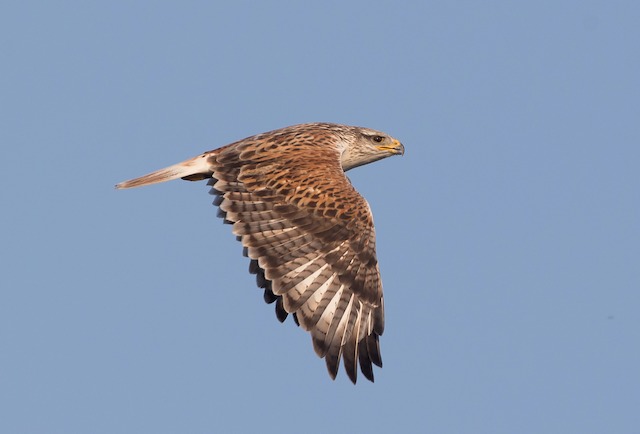
A Red-shouldered Hawk in flight has broad wings and a relatively long tail, sometimes spread as the bird circles. Soaring birds may hold their wings slightly forward, with fairly squarish-looking tips. The most telling clue is the pale, translucent crescent near each outer wingtip, visible when light passes through the flight feathers. Both adults and juveniles can show it.
Adult wings often look strongly checkered, with a distinctly banded tail. Juveniles show softer brown-and-pale patterns.
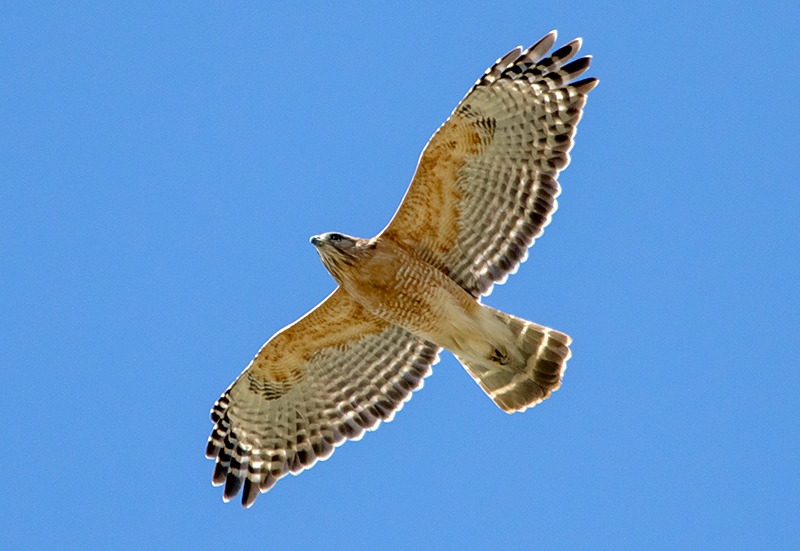
The crescents brighten when a circling hawk turns its wings toward the light, then vanish a moment later. Track the wing outline and tail bands through the turn, and count a visible crescent as extra support. A backlit photo without clear wing panels can’t show this mark.
What a hawk call can confirm
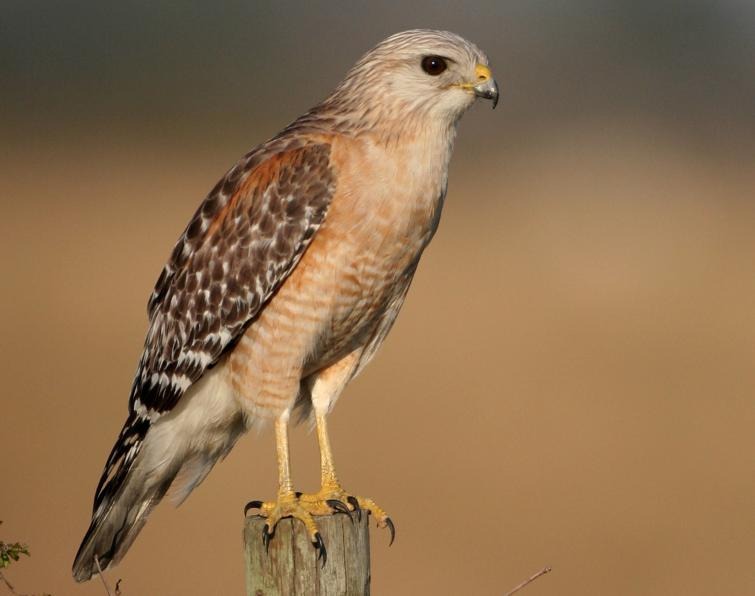
The characteristic Red-shouldered Hawk call is a loud, repeated kee-aah, with the second note descending in pitch. Hawks give it in territorial and alarm situations. Cornell’s species sound recordings include geographically labeled examples from Florida and California.
Compare the rhythm and falling second note with a region-labeled recording.
In one r/birding thread, a user watched a Blue Jay at a feeder while Merlin suggested a hawk.
This has happened a few different times to me. Merlin will identify a bird as a Hawk when it’s actually a Blue Jay. I know for sure because I’m watching the Blue Jay at the feeder and checking it with the app. I kind of skimmed through the ‘Help’ section to see if there was a way to report it but I couldn’t find anything. I was just curious if anyone else had noticed this problem – or do I just have a Blue Jay that sounds like a Hawk 😂
The general approach to identifying birds by song also helps when the bird stays hidden, alongside plumage, bill shape, and habitat.
When a Blue Jay imitates a hawk
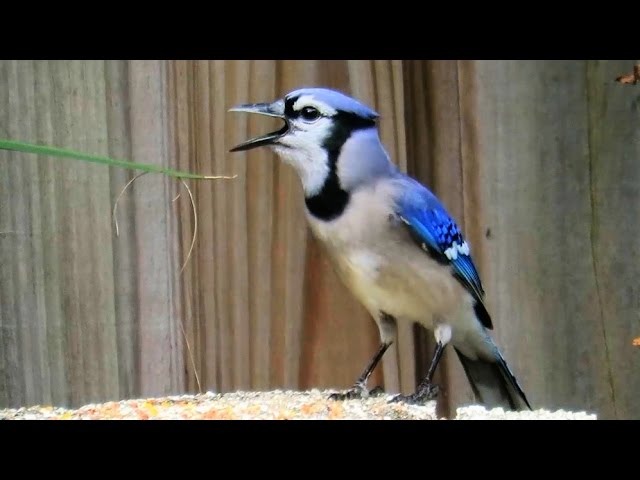
Blue Jays can closely imitate Red-shouldered Hawk cries, as Audubon’s Blue Jay guide documents. A hawk call in your yard may come from a jay, even one you can see.
Another commenter in that thread described a Blue Jay making the imitation at a peanut feeder:
I have both species on my property. I feed the Bluejays peanuts. They let me know its peanut o’clock. One morning I was feeling ill and didn’t get out at my usual time. When I finally stepped out to get a bit of fresh air a Jay landed on a post very near to me, leaned in, and I swear, looked me dead in the eye and let out the loudest, most obnoxious Red-shoulered Hawk call. Then flew off a bit. It was like he was saying ” hey lady, im not playin’, where’s the damn peanuts??!
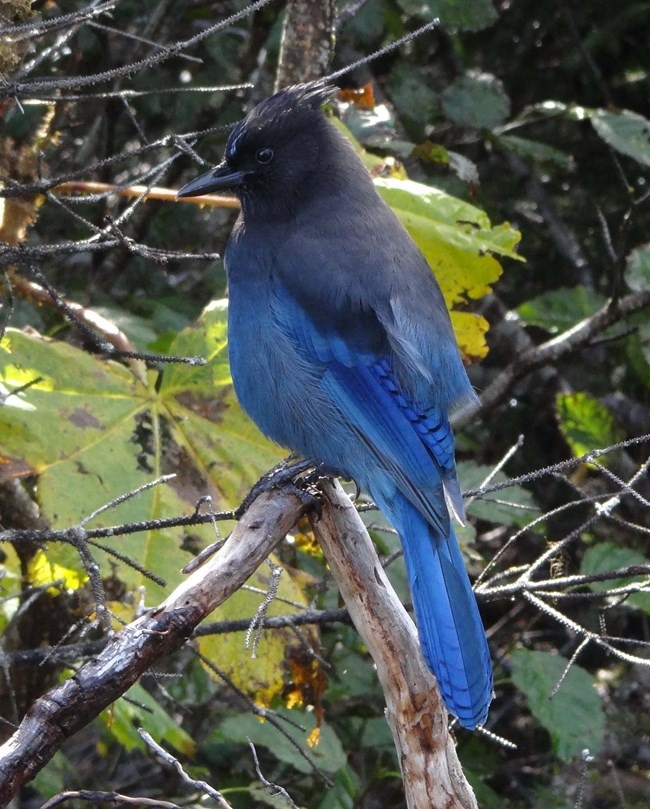
Steller’s Jays do it too.
In Arcata, California, researchers observed 49 individually marked Steller’s Jays over a 12-month period in 2015 to 2016. In the study published in 2024, 14 birds (28.6%) mimicked Red-shouldered Hawk calls, in varied social contexts.
Why Red-shouldered Hawks look different across the U.S.
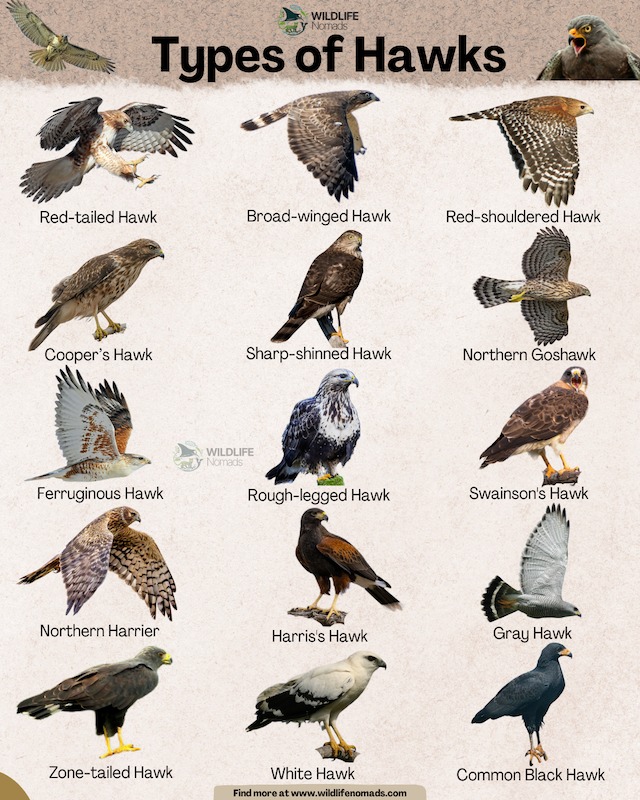
The right reference photograph depends on geography. Cornell’s labeled examples show substantially different adult color patterns in the East, Florida, and California.
| Region and form | Typical adult appearance | Identification implication |
|---|---|---|
| Eastern lineatus | Brownish upperparts; conspicuous reddish barring below | Baseline for many eastern observations |
| Florida extimus | Often paler, with a grayish head and lighter orange-brown underparts | Less richly colored adults still fit the species |
| Western elegans | Often richer orange; breast can look nearly unbarred | Solid-looking orange below fits California |
Don’t assign a subspecies from one photo.
eBird Status and Trends maps modeled seasonal occurrence from 2009 through 2023 observations, with 2023 estimates released in 2025. It shows where the species is expected by season, not live sightings at your address.
Red-shouldered Hawk versus similar hawks
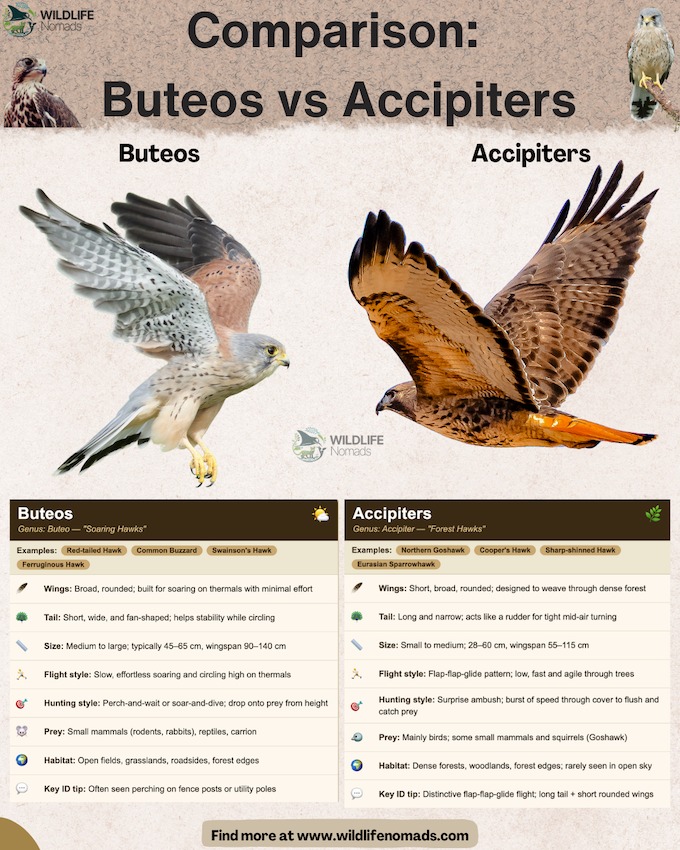
Red-tailed, Broad-winged, and Cooper’s Hawks can be mistaken for it, especially on a brief look or with a young bird. Proportions and age markings tell them apart.
| Possible alternative | Why it can confuse | Distinguishing features |
|---|---|---|
| Red-tailed Hawk | A larger, bulkier broad-winged Buteo | Many adults have a reddish tail visible from above; a darker belly band can help. Young birds lack the adult red tail. |
| Broad-winged Hawk | A compact, stocky Buteo, especially confusing at a distance | Its wingtips can look more pointed than the fairly squarish tips of a Red-shouldered Hawk; many juveniles have more lightly marked underparts. |
| Cooper’s Hawk | A woodland hunter whose outline changes rapidly in flight | Proportionally longer tail and shorter wings; many adults show a capped head. |
Check at least two independent features. A lone hawk high overhead has no dependable scale.
The full Red-tailed versus Red-shouldered Hawk comparison handles that pair in detail, and the Red-tailed Hawk identification guide has the alternative species profile.
Where to find Red-shouldered Hawks and what they are doing
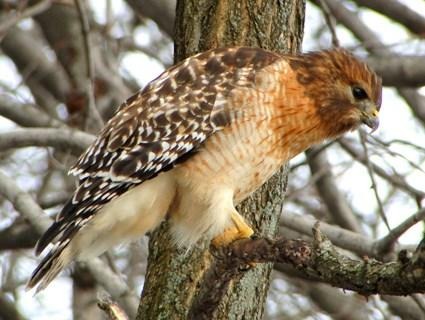
Red-shouldered Hawks use wooded wetlands and forests, including western riparian and oak woodlands near some neighborhoods. They hunt small mammals, amphibians, and reptiles, and build stick nests in large trees. Near a possible nest, keep your distance, avoid playback that could disturb the birds, and follow birding ethics around nesting raptors.
When sound alone is enough, and how to record a sighting
Skilled birders sometimes recognize a species by voice without seeing it. A heard-only ID works when the call is clear, you know it well, and you’re sure what made it.
- Supported identification: You hear a loud, repeated kee-aah with a falling second note in suitable habitat, and nothing points to another caller.
- Tentative Red-shouldered Hawk: A call or partial view suggests the species, but another bird could explain it, such as a hawk-like cry while a Blue Jay sits at your feeder.
- Unidentified or alternative caller: The sound is too vague to name, or you see that another species made it.

For a field record, log the date, place, whether you saw or heard the bird, the marks or call you noticed, and what remains uncertain.