A round head with no ear tufts, dark brown eyes, horizontal bars on the upper breast and vertical streaks on the belly point to a Barred Owl, especially when the voice and woodland range fit. If the view or call is unclear, log it as a possible Barred Owl.
A Barred Owl (Strix varia) looks unmistakable in a clear photograph and stays a mystery in a dark backyard. The familiar hoot is only one of its sounds.
How to recognize a Barred Owl by sight
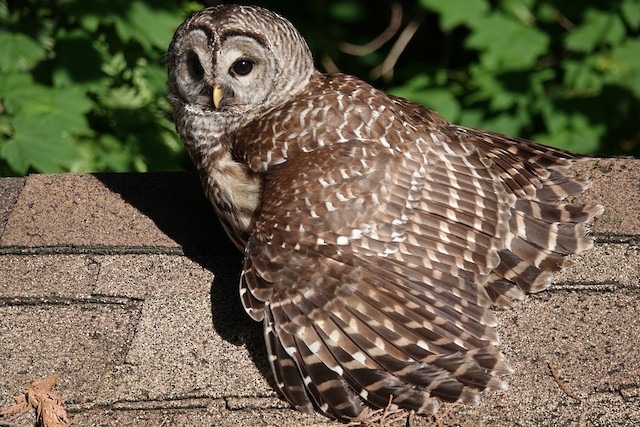
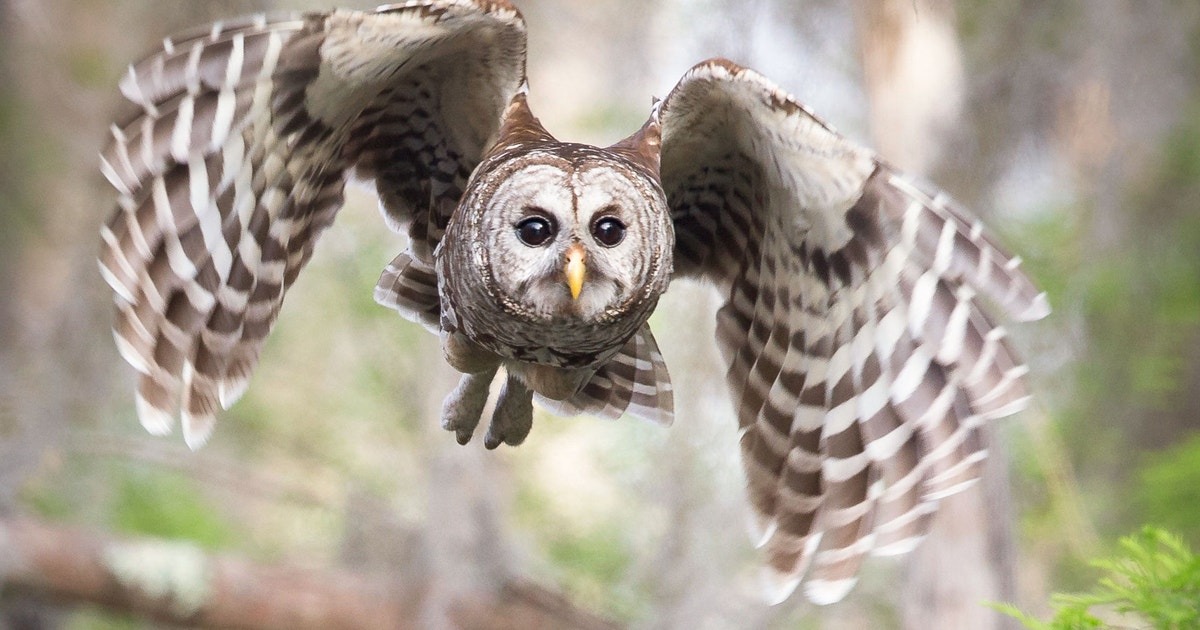
A Barred Owl is a big woodland owl with a broad, rounded head and no prominent ear tufts, the feather projections that give some other owls a horned look. Its eyes are dark brown. The upper breast carries horizontal brown bars and the lower belly has longer vertical streaks, and that change in direction is the quickest check in a clear view. Note separately whether you can see the head outline, the eye color and both parts of the underbody, and compare them with Cornell’s Barred Owl identification reference. Dim light distorts eye color, a branch can hide the belly, and an awkward angle or juvenile plumage can hide the marks you need.
What Barred Owls sound like beyond “who cooks for you”
The best-known Barred Owl song is a rolling, rhythmic phrase of eight or nine notes. Birders remember it as “who cooks for you.” A clear, repeated sequence like that is a good clue when the rest of the observation fits.
Barred Owls also duet and make calls that sound strikingly different from that familiar phrase. In a 2010 acoustic study, Karan Odom and Daniel Mennill distinguished 13 adult vocalization types and a separate nonvocal sound.
- Two-phrased hoot: two syncopated groups of hoots, with a more emphatic ending.
- Inspection call: a single, sustained note that descends toward its finish.
- Gurgles: hollow, throaty notes, sometimes exchanged between owls.
- Alarm scream: sounds unlike the usual territorial hoot.
A listener in western North Carolina described a sound like a frightened child and found no owl recording that matched it.
Western North Carolina, posting this in May. At around 8pm for the past month I’ve regularly heard what sounds like a small child throwing a shouting/screaming tantrum coming from my back yard. It sounds like a neighbor’s kid has hurt themselves and is shouting out “Aaaaah! Aaaaah!” in fear, but every time I rush to the back door the noise stops once I open the door. AI suggested barred owls to me and that would track, I’ve heard the famous “who cooks for you” calls in the past, but when I try to find a recording of a barred owl call similar to this one I can’t find anything. Everything I’m finding online sounds like a raspy shriek, but the noise I’m hearing sounds more like a yell. I also have red tailed hawks that live in a tree nearby, but the calls seeming to be coming from the other side of the back yard and don’t sound as nasally as a hawk call. I’m hoping someone can help me track down this call so I can sleep better at night knowing I’m not ignoring some kid’s pleas for help!
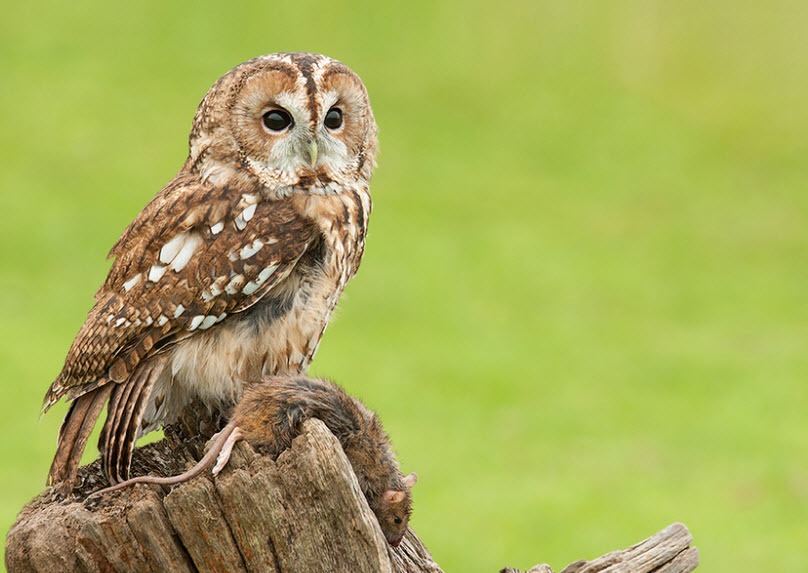
The post never says what made the sound. With actual audio, listen for the pattern of notes and compare it with the examples in Cornell’s Barred Owl sound library. If the clip doesn’t match, leave the caller unidentified and check other nighttime owl sounds.
Barred Owl vs Great Horned Owl vs Spotted Owl: the useful differences
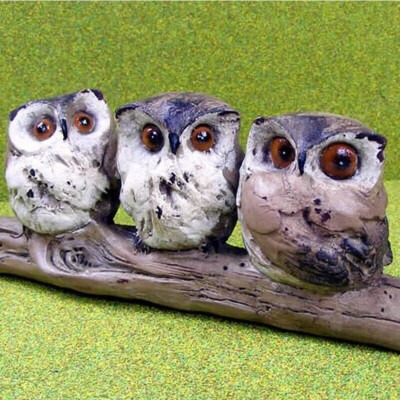
A Great Horned Owl has a different face: yellow eyes and feather tufts that are often prominent. In western forests, the dark-eyed Spotted Owl looks much more like a Barred Owl, so the marks on the breast and belly matter most.
| Field clue | Barred Owl | Great Horned Owl | Spotted Owl |
|---|---|---|---|
| Eyes | Dark brown | Yellow | Dark |
| Head | Rounded; no prominent ear tufts | Feather tufts usually apparent | Rounded; no prominent ear tufts |
| Typical voice clue | Rhythmic eight- or nine-note song; other hoots and gurgles | Deep, stuttering hoots in territorial song | Four-note signal call, with the middle two notes closer together |
| Range | Historically eastern; documented western expansion | Widespread in the US | Western forests |
In a clear frontal view, yellow eyes and usual tufts separate the Great Horned Owl quickly. Between the two dark-eyed owls, the Barred Owl shows horizontal bars across the upper breast and vertical streaks below, while the Spotted Owl has larger oval white spots across the chest and belly.
Where Barred Owls live and when you might hear them
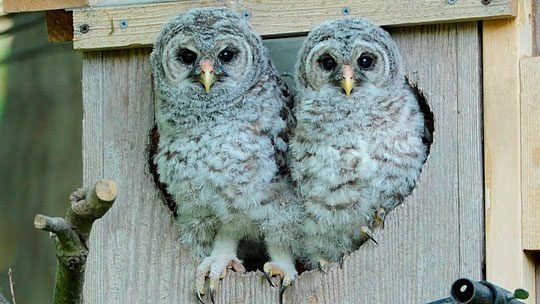
Barred Owls live in mature woods, often near water. They generally stay within their territories and are mainly active at night, though calls or hunting in daylight happen too.
Barred Owls have a long history in eastern North America and have expanded westward into the Pacific Northwest, so location matters when you separate a Barred Owl from a Spotted Owl. The eBird Barred Owl range map gives modeled distribution estimates. It is dated regional context and cannot confirm an individual bird at a particular trail or backyard. Check it against the state, habitat and season of your observation.
A 2021 experiment by Wiens and colleagues found improved Northern Spotted Owl survival at studied western sites after Barred Owl removal. The US Fish and Wildlife Service limits removals under its western strategy to authorized implementers, and public hunting is not allowed under that strategy.
How to verify a Barred Owl sighting or Sound ID result
Merlin Sound ID offers possible bird identifications, so check its suggestions against your actual sighting or recording. The Cornell Lab’s Sound ID best practices recommend comparing birds’ sounds and appearances with location, habitat and season.
| Evidence | Record | What it tells you |
|---|---|---|
| Sight | Head, eyes, breast and belly marks; anything hidden | Field marks that support or rule out a Barred Owl |
| Sound | Original clip, repeated phrase and closest reference example | How closely the clip matches; short or noisy audio weakens the match |
| Context | Date, state or region, habitat | Whether the species fits the place and season |
| Alternatives | Other likely owls and any conflicting evidence | Whether you can log the species with confidence |
A phone may catch only part of a call, or several overlapping birds.
Save the original recording or photo with your observation details. In your notes, write “possible Barred Owl” or “unidentified owl” when the evidence is uncertain, and do not submit an unverified Merlin suggestion to eBird as a confirmed Barred Owl. A knowledgeable local birder can help with a difficult clip. The broader bird sound identification method works for unfamiliar species beyond owls.
What to do when a Barred Owl swoops, follows, or calls nearby
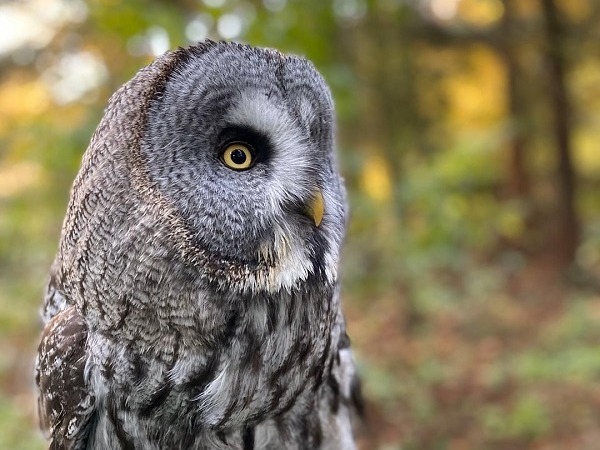
If an owl approaches closely or swoops repeatedly, stay calm, increase the distance and leave the area. Do not offer food, move closer for a photograph or repeatedly play its calls. The American Birding Association’s birding ethics emphasize the welfare of wild birds and avoiding disturbance, particularly around roosts or possible nesting areas.
On a lunch-break walk near Odessa, Florida, one observer described an owl repeatedly flying toward them. The observer thought it wanted food and offered a mushroom.
I was taking a hike on my lunch break at a park near my office (my office is in the middle of nowhere, wilderness all around) and came across what I believe to be a Great Barred Owl (Odessa, Florida). I snapped this pic and video as I passed it, and it was screeching at me as I walked by. Once I was probably 50 yards past the tree it was in, it swooped down at me and landed literally less than a foot from me, still screeching. The sound it was making was is in the video. I was unsure if it wanted food (I was foraging and had a handful of mushrooms) so I tossed a yummy fresh mushroom on the ground for it, but when it showed zero interest and stepped right over it still eyes locked on me, I figured I should probably leave. I left the area, and it followed me, repeatedly flying straight at me and landing right next to me. Probably did that 5 times.
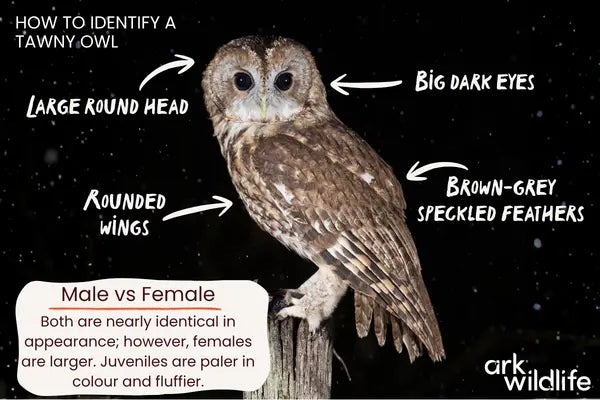
The report doesn’t explain why the owl followed, and nobody confirmed the poster’s species label.
Other firsthand accounts describe owl swoops during walks and runs, including a reported scalp injury. If an owl makes contact and hurts you, see a doctor. For more on observing without disturbance, see responsible birdwatching practices.