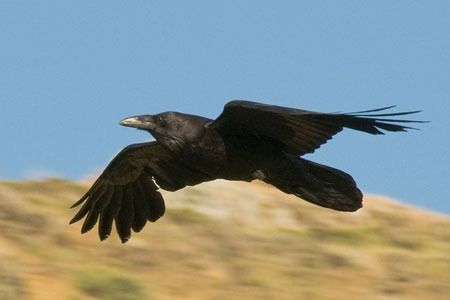
Call it a Common Raven when several clues agree and fit the location: a heavy bill, a shaggy throat, a tapered tail in flight, a deep croak. If the clues conflict or you caught only part of them, keep the identification provisional and get a clearer look or a recording.
Common Raven identification: bill, throat and body shape
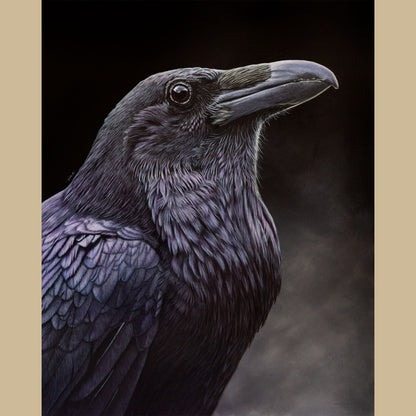
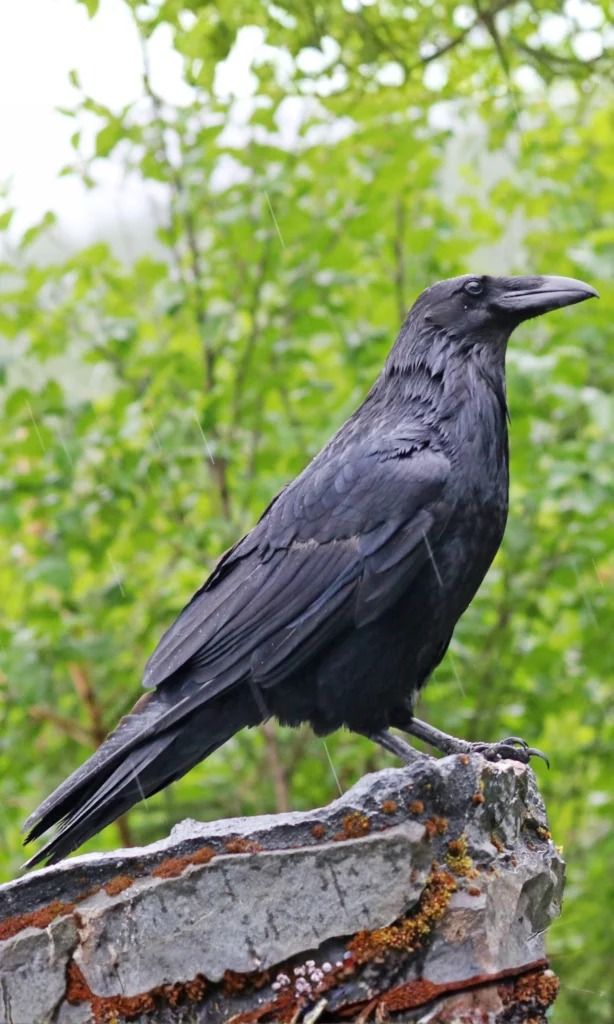
A Common Raven (Corvus corax) is a large black member of the crow family, Corvidae. A perched raven has a heavy, deep bill, a big head and a thick neck. Elongated feathers under the throat give the neck a rough, shaggy outline.
Even when branches hide the tail and nothing nearby gives you a size reference, the head and bill still carry the identification. A raven’s bill looks large for its head, with a slightly curved upper edge, and the neck looks thick through the base of the head.
Those long throat feathers are called throat hackles. A raven can raise them, but they lie flatter with changes in posture. A smooth throat in a single photograph is therefore a weaker clue than a clear view of the bill and head together.
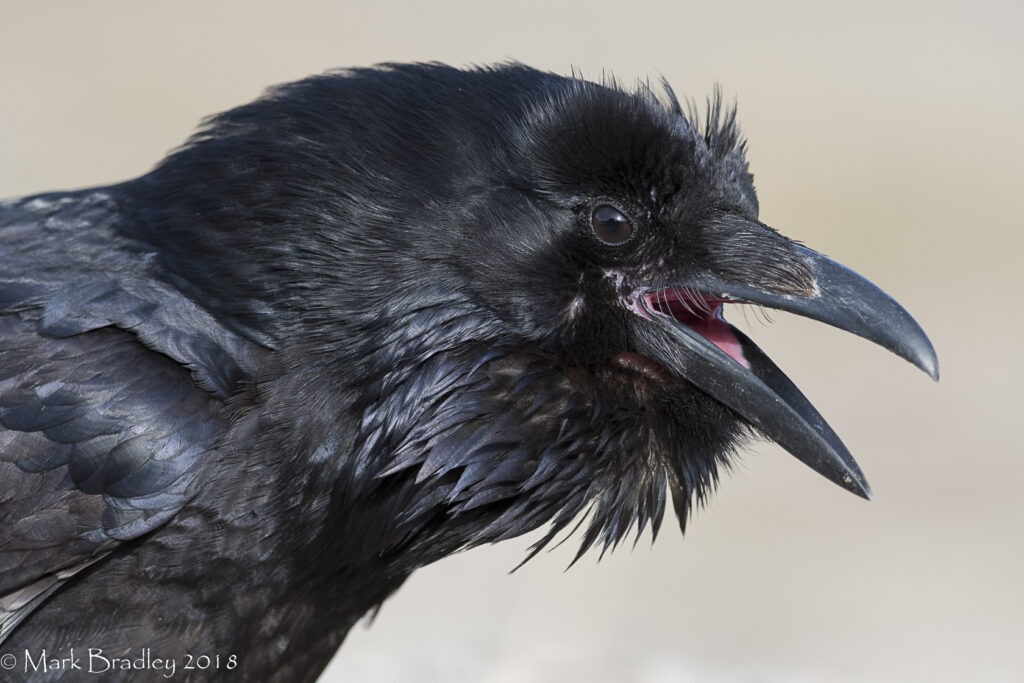
Adult Common Ravens have glossy black plumage, and sunlight can give the feathers a changing sheen. Black plumage won’t separate a raven from a crow, so check the bill-to-head proportion and the throat and neck profile in the same view. Cornell’s Common Raven identification guide has age-labeled photographs of these features.
Common Raven or crow when size is hard to judge
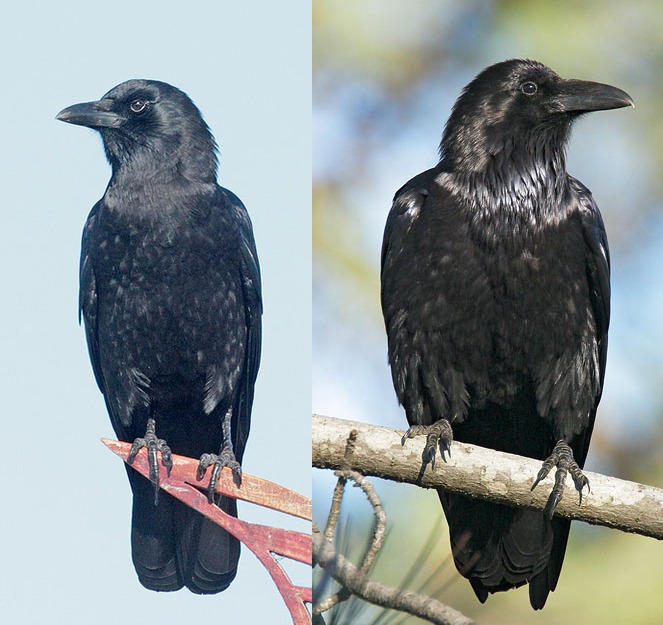
A raven usually looks heavier through the bill, head and neck than an American Crow. Apparent size misleads at a distance, since a nearby crow can look enormous and a distant raven small.
When American Crow is locally plausible, compare it directly with Common Raven. In the right region, add Fish Crow or Chihuahuan Raven to the shortlist. To weigh plumage, range, and song, use American Crow identification and field marks as a cross-check.
| Candidate | Useful identifying contrast | Where it matters |
|---|---|---|
| Common Raven | Heavy bill, thick neck, sometimes shaggy throat; tapered flight tail; deep croaks among varied sounds | Broad range of US habitats |
| American Crow | Lighter bill and smoother throat; rounder or squarer tail in a good flight view | A large black bird seen briefly |
| Fish Crow | Crow-like shape; a nasal, often two-noted call sets it apart | Eastern and coastal US locations |
| Chihuahuan Raven | Raven-like bill and shape; tail can also look wedge-shaped; some calls overlap with Common Raven | Southwestern habitats where both ravens are possible |
Cornell’s four-corvid comparison sets the birds side by side on the same visual and vocal criteria.
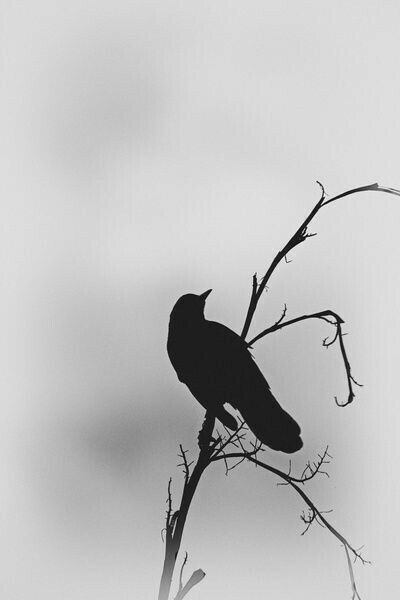
Raven flight silhouette: tail, wings and viewing angle
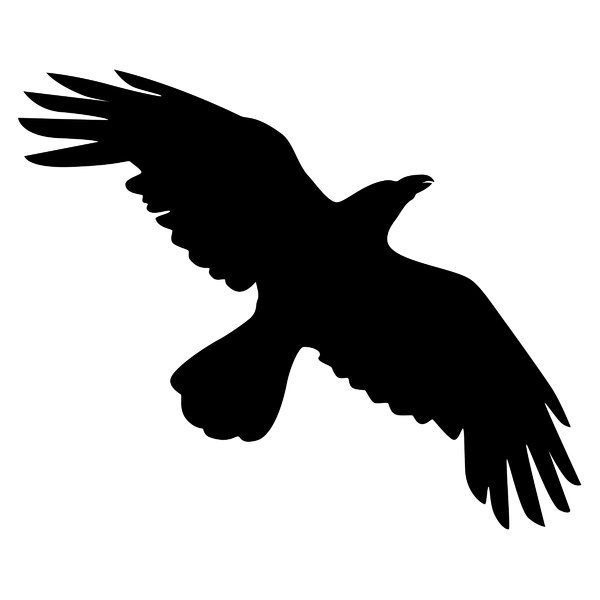
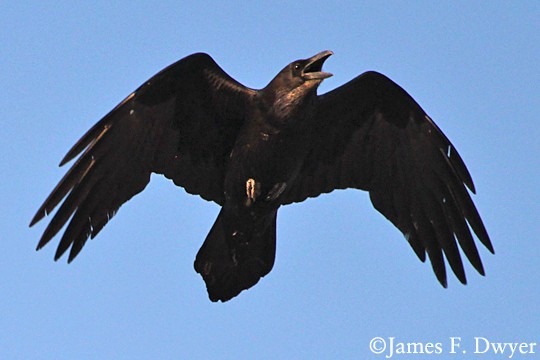
From below, a Common Raven often shows a long tail tapering to a point, which gives a wedge or diamond outline. American Crows more often show a rounded or squarish tail. Ravens also have long wings and alternate deliberate wingbeats with glides or soaring.
The outline changes as a bird banks and spreads its feathers, and a distant photograph can freeze the tail in a position that hides its shape.
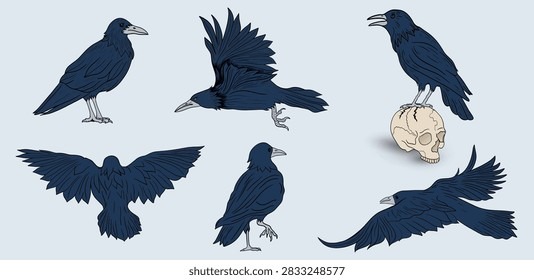
Watch the whole tail through a turn and note the wings during any glide. If the tail stays hidden behind the body or folded narrow, rely on head shape or voice.
Common Raven calls: croaks, rattles and knocks
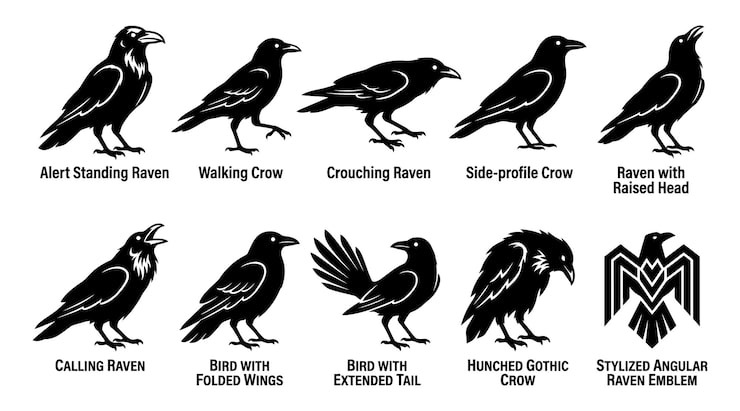
The classic Common Raven sound is a deep, rough croak with a resonant, almost hollow quality. It sounds lower and more rolling than a crow’s caw. The species also makes a much wider range of sounds.
Ravens make grating and rattling calls, as well as knocking-like notes. Cornell describes rapid knocking vocalizations from some females. Bill snapping during display is a separate sound that comes from the bill itself.
| Sound | What an observer hears | What it tells you |
|---|---|---|
| Deep croak | Low, harsh, resonant call | A characteristic Common Raven reference sound |
| Rattle or knocking call | Series of rough or short repeated notes; rapid knocking has been described for some females | Variation within the vocal repertoire |
| Bill snapping | Brief snaps made with the bill during display | A physical sound, separate from a knocking call |
A bill snap you can see is a display action. A recording of rapid knocks can be compared with vocal examples, even when the bird stays out of view.
One observer in Baltimore, Maryland, described a puzzling corvid sound and was unsure which species made it:
Saw this beautiful corvid near me and was making the most interesting sounds. I am not sure what kind of all it was. I think it is a raven by the shape of its beak. But it could be an American crow or fish crow too. Any thoughts on what the type of call is? Location Baltimore Md
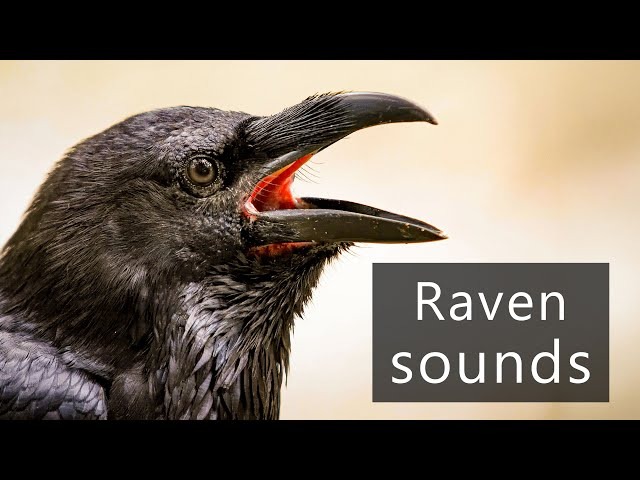
To judge a similar sound, compare its pitch, rhythm and texture with the attributed examples in Cornell’s Common Raven sound recordings. If the first recording doesn’t match what you heard, try several more.
Cornell’s Macaulay Library includes Common Raven recordings from Texas, California, Alaska and New York, as well as examples labeled for young birds.
Can Common Ravens make sounds like other animals?
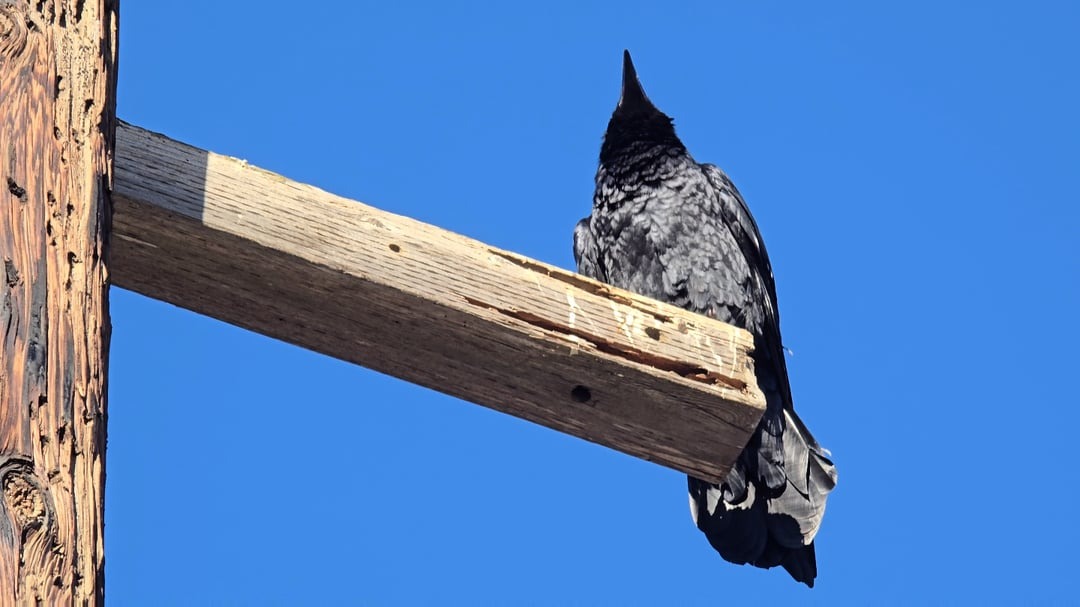
Some raven sounds are strange enough that people place them with another animal. A squeaky, rattling or cat-like noise can catch a listener off guard.
In one firsthand account, the person first thought a cat was making the sound:
My first thought was a cat in a tree when i heard these sounds , but then i discovered that this raven was doing it. For my girlfriend and me, it sounds very much like a cat – why is he doing it? I know, ravens are very intelligent and can imitate a wide variety of noises, but why should he imitate a cat?
The poster says it sounded like a cat. Why the raven made the sound isn’t clear from the post.
In a study of free-ranging ravens, responses to food-associated calls varied with the individual caller.
Where Common Ravens live in the United States
Common Ravens live in mountains, forests, deserts, tundra and coasts across the US, including places near human activity and reliable food, such as landfills. Most are resident through much of their range, though some wander, particularly in fall and winter.
The Chihuahuan Raven complication
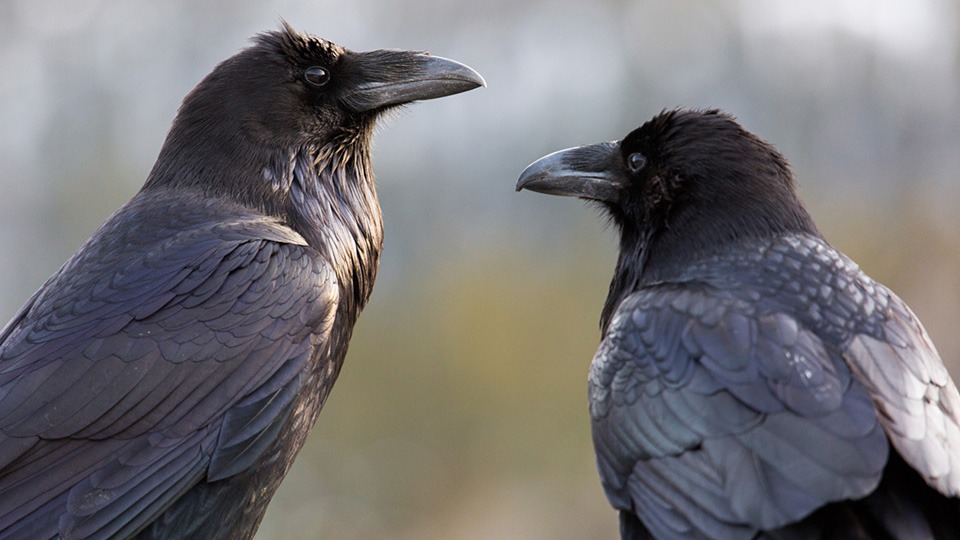
In southwestern settings, Chihuahuan Raven (Corvus cryptoleucus) is an important alternative. Its voice overlaps with Common Raven in some contexts. The American Birding Association cautions against relying on pale feather bases, which are hard to judge in changing light.
For a raven-like bird in a southwestern desert, the American Birding Association’s preliminary analysis points to a direct side view of the perched head. Feather position and posture change the outline, so get more than one good view when a photograph is angled or ambiguous.
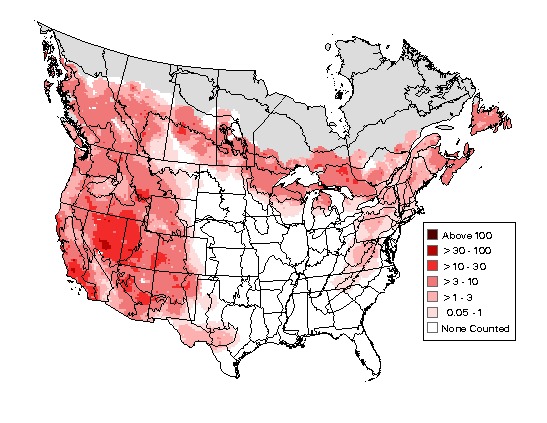
The eBird Common Raven range map shows modeled occurrence by place and season. Use it to filter candidates for your location and time of year. The shading estimates distribution and does not confirm a bird at your spot on a given day.
Juvenile ravens and behavior
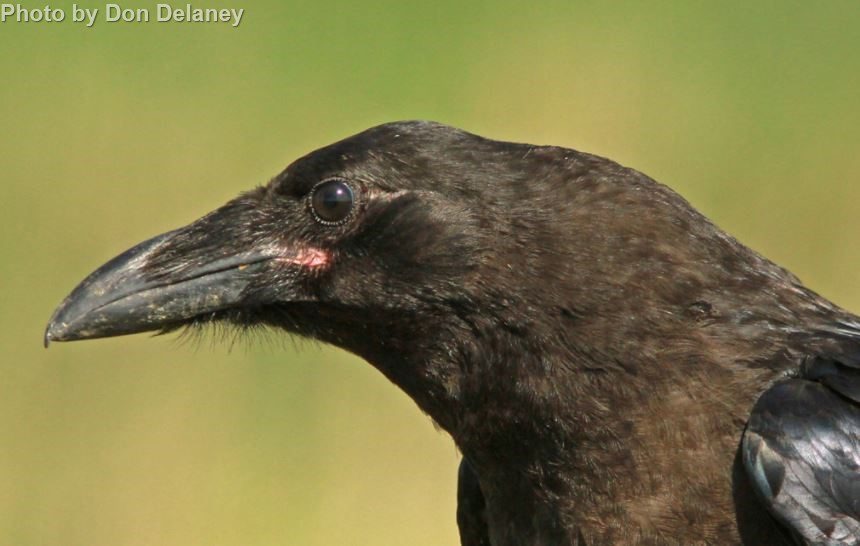
Young Common Ravens look duller or browner than glossy adults, and their throat feathers can look different with age and posture. If the bird departs from the adult portrait, compare it with an age-labeled juvenile photograph.
Common Ravens eat carrion, insects and fruit. They occur alone, in pairs and sometimes in groups around abundant food.
A Common Raven identification checklist for an uncertain sighting
Keep what you observed separate from what a guide or app later suggested. A photograph from below, a short croak in the trees and a Merlin suggestion each record something different.
- Record the circumstances. Write down the date, general location, habitat and whether you saw the bird, heard it or both.
- Separate observations from guesses. Note the bill, throat or tail features you saw and the sounds you heard. Leave unseen features blank.
- Weigh the clues together. Combine bill, flight view, voice and the species that live where you were.
- Check the app suggestion. Merlin Sound ID suggests candidate species. Compare its suggestion with your notes. If you submit a Merlin-suggested bird to eBird, confirm the recording location and upload the audio with the checklist, especially for an unusual report.
- Keep a usable record. If you can, record a steady audio clip without disturbing the bird. Cornell’s smartphone guidance suggests at least 30 seconds when practical. If the bird flies off before its tail is clear, an underside photograph keeps the partial silhouette, and the recording adds a second kind of evidence.