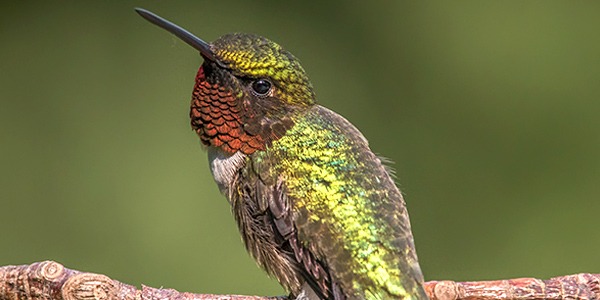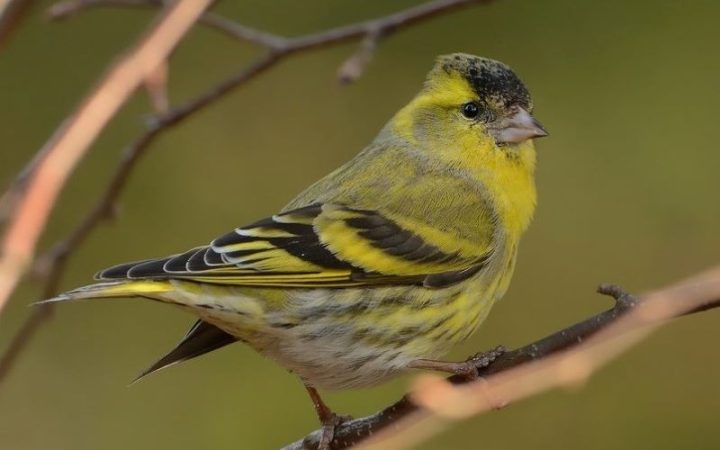
Within its U.S. range, a thick conical bill, a long tail, a usual crest and plumage that matches the bird’s age and sex point to a Northern Cardinal. That includes a brown female and a dark-billed young bird. If the marks or the location don’t fit, compare regional lookalikes.
How to recognize a Northern Cardinal at a glance
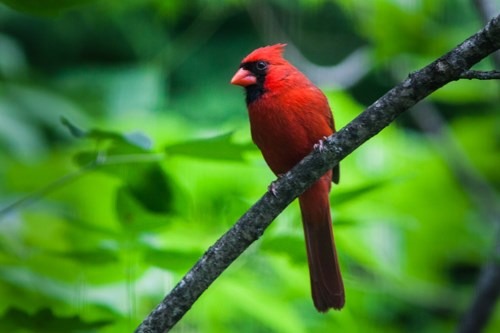
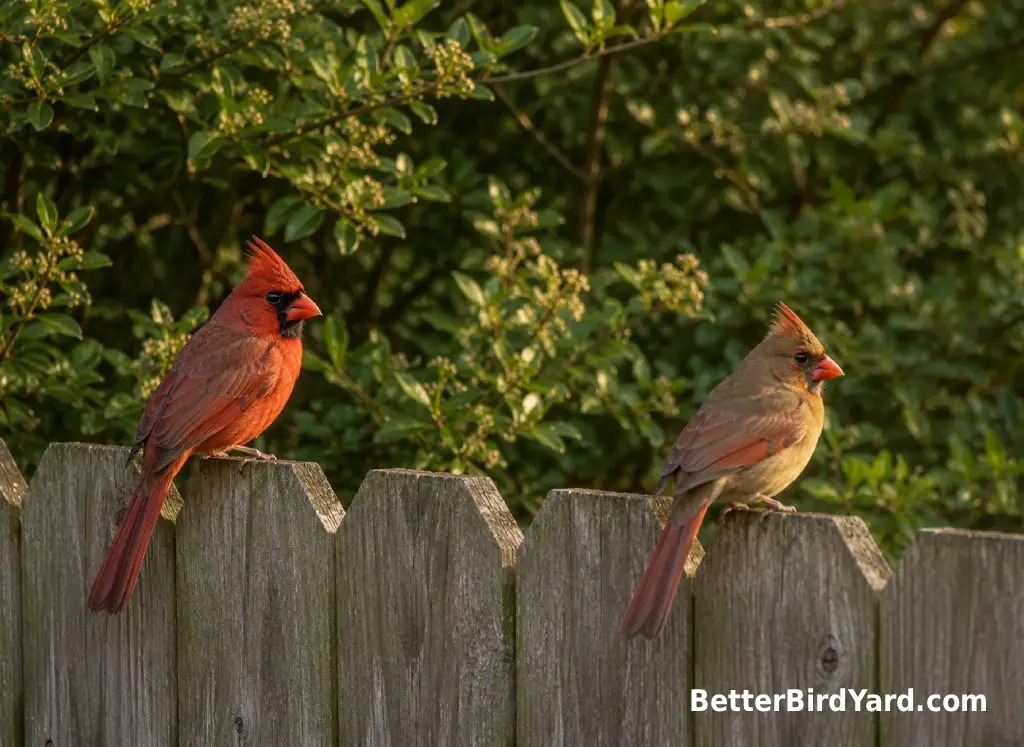
A Northern Cardinal (Cardinalis cardinalis) is a medium-sized songbird with a long tail and a crest that changes the outline of its head. Its deep, cone-shaped bill is short, heavy and reddish orange in adults. The adult male is bright red with a black mask around the bill. The adult female is warm brown with red in the crest, wings and tail.
The crest can stand up sharply or lie flat against the head. Cornell gives a body length of 8.3 to 9.1 inches (21 to 23 cm), a little smaller than an American Robin.
For a first look, run three checks:
- Silhouette: Look for the long tail, the solid body and the head shape, including the crest when you can see it.
- Bill and face: Look for the thick conical bill and the pattern of the face around it.
- Overall fit: Match the plumage to the bird’s likely age or sex, and check that the species lives in your area.
Cornell’s Northern Cardinal identification guide shows male, female and immature birds side by side.
Male, female or juvenile: which cardinal did you see?
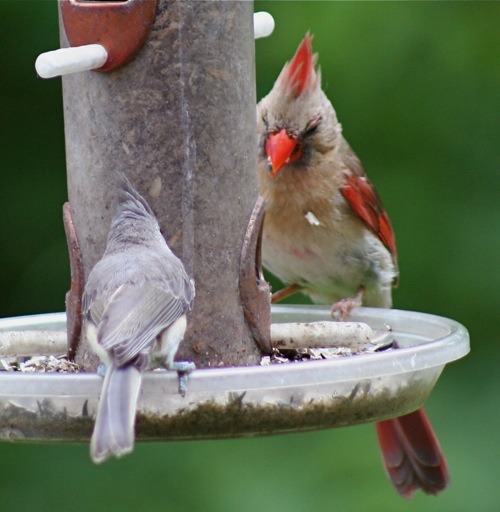
A brown Northern Cardinal is an adult female or a young bird. Adults have reddish-orange bills. Newly fledged juveniles start with dark gray to black bills. The plumage can look similar enough that a partial view leaves you guessing.
| Bird | Plumage | Bill | Useful clue |
|---|---|---|---|
| Adult male | Mostly bright red, with a dark facial mask | Thick and reddish orange | Red body and dark face seen together |
| Adult female | Warm brown, with red in wings, tail, and crest; dark area around the bill | Thick and reddish orange | Brown-and-red adult pattern |
| Juvenile | Generally brownish at first; young males can develop scattered brighter-red feathers during their first molt | Initially gray to black, changing as the bird matures | Dark early bill and transitional plumage |
Feathers are replaced at their own pace, so a hidden or transitional bill leaves age and sex open.
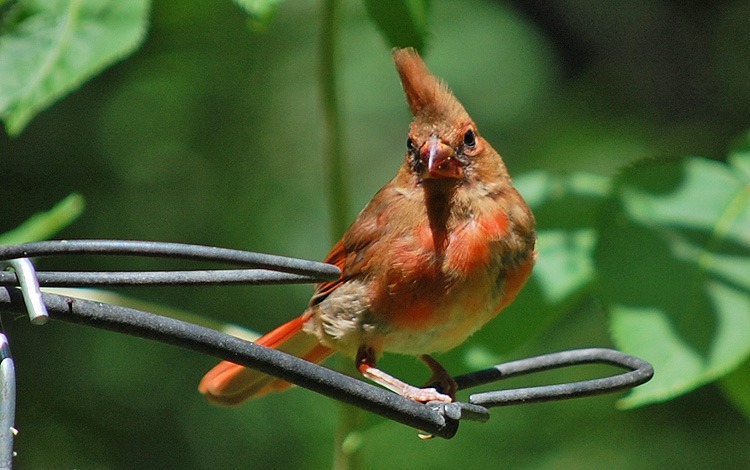
A feeder watcher posted a brief camera view that left the question open:
Took both pics this morning. First is a screenshot from a video. Sorry I don’t have a better pic, they weren’t there long. Second is a cardinal that’s been visiting regularly. I like to imagine he’s giving me the stink eye bc I need to refill the feeder. If this is a juvenile I’ll be tickled pink. I have a few feeders set up to watch birds while I work. This is a new style (to me) of bird feeder and juveniles LOVE it.
In a photo like that, the bill and the developing feathers decide it. If the age marks are hidden, record it as a Northern Cardinal and skip the adult-female or immature label.
Birds that look like Northern Cardinals and how to separate them
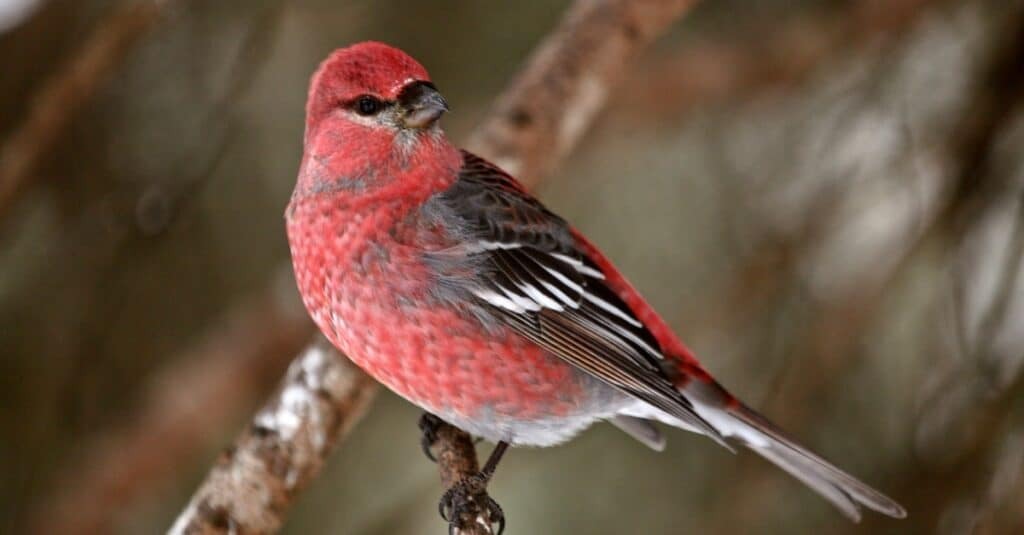
A red body or a pointed crest can belong to another bird. Start with geography and bill shape, then check color. Southwestern comparisons differ from those that help in much of the eastern United States.
| Species | What to examine | Where or when the comparison helps |
|---|---|---|
| Northern Cardinal | Deep, conical reddish adult bill; crest; dark facial pattern | Within its established range |
| Pyrrhuloxia | Grayer body with red accents; short, curved bill that is yellowish in breeding condition and darker or dusky in winter | Desert and scrub settings in the U.S. Southwest |
| Scarlet Tanager | Breeding male has a red body with black wings and tail, without the cardinal’s crest | Adult males in breeding plumage |
| Summer Tanager | Adult male is red throughout, without a cardinal-style black face mask; different bill profile | Adult male plumage and shape |
| Phainopepla | Female is gray with red eyes, a crest, and a slimmer bill | Southwestern sightings |
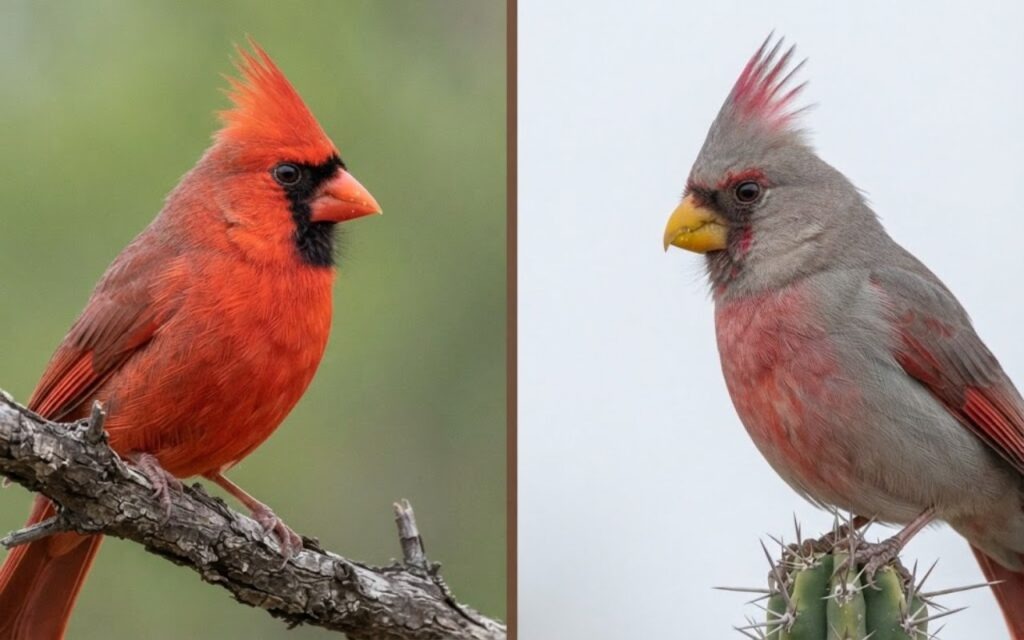
In an Arizona desert wash, think Pyrrhuloxia first. Check the bill shape, because winter darkens the color. A side view of the head helps most.
What Northern Cardinals sound like: songs and calls

Northern Cardinals sing clear, repeated whistles, and both males and females sing. A typical song lasts around two to three seconds and often speeds up toward the end. The metallic chip is a separate call used in several situations.
| Sound | What it indicates | What to listen for |
|---|---|---|
| Repeated clear whistles | A cardinal song | The contour, rhythm and repetition of the phrase |
| Sharp metallic chip | A call used in several situations | Its tone and what the bird is doing |
Some listeners hear the whistles as cheer or birdie. Cornell’s Northern Cardinal sound recordings include examples of songs and calls.

Female song has been studied in the context of nesting and pair communication. In central Kentucky, Ritchison’s 1986 observations and playback work suggested a role in pair bonding and possibly reproductive synchronization.
In Madison, Wisconsin, Halkin’s 1997 study followed 13 Northern Cardinal pairs across 25 nestings over six summers. Near nests, the probability of male food delivery varied with the context of female song responses. For bill shape, plumage and habitat checks, see northern cardinal sounds: songs, calls, and how to tell them apart.
Where Northern Cardinals live and when to look for them
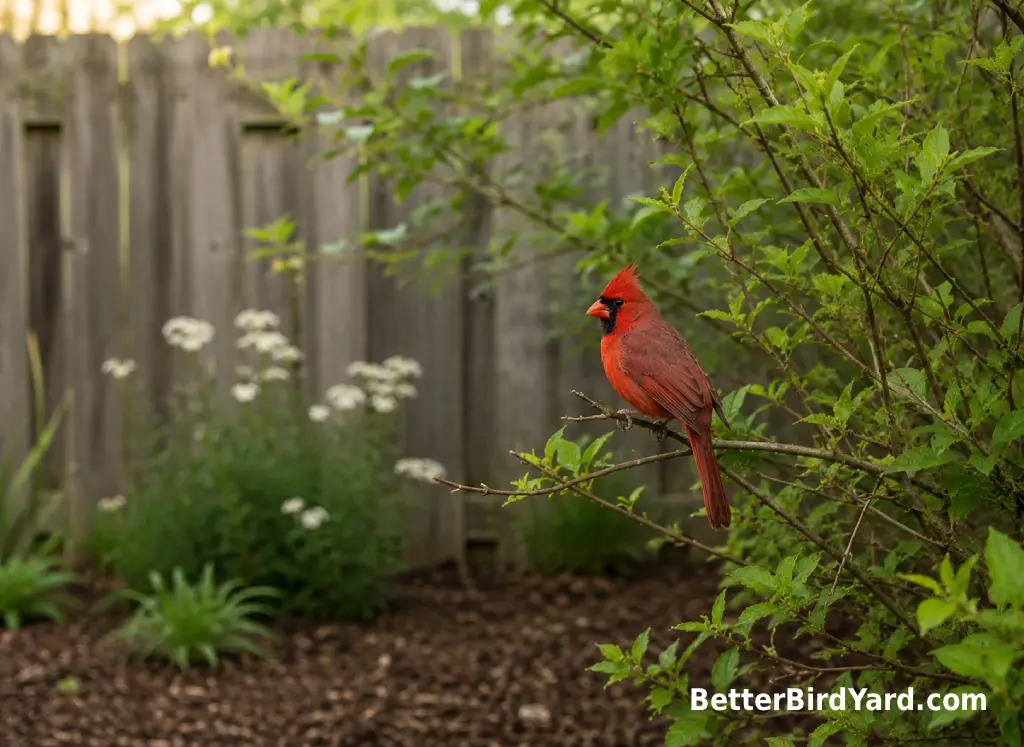
Northern Cardinals are mainly year-round residents within their established range, which covers much of the eastern and central United States and parts of the Southwest. They use woodland edges, hedgerows, overgrown fields, parks and dense backyard shrubs. Some Southwestern populations occupy desert washes and mesquite cover. A bird can stay hidden in vegetation while it sings nearby. Cornell’s Northern Cardinal range map helps you check whether a cardinal fits your location.
Food, nesting and the behavior you may see in a backyard

Northern Cardinals eat seeds, fruit and insects. Their strong bills crack seeds, including black oil sunflower seeds offered at feeders. They also pick up food beneath feeders and forage among low branches.
Males and females sometimes appear together. Courtship feeding, in which one bird passes food directly to another, is documented. If a male dislodges seeds while a female feeds below, describe exactly that. It doesn’t show deliberate sharing or courtship.
Nests are usually hidden in shrubs, saplings or tangled vines. Cornell describes placements typically 1 to 15 feet above the ground.
For plants, food and shelter, see the guide to creating safer backyard bird habitat.
Why a cardinal may look bald, black-headed or unusually scruffy
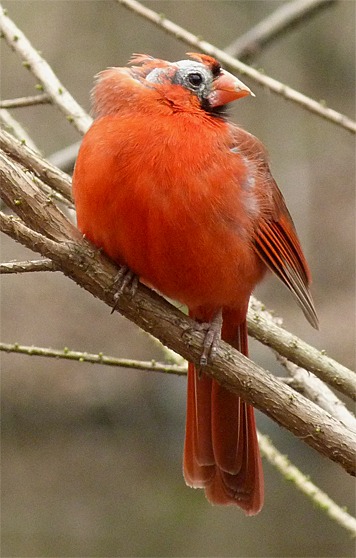
A Northern Cardinal can lose much of its head plumage during molt and look dark-headed or crestless for a while. Cornell FeederWatch describes these striking bald-headed birds, particularly in late summer and fall. Parasites can also cause feather loss.
One observer in southeastern Wisconsin described a bird whose bill looked familiar even though the head didn’t:
SE Wisconsin. This bird looks for all the world like a Northern Cardinal, except that it has so much black on its head and on some of its feathers, especially the back ones. He has the cardinal beak, but no crest. I watched him take sunflowers and feed them to a baby bird sitting on the fence.
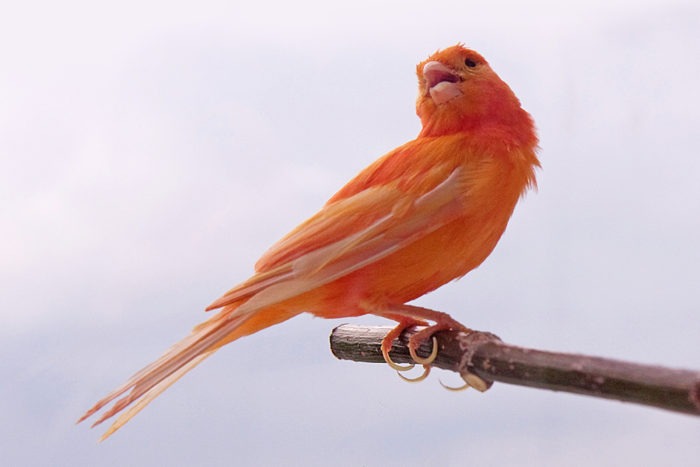
For an unusual bird, note where feathers are missing, whether the bill and tail still match a cardinal, and whether it moves and feeds normally. Watch from a distance. Don’t handle the bird or try to treat it based on a photo.
Why a Northern Cardinal keeps pecking at a window
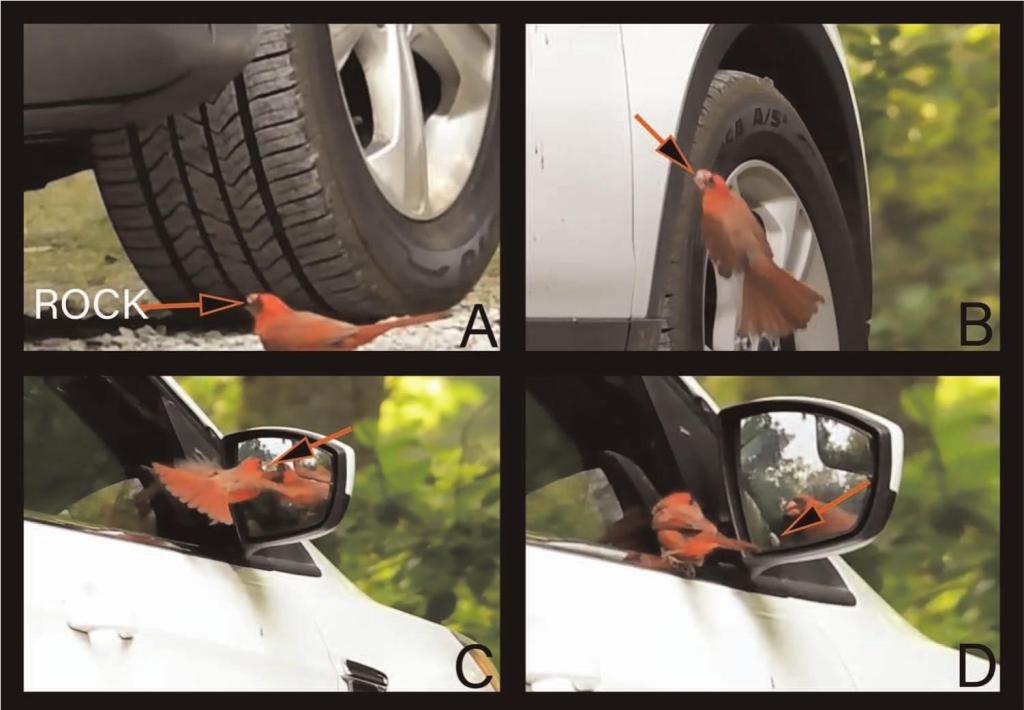
A Northern Cardinal that keeps pecking a window is reacting to its own reflection as a territorial rival. Both males and females do it, and a bird often moves from pane to pane when each one shows a reflection.
An office worker in southern West Virginia described months of repeated contact and worry about injury:
I need help with an angry cardinal at my office building. For months, it has been coming to my window and it just pecks the window for a few minutes then goes to another window. It does this on and off all day, every single day. Sometimes, he just flies straight into the glass. It was cute at first but now the glass pecking is getting on everyone’s nerves. My biggest concern is that the bird will injure itself by flying into the window (I enjoy watching the bird fly around and visiting me every day lol). We have tried placing owls, aluminum pans, etc. around but nothing is working, he loves the windows.
To stop reflection pecking, block or obscure the reflected image on the outside of the affected pane with a suitable covering, exterior curtain or film.

A fast collision is a separate danger. American Bird Conservancy recommends visible exterior treatments that let birds recognize glass as a barrier. Its home guidance calls for patterns with openings no larger than 2 by 2 inches. Dots should measure at least 1/4 inch across and stripes at least 1/8 inch wide, and the markings should be visible from about 10 feet. Suitable exterior screens are another option. American Bird Conservancy’s window guidance explains these collision-prevention measures.
A bird that flies away after a strike can still be injured. If you find an injured one, ask a qualified wildlife rehabilitator for advice. Don’t trap or relocate a territorial cardinal to stop the pecking.
The guide to preventing bird window strikes covers the wider collision problem.
What to do when your cardinal identification is uncertain
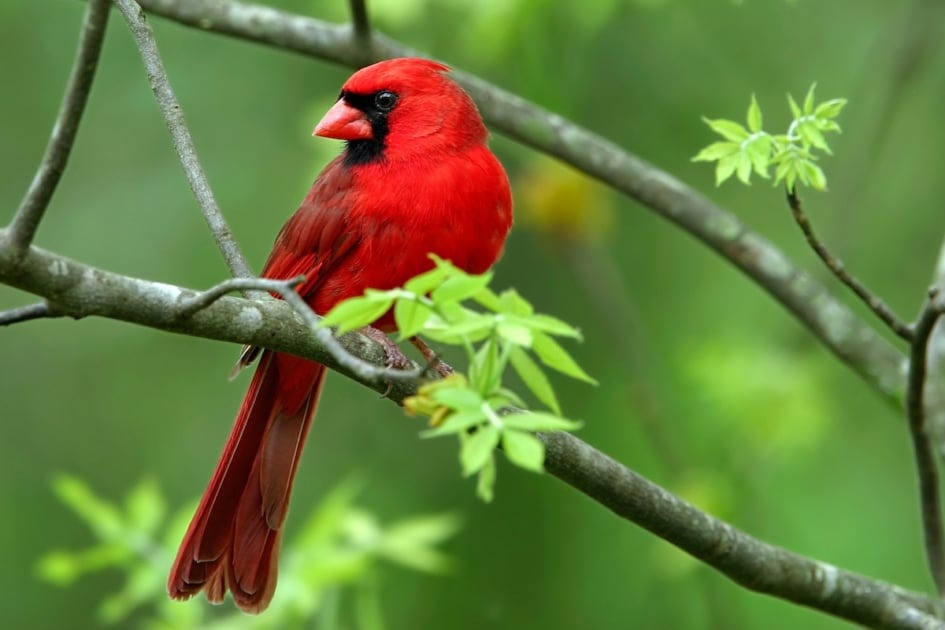
A fleeting view can hide the bill, and a whistle from thick cover shows no plumage at all. Write down the details while they’re fresh.
- Place and date: Record the state or region, habitat, and when the sighting happened.
- Field marks and sounds: Note the bill shape and color, crest, face, tail, plumage, behavior, and any audible phrase.
- Original record: Save a photograph, video frame, or audio clip when available, including observations that challenge your initial guess.
Check those notes against field-guide illustrations and range information. When several candidates remain, the method for identifying birds by shape, color, behavior, and habitat helps. Use an app’s suggestion as a starting guess, then check it against the bill, plumage and location you observed.