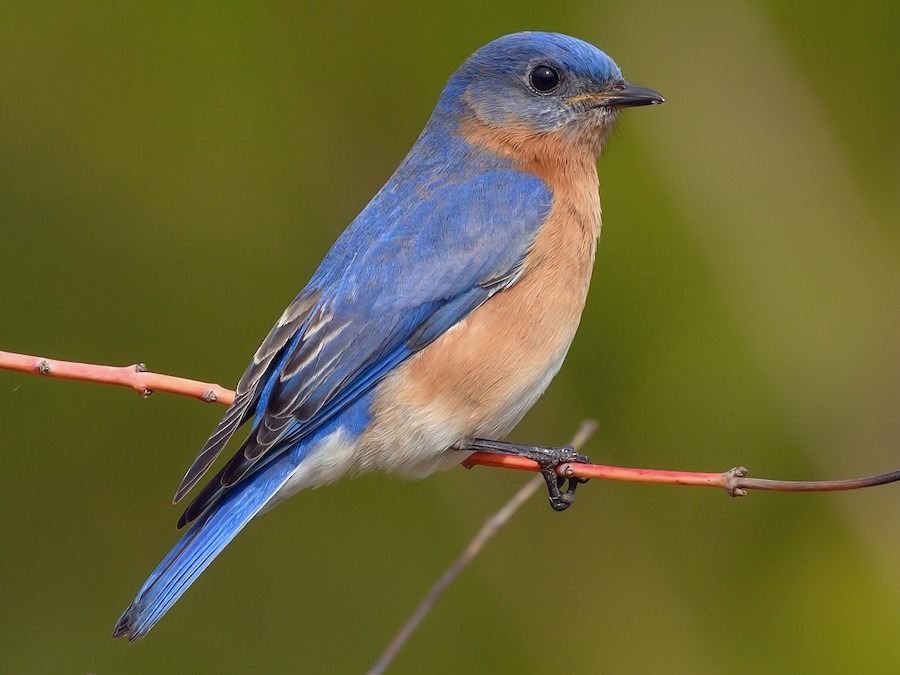
Look for a small, plump thrush with a rounded head, a short straight bill and blue on the wings and tail. Males have a rusty breast. Females are grayer with a softer orange-brown breast, and young birds are spotted. They live mainly in eastern North America and hunt from low perches such as fence posts.
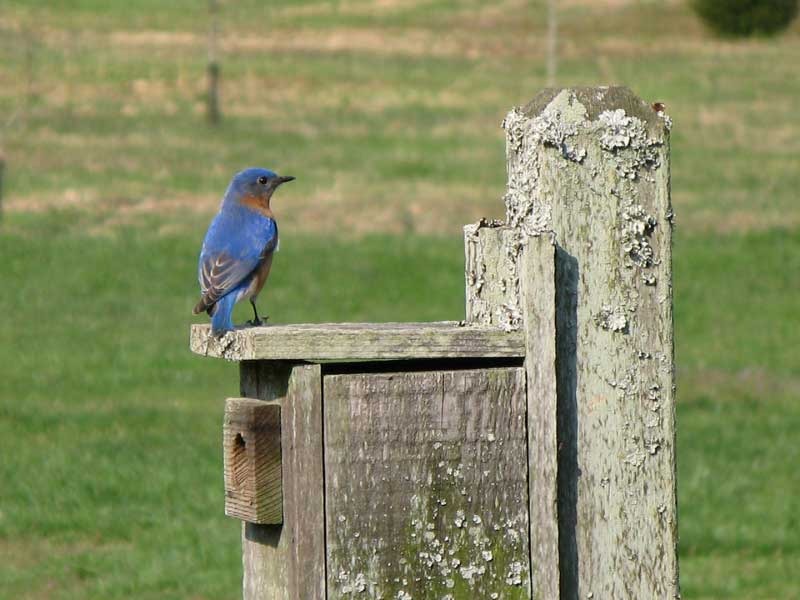
An Eastern Bluebird looks brilliant in full sun and muted in shade. A male on a fence post shows bright blue wings and a rusty breast, while a female nearby looks mostly gray at first glance. Shape and behavior tie the two together.
How to Identify an Eastern Bluebird: Male, Female, and Juvenile
Eastern Bluebirds are small thrushes with rounded heads, plump bodies, large eyes and short, straight bills. Perched, they look compact, with wings folded along the back and a short-looking tail.
Cornell’s Eastern Bluebird identification guide gives a length of 6.3 to 8.3 inches and a wingspan of 9.8 to 12.6 inches. Those numbers help with scale, but they are hard to judge on a lone bird on a distant branch.
| Bird | Upperparts | Throat and breast | Extra clue |
|---|---|---|---|
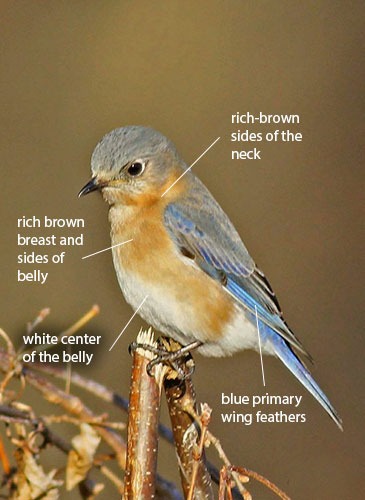
| Adult male | Deep blue head, back, wings and tail | Rusty-orange or brick-red throat and breast; whitish belly | Blue can appear dull in poor light |
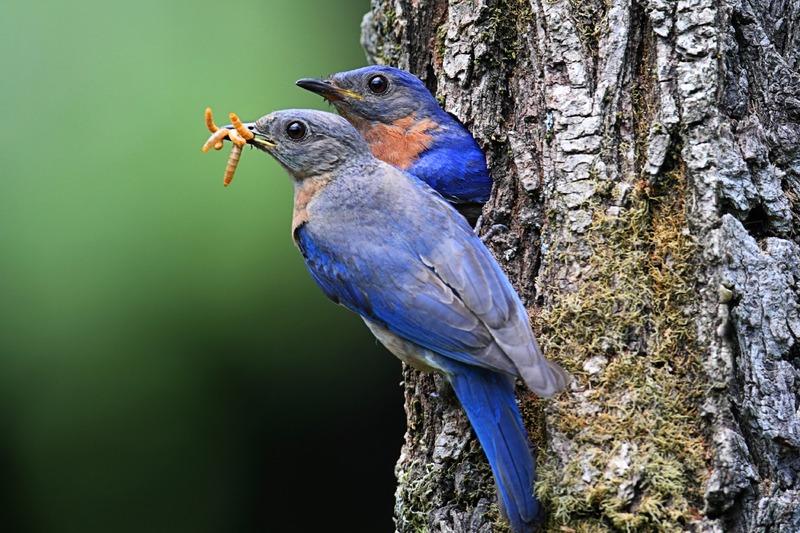
| Adult female | Grayish-brown head and back, with blue wings and tail | Softer orange-brown breast | Often much less colorful than a male |
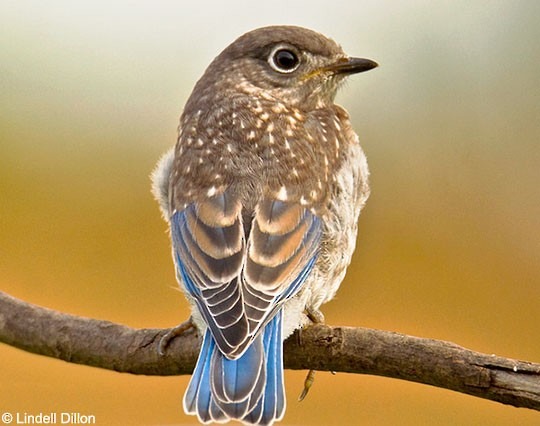
| Juvenile | Brownish or grayish with developing blue on wings and tail | Spotted breast and body plumage | Spots distinguish young birds from typical adults |
A female over a lawn can look like a plain gray bird. Blue in her folded wings or tail gives her away, and the orange breast shows only when she turns.
A recently fledged bird has obvious spots across its back and breast, so it looks very different from the adult male. Check the rounded head and short bill, and match the plumage to the bird’s apparent age.
Eastern Bluebird vs. Western Bluebird, Mountain Bluebird, and Indigo Bunting
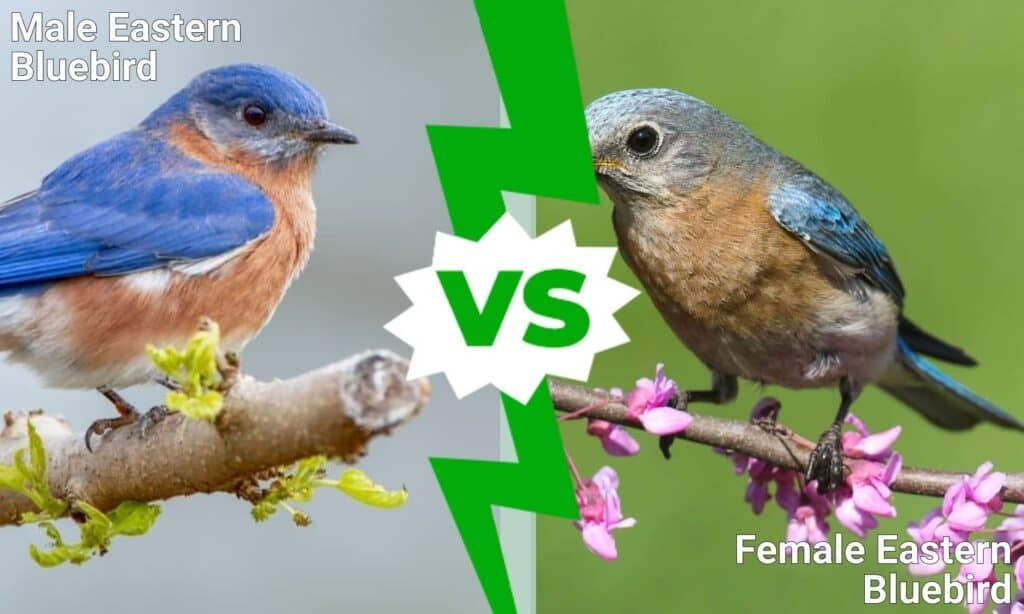
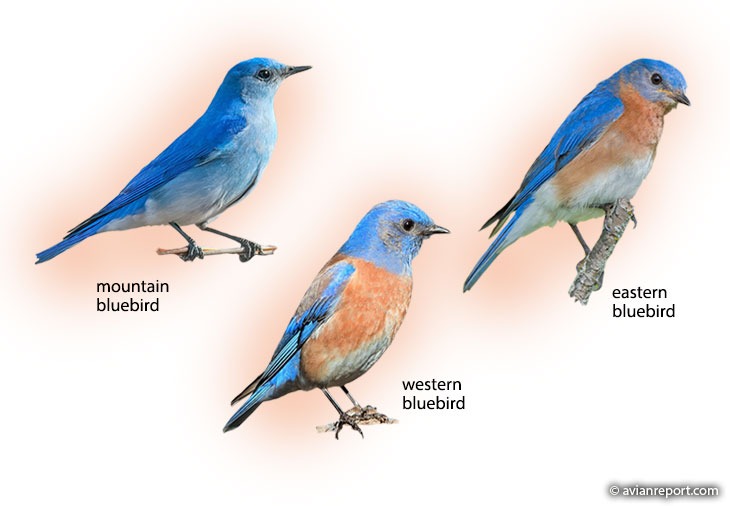
Several North American species look convincingly blue from a distance. Compare the same features in each: bill shape, throat and breast pattern, proportions and range.
| Species | Throat and breast | Bill and body shape | Geographic context |
|---|---|---|---|
| Eastern Bluebird | Adult male has a rusty throat and breast; females are duller | Compact thrush with a short, straight bill | Primarily eastern North America |
| Western Bluebird | Adult male has a blue throat and rusty-orange breast; chestnut color reaches onto upper back and shoulders | Small bluebird with a thin, straight bill | Western North America |
| Mountain Bluebird | Adult male is mostly blue, without the broad rusty breast of a male Eastern Bluebird | Small, stocky thrush with a rounded head and thin, straight bill | Western open-country habitats |
| Indigo Bunting | Adult male intensely blue, without a rusty bluebird-style breast | Thicker, conical seed-eating bill | Range and season help as supporting clues |
Throat color is the best way to separate adult male Eastern and Western Bluebirds.
Blue Jays are much larger, with crests and the build of a corvid, so they are easy to separate from bluebirds. To tell the two apart in detail, see how to distinguish Blue Jays from bluebirds.
For a doubtful sighting, compare two or three species side by side, using photos of the same sex and age. A distant female or a partial view can fit more than one species, especially where ranges overlap.
Where Eastern Bluebirds Live and When to Look
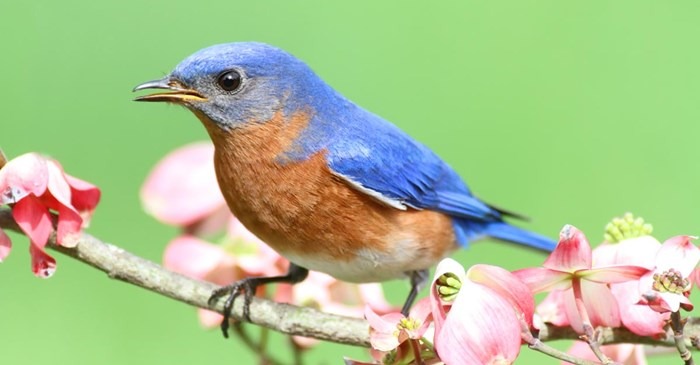
Eastern Bluebirds favor open and semi-open places where they can perch above the ground and spot insects below. Pastures, agricultural edges, parks, lawns and golf courses give them open feeding space with scattered trees.
A low fence post, wire or branch makes a good hunting perch. A bluebird sits quietly watching the grass, drops to the ground after an insect, then returns to its perch.
Natural tree holes, including old woodpecker cavities, and nest boxes attract cavity-nesting birds where the surrounding habitat suits them. For native plants, shallow water and feeder upkeep, see how to make a backyard more attractive and safer for birds.
Many southern Eastern Bluebird populations stay in their regions all year, while birds farther north move with the seasons. A winter sighting therefore needs regional context.
The eBird Status and Trends range map models seasonal occurrence from observations made from 2009 through 2023, for its 2023 estimate. It shows historical distribution and cannot tell you whether a bird is at a particular address.
Before an outing, check a dated regional range resource or local sightings for the season, then look for open habitat with low perches and nearby tree cover.
What Eastern Bluebirds Eat: Insects, Berries, and Optional Mealworms
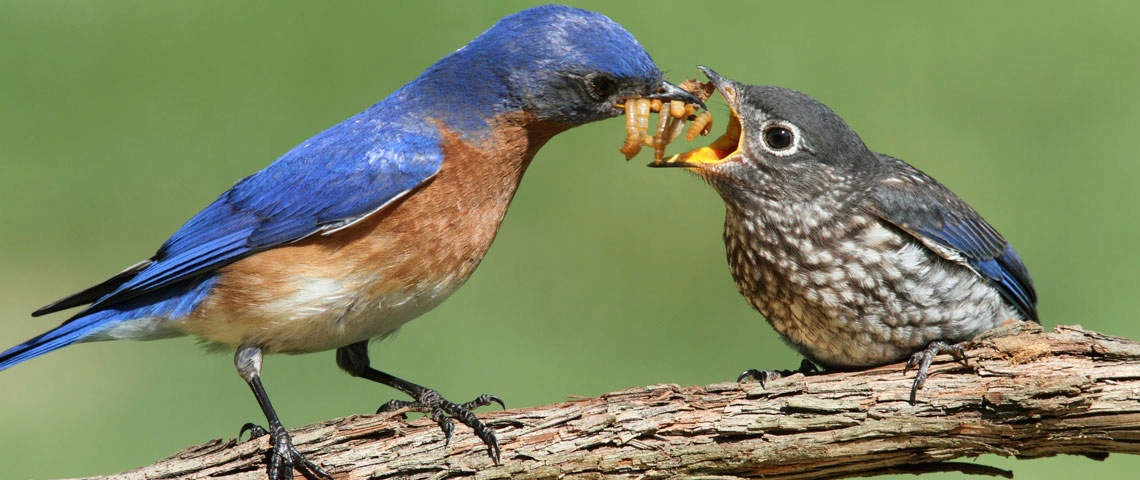
Eastern Bluebirds feed heavily on invertebrates for much of the year. Cornell lists caterpillars, beetles, crickets, grasshoppers and spiders among the prey they take near the ground.
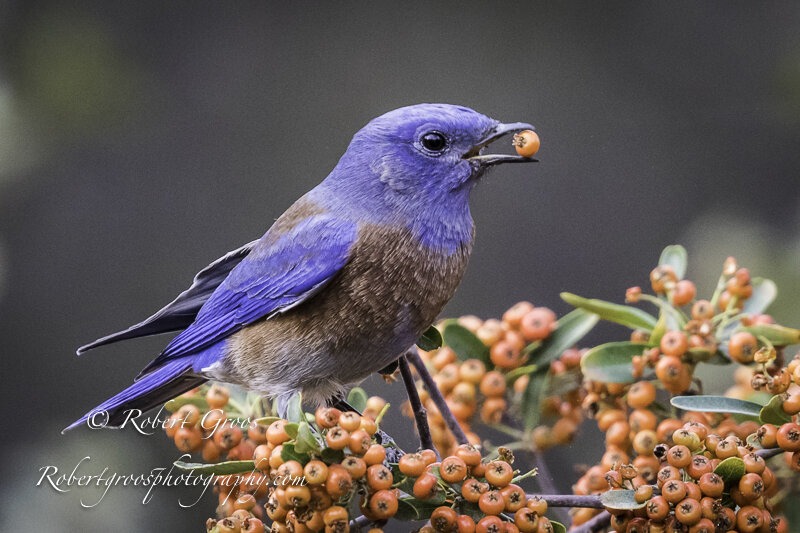
In cooler seasons, wild fruit matters more. Recorded foods include sumac, blueberries, black cherry, holly, dogwood, hackberry and juniper.
A bird taking berries from a shrub or searching a lawn for insects is using natural food. Conventional seed feeders attract other backyard birds and draw little interest from bluebirds.
Some people offer supplemental mealworms, and individual birds respond differently. One backyard observer trying to attract bluebirds already using a nest box reported this problem:
After many attempts at feeding dried mealworms, the birds just aren’t interested in them and I’ve read that starting with live mealworms then switching to dried can help so I finally purchased them online and they get here Saturday. I am particularly trying to appeal to my bluebirds as they finally started nesting in the birdhouse I put up!
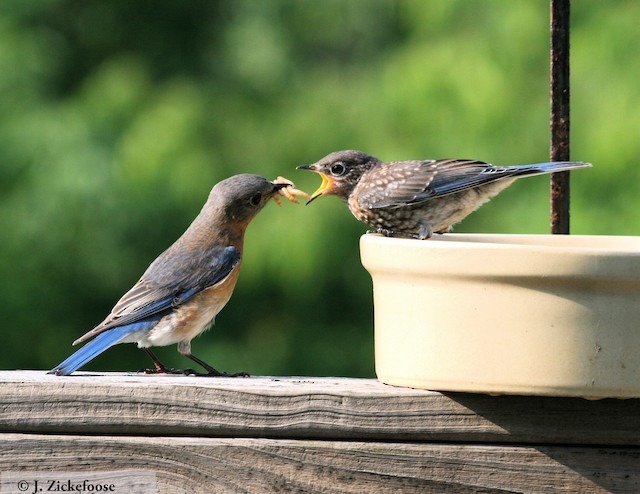
To see what a bluebird eats in your yard, watch where it finds food. A quick drop into the grass means ground prey. A visit to a fruiting branch shows the berry side of its diet.
Eastern Bluebird Song, Calls, and Everyday Behavior
Eastern Bluebird song is a soft, low-pitched warble in several phrases, with a typical example lasting about two seconds. Contact notes are short, and alarm chatter is sharper.
When a bird calls from the edge of an open field with its breast hidden, compare the sound with labeled recordings in Cornell’s Eastern Bluebird song and call guide, and watch its behavior as well as its voice. Background noise and partial recordings can leave a sound-only identification uncertain.
Eastern Bluebird Nesting: Cavities, Courtship, Eggs, and Young
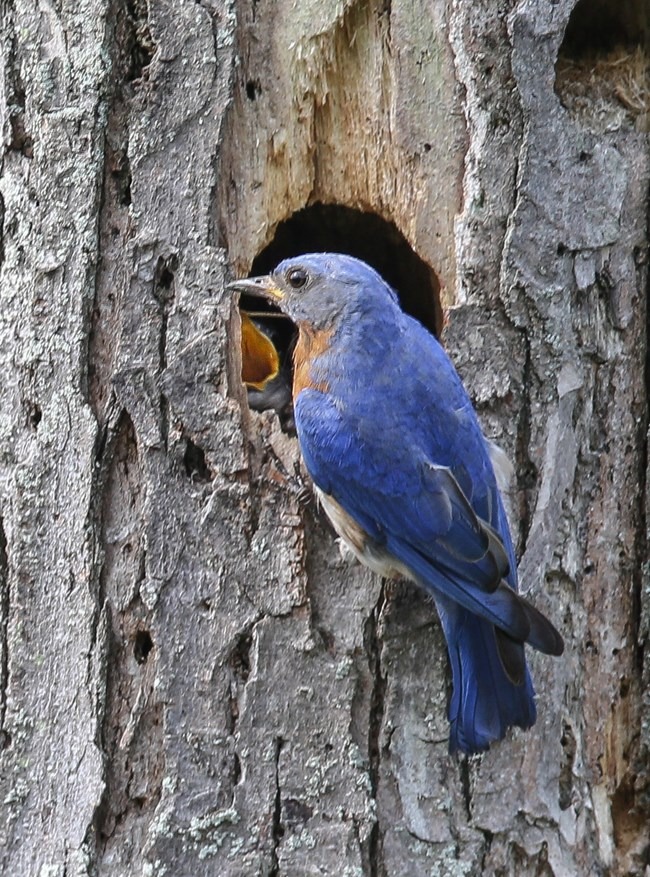
Eastern Bluebirds nest in cavities: natural holes in trees, abandoned woodpecker cavities and suitably placed nest boxes.
A male investigates a prospective cavity and displays near its entrance, fluttering his wings or carrying nest material in and out. The female does most of the nest construction, arranging grasses and sometimes pine needles into a cup and lining it with finer material. Nest building and egg laying follow the display.
What the nesting stages mean
Cornell supplies the figures below.
| Stage | What an observer might notice | Detail |
|---|---|---|
| Site investigation | Birds visiting or displaying near a cavity | A prospective site is being examined |
| Nest construction | Female carrying and arranging grasses | Nest building is underway |
| Eggs | Eggs present in a completed nest | 2 to 7 eggs per clutch |
| Incubation | Adult attending a clutch | 11 to 19 days |
| Nestling development | Adults bringing food to young | 17 to 21 days in the nest |
| Fledging | Young birds leaving the cavity | Timing varies with the nesting attempt |
Bluebirds raise one to three broods. All figures are species-level ranges, and timing varies by region and season.
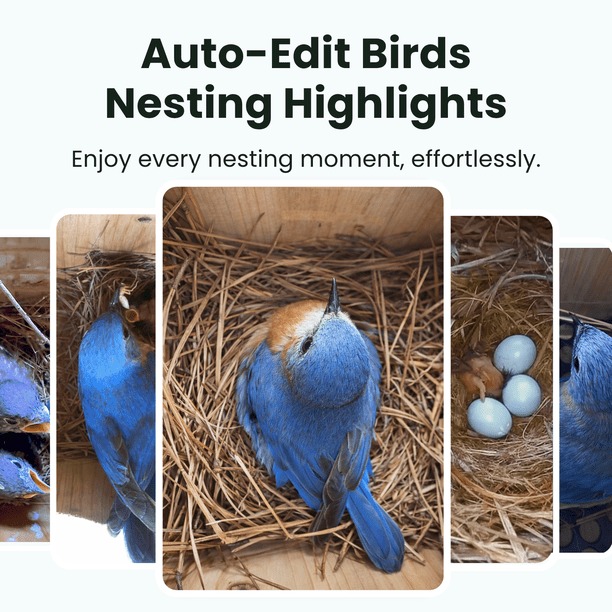
Nest ownership is not always clear. A nest-box owner described a box visited by bluebirds and later by House Sparrows:
I put up some blue bird houses this year, and one of them attracted blue birds (yay!). However, I noticed that some house sparrows have been hanging out in there. I checked the nest to see if it was a blue bird nest or a house sparrow nest, and it matches the description of a typical bluebird nest. However, there are definitely house sparrow feathers in it. Would it be best to throw out the nest to deter the house sparrows, since it seems like they have chased off the blue birds?
A feather and an earlier visit do not show which species occupies the nest. For plumage, range and song, check the North American bird species profiles.
Can Eastern Bluebird eggs be white?Yes. The eggs are usually pale blue, but Cornell records occasional white eggs. Color alone will not tell you which species owns a nest.
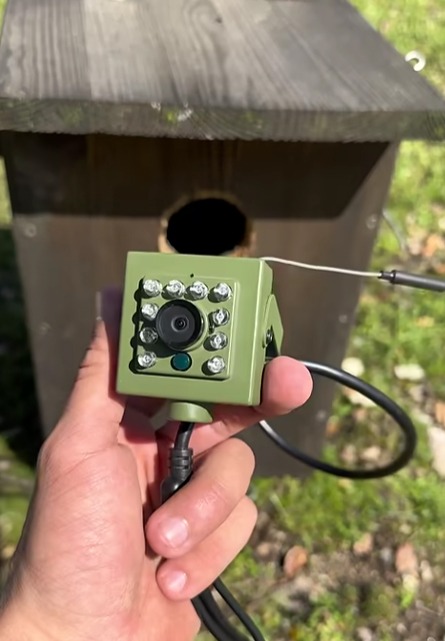
From a safe distance, note which birds enter and leave a box, who carries nesting material and whether adults bring food into the cavity. These behaviors separate site investigation, construction and care of young.
When Another Bird Uses the Box: Observation and Nest Safety
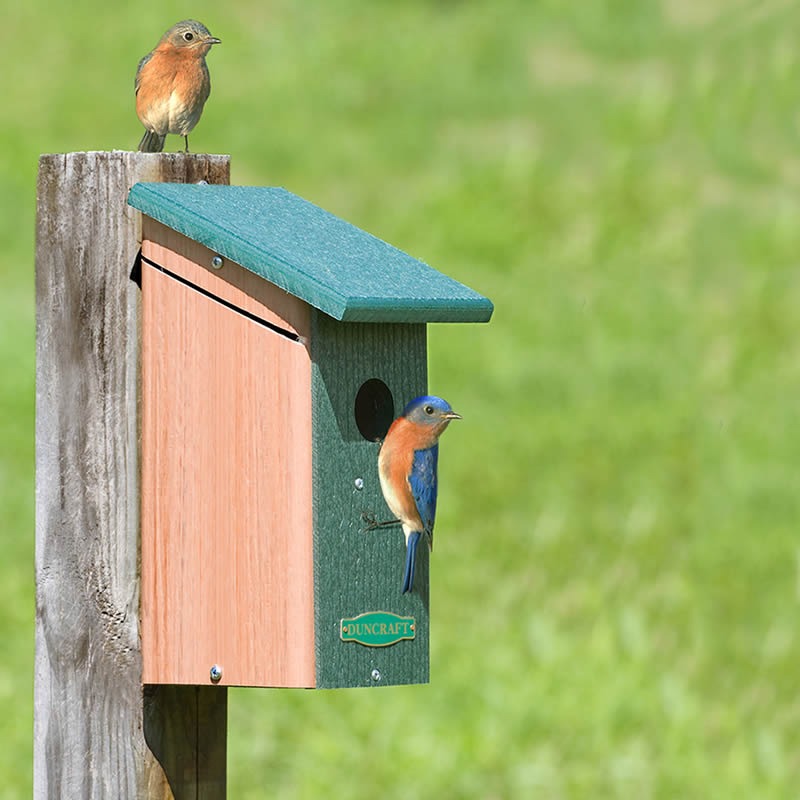
House Sparrows and European Starlings compete with Eastern Bluebirds for nesting cavities. These introduced birds use boxes meant for native cavity-nesting species, including bluebirds.
Cornell NestWatch provides species-specific guidance on House Sparrows and European Starlings. Which birds occupy a box, and whether it holds eggs or young, decides what you do next.
Under the Migratory Bird Treaty Act, covered native birds and their nests have federal protection. Destroying an active protected nest with eggs or chicks, or one with dependent young, generally requires authorization.
House Sparrows and European Starlings are treated differently under that law. Inactive empty nests, possession of nest material and state or local rules raise separate issues, so identify the species and nest status before you act.
Do not remove a possibly active protected nest, move eggs or attempt harmful control based on a brief sighting or an unidentified feather.
Before handling any nest, check the U.S. Fish and Wildlife Service guidance on bird nests, the NestWatch species information or a qualified local wildlife authority.
How to Confirm an Uncertain Eastern Bluebird Sighting
Take a grayish bird photographed from behind in a park. Blue shows in the wings, but the breast is hidden. A female Eastern Bluebird fits, though a key field mark is missing. A spotted juvenile darting past, or a bluebird-like bird outside the region’s seasonal pattern, leaves the same gap.
Write down the bird’s shape, visible plumage, any sound, its behavior and the habitat. An original photograph or a responsibly obtained audio recording preserves features that were hard to judge in the moment.
For a birder in the United States, Eastern Bluebird is the strongest identification when shape, plumage, behavior and local context agree. If a key field mark conflicts, keep the identification tentative. Record the date, place, habitat and marks you actually saw.