Call it a Black-capped Chickadee when the black cap, throat bib and white cheeks match, and your location and the sounds fit. Near the Carolina Chickadee contact zone, those clues may leave the species open. Record what you saw or heard, and the identification you can support.
How to recognize a Black-capped Chickadee
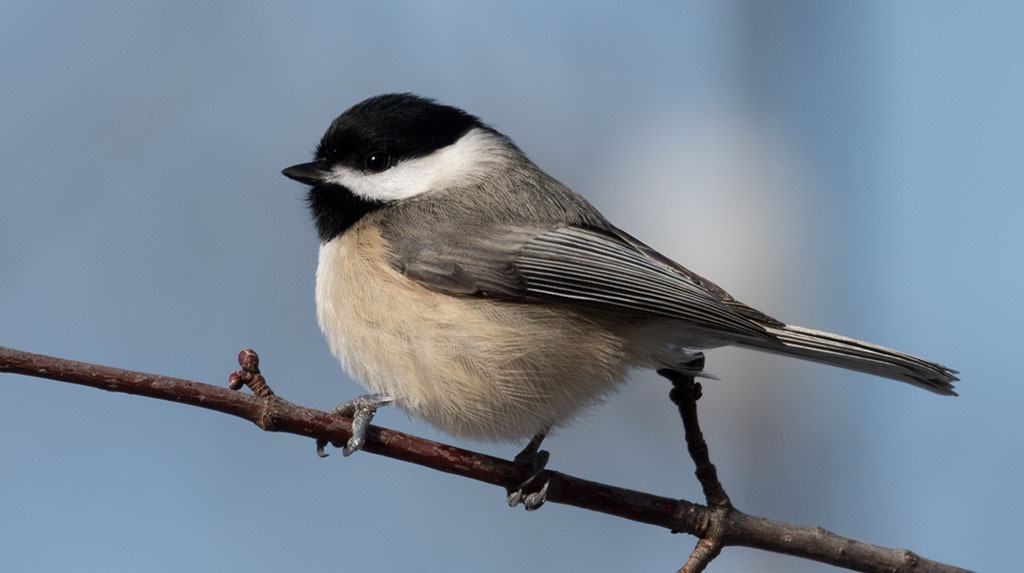
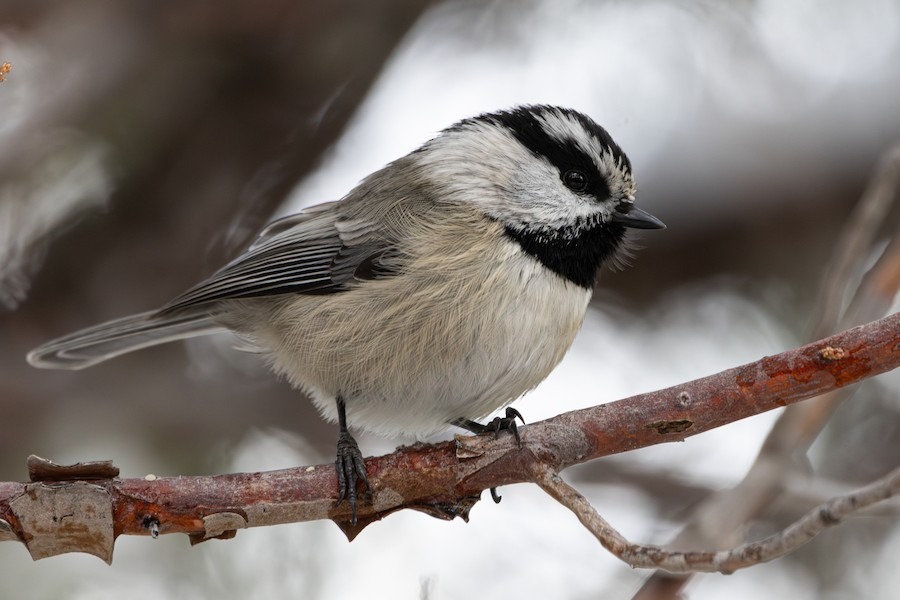
A Black-capped Chickadee (Poecile atricapillus) is a compact songbird with a rounded body, short bill and relatively long tail. Its black crown and throat bib frame bright white cheeks. Gray upperparts, pale feather edging on the wings and soft buff sides complete the look. The species belongs to the tit family, Paridae.
A chickadee may turn toward you for an instant, show that sharp white cheek, then slip behind a branch. That glimpse tells you it’s a chickadee. Naming the species can take a better view.
| Feature | Typical Black-capped appearance | Useful observation |
|---|---|---|
| Head | Black cap and bib with white cheeks | Look for a distinct pale cheek between the dark patches |
| Wings and back | Gray upperparts with pale wing-feather edges | Study the folded wing in even light |
| Sides | Buff wash below the wings | Compare the flank against the gray back |
| Shape | Rounded body, short bill, relatively long tail | Use proportions when the bird is moving |
| Size | About 12 to 15 cm (4.7 to 5.9 in) long | Overall scale and proportions |
Cornell gives a typical weight of 9 to 14 g (0.3 to 0.5 oz). Males and females look broadly alike, so cap darkness and bib shape are poor tests for sex.
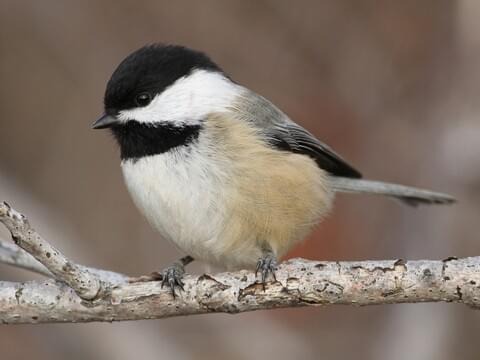
For a photograph, label the cap, bib, cheeks, folded wings, flanks and tail as “observed,” “not visible” or “uncertain.” A partly hidden wing goes under “not visible,” even if an illustration shows the mark clearly.
For the general method behind this kind of observation, see the four keys to bird identification. Cornell’s Black-capped Chickadee identification guide provides comparative field photographs.
Where Black-capped Chickadees live and when range matters
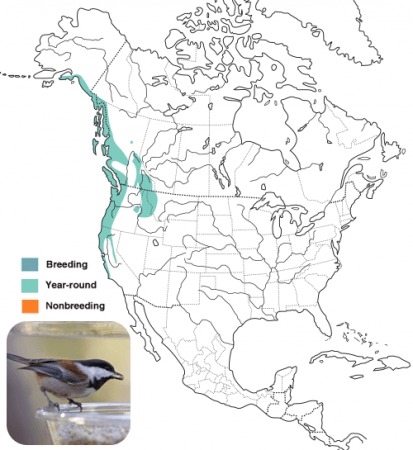
Black-capped Chickadees occur across much of Canada and the northern United States, generally as residents. Local distribution depends on region, habitat and elevation, and some birds move in winter.
Farther south in the eastern United States, a similarly marked bird may be a Carolina Chickadee. Their ranges meet in parts of the eastern and central country, so a broad state-level map tells you little about a single bird.
Research shows this contact zone shifts. A 2025 Evolution Letters genomic study analyzed 259 birds from eastern and central transects and reported differing patterns of hybrid-zone movement.
Audubon’s regional description traces a broad contact corridor from New Jersey toward Kansas. For a bird near that corridor, a recent local map helps more than the corridor’s endpoints. The eBird Status and Trends abundance map displays modeled distribution estimates, so check its geographic scale and data period.
Black-capped vs Carolina Chickadee: the confusing overlap
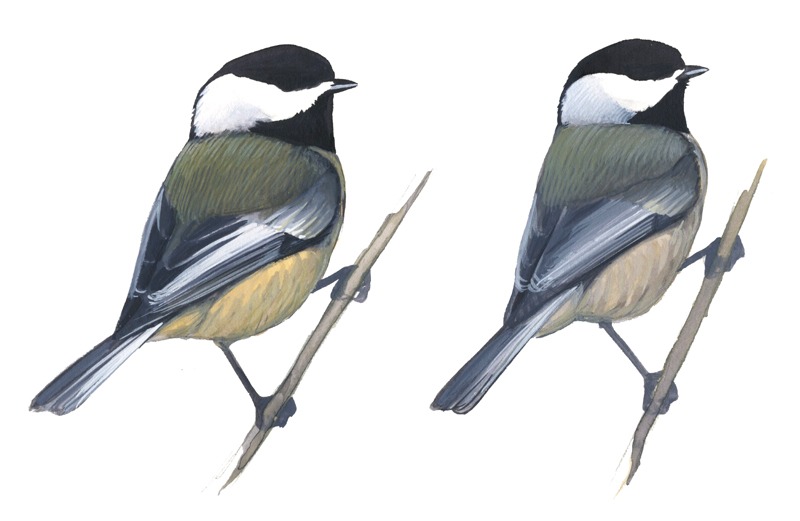
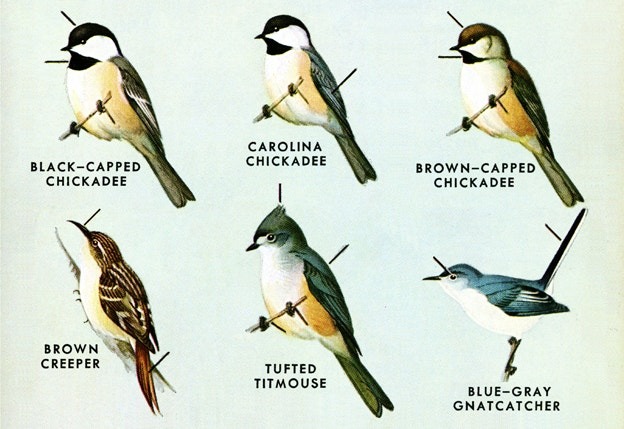
The Carolina Chickadee (Poecile carolinensis) is the Black-capped Chickadee’s most important lookalike in the eastern United States. Both have black crowns and bibs, white cheeks and gray bodies, so the head pattern often identifies the group before it identifies the species.
| Evidence | Black-capped tendency | Carolina tendency | What complicates it |
|---|---|---|---|
| Folded wing | Often stronger pale edging | Often subtler edging | Feather wear, light, overlapping appearances |
| Flanks | Often warmer buff | Often paler or less buff | Lighting and individual variation |
| Head | Black cap and bib, white cheeks | Similar pattern | Little separation from the face alone |
| Song and calls | Typical two-note fee-bee whistle | Classic fee-bee-fee-bay whistle; other patterns occur | Learned songs, variable repertoires and contact-zone overlap |
Wing edging is easiest to compare on fresh plumage in fall and winter. By late spring and early summer, fading and worn feather edges make the difference harder to see. When the head fits both species, a clear view of the folded wing is the most useful check, along with the flank color.
Black-capped and Carolina Chickadees interbreed where their ranges meet, and learned vocalizations complicate the picture. An unusual voice or an intermediate-looking bird may stay unresolved in the field.
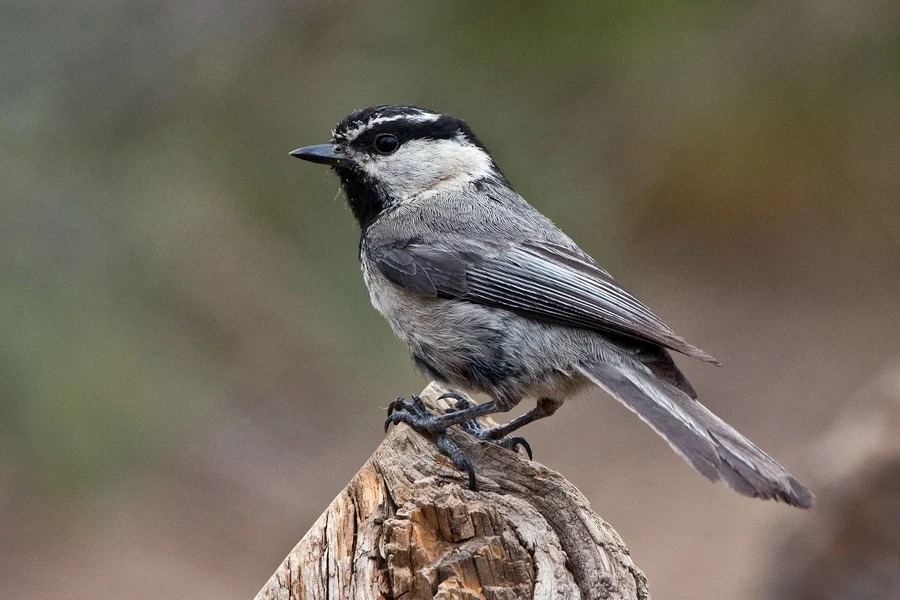
The detailed pairwise field marks belong in the Black-capped versus Carolina Chickadee comparison. Mountain, Boreal and Chestnut-backed Chickadees are additional lookalikes in appropriate western or northern regions.
For specialist discussion of these visual and vocal differences, see Audubon’s identification comparison.
What a Black-capped Chickadee sounds like
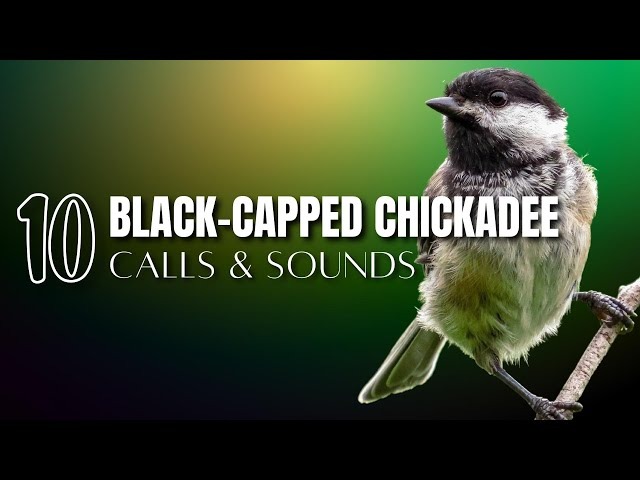
Two familiar sounds are a clear, whistled fee-bee song and a more variable chick-a-dee call. The whistle is simple and musical. Calls can hold changing sequences of short notes.
If you recorded only the string of quick notes, you have evidence of that call. A whistle you heard but didn’t record leaves nothing to compare.
In a contact area, some birds learn vocal patterns associated with the other species, and hybridization adds another complication.
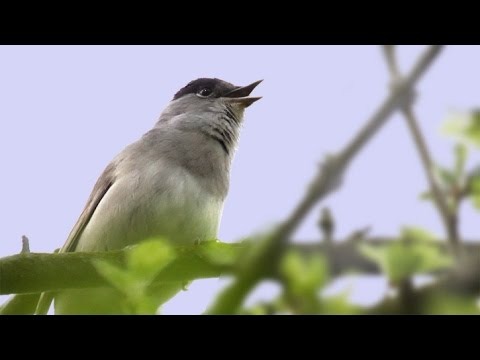
Chickadee calls also convey information about threats. In a 2005 Science study, Templeton and colleagues examined alarm-call variation in controlled presentations involving 15 predator species. The findings associate call structure with predator characteristics.
Enjoy naturally occurring vocalizations without using playback to provoke responses. The American Birding Association’s ethics guidance emphasizes minimizing disturbance, especially around sensitive birds and nesting activity.
How to verify a chickadee when your photo or Merlin result disagrees
Merlin Sound ID suggests candidates from the audio it detects. Cornell’s Merlin Sound ID guidance describes the suggestions as leads for you to evaluate. If different calls produce different species suggestions, weigh them against location, visible marks and the original sounds.
One birder in south-central Pennsylvania described the difficulty in an April 2024 post.
I found a chickadee while birding (couldn’t get a picture unfortunately) in south-central PA in an area basically right in the hybrid zone whose longer calls registered in Merlin as Black-capped Chickadee but whose shorter chips registered as Carolina Chickadee. I usually don’t do playback when birding, but decided to try, and the individual responded territorially to both Black-capped and the Carolina Chickadee songs. Does anyone happen to know if this is enough evidence to suspect a hybrid, or if the individual is more likely to be a Black-capped Chickadee whose chips register weird in Merlin and who’s learned to react to both species songs because of proximity?
Misclassification, an incomplete recording, vocal learning and hybridization could each explain it.
| What you have | How to interpret it | Defensible result |
|---|---|---|
| Clear field marks, plausible location and consistent sound | Independent cues support one species | Species-level identification may be reasonable |
| Contact-area location and conflicting sound suggestions | The evidence leaves an important distinction open | Species unresolved |
| Head-only photo, no visible wing detail or recording | Group appearance is visible, separating detail is missing | Broader chickadee identification |
| Sound-only observation with a Merlin suggestion | Compare the song or call with reference audio and geographic context | Sound can support a species ID; an unchecked app suggestion remains provisional |
For a single observation, gather the date and place, the field marks you saw, the original audio if you have it, and the competing species. If they point to one bird, name it. If they conflict in a contact area, leave the species open.
Habitats, flocks and everyday behavior
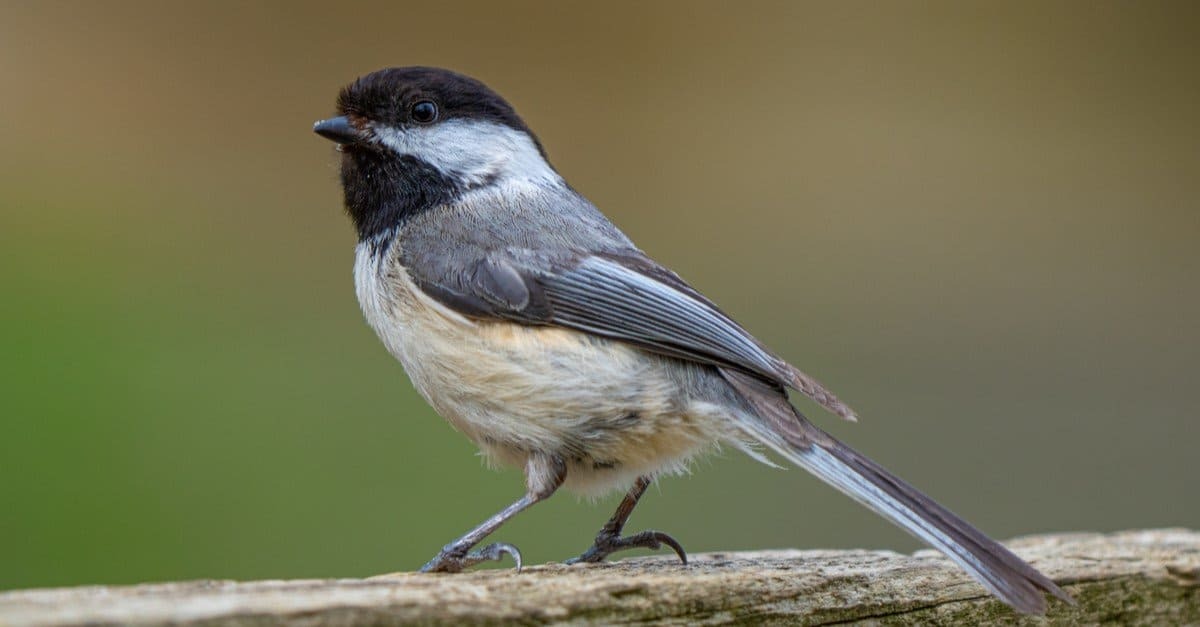
Within its range, a Black-capped Chickadee forages actively among branches and twigs in woods and tree-filled neighborhoods. In winter it may join mixed-species foraging flocks, moving through cover with other small birds. Watch its posture, branch use and companions from a respectful distance.
What Black-capped Chickadees eat and why they carry food away
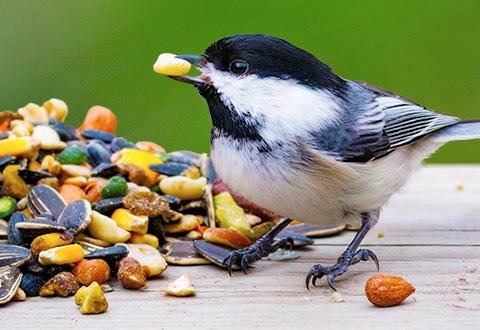
Black-capped Chickadees eat natural foods, including seeds and invertebrates. They also visit feeders for sunflower seeds and suet.
A bird may take a single seed and leave the feeder almost at once. It could settle under cover to eat, or it could hide the food to retrieve later. That second behavior is called food caching and is part of this species’ documented natural history.
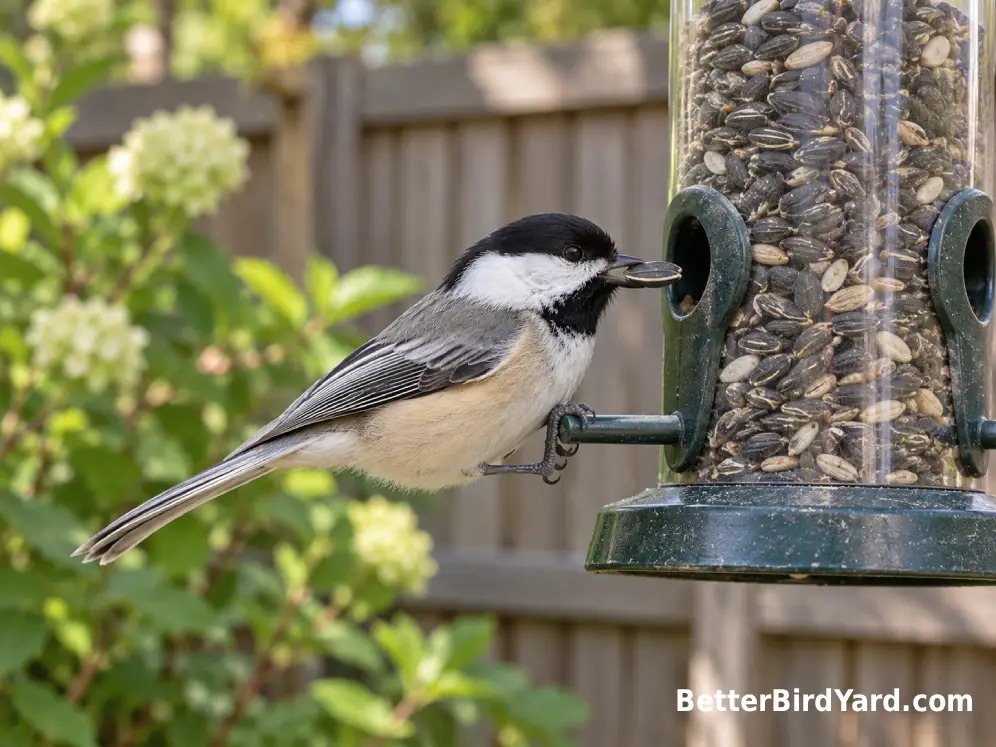
A chickadee grabs a sunflower seed and vanishes into the twigs. If it comes back out and tucks the seed somewhere, that’s a cache. If it stays out of sight, you can’t tell where the seed went.
On another visit, watch where the bird goes after taking food and whether it eats or hides it. Keep the feeder clean; the guide to cleaning backyard feeders covers how.
Nesting in cavities and watching young birds
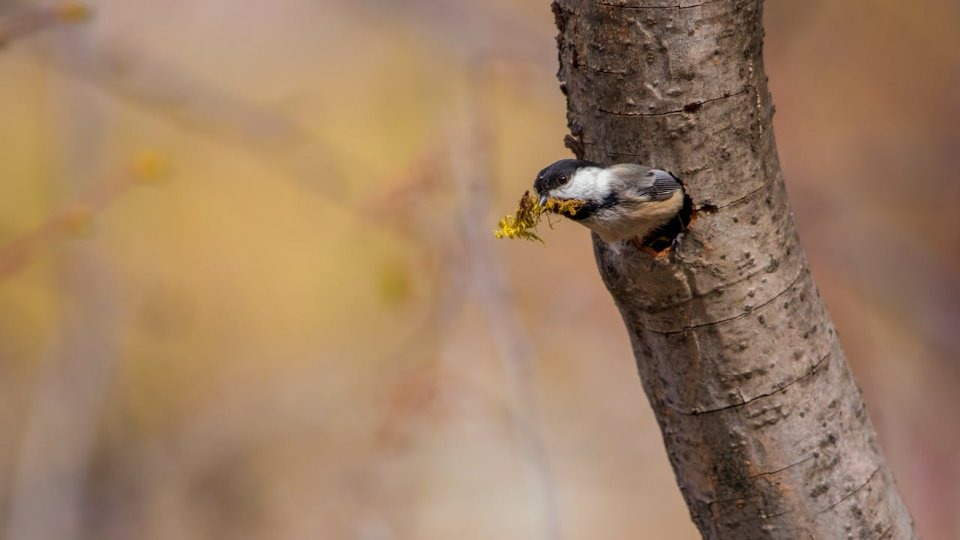
Black-capped Chickadees nest in cavities in trees and sometimes in nest boxes. Both sexes may take part in excavating a cavity, while the female builds the nest cup with plant material and softer lining.
During breeding, adults carry food into the cavity for their young. Watch an active nest from a distance. Keep your hands away from the cavity, don’t inspect its contents and don’t try to bring the adults closer for a photograph. If something unusual happens, note when it happened, which adults were present and what each one did.
Recording the observation and deciding what to leave unresolved
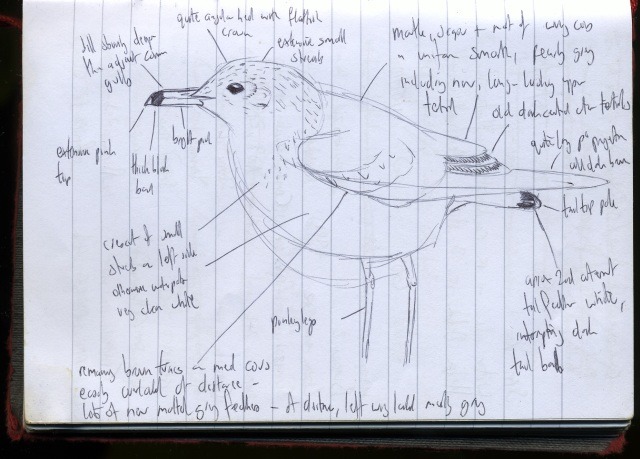
Write a field note that preserves the observation even if the species name stays uncertain. Keep what you saw and recorded separate from the name you assign afterward.
Example field note
Date: 14 October. Location: wooded neighborhood, with coarse geography for public sharing. Habitat: trees near houses. Visible marks: black cap, bib and white cheeks; folded wing hidden. Sound: two-note whistle heard but not recorded. Candidates: Black-capped Chickadee and Carolina Chickadee. Outcome: chickadee seen, species unresolved because the location is near a contact area and distinguishing details are missing.
Some checklists let you record a group or paired-species category for difficult birds. Use one only if your recording tool offers it. For the broader reporting method, see how to record bird sightings (with field notes, sightings, and eBird in view).