To identify an unfamiliar wild bird, start with the clue you have the most of: its shape and behavior, a usable photo, or a recognizable call. Compare it with likely species using field marks, location, and season. If the key details are missing, or an app suggestion conflicts with what you saw, keep the ID broad. Save your notes and follow the guide that matches the question you still need to answer.
Choose your route: seen, photographed, heard, or remembered
You do not need the same method for every bird. First ask whether you watched it, photographed it, heard it, or only remember a few details.
| Evidence you have | Useful starting clues | First identification task |
|---|---|---|
| You saw the bird | Silhouette, relative size, bill, tail, flight, or movement | Narrow the bird to a likely group, then compare species |
| You have a photograph | Visible marks, proportions, and which bird appears in the image | Examine the subject and test an ID |
| You heard a song or call | Original recording, repeated phrases, and rhythm | Compare likely callers and their sounds |
| You remember a brief encounter | Shape, unusual markings, behavior, habitat, place, and date | Rebuild the sighting and note what you are unsure about |
Say a bird crossed your yard and vanished behind a tree. If you remember its broad wings and how it flew, start with the visual route. If a bird calls from thick foliage, start with sound.
Cornell’s Merlin Bird ID offers description, photo, sound, and nearby-bird identification options. The Audubon Bird Guide helps you explore birds by appearance and context. Both can suggest species, but your own notes tell you which suggestions deserve a closer look.
Start with shape, pattern, behavior, and habitat
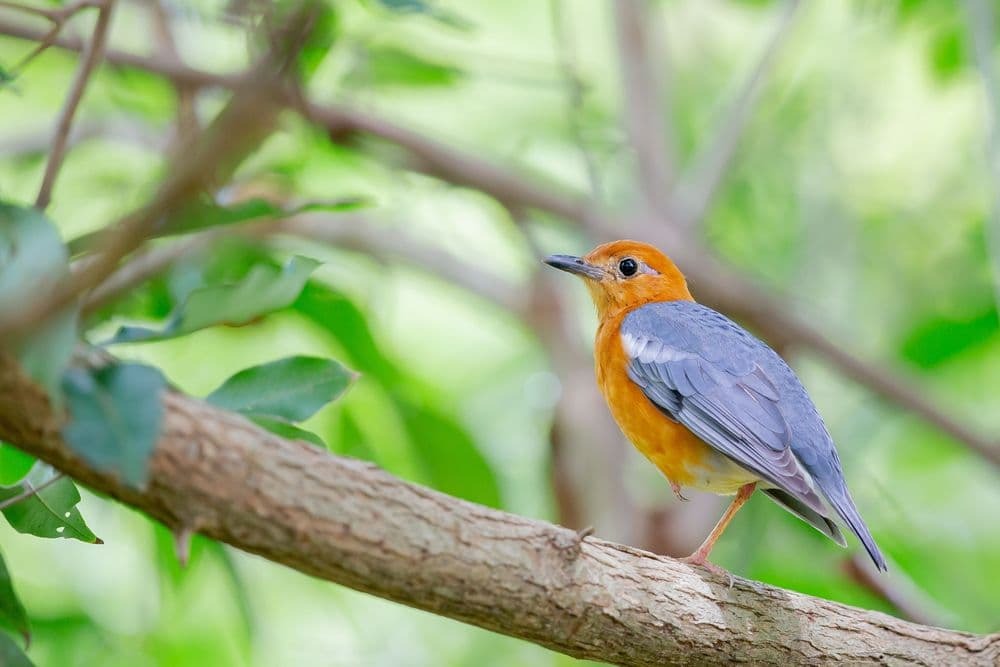
Cornell Lab teaches four keys to visual bird identification: size and shape, color pattern, behavior, and habitat. Describe the features you saw clearly. For bill shape, plumage, and habitat, use how shape, color, behavior, and habitat identify a bird as a cross-check.
Start with the silhouette. Was the bird compact or long-bodied? Did it have a thick bill, a slender bill, a long tail, or unusually broad wings? Relative size helps when you can compare it with a familiar bird.
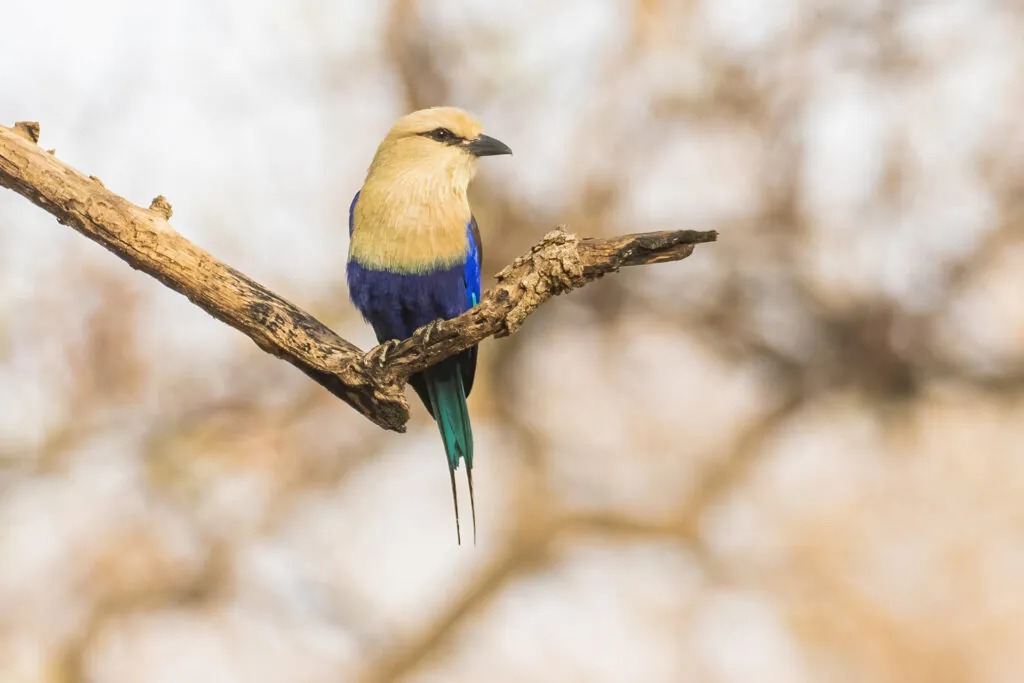
Next, note where the colors sit. A blue bird with a pale underside gives you more to work with than “blue” alone. Patches, stripes, borders, and contrasts can narrow the list even when the overall color is familiar.
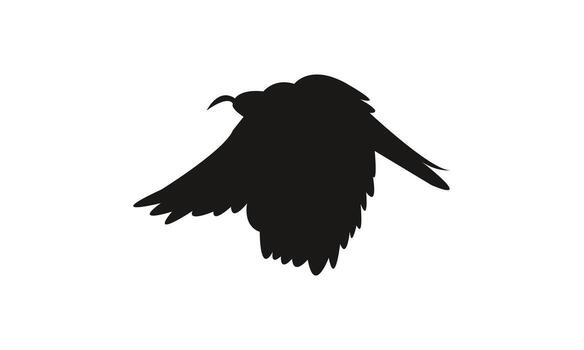
Behavior adds what a still image misses. Does the bird hop, walk, climb, glide, or move its tail in a recognizable way? Habitat is the setting: dense vegetation, open ground, a yard, or water.
Take a large, dark bird overhead. Darkness is easy to remember, but wing proportions, tail outline, and flight style do more to separate species.
Distance and bad light distort color. Shape and behavior still work when light hides plumage. The Cornell Lab guide to identifying an unfamiliar yard bird covers these visual clues and field notes in more detail.
What if the bird moves before you get a good photo?
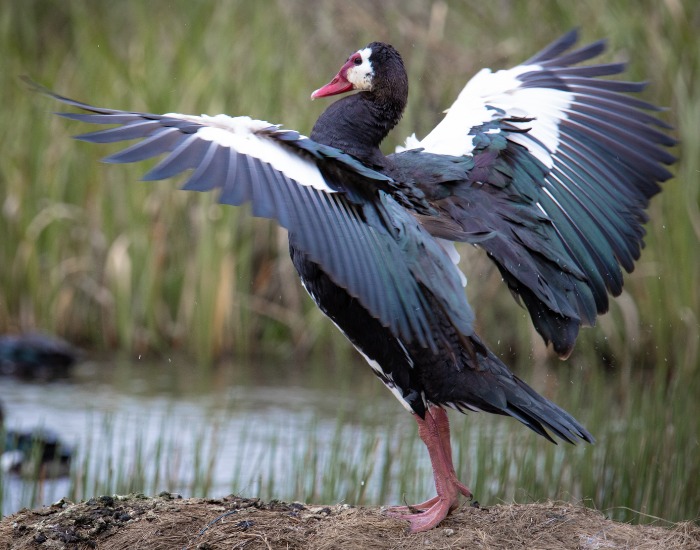
A fleeting sighting can still give you a useful field note. Small, active birds are the hardest, because they move through branches faster than a camera can focus.
One beginner on Reddit knew the familiar birds but struggled to name the small, moving ones.
I find them really hard to photograph clearly, and without a decent photo, I struggle to confirm the ID in Merlin. … I really want to get better at recognizing birds without needing a perfect photo every time. Right now, I feel like I see “a bird,” not “a species.” I’d love to train my brain to think more specifically. Any advice, resources, or practice methods would be greatly appreciated. Thanks in advance!
While the encounter is fresh, write down the strongest features you remember. A short description keeps details that fade once you start flipping through photos of similar birds.
- Shape and relative size: Compare the bird with something familiar and note its proportions, bill, and tail.
- Markings: Say where the clearest colors or contrasts were, including any pattern on the head, wings, or underside.
- Movement: Record a distinctive posture, flight style, tail motion, or feeding behavior.
- Setting: Include the place, date, and type of habitat.
- Missing details: Note the features you could not see, so they do not become assumed facts later.
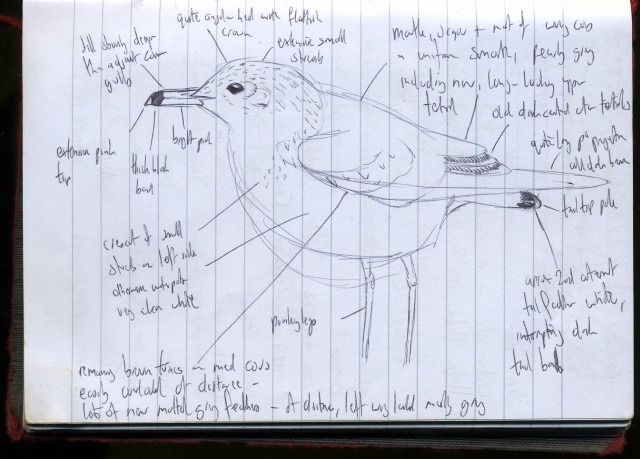
A flawed photo can still help. If a branch hides most of the bird but its tail shows, that part supports a comparison. Keep the uncropped original, because it preserves the surroundings and shows which details the camera actually caught.
Cropping makes a visible feature easier to inspect. Heavy editing cannot create a diagnostic mark the photo never recorded.
Location and recordings are clues, not guarantees
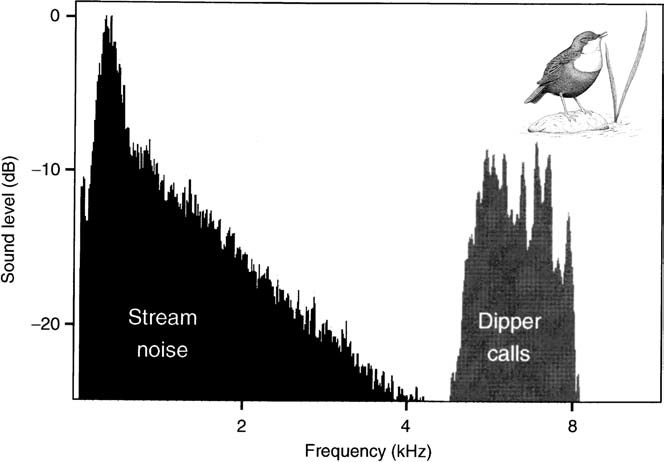
A call can identify a bird that never comes into view. Rhythm, repeated phrases, and sequence help separate possible callers, especially when you compare your sound with reference recordings.
A reference recording shows one version of a species’ call. Yours may sound different, so compare it with other possible callers too.
Location and season narrow the options. An eBird report shows where another observer found a species, but it does not promise the bird will be at that spot during your visit.
One birder searching for a Belted Kingfisher moved on after a call differed from a recording and the expected sighting location.
So today I went looking for my lifer belted kingfisher. Heard a call I’d never heard before but it didn’t sound exactly like the recording I listened to and I wasn’t at the exact location reported on ebird, so I decided to move on. Went to the location and didn’t find it there, so I listened to some more recordings and that was probably it. Went back to the same location and didn’t find it. Feeling pretty stupid.
The caller was never identified. One recording and an expected spot decided which sounds the birder counted as a match.
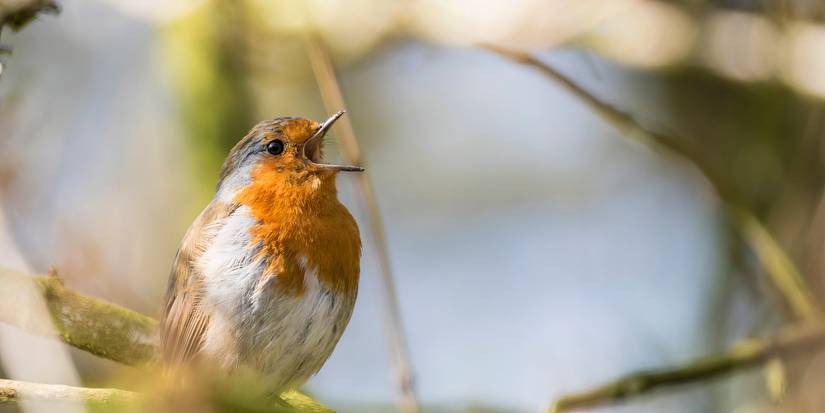
For a hidden bird, compare the sound’s repeated structure with likely callers and use the local setting to narrow the list. Save the audio if you can. With no recording, write a short description of the sound.
How to check an app suggestion
A Merlin ID is a suggestion to test against the bird or sound you actually encountered. Ask whether the suggested species fits your own notes.
Check the input as well. In eBird’s Manage Media photo review, Merlin’s Photo ID model can suggest another visible bird when your intended subject is obscured. That limitation is documented for the Manage Media integration, and Merlin Bird ID uses the same underlying technology.
Sound suggestions need the same scrutiny. Cornell’s guidance on Merlin Sound ID stresses listening to the actual sound and checking each species before you report it as identified.
One Reddit contributor got a striking mismatch from an ordinary sound:
Point 1: Merlin is a great tool for beginners and seasoned birders alike. I’m glad it exists for many reasons. Point 2: Merlin is frequently incorrect. I use Merlin almost daily, and I’m telling you every single time I use it, it makes mistakes. If I didn’t know better, I’d be reporting birds that simply aren’t there on a near daily basis. Example: my shoe squeaked on some wet grass today and Merlin told me I heard a Black-backed woodpecker. I never want to say anything’s impossible, but that’s a pretty impossible bird for my area.
That is one user’s experience and opinion of Merlin’s reliability, not an app-wide error rate.
Run three checks before you accept a suggested species:
- Match what you saw or heard. Compare the proposed bird with the marks or sound you recorded. For a photo, confirm which bird in the image the suggestion concerns.
- Check the circumstances. Does the species fit the location, season, and habitat of the encounter?
- Test alternatives. Look at other likely species, and at nonbird sounds when the recording is ambiguous.
The eBird Merlin Sound ID best-practices guidance gives more detail on evaluating detections.
Compare lookalikes using a feature that separates them
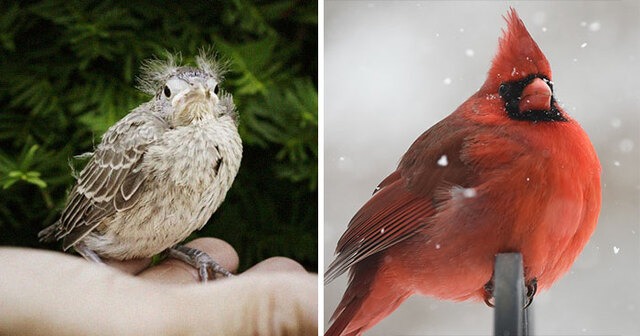
When two birds look alike, compare the same feature in both. It has to be something you saw or heard clearly enough to judge.
Start with likely species from the right bird group. Similar colors, silhouettes, or behavior explain why both came to mind, and a more specific mark separates them. For wing shape, plumage, and reliable field marks, see similar-looking birds: how to tell them apart.
| Feature | Species A | Species B | What you saw |
|---|---|---|---|
| Size and silhouette | Its proportions | Its proportions | Was the outline clear enough to compare? |
| Bill, wings, or tail | Its structure | The same feature | Which part could you see? |
| Color pattern | Where its marks and contrasts sit (Bell’s Vireo: eye-ring) | The same area (Red-eyed Vireo: eye-line) | Which marks did you see? |
| Behavior or voice | Its movement or sound | The same movement or sound | Did you see or hear it directly? |
| Habitat and season | Does it fit the setting? | Does it fit the setting? | Does either species conflict with the context? |
The Missouri Department of Conservation’s identification guidance gives a concrete case. It compares Bell’s Vireo, where an eye-ring is a useful field mark, with Red-eyed Vireo, where an eye-line is. That tells you exactly where to look: the pattern around the eye.
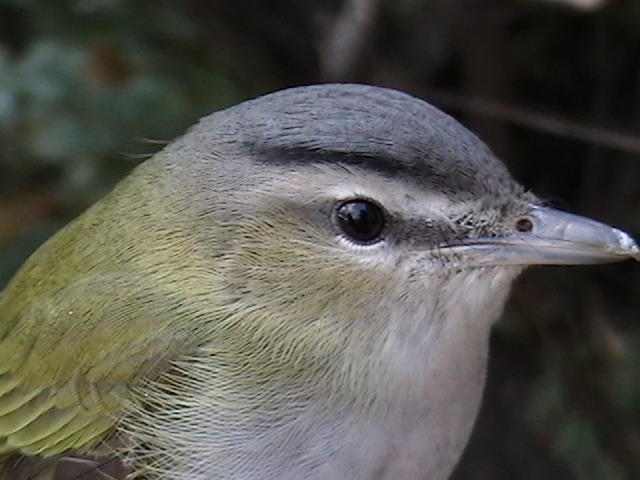
Red-tailed versus Red-shouldered Hawk and Black-capped versus Carolina Chickadee each need their own pair guide with documented distinguishing features.
A partly hidden tail shows the limit of an ID. A mark you could not see tells you nothing about whether the bird has it.
When the differences you saw do separate the species, prefer that one. If the key feature stayed out of view, a focused species-pair guide prepares you for the next encounter.
When should you leave the identification broad?
Use the most specific ID your notes support. Sometimes that is a species, sometimes a broader bird group, sometimes an unresolved sighting.
| Outcome | What the evidence supports | How to handle it |
|---|---|---|
| Supported species | Distinguishing features fit and realistic alternatives have been considered | Use the species name |
| Tentative species | Several clues fit, but an important distinction is unavailable | Label the species name as tentative |
| Broader bird group | The group is supported, but species-level marks are inconclusive | Use a recognized broader category |
| Unresolved observation | Too little reliable evidence for a narrow ID | Record the sighting without forcing a species |
When you submit a record to eBird, pick from the categories its taxonomy actually has. It includes sp. categories, sometimes called spuhs, and slash taxa covering specified alternatives. The eBird taxonomy documentation explains both. Use a slash category only where the taxonomy recognizes that grouping.
Say you see a distant hawk in silhouette with its tail partly hidden. You can log an unidentified hawk in a personal notebook without having enough to name a species. In eBird, pick the available category the sighting justifies.
A complete eBird checklist means birding was your main activity and you reported every species you could identify. Birds you could not name to species do not break that rule.
An unresolved sighting still tells you what you confirmed and where the ID stops. For plumage, range, and song, check the North American bird species profiles before you commit to a firm answer.
When identification is only part of a wildlife incident
Bird welfare comes first when identifying an animal might disturb it. The American Birding Association’s Code of Birding Ethics calls for restraint around sensitive birds, including with recorded calls. Don’t approach nests, and don’t replay calls repeatedly to provoke a response. If a bird is trapped, injured, or visibly distressed, contact a qualified wildlife helper. Don’t attempt a rescue yourself.
Where to go next once you have an observation
- Visual details are confusing: Read a deeper four-keys guide on shape, pattern, behavior, and habitat.
- A song or call is unresolved: Use a sound-identification guide to compare recordings and likely callers.
- Two species still fit: Use a similar-birds guide or a comparison of that particular pair.
- The species is well supported: Read its species account for context. A sighting-record guide helps you document the place, date, and evidence.