A male House Sparrow has a gray crown and a black throat bib. A female is plain buff-brown below, with a pale eyebrow. If a female-looking bird has streaks on its breast, check House Finch instead.
How to Recognize a House Sparrow at a Glance
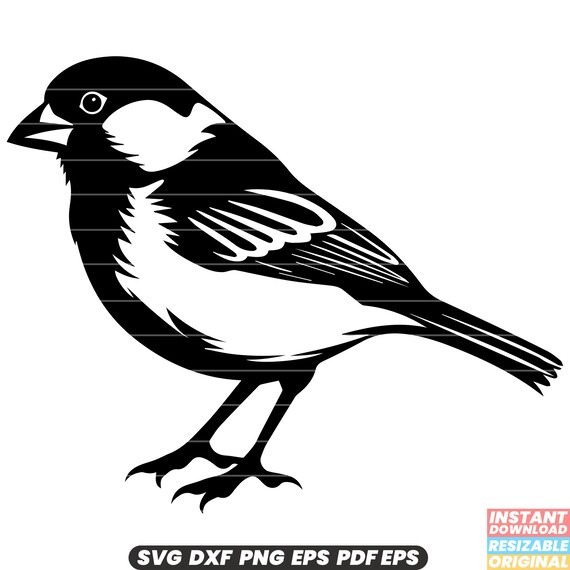
A House Sparrow (Passer domesticus) is a compact bird with a rounded head, a thick seed-eating bill, a full chest, and a fairly short tail. Even when a branch hides its breast, you can still see the stocky outline.
An adult male has a gray crown, chestnut nape, pale cheeks, and a black throat bib. Females are duller, with brown and buff feathers and a pale eyebrow. Two House Sparrows at the same feeder can look like different species.
The Cornell House Sparrow identification guide shows the bird’s shape and several plumage states in photographs.
Male, Female, and Young House Sparrows: The Markings That Change
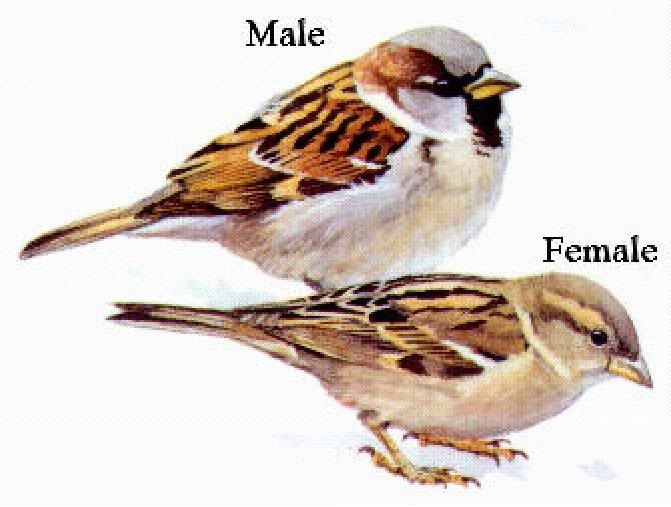
Sex and age change a House Sparrow’s face and throat. A recently fledged bird usually looks like an adult female, and a male outside breeding plumage shows a smaller bib.
| Bird | Head and face | Body and age clues |
|---|---|---|
| Breeding male | Gray crown, chestnut nape, pale cheeks, black throat bib | Strongly contrasting plumage |
| Adult female | Buff-brown face with a pale eyebrow | Patterned brown back and largely plain underparts |
| Recently fledged bird | Usually female-like | Yellowish gape edges in very young birds |
| Nonbreeding male | Duller male head pattern, smaller-looking bib | Bill looks more yellowish |
The plain brown birds beside a marked male are females or fledglings.
House Sparrow vs. House Finch and Other Brown Lookalikes
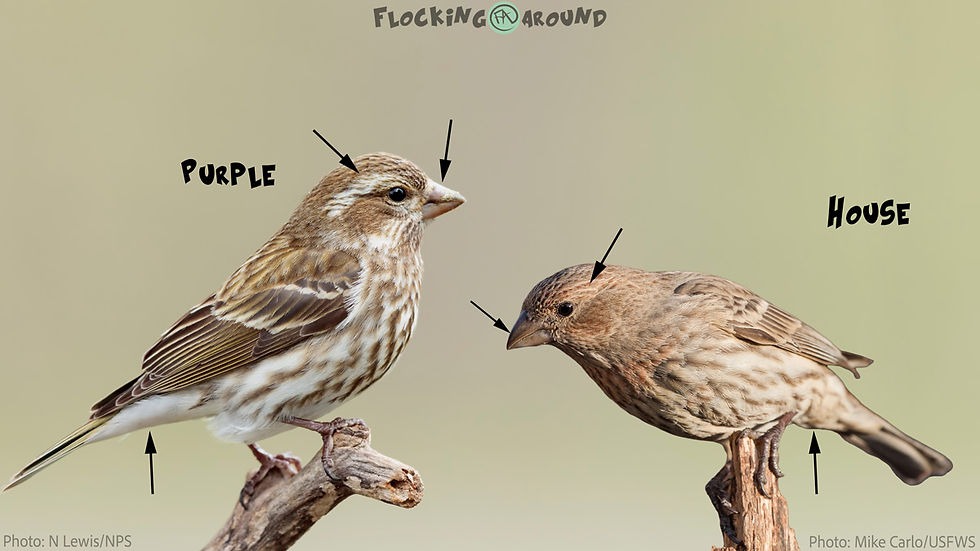
Female House Sparrows and female House Finches are easy to confuse. Check the breast first: a female House Sparrow is plain below, while a female House Finch has dark streaks. If the breast is hidden, look at the face.
| Candidate | Breast and belly | Face or shape clue |
|---|---|---|
| Female House Sparrow | Plain, no prominent streaking | Broad pale eyebrow; stocky outline |
| Female House Finch | Noticeably streaked | Plain brown face, no broad buffy eyebrow |
| Song Sparrow | Streaked, often with markings converging toward a central spot | Relatively long, rounded tail; regional variation |
A broad pale eyebrow and a stocky profile point to House Sparrow even when the underside is hidden.
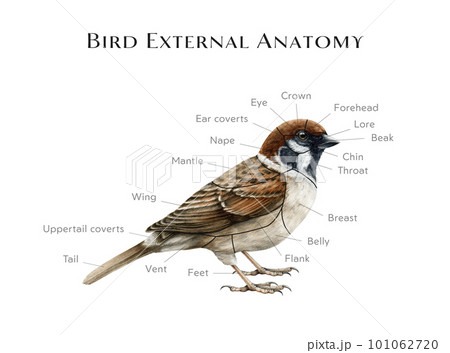
Eurasian Tree Sparrow and immature White-crowned Sparrow can look similar in some regions or at some ages. For an ordinary feeder sighting, start with the three birds above.
Cheeps, Flocks, Dust Baths, and Other Everyday Behavior
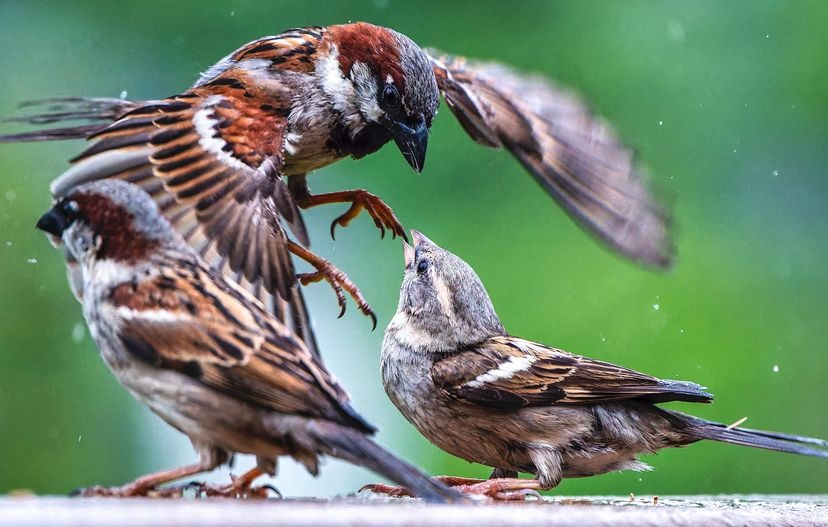
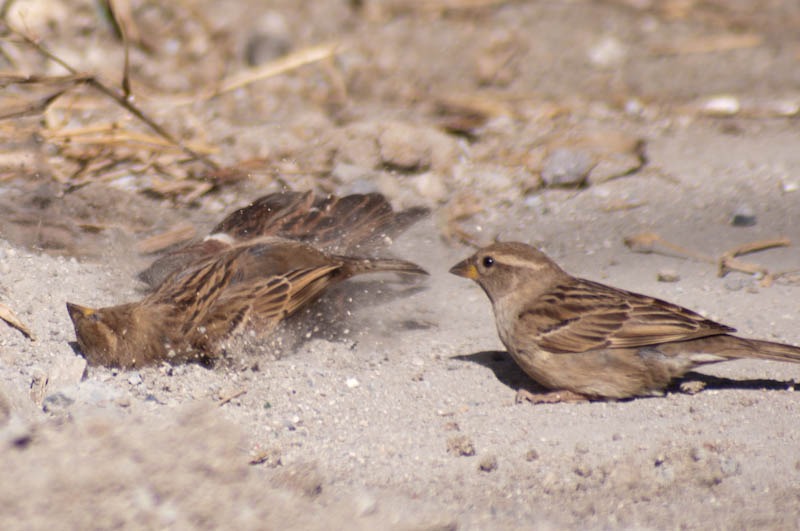
House Sparrows make short, repeated cheeping calls, often in a busy cluster near a shrub, feeder, or building. They also forage on the ground, flock, and dust bathe in exposed soil.
| What you notice | What fits House Sparrow behavior | Useful context |
|---|---|---|
| Repeated male cheep-chirrup song | Advertises a nest site and attracts females | Other cheep calls occur in social and courtship contexts, so identify the caller by sight |
| Several birds feeding together | Flock feeding at a feeder or on the ground | Common wherever seed is available |
| Bird rolling in loose dirt | Dust bathing | Seen on exposed patches of ground |
| Calling near an eave or cavity | Typical nesting-site behavior | Look for other signs before assuming a nest |
Compare the rhythm of a call you hear with Cornell’s House Sparrow recordings.
A 2018 meta-analysis by Sánchez-Tójar and colleagues tested whether a male House Sparrow’s black throat bib signals social dominance. It found weak, unreliable support for that link, with concerns about publication bias.
Backyard Feeding and Species Competition
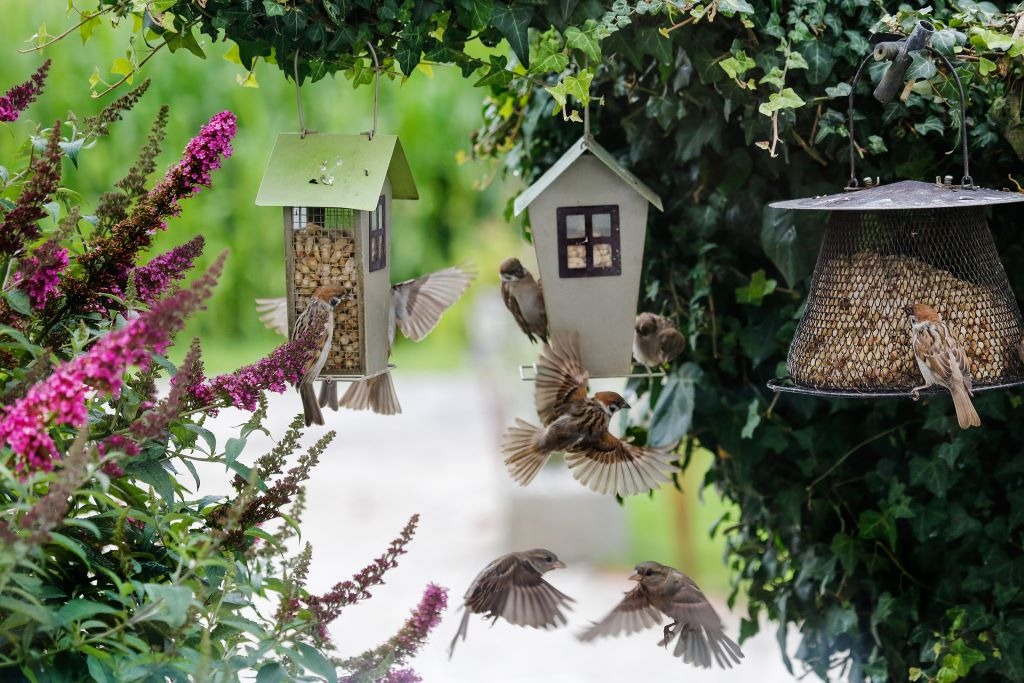
House Sparrows eat at seed stations and pick up food on the ground beneath them. In a yard with several species, a group crowding around one seed source is hard to miss. For seed choices that suit the birds you want, see choosing bird seed for backyard birds.
An urban gardener who wanted to attract native birds stopped putting out ordinary feeders after House Sparrows crowded them:
I live in a urban setting and House Sparrows are fucking everywhere. I get some Cardinals, Chickadees, House Finches, Juncos, Downy & Hairy Woodpeckers … I had a few bird feeders, but they were overrun with house sparrows so I stopped putting them out. I only have hummingbird feeders now
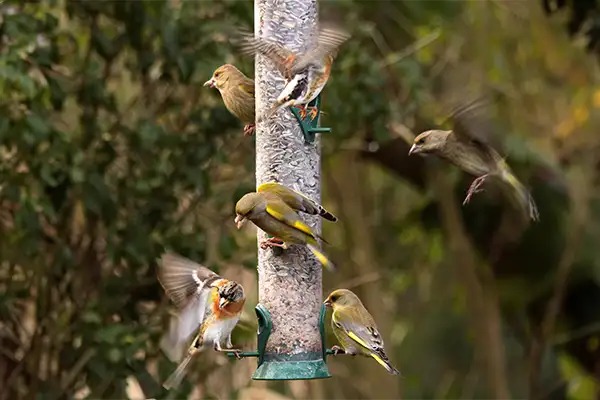
Watch what happens when chickadees or finches arrive: do they keep feeding, wait nearby, or move off as the sparrows approach? For ways to address crowding at a seed station, see the House Sparrows at feeders guide.
Nesting Around Homes
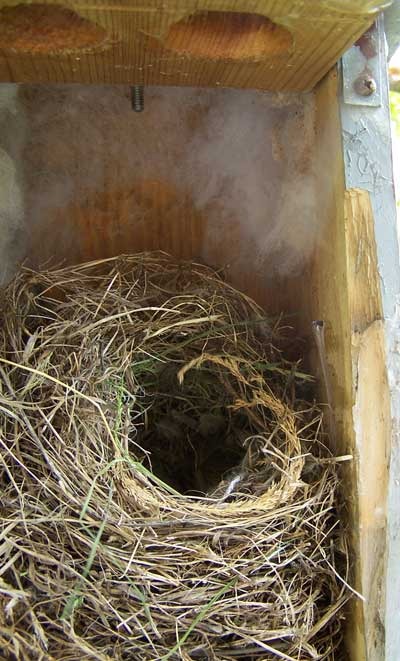
House Sparrows use building crevices, eaves, and artificial nest boxes. Native cavity nesters want the same spaces, so a sparrow at your birdhouse can put you in a tough spot.
A homeowner in Southern Illinois put up a birdhouse for bluebirds and kept finding a House Sparrow back at it:
I bought a birdhouse and am following all the guidelines to attract bluebirds. They’re supposed to be all around my area in Southern Illinois. I live in a subdivision with a moderately sized yard. However, I’ve never seen a bluebird In my yard or at my feeders. Instead, I’m removing a house sparrows nest from the house every day or two. They’re VERY persistent and are starting to win me over! As soon as I clear the nest out I can see the sparrow scoping things out, watching and waiting. Within a few hours he’s back on top of the house screeching and chirping away. Should I just give up and let him (?) have it?
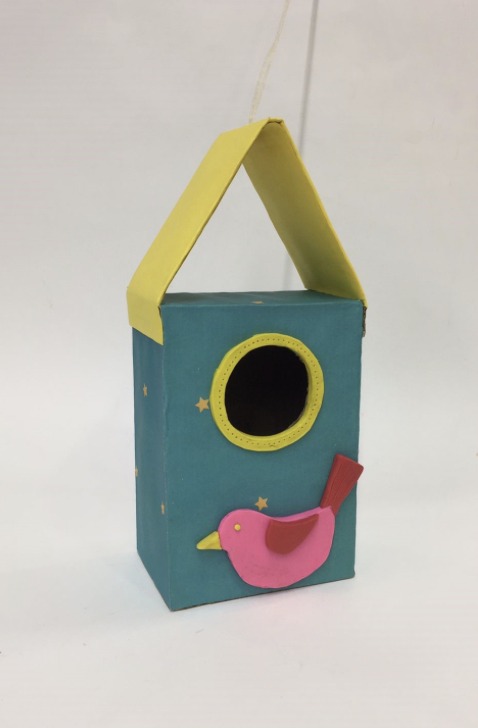
Cornell NestWatch documents House Sparrow competition with native cavity-nesting species, including Eastern Bluebirds and Tree Swallows, and says no nest-box design is permanently or completely House Sparrow-proof.
House Sparrows are not covered by the federal Migratory Bird Treaty Act. State and local rules, active nests, and protections for other bird species still apply.
Before changing anything around an occupied box, read Cornell NestWatch’s House Sparrow guidance and check your local rules.
Why House Sparrows Are So Often Found Near People
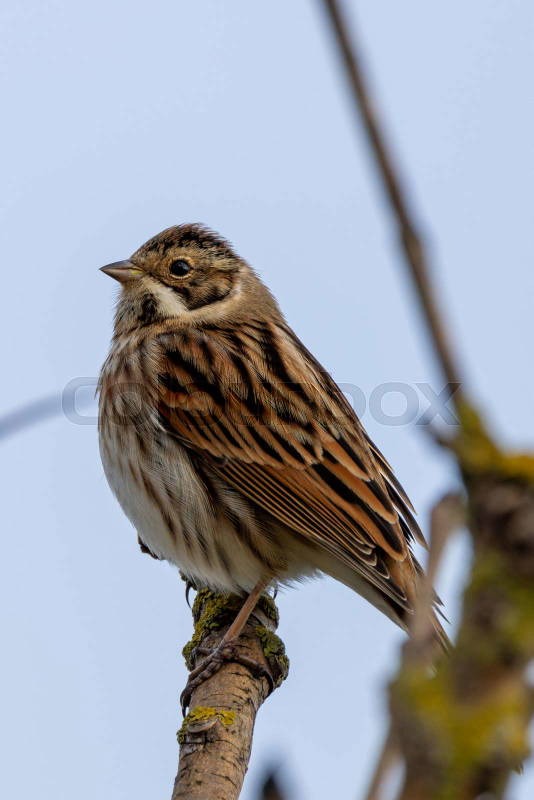
The House Sparrow belongs to the Old World sparrow family Passeridae and was introduced to the United States. It thrives around people, in developed neighborhoods and on farms, where buildings and accessible food give it places to nest and feed.
How to Confirm Your Identification and Know When to Stop Guessing
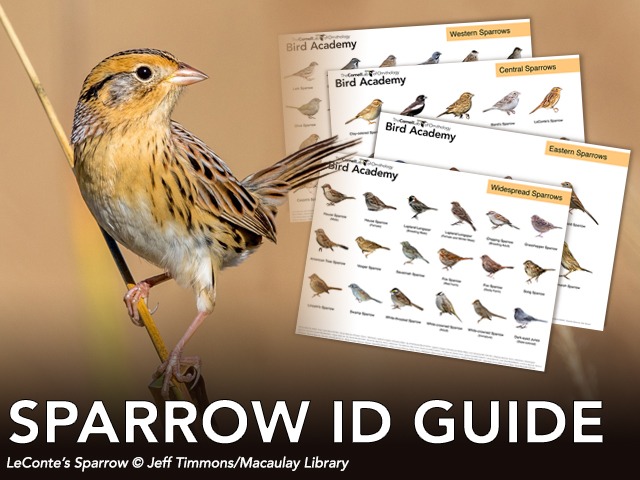
A short, obstructed view supports a tentative ID at best. Compare only the features you actually saw with a reference photo of the same sex and age in a reliable guide.
- Pick the plumage state. A marked adult male is easy. Brown, female-looking birds need a closer comparison.
- Check shape and bill first, then one mark on the head or breast.
- Compare with the nearest lookalike. Check the marks you saw against House Finch or a native sparrow of the same plumage class.
- If shade or a hidden breast blocks the key marks, keep the ID provisional until you get a clearer look.
For illness signs, feeder hygiene, and disease precautions, see what to do when birds appear sick at feeders.