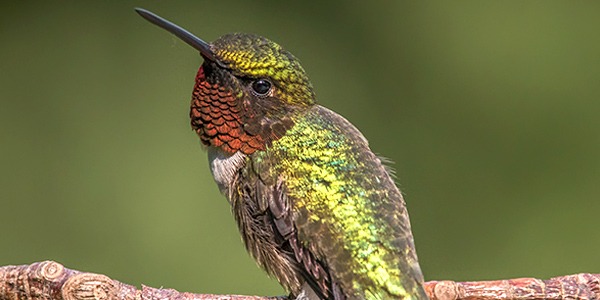
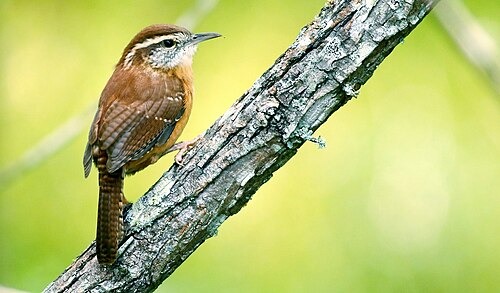
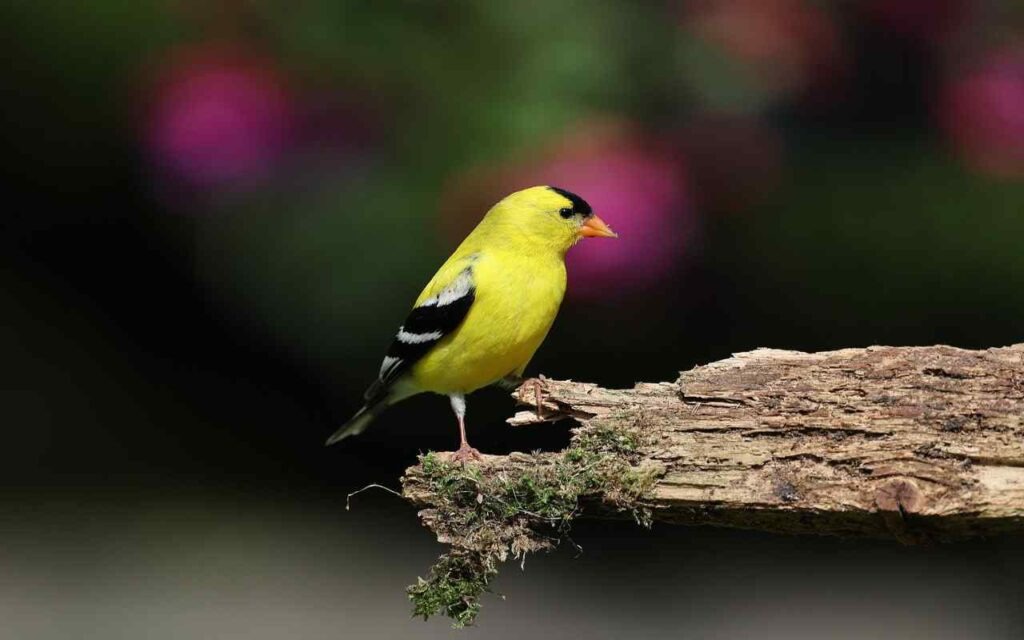
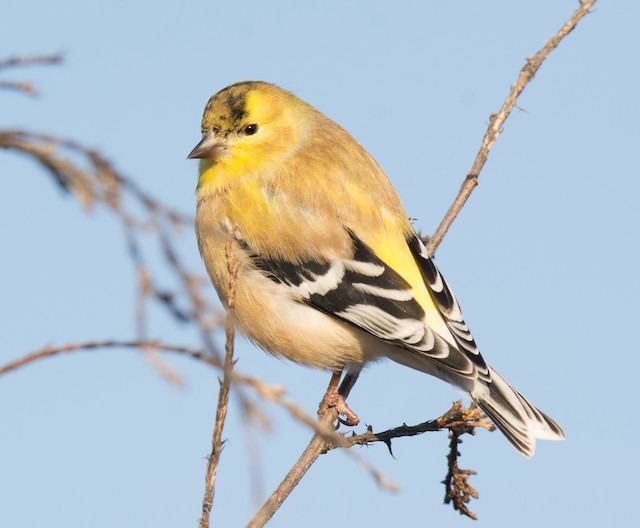
In winter an American Goldfinch is olive-brown, and during molt it looks patchy. Look for a small, mostly unstreaked finch with a short conical bill, dark wings and pale wingbars. Heavy body streaking with a fine, pointed bill means a Pine Siskin.
Recognizing an American Goldfinch Without Bright Yellow
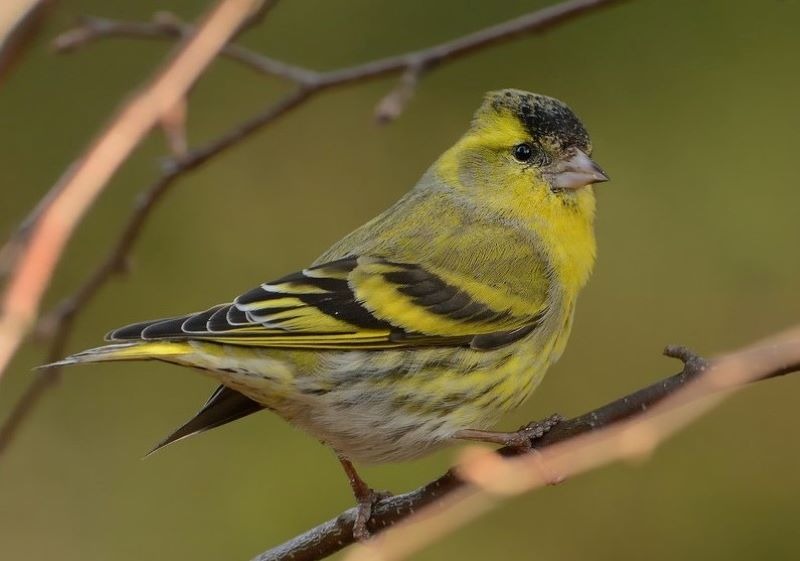
An American Goldfinch (Spinus tristis) is a compact finch with a small head, a short seed-cracking bill, long wings and a short, notched tail. That shape holds after the bright yellow is gone.
At a feeder or in the field, check three things at once:
- Bill: Short and conical, with a broader base than the fine bill of a Pine Siskin.
- Underparts: Plain, with little or no dark streaking across the breast and belly.
- Wings: Dark flight feathers crossed by two pale or buffy wingbars. White tail markings help when you can see the tail.
A bird photographed through a window can hide the wingbars in shadow or blur the fine breast markings.
The Cornell Lab identification guide gives a length of 4.3 to 5.1 inches (11 to 13 cm), a weight of 0.4 to 0.7 ounces (11 to 20 g) and a wingspan of 7.5 to 8.7 inches (19 to 22 cm). You can’t measure any of that at a feeder, so go by shape and markings.
In flight, American Goldfinches follow a buoyant, undulating path. Their flight call is commonly rendered as “po-ta-to-chip.”
American Goldfinch Plumage Through the Seasons
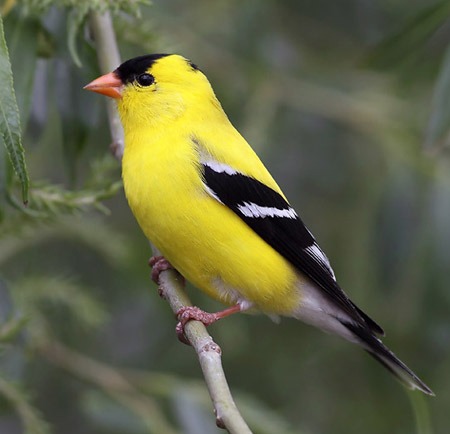
The brilliant yellow bird of spring and summer is the breeding male. Females are more subdued, and both sexes turn duller outside the breeding season. A spring male between molts looks mottled as brownish feathers give way to yellow.
| Stage | Adult male | Adult female | Useful field marks |
|---|---|---|---|
| Spring transition | New yellow feathers mixed with duller ones, giving a patchy look | Develops softer yellow and olive breeding plumage | Dark wings and pale wingbars, with seasonal wear |
| Breeding season | Brilliant yellow body and black forehead | Olive-green upperparts and a softer yellow underside | Short bill, dark wings and tail with pale markings |
| Late summer and fall | Yellow breeding plumage gives way to muted brown and olive | Moves toward subdued nonbreeding colors | Mixed feather colors show during molt |
| Fall and winter | Olive-brown or grayish, often resembling a female | Brownish or olive-gray, sometimes with a yellow wash | Mostly unstreaked underparts and pale wingbars |
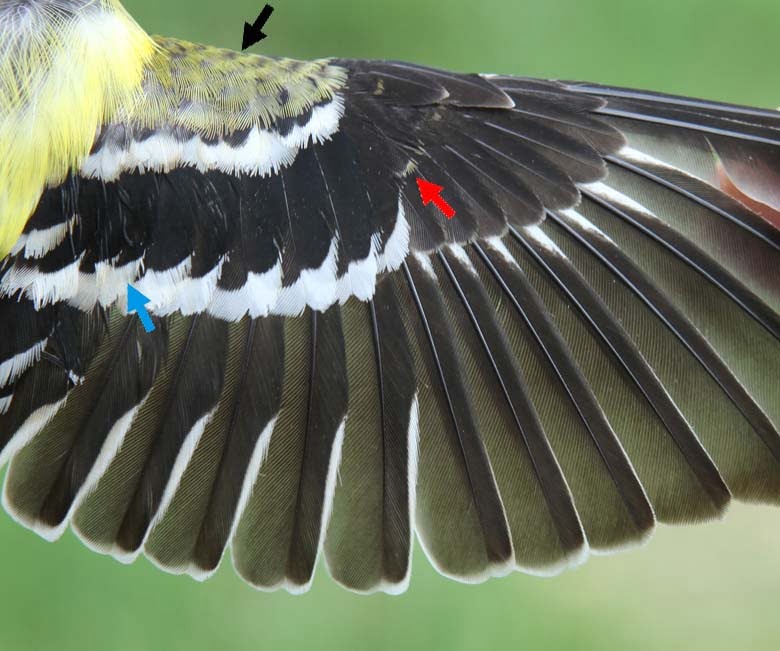
Wing feathers grown in the late-summer molt keep their pale edges through winter. They stay in place during the spring body molt, and the pale margins slowly wear away. By the breeding season the wingbars look narrower, even though the body has turned bright.
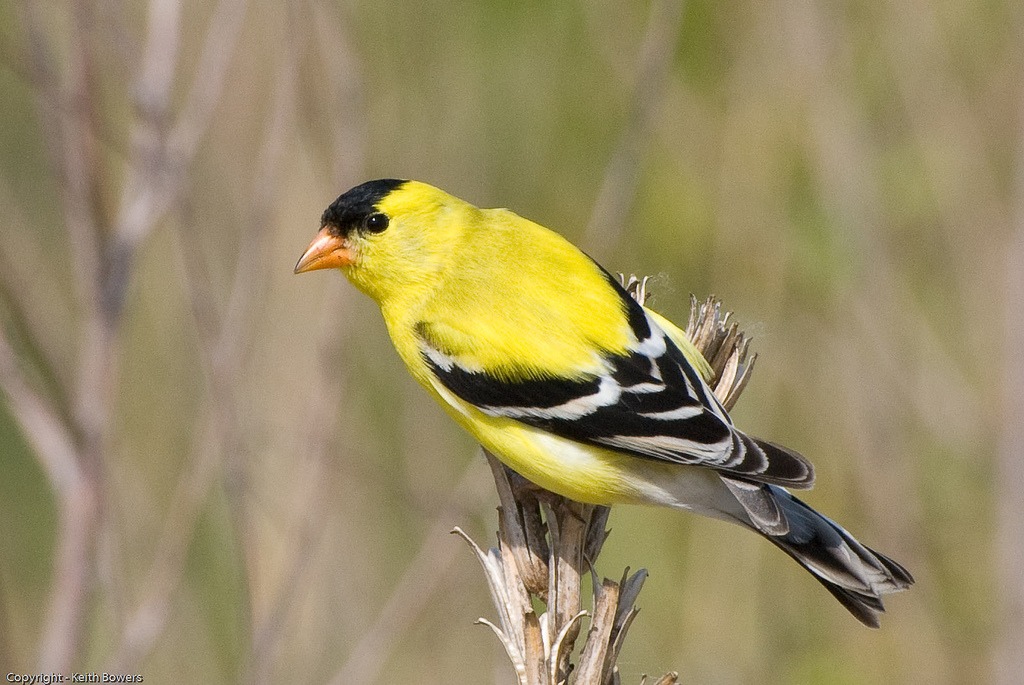
What a changing male looks like
In spring, bright feathers show up first on parts of the head and breast while the rest stays brownish, so a partly molted male looks uneven. Later in the year the bird moves toward a quiet brown and olive.
A Cornell photograph from Massachusetts dated April 7, 2017, shows a male partway through this change, with new yellow plumage alongside duller feathers.
The Missouri Department of Conservation field guide shows separate examples of summer and winter males and females. Immature goldfinches add one more look: some have brown upperparts, a pale yellowish underside and buffy wingbars.
Why Goldfinches Change Color: Molt and Pigment
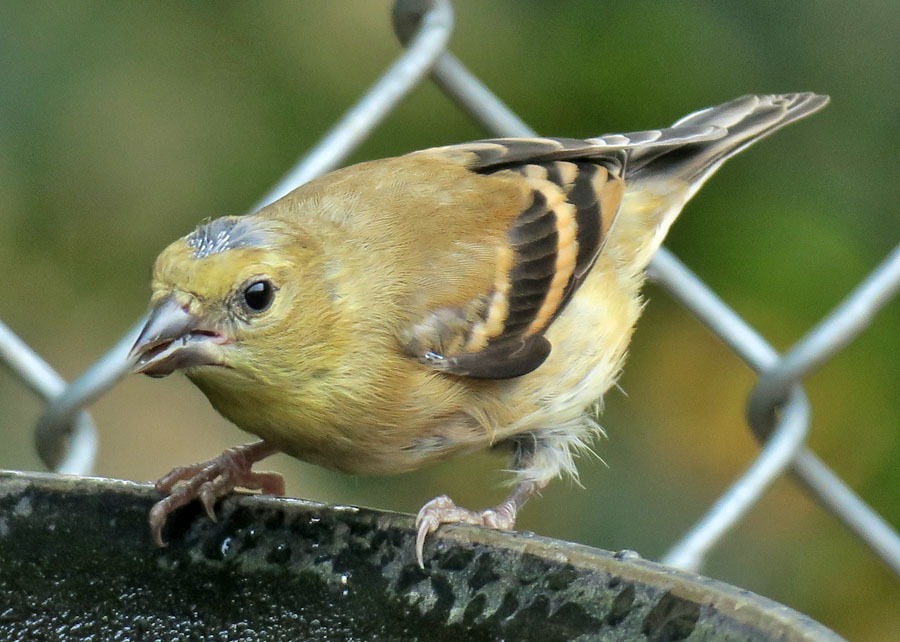
Goldfinches change color through molt, the growth of replacement feathers. Each new feather gets its pigment as it grows. The patches on a transitional bird are old and new feathers growing or sitting side by side.
Cornell describes two body-feather molts, one in late winter and one in late summer. The late-winter molt mainly replaces head and body feathers and produces the brighter breeding plumage. The late-summer molt goes further. It replaces flight feathers too and leaves the bird in its muted nonbreeding look.
Why the new feathers are yellow
Carotenoid pigments from food contribute to yellow plumage. In a controlled American Goldfinch experiment, lutein and zeaxanthin supplementation affected male feather coloration.
Why the bill can change on a different schedule
In fall and winter, adult American Goldfinches generally have dark gray bills. In the breeding season the bills turn orange in both sexes.
A finished feather keeps its color until it is replaced. Bill color changes faster, in response to the bird’s condition. A photo of the bill and a photo of the feathers therefore tell you different things about the season.
Can You Tell Male, Female, and Young Goldfinches Apart?
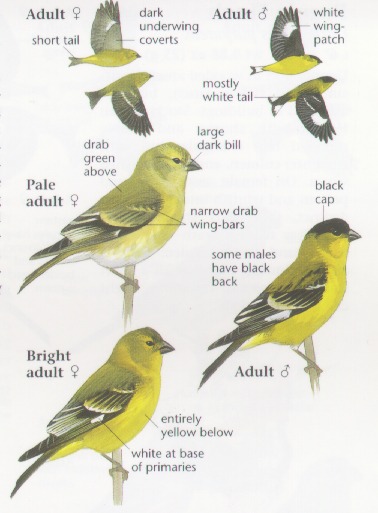
A brilliant yellow goldfinch with a black forehead in breeding plumage is an adult male. Dull adults are harder. In winter a male looks so much like a female that a field photo often can’t settle the sex.
Breeding females have olive-green upperparts and softer yellow underparts. Immature birds show brown upperparts, paler yellow below and buffy wingbars. Specialists judge age from the pattern and wear of the wing coverts, which a folded wing or a distant photo hides.
A winter group of uniformly dull birds can include both sexes. If you can’t see enough to tell age or sex, record “American Goldfinch, sex/age unknown.”
American Goldfinch vs Pine Siskin and Lesser Goldfinch
Pine Siskin is the first comparison for a drab American Goldfinch, especially when small brownish finches gather at a feeder. The two overlap in size and setting, so check underpart markings and bill shape instead. If you are deciding what to put out for them, see choosing bird seed for backyard birds.
| Field mark | American Goldfinch | Pine Siskin | Lesser Goldfinch |
|---|---|---|---|
| Underparts | Plain or largely unstreaked | Dark, distinct streaking | Variable; check other marks |
| Bill | Short and conical | Finer and more sharply pointed | Short and finch-like |
| Folded wings | Two pale wingbars on dark wings | Brownish wings, often with subtle yellow edging | Female/immature can show a white rectangular wing patch |
| Adult male head | Black forehead in breeding plumage | No solid black breeding forehead | More extensive black crown in many males |
| Typical US context | Widespread, with seasonal changes | Broad distribution, irregular movements | Most common in western and southwestern states |
| Length | 4.3 to 5.1 inches | 4.3 to 5.5 inches | 3.5 to 4.3 inches |
The length ranges overlap at the edges, so judge a distant bird by shape and feather pattern.
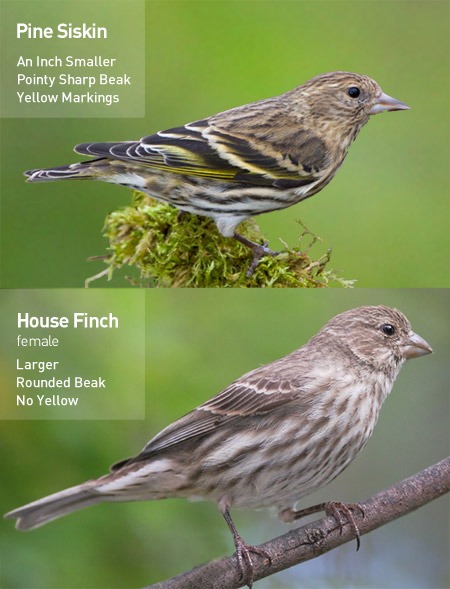
Pine Siskin: streaking and a pointed bill
A typical Pine Siskin has conspicuous dark streaks across the breast and a slender, pointed bill. Some yellow can show along the wing and tail edges, but it is subtle on a perched bird.
Lesser Goldfinch: the wing patch and undertail
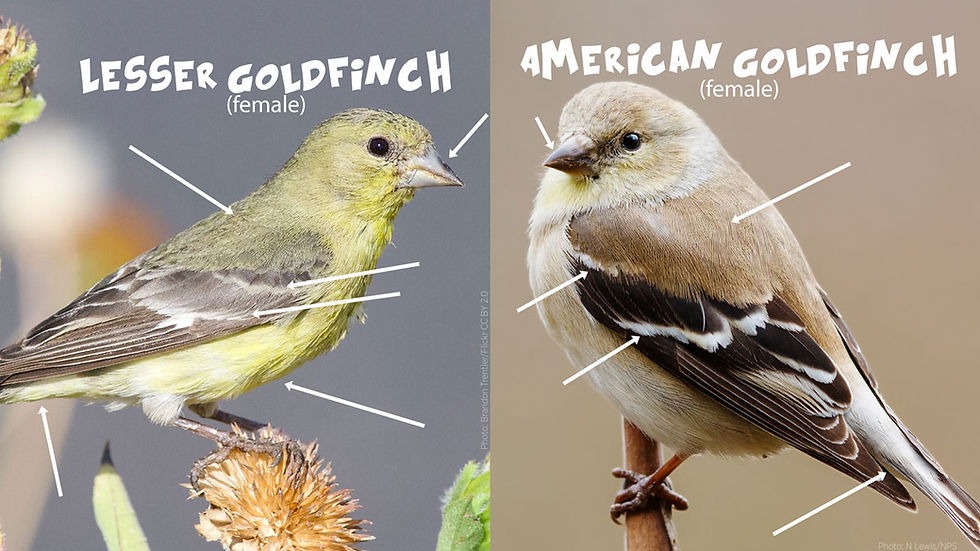
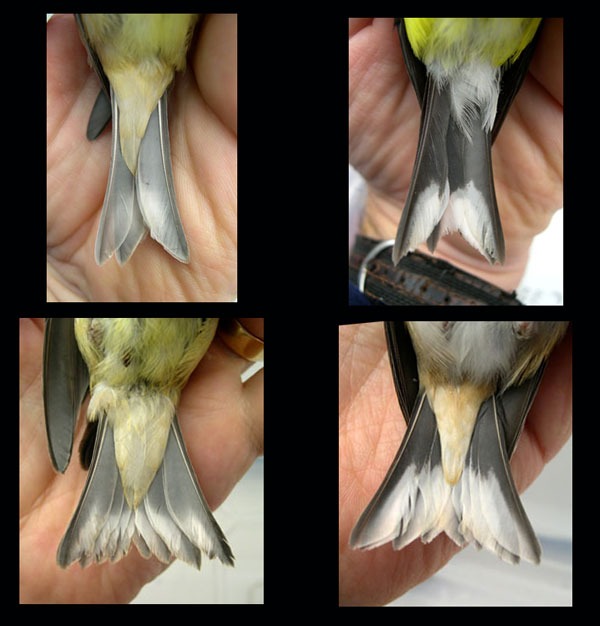
In the western United States, Lesser Goldfinch is another candidate. Along with the wing patch and crown noted in the table, female Lesser Goldfinches have yellowish undertail coverts, while American Goldfinches have white ones. You need a clear view of the feathers to see this.
Plumage varies by region, so when several field marks disagree, check the Cornell species comparison.
When Goldfinches Stop Visiting a Feeder
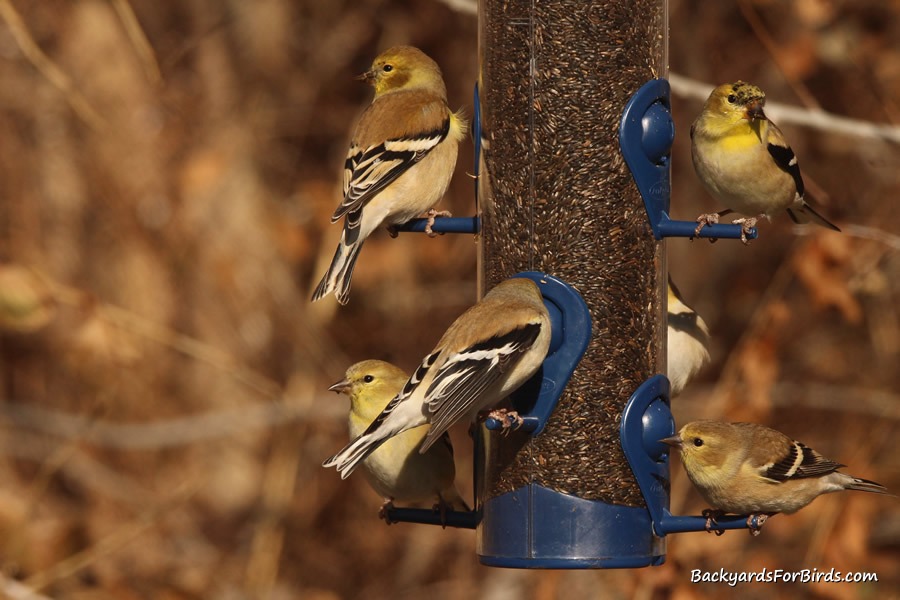
A quiet feeder doesn’t mean the goldfinches have left. They forage among seed-bearing plants in open habitats, and their seasonal movements vary. Listen for them, or look along the weedy edges nearby.
Normal Molt or a Bird That May Need Help?
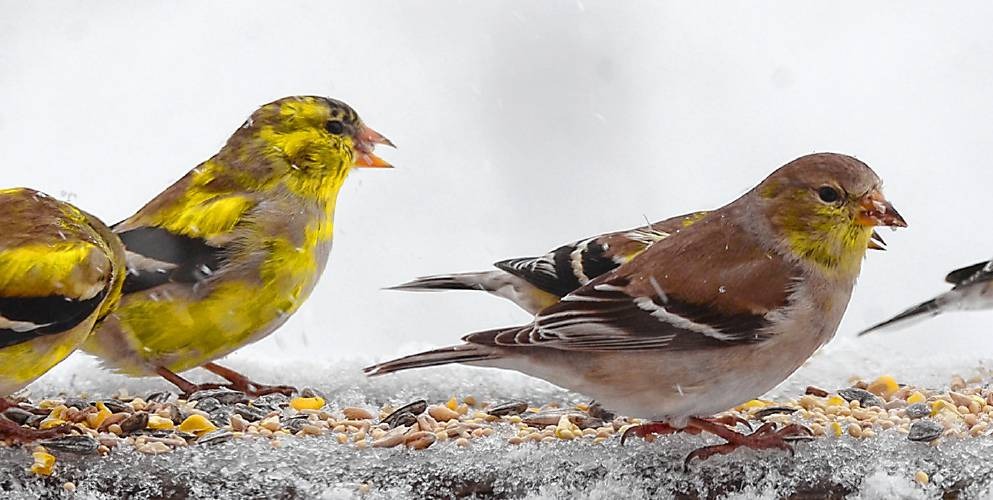
Patchy yellow and brown feathers are normal during molt, especially in seasonal transitions. Feathers say nothing about behavior or injury, though. If a bird stays unusually unresponsive, looks injured or shows ongoing distress, contact a local wildlife rehabilitator.
How to Record and Verify a Seasonal Goldfinch Sighting
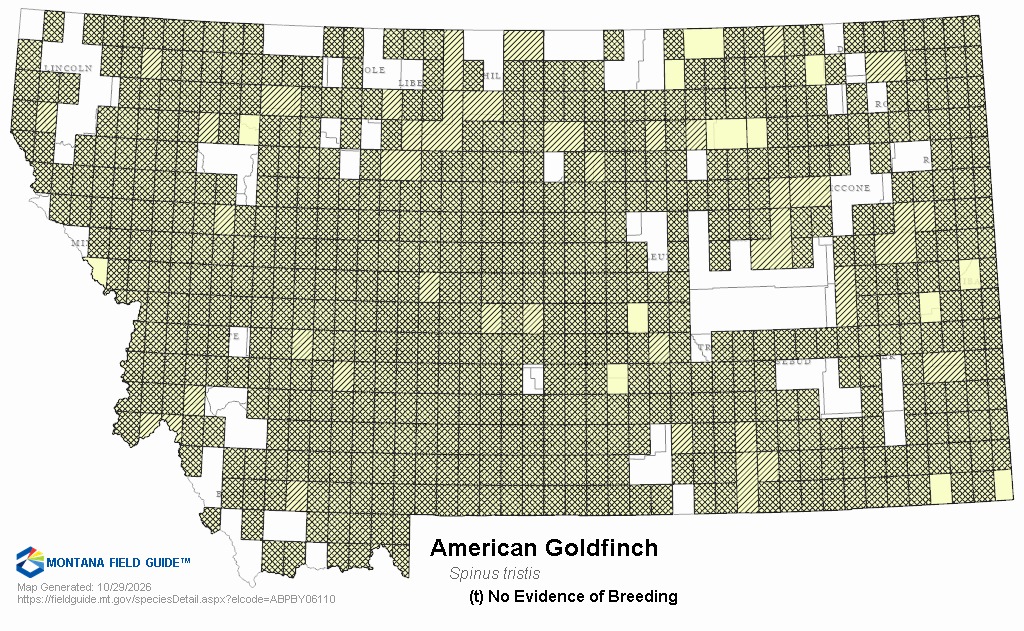
Record each sighting with these details:
- Date and region: When and where you saw the bird, including the state or local region.
- Habitat: Feeder, weedy field or open edge.
- Photographs: Your clearest views of the bill, breast, folded wings and tail, plus a second angle if you have one.
- Sound and movement: Any flight call or undulating flight, noted separately from what you saw.
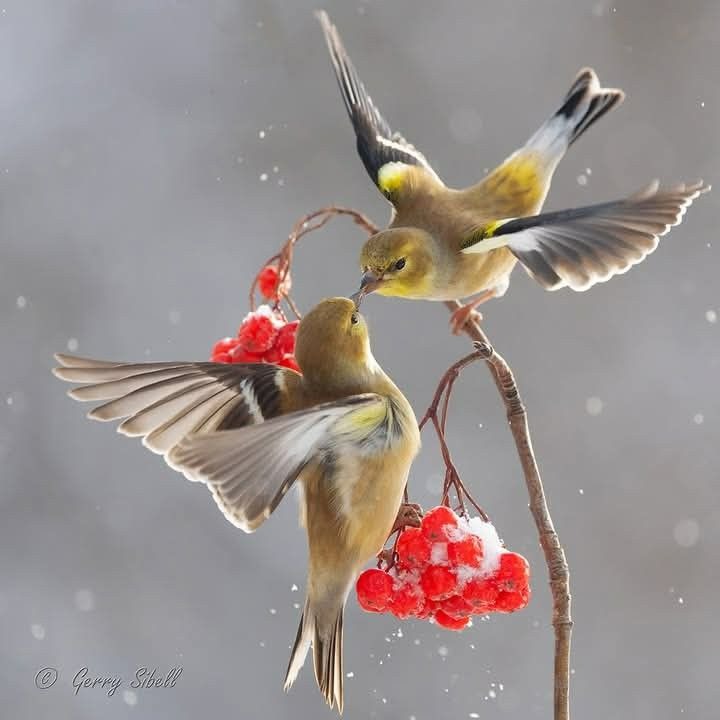
Compare your record with a dated regional field-guide image before you settle on an ID.