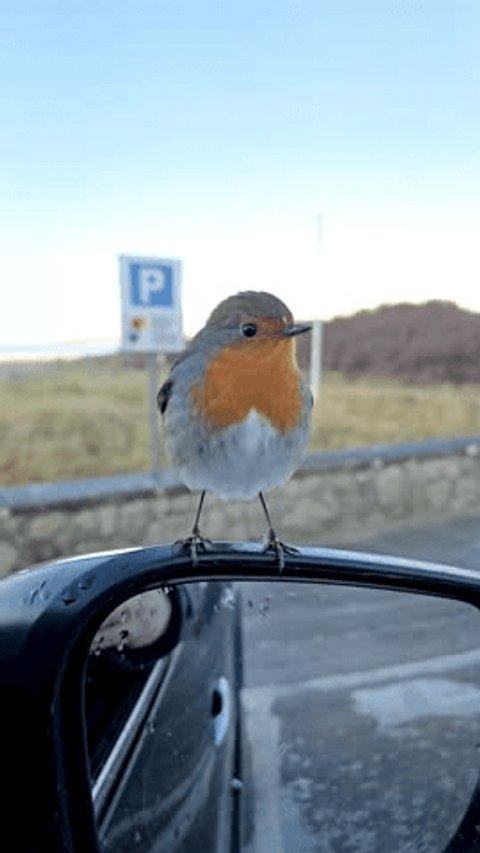
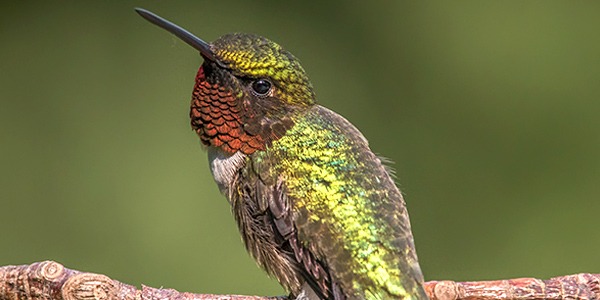
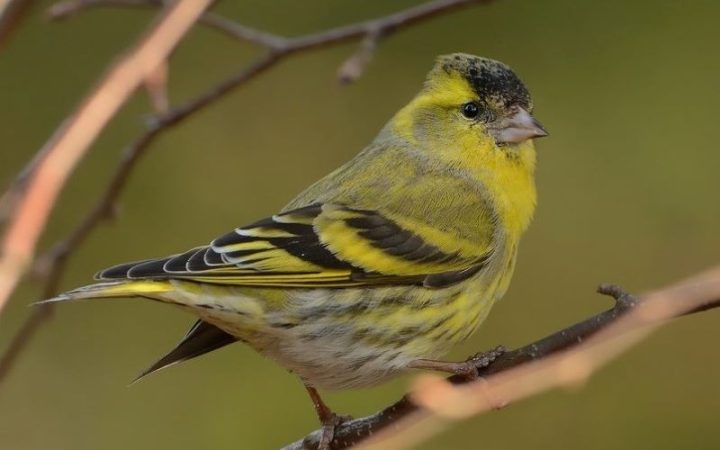
If the bird you saw in the United States has the rounded shape of a thrush, a gray-brown back, warm orange underparts, a yellowish bill, and a stop-and-go way of searching a lawn, it’s an American Robin. Spotted plumage, unfamiliar markings, or an unexpected location or season call for a closer comparison. Check age-labeled photographs and a regional seasonal range guide before settling on an uncertain ID.
How to recognize an American Robin in the field
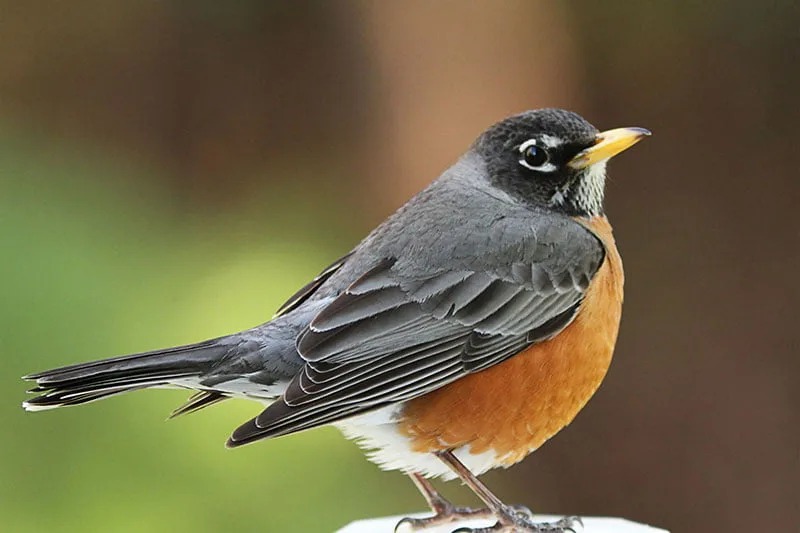
An American Robin (Turdus migratorius) is a large North American songbird in the thrush family, Turdidae. On a lawn, it stands upright on fairly long legs, with a rounded body, a longish tail, gray-brown upperparts, and warm orange across the breast and belly. The head can look darker than the back, and the bill is yellowish.
The orange breast catches your eye first. Shape and behavior confirm it: watch the bird run or hop a few steps, pause, stand tall, and search the ground for food. In a clear view, adults also show pale crescents around the eyes and a whitish throat with dark streaking.
| Field mark | What to look for | Why it helps |
|---|---|---|
| Body shape | Rounded thrush body, fairly long legs and tail | Recognizable even at a distance |
| Back and head | Gray-brown upperparts, often with a darker-looking head | Contrasts with the warm underside |
| Breast and belly | Broad orange underside | The most obvious mark |
| Bill and face | Yellowish bill; pale eye crescents in clear adult views | Confirms the ID at close range |
| Throat and undertail | Pale, streaked throat; some white below the tail | Extra detail when you can see it |
| Movement | Short runs or hops, upright pauses, ground foraging | Matches its familiar feeding behavior |
Cornell Lab’s identification guide gives reference measurements of 7.9 to 11.0 inches (20 to 28 cm) in length, 2.7 to 3.0 ounces (77 to 85 g) in weight, and 12.2 to 15.8 inches (31 to 40 cm) across the wings.
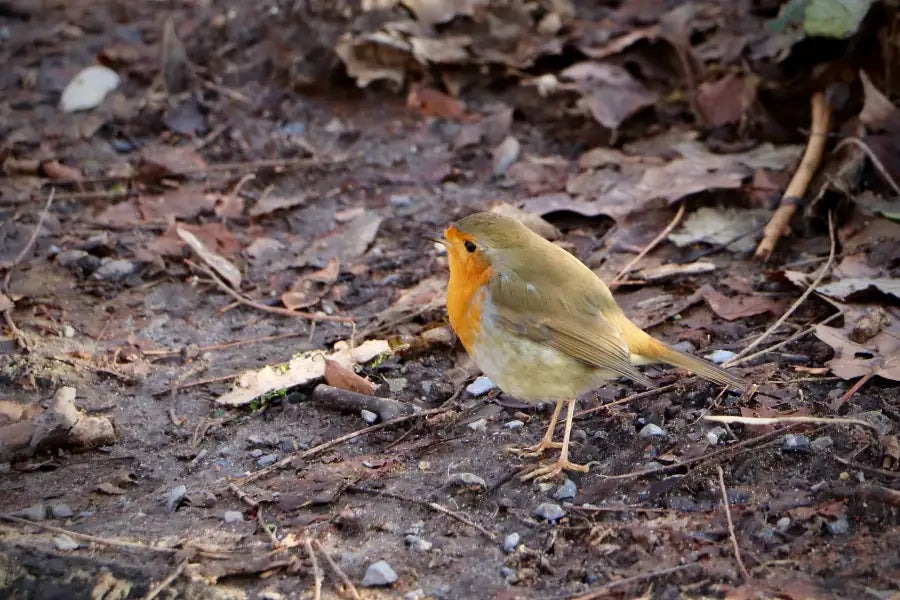
A robin runs across wet grass, pauses with its head tilted, then tugs up an earthworm. Check outline, bill, color pattern, and movement together in the same observation.
For a method that works on any species, see identifying birds by shape, color, behavior, and habitat. The European Robin (Erithacus rubecula) shares the common name but belongs to a different family.
Adult males, females and spotted young robins
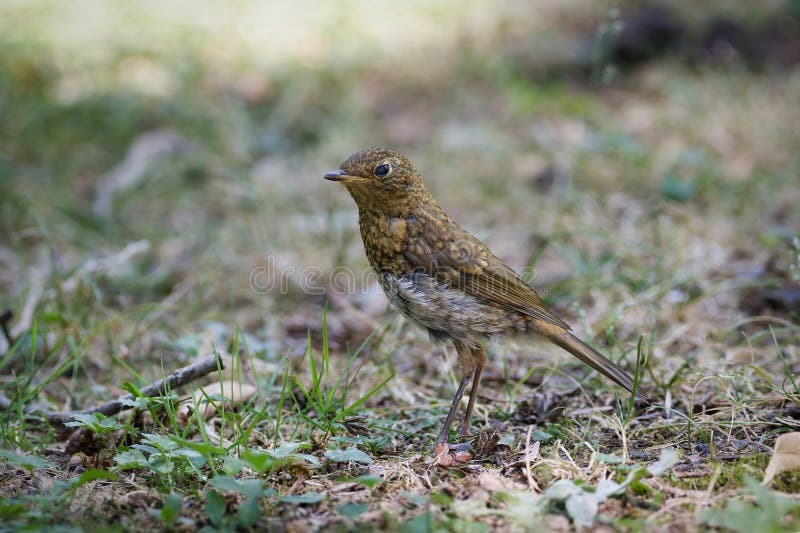
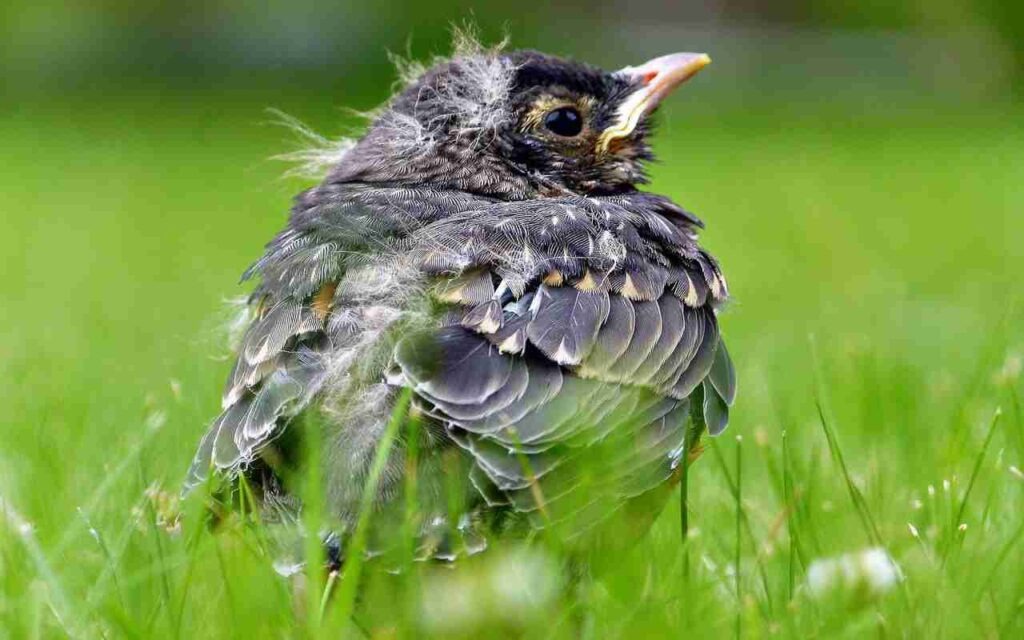
A spotted breast is the clearest sign of a young American Robin. Juveniles have spots or mottling across the breast and back, sometimes so heavy that a bird under a hedge looks nothing like the smooth orange-breasted adults nearby.
Adult males often have a darker head and richer, more contrasting plumage. Females can look paler, but individuals overlap too much to sex a bird from a brief view. Age is the more useful call.
| Bird | Typical plumage | What you can conclude |
|---|---|---|
| Adult male | Orange underparts with an often darker head and stronger contrast | Suggests a male |
| Adult female | Similar shape and orange underparts, sometimes less contrasting | Sex is often unclear |
| Juvenile | Spots or mottling across breast and back | A young bird |
In a garden, a spotted youngster hopping after an adult is normal developing plumage. A pale adult still has the same shape and orange underparts.
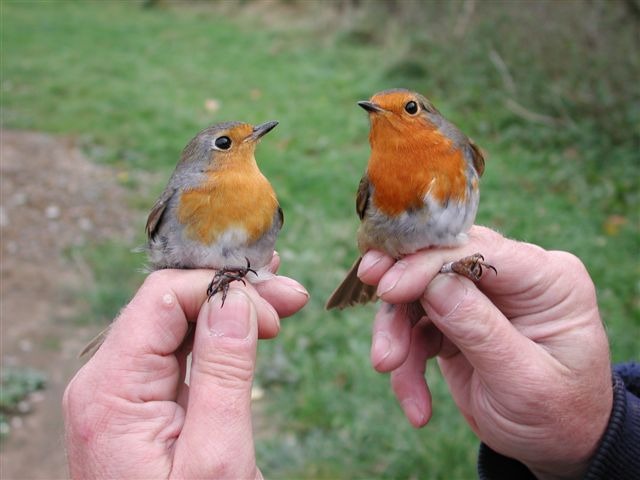
If you can tell the age but not the sex, write “adult American Robin, sex unknown” in your notes. A bird tending a nest isn’t necessarily female just because someone calls it “mama.”
Birds that look like an American Robin
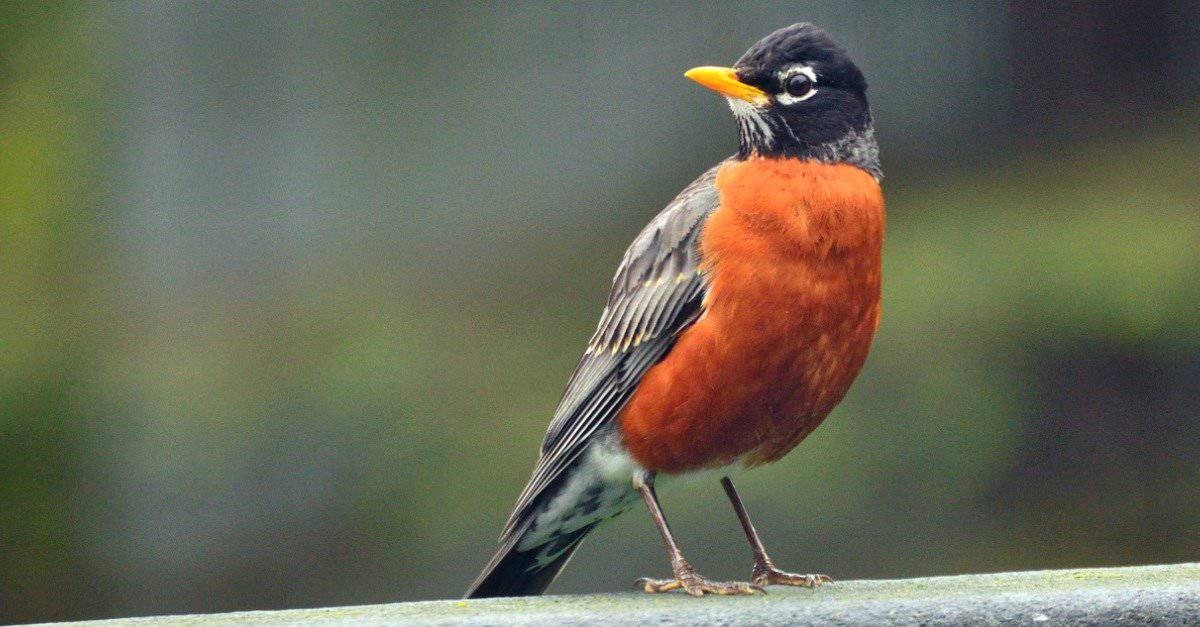
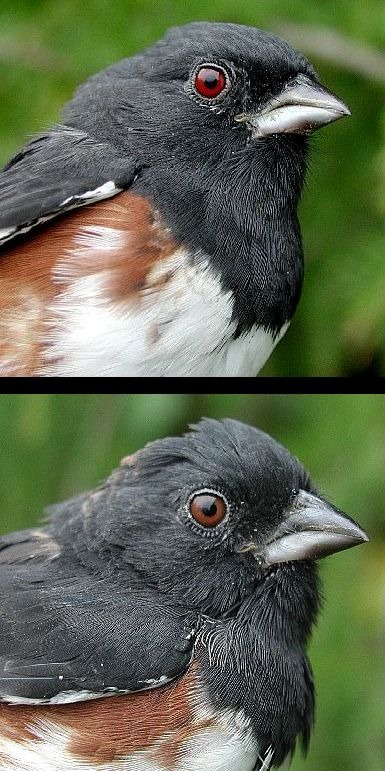
For a brief view of an orange-sided or orange-breasted bird in North America, compare Varied Thrush and the Eastern and Spotted Towhees. Bill shape and plumage pattern separate them.
- Varied Thrush: Adult males have a dark band across the breast and a warm orange eyebrow. Females and immatures are browner with a fainter breastband, but the orange eyebrow and wingbars still show. Watch for it in western regions.
- Eastern Towhee: A thick-billed sparrow with reddish sides and a white central belly. Its pattern and bill differ from the robin’s broad orange breast and slimmer thrush bill.
- Spotted Towhee: Another thick-billed sparrow with reddish sides and a white belly. Typical adults also have white spots on dark upperparts and wings.
A view from behind or through shadow can hide the deciding marks. Use location plus head, breast, bill, and body shape to narrow it down: Varied Thrush for a western sighting, a towhee when the bill and side pattern match.
Where American Robins live, and why they can appear in winter
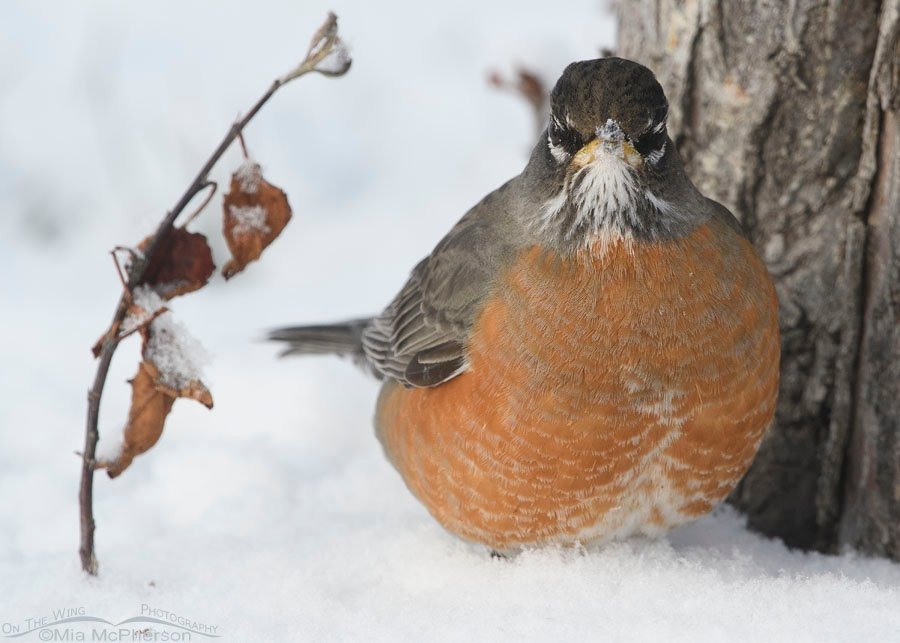
Some American Robins migrate while others stay through winter in places where people expect them gone. Movement depends on population, region, and food supply. The species lives on lawns, in parks and neighborhoods, along wooded edges, and in forests across a broad North American range.
A lone robin searching grass is easy to spot in spring. In fall or winter, birds gather in flocks and move among fruit-bearing shrubs and trees. A tree full of robins can look like a sudden arrival, though the species has often been there for months.
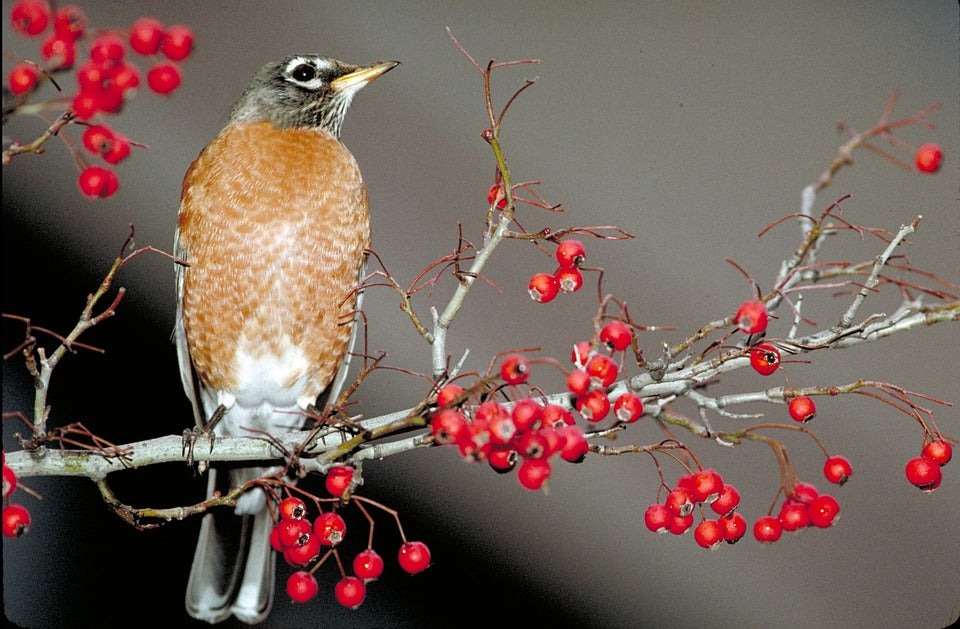
Audubon’s field guide notes that the first robin you notice in spring may have spent the winter nearby. The sighting tells you the bird is present, not where it has traveled.
When a bird seems out of place, check the location and month against Cornell’s range guide or the modeled seasonal distribution in eBird Status and Trends.
To see how map estimates relate to seasonal movement, read about reading bird migration maps.
What American Robins eat, and why the menu changes
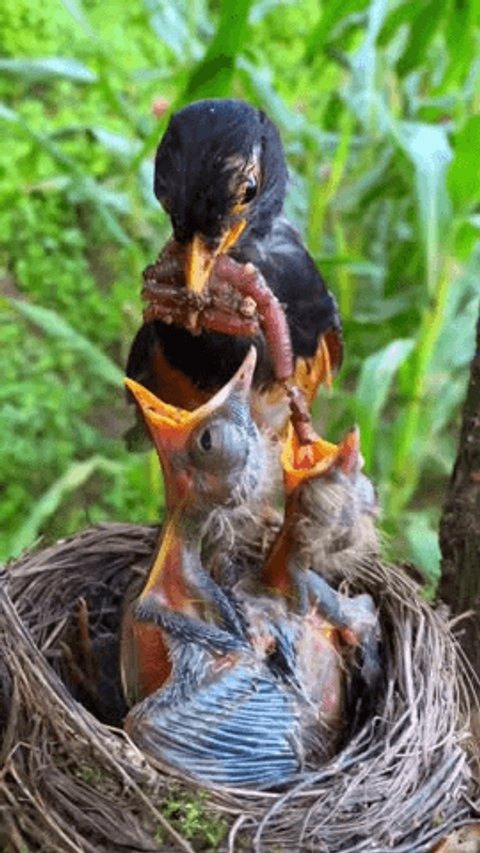
An American Robin pulling an earthworm from grass is a familiar sight, but fruit is also an important part of its diet. Robins eat insects and other invertebrates as well as berries and other fruits, depending on habitat and season.
On the ground, a robin pauses upright before probing or tugging prey from the soil. In trees or shrubs, it feeds on fruit. Cornell lists chokecherry, hawthorn, dogwood, sumac, and juniper among the plants whose fruit robins eat.
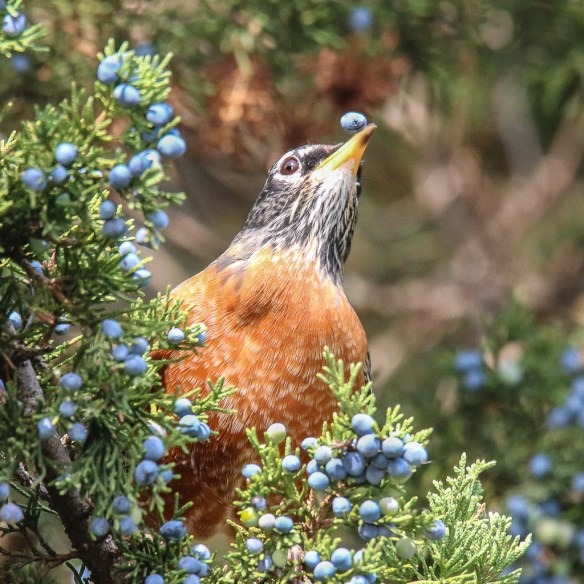
Winter flocks gather around fruiting plants, so one bird on a lawn becomes several birds feeding above ground. The balance of fruit and invertebrates changes with season and habitat, and the two overlap across the year.
In a 1986 study published in The Auk, Wheelwright examined historical stomach-content records to see how American Robin diet relates to season and habitat.
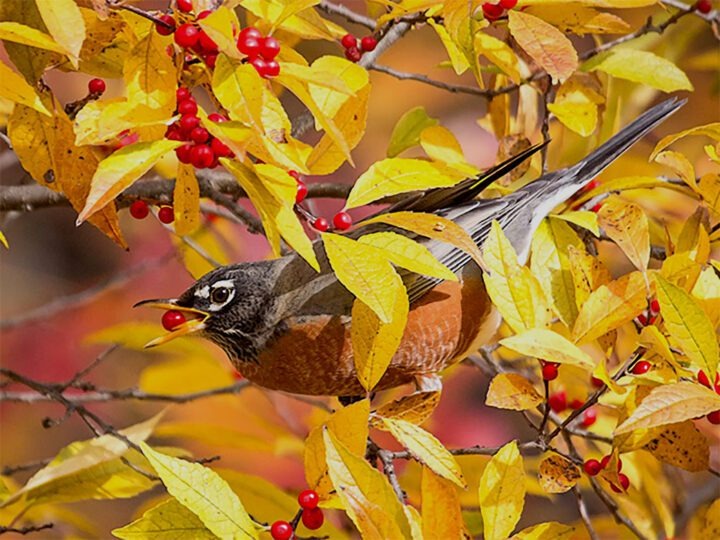
Watch what the bird eats and the surface where it feeds: soil, lawn, low vegetation, or fruiting branches. That explains why the same species shows up in different places through the year. For changes to feeding or habitat, see the guide to making a yard friendlier for wild birds.
American Robin song and calls
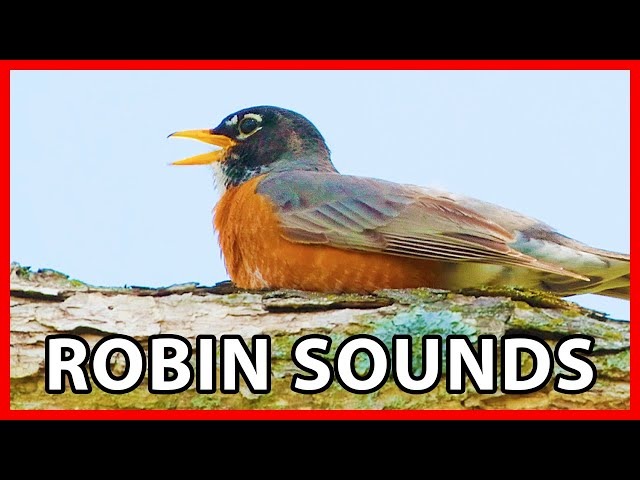
The American Robin’s song is a series of musical, rising and falling phrases, often heard around dawn during the breeding season. Shorter chips and whistles sound quite different, especially when the bird stays hidden in leaves. Listen to Cornell Lab’s American Robin recordings and use any visual clues to confirm what you hear.
American Robin nests, eggs and fledglings
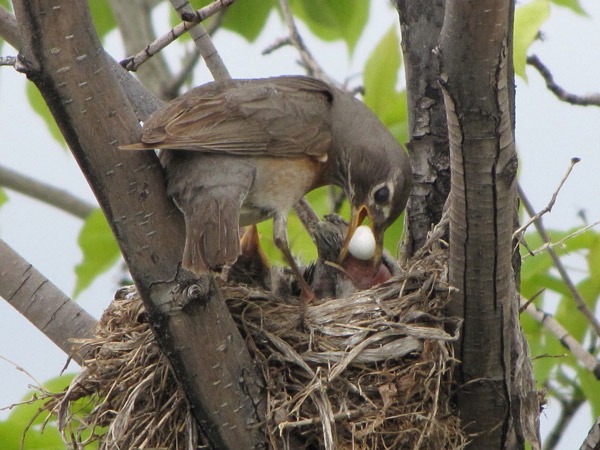
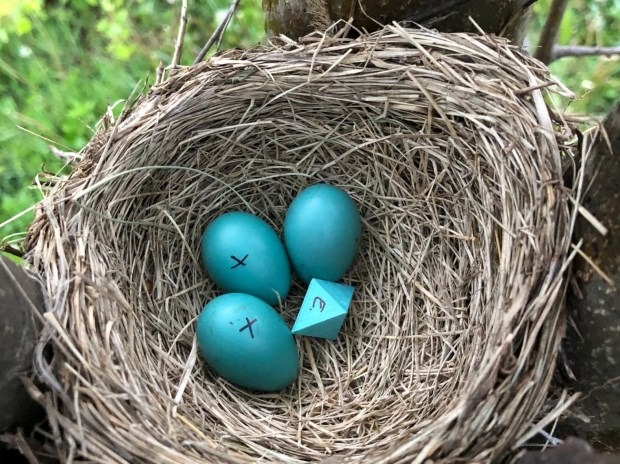
Female American Robins build cup-shaped nests from twigs, grasses, and a reinforcing layer of mud. Nests go in trees and sheltered parts of buildings, so a porch light or hanging planter can put a breeding bird close to daily human activity.
An adult leaving the nest when a door opens or someone waters a nearby planter can look alarming, but a temporary absence doesn’t mean abandonment.
| Nesting detail | Cornell reference |
|---|---|
| Finished nest diameter | Approximately 6 to 8 inches |
| Nest height | Approximately 3 to 6 inches |
| Clutch size | 3 to 5 eggs |
| Incubation | Approximately 12 to 14 days |
| Nestling period | Approximately 13 days |
| Broods | 1 to 3 |
A real nest may be at a different stage than the table suggests, especially if you didn’t see when incubation began.
A feathered young robin on the ground is often a fledgling, developing normally outside the nest while its parents care for it. A much younger nestling or a visibly injured bird is a different case. Check its feathering, behavior, and any immediate danger before deciding what help it needs.
When a nest or young bird causes concern: Keep clear of active nests and don’t handle eggs or young birds without qualified guidance. If a bird is injured or in immediate danger, contact a licensed wildlife rehabilitator or wildlife authority. Household incubators and improvised feeding are unsafe substitutes for specialized care.
The U.S. Fish and Wildlife Service bird-nest guidance explains federal protections and why active nests matter under the Migratory Bird Treaty Act. What’s allowed depends on the circumstances, including whether the nest is active.
If you found a young bird below a nest and need to decide what to do, read the guide to finding a baby bird on the ground.
Why robins sometimes attack windows or chase other birds
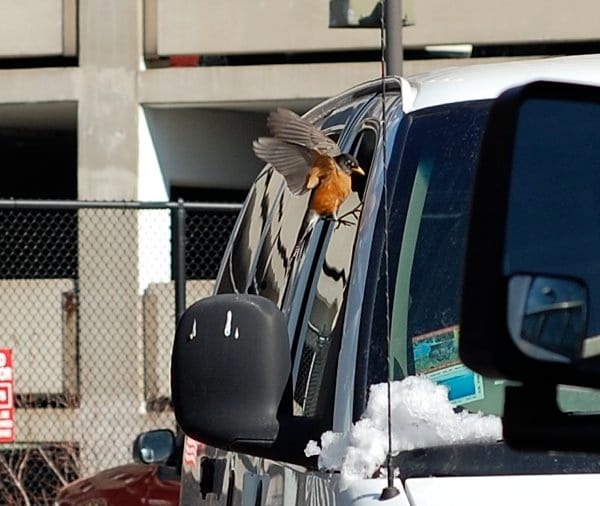
A robin that keeps pecking a window or makes aimed flights at a car mirror is reacting to its reflection as if it were another bird. This territorial behavior differs from an accidental flight into glass, which can leave a bird stunned or injured.
| What you see | Likely interpretation | Next step |
|---|---|---|
| Repeated pecking or targeted charges at a window or mirror | A response to a reflected apparent rival | Cover or reduce the reflection on the outside of the glass; cover or move an affected vehicle if you can |
| Sudden impact followed by apparent injury | Accidental window collision | If the bird is visibly injured, can’t fly, or stays impaired, contact a licensed wildlife rehabilitator promptly. Don’t offer food or water unless a wildlife professional says to. |
| A robin pursuing a different bird | A bird-to-bird interaction; the cause is unclear | Watch the context without assuming a motive |
Reflection stays visible from outside even with a curtain hanging inside the window. To prevent accidental strikes, see reducing bird-window collisions.