For a US observer, a crested bird with a bold black necklace, pale underparts, and black-and-white barred blue wings and tail is a strong Blue Jay identification when its location and other field marks fit. If the bird’s features or region point to another jay or a bluebird, compare those candidates. If a hawk-like call is the only clue, locate the caller before recording a Blue Jay.
How to Recognize a Blue Jay in the Field
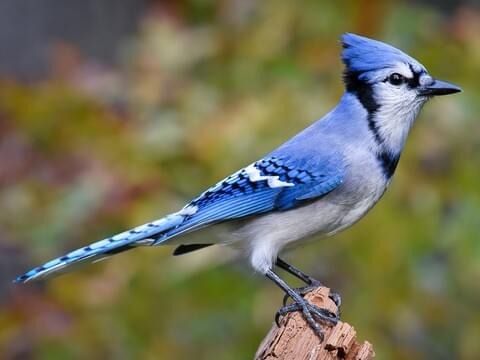
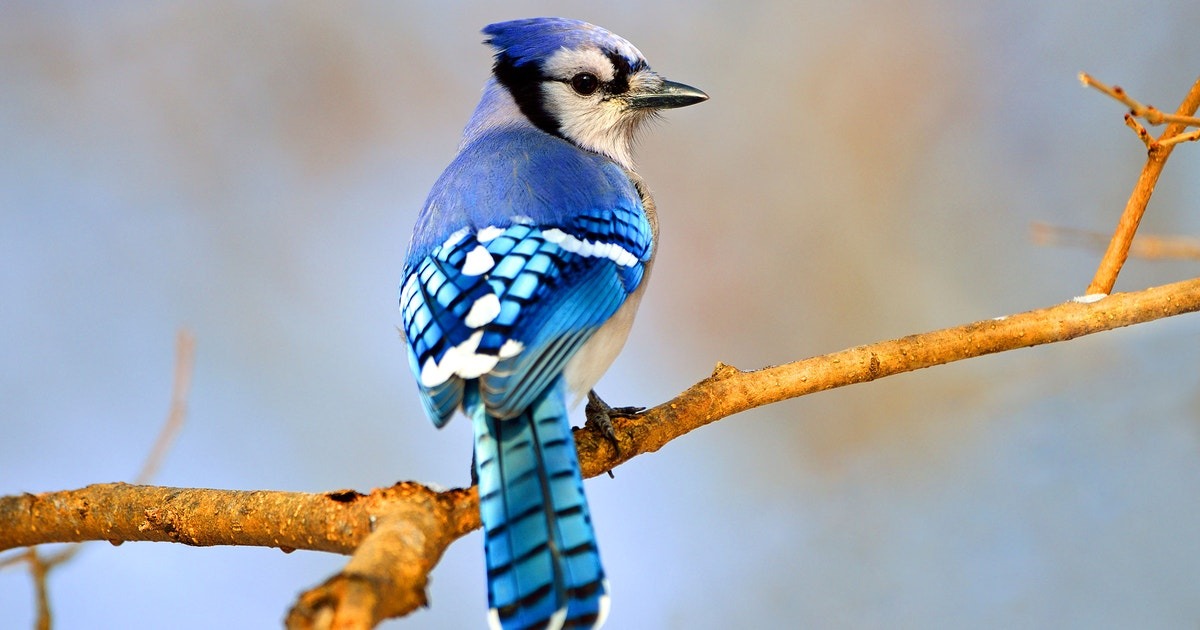
The Blue Jay (Cyanocitta cristata) is a large, crested songbird in the crow family, Corvidae. Blue upperparts, a patterned face and throat, a pale belly, barred wings and a long tail make it easy to pick out. The crest rises or lies flat, so a flat crest doesn’t rule out a Blue Jay. To tell the sexes apart, see male vs female blue jay: what you can tell in the field.
A perched adult has a stout, straight bill and a broad, rounded tail. It is larger than an American Robin and smaller than an American Crow. Cornell’s Blue Jay identification guide gives an adult length of 9.8 to 11.8 inches (25 to 30 cm) and a wingspan of 13.4 to 16.9 inches (34 to 43 cm).
| Field mark | Typical appearance | What it tells you |
|---|---|---|
| Shape | Prominent movable crest, stout bill, substantial body | Separates the bird from small, round-headed bluebirds |
| Face and neck | Pale face framed by black markings and a bold black necklace | Distinguishes the pattern from scrub-jays |
| Wings | Blue feathers crossed by black-and-white bars, with a white wing bar | Useful during a side view or a brief spread-wing glimpse |
| Tail | Broad and blue with black barring and pale markings | Useful as the bird turns or flies away |
| Underside | White to pale gray | Contrasts with the rusty breast of a male Eastern Bluebird |
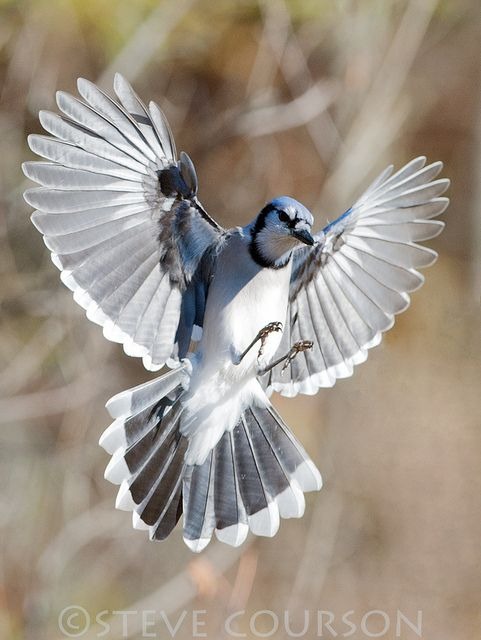
In a short sighting, check body shape and crest first, then the face and neck markings, then the wing or tail pattern. A glimpse of the black necklace and barred tail is especially helpful. In flight, the wings and tail are easier to judge than the head.
Much of a Blue Jay’s blue plumage comes from microscopic feather structures that scatter light, producing a non-iridescent blue. Cornell also describes pale-blue iridescent patches on the wings that look brighter or duller as the viewing angle changes. When light passes through a blue feather, underlying brown melanin can become visible.
Blue Jay or Another Blue Bird? The Useful Differences
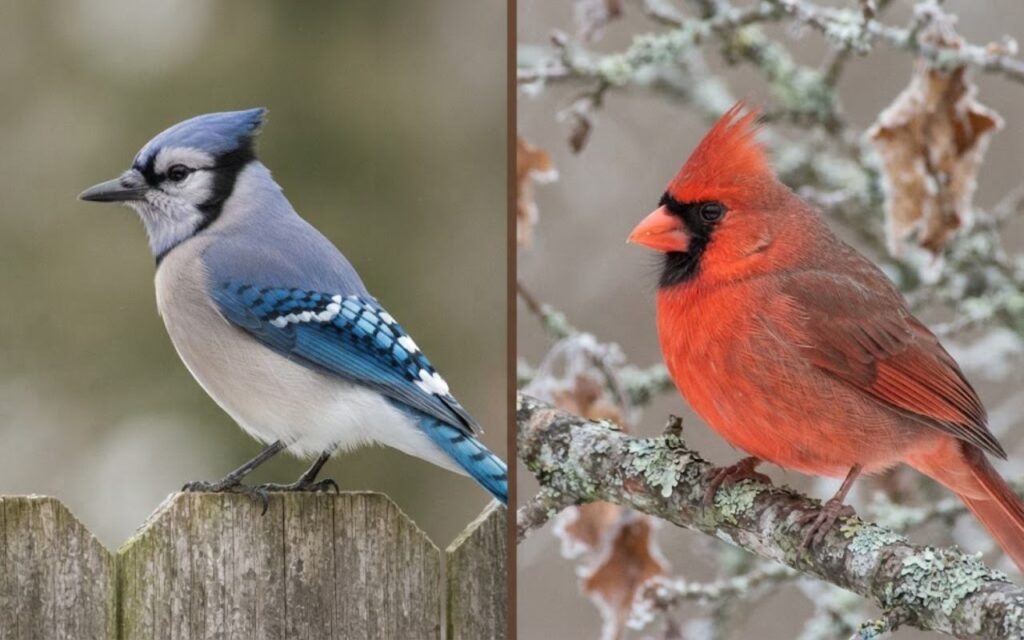
Other jays and the smaller Eastern Bluebird share the blue coloring. Head pattern, crest, breast and local habitat separate them.
| Bird | Head and crest | Neck or underside | Where to consider it |
|---|---|---|---|
| Blue Jay | Prominent crest, light face with bold black framing | Black necklace; pale underside | Eastern and central North America, wooded yards and forest edges |
| Steller’s Jay | Tall crest and dark charcoal or black head | Blue lower body | Western evergreen and mixed forests |
| California Scrub-Jay | Blue-gray head without a prominent crest | Pale underside; partial blue necklace | West Coast oak woodland and chaparral |
| Florida Scrub-Jay | Uncrested, with a pale forehead | Grayish back and belly | Florida scrub habitat |
| Woodhouse’s Scrub-Jay | Uncrested, blue-gray head | Thin, partial pale-blue chest marking | Interior western pinyon-juniper and open woodland |
| Eastern Bluebird | Smaller, rounder head without a crest | Male has rusty-orange throat and chest; female is more muted | Eastern North American open country and edges |
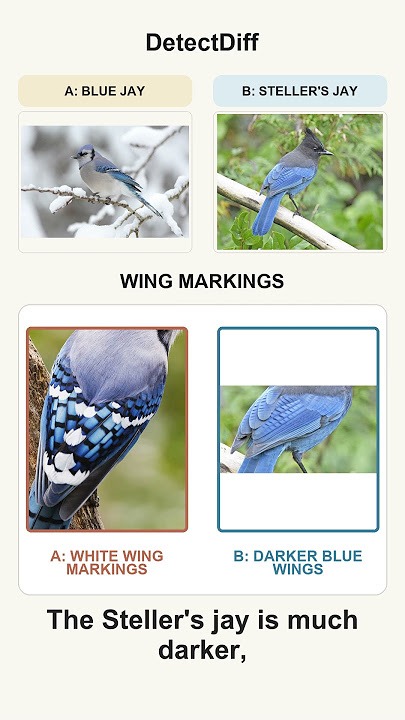
A dark crested head in a western conifer forest points to Steller’s Jay. A small bird with blue upperparts and a rusty-orange chest in an eastern meadow is a male Eastern Bluebird. For bill shape, plumage, and habitat, see how to distinguish Blue Jays from bluebirds.
Scrub-jays lack the tall crest. A California Scrub-Jay also has a partial blue necklace, but the Blue Jay’s heavier black facial pattern is distinctive. Florida Scrub-Jays belong to Florida’s scrub habitat. Match the head and breast markings to the birds expected in your region, especially when the view is incomplete.
Blue Jay Calls, Whisper Songs, and Hawk Mimicry
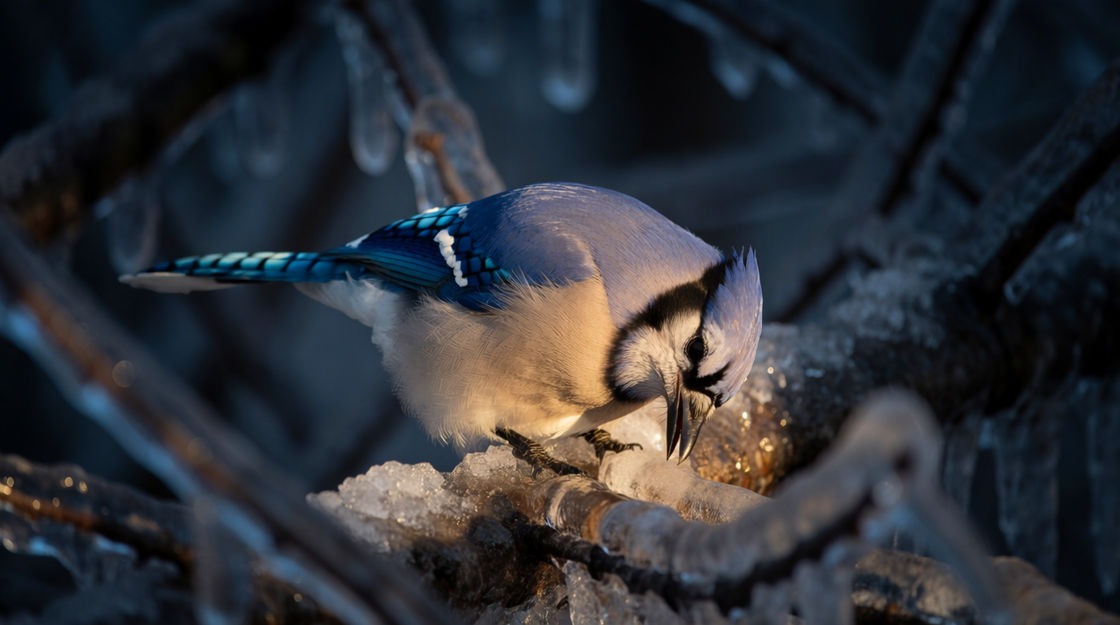
Besides the familiar harsh jeer, Blue Jays whistle, gurgle, click and sing a softer whisper song. They also imitate hawks, particularly Red-shouldered Hawks, closely enough to fool listeners and sometimes sound-identification software.
Cornell’s Blue Jay sound recordings demonstrate its range of calls and whisper song. The species description also covers frequent hawk imitation.
A Blue Jay’s whisper song can continue for more than two minutes. Cornell describes a low-volume mixture of clicks, liquid notes, whines and other sounds.
One birder watched the calling bird while Merlin suggested a hawk:
This has happened a few different times to me. Merlin will identify a bird as a Hawk when it’s actually a Blue Jay. I know for sure because I’m watching the Blue Jay at the feeder and checking it with the app. I kind of skimmed through the ‘Help’ section to see if there was a way to report it but I couldn’t find anything. I was just curious if anyone else had noticed this problem – or do I just have a Blue Jay that sounds like a Hawk
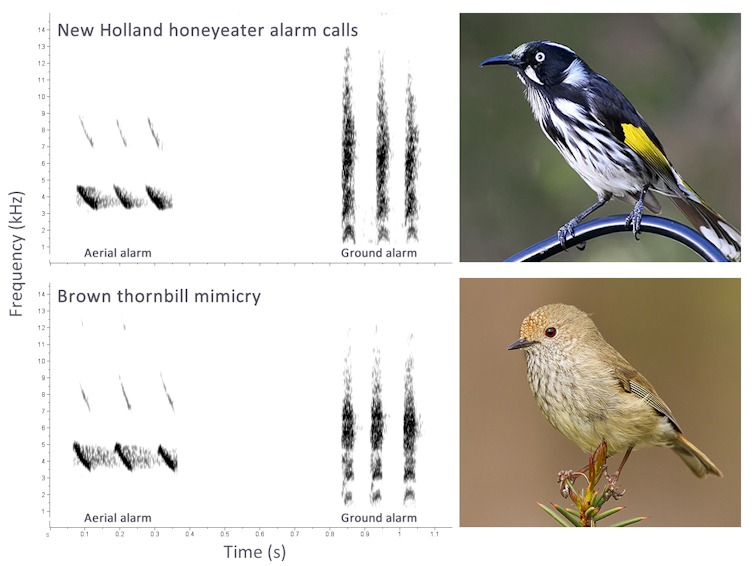
The birder saw the jay making the sound, which explains why the app and the bird disagreed.
| Sound or encounter | What it suggests |
|---|---|
| Harsh, repeated jeer | A familiar Blue Jay call |
| Quiet clicks, whistles and liquid notes | The softer Blue Jay vocal repertoire |
| Hawk-like scream from an unseen bird | A hawk or a mimic |
| Hawk-like sound from a visible jay | Mimicry you can witness |
When Merlin suggests a hawk, open the suggested species, examine its spectrogram and compare the example sounds. The Merlin Sound ID guidance also directs you to the Details view for range, habitat and behavior. Find the actual caller, then combine the sound with what you see before recording a definite identification.
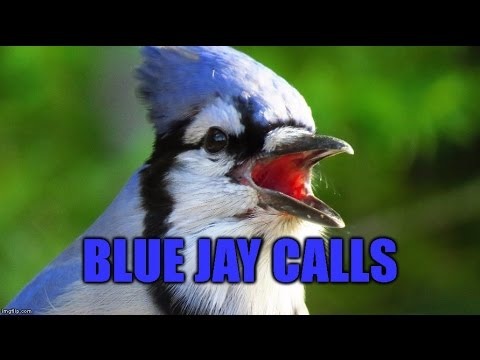
Jays may imitate hawks to alarm nearby birds or to gain access to food. Birdwatchers and specialist observers have also reported imitations away from feeding stations.
What Blue Jays Eat, Carry, and Cache
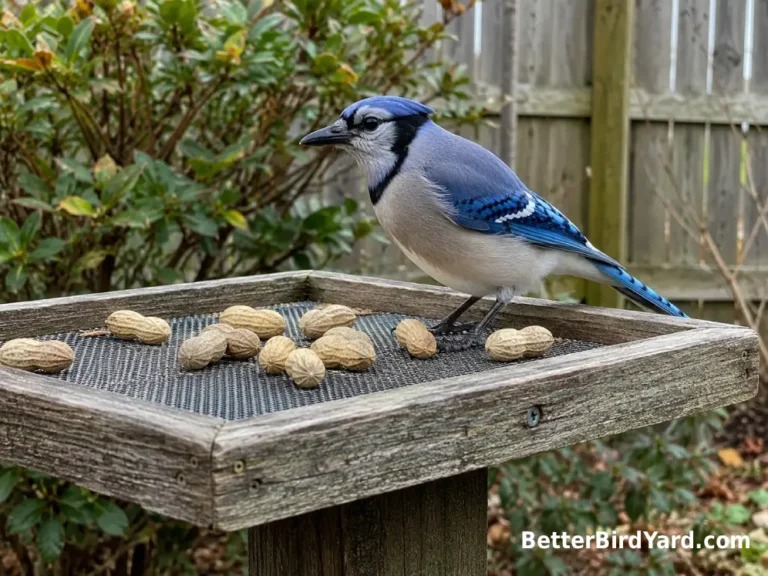
Blue Jays eat acorns and other nuts, seeds, fruit, grains, insects and some additional animal foods. Oaks matter in their foraging habitat because acorns can be eaten immediately or stored for later use.
At a feeder, a jay grips a sunflower seed under its feet and hammers it open with its bill. It also carries a peanut away, returns, and leaves with another. Cornell describes Blue Jays transporting several acorns in a single trip, as many as five carried in the bill, mouth and upper esophagus.
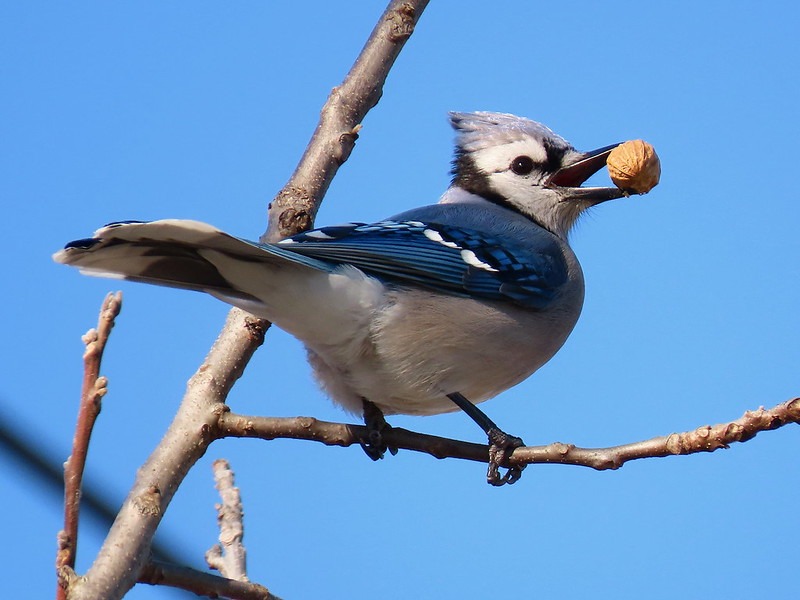
Caching explains these repeated trips. In one study described by Cornell, six radio-tagged Blue Jays each cached approximately 3,000 to 5,000 acorns during a single autumn.
A Reddit commenter described what happened when the peanuts ran late:
I have both species on my property. I feed the Bluejays peanuts. They let me know its peanut o’clock. One morning I was feeling ill and didn’t get out at my usual time. When I finally stepped out to get a bit of fresh air a Jay landed on a post very near to me, leaned in, and I swear, looked me dead in the eye and let out the loudest, most obnoxious Red-shoulered Hawk call. Then flew off a bit. It was like he was saying ” hey lady, im not playin’, where’s the damn peanuts??!
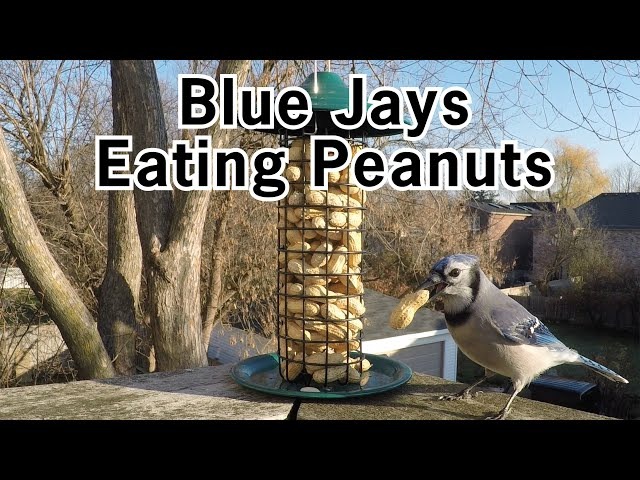
When you watch a feeding jay, note whether it opens the food at once, carries it away or returns for another item.
Alarms, Mobbing, and Social Behavior
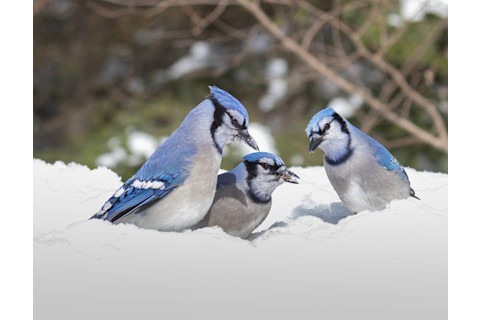
Blue Jays communicate with other birds, compete for food, and sometimes join noisy encounters around predators. When a hawk or owl appears, a jay may call repeatedly while other species, including chickadees, cardinals or woodpeckers, react nearby. Birds that approach and harass a possible predator are engaging in mobbing.
Dominance at a feeder varies from encounter to encounter. Blue Jays can displace smaller birds, while other birds and gray squirrels sometimes displace the jays. Their crests also rise or flatten during an encounter.
Where Blue Jays Live and Whether They Migrate
Blue Jays occur widely across eastern and central North America, extending into southern Canada. They favor forests with oaks, woodland edges, parks, woodlots and suburban yards. In neighborhoods with mature trees, they visit feeders and move between planted trees and nearby woods.
Migration is partial and irregular. Many Blue Jays stay in the same broad region all winter, while others move south in variable numbers. Cornell describes individuals migrating in some years and remaining resident in others. Fall movements include daytime flocks near the Great Lakes and along the Atlantic coast.
For a sighting outside the expected local pattern, compare the season and habitat with a regional range guide or a dated eBird record.
Male, Female, Juvenile, and Bald Blue Jays
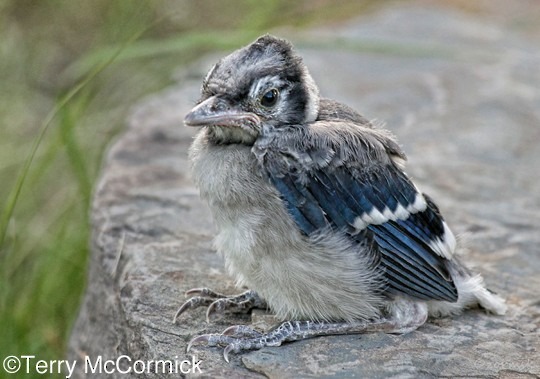
Male and female Blue Jays have similar blue, white, black and gray plumage, so a casual photograph rarely settles the sex. Juveniles are duller or grayer, sometimes with shorter crests. Late in summer or during fall, some birds go through a synchronized head-feather molt that leaves the crown bare. Cornell reports that fresh feathers begin to restore the head’s appearance after roughly a week. Other conditions can also affect head plumage, so check the season and the bird’s overall condition. Leave unusual birds alone, with no handling or amateur treatment.
Nesting, Young, and the Nest-Raiding Reputation
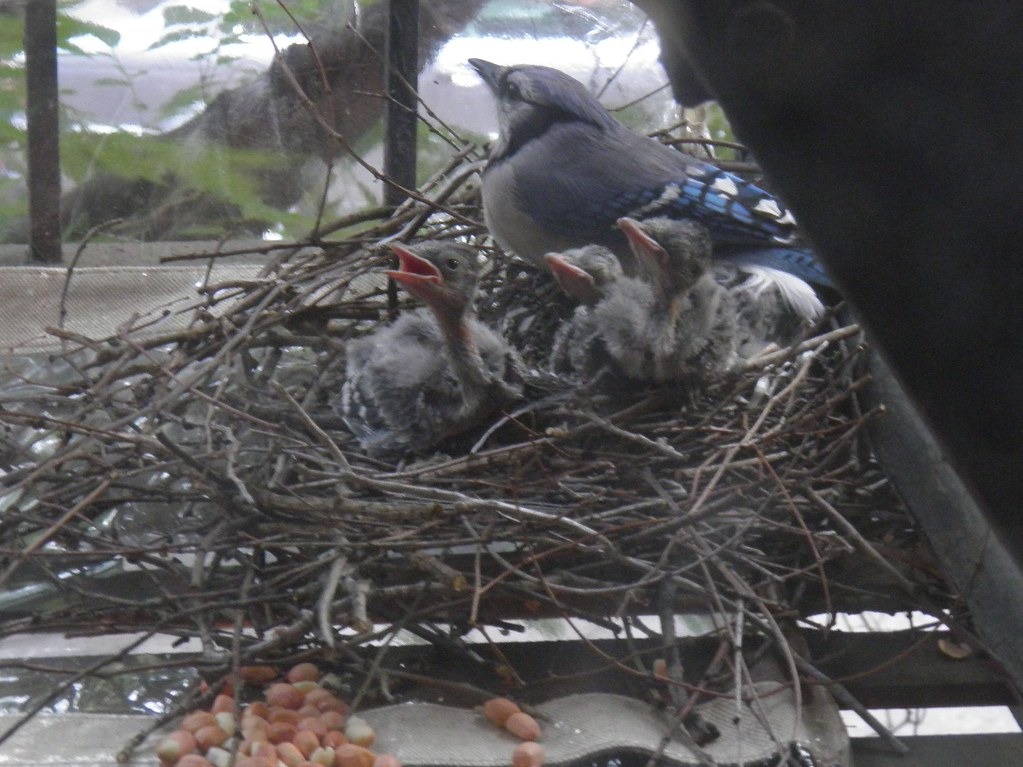
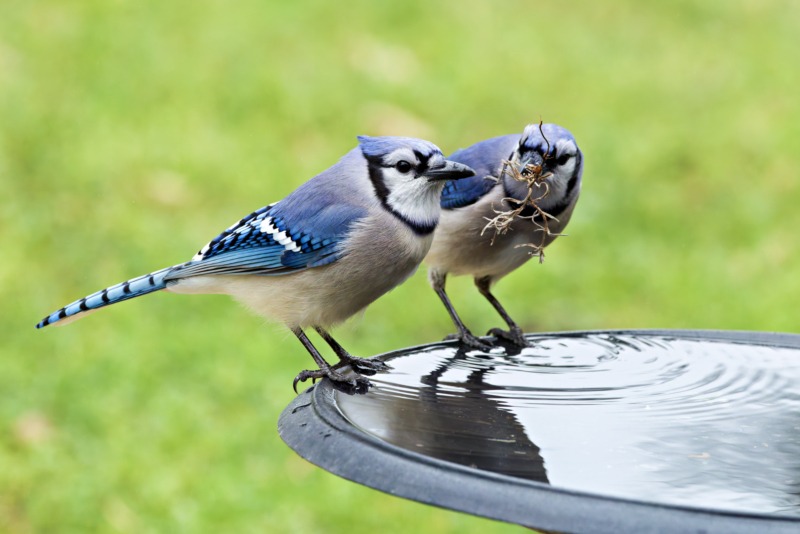
Blue Jays build sturdy open-cup nests among tree branches from twigs, rootlets, grass and sometimes mud. Both adults help build the nest and feed young. A nest can stay hard to see even when jays are active in the canopy around it.
The Cornell Blue Jay life-history account gives these nesting figures:
| Nesting feature | Reported range |
|---|---|
| Nest height | 10 to 25 feet |
| Clutch size | 2 to 7 eggs |
| Incubation | 17 to 18 days |
| Nestling period | 17 to 21 days |
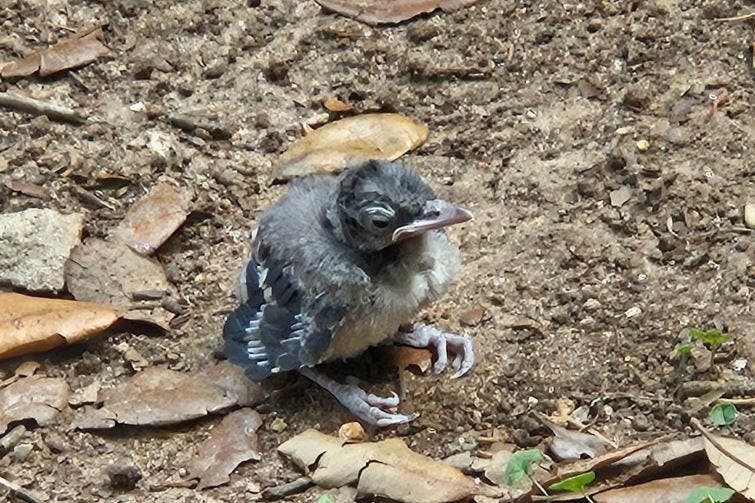
Young Blue Jays keep begging and receiving food after leaving the nest while they develop their flying and foraging skills, so a young bird outside the nest may still be under parental care. Watch nesting birds from a distance and leave active nests and young birds undisturbed.
Blue Jays sometimes eat other birds’ eggs or nestlings, a behavior that has given them a reputation as nest raiders. Cornell recounts a historical examination of 530 Blue Jay stomachs in which six contained traces of eggs or nestlings.