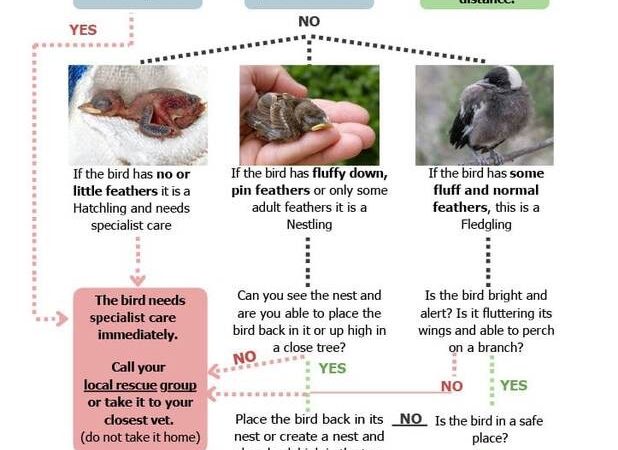
Identify the nesting stage and watch from a distance. A missing parent or an empty nest does not mean abandonment. If a bird is visibly injured, in immediate danger, or you plan an action the law may restrict, such as moving or removing a nest, get specialist guidance instead of acting on a guess.
What stage is this bird nest in?
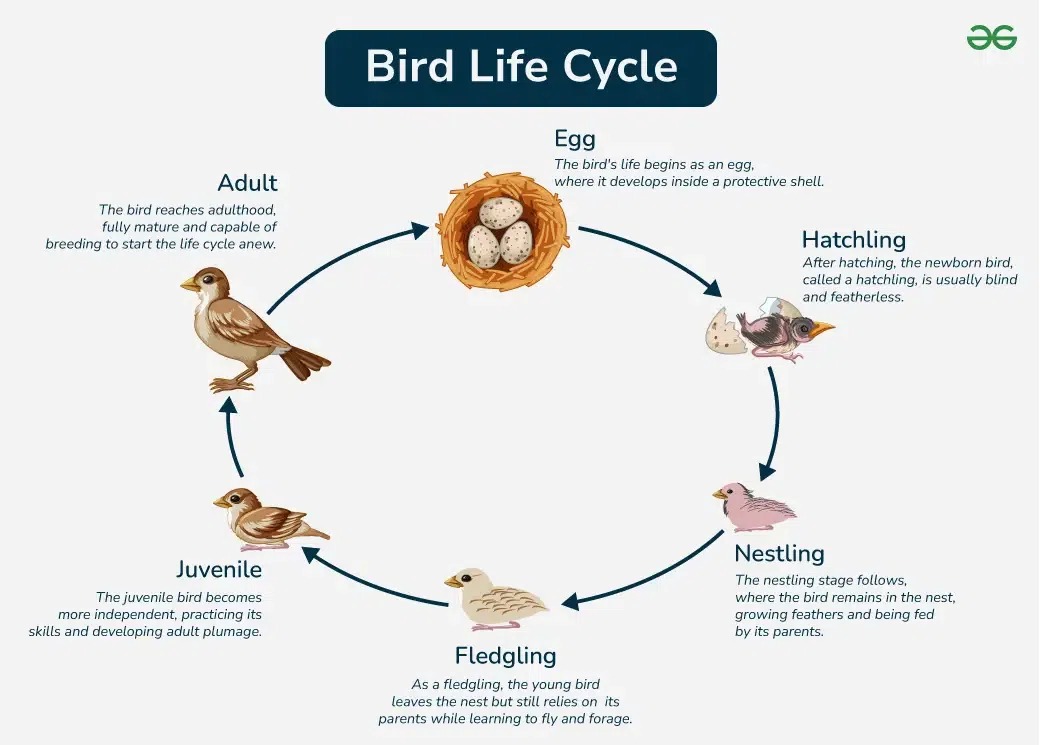
Fresh building material, eggs and young birds each point to a different stage of the nesting cycle.
| What you see | Likely stage | What it means | Explore this stage |
|---|---|---|---|
| Adults carrying nest material or assembling a structure | Site selection or construction | A breeding attempt is starting, before any eggs. | Nest building |
| Eggs or an adult settled over them | Egg laying or incubation | Eggs are present, and the adults are usually caring for them. | Eggs and incubation |
| Small, bare or downy chicks in a nest | Hatchling or nestling development | Many songbird chicks depend heavily on adults. | Types of hatchlings |
| Feathered young moving outside the nest | Fledgling or later juvenile stage | Leaving the nest often comes before full independence. | Fledging |
| Ducklings walking with adults soon after hatching | Precocial development | Some young become mobile very early. | Developmental differences |
| A nest that suddenly appears empty | Cause unclear | The young may have left, or another event occurred. | Empty-nest clues |
Development differs by species, so the same stage looks different from one bird to the next. A duckling walking after hatching and a young robin hopping beneath a shrub follow different development strategies.
From nest building to hatching eggs
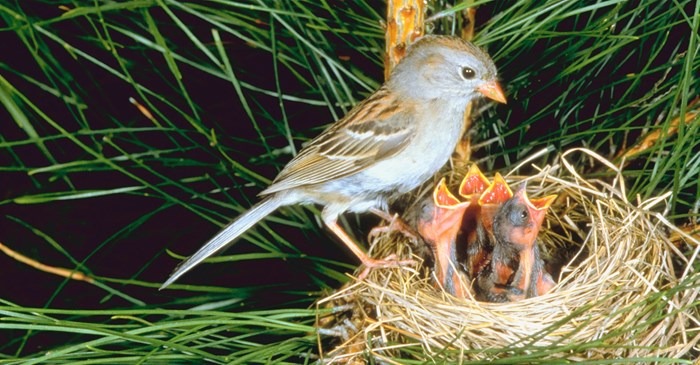
Nesting begins before the first egg appears. Courtship, territory establishment and nest-site choice shape where a breeding attempt takes place. Construction, egg laying and incubation follow, and the division of work varies among species.
A nest in a porch shrub is easy to recognize. A shallow scrape on the ground hardly resembles the woven cup people picture when they hear the word nest. Both can hold eggs and young, depending on the bird.
Cornell NestWatch’s nesting-cycle guide describes the progression from site selection and construction through laying, incubation, hatching and development.
Egg laying and incubation are separate processes. In many songbirds, incubation usually starts once the clutch is complete, so the eggs hatch close together. In certain herons, cranes, cormorants and raptors, incubation can begin with the first egg, and the young hatch on different days.
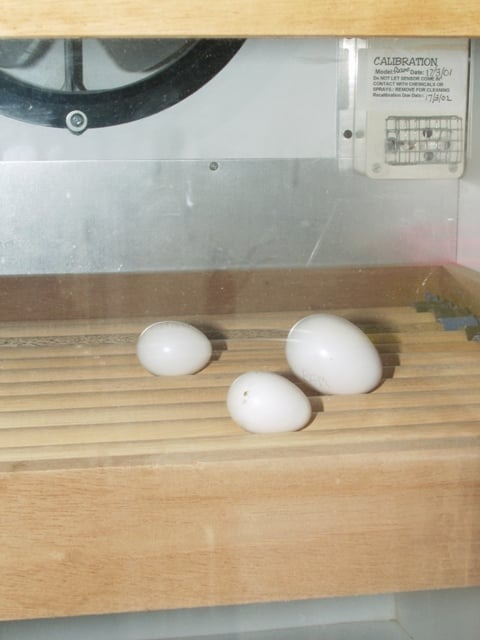
Breeding dates depend on the species, region, climate, habitat and available resources. A nesting observation from Indiana cannot supply a dependable date for the whole United States. To estimate when eggs might hatch in your yard, consult a reliable species account for the local season.
Why some hatchlings stay in nests and others walk away
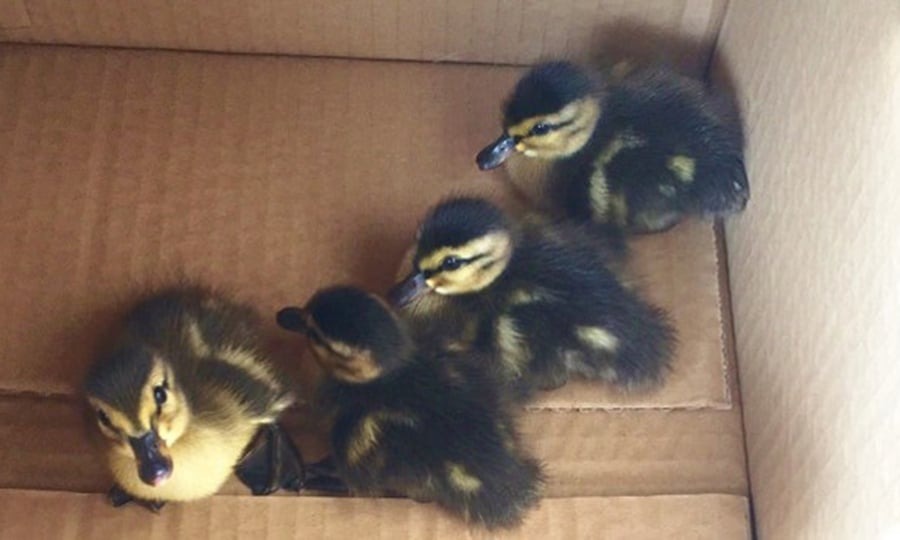
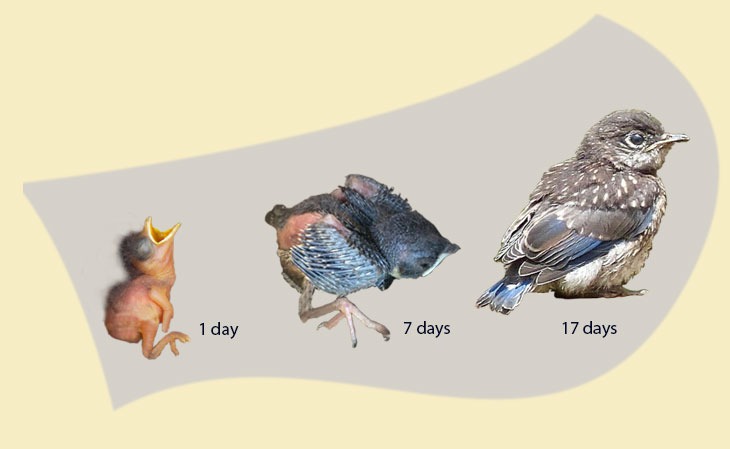
Many songbirds hatch as altricial young: comparatively helpless chicks that stay in the nest while adults provide food, warmth and protection. Many ducks produce precocial young, which walk or swim soon after hatching but still depend on adults for care. Down, feather development, eye condition and mobility explain the contrast. The category is useful, but one visible trait does not tell you a chick’s age or welfare needs.
What fledging means
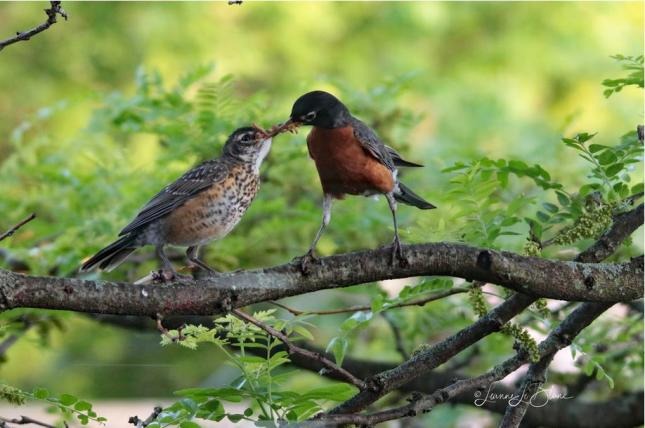
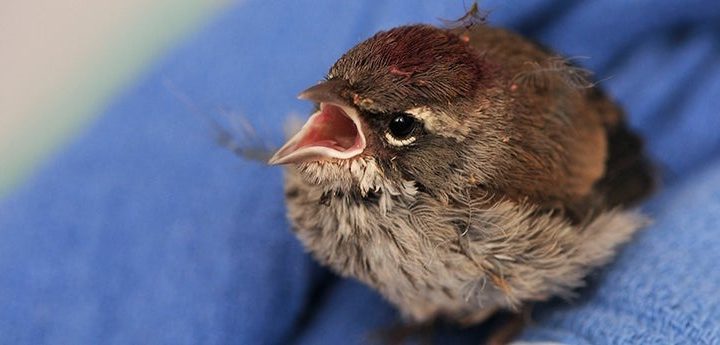
A fledgling has left its nest but may still be learning to fly and find food. In many species, parents keep feeding and protecting young birds after they move into nearby vegetation or onto the ground. For the checks that separate nestlings, fledglings and parental care, see what to do after finding a baby bird on the ground.
A young robin beneath a bush hops, flutters and makes short flights while adults stay active nearby. Siblings from one nest can leave on different days.
One observer followed four American Robin hatchlings through the days around fledging.
Short story: We had the amazing opportunity to watch a pair of American Robins building the nest, laying eggs, feeding the 4 hatchlings, and now the littles ones are about to leave the nest. 2 of them already left 2 days ago. My presence did scare the first one and made him jump out. I feel absolutely terrible about this and will never disturb them again! Yesterday, I found both fledglings near our house. Today I only found one. I saw him flying from the ground to the edge of a balcony about 2.5m (8 feet) high which is pretty impressive . I’m pretty sure the other fledgling is alive too ☺️
The writer found only one of the two fledglings the next day.
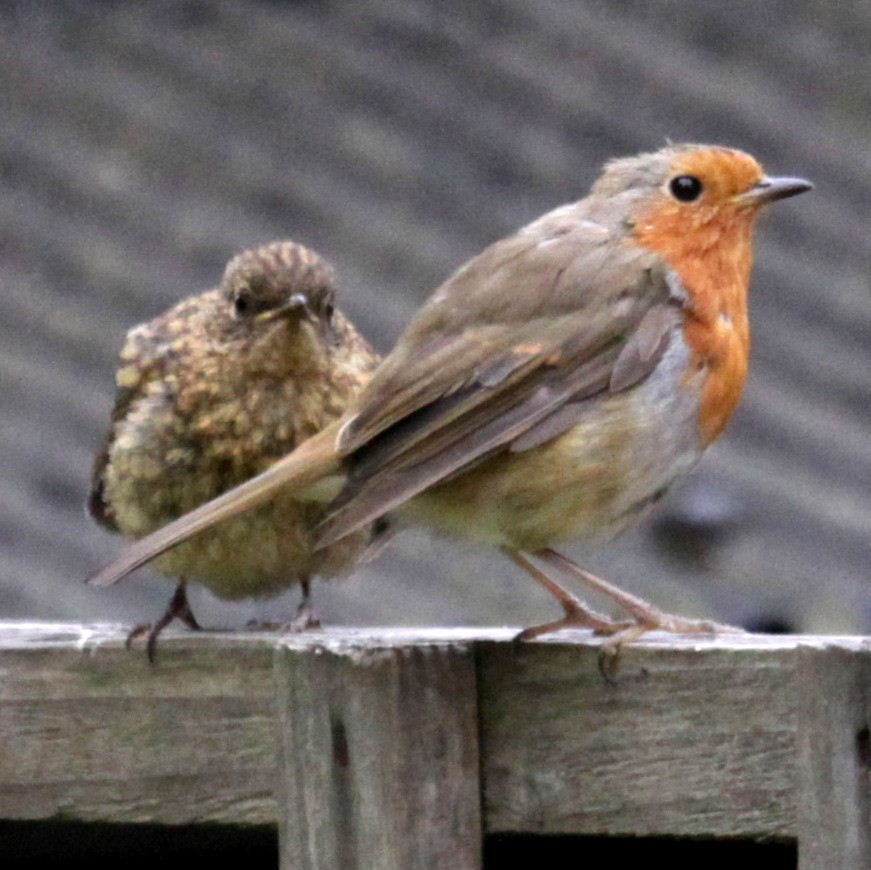
Watch from your safe viewing spot for adult visits or feeding near a feathered youngster. The U.S. Fish & Wildlife Service’s baby-bird guidance explains why. An obviously injured bird needs qualified help, even when its plumage suggests a fledgling.
When a nest suddenly goes quiet
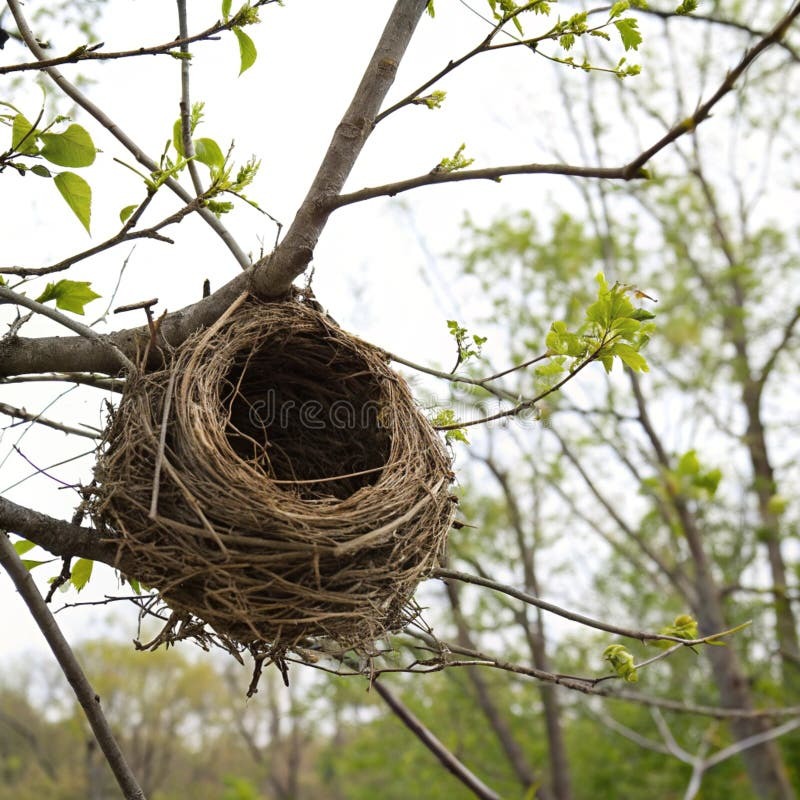
Finding a nest empty after days of feeding activity is unsettling. Chicks may have fledged and moved into cover, or the nesting attempt may have ended unsuccessfully. An empty nest looks the same after very different events.
| Last observation | What it suggests | What remains unknown |
|---|---|---|
| Feathered young moving near the nest | Fledging fits. | Whether every youngster left safely |
| Small nestlings present earlier, gone at the next check | The nest changed between checks. | Whether fledging, predation or another event occurred |
| No adult visible during a brief look | The adult was out of sight at that moment. | Whether parental care had stopped |
What you saw before the nest emptied tells you more than the empty structure does.
In one front-porch nest, a Reddit observer saw Brown Thrasher nestlings earlier in the afternoon and returned to find every chick gone.
Hello all! I’ve had quite the adventure the last few days with some newborn Brown Thrasher nestlings in the shrubs of our front porch. On Monday, we found one on the ground that must have fallen out of the nest and when I found the nest I put it back in with the other babies. Mama had been continuously tending to them while Papa is around as well. This afternoon, I peeked in and saw her sitting on there, babies were nestled under -I saw some heads bobbing. This was around 2:30. I went back out to the yard around 6:30 and poof-the entire nest was empty. Babies were all gone and parents were nowhere to be found!! I can’t stop thinking about what could have happened. A predator? I do have a busy feeder in the front yard that often attracts cowbirds. I also saw a blue jay flying away from the front yard as I was walking out at 6:30-I don’t often see them on the daily.
The writer suspected a predator, pointing to a Blue Jay seen leaving and the cowbirds at the feeder, but saw no attack.
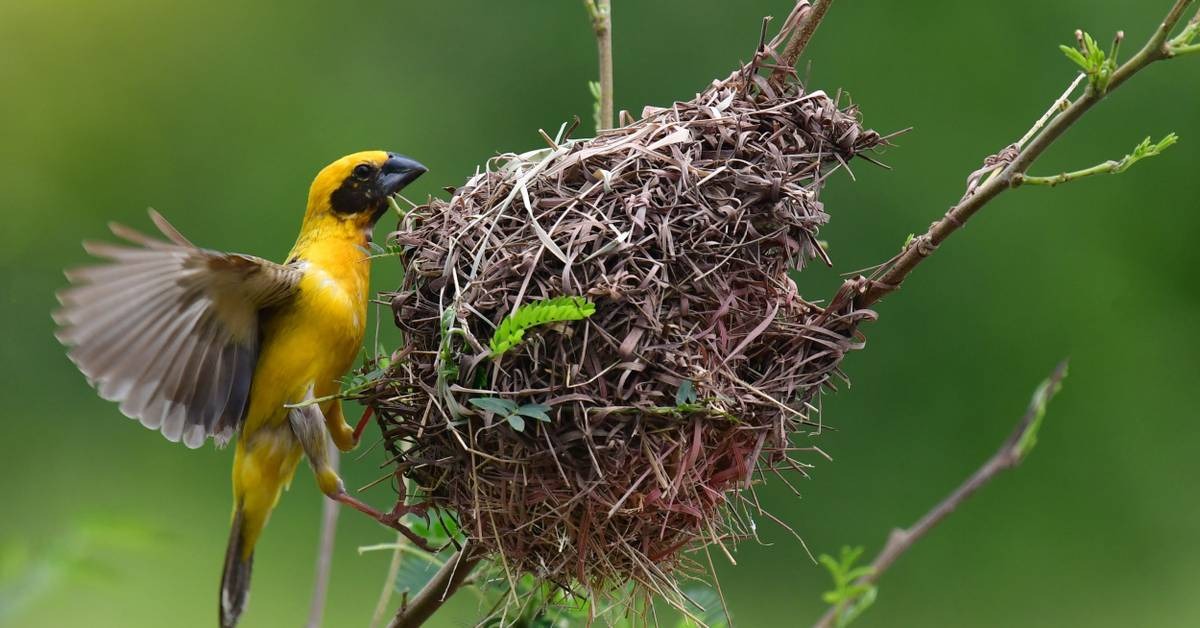
For a nest record, note what was visible at each check, the young birds’ apparent stage and the interval between observations.
Watching nesting birds without disturbing them
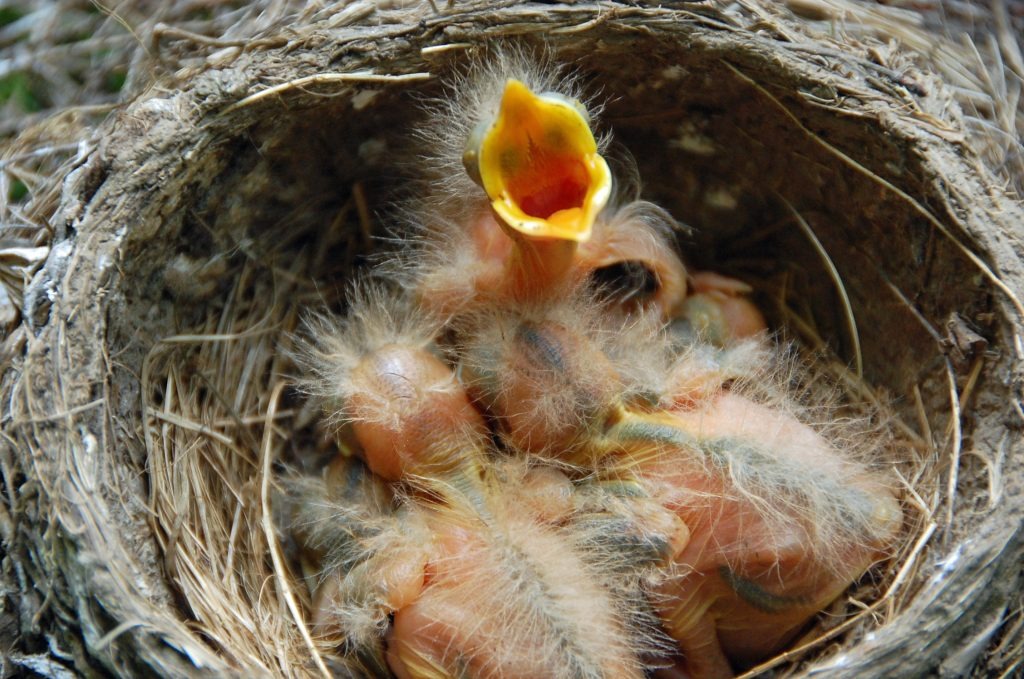
Watch from a distance where the birds can carry on as normal. A view through a window or from an established path lets you follow the nesting cycle without handling the nest or exposing its cover.
Approaching birds can alter their behavior, draw attention to a concealed nest or startle nearly fledged young into leaving early. Weather and developmental stage can make a visit especially risky.
Cornell NestWatch’s Code of Conduct advises avoiding nest checks in adverse conditions, during vulnerable incubation stages and just before fledging.
- Leave vegetation and the nest undisturbed. Do not shift branches, handle eggs or young, or uncover a hidden nest for a photograph.
- Avoid repeated close inspections. Young birds near fledging may react abruptly to a visit.
- Withdraw if the birds react. Agitated adults or scattering young are reasons to leave the area quietly.
Old nests, nest boxes, and legal limits
After young birds leave, you may want to clean a nest box, remove nesting material or move a nest attached to a building. These actions carry different biological and legal consequences.
Under a U.S. Fish & Wildlife Service migratory bird permit memorandum, an in-use nest contains viable eggs or nestlings and remains in use until the young have fledged and no longer depend on it. A structure can count as inactive before the first egg is laid, even when adults have started building.
The USFWS nest memorandum dated January 15, 2025 describes circumstances in which destruction of an inactive nest without taking possession may fall outside the federal MBTA permit requirement. Relocating a nest involves collection and possession and requires authorization under the memorandum; interference with protected birds, eggs or young raises separate concerns.
Federal rules are not the only ones. State, Tribal and local protections may apply, and Bald and Golden Eagle nests receive additional protection, including outside an active nesting attempt.
An apparently empty birdhouse after one brood differs from a nest still holding eggs or dependent young. Before cleaning, removing or moving a nest, find out its status and, as far as you can do so safely, the species. Then consult the applicable official or qualified guidance. A porch renovation and an old bluebird box raise different questions.
Find the right guidance for your situation
| Your situation | Covered on this page | More focused subject |
|---|---|---|
| A feathered young bird is on the ground | Why fledglings may be outside nests | Found a Baby Bird on the Ground: what to do |
| Unsure whether the bird is a nestling or fledgling | What fledging means | Nestling vs Fledgling: how to tell them apart |
| Wondering when birds nest in your region | Why nesting dates vary | When Birds Nest in the United States: timing by species and region |
| Considering materials for nesting birds | Covered in a separate guide. | Safe Nesting Materials: which materials are safe and which are hazardous |
| Birds are nesting on a porch or near a doorway | Nest status and legal limits | Birds Nesting on Your Porch: dealing with property conflicts |
| A wild bird has an obvious injury | When an injury calls for qualified help | USFWS guidance linked above; licensed wildlife rehabilitator for an injured bird |
For nest sites, approach distance and recorded calls near sensitive birds, see ethical birdwatching around sensitive birds.