Judge a Red-tailed Hawk by its shape first: a stocky body, broad rounded wings and a short, broad tail. A bird with that build and marks that fit its age is a Red-tail even when no red shows on the tail. Juveniles generally have brown, banded tails, and some adults look quite different from the familiar eastern bird.
How to Recognize a Red-tailed Hawk at a Glance
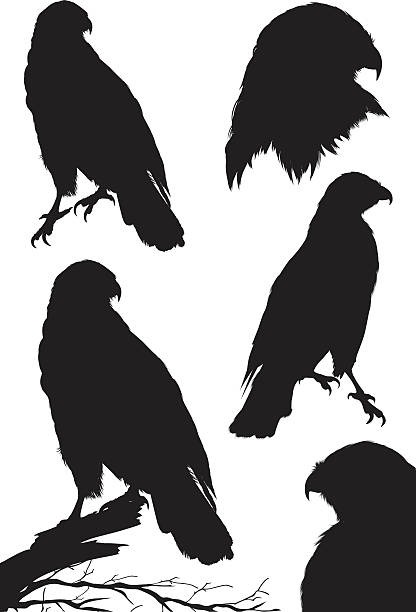
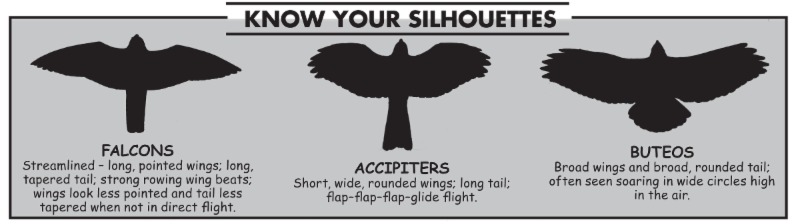
Start with shape. A Red-tailed Hawk (Buteo jamaicensis) is a heavy-bodied bird of prey with broad, rounded wings and a short, broad tail. It belongs to the Buteo group of hawks, built for soaring.
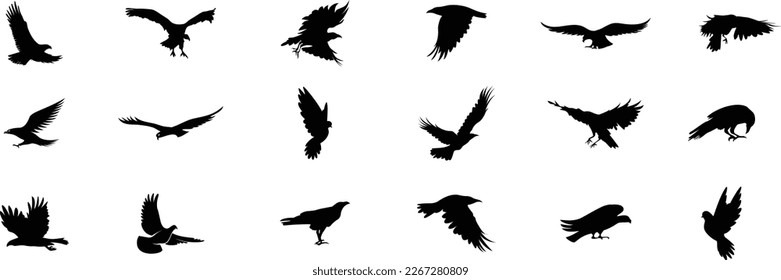
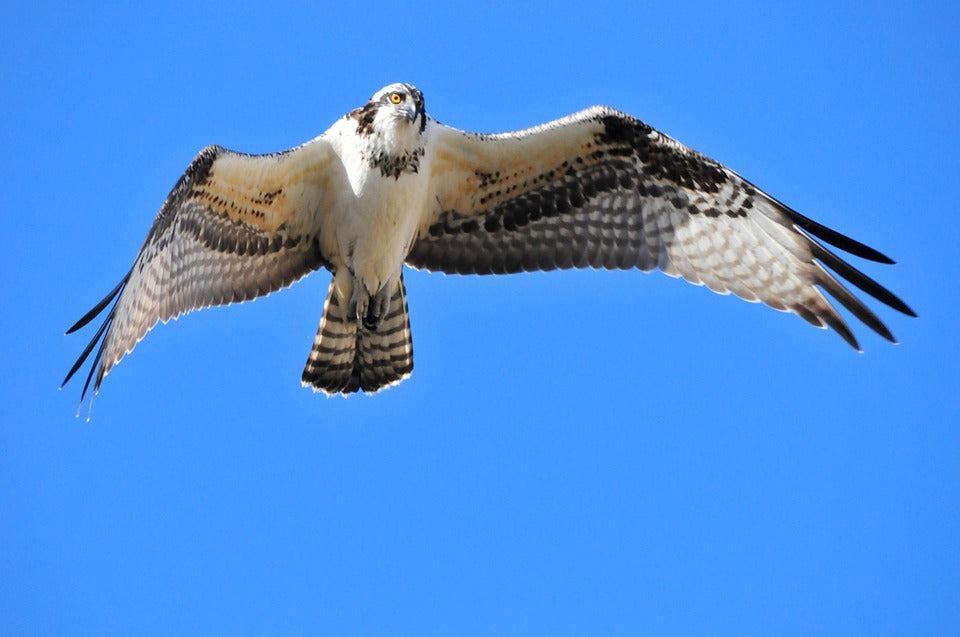
In open air a Red-tail circles or glides on spread wings, with slow, powerful wingbeats between glides. The tail looks compact behind a broad chest.
A perched bird shows its shoulders, back and breast. Folded wings cover the tail.
| View | What it can reveal | What remains difficult to judge |
|---|---|---|
| Perched | Bulky body, broad shoulders, tail proportions, upperparts | Wing shape in flight and concealed tail color |
| Overhead | Broad rounded wings, short broad tail, slow wingbeats, underwing patterns | Red coloring on the upper tail |
| Heard only | Length and character of a call | Structure, plumage and the caller’s identity |
Sort your sighting into one of these views, then check whether the proportions fit a broad-winged Buteo. The Cornell Lab identification gallery shows perched and flying Red-tails at different ages.
Adult vs. Juvenile Red-tailed Hawks: Why the Tail May Be Brown
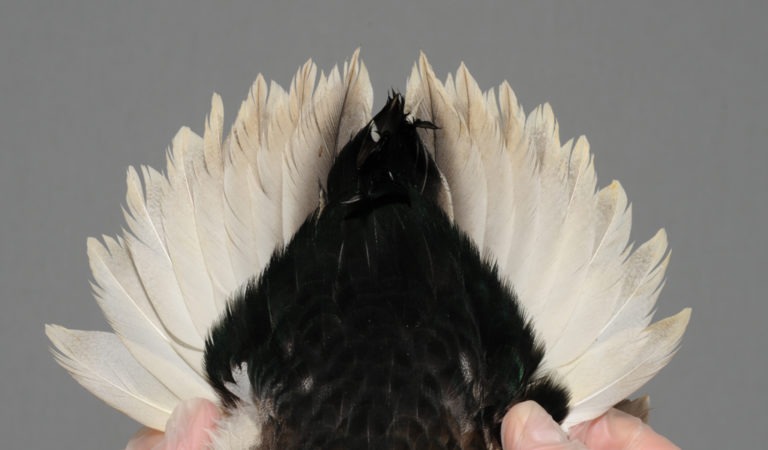
Many adults have the rusty-red tail that gives the species its name. A young Red-tail usually has a brown tail crossed by narrow darker bands, so an otherwise convincing young bird can lack the feature people expect most. Plumage changes with age happen gradually as feathers are replaced.
| Tail observation | Typical adult interpretation | Typical juvenile interpretation |
|---|---|---|
| Upper surface seen clearly | Rusty or cinnamon-red color often apparent | Usually brown without the classic red |
| Dark transverse bands visible | Some adults retain tail banding; individual patterns vary | Numerous relatively narrow dark bands are characteristic |
| Viewed from below against bright sky | Rusty upper-tail color may appear pale or indistinct | Brown tail bands may also be difficult to resolve in the same backlighting |
Once the structure points to a Red-tail, use the upper-tail color and the width and spacing of the bands to judge age.
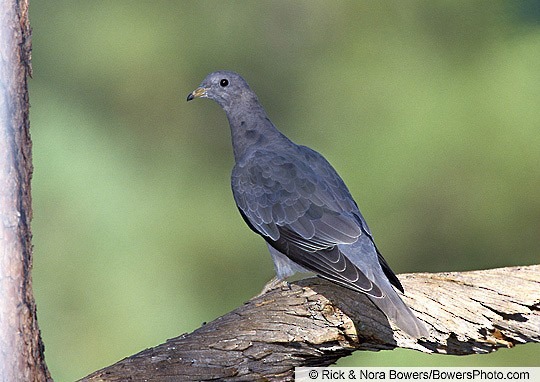
A juvenile can already have the heavy build and broad wings of a Red-tail while carrying a brown, banded tail.
Field Marks in Flight: Wings, Belly Band, and Patagial Bars
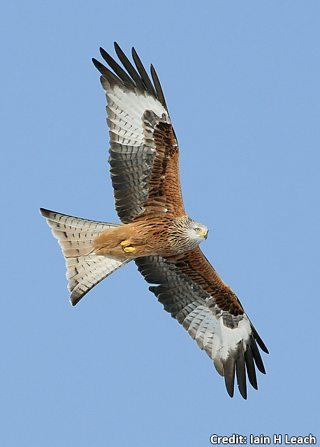
A light-plumaged Red-tail often shows a pale upper breast, dark belly streaking and dark marks along the front edges of its underwings. These help most when the bird soars overhead and you can’t see the upper tail.
The dark leading-edge mark is the patagial bar. It lies near the body along the front of the wing, where the patagium stretches between the shoulder and wrist. A carpal patch sits farther out around the wrist. Mixing the two up means describing a different field mark.
Many light Red-tails also show a belly band: brown streaking across the middle of the underside, below a pale upper breast. Its darkness and extent vary among individuals and plumages.
The HawkWatch discussion of patagial markings documents Red-tailed Hawks with extremely faint patagial bars, including pale juveniles. A barely visible leading-edge stripe still fits a Red-tail.
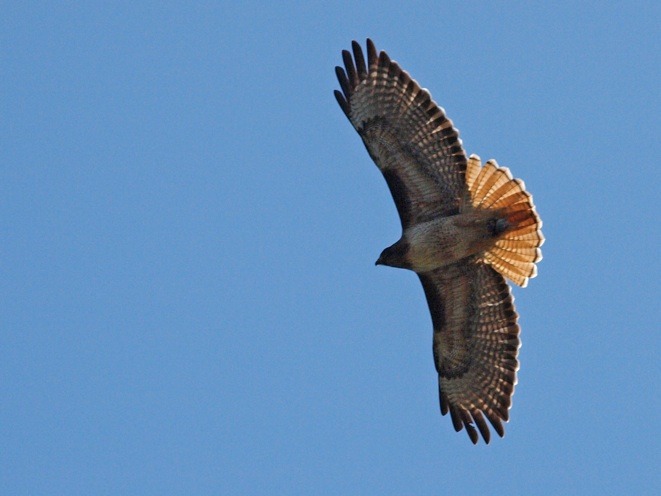
On a clear overhead view, read the leading-edge marking and the belly streaks together with the wing shape. Some birds also show pale scapular feathers forming a V across the back, visible from above or on a well-positioned perched hawk.
Why Red-tailed Hawks Can Look Pale, Dark, or Unusual
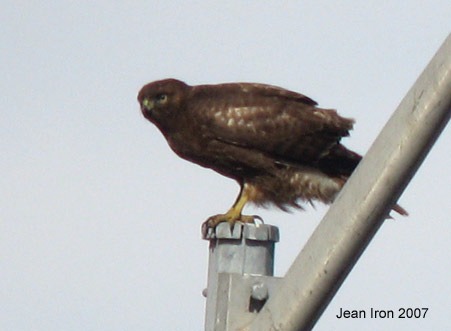
The familiar eastern Red-tail, brown-backed and pale-bellied, is only one version of a variable species. Western birds, often described under calurus, include light, rufous, intermediate and very dark plumages. On a dark bird, the belly band that is easy to see on a light bird nearly disappears.
- Harlan’s Red-tailed Hawk: Some individuals have tails patterned in white, gray and black, with little resemblance to the classic rusty-red tail.
- Krider’s-type Red-tailed Hawk: Some are notably pale, with reduced contrast in the belly and wing markings people expect to see.
Telling an unusually pale regional form from leucism takes a clear view of the bird’s structure and feather pattern.
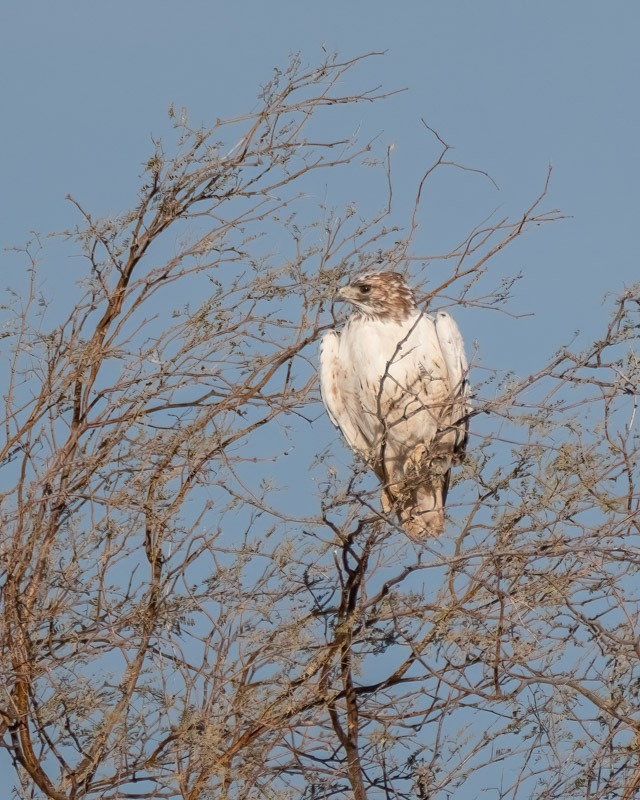
For unusually colored birds, check reference photographs matched to age and region before choosing a morph name.
What Does a Red-tailed Hawk Sound Like?
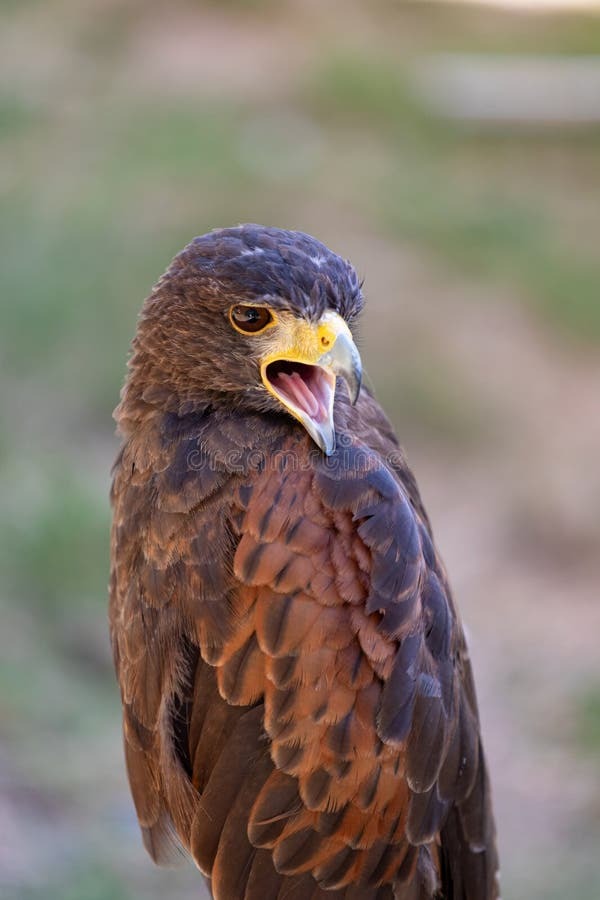
The classic Red-tailed Hawk call is a hoarse, descending scream lasting roughly two to three seconds. It starts forcefully and trails off, rough and drawn out. Across an open field you may hear it before you find the bird.
Red-tails give other calls too. Cornell describes a shrill chwirk courtship call and has separately labeled juvenile recordings.
The Cornell Lab sound recordings include examples of the adult call and juvenile vocalizations. Match what you heard against them by length and shape, and weigh any bird you can see and its surroundings.
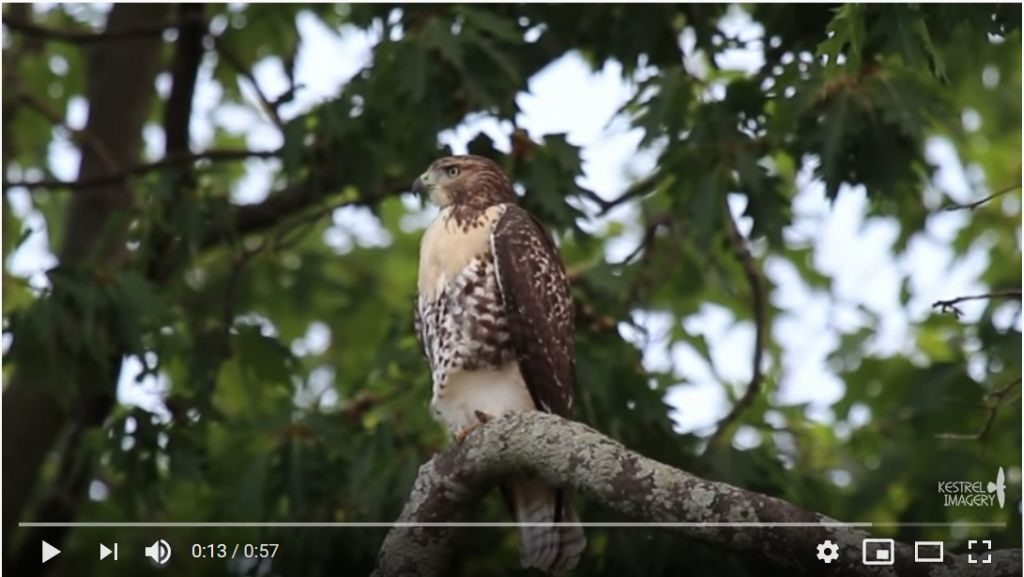
Repeated calling near a house can accompany courtship or a young bird asking for food.
Audubon describes a familiar Hollywood substitution: a Red-tailed Hawk’s scream is often heard over footage of a Bald Eagle.
Red-tailed Hawk vs. Similar Hawks and Eagles
An adult Red-shouldered Hawk often looks slimmer and longer-tailed than a stocky Red-tail, with reddish barring below and conspicuous black-and-white patterning on its wings and tail. For wing shape, tail bands and flight style, see Red-tailed versus Red-shouldered Hawk identification.
| Alternative | Field feature worth comparing | Best view to check |
|---|---|---|
| Red-shouldered Hawk | Adult’s slimmer, longer-tailed profile; reddish underparts and bold black-and-white wing and tail pattern | Side and flight views; juveniles need an age-matched comparison |
| Cooper’s Hawk | Long rounded tail, shorter rounded wings, and head projecting conspicuously beyond the wings in flight | Clear flight profile |
| Swainson’s Hawk | Relatively long, slender pointed wings; many light adults have dark flight feathers contrasting with paler wing linings | Underside in flight; check season and region |
| Broad-winged Hawk | Compact Buteo shape and short squarish tail; typical adults show bold tail bands | Good tail view |
| Juvenile Bald Eagle | Very large head, heavy hooked bill, broad long wings and predominantly dark, often mottled plumage | Clear side or flight view of head, bill and wing proportions |
| Turkey Vulture | Wings commonly raised in a shallow V, rocking or teetering in flight; pale flight feathers contrast with darker forward underwings | Extended soaring view shows the clearest behavioral difference |
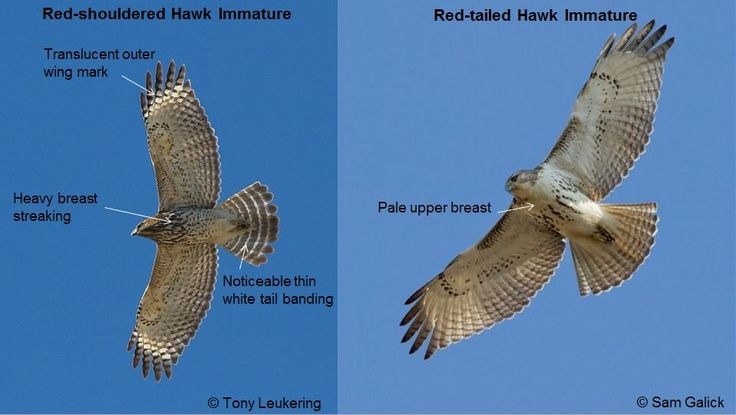
The Cornell Red-shouldered Hawk guide shows age-labeled views of the closest comparison.
Where You Might See a Red-tailed Hawk in the United States
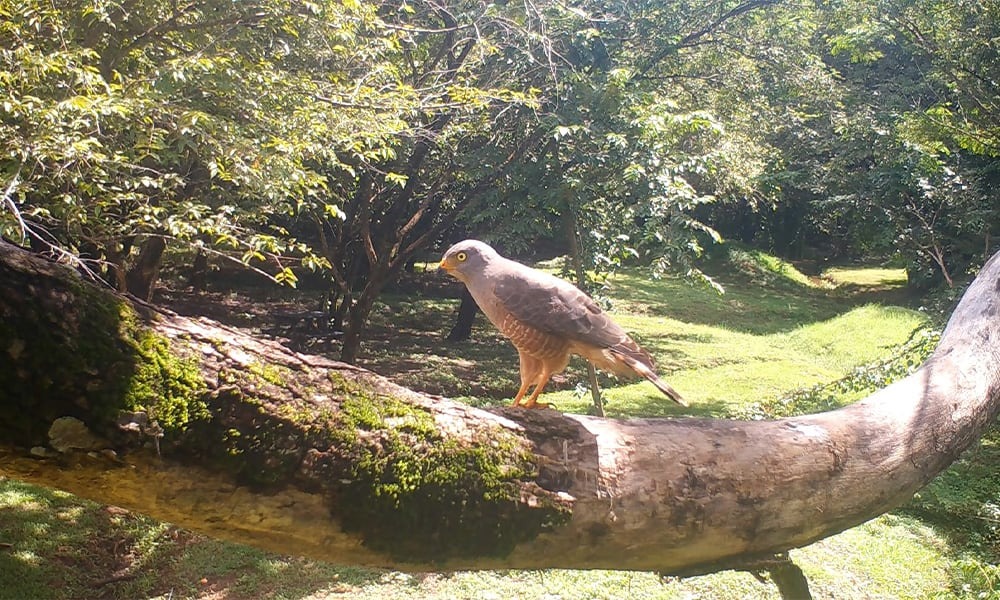
Red-tailed Hawks occur widely across the United States in open and semi-open country: fields, pastures, parks, scrub, woodland edges and roadside perches. A hawk scanning from a utility pole or soaring above a field fits familiar Red-tail behavior, and mammals make up much of the species’ diet, alongside other prey.
How to Check a Difficult Red-tailed Hawk ID
A brief sighting can give you a convincing shape and almost no color. Another can give you a clear tail and little of the underwing. Write down what you saw and what you couldn’t see.
Say a hawk circles above a field. You see broad, rounded wings and dark belly streaking, but the tail is backlit and you can’t judge its color or bands. That supports a possible Red-tail, with tail color unobserved.
A phone photograph taken through binoculars, glass or a screen may keep the silhouette but lose feather detail. A crop or extreme enlargement can’t add what the original never captured.
Write field notes
- Encounter: Date, approximate time, state or region, habitat, and whether the bird was perched, flying, or heard without a useful view.
- Original evidence: Keep the uncropped photograph, video or sound recording if one exists. Note the approximate distance when known, plus any backlighting, obstructions or poor image detail.
- Visible features: Record the wing and body proportions, tail appearance, underwing marks and any clear call qualities.
- Unseen features: Mark a concealed tail, unobserved leading edge or unclear feather pattern as unknown. Keep those apart from features you positively saw were absent.
- Your call: Write the most likely identification and the alternative that fits the evidence, and name the missing field mark that could separate them.
Choose a confidence level that fits the evidence
Likely Red-tailed Hawk fits when the overall structure and several field marks appropriate to the bird’s age agree and no competing species fits as well. Possible Red-tailed Hawk suits a view that supports some important characters but leaves an alternative unresolved. Hawk sp. is the right record when the photograph, silhouette or sound can’t establish a species.
In the circling-hawk example, broad wings plus a streaked belly support a possible Red-tail. A later unobstructed view that shows compatible patagial marks and matching structure raises it to likely. Without that view, the possible record stands. Before you commit to a name, check your notes against Cornell’s species references.
Watch from a respectful distance. Don’t approach active nests, disturb a perched raptor for a better photograph, or provoke calls to get a recording.