A warm reddish-brown bird with a bold white eyebrow, or a loud repeated whistle from low cover, points to a Carolina Wren when the habitat and region fit and no lookalike matches better.
A bird the size of a small fist can fill a wooded yard with sound. A sharp phrase repeating from the shrubs and a brown shape slipping between the branches point to a Carolina Wren.
Is It a Carolina Wren? Start With What You Heard or Saw
| What you noticed | Initial clues | Next section |
|---|---|---|
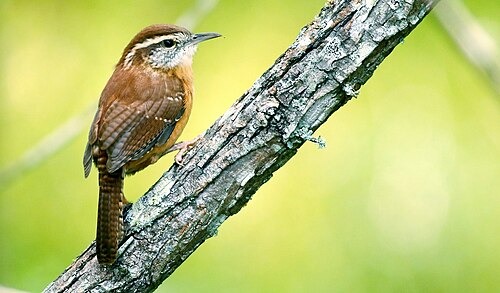
| A small brown bird | White eyebrow, warm upperparts, pale throat and narrow curved bill | Visual field marks |
| Loud phrases repeated from cover | Short, clear whistles recurring in a regular sequence | Male song |
| Rasps, chatter or a rough response to a whistle | Harsh notes or contrasting sounds from two birds | Calls and duet |
What a Carolina Wren Looks Like: The Field Marks That Matter
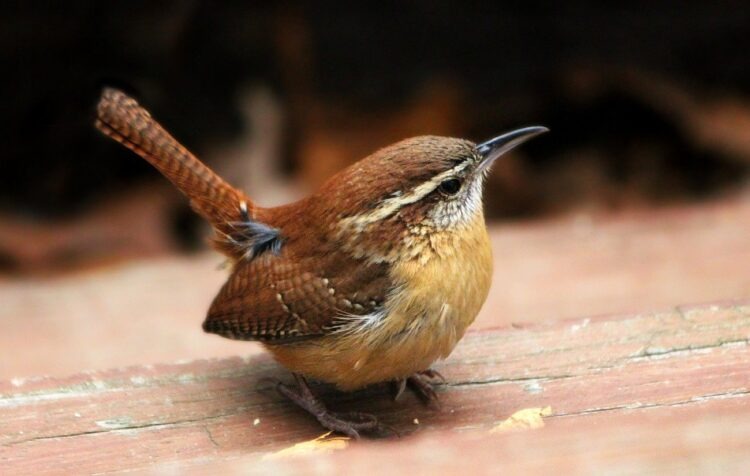
The Carolina Wren is compact and richly colored, with reddish-brown upperparts, a white throat and warm buffy underparts. A bold white stripe runs above the eye. Birders call it the supercilium, and against the darker eye line it gives the face a crisp pattern.
The bill is long and slender for such a small bird, with a gentle downward curve. Fine dark bars cross the wings and tail, though a quick look through foliage can hide them. The bird often raises its tail while working low branches, bark or tangled roots.
University of Florida IFAS gives a length of about 5.5 inches and a wingspan of about 11 inches. Apparent size is unreliable in shade or with nothing nearby for scale.
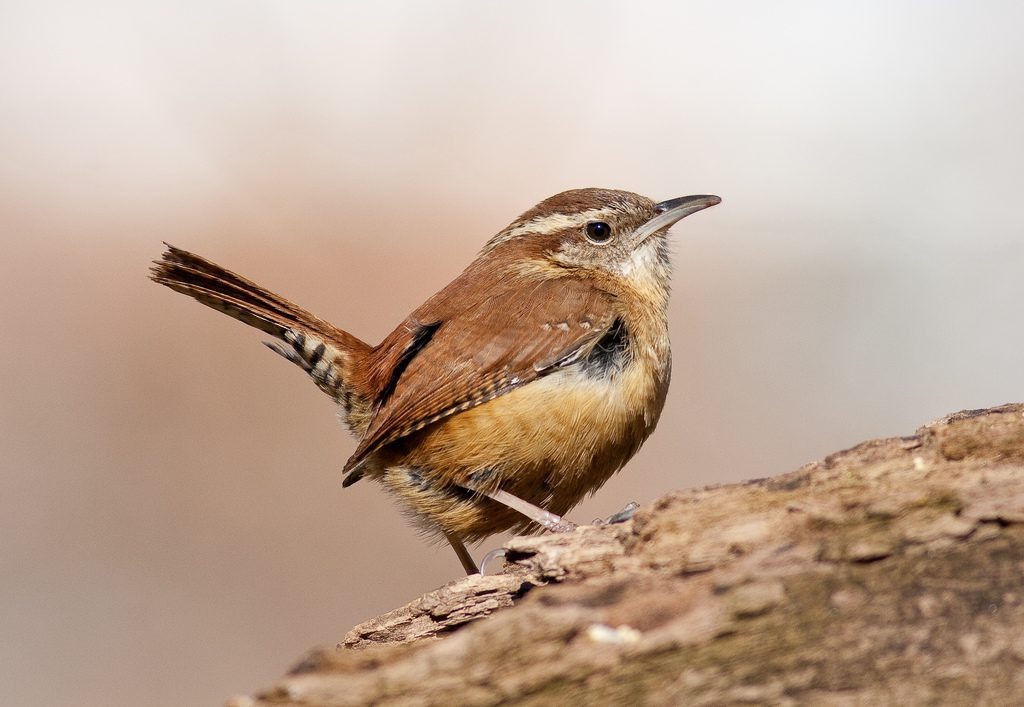
Males and females look alike, so the eyebrow and tail posture won’t tell you the sex. A lowered tail is normal movement.
The Cornell Lab’s Carolina Wren identification guide has reference photos of the face and body. The white eyebrow stays visible even when the reddish back blends into dark vegetation.
Carolina Wren Song: Recognizing the Repeated Whistle
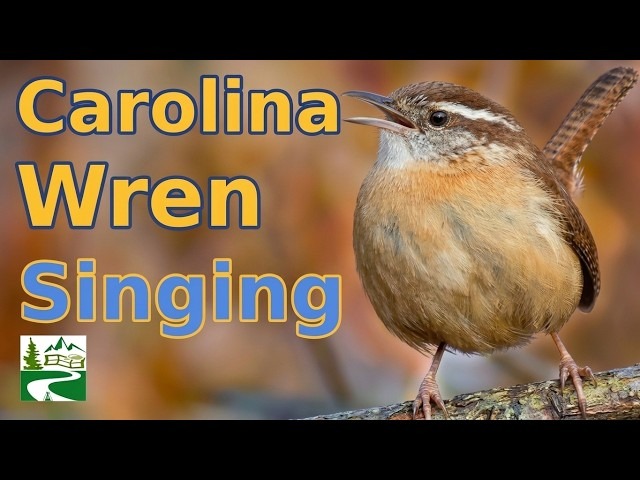
The male sings a loud, clear sequence of whistled phrases. One phrase lasts under two seconds, then repeats. The voice carries far and seems too big for the bird.
Teakettle, teakettle, teakettle is the familiar way to write the rhythm. Some people hear germany, germany. Both spellings only approximate particular versions of the song. To break any song into rhythm, repetition, pitch and tone, see how to identify birds by song without guessing.
University of Florida IFAS describes a male repertoire of 20 to 40 song variations. Cornell notes that a male may repeat one version roughly 15 times before switching, and the same singer can change phrases during a singing bout.
Cornell includes a Carolina Wren recording made in West Virginia on July 3, 2012, so you can hear how the repeated whistle really sounds.
The Cornell Carolina Wren sound collection covers songs, calls and exchanges between birds. The rhythm of the phrase matters more than a perfect match to an English mnemonic.
Calls, Chatter, and the Carolina Wren Duet

Both sexes give calls that can sound like harsh chatter, rasps or rising and falling cheer notes. These differ from the male’s patterned whistle.
A female may answer a singing male with a sharp churr or chatter. When the two alternate, you hear a loose duet: a whistled phrase, then a rougher reply.
| What the sound resembles | Likely vocal category | Audible distinction |
|---|---|---|
| Repeated, clear whistles | Male song | One short phrase returns in a regular sequence |
| Rasping or irregular chatter | Call | Rough texture and less regular phrasing |
| Whistle followed by a rough reply | Pair exchange or loose duet | Contrasting vocal parts alternate |
| Rising or falling cheer notes | Call | Different contour from the repeated territorial song |
Male Carolina Wrens also sing outside the breeding season, so a song heard near a doorway in winter is normal behavior.
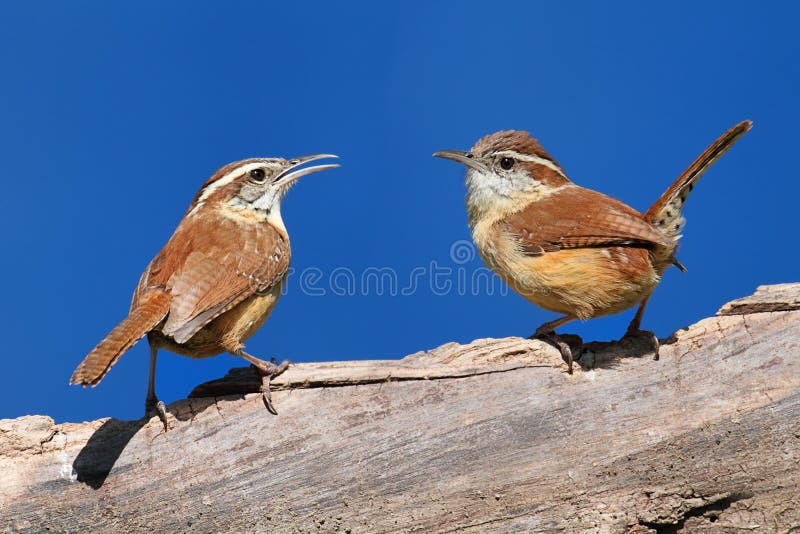
Cornell’s duet recordings from Arkansas and Florida show how different an exchange can sound from the teakettle refrain.
Carolina Wren vs. Northern House Wren vs. Bewick’s Wren
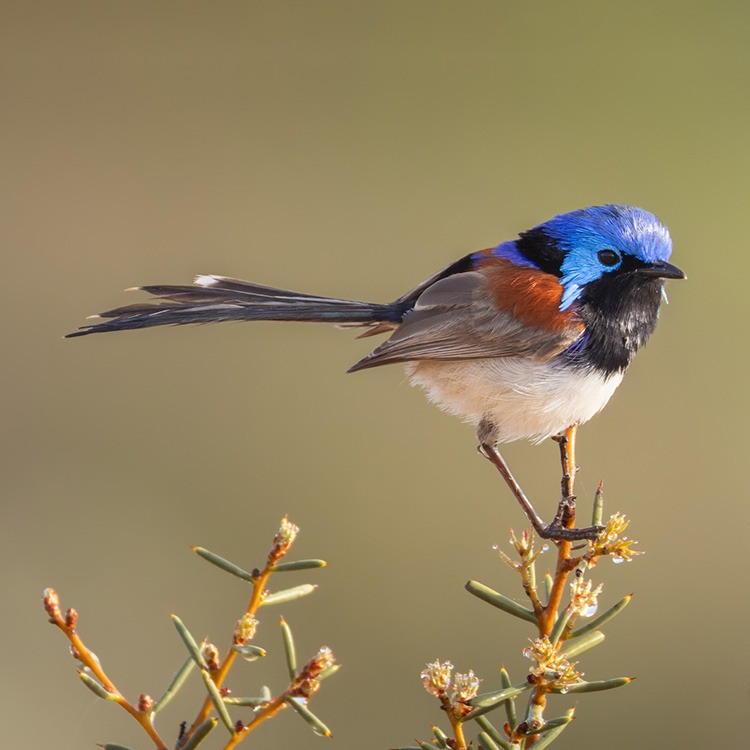
Carolina, Northern House and Bewick’s wrens are all small and brown. Northern House Wren usually looks plainer than Carolina Wren and sings a longer, more bubbling sequence. Bewick’s Wren shares the pale eyebrow, so body color, tail markings and regional occurrence matter most.
| Feature | Carolina Wren | Northern House Wren | Bewick’s Wren |
|---|---|---|---|
| Face | Bold white eyebrow | Plainer face; weak eyebrow | Distinct pale eyebrow |
| Upperparts | Rich reddish or cinnamon brown | Generally drabber brown | Grayer brown |
| Underparts | Warm buffy or cinnamon | Paler, grayer | Relatively pale gray |
| Shape and tail | Chunky; tail often raised | Small and compact | Slimmer; longer tail with contrasting pale outer corners |
| Song | Clear, repeated whistles | Long, bubbling or cascading sequence | Variable phrases |
| Broad US range | East and central regions | Widespread; depends on season | Central and western regions |
The shared eyebrow makes Carolina and Bewick’s Wrens easy to confuse in a poor photograph. A clearer view of the body and tail, or a recorded song, can settle it. For a sighting near a range edge, local distribution records give finer geographic detail than these broad regions.
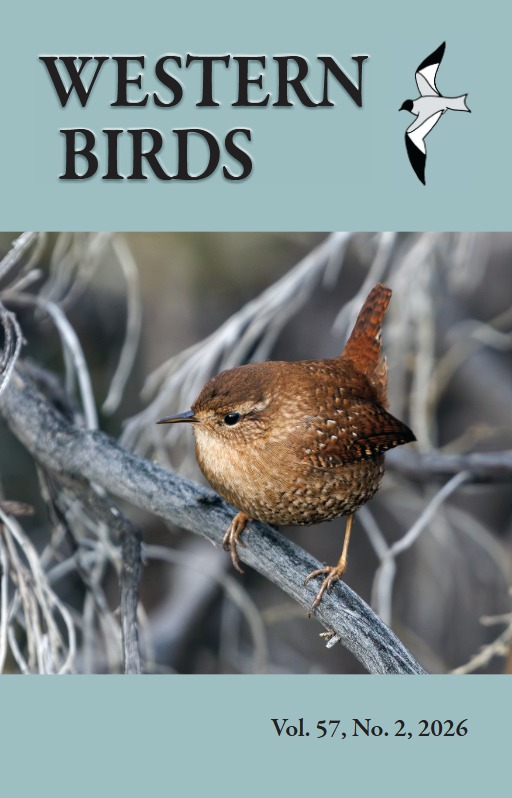
The Cornell Bird Academy comparison of backyard wrens puts the three birds side by side.
Birds That Can Sound Like a Carolina Wren
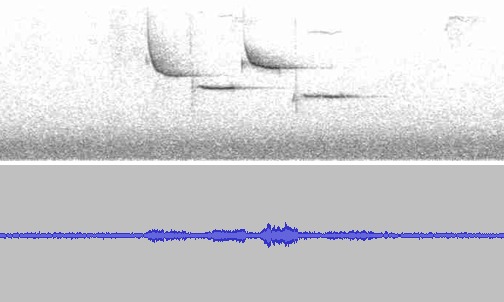
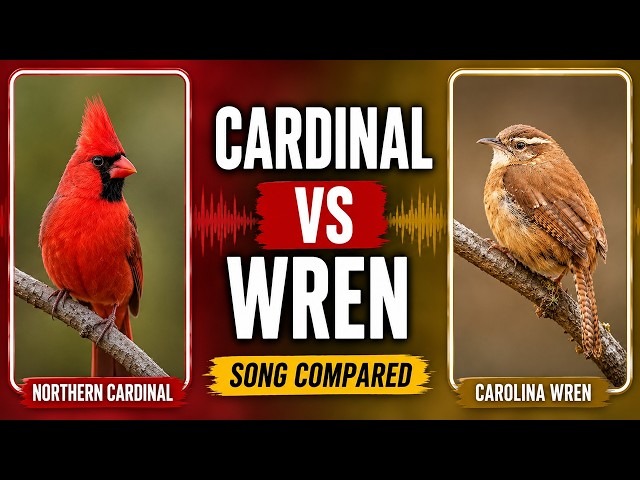
A hidden singer can pass for a Carolina Wren and belong to another family. Missouri Department of Conservation lists Northern Cardinal and Kentucky Warbler as acoustic lookalikes, especially when you hear only a short repeated phrase.
Northern Cardinals also deliver clear repeated whistles. Some cardinal songs include slurred notes that speed up and end in a trill, while Carolina Wren commonly repeats short, distinct phrases. A visible cardinal settles it fast. A hidden singer may need a longer stretch of sound.
Kentucky Warbler can also give a repeated two-syllable phrase like a Carolina Wren’s. Missouri describes its refrain as less musical.
Recordings often catch two singers at once. A phrase repeating near the microphone and a second song deeper in the trees are easy to merge into one imagined bird. Identify the nearest singer first, then deal with the background voices.
Where Carolina Wrens Live and Forage
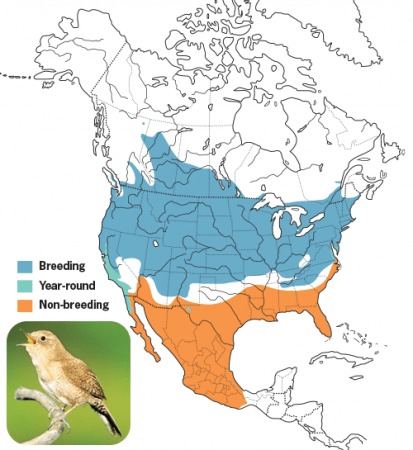
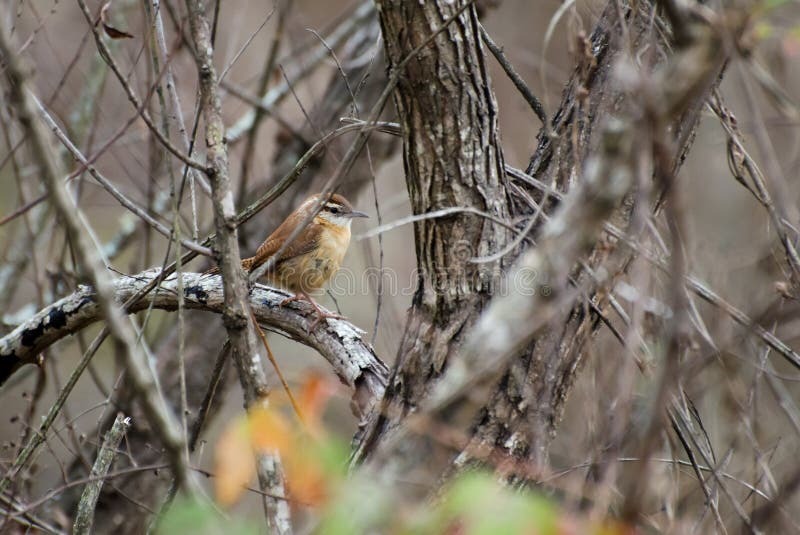
Carolina Wrens favor brushy woods, thickets, ravines and shrubby yards across much of the eastern and central United States. They search leaf litter, bark, roots and crevices for insects and spiders and stay close to dense cover. Severe winters can affect their occurrence near the northern edge of the range. They also nest in sheltered places around homes, including flowerpots, mailboxes and garages. Leave a nest alone even if it looks unattended.
How to Verify a Carolina Wren Identification
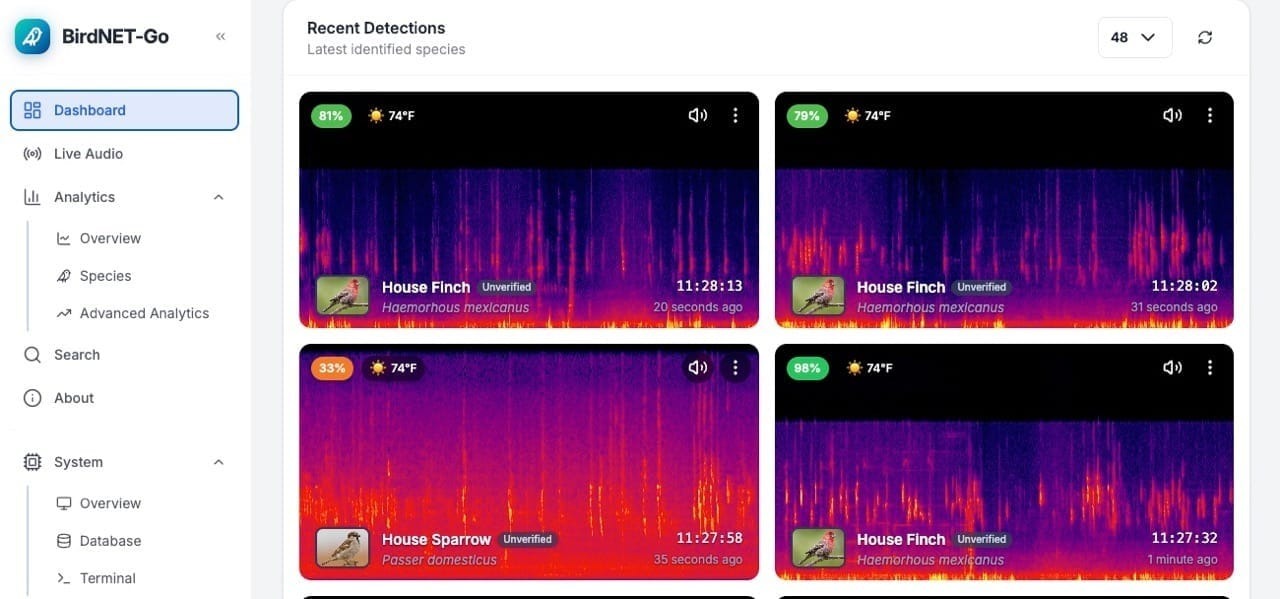
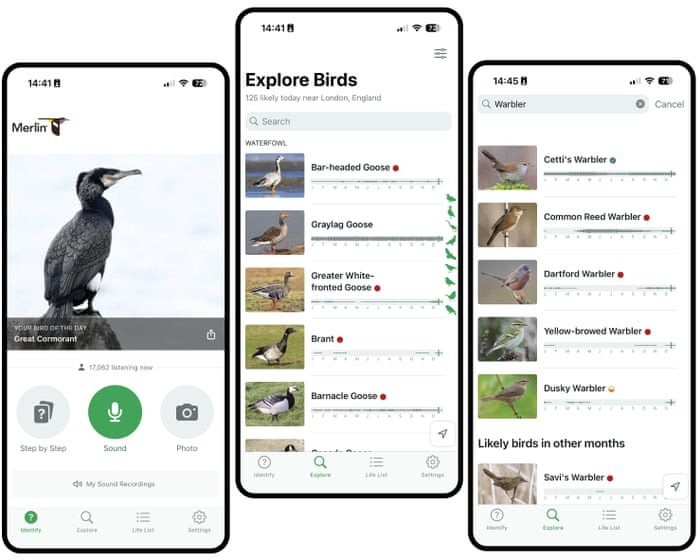
Merlin Bird ID can suggest species from a recording, including birds you cannot see. Sound ID matches its suggestions to the sound pattern it displays, which makes it handy for building a shortlist and finding reference examples.
Cornell’s Merlin Sound ID best practices explains why you must check each suggestion against the sound, the local species you would expect and any visual evidence. Recording conditions and other singers limit how far you can trust a result.
- Write it down. Note the location, date and whether you heard, saw or recorded the bird.
- Note what you saw. List the facial marks, colors and bill features that were clear.
- Sort what you heard. Separate patterned song from chatter, and note whether several singers overlap.
- Rule out lookalikes. Check region, season and habitat, then compare the closest lookalike using its field marks or reference sound.
- Record it at the right level. In personal notes, mark an uncertain Carolina Wren as provisional. For eBird, choose an available taxon the observation supports, such as an appropriate sp. or slash category if offered, and avoid an unsupported species-level entry.
| What you have | What to write down | Reason |
|---|---|---|
| Distinctive song or clear field marks supported by context | Carolina Wren | Sound, sight and context agree |
| Suggestive sound or partial view with a missing discriminator | Carolina Wren suspected (provisional) | A lookalike is still possible |
| Conflicting field marks, overlapping singers or insufficient detail | Unidentified wren or broader bird group | Not enough for a species ID |