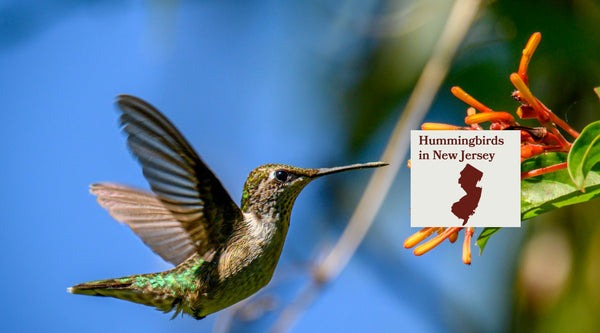
A small, green-backed hummingbird in the eastern United States during the usual season is most likely a Ruby-throated Hummingbird. A missing red throat doesn’t rule it out: females and young males lack the full gorget, and an adult male’s gorget can look black in poor light. If the date or location looks off, or the key marks aren’t visible, compare your photos with the lookalikes below before you call it.
How to recognize a Ruby-throated Hummingbird
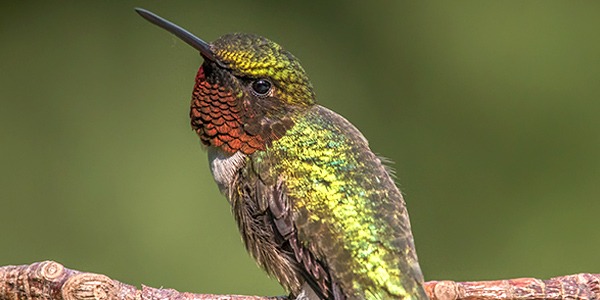
A Ruby-throated Hummingbird (Archilochus colubris) is a tiny, green-backed bird with a long, slender, slightly downcurved bill and a pale underside. Adult males are famous for their brilliant red throats. A bird darting between flowers won’t always show its throat, so check the bill shape, back color, body shape and tail too.
The upperparts have a metallic green or golden-green sheen, and the underside is grayish white. Females may show white tips on the outer tail feathers. You’ll see them best when the tail is spread and in clear view.
| Measurement | Cornell reference range |
|---|---|
| Body length | 2.8 to 3.5 inches (7 to 9 cm) |
| Wingspan | 3.1 to 4.3 inches (8 to 11 cm) |
| Weight | 0.1 to 0.2 ounces (2 to 6 g) |
In the field, use a flower, feeder or perch to judge size.
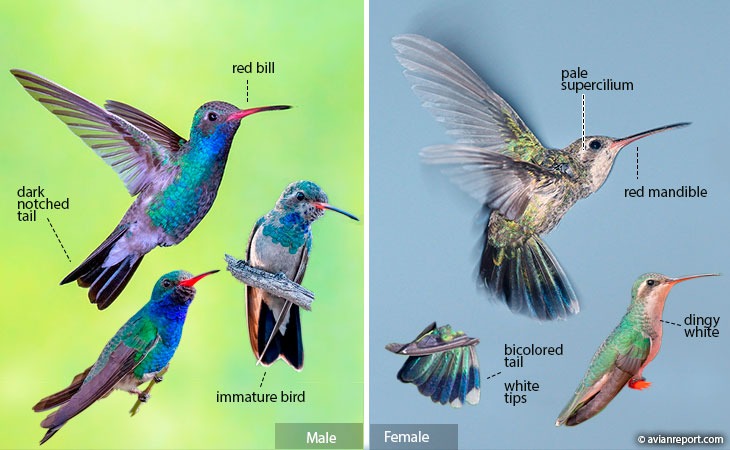
Watch the green back, pale breast, bill profile and any white on the tail as the bird changes position. The Cornell Lab identification guide shows reference views of the different plumages.
Male, female, or immature: what throat color reveals
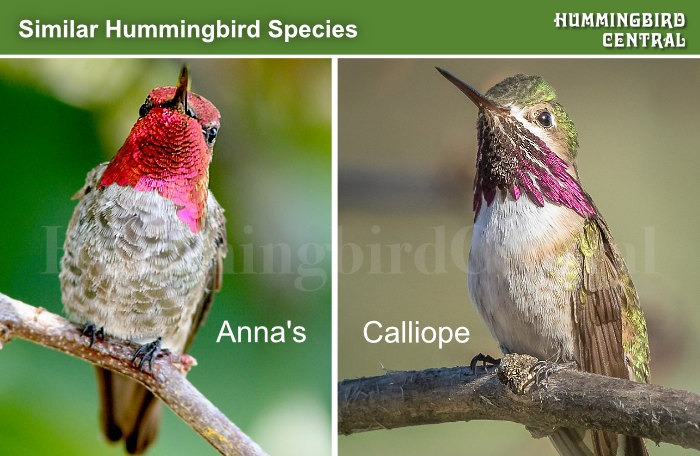
An adult male’s gorget is a patch of iridescent throat feathers that flashes ruby-red in favorable light. From another angle the same feathers look dark red or almost black, and a photo taken at that angle hides the color that gives the species its name.
Females are green above and mostly pale on the throat and underside, without the adult male’s full brilliant gorget. Young males may show dark throat speckling or a few red feathers as their plumage develops.
| Bird or plumage | Field appearance | What it means |
|---|---|---|
| Adult male | Full iridescent ruby gorget, sometimes looking dark | A good view of the full gorget points strongly to an adult male |
| Adult female | Green upperparts, pale throat, sometimes white outer tail tips | Fits an adult female; some immature birds look similar |
| Immature male | Pale or mottled throat, possibly a few red feathers | A few red feathers fit a developing male |
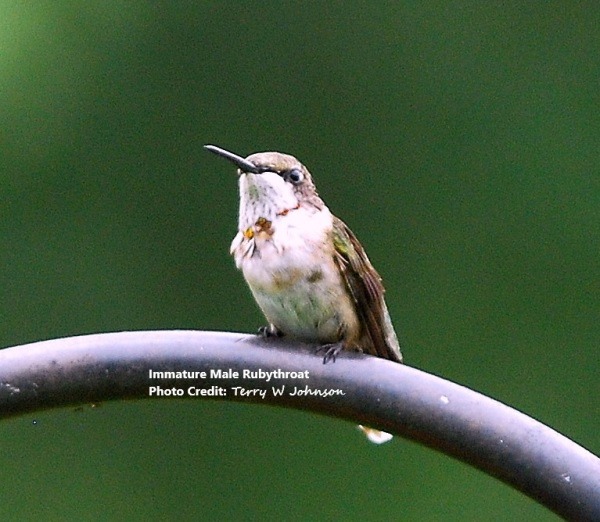
Even a sharp photo of a green-backed bird with a pale throat can leave an adult female and an immature bird hard to tell apart. Journey North points out how hard it is to judge subtle traits such as bill length in ordinary field views.
A few red feathers on an otherwise pale throat fit a young male, and the date of the sighting helps you read his age.
Compare a clear front or side photo with the adult and immature examples in Journey North’s plumage guide.
Which other hummingbirds look similar?
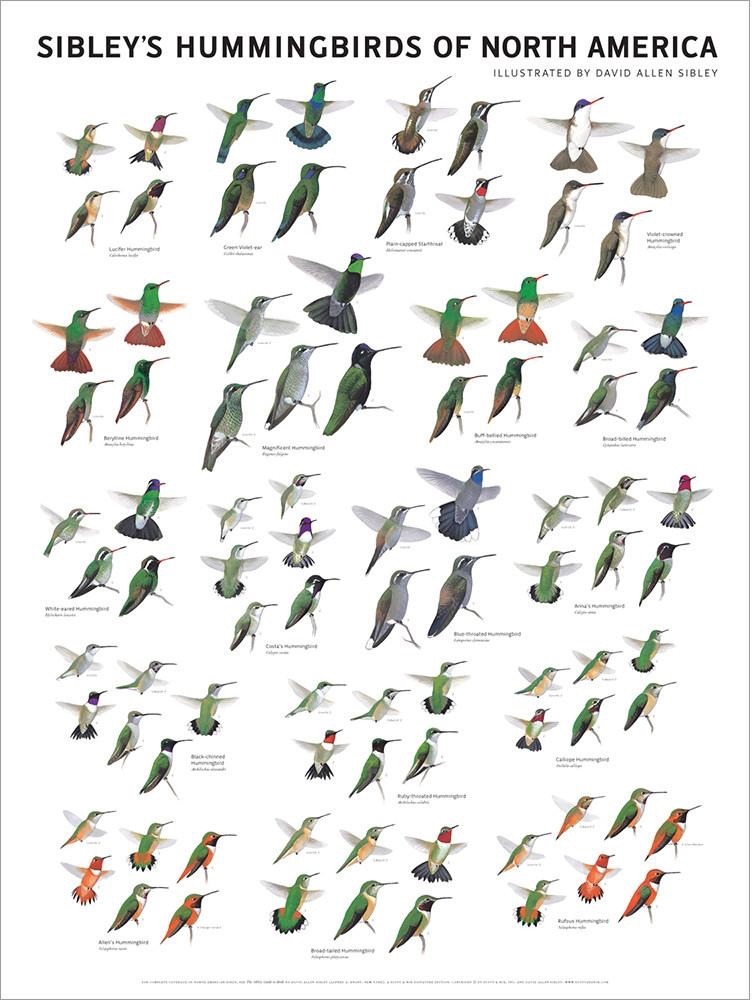
Black-chinned Hummingbird is the lookalike to check first where its range overlaps that of Ruby-throated Hummingbird. Both belong to Archilochus, and females or immature birds can be hard to tell apart in a fleeting view.
On a perched bird, compare the wings with the tail. Cornell notes that a Black-chinned’s folded wingtips reach the tail tip or project slightly beyond it. On a Ruby-throated, the tail projects noticeably past the folded wingtips. You need a clear side view of a resting bird.
Adult male gorgets differ too in suitable light: ruby-red on Ruby-throated, purple on Black-chinned. Lighting and age affect how either bird looks.
Rufous Hummingbird is worth considering in unusual-season encounters, including winter sightings in the Southeast. Cornell describes a cinnamon wash on the flanks of female and immature Rufous birds. The same comparison guide also covers Anna’s and Broad-tailed Hummingbirds.
Where and when Ruby-throated Hummingbirds occur
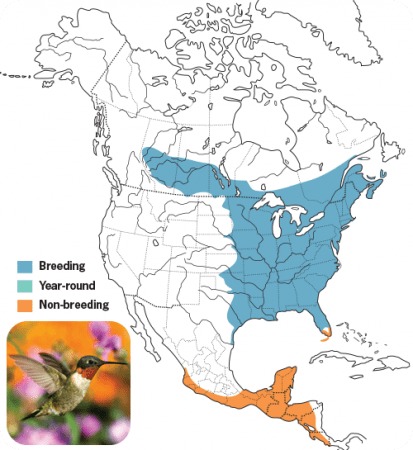
Ruby-throated Hummingbirds breed across much of eastern North America, including the eastern United States and parts of Canada. They use open woodland, forest edges, meadows, orchards, stream edges and yards with flowers and insect prey.
Most move south for winter toward Mexico and Central America. Audubon describes routes across the Gulf of Mexico as well as journeys around the Gulf Coast. Timing differs by region and individual. The University of Maine’s regional hummingbird guidance covers seasonal observations in the Northeast.
Reading a seasonal abundance map
eBird Status and Trends models seasonal relative abundance from bird observations.
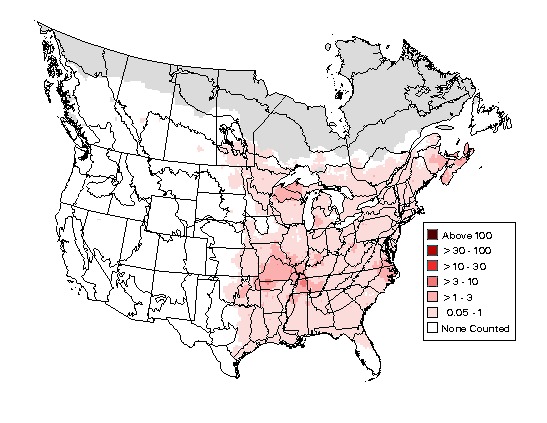
The model shows where Ruby-throated Hummingbirds are more plausible at different times of year. Some regions get no model prediction, so the map says nothing about a bird there. Read the map’s labeled season alongside the actual date, location and field marks.
What Ruby-throated Hummingbirds eat
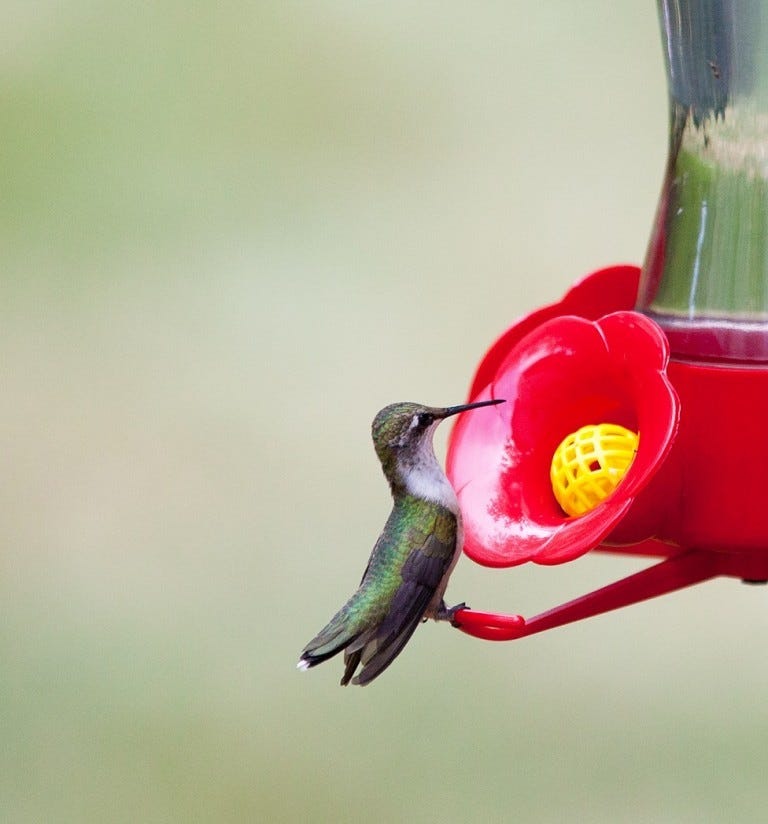
Ruby-throated Hummingbirds drink flower nectar and catch small arthropods. Cornell lists visits to trumpet creeper, cardinal flower, jewelweed and bee-balm, and insects such as gnats, flies, mosquitoes and small bees. Spiders and prey around sap wells are part of the diet too.
A feeder shows only one part of that feeding. The bird may hunt small prey elsewhere in the yard, often too quickly to follow.
For artificial nectar, Smithsonian guidance calls for one part refined white sugar to four parts water, without red dye. For more on feeders, plants and backyard habitat, read safe hummingbird nectar and feeder care.
Why Ruby-throated Hummingbirds chase visitors or leave feeders
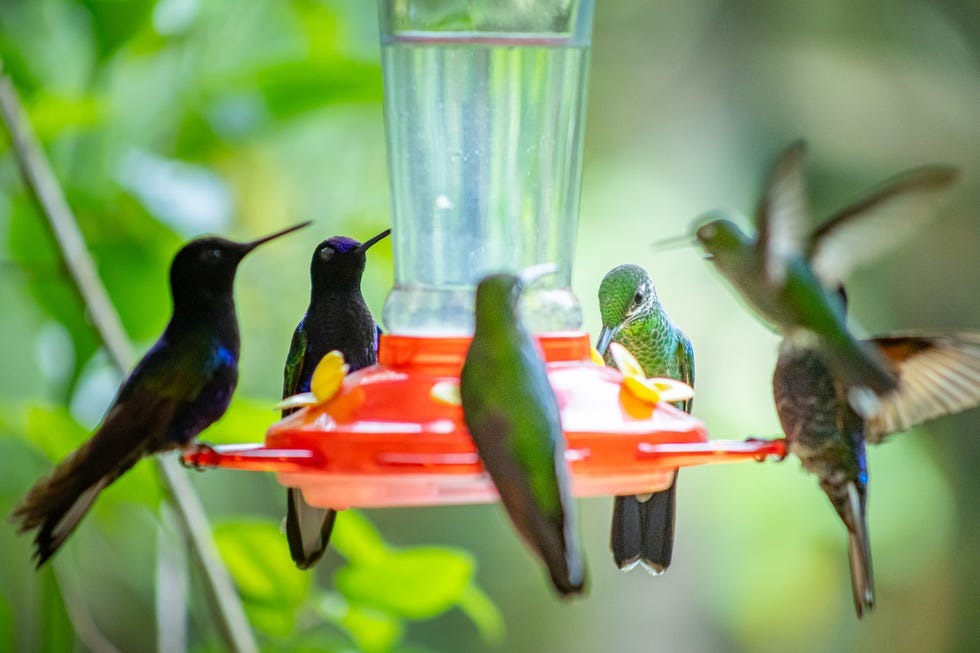
Male Ruby-throated Hummingbirds defend feeding resources, including flowering patches and feeders, and territorial chases can drive other hummingbirds away from them.
One observer described a sudden change in feeder visits:
So I get ruby-throated hummingbirds at my feeders (one in the backyard, one in front). They arrived about six weeks ago and I’ve had so many of them! Then about a week ago they literally disappeared almost overnight. I tried googling the reasons for this and the two that could possibly make some sense are that it is nesting season for females, and that other sources of nectar are in bloom right now, creating less of a need to come to feeders. But you’d still think I’d see a couple of them here or there. I haven’t seen any around at all. Any thoughts?
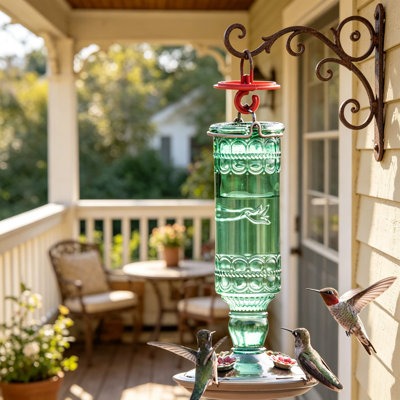
Natural nectar availability, seasonal movement and territorial behavior all affect feeder activity.
If visits drop, note when you watch the feeder and whether nearby flowers are blooming.
Nesting, young, and lifespan
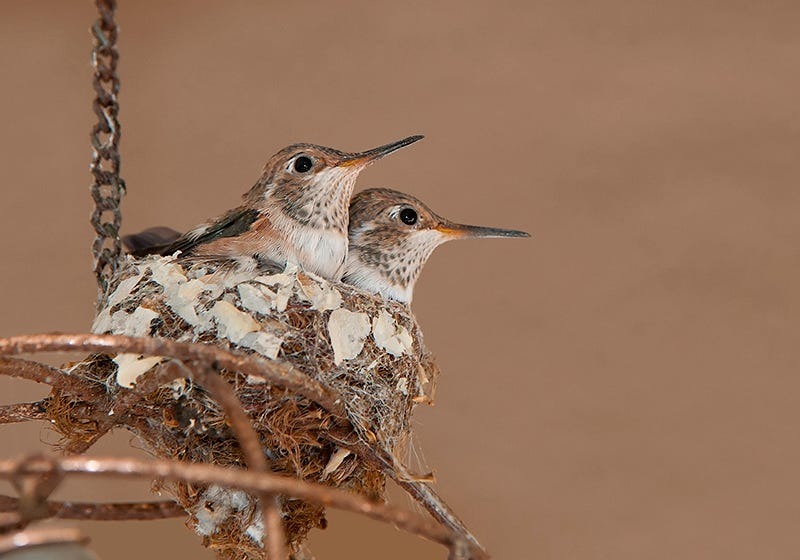
The female builds the nest, incubates the eggs and raises the young. She builds a small cup from plant down and spider silk, often on a slender branch. Lichen and moss may cover the outside.
Cornell gives these reference ranges for nest placement and development:
| Nesting feature | Cornell reference |
|---|---|
| Nest placement | Typically 10 to 40 feet above ground |
| Nest dimensions | Approximately 2 inches across and 1 inch deep |
| Clutch size | 1 to 3 eggs |
| Incubation | 12 to 14 days |
| Nestling period | 18 to 22 days |
Spider silk gives the nest elasticity, so it stretches as the young grow. The Cornell life-history account covers how the female builds and tends this small cup.
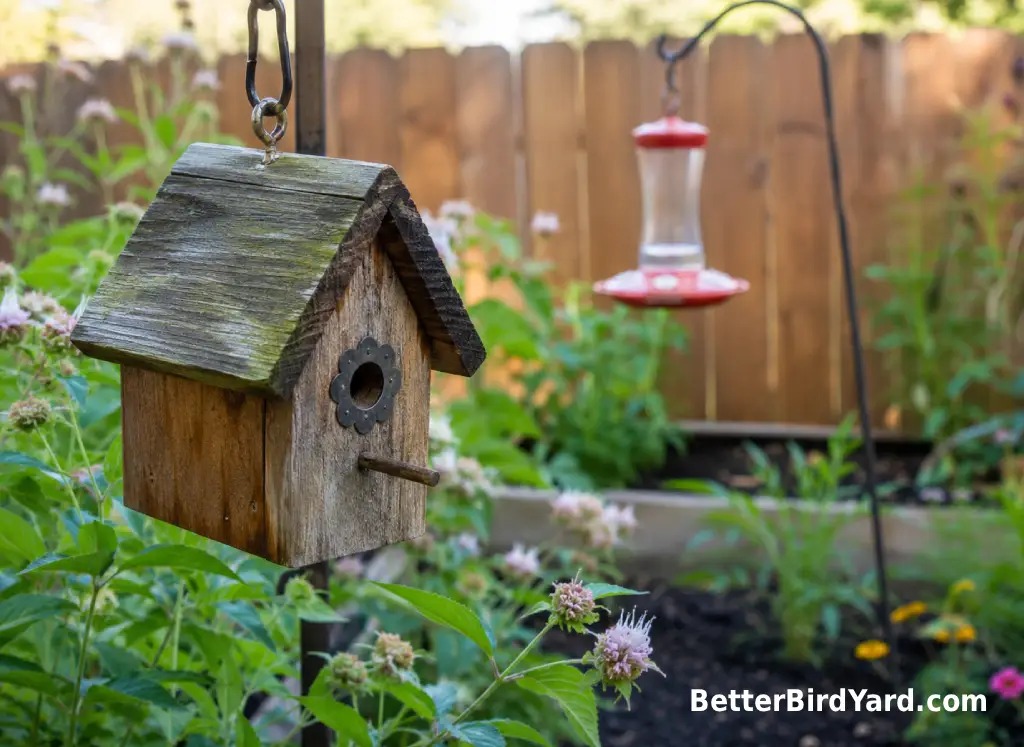
Watch an active nest from a respectful distance, and don’t approach closely or interfere with the female or nestlings. Avoid publishing the precise location of an active nest, since that could expose it to disturbance.
The USGS Bird Banding Laboratory lists a female Ruby-throated Hummingbird longevity record of 9 years, 2 months.
Calls and flight that help identify a bird
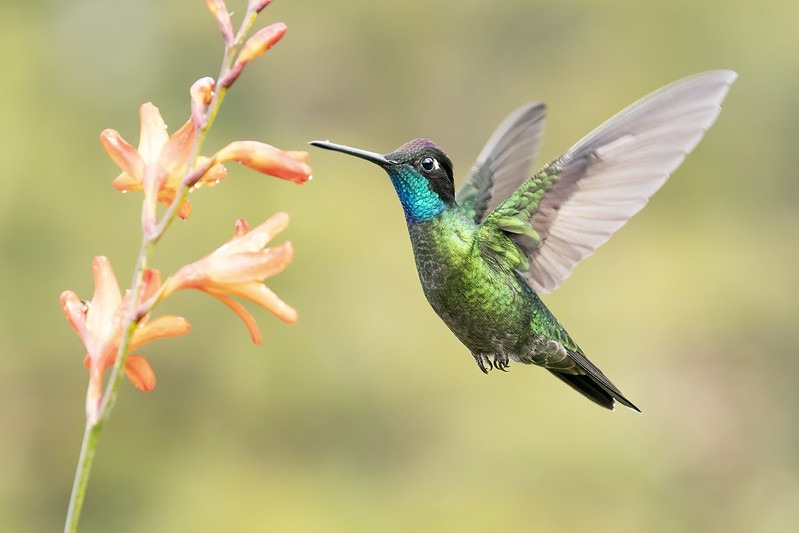
Ruby-throated Hummingbirds hover beside flowers, reverse direction quickly and pause on perches between feeding visits. The Smithsonian says their high-pitched chirps can sound faintly squeaky. Listen to a verified Cornell or Audubon recording while you watch the bird. Calls and hovering add context to plumage, place and season.
How to verify an uncertain Ruby-throated Hummingbird sighting
Your confidence should match the marks you actually saw. A full iridescent male gorget is strong evidence, while a pale-throated bird photographed from behind leaves several candidates open. Place and season tell you which alternatives to compare.
| Identification status | What you saw | How to log it |
|---|---|---|
| Likely Ruby-throated | Several consistent field marks, a fitting place and season, alternatives considered. Example: a summer photo from an eastern yard showing a green back, pale underside and clear bill profile, with age and sex still open. | Ruby-throated Hummingbird, with a qualifier if needed |
| Possible Ruby-throated | Some supporting marks, but the tail, throat or age details are unclear | Possible Ruby-throated Hummingbird |
| Unresolved hummingbird | Key marks hidden or conflicting, another species still plausible. Example: a southeastern winter visitor with an obscured tail and throat. | Hummingbird species unresolved |
In a field record, note the date, state or region, habitat, visible bill, throat and tail details, and any photographs. Keep the alternatives that still fit what you saw.