Call a large black bird an American Crow when its bill, wings, tail, range and voice all fit. Where Fish Crow is also possible and the bird stays silent, you can’t name the species.
How to Identify an American Crow
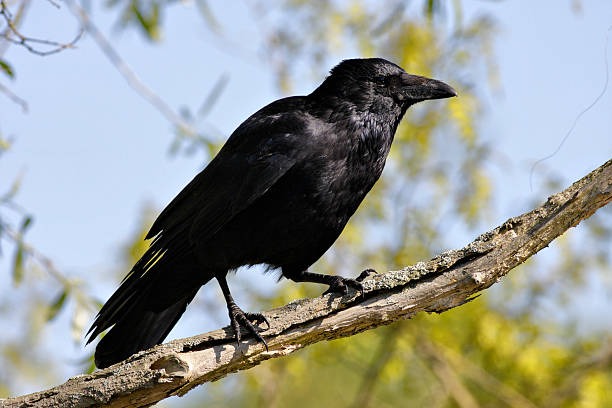
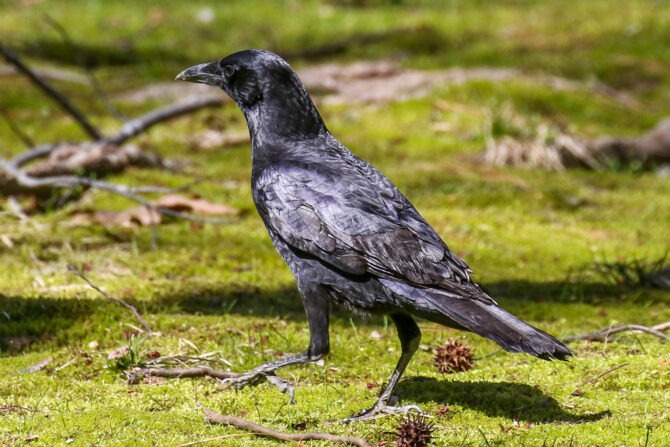
An American Crow (Corvus brachyrhynchos) is a large, entirely black member of the crow family, Corvidae. The bill and legs are black too. In good light the plumage has a sheen; worn feathers look duller or brownish.
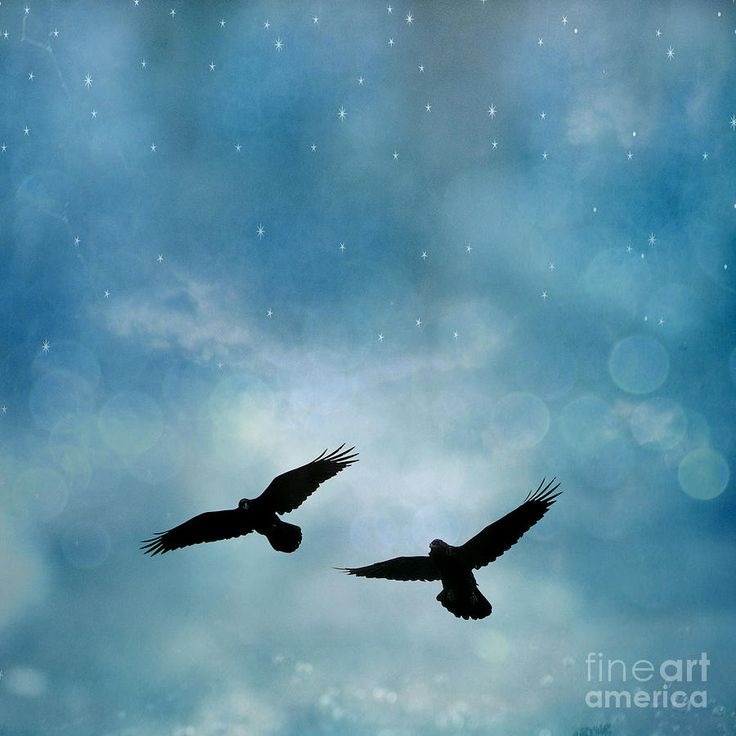
On a lawn, the bird has a solid chest and a powerful head and bill. In flight, the outer wing feathers spread apart and the wingbeats are steady and rowing, with occasional glides.
Cornell lists American Crows at 15.8 to 20.9 inches (40 to 53 cm) long, with wingspans of 33.5 to 39.4 inches (85 to 100 cm) and weights of 11.2 to 21.9 ounces (316 to 620 g). Photographs and side-by-side views are in the Cornell American Crow identification guide.
In the field, look for three marks:
- Bill: A stout, mostly straight black bill, big in proportion to the head.
- Wings: Broad wings with fingered tips, clearest against an open sky.
- Tail: A relatively short tail, square or softly rounded when fanned. The outline shows best as the bird lifts off and the tail spreads briefly.
American Crow vs Fish Crow: When You Can’t Tell
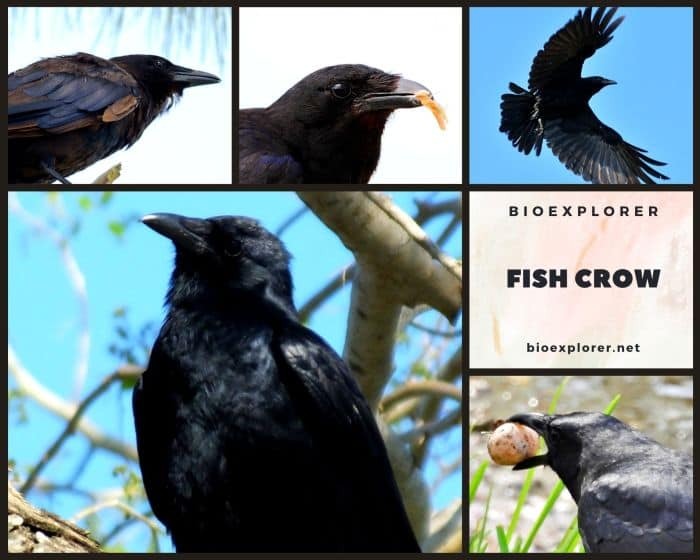
American Crows and Fish Crows (Corvus ossifragus) look so alike that a silent bird in an overlap area can’t always be identified to species. Fish Crows run slightly smaller, but distance and posture distort size.
Fish Crows have historically been concentrated along the Atlantic and Gulf coasts from southern New England to Texas, and have also expanded inland, particularly along major rivers.
An American Crow’s ordinary call is a fuller, rougher caw. Fish Crows commonly give a short, nasal, two-part call, often rendered uh-uh. American Crow begging calls, which can sound nasal, last longer and fall slightly in pitch, without the abrupt ending of the Fish Crow call.
See Cornell’s Fish Crow identification guide for more on this problem.
American Crow vs Common Raven (and Other Black Birds)
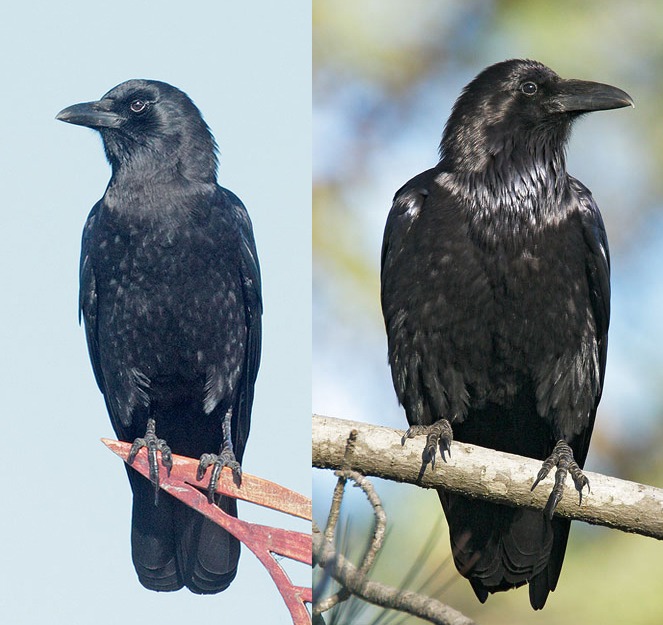
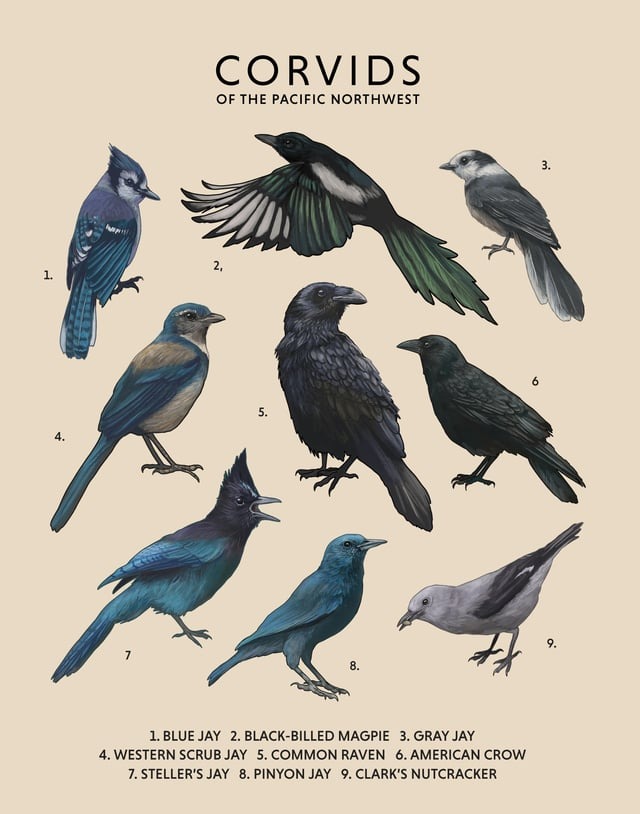
Common Ravens (Corvus corax) look heavier than American Crows. A raven has a deeper bill, shaggy throat feathers and a wedge-shaped tail when fully spread. Its voice is a deeper croak, and it often glides or soars. For plumage, range and song, see Common Raven identification and field marks.
| Field mark | American Crow | Fish Crow | Common Raven |
|---|---|---|---|
| Bill | Stout, mostly straight | Like American Crow | Deeper, heavier |
| Relative size | Large crow | Slightly smaller, overlaps | Larger and bulkier |
| Spread tail | Square to rounded | Like American Crow | Wedge-shaped |
| Typical voice | Strong caws, varied calls | Short, nasal double notes | Deeper croaks and guttural notes |
| Flight | Regular rowing wingbeats | Like American Crow | Frequent gliding and soaring |
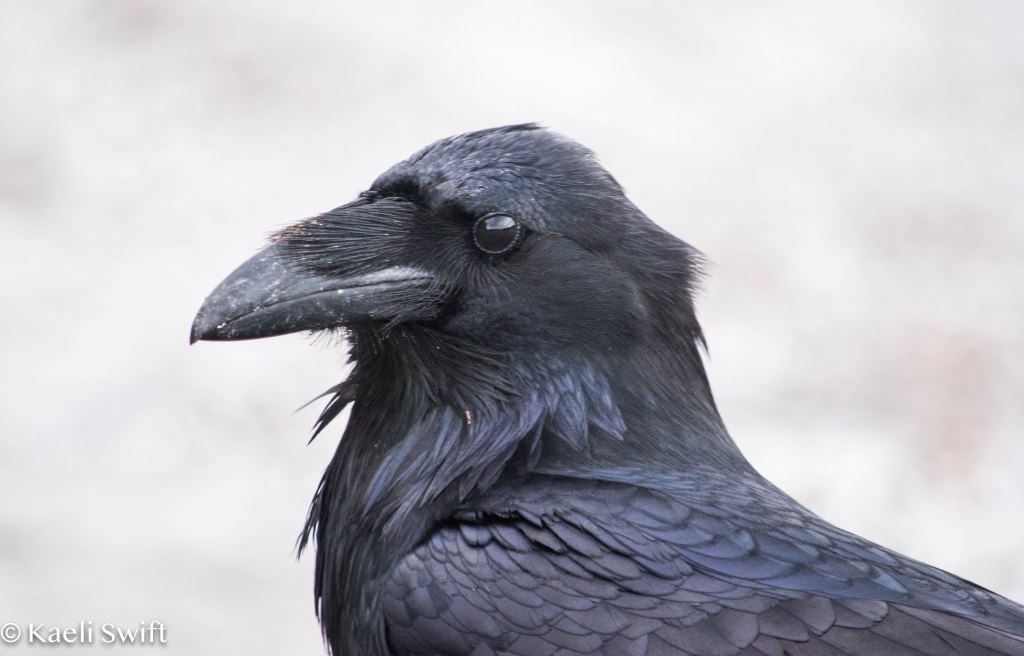
A deep bill, shaggy throat, wedge-like tail and croaking voice together point to a raven. Regular crow-like wingbeats and a squarer tail point to a crow. For bill, tail and flight checks, see how to tell an American Crow from a Common Raven.
Grackles, which belong to the blackbird family, are another occasional mix-up around parking lots and lawns. Their bills are slimmer and their proportions differ from the heavier corvids. Compare tail, bill, throat and voice together.
What Does an American Crow Sound Like?
The familiar American Crow caw is loud, coarse and often repeated. The species also makes softer sounds, including rattles, clicks and quiet mixtures of hoarse coos and caws that a casual listener may miss.
A young bird begging beside an adult sounds surprisingly nasal, and adults give begging notes too in breeding-related interactions. For crow feeding behavior, backyard habitat and hazards, see how to attract crows to a yard responsibly.
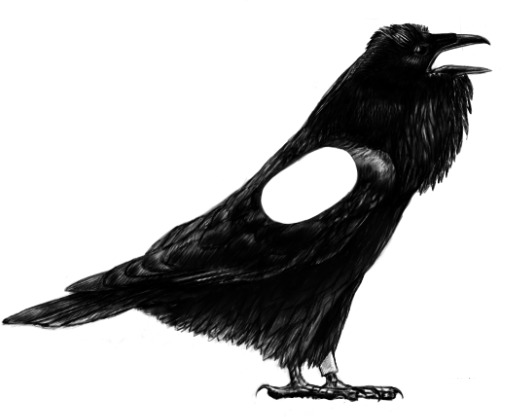
To check a call, record several phrases and compare them with the labeled recordings in Cornell’s American Crow sound library. A sound-identification app can suggest candidates.
Where American Crows Live and When You May See Them
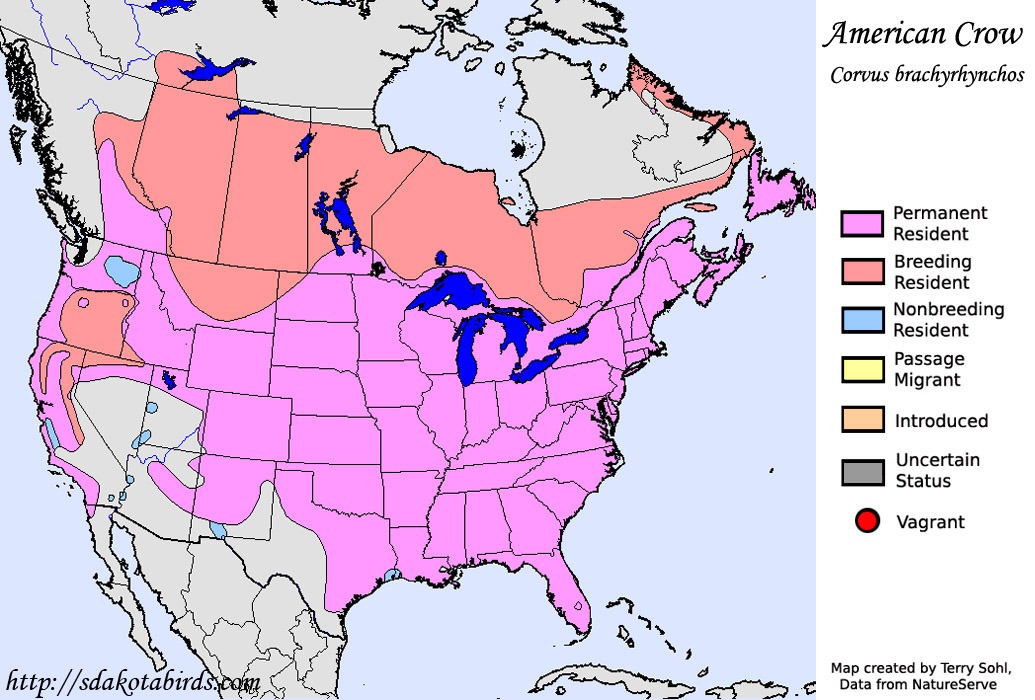
American Crows use city parks, open woodland edges, fields, farmland, yards, roadsides and other places with food and suitable perches. Many stay year-round, while some northern populations move south seasonally. They occur across most of the contiguous United States, with southwestern deserts a notable exception.
What American Crows Eat and How They Forage
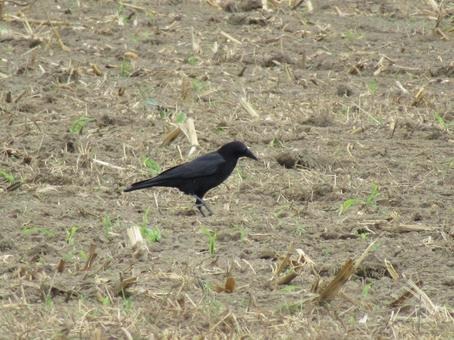
American Crows are omnivores. On lawns and farmland they hunt insects, worms and other invertebrates, and they also eat grains, seeds, nuts, fruits and berries.
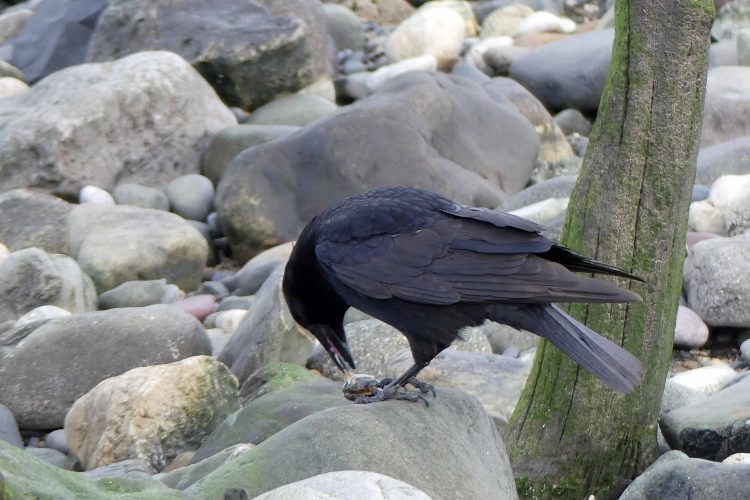
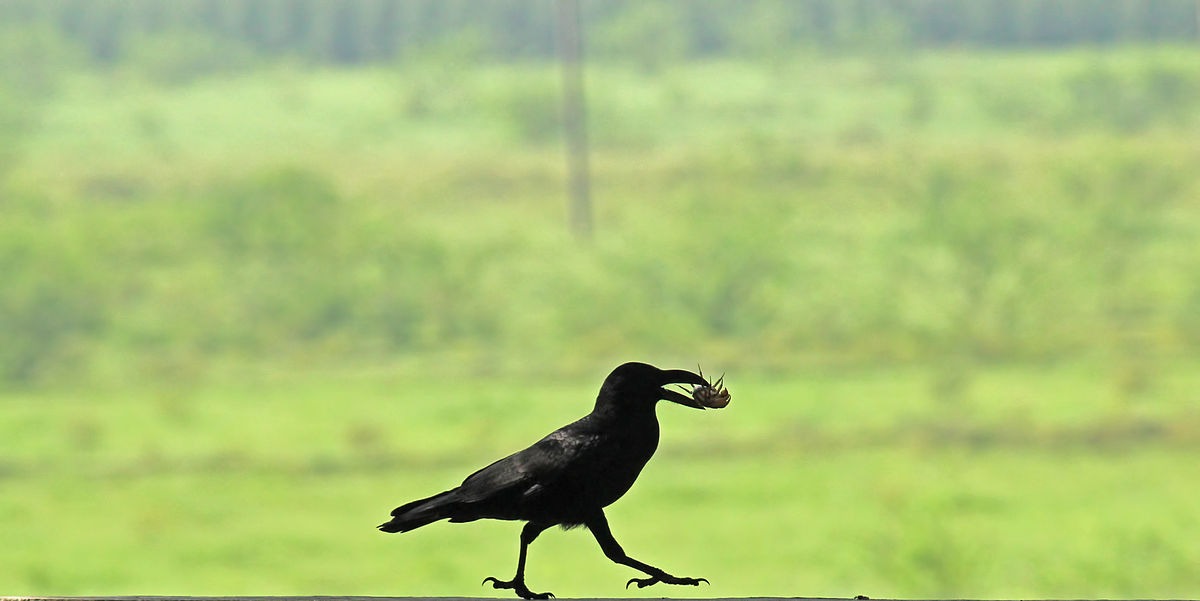
Animal foods include small vertebrates, carrion and sometimes eggs or nestlings from other birds’ nests. In towns, a crow may search through discarded food. Audubon’s species account describes American Crows dropping hard-shelled mollusks onto rocks to break them open.
Families, Nesting, Flocks and Night Roosts
American Crow family groups sometimes include offspring from earlier years who help a breeding pair raise new young, so several birds repeatedly visiting the same nest area can be one cooperative family group.
Nests are usually built from twigs with softer lining and placed in trees, often well above the ground. Cornell reports clutches of 3 to 9 eggs, incubation lasting 16 to 18 days and a nestling period of 20 to 40 days.
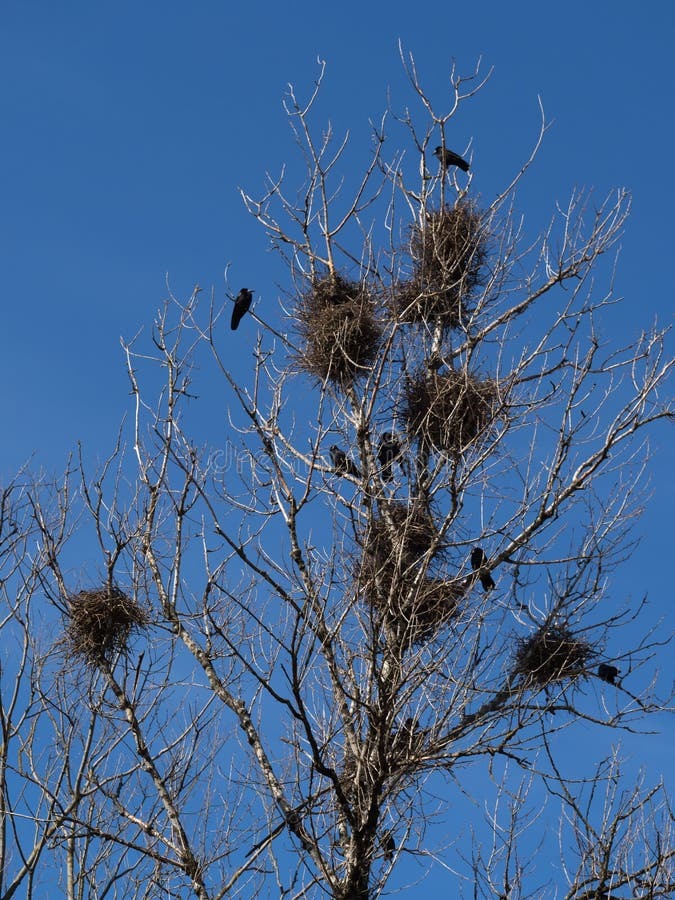
Outside nesting situations, crows gather in large communal roosts, especially in winter. Groups also call and circle around a hawk or owl, a defensive behavior known as mobbing. Watch nests and mobbing scenes from a distance that leaves the birds undisturbed.
Do American Crows Recognize People or Bring Gifts?
American Crows learn to recognize particular human faces under experimental conditions. In a study published in 2010, researchers paired distinctive masks with a threatening capture experience. Defensive reactions to those faces persisted for at least 2.7 years among the studied birds. The original face-recognition study documents the experiment.
A separate 2012 study at five study sites near Seattle documented how defensive reactions to threatening human faces spread through social learning: some birds reacted to the danger because of what others had experienced. For more, see do crows recognize human faces? what studies show.
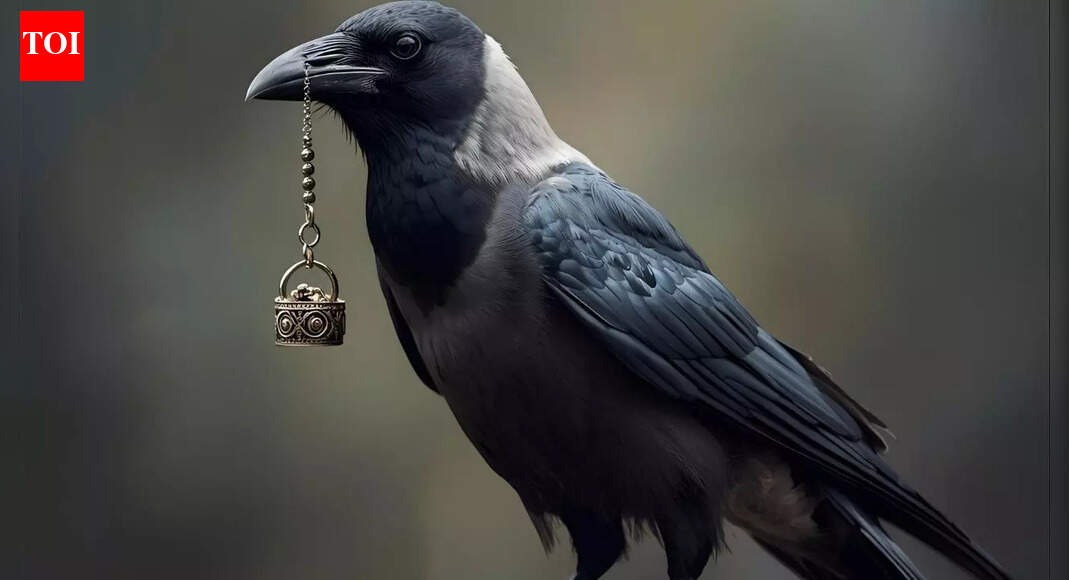
Those experiments measured responses to danger. Claims that crows routinely thank people with presents are a different matter.
When an object looks like a gift
One Reddit contributor reported a mussel shell, a blackberry and a peanut shell near a familiar feeding place:
I don’t get gifts from the crows I’ve been feeding for 2.5 years now. They do, however, seem to place orders. I live on the coast and got a blue mussel shell, thinking it might be a gift. They often steal mussels from the seagulls when they drop them on rocks to open them. The next “gift” I received was a blackberry at the end of blackberry season, and then a peanut shell jammed between planks in my deck before I started feeding them peanuts in the shell. All in the same spot—where I stand every morning to toss out their food. It’s entirely possible it’s just a coincidence but it sure seems like they’re making snack requests.
How to Check and Record an American Crow Sighting
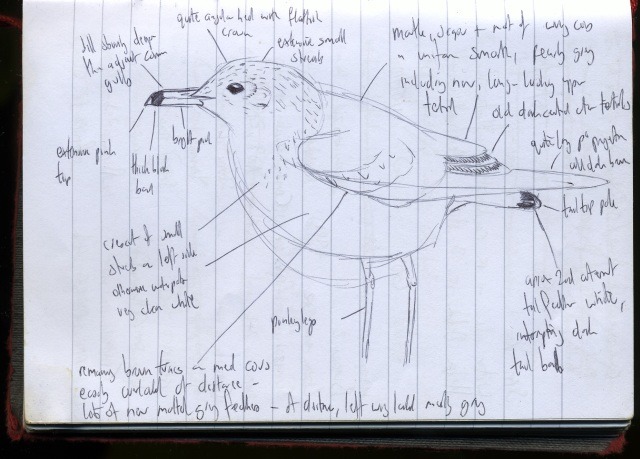
Write down the marks and circumstances while they’re fresh, with enough detail that another birder can see why you made the identification.
- Date and place: The day, approximate location, county or state, and habitat.
- Body and bill: Proportions and the quality of the view.
- Wings and tail: Flight style, and whether the tail spread enough to judge its outline.
- Sounds: A description or recording of the call sequence, or a note that the bird stayed silent.
- Behavior: Foraging, begging, nest activity or interaction with other birds, if it affected the observation.
- Alternatives: Plausible lookalikes and any field mark you couldn’t see.
On a birding checklist, use the narrowest category your evidence supports. If you can’t separate the species, log the broader sp. or two-species slash category eBird offers. If no category fits, put the doubt in your notes and don’t force an American Crow ID.