A small gray bird with a black cap, bib, and white cheeks in the southeastern or south-central United States is usually a Carolina Chickadee (Poecile carolinensis). Near the Black-capped Chickadee contact zone, or with a poor view or conflicting evidence, leave the species unresolved and log only what you can support.
How to recognize a Carolina Chickadee
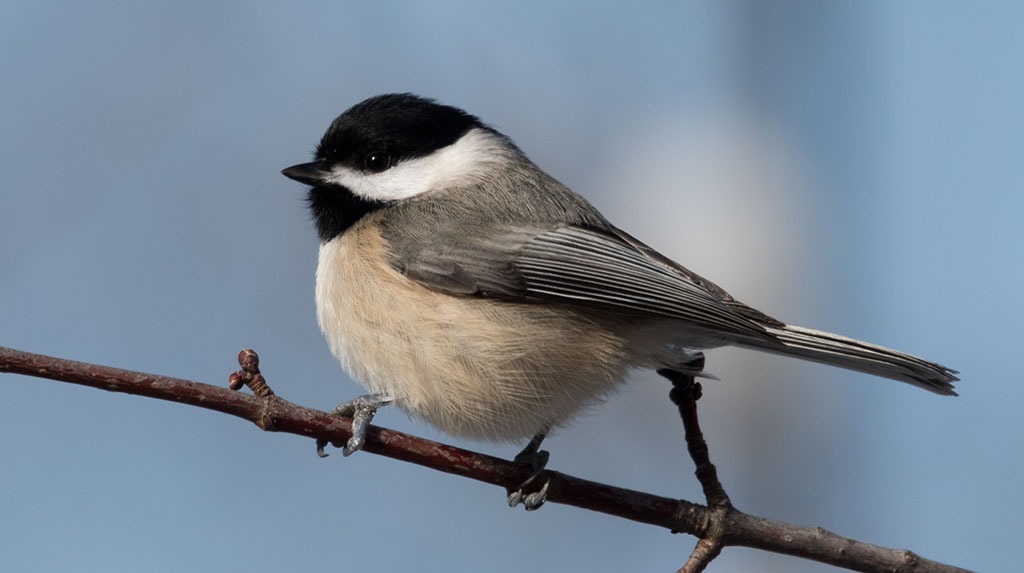
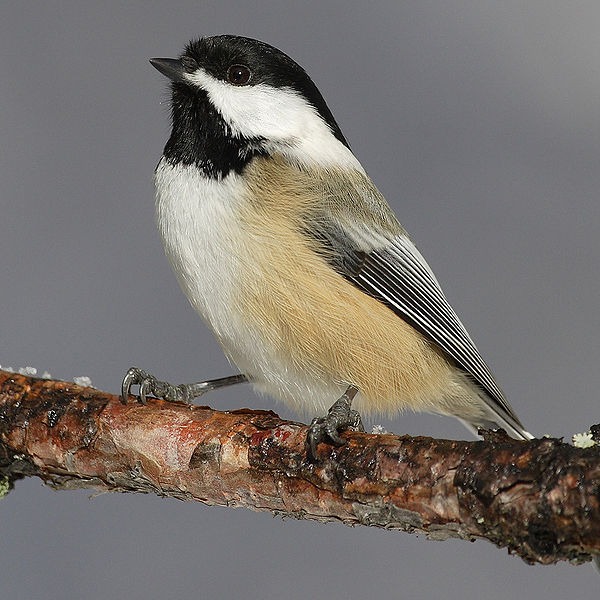
The bird has a black cap, bright white cheeks, and a black bib against a pale underside. The back, wings, and narrow tail are gray. The big round head sits right on the shoulders.
It has a short bill and moves quickly through leaves and branches, often hanging upside down to search twigs and bark for insects.
| Feature | Carolina Chickadee |
|---|---|
| Scientific name | Poecile carolinensis |
| Adult length | 3.9 to 4.7 inches (10 to 12 cm) |
| Head | Rounded, with a black cap and white cheeks |
| Throat | Black bib |
| Back and wings | Mostly gray, with subdued pale wing edging |
| Tail | Relatively narrow |
| Habitat | Woodland, forest edges, parks, and wooded yards |
The Cornell Lab identification guide gives the size range above. In a photograph without a reliable scale, shape and clear feather details tell you more than estimated inches.
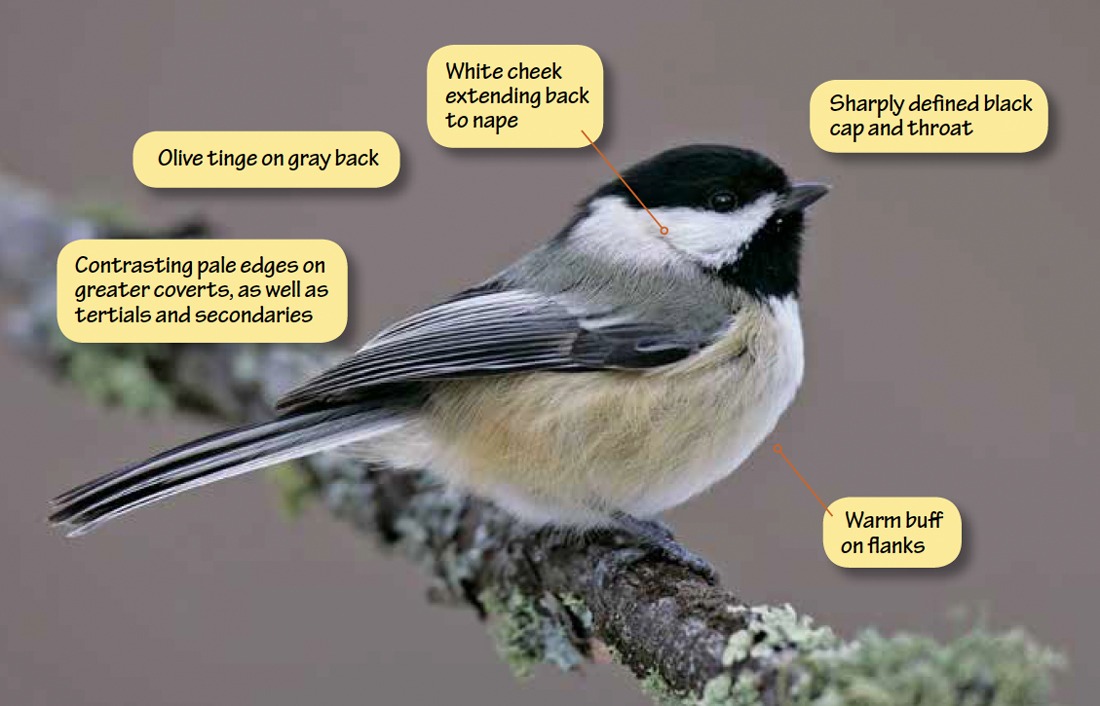
Look for the cap and cheek pattern, the rounded silhouette, and any visible edging on the folded wings.
Where Carolina Chickadees live and why location comes first
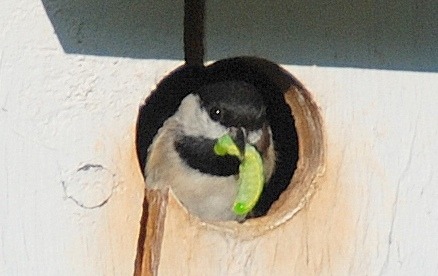
These chickadees live year-round across much of the southeastern and south-central United States. They use woodlands, forest edges, parks, and neighborhoods with mature trees, where branches and bark offer food and cavities offer nesting sites.
Missouri shows why location matters. The Missouri Department of Conservation describes Carolina Chickadees as generally southern birds in the state and Black-capped Chickadees as generally northern birds, with a contact region between their typical ranges. A chickadee near that region needs closer identification work than one well within the usual Carolina range.
For a particular bird, check its date and location against the regional observations linked from the eBird Carolina Chickadee profile.
Carolina vs. Black-capped Chickadee: the useful quick differences
Both species have the black cap, black bib, and white cheeks. When you can see the folded wing clearly, its feather edging is the more useful clue.
| Clue | Carolina Chickadee | Black-capped Chickadee |
|---|---|---|
| Face | Black cap and bib; white cheeks | Very similar black and white pattern |
| Folded wing | Usually less conspicuous pale edging | Often stronger whitish edging |
| Body sides | Subtle tones | Sometimes buffier; varies a lot |
| Typical range | More southerly | More northerly |
| Voice | Fee-bee-fee-bay song; quicker, higher chick-a-dee calls | Different typical song and call patterns |
Feather wear, fresh plumage, lighting, and photo angle all change the apparent contrast. Judge wing edging only when you can see the folded feathers and their pale borders.
Kenn Kaufman’s Audubon identification analysis covers the subtler marks and their limits. For a difficult photograph, the site’s Black-capped versus Carolina Chickadee comparison gives the longer side-by-side treatment.
What Carolina Chickadees sound like
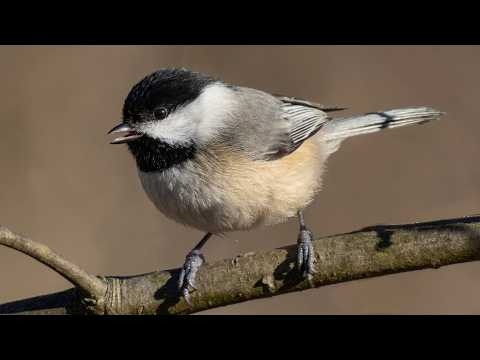
Carolina Chickadees give whistled songs and chick-a-dee calls. A song differs from the rapid, chattering call, so compare each with recordings of the same type.
One familiar Carolina song sounds like fee-bee-fee-bay, with the first and third notes higher. Cornell describes other song patterns too; the four-note one is a recognizable starting point.
Chick-a-dee calls often sound quicker or higher than Black-capped calls. No fixed pitch separates every bird.
Match your recording to an identified field recording of the same vocalization type. A complete phrase gives you more to compare than a brief sound caught through rustling leaves.
Why Merlin or a smart feeder may give the wrong chickadee name

Merlin Bird ID and smart feeder cameras can suggest different chickadee names because they work from different observations. A feeder image might show a partly hidden wing, while a phone recording gives a sound with no clear view of the bird.
Merlin uses location and eBird observations to work out which species are likely nearby, and its Sound ID feature suggests matches to recorded sounds. An app’s name is a guess from those inputs, so weigh it against what you saw and heard. When bill shape, plumage, and habitat matter, how shape, color, behavior, and habitat identify a bird covers them in more detail.
| Situation | What to examine | What to do |
|---|---|---|
| Camera shows Carolina | Whether the image shows a readable wing and head | Keep a tentative ID if details are incomplete |
| Merlin suggests Black-capped | Recording type, clarity, and regional likelihood | Review the original sound evidence |
| A saved label changes after an app update | The original media and the new label | Change the earlier entry only if the evidence supports it |
| Audio, image, and location disagree | Which observations are clear enough to assess | Leave the species undecided |

A Kiwibit feeder camera may suggest Carolina Chickadee from a brief image, while Merlin Sound ID works from audio. The two can disagree when the field marks or calls were only partly captured.
Keep the original image or recording together with the app’s suggested name so you can review the evidence later.
When the honest answer is Carolina/Black-capped Chickadee
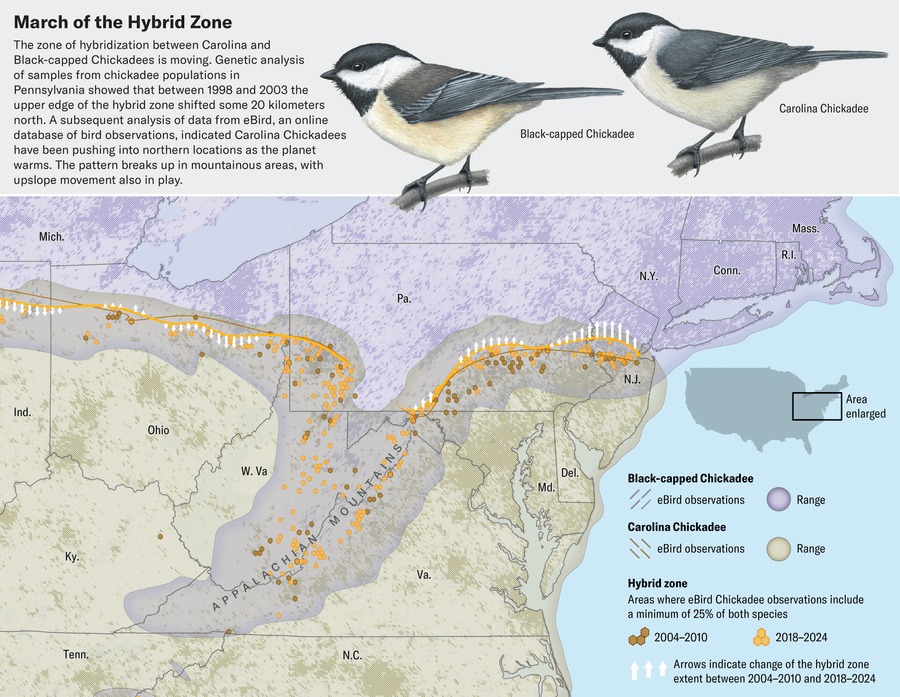
Some birds in the contact zone cannot be assigned to Carolina or Black-capped Chickadee from ordinary field evidence. The two species hybridize where their populations meet, and learned songs make a quick sighting or recording harder to read.
A 2025 whole-genome study sequenced 259 chickadees, including birds sampled along hybrid-zone transects in Pennsylvania and Missouri and reference birds from outside those areas. It documents genetic complexity across the contact zone. Establishing hybrid ancestry for a backyard bird would take its own evidence.
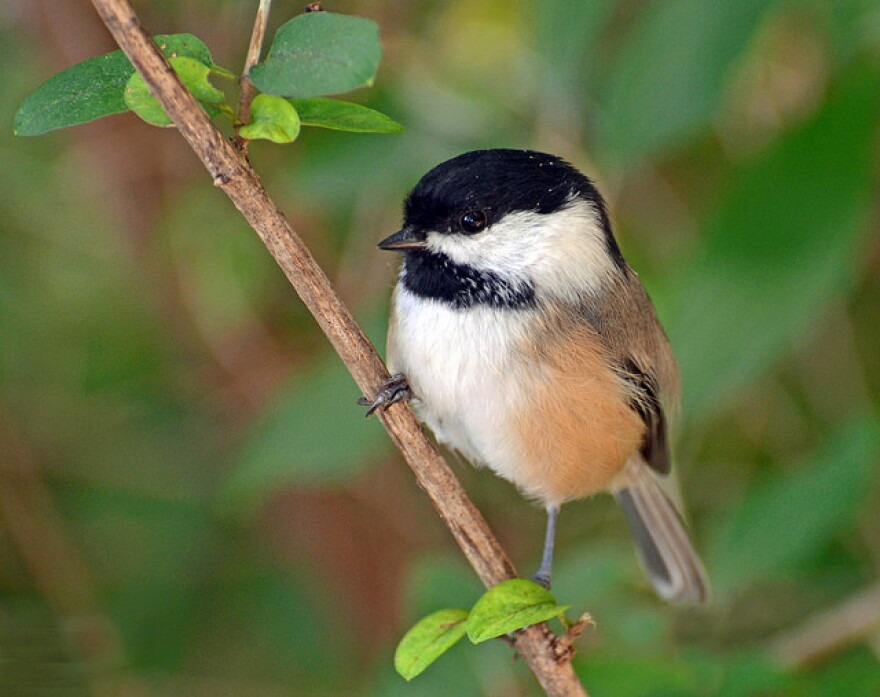
A bird with a typical face, a hidden folded wing, and a call too short to evaluate stays uncertain.
When the signs stay inconclusive, record an unresolved Carolina/Black-capped Chickadee grouping, or chickadee sp. where the platform offers it. That preserves a real encounter without forcing a species guess. Compare plumage, range, and song against Black-capped Chickadee identification and field marks rather than relying on one clue.
What Carolina Chickadees eat and how they forage
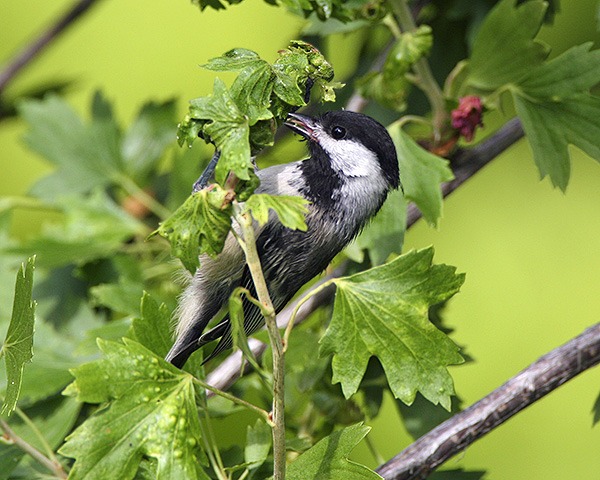
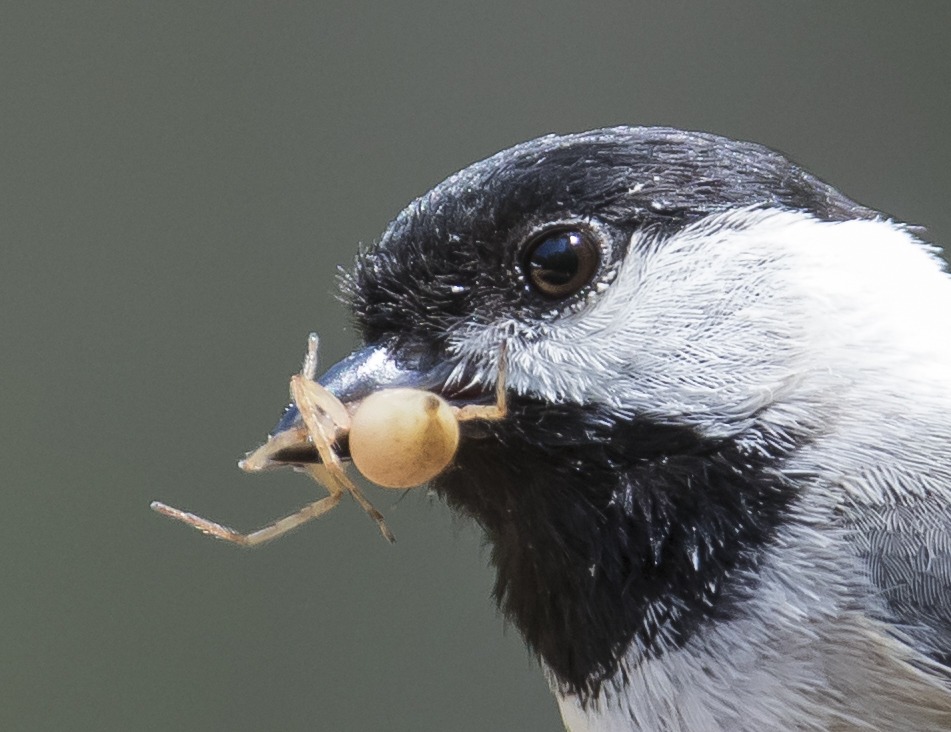
Carolina Chickadees search foliage, twigs, and bark for insects and spiders, which matter most during breeding. A bird may work along a branch, pause at a crevice, then hang beneath a twig to reach a hidden morsel.
Seeds and other plant material are part of the diet too. Their share changes with season and conditions, which is why a bird hunting insects in a tree can also show up at a backyard seed feeder.
For broader habitat choices, see how to attract birds to a yard.
Where Carolina Chickadees nest and how their young develop
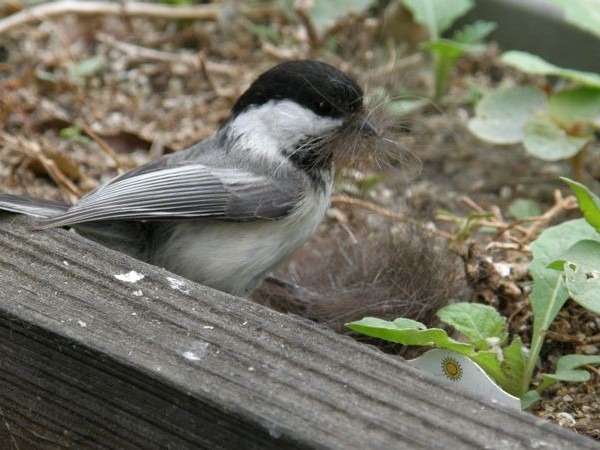
Carolina Chickadees nest in cavities, including tree holes and suitable nest boxes. They may enlarge an existing cavity or work in soft, decaying wood. Both members of a pair can help prepare the cavity, and the female builds the nest.
The Cornell NestWatch species account gives the clutch and incubation ranges below. The nestling period comes from Cornell’s All About Birds life-history account.
| Nesting measurement | Reported range |
|---|---|
| Clutch size (NestWatch) | 3 to 10 eggs |
| Incubation period (NestWatch) | 12 to 15 days |
| Nestling period (All About Birds) | 16 to 19 days |
NestWatch separately lists a “brooding period” in its nesting statistics. The nestling period in the table is the time young birds spend in the nest, and individual nests can run on different schedules.
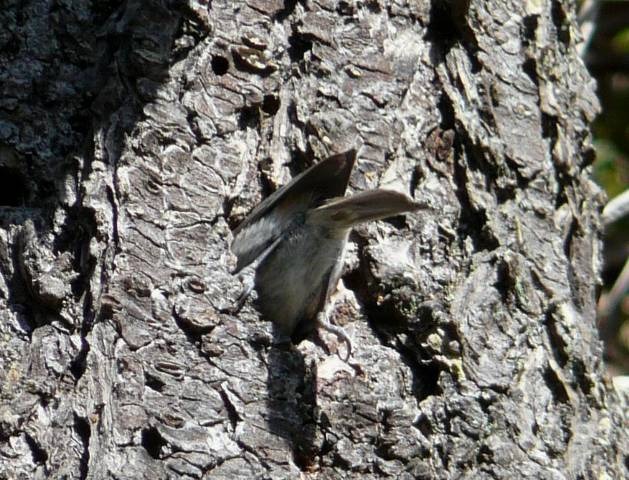
An adult entering an old woodpecker hole may be investigating or using the cavity, even when eggs or young are out of view. Watch from a distance that lets the birds carry on normally, and never open an occupied cavity or disturb eggs or nestlings.
How Carolina Chickadees behave around trees and yards
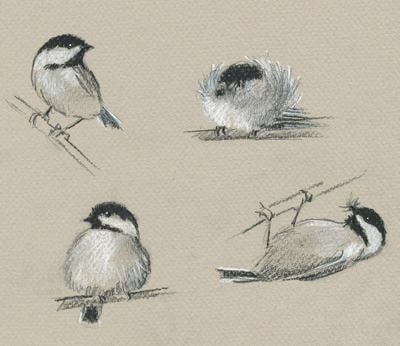
Carolina Chickadees move briskly through trees, pausing on branches and visiting feeders before vanishing into foliage. Outside the breeding season they may travel with loose mixed-species feeding flocks, where several small birds search nearby trees. A quick camera view often catches only one angle of that activity.
A practical final check before logging a Carolina Chickadee
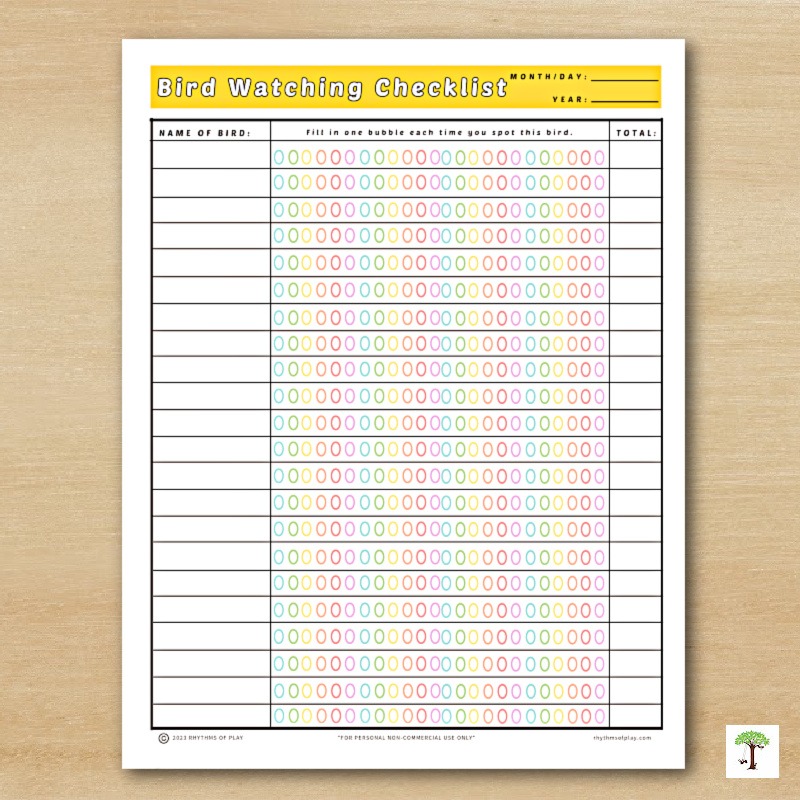
Once you’ve weighed the field marks, range, and any recording, your record should show which evidence supports the identification.
- Place and date: Record the location and when you saw or heard the bird.
- Appearance: Note the visible cap, cheek, bib, body shape, and any wing marks you could judge.
- Voice: State whether you heard a song, a call, or neither.
- Quality and conflict: Note a hidden wing, brief audio, or contradictory app labels, and explain the identification level you chose.
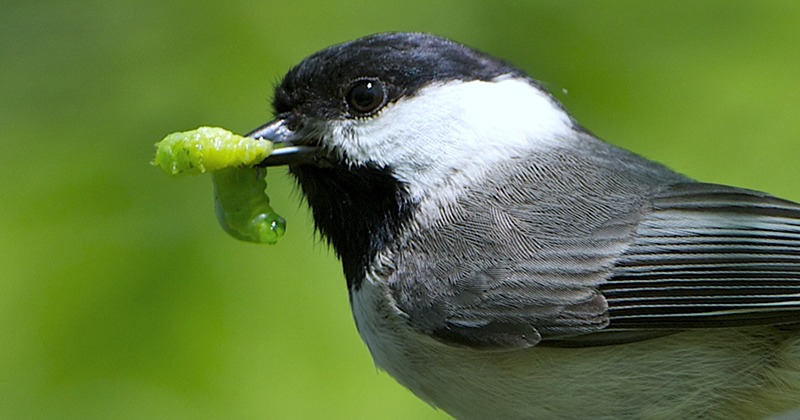
A compact field note such as “gray chickadee, white cheeks and black bib; wing edges visible; four-part whistle; within usual local range” records marks, voice, and location together. In a difficult region, a note on missing wing evidence and conflicting voice clues is also worth keeping.