A long-tailed hawk with short, rounded wings and a head that projects forward fits Cooper’s Hawk. A sturdy hawk with broad wings and a short, wide tail fits Red-tailed Hawk. When a juvenile bird, an awkward angle or a poor photograph hides those clues, compare field-guide images matched for age and angle, and record hawk sp. if the evidence still falls short.
Cooper’s Hawk vs Red-tailed Hawk: what to check first
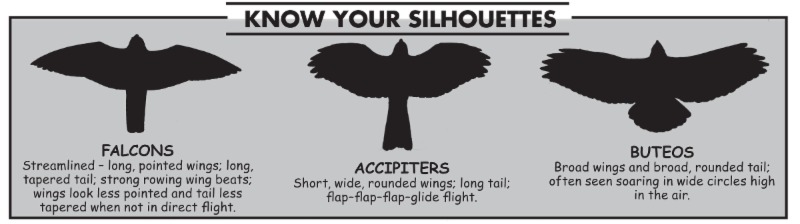
The biggest difference is build. Cooper’s Hawk looks elongated, with a prominent head and tail. Red-tailed Hawk has the broad, heavy outline of a soaring buteo.
Start with the view you had. A perched bird shows you its profile; a bird overhead shows its wings and tail. If you’re working from a photo of a young bird on a branch, run every check that applies.
- Perched: Check how the head, folded wings and tail line up in a side view.
- Flying: Compare wing breadth, head projection and tail length through a clear glide or turn.
- Brown or streaked youngster: Work out the age before you rely on tail color or breast markings.
- Photograph only: Confirm that the original frame shows the wings, head and full tail.
| Field mark | Cooper’s Hawk | Red-tailed Hawk |
|---|---|---|
| Overall shape | Relatively slim and elongated | Stockier, broad-shouldered |
| Wings | Shorter and rounded relative to tail | Broad, rounded and substantial |
| Tail | Long and prominent | Comparatively short and wide |
| Head in flight | Projects conspicuously ahead of wings | Less projecting against broad wings |
| Perched profile | Long tail may show beyond folded wingtips | Shorter tail relative to broad-winged build |
| Juvenile underside | Streaks often prominent on upper breast | Typical light forms often show a belly band |
| Flight tendency | Quick flaps alternating with glides | Soaring and slower, deliberate wingbeats |
| Hunting context | Agile pursuit among trees | Often watches or soars above open ground |
A sharply angled pose changes the apparent silhouette, so judge from a view where the features are clear.
Perched hawks: head, folded wings and tail
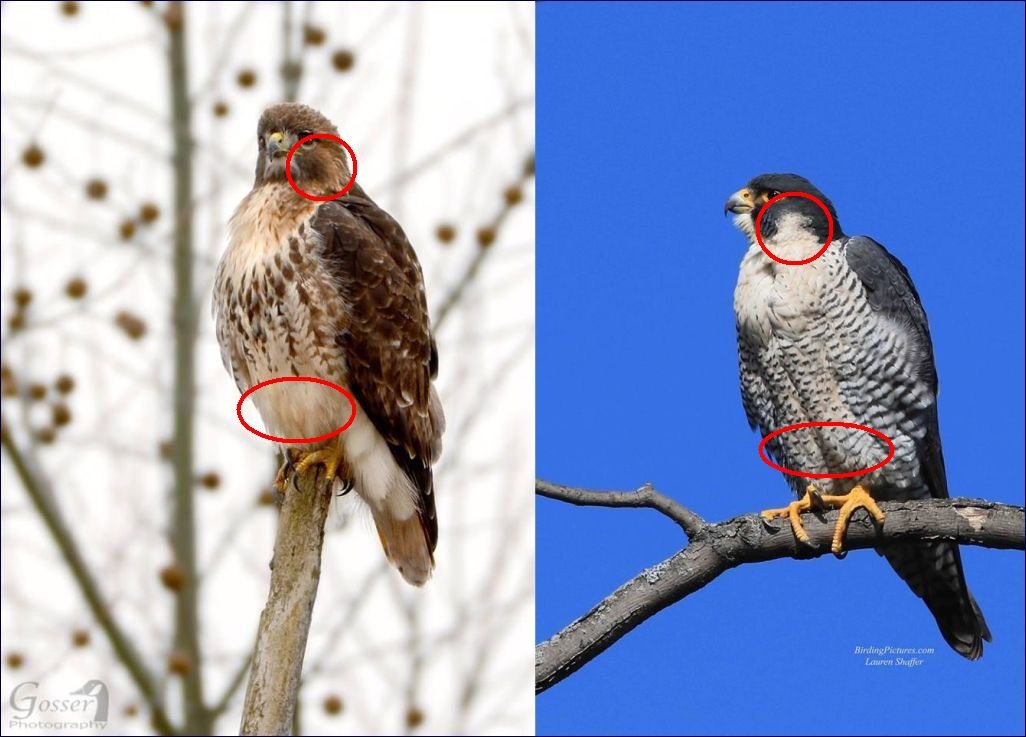
Perched Cooper’s Hawks look upright and narrow, with a relatively large head and a long tail hanging below the body. In a clear side view, the tail projects well beyond the folded wingtips.
A Red-tailed Hawk has a heavier chest and shoulders. Its broad-winged build and shorter tail give it a compact, heavy-looking profile, although it is the larger bird overall.
Judge how far the head sticks out from the shoulders and how far the tail reaches past the wingtips by proportion, not by exact distances.
A bird leaning forward or holding its tail behind a branch loses its familiar proportions.
In flight: wings, head projection and movement
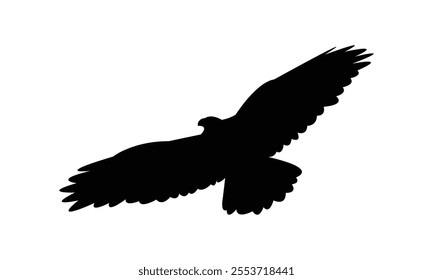
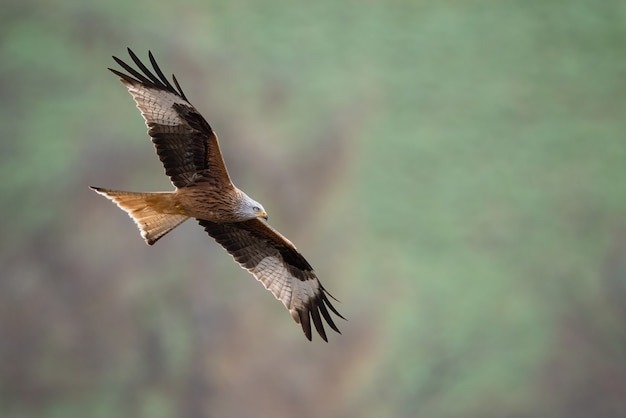
A Cooper’s Hawk in flight has a long-tailed outline. The rounded wings look short, and the head reaches well ahead of the wing fronts. You see this clearly when the bird crosses a clearing or passes between trees.
It alternates quick wingbeats with glides. In woods, its agile body and long tail suit fast turns during pursuit.
A Red-tailed Hawk has wider, heavier wings and a short, wide tail. One circling over an open field on spread wings looks nothing like a Cooper’s racing across a gap in the trees.
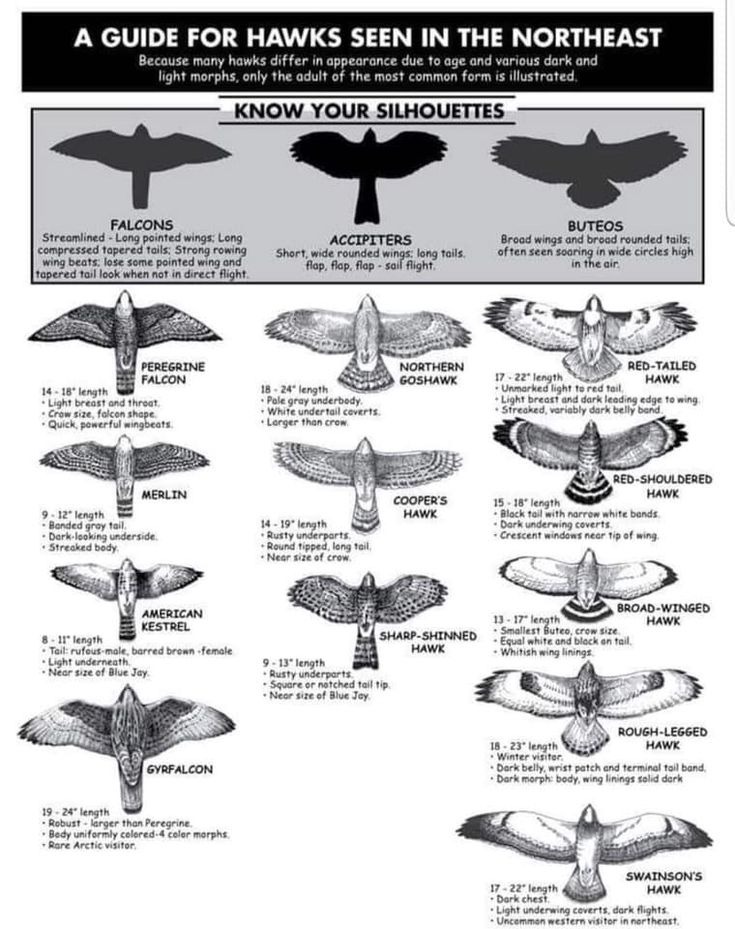
If the bird stays in view, watch its outline through several wing positions: the breadth of the extended wings, the tail’s length relative to them and the head’s projection during a glide.
Juvenile Cooper’s vs juvenile Red-tailed Hawk
A juvenile Red-tailed Hawk has a brown, barred tail without the adult red, which is why it gets mistaken for other brown-and-white hawks. Plumage and range checks are in Red-Tailed Hawk identification and field marks.
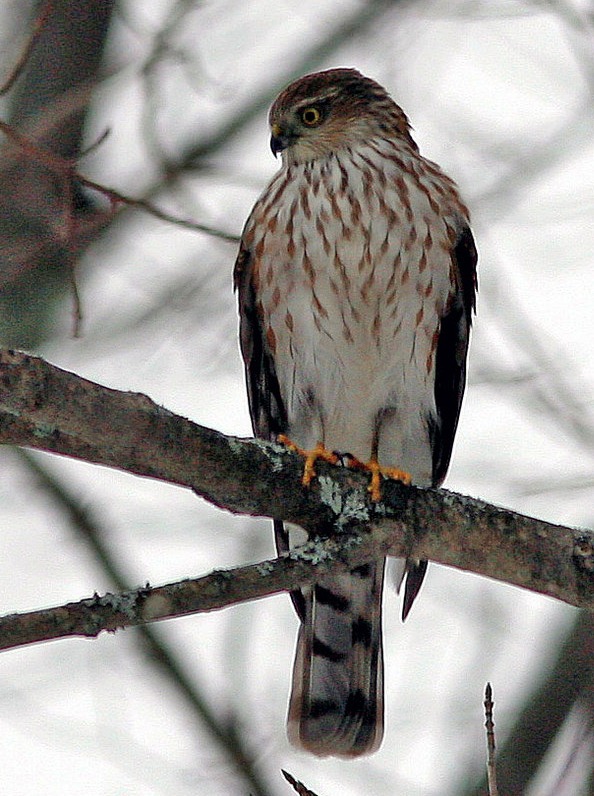
Juvenile Cooper’s Hawks are brown above and pale below, with crisp vertical streaks across much of the upper breast. A light-form juvenile Red-tailed Hawk usually carries its stronger streaking lower, in a belly band, which leaves the upper chest paler.
The Cornell Cooper’s Hawk identification account shows adult and immature examples. Adult Cooper’s Hawks have blue-gray upperparts, a darker cap and warm barring below, which looks quite different from the brown-streaked young.
| Bird and age | Upperparts and tail | Underside |
|---|---|---|
| Adult Cooper’s Hawk | Blue-gray upperparts, dark cap, long banded tail | Warm reddish barring |
| Juvenile Cooper’s Hawk | Brown above, long barred tail | Light underside with crisp brown streaks, often high on breast |
| Typical adult Red-tailed Hawk | Brown upperparts; often reddish upper tail | Light forms frequently show a darker belly band |
| Typical juvenile Red-tailed Hawk | Brown, barred tail without adult red | Light forms often show streaking concentrated across belly |
Streak position helps with young birds that look alike in overall color. It works best for typical light-form Red-tailed Hawks; dark morphs, regional variation, difficult lighting and hidden feathers can obscure it.
Match the reference photo to the bird’s age, or ordinary juvenile markings will look unfamiliar.
Tail bands, underwing marks and viewing angle
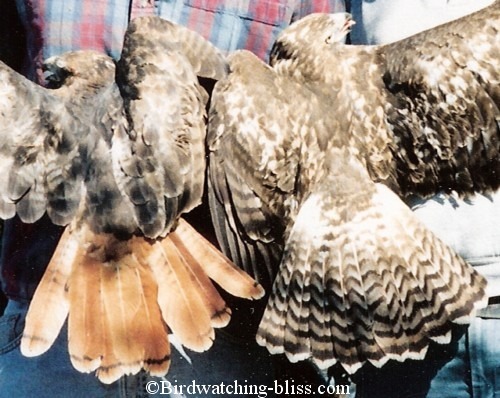
A Cooper’s Hawk has a long, rounded tail with dark bands. The tip often shows a pale edge, though wear and light affect how easily you see it.
Adult Red-tailed Hawks show rusty red on the upper surface of the tail. From below, the same feathers look pale, and juveniles have brownish, barred tails. A pale tail on a bird flying away therefore doesn’t identify its age by itself.
Light-form Red-tailed Hawks also show a dark patagial mark along the leading edge of the underwing, between shoulder and wrist. It pairs well with the belly band.
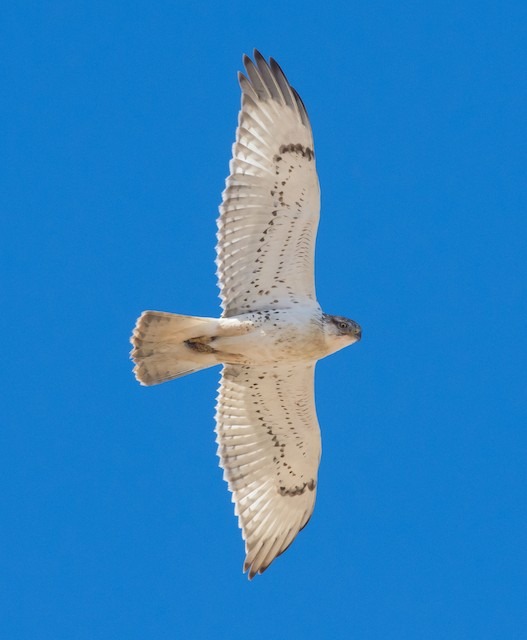
Check which surface the photograph shows before you read its colors. From beneath, compare the underwing leading edge and where the belly or breast streaks sit. From above, look at upper-tail color and tail shape. No single clue decides it; how shape, color, behavior, and habitat identify a bird explains how to weigh them together.
Size and perspective: why a large Cooper’s can be confusing
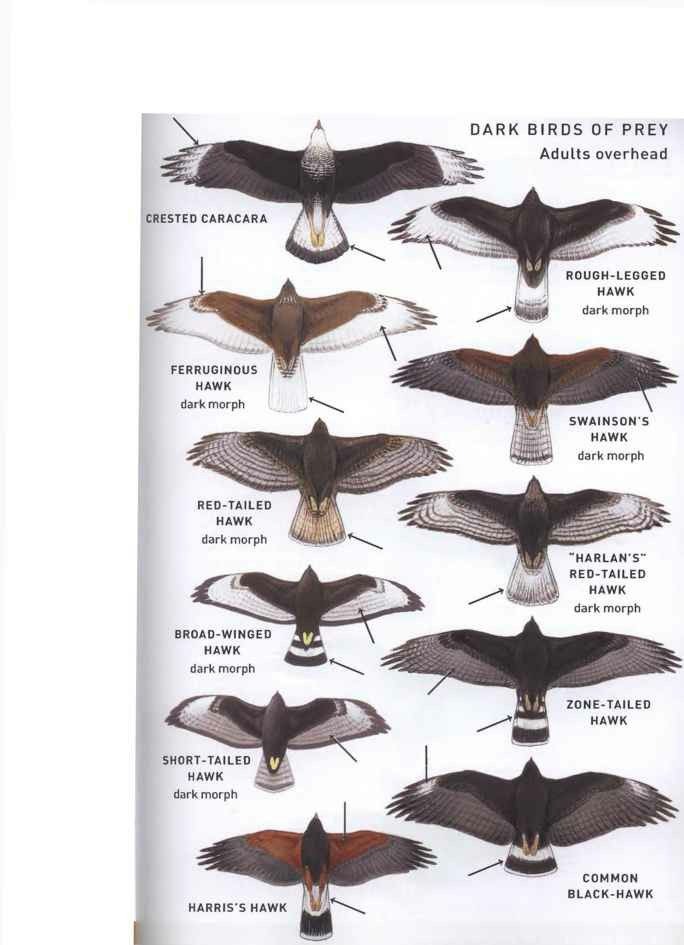
Red-tailed Hawks are much larger in published reference measurements, especially wingspan and weight. Females also differ in size from males within each species, so a rough estimate from a single bird misleads.
The Cornell Red-tailed Hawk identification account and its Cooper’s Hawk counterpart give separate reference ranges for each sex.
| Species and sex | Body length | Wingspan | Weight |
|---|---|---|---|
| Cooper’s Hawk, male | 14.6 to 15.3 in (37 to 39 cm) | 24.4 to 35.4 in (62 to 90 cm) | 7.8 to 14.5 oz (220 to 410 g) |
| Cooper’s Hawk, female | 16.5 to 17.7 in (42 to 45 cm) | 29.5 to 35.4 in (75 to 90 cm) | 11.6 to 24.0 oz (330 to 680 g) |
| Red-tailed Hawk, male | 17.7 to 22.1 in (45 to 56 cm) | 44.9 to 52.4 in (114 to 133 cm) | 24.3 to 45.9 oz (690 to 1300 g) |
| Red-tailed Hawk, female | 19.7 to 25.6 in (50 to 65 cm) | 44.9 to 52.4 in (114 to 133 cm) | 31.8 to 51.5 oz (900 to 1460 g) |
The female Cooper’s and male Red-tailed length ranges meet at 17.7 inches (45 cm), while their wingspan ranges stay separate. Wingspan gives the clearer contrast, if you can measure the bird reliably.
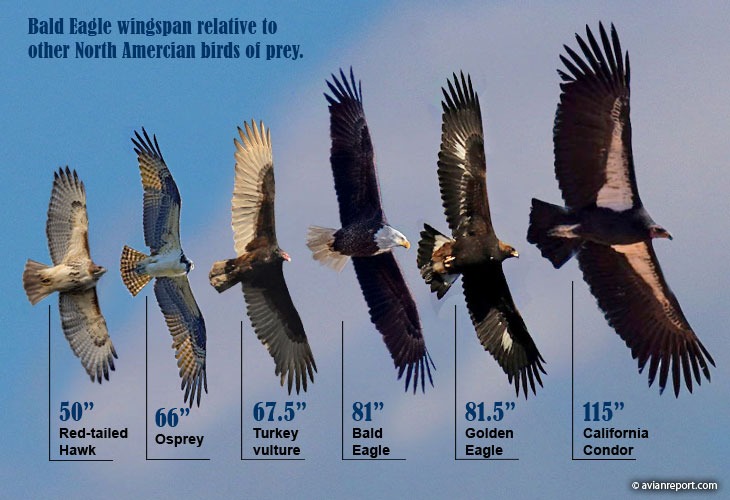
A fence or branch beside the bird tempts you to work out its length from the photograph, but camera distance, viewing angle and lens perspective defeat that comparison, especially when the object and the bird sit in different planes. Without a calibrated reference, rely on the wing-to-tail proportions instead.
Can habitat or hunting behavior identify the hawk?
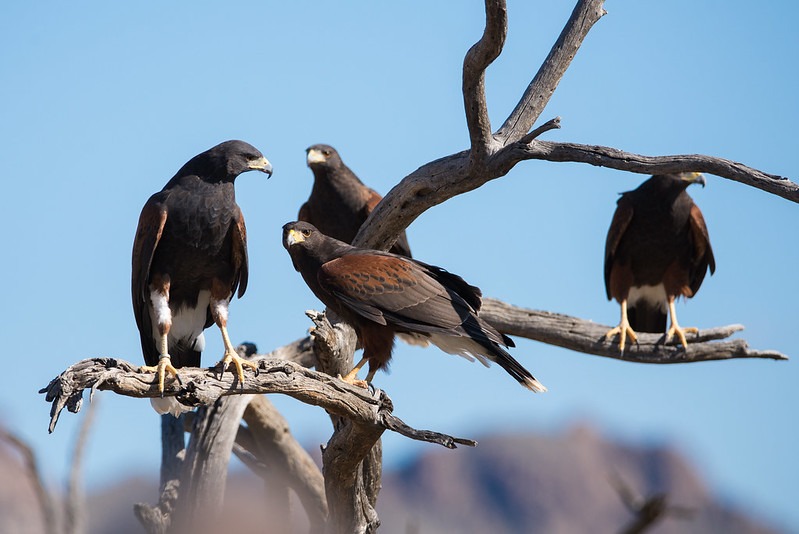
Cooper’s Hawks chase birds through trees and leafy neighborhoods. Red-tailed Hawks watch open ground from exposed perches or soar above fields. Both visit suburban yards, so treat place and prey as supporting evidence beside the bird’s structure, never as a marker for one species.
Poor photos and conflicting image-search results
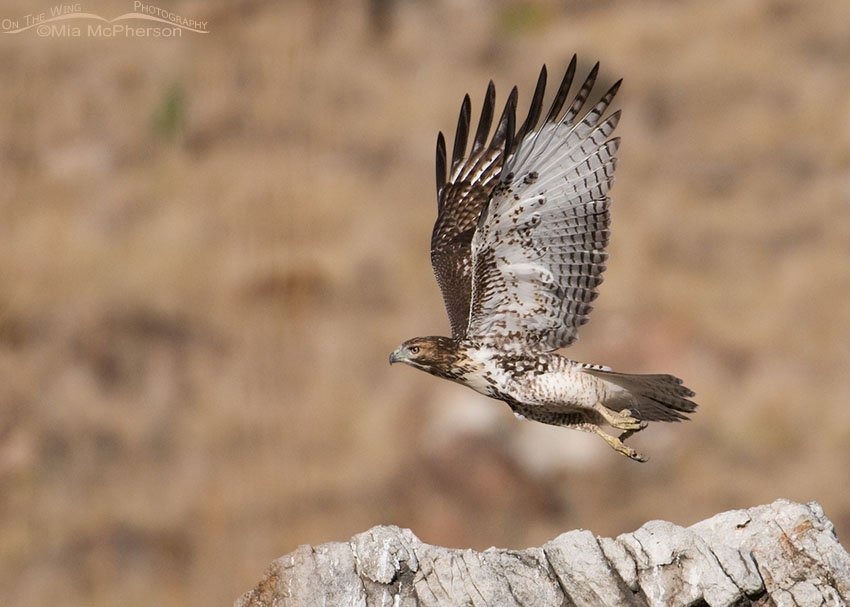
A hawk that looked unmistakable through binoculars can turn into ambiguous shapes in a phone photograph: the head hidden, one wing folded at an odd angle, the tail cut off at the edge of the frame.
Cropping makes a feature easier to inspect but can’t restore feathers that fell outside the frame, and heavy sharpening puts crisp edges around blurred markings. Treat a reverse-image-search result as a suggested match, and compare it with the proportions visible in your original photograph.
- Keep the original frame: Preserve the whole photograph, with its view of the body, wing positions and tail.
- Mark what is visible: Separate a clear tail band or wing edge from a feature hidden by blur, shadow or a crop.
When the field marks disagree
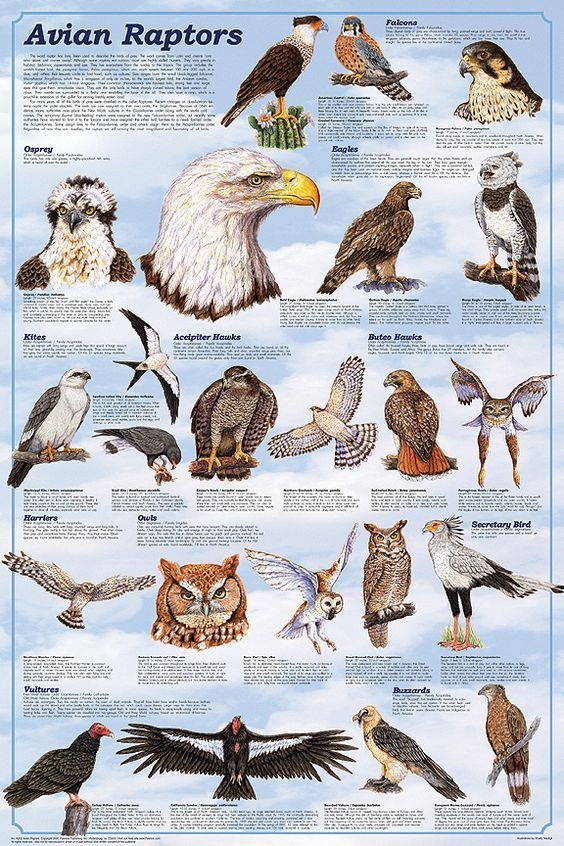
Conflicting marks come from an angled view, an uncertain age or photographs of different birds. The hawk may also belong to neither species in this comparison.
For a small, long-tailed woodland hawk whose proportions don’t fit Cooper’s, consider Sharp-shinned Hawk. For a broad-winged bird that departs from a typical Red-tailed Hawk, consider Red-shouldered Hawk; Red-tailed versus Red-shouldered Hawk identification compares wing shape, tail bands and flight style.
Base your identification on head projection, wing breadth, tail length and plumage from a single sighting, and ignore any feature you couldn’t see.
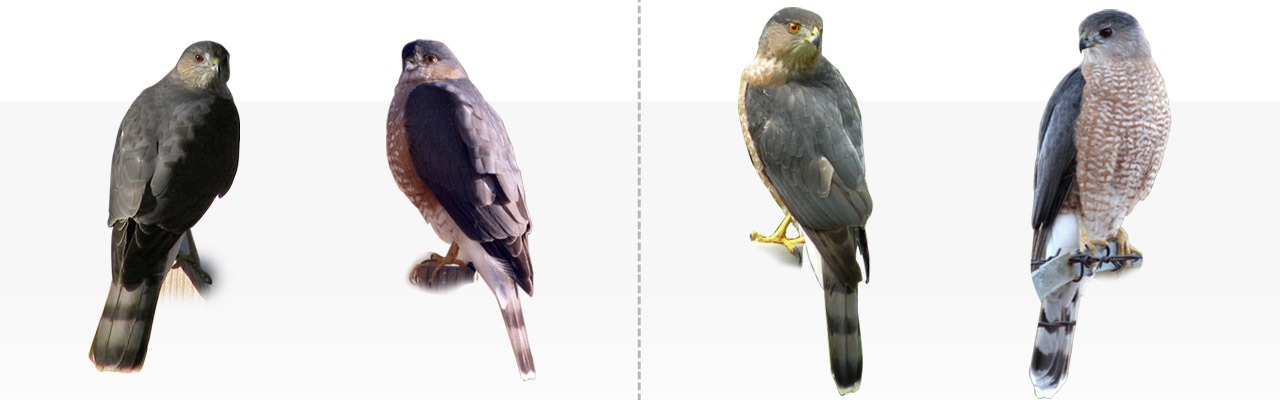
Cornell’s October 2024 Clements checklist update moved Cooper’s Hawk from Accipiter cooperii to Astur cooperii. Older field guides may use the former scientific name for the same bird.
For a US observer, the long-tailed, short-rounded-winged hawk with a projecting head is the stronger fit for Cooper’s Hawk; the broad-winged, heavier bird with a short, wide tail favors Red-tailed Hawk.