A larger bird with a dark necklace and boldly barred black-and-white wings and tail is a Blue Jay. A smaller, round-headed bird without those markings is a bluebird. If the key marks are hidden or a western lookalike fits, check another field mark and the local range.
Blue Jay vs bluebird at a glance
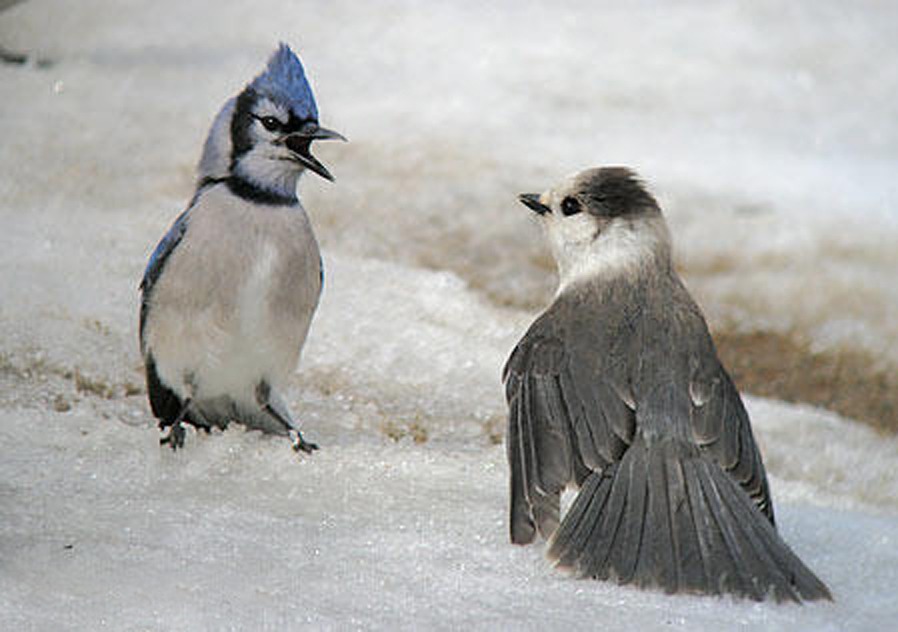
Blue Jays and bluebirds can look alike at a glance, but they belong to different families. The Blue Jay (Cyanocitta cristata) is a corvid, related to crows. The Eastern Bluebird (Sialia sialis) is a thrush, family Turdidae, like the other two North American Sialia bluebirds. For plumage, range and song, see Blue Jay identification and field marks.
| Feature | Blue Jay | Eastern Bluebird |
|---|---|---|
| Length | 9.8 to 11.8 inches (25 to 30 cm) | 6.3 to 8.3 inches (16 to 21 cm) |
| Silhouette | Sturdier body and relatively long tail | Smaller, compact, round-headed shape |
| Head | Crest present, sometimes held flat | Smooth head without a jay-like crest |
| Neck | Distinct dark necklace | No comparable dark necklace |
| Wings and tail | Bold black-and-white bars and pale patches | Does not show the jay’s bold barring |
| Underparts | Pale, with dark neck markings | Adult male has a rusty breast; female is duller |
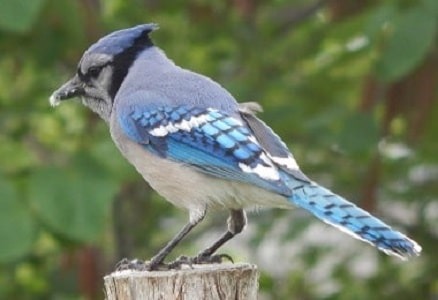
For a bird seen only briefly, compare the outline first, then check whatever you saw of the neck, wing and tail. A dark necklace together with bold barring is the giveaway. Cornell’s Blue Jay identification guide shows both features in photos.
Start with size, head shape and crest
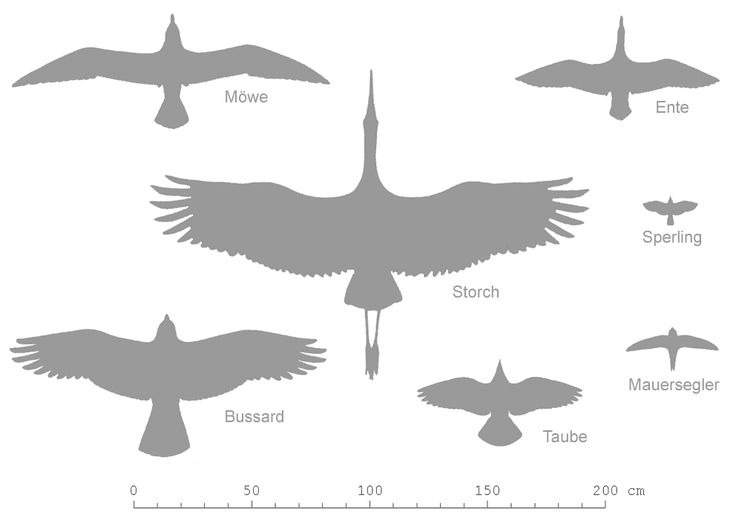
A Blue Jay has a sturdy body and a long tail. A bluebird looks compact, with a round head and shorter proportions. These differences hold up at a distance, when colors are hard to make out. A small, thrush-like shape counts toward bluebird even if the breast was hidden.
A Blue Jay’s crest can stand high or lie flat, and a bird with the crest down looks smooth-headed.

Size is hard to judge without another bird or a fixed object nearby for scale, so compare the outline with something familiar.
Look for the necklace and barred wings
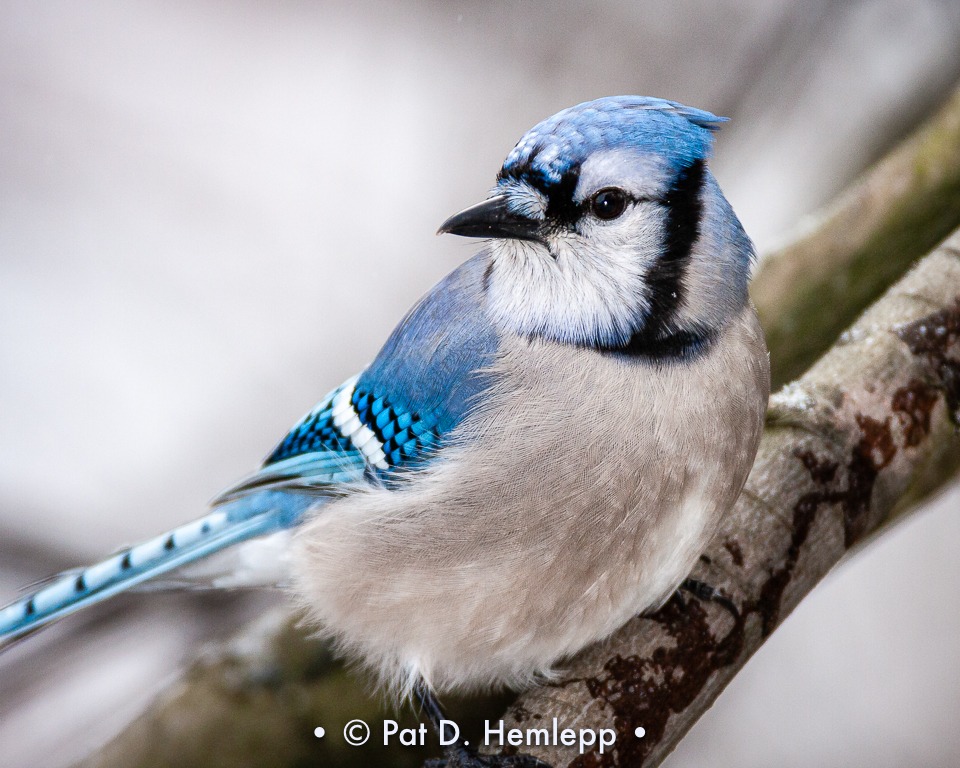
The Blue Jay’s dark necklace curves around the throat and lower face. Its wings and tail combine blue, black and white, with bold barring and pale patches. These marks work even when the feathers look nearly gray in shade.
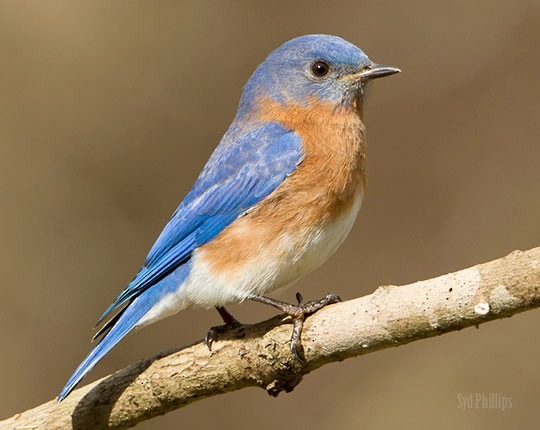
An adult male Eastern Bluebird has blue upperparts and a rusty breast. Females have softer blues and grays and a more muted breast. On a partly hidden bird, start with the exposed neck and wings, then use the breast if you saw it clearly.
A birder in the northeastern United States, on seeing an Eastern Bluebird for the first time:
First time seeing an Eastern Bluebird and I was shocked just how blue it was. It felt like it was fully glowing when the sun hit it just right. Taken in the Northeastern US Trying to figure out this whole bird photography thing so any feedback is appreciated
Eastern, Western and Mountain Bluebirds look different
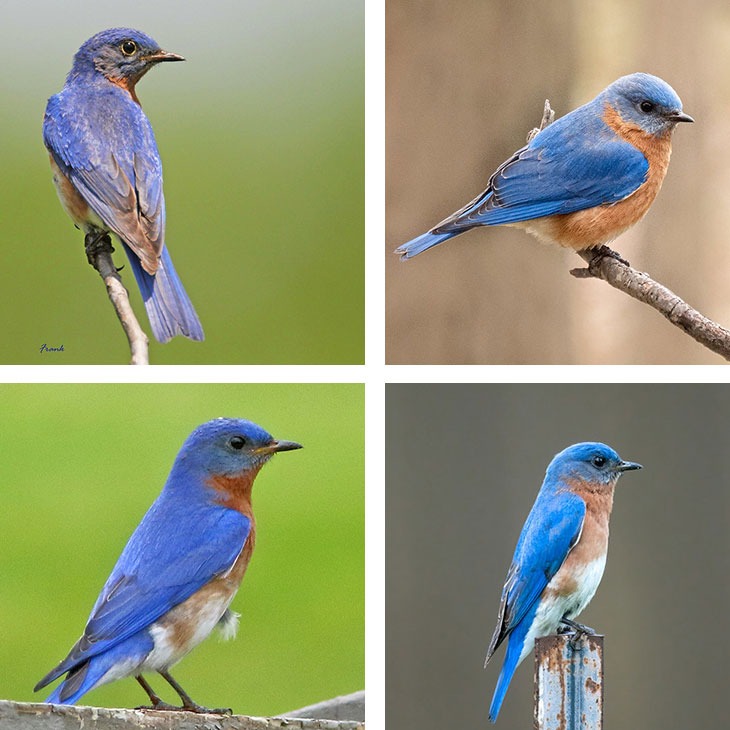
North America has three Sialia bluebirds, and plumage varies by species and sex. The rusty-breasted Eastern Bluebird male is one example, not a template for all of them. For a closer look, read Eastern Bluebird identification and field marks.
| Species | Adult male | Female |
|---|---|---|
| Eastern Bluebird (Sialia sialis) | Blue upperparts, rusty breast | Grayer above, duller blue and subdued rust |
| Western Bluebird (Sialia mexicana) | Blue throat, rusty-orange chest and warm color toward upper back | More subdued gray-buff and muted warm colors |
| Mountain Bluebird (Sialia currucoides) | Broadly sky-blue, without the typical rusty breast | Mostly gray, with paler blue areas |
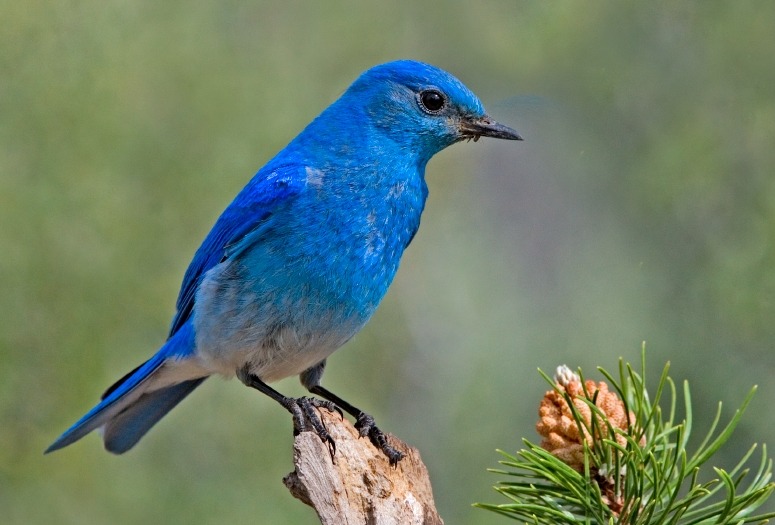
A male Mountain Bluebird can be almost entirely blue. Females of all three species are less vivid, and immature birds can look different again. For a duller bird, compare photos labeled with the right species, sex and age. The Eastern Bluebird identification page at Cornell is a good place to start.
Let location and habitat narrow the choices
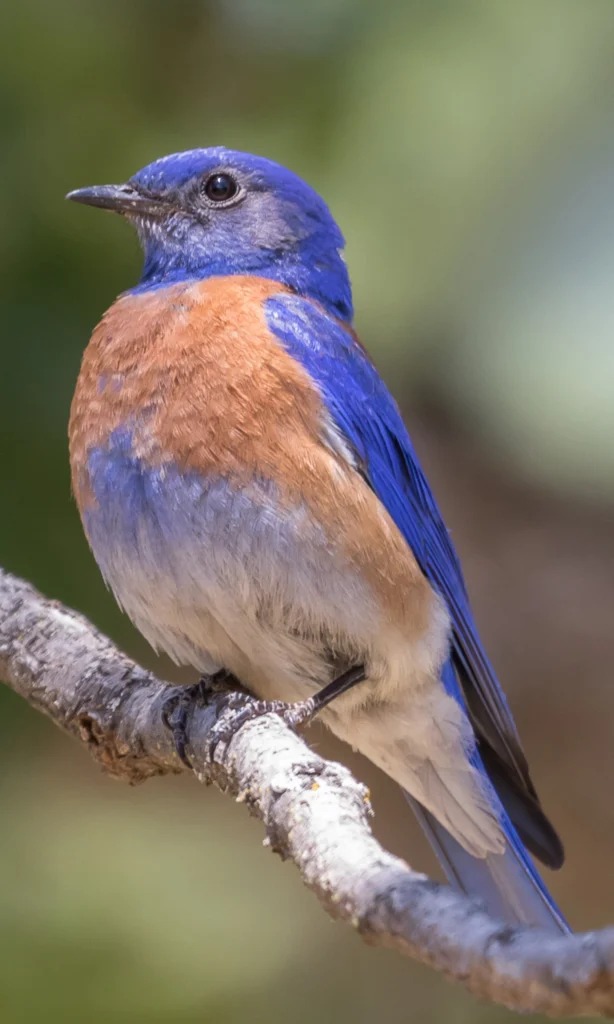
The North American bluebirds differ in range and habitat, so where you saw the bird narrows the choices. Open country, a fence or a woodland edge tells you which species accounts to compare, and your state and the season rule candidates in or out.
In the western United States, a crested blue bird may be a Steller’s Jay. In a western forest it has a charcoal-dark head and dark underparts. A Blue Jay shows a paler underside framed by its dark necklace.
A breeding male Indigo Bunting can look bright blue. It is smaller than an Eastern Bluebird and has a short, thick, conical bill, while the bluebird’s bill is finer and straighter. Check the range for your state, season and habitat before you settle on a candidate.
Use calls and behavior as supporting evidence
Blue Jays give loud, harsh, jeering calls. Eastern Bluebirds sing soft, low warbles and use quiet contact calls. Perching in the open or visiting a feeder adds context when the visible marks agree. If Merlin names Blue Jay from a recording while a blue bird is in the yard, check the recording against reference calls. Several birds may be calling, so the app result does not tell you which one you saw.
When the bird is a blur or single feather
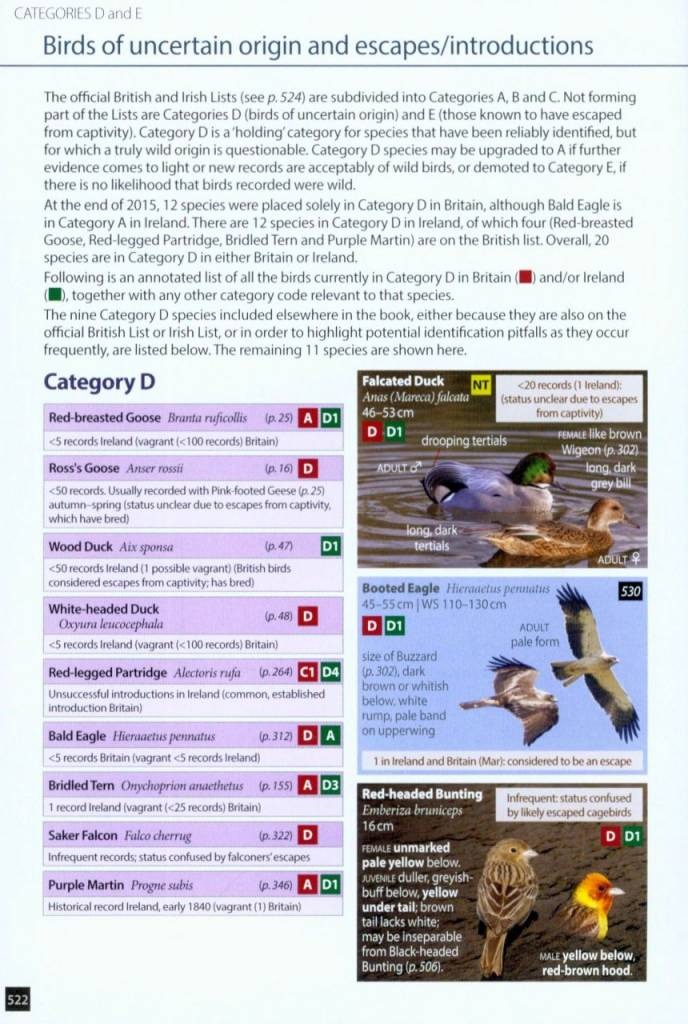
A blurry photo may keep a blue patch but lose the neck and wing pattern you need. A distant bird against open sky gives even less.
A detached blue feather next to a pen gives you a size reference but no head, breast or full wing. Without a distinctive pattern, Blue Jay and Eastern Bluebird both stay possible. The same goes for a dark area in a compressed photo that could be a marking or a shadow.
Keep the observation separate from the identification. “Blue back, rounded head, wing markings not seen” is a field note; a species name added later is an interpretation. Note which parts were hidden, and leave the ID open if the needed features were never visible.
Make the identification call
For a working identification, look for two or three independent observations that agree.
- Likely Blue Jay: The outline and the jay pattern agree, and the region fits.
- Likely bluebird: The compact, thrush-like form and the markings fit a bluebird; then work out which Sialia species applies.
- Unresolved or another blue bird: The key features were unseen, or the observations point to different species.

Cornell’s four keys to bird identification sort the evidence into size and shape, color pattern, behavior and habitat. Save the date, place and any photo or field note so the next sighting can be compared with the original evidence.