Several US birds have yellow chests. Check where the yellow sits, then the region and month, then bill shape, facial markings, chest pattern and wings. A black V means a Dickcissel or one of several meadowlarks. A gray breast above a yellow belly means a different kind of bird.
Where Is the Yellow: Throat, Breast, or Belly?
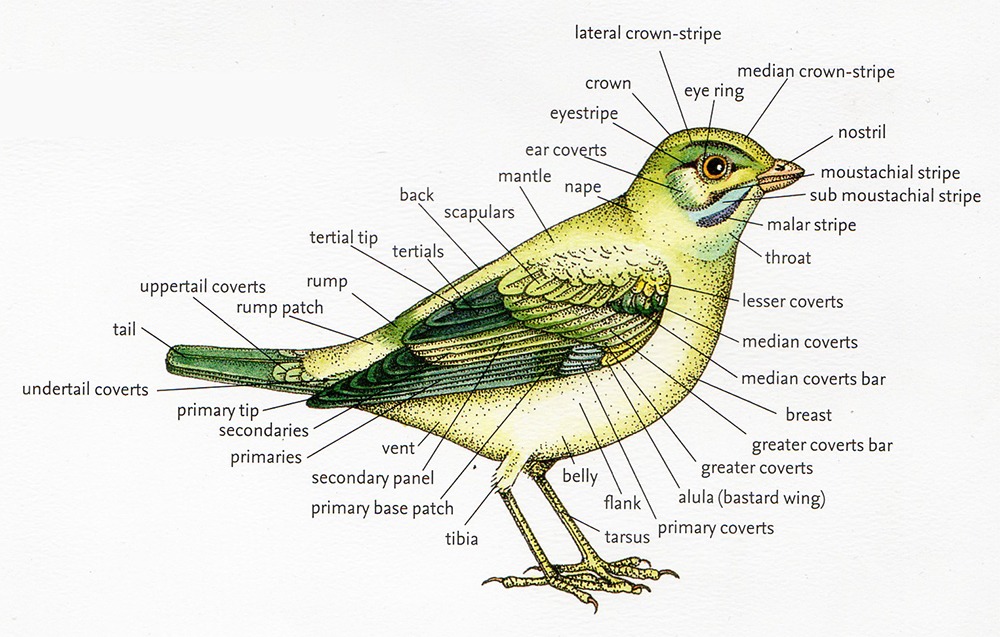
Start with where the yellow sits. Through leaves, the whole front can look the same color, but a yellow throat, breast and lower belly point to different birds.
| Yellow area | Position on the bird | Candidates to compare | Also look for |
|---|---|---|---|
| Throat | Immediately below the bill | Common Yellowthroat, Northern Parula | Facial mask or pale eye crescents |
| Breast | Upper and middle front | Northern Yellow Warbler, Yellow-breasted Chat | Chestnut streaks or white spectacles |
| Belly | Lower front, below the breast | Great Crested Flycatcher | Gray upper breast |
| Undertail coverts | Feathers beneath the base of the tail | Palm Warbler | Frequent tail-wagging |
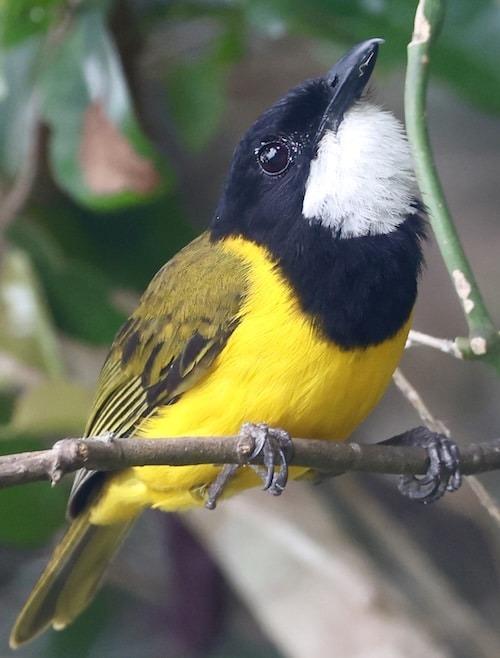
If you couldn’t see where the yellow ends, write “yellow underparts” in your notes. That stays accurate until a better view settles it.
Cornell Lab’s Four Keys to Bird Identification places color pattern alongside size and shape, behavior and habitat. Together, those clues separate birds that share one bright color.
Where and When You Saw It Changes the Shortlist
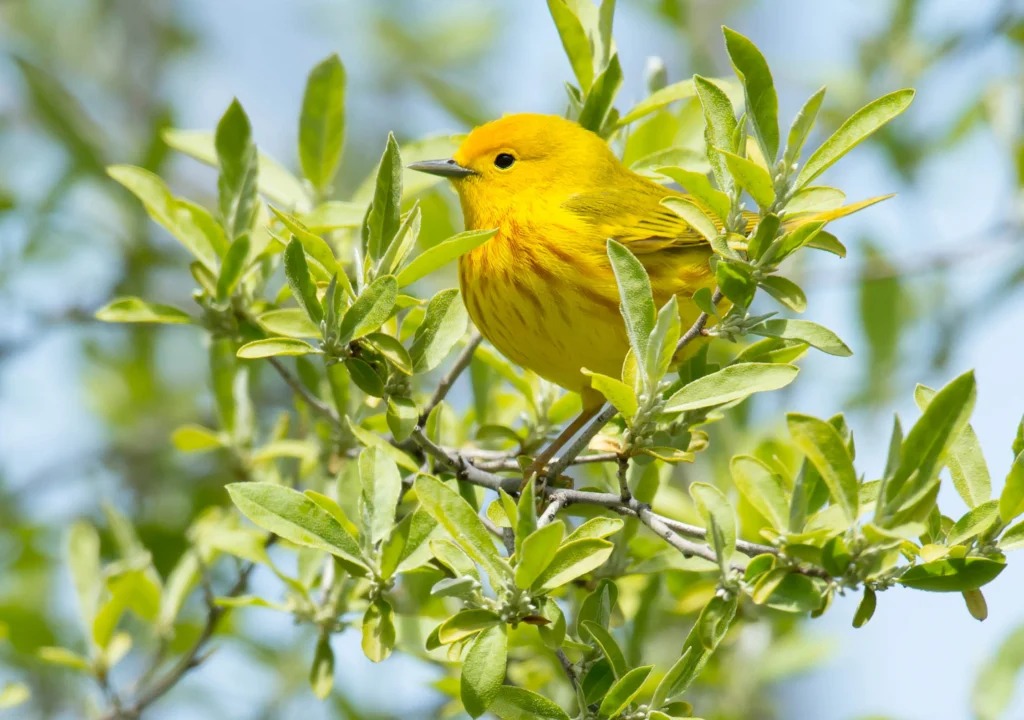
State, month and habitat turn a long list of yellow birds into a short one. A species common in one region is unusual in another, even when a photo seems to match. Range works as a filter, though wandering birds do turn up.
Lesser Goldfinch is a western bird with a dark or greenish back. In an eastern backyard, compare other species first.
Habitat narrows it further:
- Backyards and feeders: American Goldfinches, Lesser Goldfinches in the West, and the occasional yellowish or orange House Finch.
- Dense low vegetation: Common Yellowthroats, with their distinctive shape and facial pattern, or the bulkier, long-tailed Yellow-breasted Chat.
- Open grassland: Meadowlarks and Dickcissels, especially when a black V shows on the front.
- Shrubs and wooded areas: Northern Yellow Warblers and Northern Parulas, within their ranges and seasons.
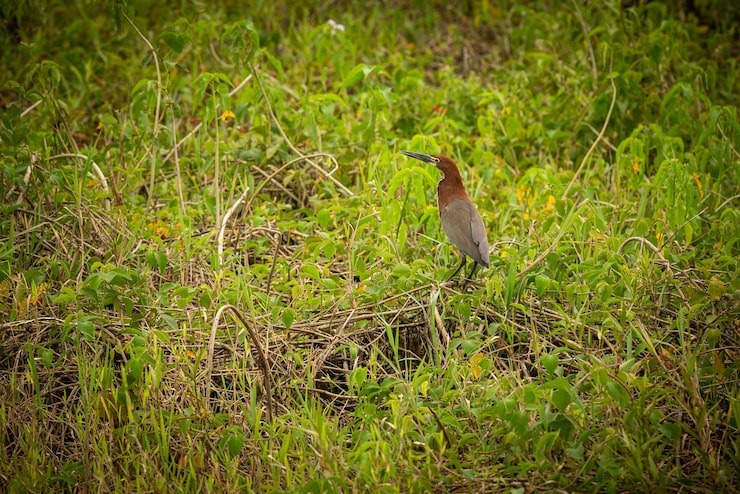
A bird skulking in a marshy thicket and one standing in an open field call for different checks. Month matters too: migration changes which species are around.
Yellow Goldfinches, and the Finch That Can Look Orange
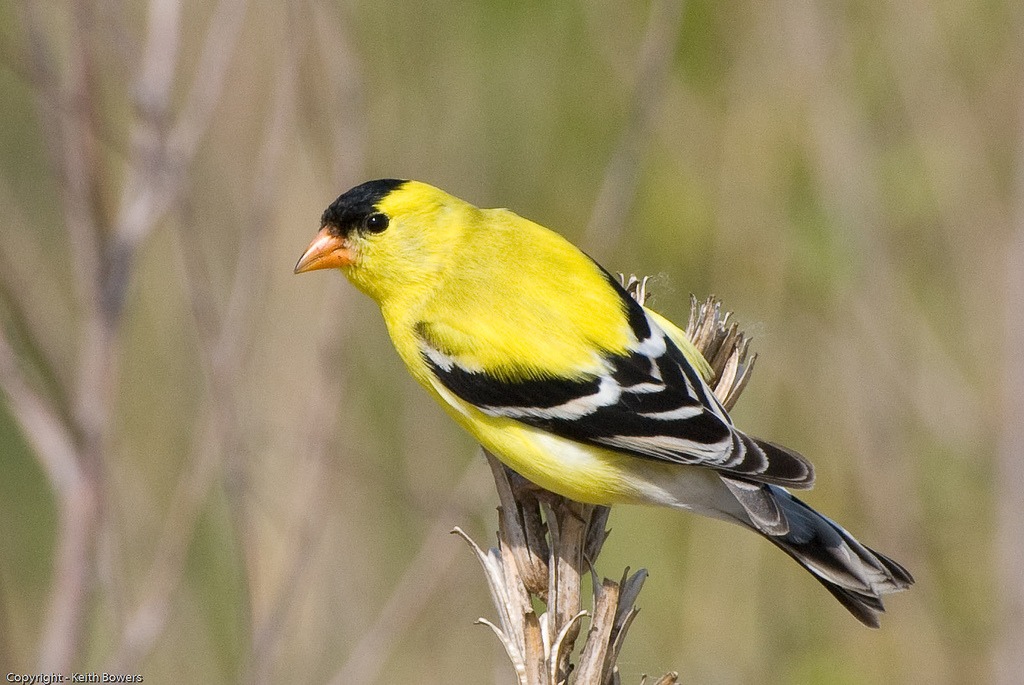
A small yellow bird with a conical bill and contrasting dark wings points to a goldfinch. The brilliant yellow American Goldfinch is an adult breeding male, though. Other plumages are much duller. For plumage, range and song, read American Goldfinch identification and field marks.
Female American Goldfinches and nonbreeding birds look duller, with less contrast across the body. The compact bill and wing pattern still work when the bright breeding colors are gone. Cornell’s American Goldfinch identification gallery shows the differences.
Lesser Goldfinches share the same shape. Their yellow underparts contrast with a greenish or darker back. In the West, the back and wings separate them from other yellow birds at a feeder.
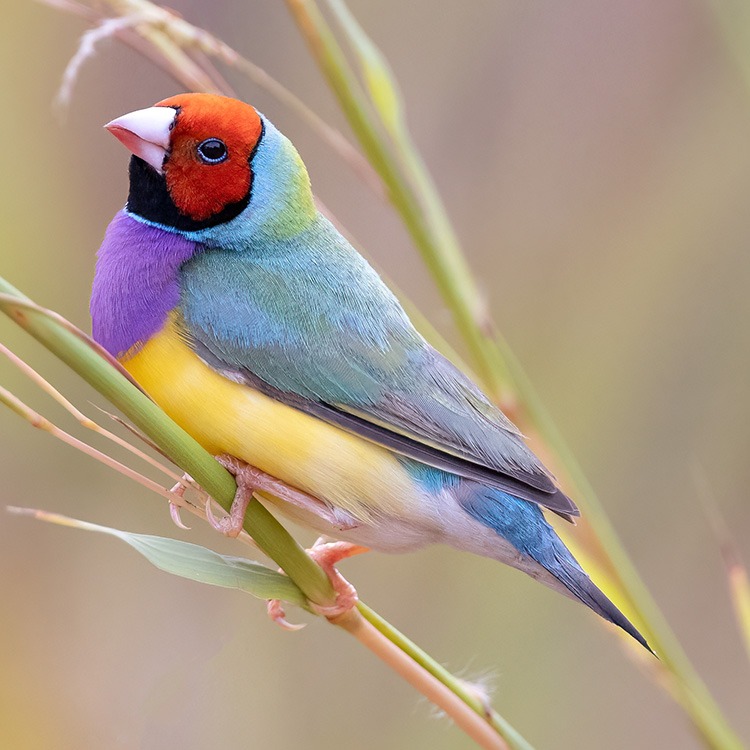
Male House Finches can surprise you. Their red, orange or yellowish plumage comes from carotenoid pigments, so an unusually colored bird looks unfamiliar even though it has a House Finch’s shape and bill.
One birdwatcher described seeing an orange individual:
re: yellow house finches: I’ve not seen yellow, but I have seen orange! I was taken aback and thought I found a new bird! But then it turned out just to be a color variant due to diet (redder house finches are eating better food). Still pretty cool.
The “better food” explanation is the commenter’s opinion. Carotenoid-related variation is the established plumage mechanism. An unexpected orange or yellow shade is a reason to check the bill and body shape.
Warblers and Chats: Masks, Streaks, and White Spectacles
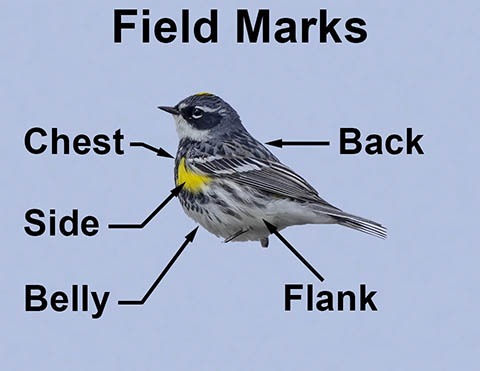
On small yellow birds moving through foliage, a facial mark or chest pattern tells you more than the shade of yellow. Sex and age matter, because some of the strongest markings show mainly on adult males.
An adult male Northern Yellow Warbler shows chestnut streaks on a mostly yellow breast. Females often have little obvious streaking, and immatures look paler. A bird without chestnut lines can still be this species, so read the streaks against the bird’s plumage.
| Bird | Field marks | Habitat or behavior | Exceptions |
|---|---|---|---|
| Northern Yellow Warbler | Mostly yellow; chestnut streaks in adult males | Shrubs and wet vegetation | Females and immatures have few visible streaks |
| Common Yellowthroat | Black facial mask in adult males | Dense, low cover | Females lack the male mask |
| Northern Parula | Pale eye crescents; yellow throat; adult-male breast band | Wooded habitat | Young birds show a subdued band |
| Yellow-breasted Chat | White spectacles, bulky build, relatively long tail | Shrubs and thickets | Much heavier-looking than a small warbler |
| Palm Warbler | Yellow undertail coverts | Conspicuous tail-wagging | The yellow sits low on the underside |
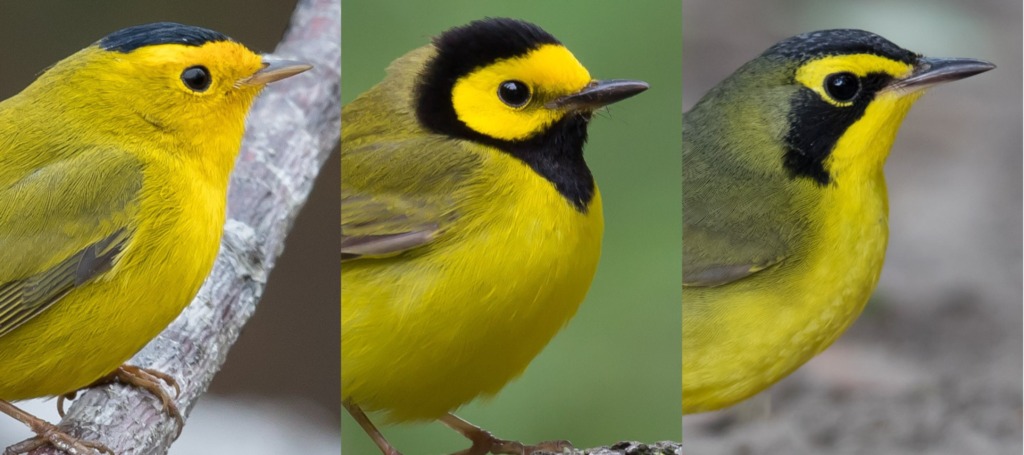
Yellow-breasted Chat belongs to the family Icteriidae, separate from the wood-warblers in this comparison. When leaves hide the breast, the face and silhouette still narrow the choices.
A Black V on Yellow: Meadowlark or Dickcissel?
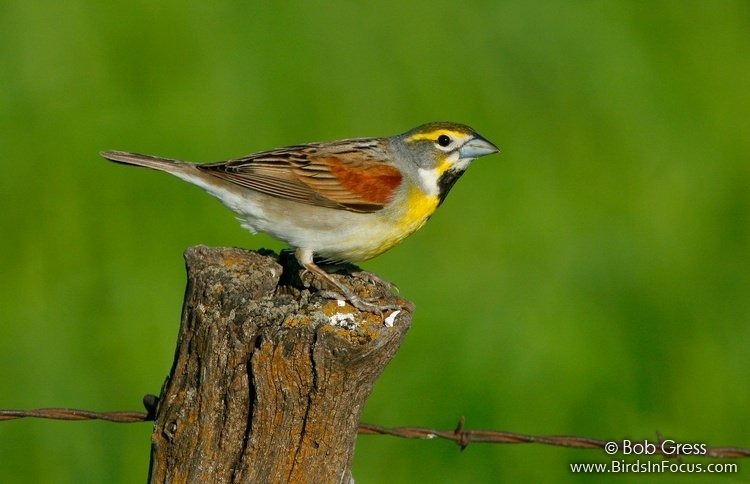
A dark V on a yellow front is a striking clue, but more than one grassland bird has it. Dickcissels and several US meadowlarks show it. Bill shape and body proportions separate the two groups.
- Dickcissel: Adult males have a dark throat V above yellow plumage. The thick, conical bill and sparrowlike proportions differ from a meadowlark’s.
- Eastern Meadowlark: A chunky grassland bird with a yellow underside, a black chest V and a long, pointed bill.
- Western Meadowlark: Another yellow-breasted grassland bird with a dark V and a long, pointed bill.
- Chihuahuan Meadowlark: A southwestern grassland bird, found in parts of Arizona, New Mexico and Texas, with the meadowlark’s yellow breast and black V.
The first call is thick bill and smaller build for a Dickcissel, or longer, spear-shaped bill and heavier build for a meadowlark. Once the bird looks like a meadowlark, geography and additional markings decide the species.
Female Dickcissels lack the breeding male’s bold black throat V. Meadowlarks show less obvious chest markings outside bright breeding plumage, so a faint mark means checking the rest of the bird.
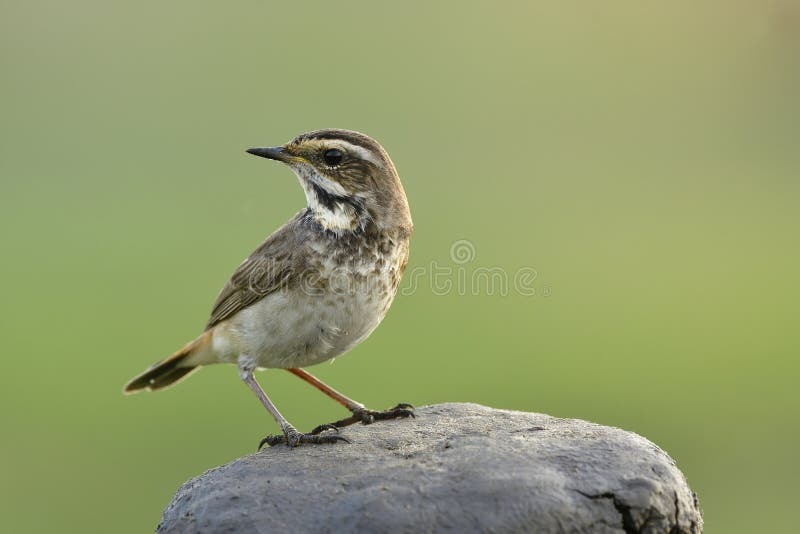
The observer behind this feeder-camera account, in Houma, Louisiana, gave the location later in the discussion.
The observer was already comparing bill length, size and chest markings when the suggestions disagreed:
So I’ve tried using the Merlin Bird ID app, and it’s not giving me consistent results on these two birds. It’s told me things like an Eastern Meadowlark, White-throated Sparrow, Finch, Cardinal haha, or just says it can’t find a species. My first thought was Eastern Meadowlark, but the beak doesn’t seem long enough or dark enough, and the size seems too small. The chest resembles the Meadowlark though. In all honesty it looks most like a house sparrow to me, but the yellow markings aren’t right. I’ve never been able to see these birds in person, only on camera. I have a few other videos if they would help in the ID, just let me know and I’ll post them.
Later commenters suggested Dickcissel. Chest color pointed to several birds here. The bill shape and body size the observer noticed made a stronger comparison than the V alone.
When the Belly Is Yellow but the Chest Is Gray
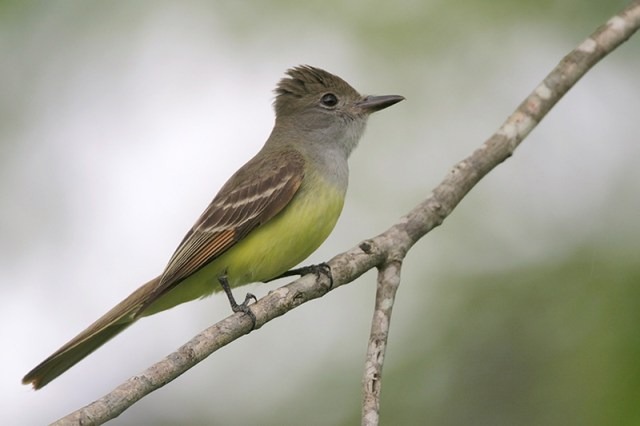
A gray upper breast over a yellow lower belly puts a bird on a different list from a uniformly yellow-fronted warbler. Great Crested Flycatcher is the classic example.
The Great Crested Flycatcher is broad-shouldered, with a large head, a peaked crown and a substantial bill. Rusty coloring in the wings and tail is another mark. It often hunts insects from exposed perches.
A clear side view puts it together: gray across the throat and breast, yellow below, and the flycatcher’s shape. In a closer photo, the rusty wing and tail separate it from a small yellow warbler or finch.
In western open country, Western Kingbird is another yellow-bellied flycatcher. Its throat and chest are whitish, and its black tail has white outer feathers. Great Crested Flycatcher’s rusty tail and woodland setting tell the two apart.
When Merlin or a Quick Photo Doesn’t Settle It
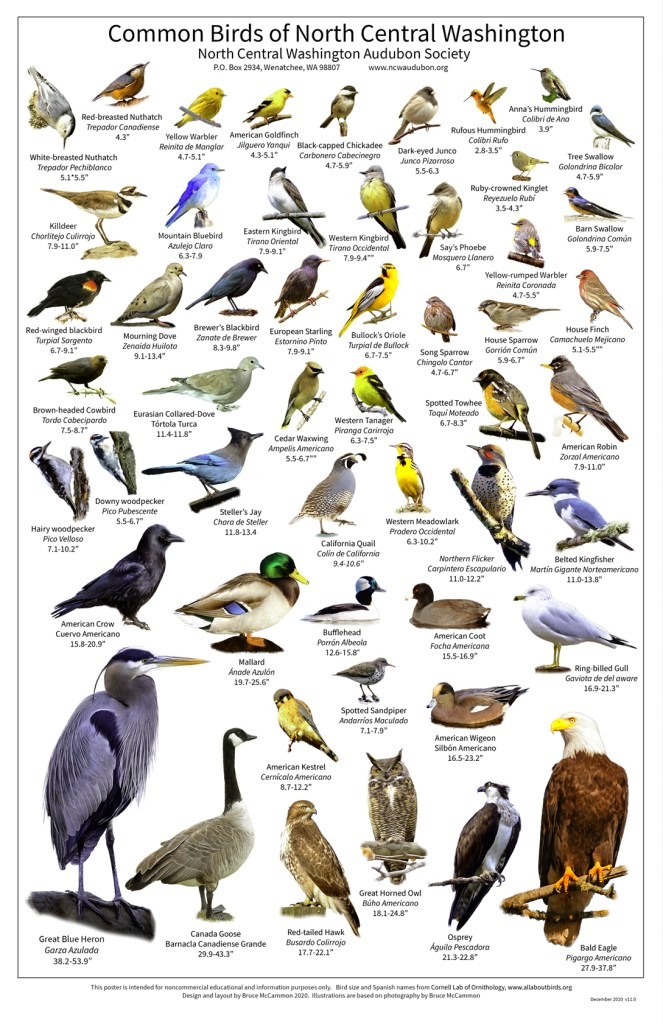
Merlin can suggest species from a photo, but the name still has to fit the bird’s visible features. A photo that shows the yellow front clearly can hide the bill, wing markings or facial details you need for a confident identification.
If the suggestion matches only the color, compare the visible shape and contrasting marks with the species account. A clear mismatch rules the name out. When the key part of the bird is outside the frame, the photo can’t settle it. To weigh bill shape, plumage and habitat, use how shape, color, behavior, and habitat identify a bird as a cross-check.
One observer in southeastern Pennsylvania assumed a feeder bird was a White-throated Sparrow because Merlin suggested it:
Thank you for asking this! I saw one of these at my feeder yesterday (SE PA), and assumed white-throated sparrow because that was what Merlin was saying. *edit : I mean to say I’m going to have to get a better look if they come around again, because they’re not common up here. Love learning this!
If you recorded a call or song from the same bird, identifying birds by their calls gives you another kind of evidence.
Why Some Guides Say Yellow Warbler and Others Say Northern Yellow Warbler
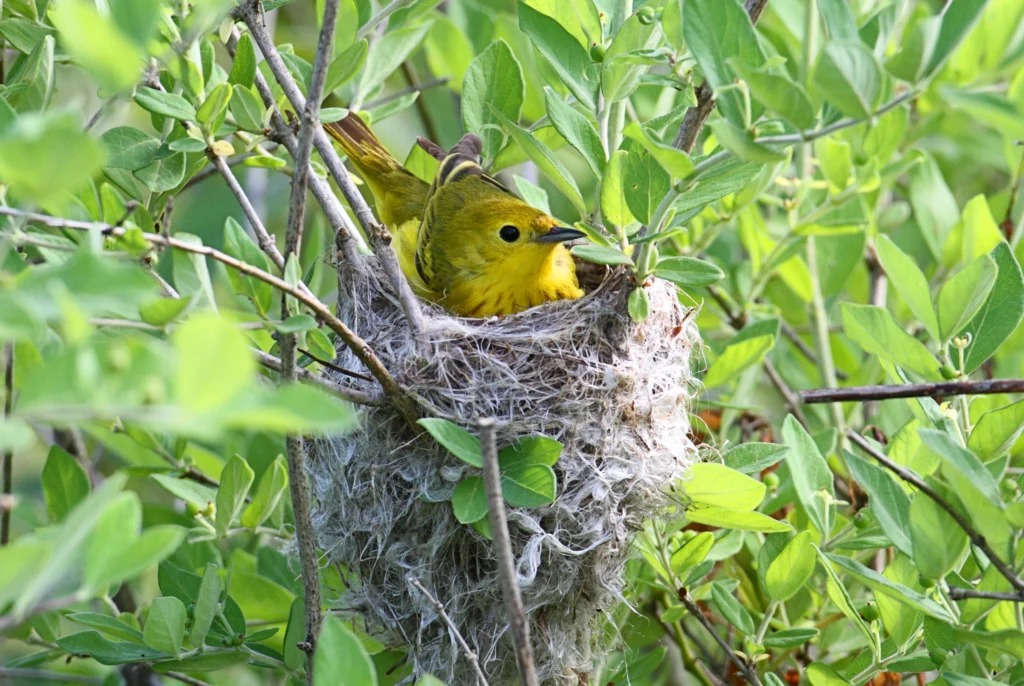
The 2026 eBird/Clements checklist calls the familiar migratory species Northern Yellow Warbler (Setophaga aestiva) and separates it from Mangrove Yellow Warbler (Setophaga petechia). The American Ornithological Society’s 2026 treatment recognizes the split but retains Yellow Warbler for S. aestiva and uses Mangrove Warbler for S. petechia, so both names appear in current sources. Field marks identify the northern species: adult males show chestnut breast streaks, while females and immatures are less strongly marked.
A Short Final Check Before You Name the Bird
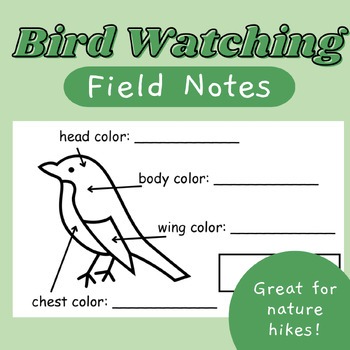
An identification is strongest when the plumage and structure you see agree with the location, season and habitat. Keep a short record of the sighting:
| Record | Example observation |
|---|---|
| Yellow placement | Yellow across the upper front; lower edge unclear |
| Place and time | State or region, month of sighting |
| Shape and markings | Thick bill, small body, dark chest V |
| Habitat and behavior | Open field; bird perched low |
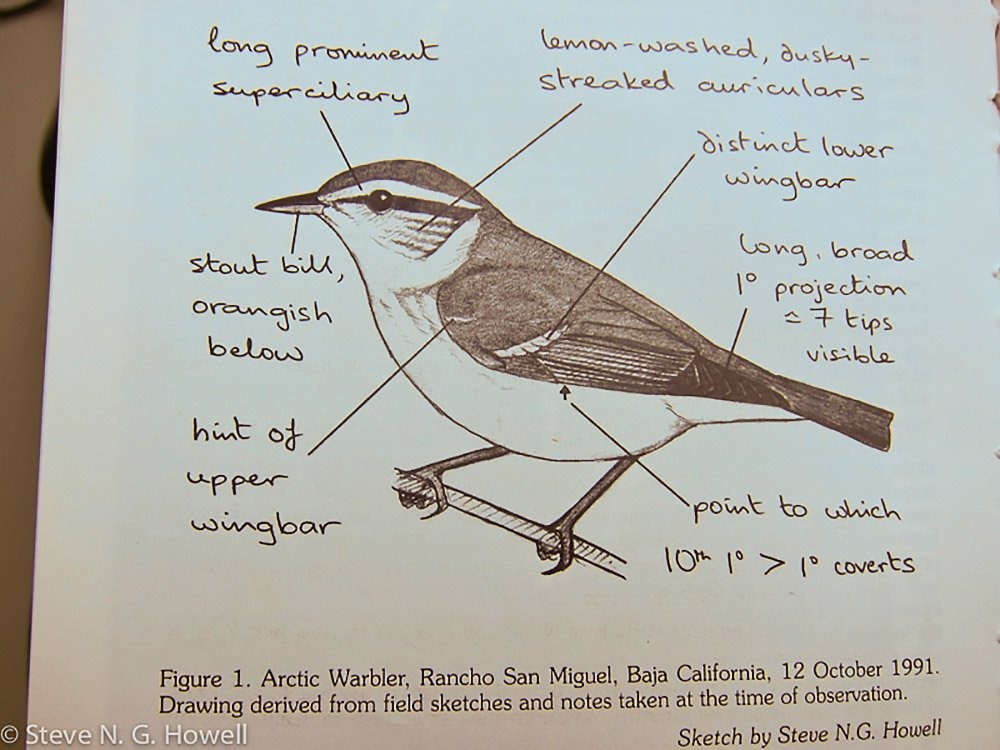
A consistent birdwatching sighting record, with field notes, sightings and eBird in view, lets you revisit an identification when better evidence turns up.
If the key marks are missing or contradict each other, keep a short list of the birds still possible and look for the one feature that separates them before you confirm the bird.