For a bird you hear but cannot see, treat a species match as supported when its sound pattern and the field context agree. Merlin Sound ID gives you a suggestion to verify. If the recording is too short, mixed with other singers, or possibly imitated, leave the ID unresolved and record a cleaner sequence to compare with reliable recordings.
You hear a distinctive whistle from a nearby tree and can’t see the singer. You open an identification app and get three possible species. Ask what you actually heard that separates one from the others.
A few observable features, plus where and when you heard the sound, turn that list into something you can check. You don’t need perfect pitch or a mental library of every North American bird song.
Record the bird before trying to name it
A recording lets you revisit a sound after the bird stops singing. Listen long enough to notice whether the voice repeats, changes phrases, or blends with another singer.
A single chirp can leave out the pattern that separates two species. Several repetitions let you hear how the notes relate: spacing, order, repeats.
Use your phone without disturbing the bird:
- Hold still. Keep the microphone unobstructed and pointed toward the approximate source. Keep your fingers off the phone while it records.
- Capture a sequence. Let the bird finish several phrases. Cornell recommends at least 30 seconds of continuous audio when the bird cooperates.
- Reduce interference. Keep your voice out of the recording and watch for wind, traffic, or another bird masking the sound.
- Save the original and its context. Keep the audio file with the date, approximate location, habitat, and whether you saw the singer or heard other birds nearby.
Cornell’s smartphone recording guidance recommends minimizing handling noise and using uncompressed WAV when available. A basic phone recording still preserves a useful phrase without advanced settings.
Don’t lure the singer with playback. The American Birding Association advises limiting attraction playback, particularly around rare or threatened birds and sensitive sites.
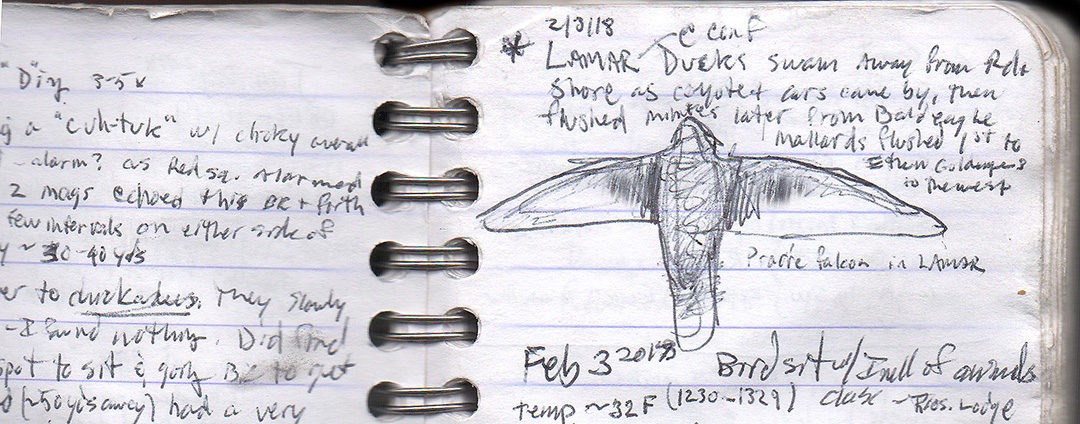
An example of a useful field note: Wooded backyard, early morning, unseen singer, repeated whistle followed by rougher notes, another bird audible farther away.
A recording of mostly wind or one faint note won’t give you an ID.
Break a song into rhythm, repetition, pitch and tone

You can describe a bird’s voice without knowing who made it. Listen for four characteristics separately, then see how they fit together.
| Feature | What to listen for | Example from Cornell’s bird-song comparisons |
|---|---|---|
| Rhythm | The pace of notes and pauses | Marsh Wren songs can sound hurried; White-throated Sparrow songs are comparatively leisurely |
| Repetition | How many times a note or phrase repeats before changing | Northern Mockingbirds often repeat phrases several times; Brown Thrashers commonly deliver paired repetitions |
| Pitch | Whether notes rise, fall or remain relatively level | Prairie Warbler songs rise; Canyon Wren whistles descend |
| Tone | Whether a sound is whistled, buzzy, scratchy or otherwise textured | Clear whistles and rougher buzzes leave different acoustic impressions |
A mismatch in the order of repeated notes counts against a candidate that otherwise sounds similar. Cornell’s guide to rhythm, repetition, pitch and tone provides the recordings behind these comparisons.
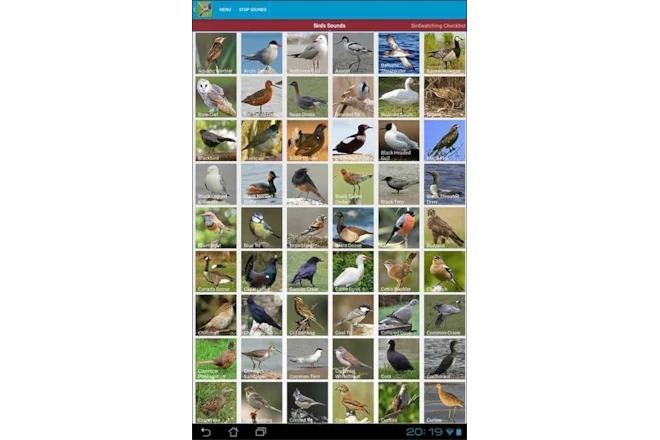
Describe your own recording in plain language. Example: three thin whistles, a brief pause, then a faster rough trill.
Birds make more than one kind of noise. Songs are often associated with attracting mates or defending territories; calls serve alarm, contact and flight functions. Some songs are very short, including those of Henslow’s Sparrow.
A Downy Woodpecker shows the distinction: its whinny is a vocalization, while drumming is a mechanical signal. Cornell Bird Academy teaches them as different sounds from the same bird.
Narrow your shortlist by where and when you heard it
Location, season and habitat narrow your shortlist before you compare recordings. Use the real observation date and region. If a completed Merlin recording has the wrong location, connect to the internet, open that recording’s upper-right edit control and select Change Location, as Cornell describes.
Check candidates against regional range, seasonal occurrence and habitat information, and keep a few possibilities when the sound is ambiguous.
Compare your recording with similar songs
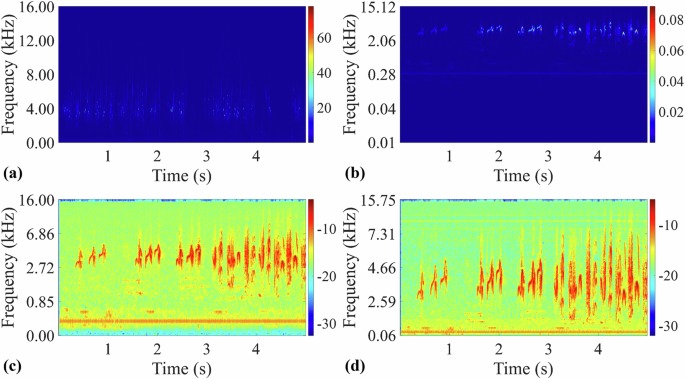
Two recordings that sound alike at first listen separate once you focus on one characteristic. Choose two or three plausible species and play a recognizable phrase from your recording right before their reference examples.
Listen for the same feature in both clips. Does the second note rise as far? Are the pauses equally spaced? Does a sequence repeat twice or run through several repetitions? A candidate with the right general sound but a conflicting phrase structure is a poor match.
Cornell’s recordings of Harris’s Sparrow and White-throated Sparrow show the difference. In the featured examples, Harris’s Sparrow holds comparatively level-pitched whistles; White-throated Sparrow leaves longer gaps and its notes descend in pitch.
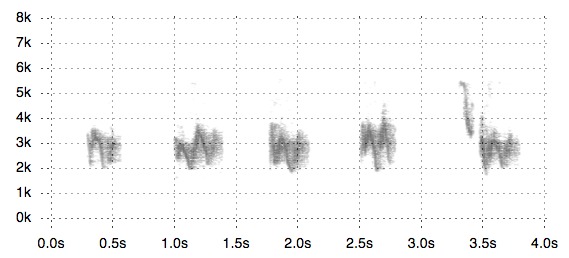
A spectrogram makes the comparison easier to inspect. Time runs from left to right and frequency, which corresponds to pitch, runs vertically. A clean whistle shows as a narrow trace; a buzz produces a more complex band of sound.
Cornell’s spectrogram guide shows how to read these shapes against reference recordings. A descending whistle, for example, traces a downward path over time.
Birds of the same species can sing different phrases, including individual and regional variants. One Reddit birdwatcher ran into an unfamiliar version of a song:
This is where good old effort actually pays off. You go birding, hear a bird, find the bird, identify the bird using field guides. I once spent 2 hours looking for a bird in a tree top. It turned out to be a Yellow-rumped Warbler but no resource had an example of the exact same song. The time spent finding it helps you remember and connect the sound to the bird.
When you can see the singer without approaching or disturbing it, the bird’s shape, markings and behavior give you more evidence.
Use Merlin as a second opinion and check its assumptions

Merlin Sound ID narrows an unfamiliar recording to possible species. It becomes useful when you test a specific suggestion against what you recorded and observed. Check it against habitat, your field notes and, if you can see the bird, binoculars. For when to rely on Merlin and when to use eBird, see when to use Merlin Bird ID versus eBird.
When Merlin shows a name, note which stretch of the recording produced it. If several names appear, check where each one sits in the recording.
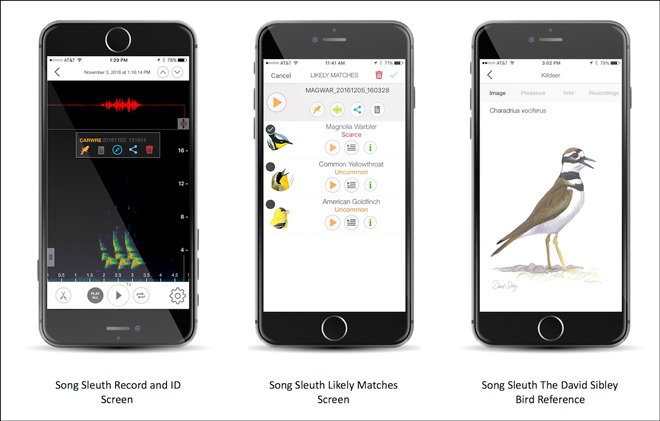
Select a suggested species in Merlin to see where its sound appears on the spectrogram and to compare your recording with that species’ example sounds. Open Details for range, behavior and habitat information, as Cornell’s Merlin Sound ID best practices describes.
Apps suggest similar-sounding birds, miss birds that are present, and respond to imitations. Audubon’s reporting on Merlin errors covers mix-ups between the similar Red-eyed Vireo and Philadelphia Vireo songs, among other cases. For bill shape, plumage and habitat checks, see the bird-identification methods.
Check for mimics and false matches
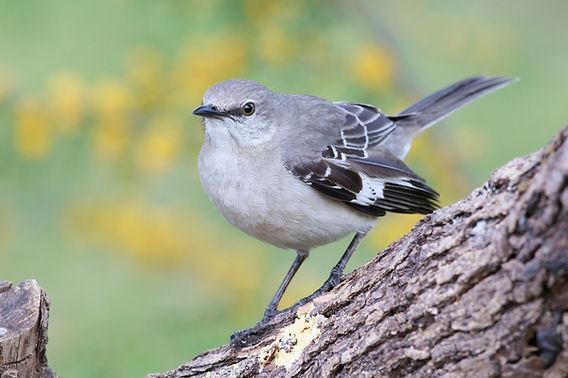
One bird can produce sounds that resemble several others. Northern Mockingbirds are known for imitating other vocalizations, which makes a changing sequence confusing when the singer is hidden.
In one Reddit account, a city resident first blamed a downstairs neighbor for a string of disturbing noises:
I live in the city and a mockingbird would sing all night the songs he learned: car alarms, different phone rings, power tool noises, door bells, you name it, he sang. I thought my downstairs neighbor was trolling me. We exchange words, he thought I was the one trolling him. Then we figured out together a mocking bird was hanging out on the tree by our windows. EVERY. NIGHT.
A run of changing notes from an unseen bird can trigger several different species suggestions even when one mimic is responsible.
Several real birds singing together cause a different problem: notes from one overlap another, and the recording captures a combination no single bird produced.
If you can watch one bird sing continuously as the motifs change, you can tie the sounds to their source. If the singer stays hidden, multiple singers, imitation and interference all remain possible explanations.
Decide what the evidence supports
You can finish an identification attempt without naming a species. Evidence falls into three groups: it supports one bird, it leaves several possibilities, or it is too incomplete to decide.
These labels are informal, not eBird statuses.
| Outcome | Evidence available | Decision |
|---|---|---|
| Supported | The sound pattern matches a reliable reference, and habitat, season and range fit | Keep the species ID and note what supports it |
| Plausible | A candidate fits some of the evidence, but alternatives or conflicts remain | Record it as a possibility, not a firm ID |
| Unresolved | The sound is too fragmentary, mixed or contradictory to choose | Keep the recording and notes. Don’t name a species. |
A distant trill that sounds consistent with two different birds stays unresolved if the recording and field context can’t separate them.
A distinctive, repeated song in the right habitat that matches reliable recordings is enough for an ID without seeing the bird.
Unusual species need more care. A bird outside its expected range is possible, but an unexpected suggestion needs stronger independent evidence and good documentation.
Cornell’s eBird guidance advises against treating an uncertain, app-only species name as a verified observation. For an unusual report, save the original recording and relevant context so others can assess the ID.
Practice with a few local birds until the differences become familiar
Birding by ear gets easier when you work with a small group of local species and learn each one’s distinguishing sound. Build familiarity with a few recordings before tackling the wider range of birds you hear during migration.
Start with two or three local species whose vocalizations are easy to compare. Listen to one clip, make your own ID before revealing the label, then replay it next to a similar-sounding species.
Say what separated them. Perhaps one bird held a clear whistle while the other changed pitch between phrases. Naming the feature gives your memory something specific to recognize next time.
Mnemonics you make up yourself help, and so does remembering what a bird looked like while it sang. Cornell’s birding-by-ear lessons connect real recordings with the species and characteristics that produce them.
One learner on r/birding describes the same problem during spring migration:
Yes, I know about Merlin. I swear, every call and song sounds the same to me 😭 I do use Merlin but I don’t want it to be a crutch – I really want to actually be able to identify by sound on my own, especially for spring migration. Any advice?
Phrases that confused you on the first walk start to click once you’ve matched them to a bird a few times.