In the US, a bulky hawk with dark bars along the front of its underwings and streaking concentrated on the belly is a Red-tailed Hawk. A slimmer hawk with pale outer-wing crescents and a longer-looking, banded tail is a Red-shouldered Hawk. If the bird is young, regionally unusual, or only partly visible, check a second feature and the location, or call it a hawk until you get a better look.
Red-Tailed vs. Red-Shouldered Hawk at a Glance
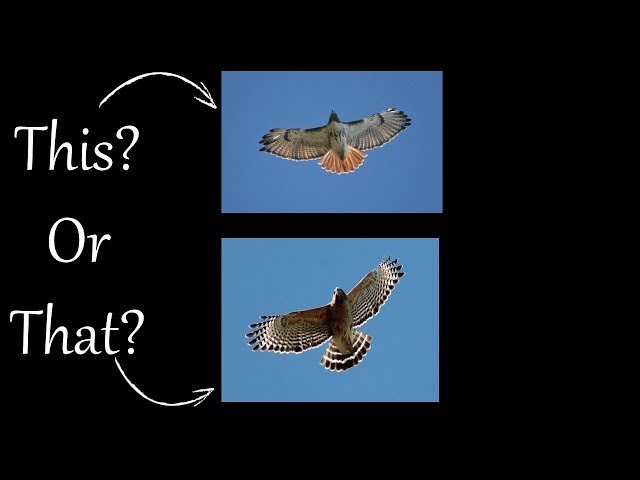
A Red-tailed Hawk (Buteo jamaicensis) has a sturdy body, broad rounded wings, and a comparatively short tail. A Red-shouldered Hawk (Buteo lineatus) looks slimmer, with a tail that appears longer relative to its wings.
| Visible feature | Red-tailed | Red-shouldered |
|---|---|---|
| Body and wing shape | Stocky, broad rounded wings; shorter-looking tail | Slimmer profile; relatively longer tail |
| Underwing leading edge | Dark patagial marks near the inner front edge | Less conspicuous dark leading-edge bars |
| Outer wing | No characteristic pale outer-wing crescent | Pale translucent crescents in favorable light |
| Typical adult underparts | Paler upper chest with darker streaking around the belly in many light forms | Fine rusty breast barring in typical eastern adults |
| Folded wing | Mottled brown in the typical light form | Strong black-and-white checkering in many adults |
| Adult tail | Reddish above; can be hidden or vary by form | Dark, with narrow pale crossbands |
| Young bird | Brown banded tail; streaking stronger toward the belly | Brown banded tail; streaking reaches higher on the chest |
Compare birds of the same age. Cornell’s Red-tailed Hawk and Red-shouldered Hawk guides give age-labeled references for the typical differences.
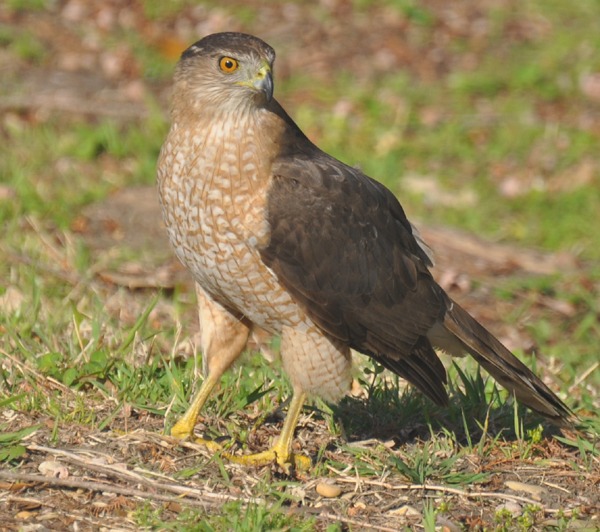
An adult Red-tailed Hawk often has a reddish tail, but dark and unusually pale adult forms add variation. Wing position and lighting also decide which marks show up in a photo. For plumage, range, and song, see Red-Tailed Hawk identification and field marks.
Start With the View You Actually Have
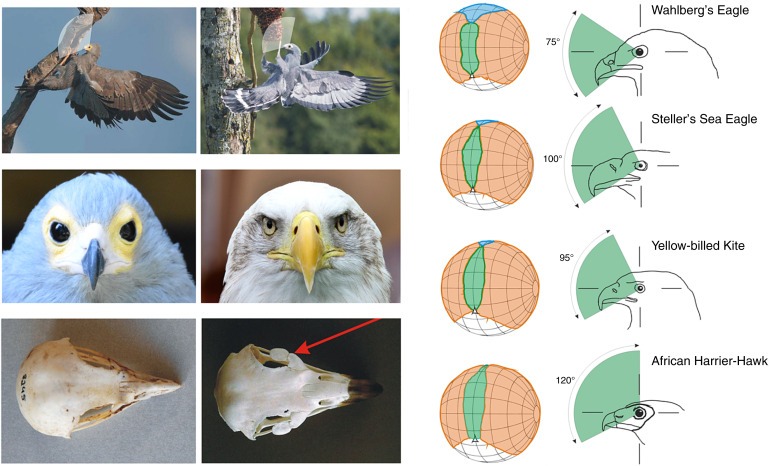
A hawk overhead shows different marks than one perched sideways, and a photo can’t show feathers the body hides.
- Soaring, seen from below: Check the inner front edge of each underwing, the outer flight feathers, the belly, and the width of the tail.
- Seen from above or in a well-lit side view: Use upperwing checkering, upper-tail color and bands, and the overall profile.
- Perched: Work with the folded wing, upper chest, belly, and tail. Most of the underwing is hidden.
- Heard or photographed indistinctly: Use the call or a recognizable silhouette as supporting evidence. A blurred patch of feathers can’t show a precise wing mark.
A side-on portrait may show the entire breast but almost none of the patagial area. A bird soaring with its belly toward the camera can show both the dark leading edge and pale areas near the outer primaries.
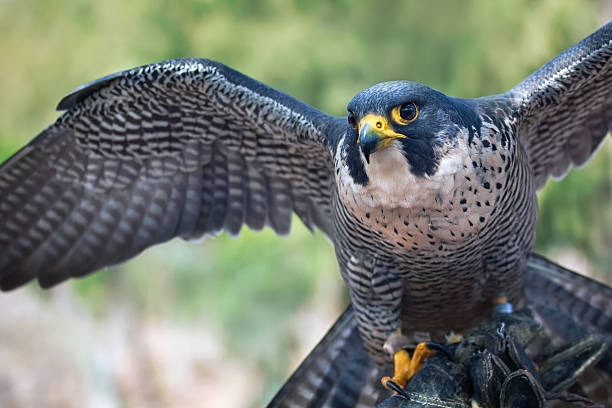
In Flight: Patagial Bars Versus Pale Wing Crescents
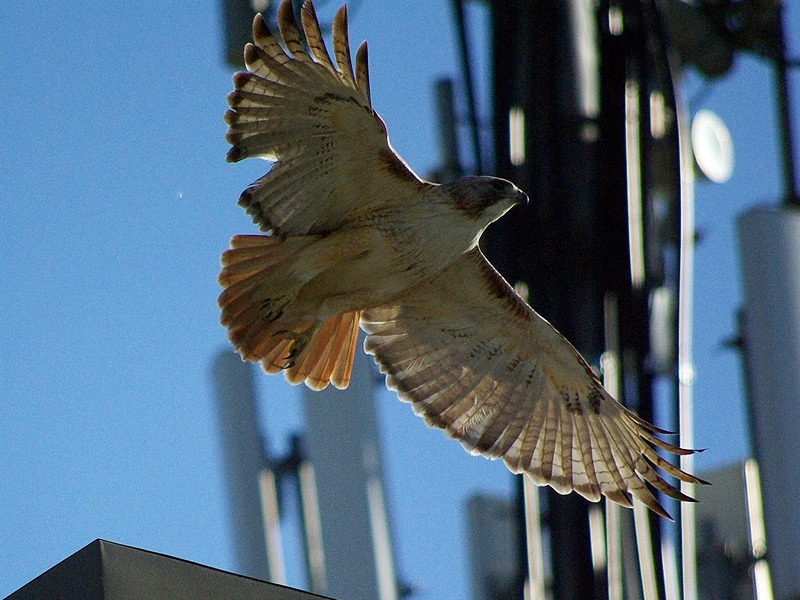
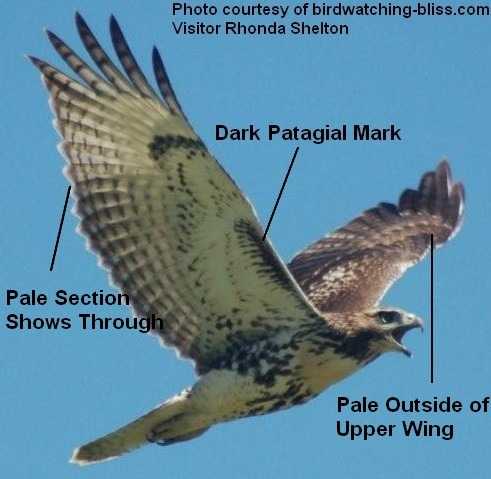
The dark patagial bar of a typical light Red-tailed Hawk runs along the forward edge of the inner underwing. With the bird overhead and its wings open, the bar follows the leading edge from near the body toward the wrist, where the wing bends.
The pale crescent of a Red-shouldered Hawk sits much farther out, among the outer flight feathers toward the wingtip. When light shines through the feathers, it often looks like a translucent comma. The two marks occupy separate parts of the wing, which helps when the tail is partly hidden.
HawkWatch International describes the Red-shouldered Hawk’s pale wing commas as particularly conspicuous from above or from below with backlighting. In poor light, the pale area can be hard to see. Its Red-shouldered Hawk identification guide also covers wing shape and regional forms.
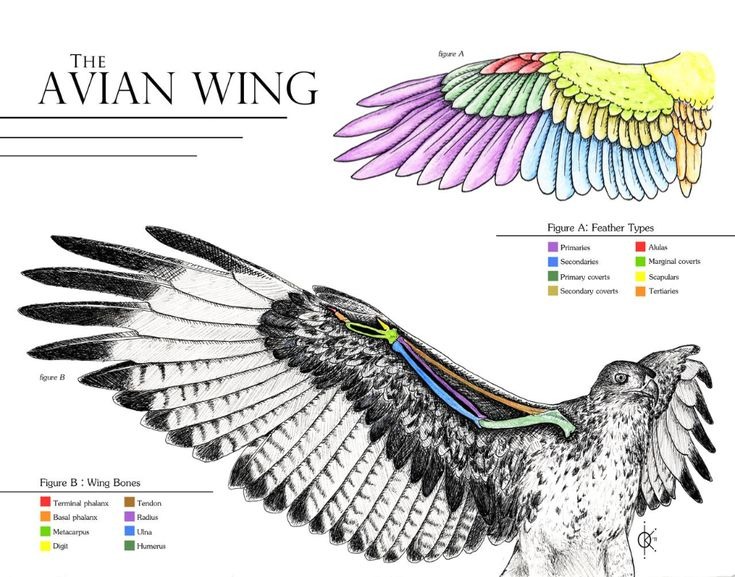
On an underside photo, find the front edge of each open wing and trace it toward the wrist. Then move out to the long primaries near the tip. That separates the dark leading-edge mark of Red-tailed Hawks from the light outer-wing window of Red-shouldered Hawks.
Wing shape adds another clue. Red-tailed Hawks look broad and rounded, with a wide, relatively short tail. Red-shouldered Hawks can show squarer-looking wingtips and a longer tail, especially while gliding. A distant speck, a motion-blurred image, or a wing seen at an extreme angle can hide the feather details.
Perched: Read the Chest, Wing Checkering, and Tail Together
With the wings folded, the breast and upperwing pattern are your best marks. A typical adult Red-shouldered Hawk has conspicuous dark-and-light checkering on the exposed wing feathers, and eastern adults often show reddish horizontal bars across the chest.
In many light Red-tailed Hawks, the upper chest looks pale while darker vertical streaks gather below in a belly band. The difference is where the markings sit and which way they run. Strongly dark individuals and younger birds need a separate comparison by age and morph.
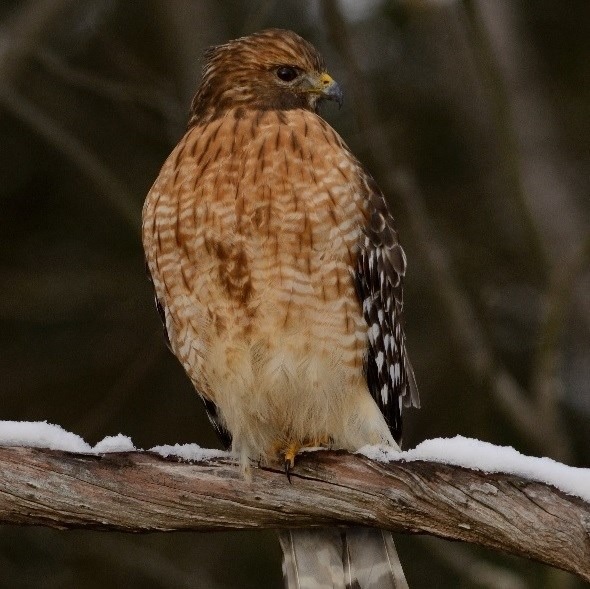
For a perched bird, check four areas in order:
- Folded wing: Look for clear alternating checkering or a mottled brown surface.
- Upper chest: Note whether dark markings form fine crossbars, lengthwise streaks, or a mostly pale area.
- Belly: Find where streaking concentrates and which way it runs.
- Exposed tail: Look for a reddish upper surface or narrow pale bands in a dark tail.
Tail color depends on how the bird sits. Even a reddish adult Red-tailed tail can look dull, or hide beneath folded wings when you view it from below. Body bulk and head proportions can support your call once you’ve read the feather patterns.
Juveniles and Hawks With No Red Tail
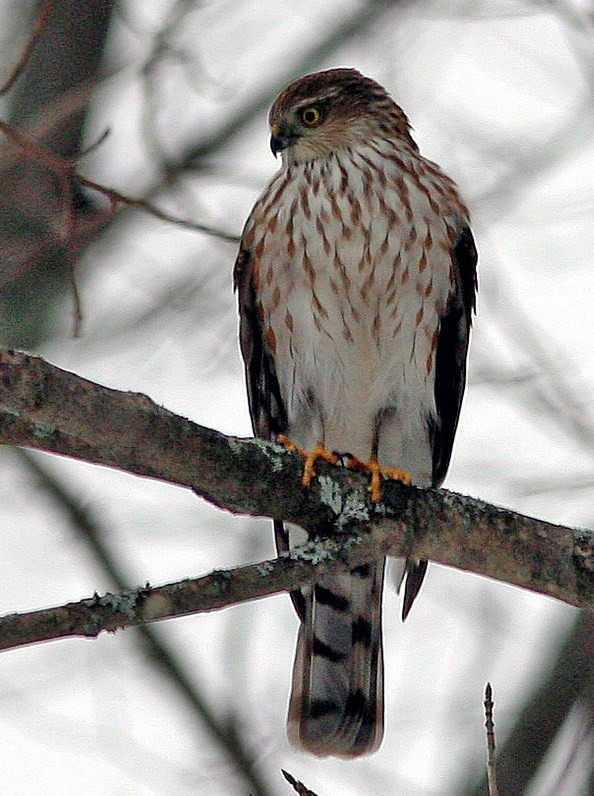
A juvenile Red-tailed Hawk has a brown, banded tail. The reddish tail of many adults develops as the bird matures, so the name is a poor shortcut for young birds.
Young Red-shouldered Hawks also have brown barred tails and pale underparts with vertical streaks. The rusty barring of eastern adults and the pronounced adult wing checkering are less developed or less conspicuous in juvenile plumage.
| Bird and age | Tail | Underparts | Other field marks |
|---|---|---|---|
| Adult Red-tailed | Often reddish above | Frequently pale upper chest with lower belly streaks in light forms | Broad build and dark patagial marking |
| Juvenile Red-tailed | Brown with darker crossbands | Streaks often strongest on belly | Broad wings; patagial pattern may help |
| Adult Red-shouldered | Dark with narrow pale bands | Often rusty and finely barred in eastern adults | Checked wings and pale outer-wing crescent |
| Juvenile Red-shouldered | Brown and barred | Vertical streaks often extend higher on chest and throat | Wing crescents may be apparent in suitable light |
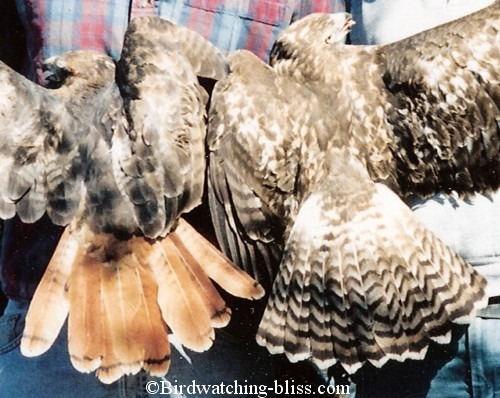
Compare a young bird only with reference photos labeled immature or juvenile and taken from a similar angle.
Western dark Red-tailed Hawks vary substantially, and Harlan’s forms can have mottled gray, black, or light tails without obvious red. Pale Krider’s forms can have a weak or inconspicuous belly band.
Shape and Size: Proportions and Measurements
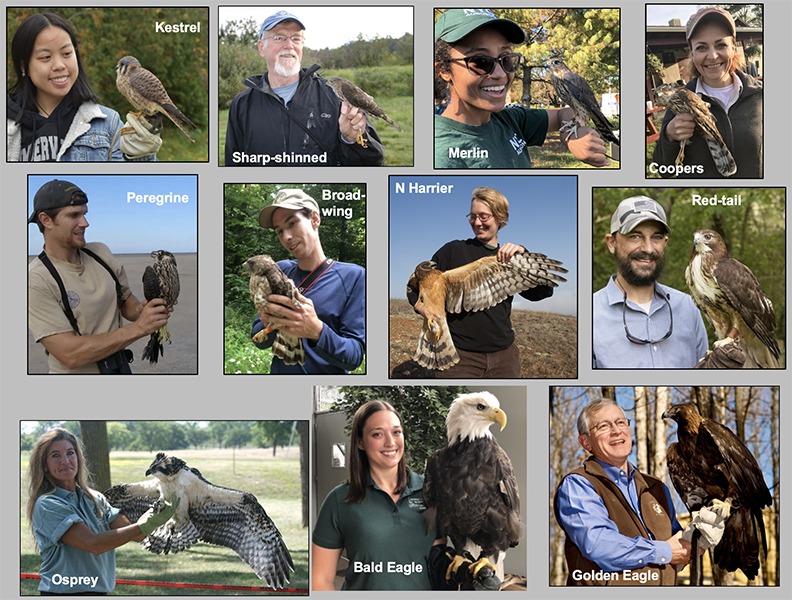
Red-tailed Hawks have broader wings and more substantial bodies, while Red-shouldered Hawks have longer-looking tails relative to the rest of their silhouette. These proportions help when the bird is too distant for fine plumage marks.
Cornell All About Birds gives these measurements:
| Species and sex | Length | Wingspan | Weight |
|---|---|---|---|
| Red-tailed male | 17.7 to 22.1 in (45 to 56 cm) | 44.9 to 52.4 in (114 to 133 cm) | 24.3 to 45.9 oz (690 to 1,300 g) |
| Red-tailed female | 19.7 to 25.6 in (50 to 65 cm) | 44.9 to 52.4 in (114 to 133 cm) | 31.8 to 51.5 oz (900 to 1,460 g) |
| Red-shouldered, both sexes | 16.9 to 24.0 in (43 to 61 cm) | 37.0 to 43.7 in (94 to 111 cm) | 17.1 to 27.3 oz (486 to 774 g) |
Body-length ranges overlap, though Cornell’s wingspan ranges don’t. Looking up at a flying hawk, you rarely have a known distance or an object for scale.
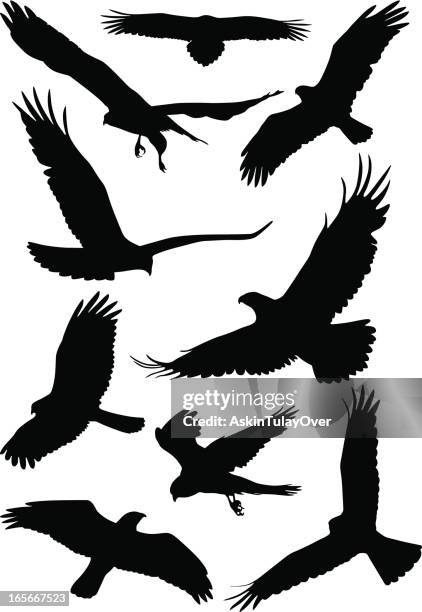
Compare silhouettes photographed from similar angles, and watch the tail’s length relative to the wings and the shape of the chest. A Red-tailed Hawk soaring with its broad wings fully spread looks very different from a Red-shouldered Hawk gliding with its wings held forward.
Location, Plumage Variations, and Habitat Can Change the Odds
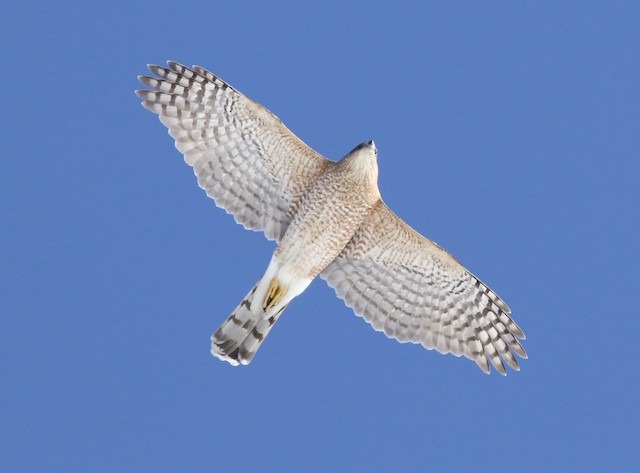
Red-tailed Hawks use open and mixed country, including farmland, grassland, roadsides, and places with scattered trees. Red-shouldered Hawks live in woodlands, forest edges, wooded wetlands, and suitable suburban neighborhoods.
The habitats overlap. A roadside tree near woodland suits either species, and a photo taken in an unfamiliar region can show a plumage form that looks different from the familiar eastern field-guide bird.
Some western Red-shouldered Hawks of the elegans group, including birds in California, have a largely solid orange breast without the fine barring typical of eastern adults. Florida Red-shouldered Hawks may have noticeably pale gray heads, giving them a different appearance from the typical eastern adult illustrated in many guides.
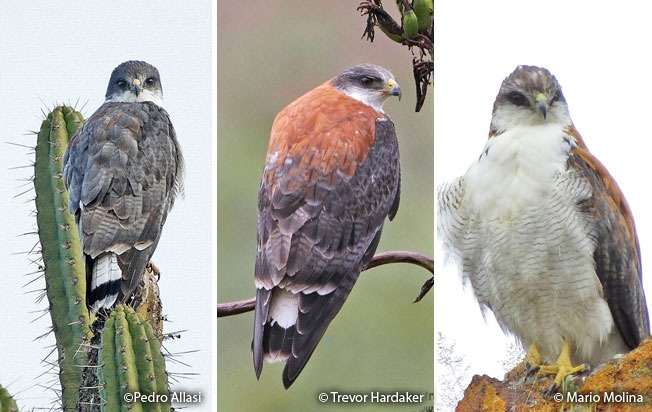
Western Red-tailed Hawks include darker birds with more heavily marked underparts. A dark Red-tailed Hawk can look like a different species if you overlook wing shape, age, and individual markings. For help with bill shape, plumage, and habitat, read how shape, color, behavior, and habitat identify a bird.
Use the sighting’s state or region and month to look up dated range information, then compare reference images labeled for the local population. Cornell’s species accounts and eBird Status and Trends give distribution context modeled from past observations.
Calls, Merlin, and Poor Photos: When Evidence Conflicts
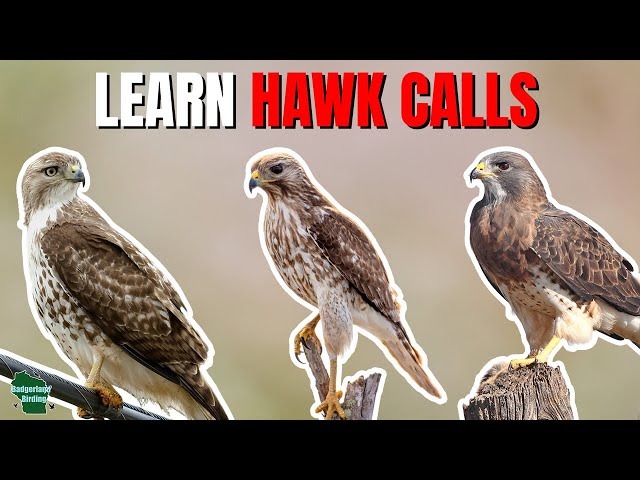
Red-tailed Hawks give a long, hoarse, descending scream. Red-shouldered Hawks repeat descending whistles, sometimes written as kee-yeeear. A recording with a distinct call gives you another feature to compare.
In eastern North America, Blue Jays imitate Red-shouldered Hawk calls, so a call from wooded cover with no visible bird can stay ambiguous.
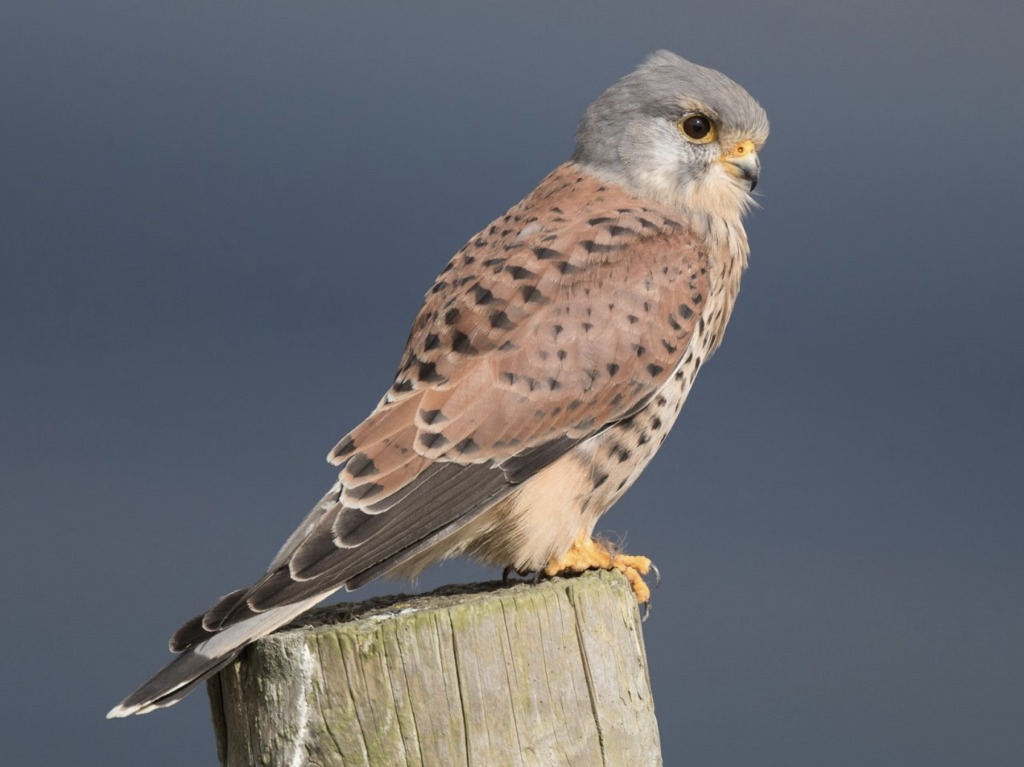
If Merlin Bird ID suggests both Red-tailed and Red-shouldered for your photo, it hasn’t settled the question for you. Cornell notes that AI-assisted identifications can be wrong, particularly with obscured birds.
If you dispute a Merlin Photo ID result:
- Check the inputs: Confirm the date and location match the observation.
- Crop again: Enlarge the bird if the original frame has distracting surroundings.
- Inspect the alternatives: Compare the suggestions with labeled photographs.
- Add a recording: Compare a clear call with documented Red-tailed and Red-shouldered vocalizations.
Cornell’s Merlin Photo ID guidance explains how to adjust an image and its associated information. Give less weight to pale patches caused by glare and dark patches caused by shadow than to a clearly resolved wing or breast mark.
What if It Isn’t Either Hawk?
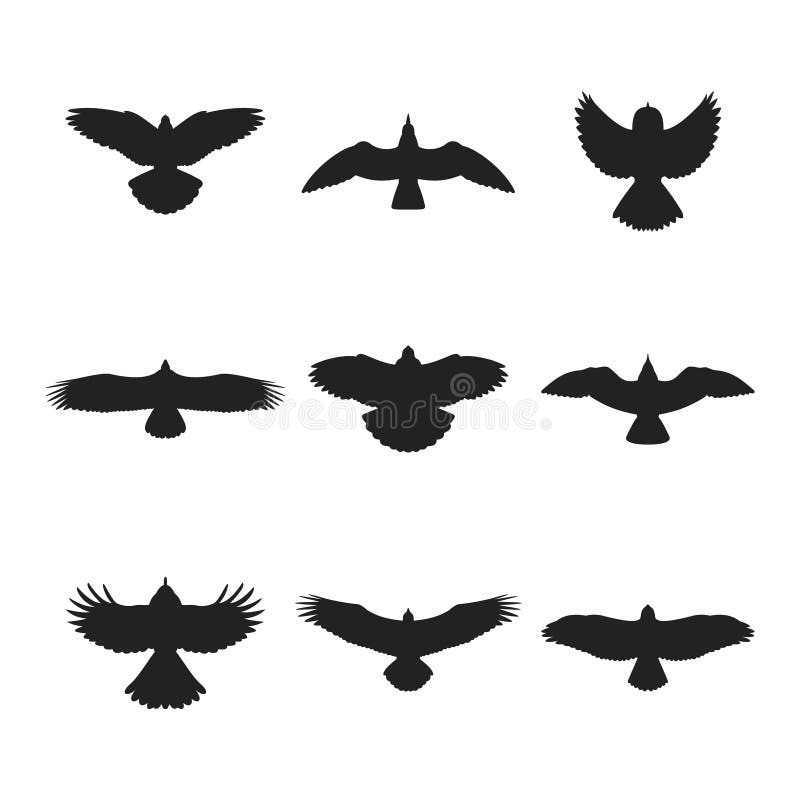
A hawk with a long tail and relatively short rounded wings points toward Cooper’s Hawk, and Broad-winged Hawk can complicate a Red-shouldered comparison in some views and seasons. Compare plumage, range, and song against Red-shouldered Hawk identification and field marks rather than relying on one clue.