A cardinal song is a run of clear, slurred whistles. The chip is one sharp, metallic note. Hear either within the Northern Cardinal’s range and think cardinal first. Then confirm with a clear recording or a sighting. If the sound or the range doesn’t fit, compare other plausible birds.
What does a Northern Cardinal sound like? Song vs. chip
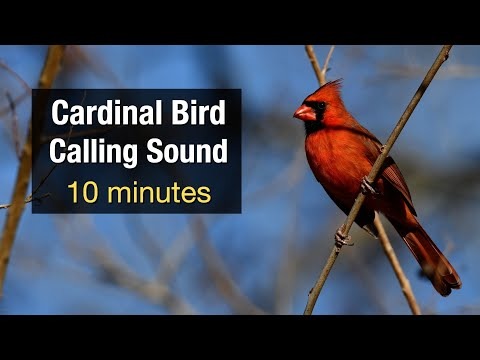
A Northern Cardinal (Cardinalis cardinalis) sings clear, musical whistles that slide between pitches. Its familiar chip is shorter, sharper, and almost metallic. A song gives you a recognizable phrase. A chip is often a single note from a bird hidden in a shrub.
Songs run in phrases of about two to three seconds. The whistles repeat at an even pace, speed up, or end with a trill.
| Sound heard | What it contains | What it is |
|---|---|---|
| Whistled song | Clear, often slurred notes in a repeated musical phrase | Northern Cardinal song |
| Metallic chip | Short, pointed notes, singly or in a series | Northern Cardinal call |
Cornell’s Northern Cardinal recordings include songs, chip calls, duets, and juvenile voices. Play a labeled song and a labeled call, then decide which one matches what you heard.
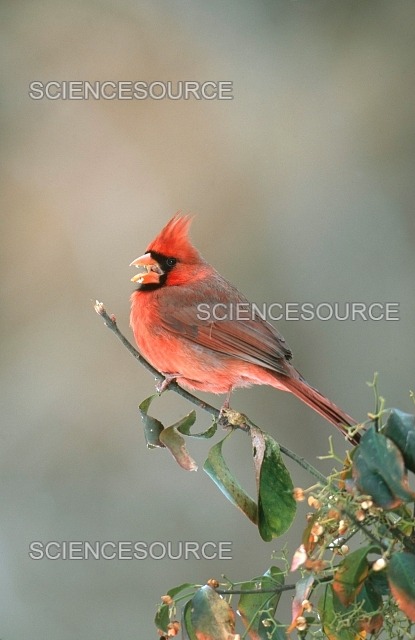
Macaulay Library recording ML237010 has low-pitched chip calls from an adult male Northern Cardinal. For plumage, range, and song, cross-check with Northern Cardinal identification and field marks.
Cornell describes at least 16 kinds of Northern Cardinal calls. The familiar chip occurs in different contexts, so hearing one doesn’t tell you whether the bird is reacting to a predator, a mate, or something else.
Hear the pattern: whistles, pitch, rhythm, and repetition
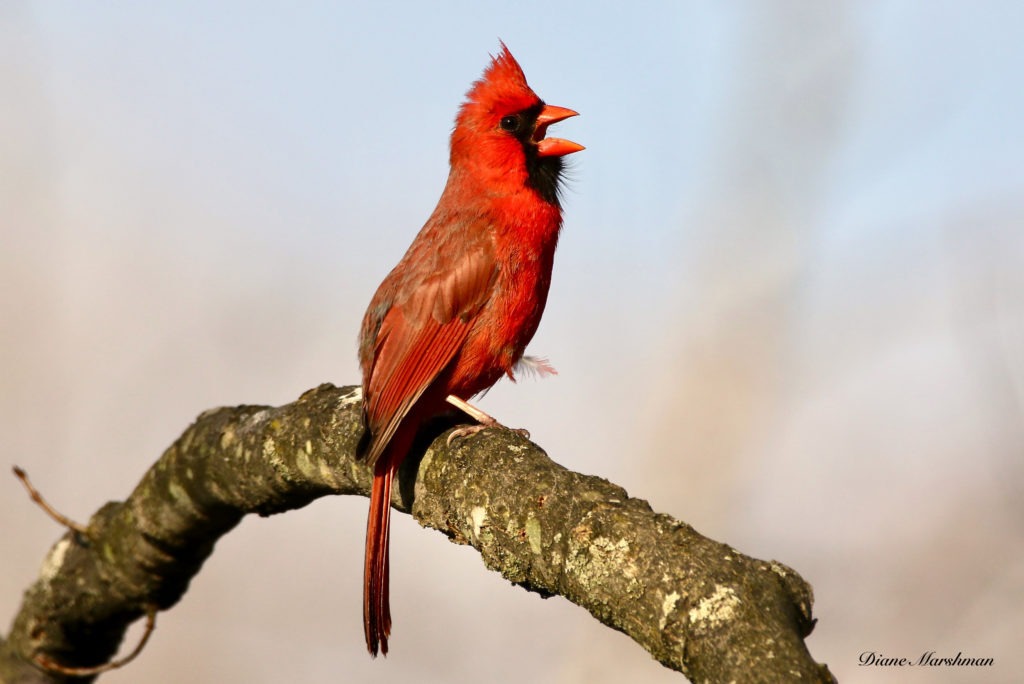
The shape of a song tells you more than the syllables people use to imitate it.
A slur is a smooth glide in pitch. A cardinal whistle curves upward and then down without breaking into separate notes. A trill is a rapid succession of notes, sometimes heard toward the end of a phrase.
| Feature | What to notice | Why it helps |
|---|---|---|
| Pitch movement | Rising, falling, or smoothly curving notes | Separates whistle shapes |
| Repetition | A note or small group that returns | Shows the phrase’s recurring unit |
| Rhythm | Even spacing or notes becoming faster | Separates steady phrases from accelerating ones |
| Ending | A final whistle, shorter notes, or a trill | Tells similar openings apart |
Two phrases can both open with broad whistles. One ends with a quick run of notes, the other with another slow whistle. The endings tell them apart even when a written “cheer” fits both openings.
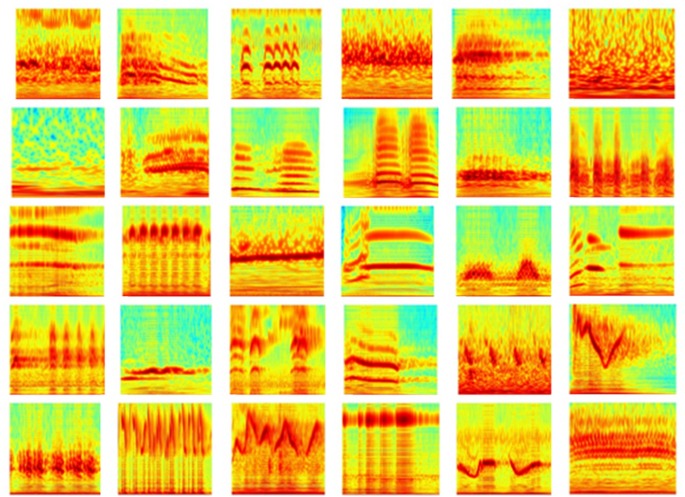
A spectrogram shows sound frequency vertically and time horizontally. A rising whistle draws an upward line, repeated notes form repeated shapes, and a faster series crowds the shapes together. The spectrogram guide uses cardinal vocalizations to explain these features.
Read a spectrogram alongside the recording that produced it.
Why cardinals don’t always match the same song mnemonic
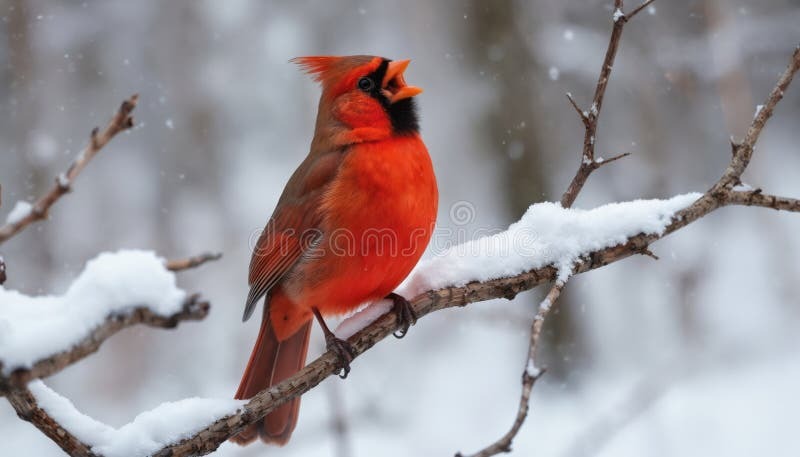
A Northern Cardinal sings several recognizable phrases, and another individual arranges its whistles differently. If you’ve memorized one tune, the next cardinal in your yard can surprise you.
One r/birding commenter uses private reminders for bird voices and still finds cardinals a recurring source of uncertainty:
I think that the Merlin app helps a lot, because it tells me what I’m (probably) hearing. I’ll save the recording and then once I’m back home, I’ll go through the list of birds and play the calls on the overview page for each species. But little ways to remind myself what their calls sound like helps too. … And, lastly, I’ve found that almost anytime I find myself wondering what that bird call is, it is a Northern Cardinal, because they are my bird nemesis.
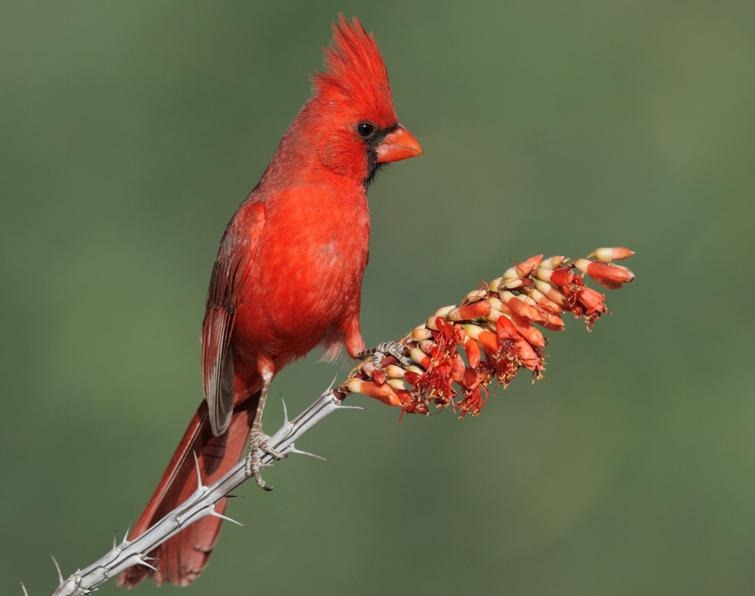
The sound gallery has several labeled Northern Cardinal songs, including recordings from New York on April 3, 2018, and Maryland on April 26, 2000. Play them as a pair. Hear each phrase through to its ending and note which whistle shapes repeat.
Mnemonics still work as memory cues. A phrase such as “cheer” becomes more useful once you attach it to the rise, fall, and rhythm of a real example.
How to distinguish cardinal song from similar birds
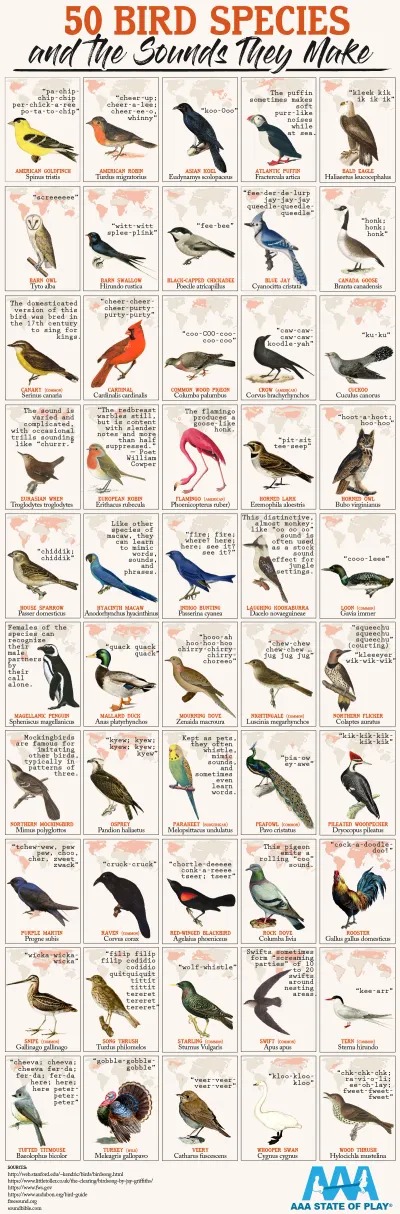
Carolina Wren, Tufted Titmouse, House Finch, and Song Sparrow can all be mistaken for a Northern Cardinal where their ranges overlap. Compare the whole phrase, especially its repeated unit and its ending.
| Singer | Sound shape | What sets it apart |
|---|---|---|
| Northern Cardinal | Clear, slurred whistle groups, sometimes ending in faster notes or a trill | Gliding pitch and recurring whistles |
| Carolina Wren | Fast, repeated phrases in a three-part rhythm | The same three-part unit, over and over |
| Tufted Titmouse | Short, clear, regularly repeated whistle motif | A repeated “peter”-like cadence |
| House Finch | Jumbled, flowing warble with changing notes; sometimes a sharp cheep | Continuous warbling, rapidly changing notes |
| Song Sparrow | Separated opening notes, then a buzz or trill | A distinct opening followed by a busier finish |
One clear whistle can resemble several of these birds. What follows it narrows the field: how many times a unit repeats and how the phrase finishes.
One r/birding poster knows several birds by sight but struggles to retain their sounds:
I’m reasonably confident with my visual ID, and can pick out some obvious calls in my area (Canada Goose, American/Fish Crow, Mourning Dove) but cannot seem to commit the other bird calls to memory. I feel like I should be able to tell the difference between a Cardinal, Carolina Wren, House Finch, and Song Sparrow, but am struggling. Would love to be able to keep the phone in my pocket and know what I’m looking for by sound. Any tips?
Do female cardinals sing? Songs, duets, and communication

Both male and female Northern Cardinals sing, so a melody alone can’t tell you the singer’s sex. Duets and pair communication appear in the recordings.
In a 1997 observational study of 13 pairs across 25 nestings in Madison, Wisconsin, S. L. Halkin looked at what happened after males sang or called within 12 meters of nests with young. Males were more likely to bring food following a female song than following silence. Matching the male’s song type was associated with a lower likelihood of a visit.
For bill shape, plumage, and habitat checks, see how to identify birds by song without guessing.
What to do when Merlin cannot identify a cardinal-like sound
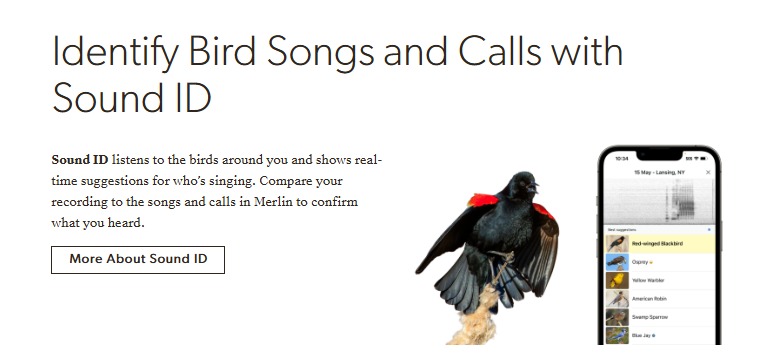
Merlin Sound ID suggests possible species from recordings.
A recording with overlapping singers or background noise can hide the features that would identify the bird.
The Merlin Sound ID best-practices guide describes this process.
When a species appears in Merlin
- Check the location. Make sure Merlin uses the place where you recorded, then ask whether the suggested bird occurs there in that season and habitat.
- Compare the suggestion. Open the bird’s Details and compare its sounds and spectrogram with a reasonably clear part of your recording.
- Independent support. A view of the singing bird or other reliable field marks strengthens the identification. Don’t report an unconfirmed suggestion to eBird.

When Merlin gives no suggestion
A no-match result can come from a poorly isolated call, an unusual vocalization, or a species outside the feature’s coverage. Use Explore Birds to review locally plausible species and keep the recording context for later.
If a clip stays inconclusive, mark it unresolved. If the evidence points to one species but doesn’t prove it, call it tentative. Use confirmed only when credible field evidence supports the observation.
A field method for learning Northern Cardinal songs

You learn a bird’s voice faster if you hear it on your regular walks and guess the species before checking a guide.
One r/birding contributor describes a method built on personal experience with Merlin:
I’ve made huge improvements in my birding by ear skill in the two years since I started using Merlin. Merlin is, in my opinion, the best training tool for birding by ear ever invented, provided you use it correctly. If you use it incorrectly, there is a good chance it can actually make you worse. The two keys to learning anything are repeated exposure and active recall. Repeated exposure is easy–just go birding. Active recall is simply the process of trying to dredge up knowledge that’s in your brain, even if it doesn’t immediately come to you. This is where I think a lot of people go wrong with Merlin: they skip this step and just let Merlin do all the work for them.
- Guess first. When a bird vocalizes, pause and see which species comes to mind. Give yourself a moment to recall what makes the sound distinctive.
- One feature per bird. Once you know the species, attach one specific cue to that encounter, such as a smooth downward whistle or a quick ending.
- A field note. Keep one short description you will understand on the next outing, even if it only compares the bird with another familiar local one.
- Another walk. Each natural encounter gives you another chance to recall the same bird, with no artificial song list to study.
Leave birds undisturbed while you practice. The American Birding Association’s birding ethics code advises minimizing disturbance. Don’t repeatedly play recordings near nests or birds showing signs of stress.