A lanky, long-tailed bird with a metallic blue-purple head and a bronzy body is most likely a Common Grackle, especially in the eastern or central United States. In the West, near the coasts, or when the tail looks short, compare Brewer’s Blackbird and the other grackles. Tail, bill and location settle it.
What bird is black with a shiny blue head?
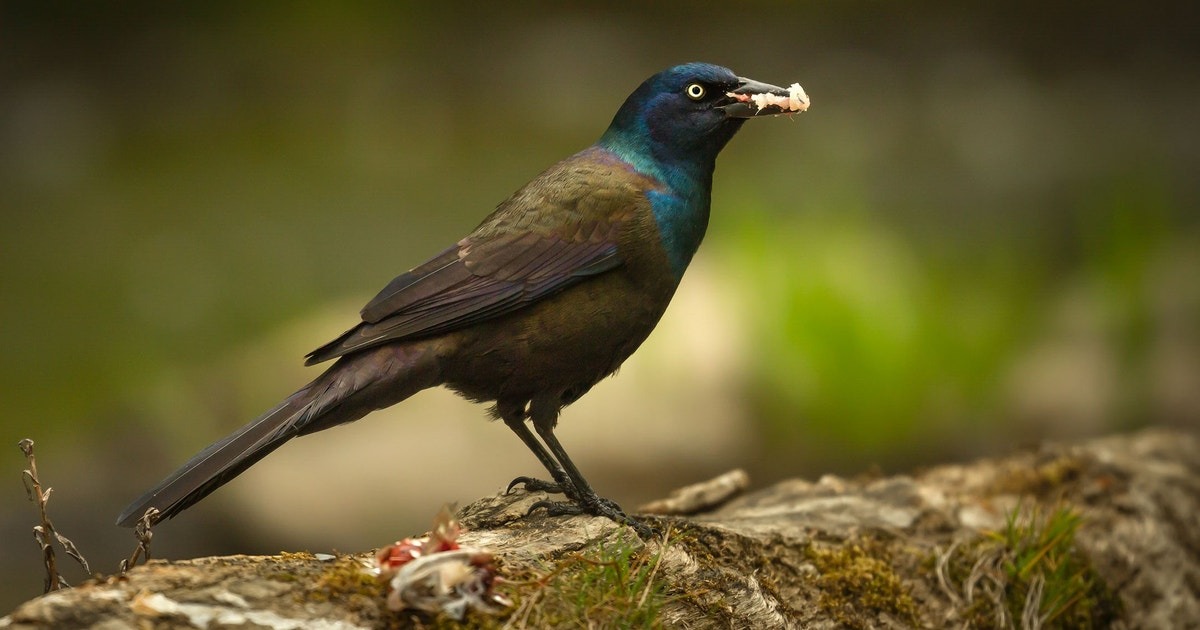
A male Common Grackle is the first bird to check. In good light its head shines electric blue or purple above a dark body with a bronze sheen. It looks stretched out: long legs, a heavy bill, and a tail that can look almost boat-shaped when spread.
Brewer’s Blackbirds, particularly adult males, can also have a blue-purple head. Check Great-tailed and Boat-tailed Grackles when the tail is unusually long or the location fits. A compact bird with a shorter tail may be a European Starling.
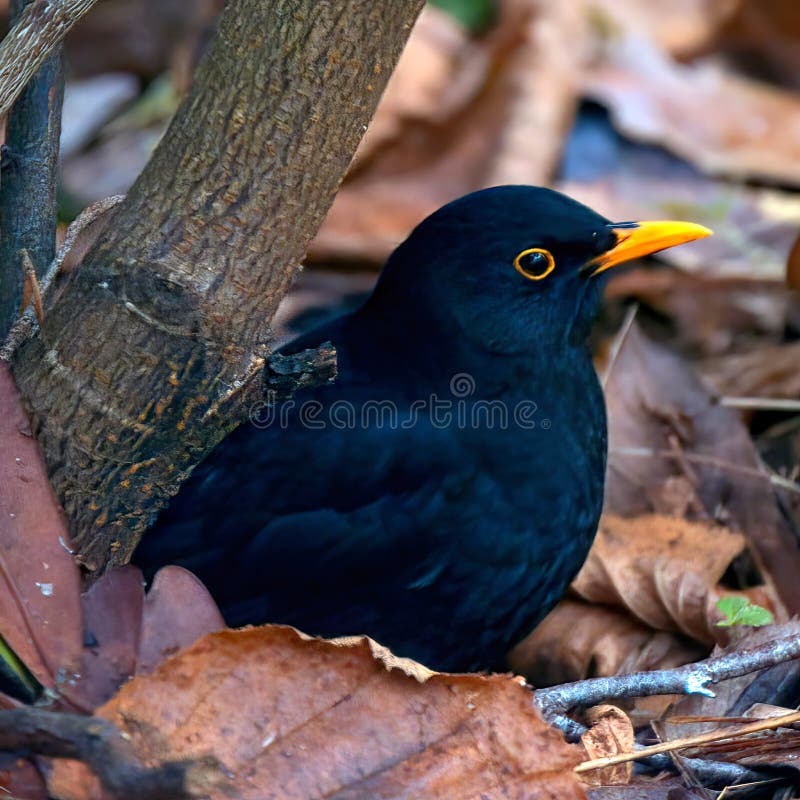
One backyard birder learned to recognize a bird through repeated observations without binoculars:
There’s a beautiful blackbird with a lovely iridescent deep blue head over there I keep seeing, and I wasn’t exactly sure what it was. I kept looking for it everyday, trying to notice whether it walked or hopped (walked), the color of its beak (black), the shape of its tail (skinny and long but fanned out slightly), the noises it was making, how aggressive it was (not really), whether it was alone or has buddies (has buddies). After some sleuthing (especially listening to the sounds it makes), I’m pretty sure it’s a Grackle!
Start with the tail, bill, body shape and eyes
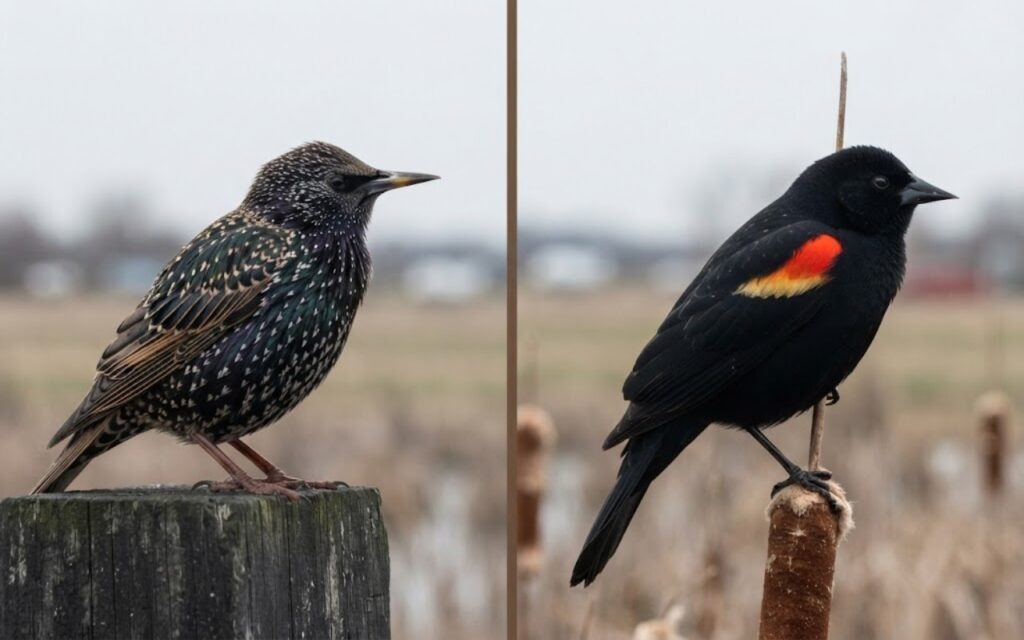
Start with the outline. A Common Grackle looks lanky, a Brewer’s Blackbird looks more compact, and a male Great-tailed Grackle has an exceptionally long tail.
The table gives published total-length reference ranges. The Brewer’s Blackbird range is for males; the Great-tailed Grackle range covers both sexes. Individual size varies.
| Candidate | Published total length | Tail and bill | Color and eye clues |
|---|---|---|---|
| Common Grackle | 11.0 to 13.4 in (28 to 34 cm) | Long, sometimes keel-shaped tail; substantial, slightly curved bill | Adult golden eye; often blue-purple head and bronzy body |
| Brewer’s Blackbird (male) | 8.3 to 9.8 in (21 to 25 cm) | Shorter rounded tail; relatively straight bill; fuller body | Purple-blue head sheen, greener body gloss and yellow eye |
| Great-tailed Grackle | 15.0 to 18.1 in (38 to 46 cm) | Adult male: exceptionally long V-shaped tail and stout bill | Adult male: dark, strongly iridescent plumage; often a yellow eye |
| Boat-tailed Grackle | 10.2 to 14.6 in (26 to 37 cm) | Long folded V-shaped tail; long pointed bill | Glossy purple-green plumage; eye color varies geographically |
| European Starling | 7.9 to 9.1 in (20 to 23 cm) | Compact body; short tail; slender pointed bill | Dark eye and purple-green sheen, often across much of the body |
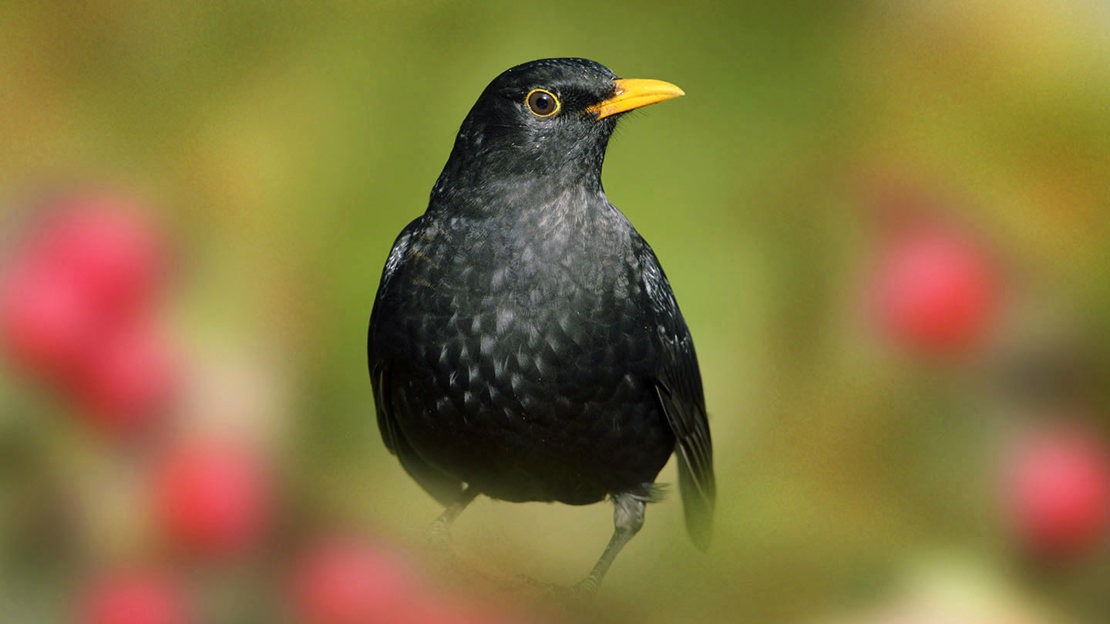
Compare tail length with body first, then the bill. A Common Grackle’s bill is longer and heavier than a Brewer’s Blackbird’s shorter, straighter one, and a starling combines a slender bill with a stubby tail.
Eye color helps less than you’d expect, because several adult male blackbird species have yellow or pale eyes. Read it alongside bill and tail. Cornell’s Common Grackle identification guide shows the species’ proportions and plumage.
Where you saw it changes the shortlist
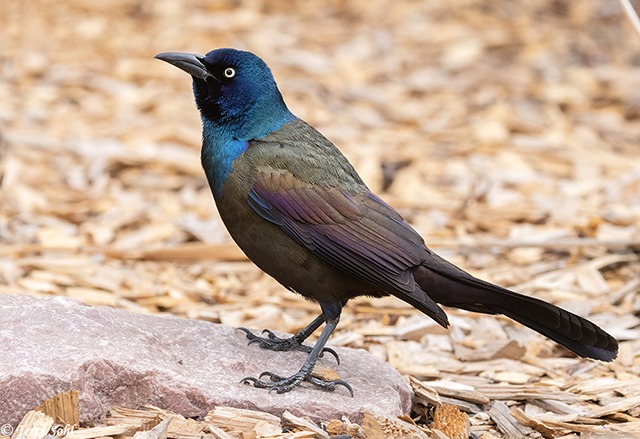
A blue-headed blackbird in Virginia calls for a different shortlist than one in California or along the Gulf Coast. Ranges overlap in places, so state, season and habitat narrow the field.
- Eastern and central United States: Common Grackle is a strong candidate on lawns, in parks and in fields. The long-tailed silhouette and contrasting head color fit.
- Western open country: Brewer’s Blackbird is important in fields, parks and lawns. A shorter, rounder bird fits it better than a very long-tailed grackle.
- Midwest, West, and southern developed areas: Great-tailed Grackle shows up around urban lawns, agricultural land and water. Adult males have tails approaching the length of the rest of the body.
- Atlantic and Gulf coastal regions: Boat-tailed Grackle is a major candidate, particularly around marshes and coastal habitats. It also occurs across much of Florida, including inland areas, so an unfamiliar glossy black bird on a lawn there can fit.
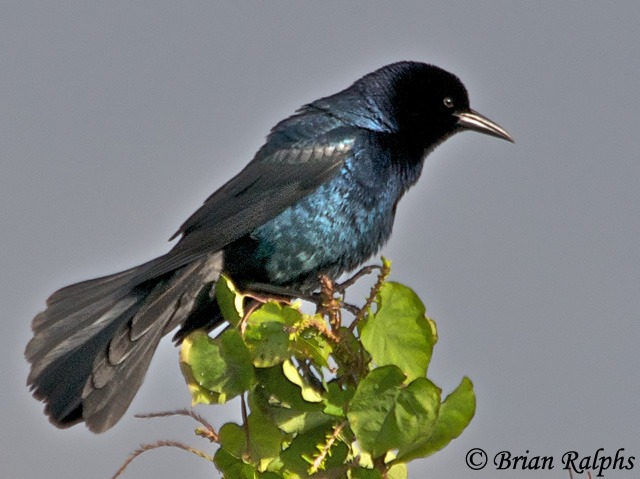
Boat-tailed Grackle eye color varies geographically. Atlantic birds can have pale yellow eyes, while birds along parts of the western Gulf Coast can have duller brown eyes.
A Common Grackle in California needs a check against a current regional range reference and the habitat. Great-tailed Grackle and Brewer’s Blackbird are both in play.
Could it be a starling or another dark bird?
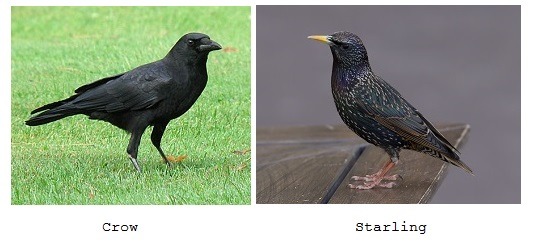
A European Starling can look surprisingly similar when sunlight catches its purple-green feathers. Its compact body and short tail give it away. In breeding plumage it has a yellow bill, while fresh nonbreeding plumage often shows pale spots and a darker bill.
| Bird | When it deserves consideration | Distinguishing observation |
|---|---|---|
| Rusty Blackbird | Wet woods, marsh edges, or seasonal movements | Slim, slightly curved bill; relatively short tail; rusty feather edging in some plumages |
| Purple Martin | A dark blue-purple bird flying around open areas or martin housing | Long pointed wings, short forked tail, and a swallow’s silhouette |
| Brown-headed Cowbird | A black-bodied bird whose head appears dark in poor light | Male has a brown head, short tail, and thick conical bill |
| Steller’s Jay | A western bird with blue and black plumage | Dark crested head above a blue body and wings |
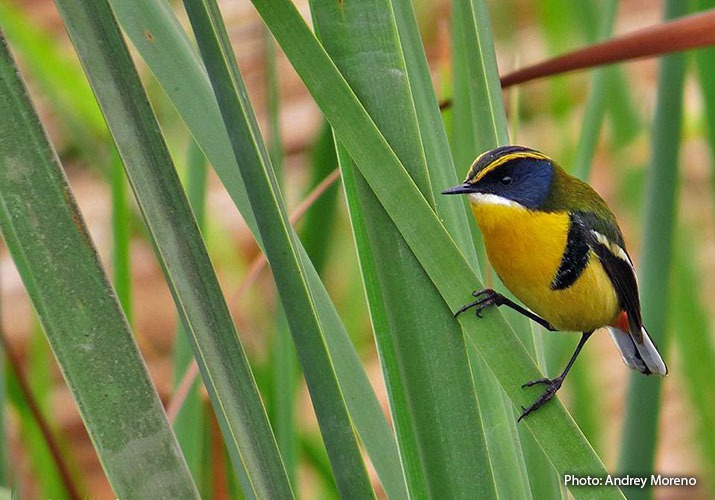
A Steller’s Jay carries its strongest blue on the body, the reverse of a blue-headed Common Grackle. A male Purple Martin can look blue-purple almost all over, but its pointed wings and swallow-like flight set it apart.
A vivid patch of sheen helps only when the rest of the bird fits. For a fuller method, see how shape, color, behavior, and habitat identify a bird.
Why the blue head can disappear or change color
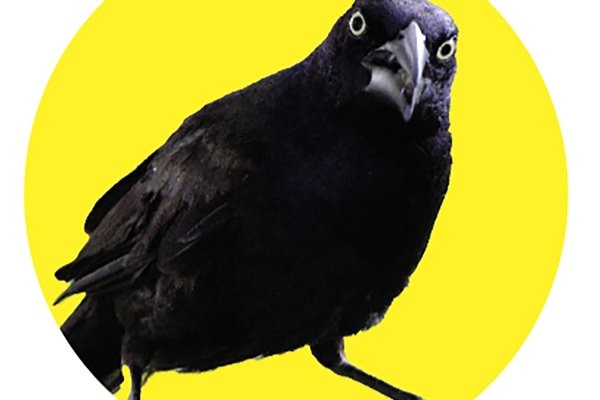
The metallic color on a grackle’s head comes from microscopic structures in its feathers that interact with light, producing iridescence that changes with the viewing angle. A bird that looked brilliant blue in direct sunlight can appear nearly black in shade. Some Common Grackles have a more purple body, while others show a stronger bronze contrast.
Age, sex and molt can change the usual clues
The glossy adult male is the easiest version to recognize in a field guide, but young and female birds look quite different. Juvenile Common Grackles are generally browner, with dark eyes that later become pale or golden. Female Common Grackles may look less glossy, and the bronze-versus-purple body contrast varies among regional forms.
Molt adds another complication. Audubon’s Common Grackle account describes late-summer birds whose tails can appear ragged or temporarily shortened, so a bird with a convincing grackle shape may lack the smooth, long-tailed outline.
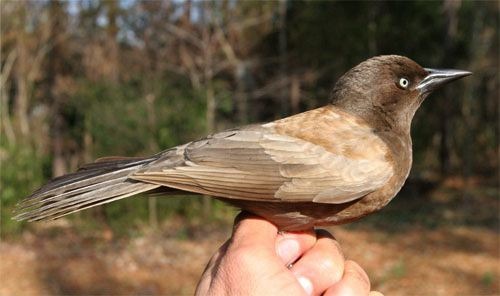
Brewer’s Blackbirds differ by sex too: adult males are dark and iridescent, while females are predominantly brown and may have dark or occasionally pale eyes. Female Great-tailed and Boat-tailed Grackles are also much browner than glossy adult males and differ substantially in size.
When one reliable clue conflicts with the rest, ask whether season, a younger bird or worn feathers explains it before you rule out a species.
How to confirm the ID when the photo or bird app disagrees
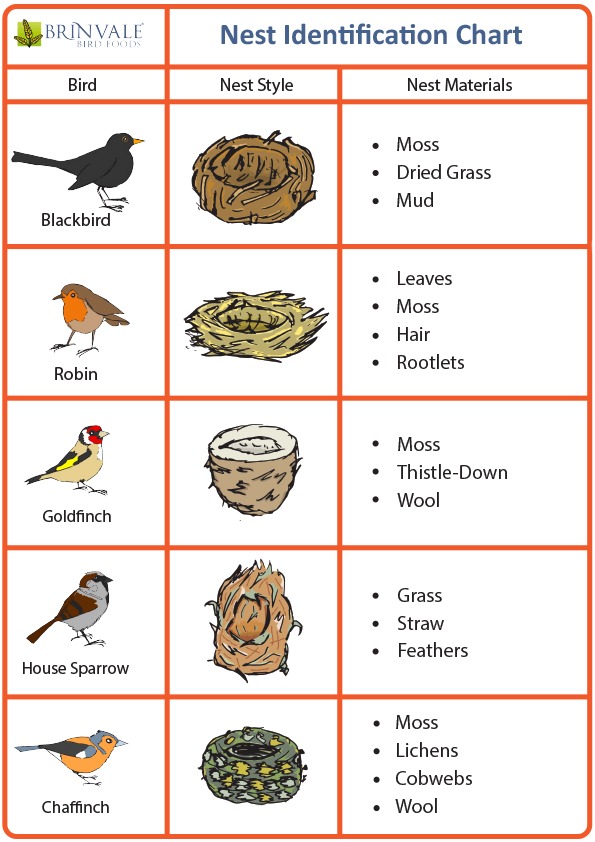
A phone app helps most when it gives you a candidate to check against what you saw.
One observer in Springfield, Virginia described an unexpectedly dramatic mismatch between the bird they saw and a suggestion from Merlin Bird ID:
I saw this beautiful bird with a glossy black body and shiny blue head and neck. Yellow eyes and a strong beak. It was a new species for my backyard. My app (Merlin Bird ID) kept identifying it as an Indian peacock, which it definitely was not. I turned to AI and gave it the photo and when it said “Common Grackle” my jaw dropped.
Cornell’s four keys to bird identification are size and shape, color pattern, behavior, and habitat. Compare them with photographs that match the bird’s age, sex, season and region.
To finish an uncertain identification:
- Write down what you saw. Record the date, state or county, habitat, and whatever the original photo or field notes show. Keep your observations separate from the name an app suggested.
- Check two field marks and the range. Compare the candidate on at least two observed traits, such as tail proportions and bill shape, and check that the location fits. A reference photo of similar plumage helps once the shape agrees.
- Get another view or a recording. Common Grackles make harsh, sometimes squeaky calls. Compare a recording with a trusted species reference. Cornell’s Merlin Sound ID best practices explain how to weigh suggested sounds against the rest of the evidence.
- Record uncertainty accurately. If the clues point to several species, log a tentative grackle or an unidentified blackbird rather than a specific name picked from an ambiguous picture.
Can a sound-identification app confirm the bird I was watching?A suggested call may have come from another bird nearby, especially when several birds are vocalizing. The match is strongest when you watched that bird make the call.