If you saw a small black-and-white bird in the U.S., start with where you saw it, then compare its bill, the position of its markings, and how it moves. Name the species once a second field mark agrees. If you only have one, note what to check next time.
Start with the bird’s size, location and behavior
White cheeks flashing in the branches point to different birds than a striped shape creeping around a trunk. Before you pick a name, recall where the bird was, how big it looked and what it was doing.
The Cornell Lab of Ornithology’s Four Keys build bird identification on size and shape, color pattern, behavior and habitat. In a hurry, jot four short notes:
- Place and season: State or region, month, and the setting: yard, woodland, park or waterside perch.
- Relative size: Chickadee or sparrow sized, or bigger? A nearby familiar bird or object gives you scale.
- Placement of white: Cheeks, belly, wings, central back or stripes across the body.
- Movement: Hopping through twigs, circling bark, bracing against a trunk or perching upright and flicking the tail.
A telephoto crop can make a tiny bird fill the frame, so judge size only against something else in the scene.
For a familiar reference, Cornell gives the Black-capped Chickadee a length of 4.7 to 5.9 inches (12 to 15 cm). You’ll see this compact bird moving among twigs or visiting backyard feeders. For plumage, range, and song, see Black-capped Chickadee identification and field marks.
Small black-and-white birds at a glance: the deciding marks
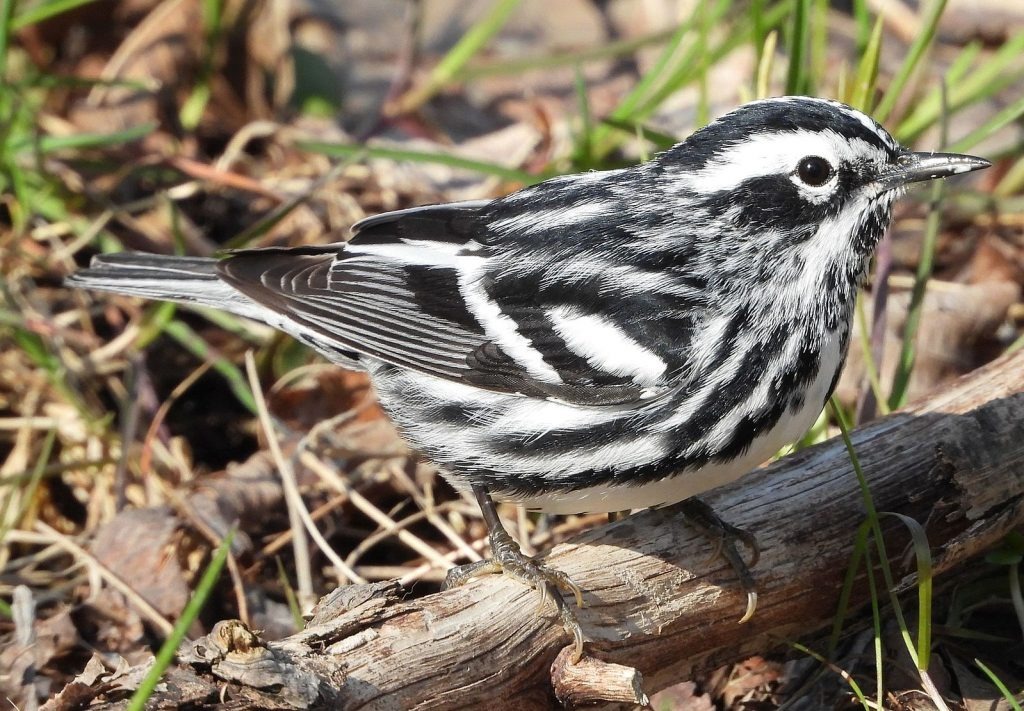
Where the markings sit gives you a fast first filter. Several birds below have gray backs, buff sides or small yellow accents, even though at a distance they look simply black and white.
| Bird | What stands out | Behavior or setting |
|---|---|---|
| Black-capped Chickadee | Black cap and bib, white cheeks, short bill, gray and buff body | Active in branches and foliage; feeder visitor |
| Carolina Chickadee | Black cap and bib, white cheeks, compact gray body | Very similar to Black-capped; location tells them apart |
| White-breasted Nuthatch | White face and belly, black or gray cap, blue-gray back, pointed bill | Climbs up, down and around trunks |
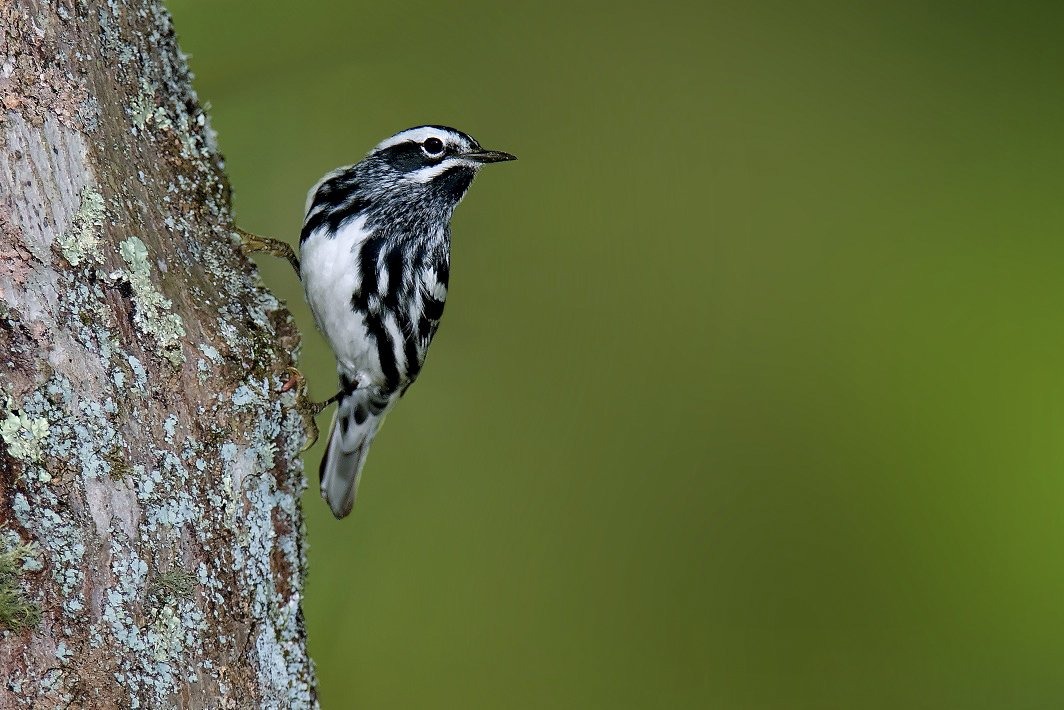
| Black-and-white Warbler | Bold striping over much of the body, thin slightly downcurved bill | Creeps along bark and branches |
| Downy Woodpecker | Central white back stripe, patterned wings, short chisel-shaped bill | Works on trunks; visits some feeders |
| Hairy Woodpecker | Similar woodpecker pattern, larger build, longer bill | Larger lookalike of the Downy |
| Black Phoebe | Sooty-dark upperparts and chest, clean white belly | Upright low perch, often near water; pumps tail |
| Black-throated Gray Warbler | Contrasting face, gray back, small yellow spot by the eye | Western woods |
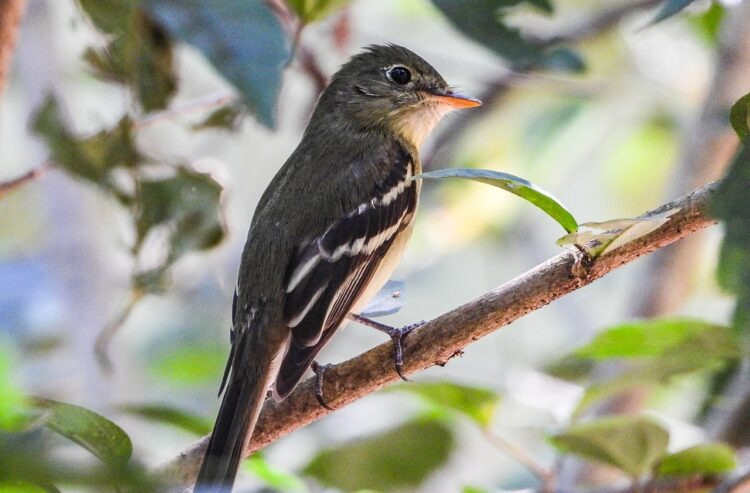
Match a mark you clearly saw to two or three rows. A white cheek and black cap mean chickadee. Striping across the body means Black-and-white Warbler. The Hairy Woodpecker is here as a larger Downy lookalike.
Chickadee, nuthatch or Black-and-white Warbler?
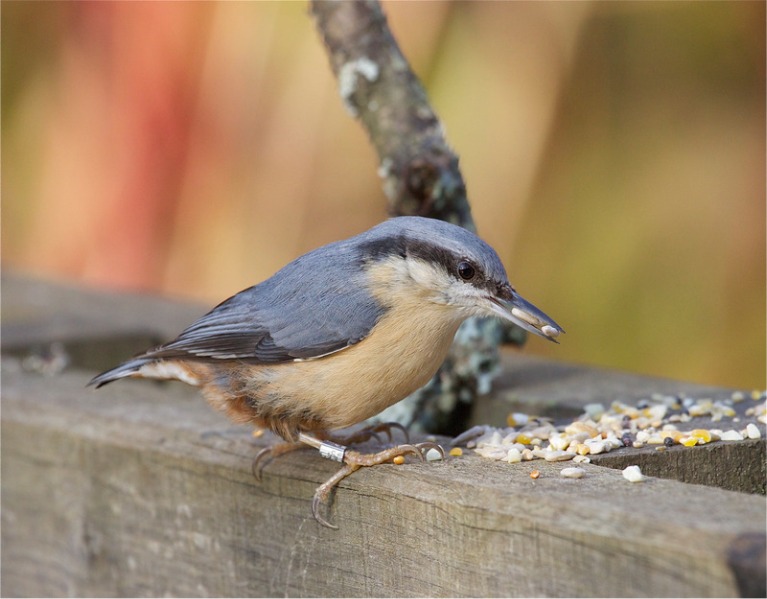
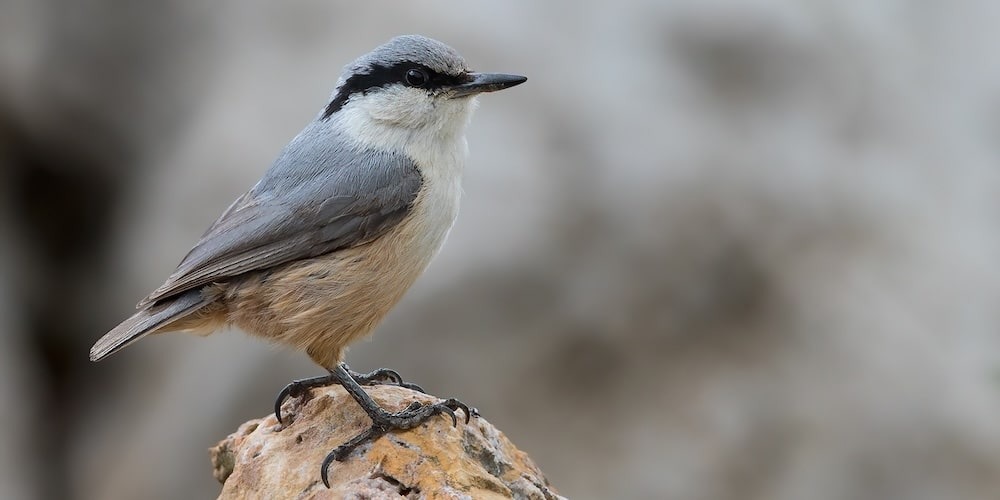
A bird creeping along bark is a White-breasted Nuthatch or a Black-and-white Warbler. The warbler moves much like a nuthatch, so bill shape and where the black and white fall matter most here.
Chickadees have a short bill, a black cap and bib, and prominent white cheeks. Black-capped and Carolina Chickadees share this face pattern, and both move acrobatically among twigs.
A White-breasted Nuthatch has a pointed, relatively long bill, a short tail, a white face and underside, and a blue-gray back. It measures about 5.1 to 5.5 inches long and moves in several directions around a tree trunk.
The Black-and-white Warbler is 4.3 to 5.1 inches long, with strong striping and a thin, slightly downcurved bill. It searches trunks and branches like the nuthatch, so get a clear look at the bill and the body pattern.
Adult male Black-and-white Warblers often show darker cheeks. Females and immature birds look paler, sometimes with a buff wash.
Downy vs. Hairy Woodpecker: Bill, size and tail
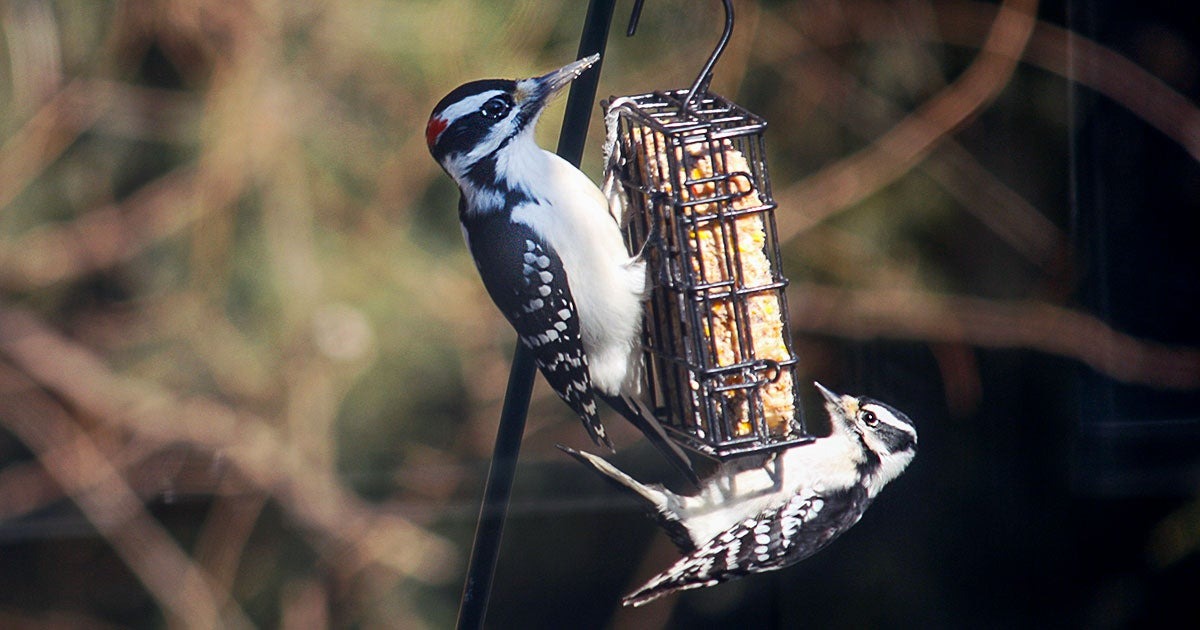
Downy and Hairy Woodpeckers look almost identical from behind. Start with how far the bill extends relative to the head. Body size and tail markings back that up.
The Downy Woodpecker and Hairy Woodpecker differ in these field marks:
| Field mark | Downy Woodpecker | Hairy Woodpecker |
|---|---|---|
| Length | 5.5 to 6.7 inches (14 to 17 cm) | 7.1 to 10.2 inches (18 to 26 cm) |
| Bill relative to head | Short and chisel-shaped | Longer, approaching head length |
| White outer tail feathers | Dark-spotted | Unmarked white |
| Back and wings | Central white back stripe and patterned wings | Similar contrasting back and wing pattern |
A clean side view settles the bill. Confirm with a size reference, and check the tail when the outer feathers are visible.
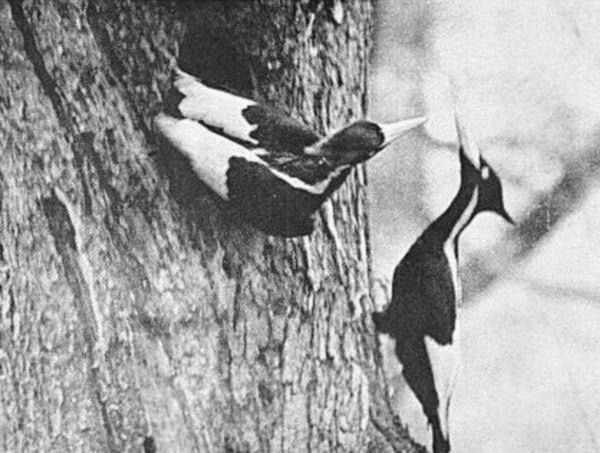
Spots disappear behind branches, a folded tail or blur, so a spotless tail in a poor photo proves nothing. Both species also vary by region, including darker or brownish Pacific forms.
A black-and-white-looking bird by water or in western woods
An upright bird with sooty-dark upperparts and a clean white belly, perching low beside a western waterway and pumping its tail, is a Black Phoebe. Cornell gives its length as about 6.3 inches (16 cm). In western woodland, look for a Black-throated Gray Warbler instead, with a gray back, strongly contrasting face and a small yellow spot near the eye.
Region and season can change the shortlist
Geography narrows the lookalikes. A Black-throated Gray Warbler is a western woodland bird, while Black Phoebes stay near water in their U.S. range. Black-capped and Carolina Chickadees look alike, so range is how you separate them.
Black-and-white Warblers migrate. They occur in forests and woodlots during migration and winter in regions that include parts of the southeastern United States, within a much broader wintering range. The month you saw the bird matters.
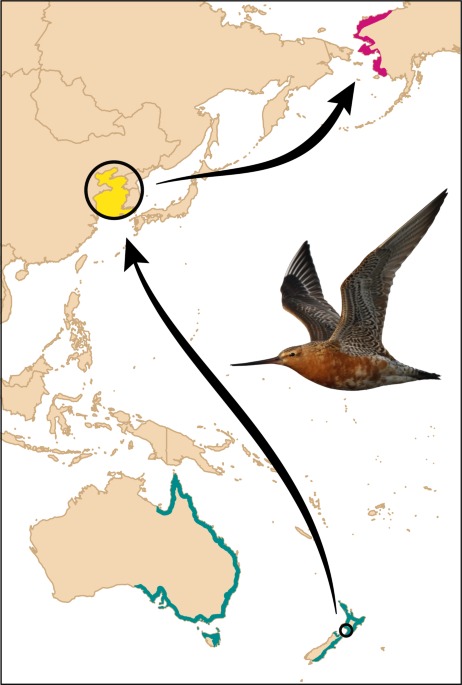
Check Cornell’s range guidance for your state and month, then compare it with nearby eBird reports. The range text gives the broad seasonal picture. eBird reports show birds that observers logged on specific dates and places.
An empty eBird search can come from your filters or from few observers in the area, so it doesn’t rule a species out.
What a poor photo or bird-ID app cannot settle
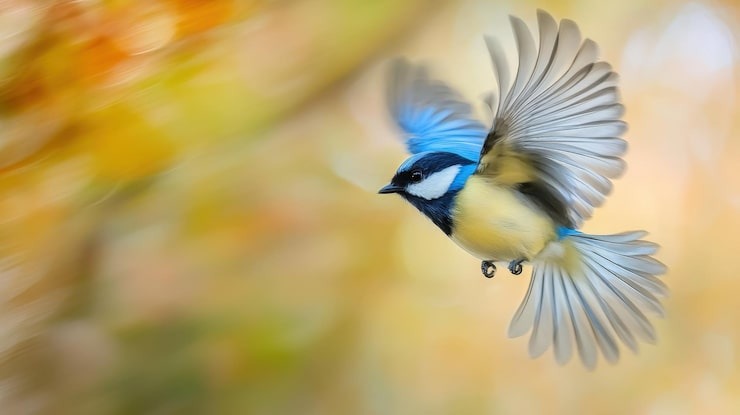
A through-window photo may show the white stripe on a woodpecker’s back while feeder bars hide the bill. The photo confirms the stripe and says nothing about the bill, which is the deciding mark.
- Crop: A tail outside the frame can’t show spotted versus unspotted.
- Angle: A bill pointing toward the camera looks shorter than it does in profile.
- Light and plumage: Shadow, sex, age and feather condition change the apparent contrast.
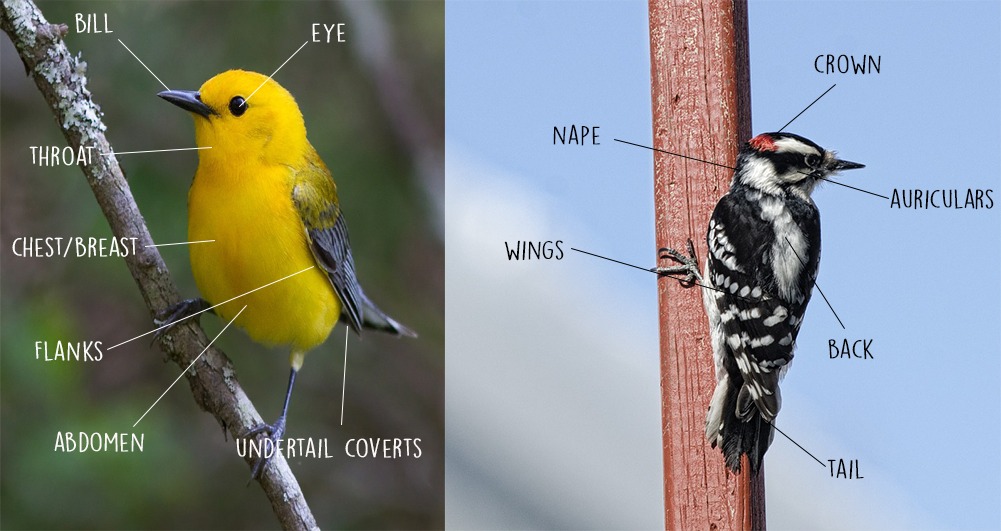
Merlin Bird ID’s Photo ID suggests matches. Compare each suggestion with the features you can see, especially the marks that separate it from the next likely species. If the image hides those marks, treat the suggestion as a guess.
If two suggestions disagree, find the feature that differs, such as a woodpecker’s bill length or the stripes on a bark-climbing bird. That is the detail your image leaves open.
If you’re still unsure, record one more useful observation
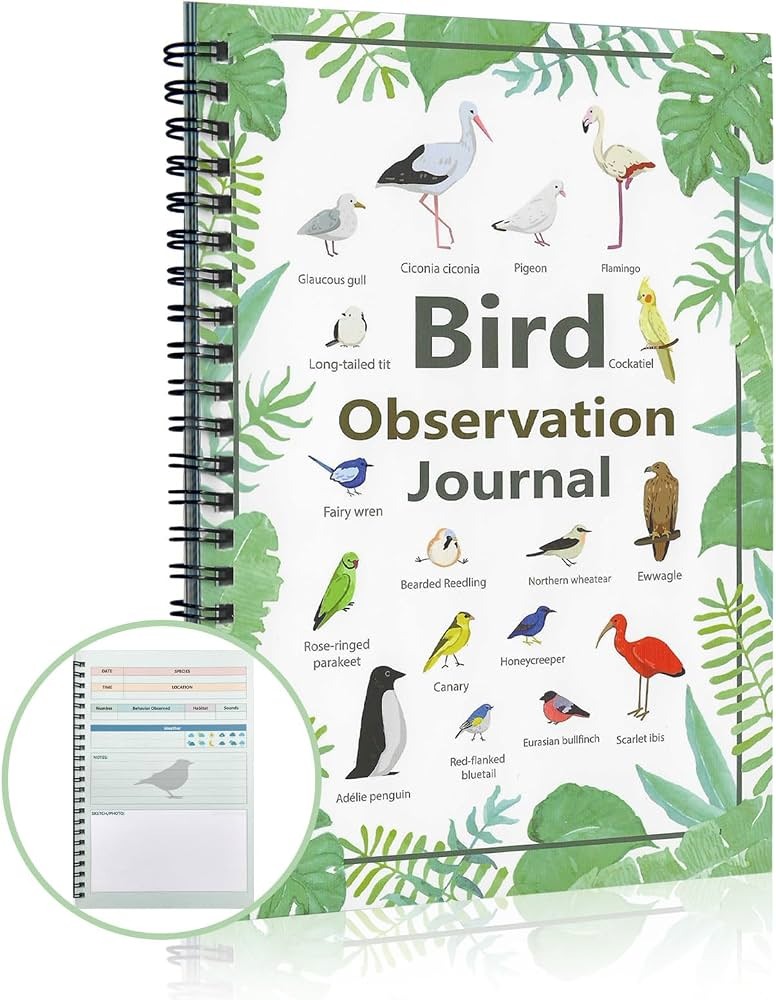
A good field note records what you saw and names the mark you missed. This entry is a fictional example of a bird moving along a tree trunk.
| Field-note item | Example entry |
|---|---|
| Setting | Pennsylvania woodland, September 14 |
| Observed | Small black-and-white-looking bird moving along a trunk |
| Unobserved | Clear bill profile and complete body pattern |
| Possible IDs | Black-and-white Warbler; White-breasted Nuthatch |
| Next useful detail | Side view of the bill and distribution of the striping |
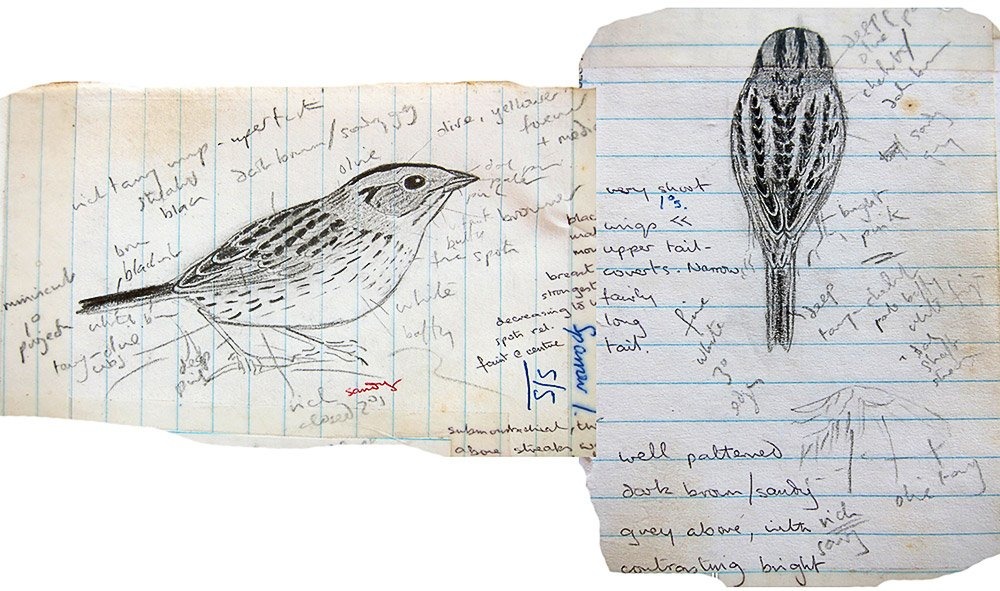
If the bird comes back, go for the missing angle or behavior from a comfortable distance, without chasing or disturbing it. One clear view beats several pictures of the same obscured feature.
For the full approach, see the bird-identification methods.