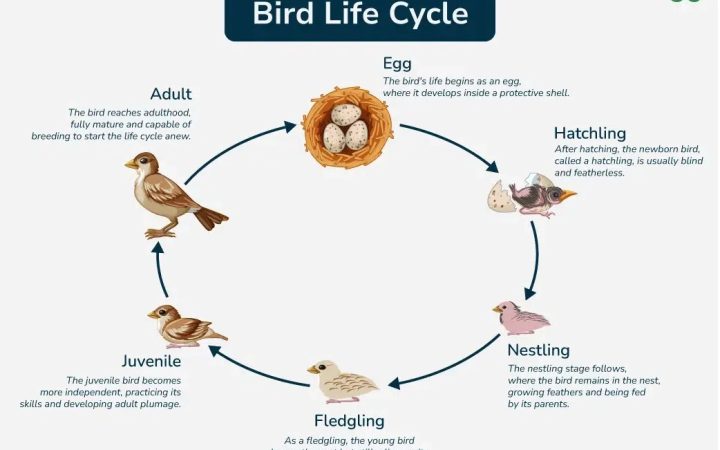
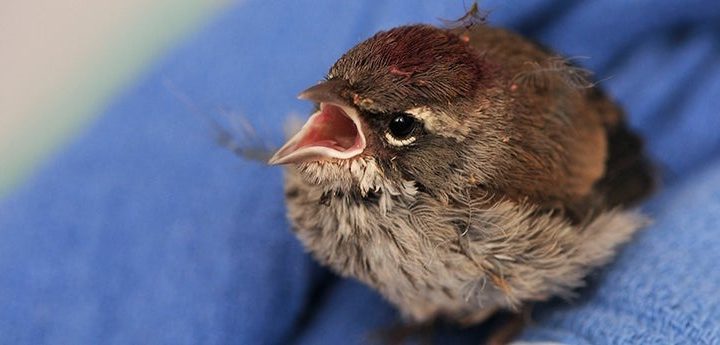
A mostly feathered bird that hops and flutters is a fledgling. Leave it near its parents. If a hazard is right there, move it a short distance to cover nearby. A sparsely feathered chick that looks healthy is a nestling: put it back in its own nest when you can do that safely. If the bird is injured or sick, a cat or dog has touched it or probably has, or you can’t reunite it safely, contact a licensed wildlife rehabilitator.
Some young birds on the ground look helpless but are fine. Others can barely stand.
Check for injury or animal contact first
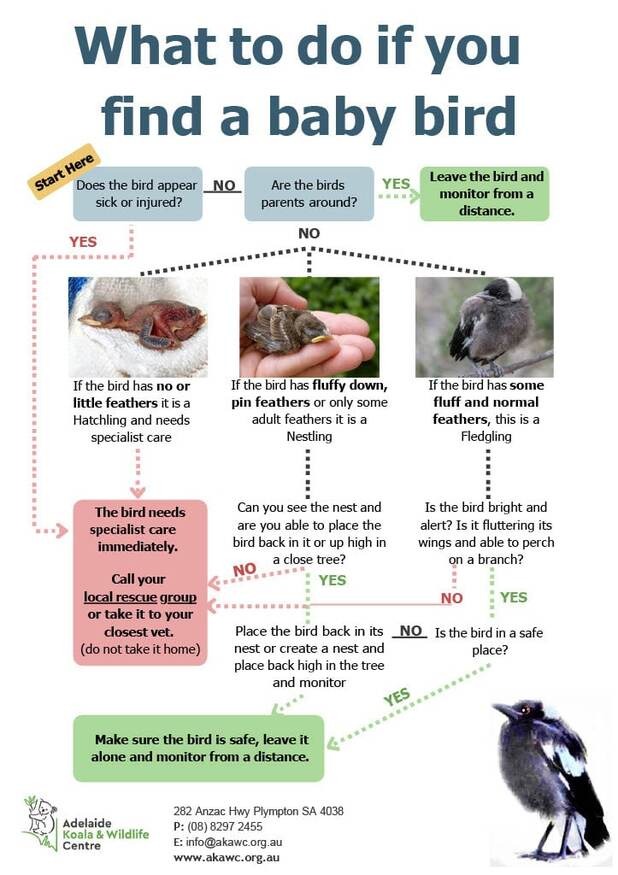
Check the bird first. Bleeding, a visible wound, collapse, a head it can’t hold up, or heavy distress means you need a wildlife rehabilitator.
The same goes if a cat or dog has touched it, or probably has, even with no wound in sight. A pet that only walked past isn’t contact. Just keep it away.
| What you notice | Your next step |
|---|---|
| Injury, illness, heavy distress, or cat or dog contact (known or likely) | Get a wildlife rehabilitator |
| Alert, mostly feathered songbird that hops or flutters | Leave it near its parents |
| Sparsely feathered songbird that can’t hop or stand yet | Return it to its original nest if you can do so safely |
| Chick on the ground again, or the nest is unusable | Reassess, then ask a rehabilitator for advice |
| Mobile duckling, gosling, quail, or similar ground-nesting chick | Use guidance for that species |
Is it a nestling or a fledgling?
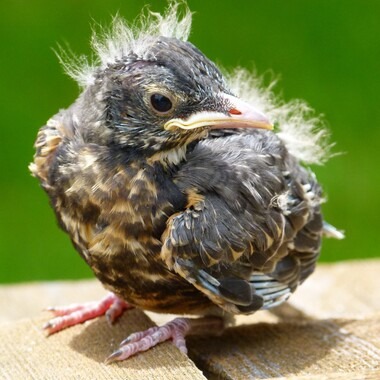
In a typical songbird, feathers and movement tell you which one you have. Nestlings still depend on a nest. Fledglings have left it, though they can be clumsy on the ground and poor fliers.
| Clue | Nestling | Fledgling |
|---|---|---|
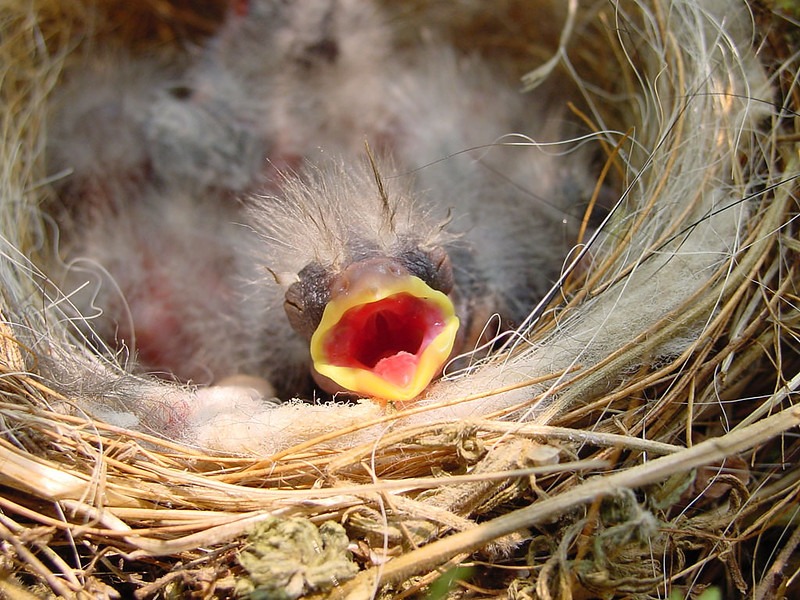
| Feathers | Bare skin, sparse down, or developing feathers | Mostly or fully feathered, sometimes with a short tail |
| Posture | Struggles to stand upright | Usually stands or perches |
| Movement | Little hopping or fluttering on its own | Hops, flutters, or makes short flights |
| Typical location | Still in a nest | Often outside the nest |
| If healthy | Return it to the original nest | Leave it near its parents |
A partly bare chick that can’t stand is a nestling. Illness or injury can look similar, so check for those too.
A 2018 study in Science Advances examined fledging age and wing development in Arizona songbirds. It explains why young birds leave the nest before they can fly well.
If the features don’t match or you can’t tell the stage, ask a wildlife rehabilitator. A clear photo or short video helps them assess the bird. For a closer look at feathers and movement, see the nestling-versus-fledgling guide.
If it is a healthy fledgling, leave it near its parents
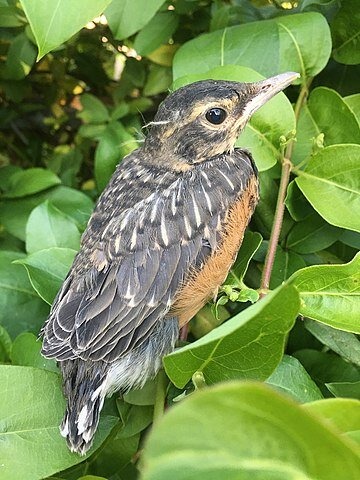
An alert fledgling in a safe spot belongs outdoors. Parents keep bringing food after it leaves the nest, even if it can’t fly far or land neatly.
A small robin hops between patches of grass, stands upright, moves away from you, and flutters toward a hedge. That’s a young bird learning to fly. Cornell NestWatch says parents keep feeding for a few weeks after fledging, depending on the species.
Taking a healthy fledgling indoors or carrying it to distant woods separates it from the adults caring for it. Leave it in its own area so they can find it.
Will its parents reject it if I touched it?Brief human handling doesn’t automatically make a parent bird abandon its chick.
What if cats, traffic, or another hazard threaten it?
Pets and roads can turn a normal fledgling situation dangerous. Keep pets away from the bird. If it’s on a road or driveway, move it briefly to nearby shelter if you can do that safely, and keep it where its parents can find it.
One finder in Florida described a young blue jay surrounded by outdoor cats and the frustration of finding help:
I know this is about animals that aren’t being touched, but I couldn’t let the cats eat the bird. The blue jay fledgling fell out of the nest but he’s not quite ready. He can fly for about four or five feet but he’s not going to make it on the ground with all the cats in my neighborhood. I’ve called three sanctuaries in my area, the Tampa Audubon and then animalcare.org and another number but it just forwarded me back to the Autobahn society and then the other one answered and said they aren’t taking new animals.
Never step into moving traffic or climb somewhere dangerous to reach a bird. If you can’t reduce the hazard without repeatedly taking the bird out of its parents’ area, ask a rehabilitator for advice.
If it is a fallen nestling, can you return it to the nest?
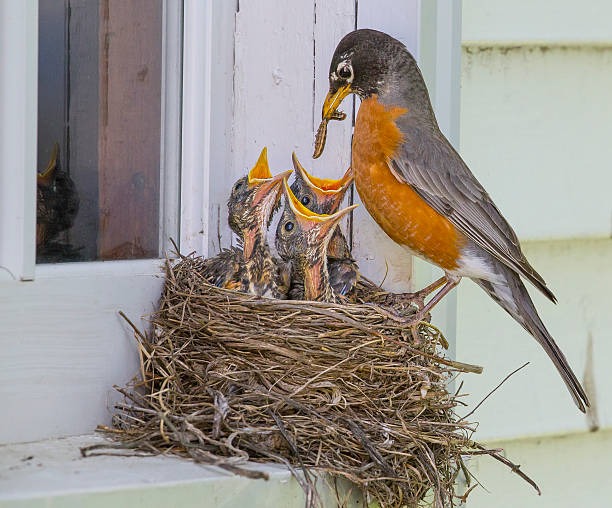
A healthy nestling can usually go back to its original nest. That means the exact nest it fell from, confirmed well enough that you don’t place it with unrelated birds.
- Identify the nest. A chick directly below a visible shrub nest is a clear case. One beneath several trees with multiple nests is not.
- Check that it is intact and safely accessible. Don’t climb risky heights or disturb a nest you’re unsure about.
- Return the chick. Then step away so the adults can resume care without anyone watching nearby.
Cornell Lab of Ornithology says to return a healthy fallen nestling to its original nest and to consider a replacement if that nest has been destroyed.
A securely placed substitute nest near the original location can let the parents keep caring for some nestlings. It depends on the chick’s stage, the species, where you put the nest, and what a rehabilitator advises. Very young, poorly feathered chicks may need their original nest or a rehabilitator’s care. If the original nest is destroyed or you can’t identify it, ask a rehabilitator before trying a substitute. For nests, eggs and fledglings, see the bird-nesting guide.
What if the chick falls again?
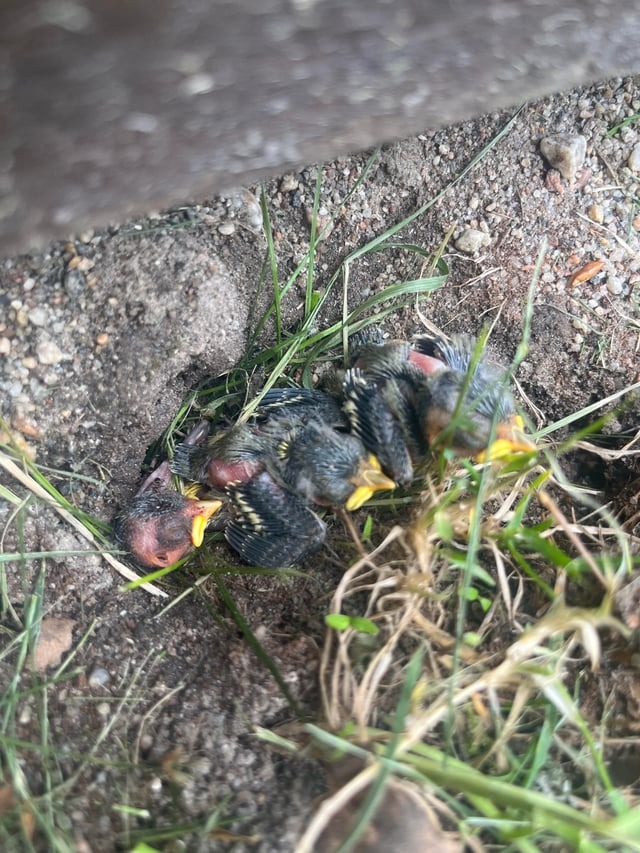
If a chick you returned is on the ground again, reassess it. It may have left as a developing fledgling. A chick that can’t stand or keeps falling needs expert attention. Don’t assume the parents gave up on it just because it fell.
A poster on r/Ornithology hit the same problem after a neighbor put a young bird back in its nest:
Hi all, so I found this bird in my yard yesterday. I can’t tell what’s wrong with it but it doesn’t seem to be able to get up. I had a neighbor come and put it back in its nest yesterday but this morning it was on the ground again. Is there anything I should do to help? I just moved it to the shade since it’s so hot today. I’m afraid if I put it back up it’ll just fall out again. Its mother is also flying around in the tree close to where the bird is.
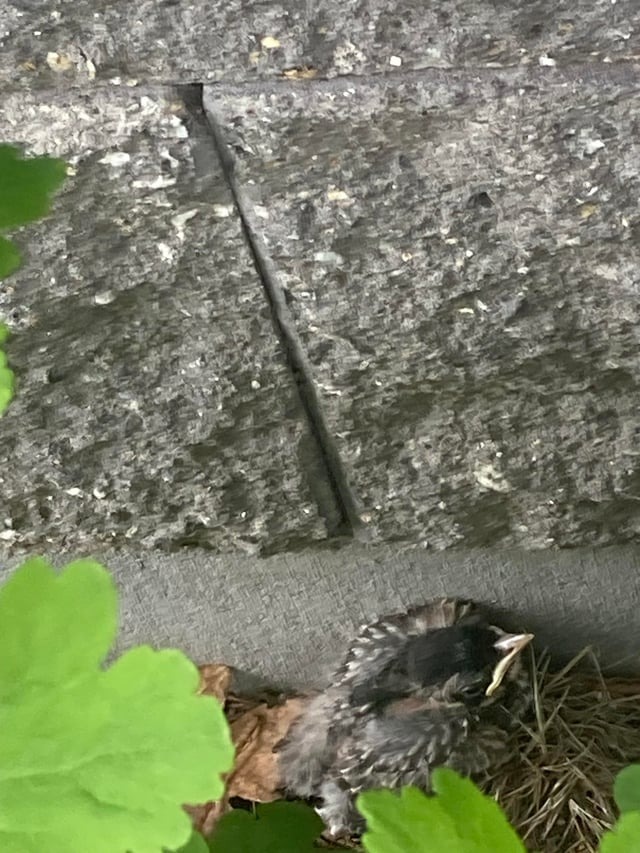
If the nest is unstable, the bird still can’t move well, or you can’t safely return it, ask a rehabilitator instead of repeating the same attempt.
How can you tell whether the parents are caring for it?
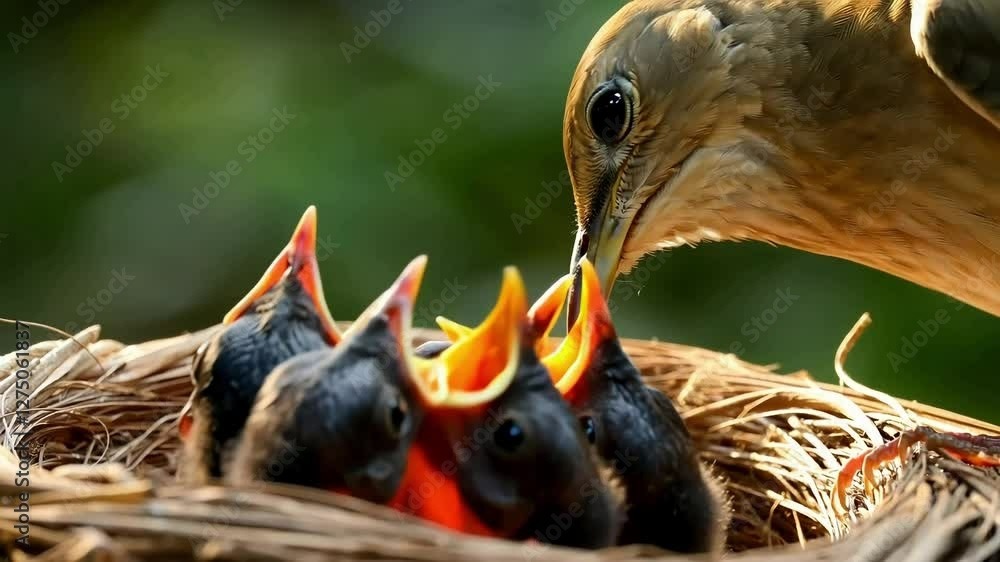
Parents may approach only briefly, and some keep their distance while a person or pet is close to the chick. For a healthy fledgling or a safely returned nestling, watch quietly from farther away, such as through a window.
An adult delivering food is better evidence of care than a bird simply passing through the tree. Cornell NestWatch advises giving parents room to approach their young.
If both parents are known to be dead, or the fledgling was moved away and can’t be reunited with them, contact a wildlife rehabilitator.
How long should I watch for a parent?There’s no fixed time. Tufts Wildlife Clinic describes about an hour in one substitute-nest monitoring situation, and other wildlife guidance notes that brief feeding visits are hard to witness. If the bird looks safe, keep watching. If it’s hurt or exposed, act sooner.
When songbird advice doesn’t apply
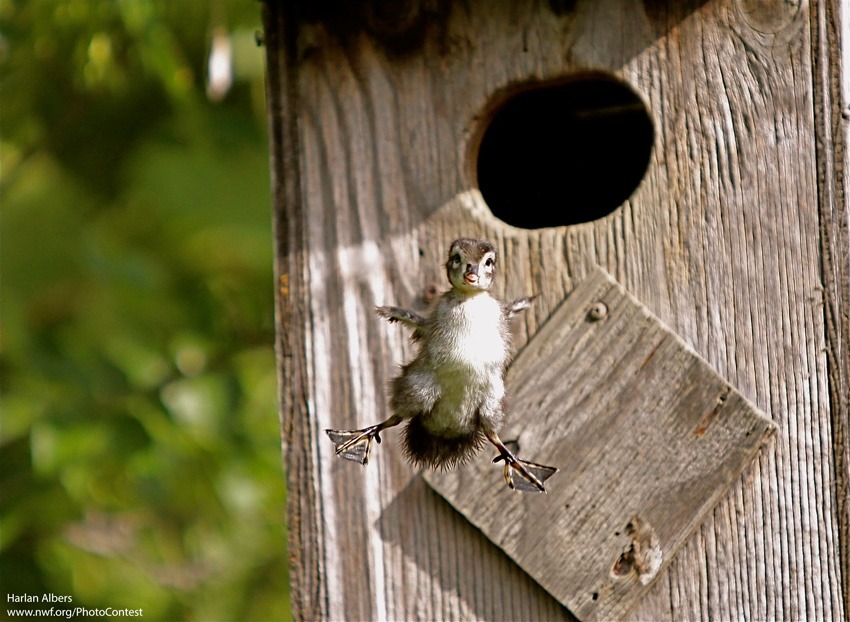
Ducklings, goslings, quail, and shorebirds such as killdeer hatch mobile and covered in down. They walk on the ground as part of normal development, and some species nest there. Don’t put a duckling near a pond or a killdeer chick on gravel into a tree nest because it looks young. If you’re unsure of the species or the family situation, check species-specific wildlife guidance before moving the chick.
How to find wildlife help and protect the bird meanwhile
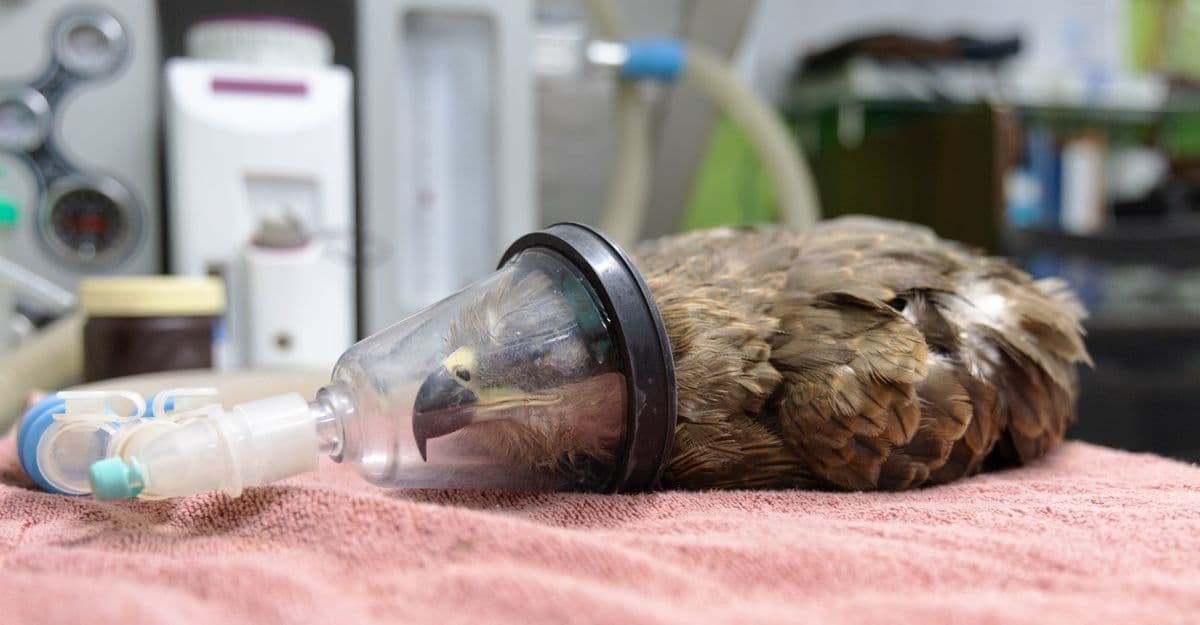
Contact a wildlife rehabilitator for an injured young bird, suspected cat or dog contact, or a reunion you can’t complete safely. The US directory Animal Help Now finds wildlife help by location. Contact details and accepted species vary, and a directory listing doesn’t guarantee admission or transport.
When you call, report what you saw and anything you’ve already done:
| Detail | What to report |
|---|---|
| Place and time | Where and about when you found the bird |
| Condition | Feathers, posture, alertness, movement, visible injury |
| Hazards and contact | Road, water, pets nearby, and known or suspected physical contact |
| Nest and parents | Whether you found the original nest and any feeding you saw |
| Previous steps | Any move, nest return, containment, feeding, or watering |
If the bird needs professional care and temporary containment is advised, Tufts Wildlife Clinic recommends minimal handling and a ventilated container in a quiet, dark place, with warmth suited to the situation. Don’t offer improvised food or water: an unidentified young bird can be harmed by the wrong food or by syringe watering.
The Migratory Bird Treaty Act protects many native wild birds and restricts unauthorized taking and possession of covered species. Keeping a wild bird to raise at home isn’t authorized rehabilitation.
To find a rehabilitator and handle an injured bird safely, read how to find appropriate help for an injured wild bird.