Wash seed and suet feeders on a regular schedule, clean nectar feeders more often, and refill only when every part is rinsed and dry. Wet food, visible mold, a damaged feeder, or a sick-looking bird means a routine wash is not enough. Check the feeder and the ground beneath it, then decide whether to disinfect, replace, or pause feeding.
Is this routine cleaning, disinfection, or a reason to pause feeding?
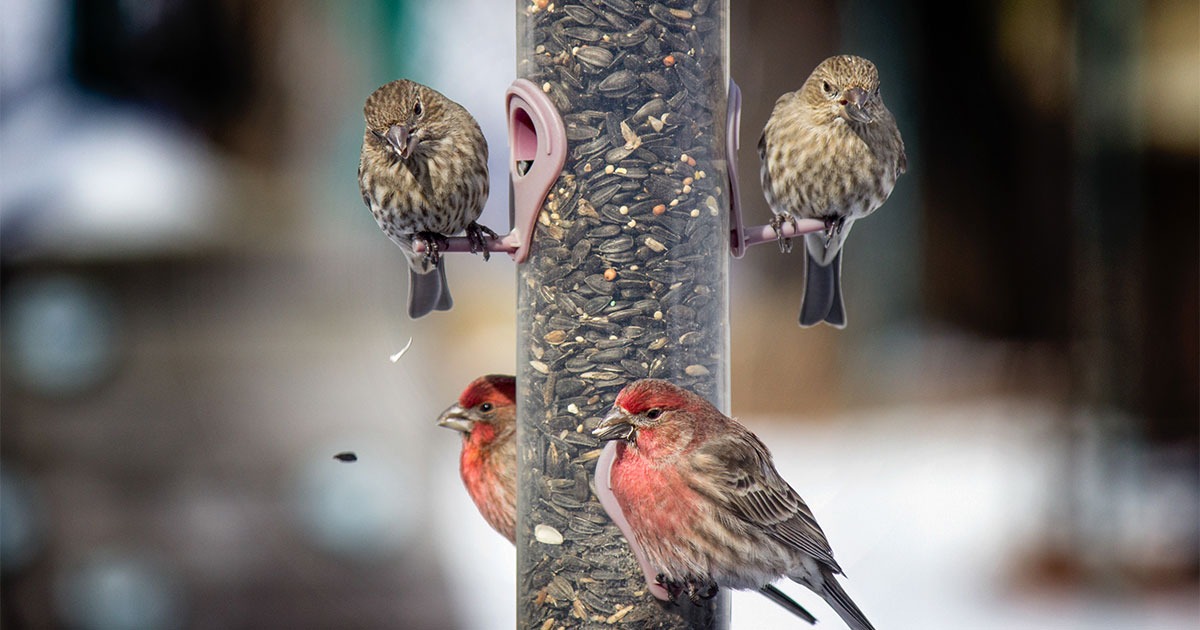
Seed dust on a feeder means a routine wash. A tube feeder packed with wet, moldy seed needs attention right away. If birds at the feeder look unwell, you also have a bird-health question to settle.
| What you notice | What it calls for | Next step |
|---|---|---|
| Seed dust, hulls, or light residue after normal use | Routine washing | Follow the washing steps |
| Wet food, visible mold, heavy droppings, or stubborn buildup | Throw out the contaminated food now, then disinfect or replace the feeder depending on its condition | See the disinfection and damage sections |
| Lethargic birds, crusty eyes, other worrying signs, or an official disease advisory | Extra hygiene, plus a separate decision about the birds | See the sick-bird section |
Rain blowing through a lid can soak the seed inside even while the outside looks clean.
Cleaning removes food and dirt. Disinfection treats suitable surfaces. A feeder that cannot be cleaned properly needs replacing.
How often should seed, suet, and nectar feeders be cleaned?
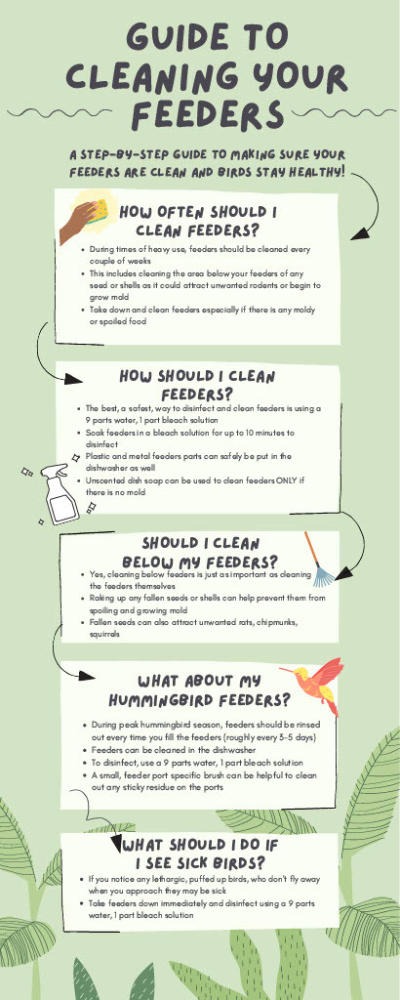
Cornell Project FeederWatch recommends washing seed and suet feeders every week or two and nectar feeders about every couple of days, ideally when you refill. Wet weather, heavy use, or visible contamination means washing sooner.
| Maintenance task | Cornell Project FeederWatch | Ornithological Council, February 2026 |
|---|---|---|
| Seed-feeder cleaning | Every week or two | At least monthly |
| Suet-feeder cleaning | Every week or two | Not specified |
| Hummingbird-feeder cleaning | About every couple of days, ideally at refilling | Weekly |
| Nectar replacement | Tied to frequent refilling and cleaning | Daily in hot weather; every 2 to 3 days in cooler weather |
The Ornithological Council sets a monthly minimum for seed feeders, while Cornell’s week-or-two schedule is more frequent. The sources differ, and no single interval fits every yard.
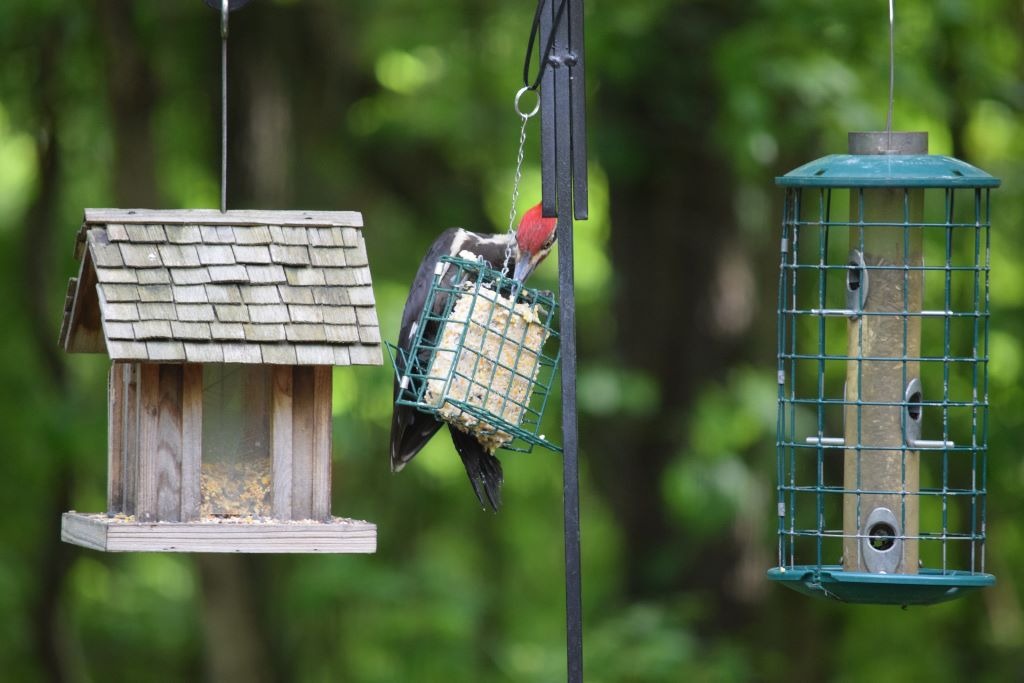
Changing nectar and washing the bottle are separate jobs. In hot weather the Council says to change nectar daily, even if the scheduled wash comes later.
Cornell All About Birds (August 2024) and University of New Hampshire Extension (February 2025) both say to clean hummingbird feeders weekly and replace nectar every 3 to 5 days, more often in hot weather.
How to wash and dry a bird feeder thoroughly
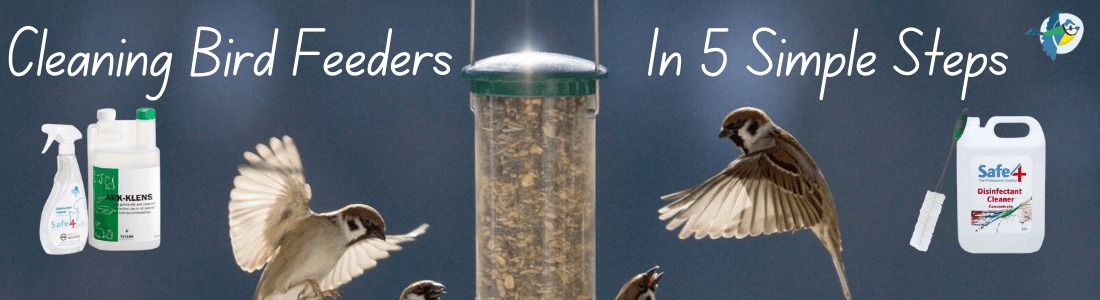
Empty the feeder, take apart whatever comes apart, scrub off residue, rinse well, and let everything dry completely before you add fresh food. A quick splash misses trapped seed dust, sticky film, and droppings around a port.
- Empty it completely. Throw out stale, wet, moldy, or contaminated food. Never top up a feeder over damp seed.
- Take it apart. Open lids and remove trays, feeding ports, and any other detachable pieces.
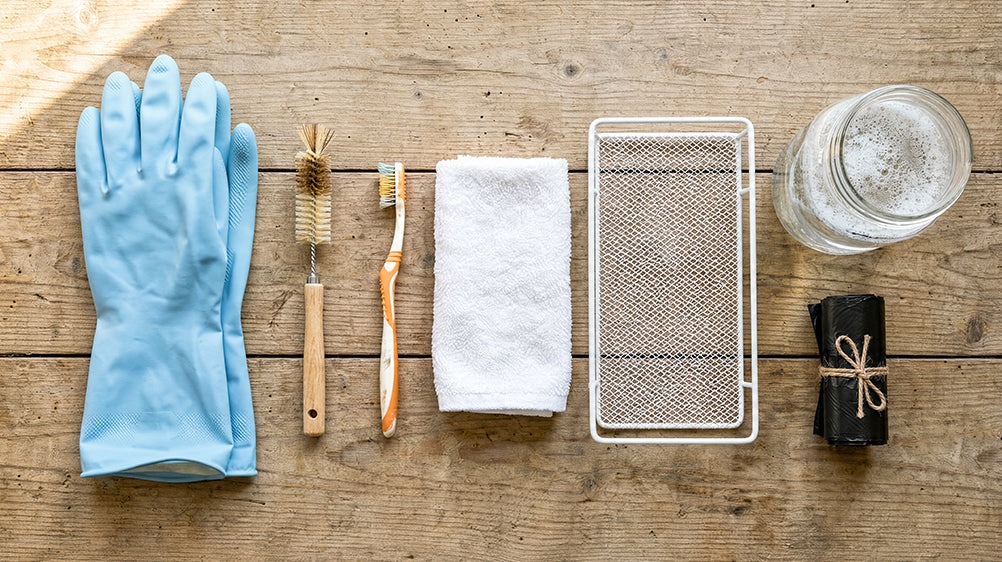
- Scrub every surface that touches food. Use warm water and dish soap for seed and suet feeders. A bottle brush or small toothbrush reaches corners and narrow openings.
- Rinse thoroughly. Flush out loosened material and soap residue, including from seams and removable parts.
- Dry completely before refilling. Check the tray and hollow pieces for trapped water, and reassemble only when everything is dry.
- Clean your hands and tools. The Ornithological Council recommends working outdoors or at a utility sink away from food preparation when possible, with gloves as appropriate.
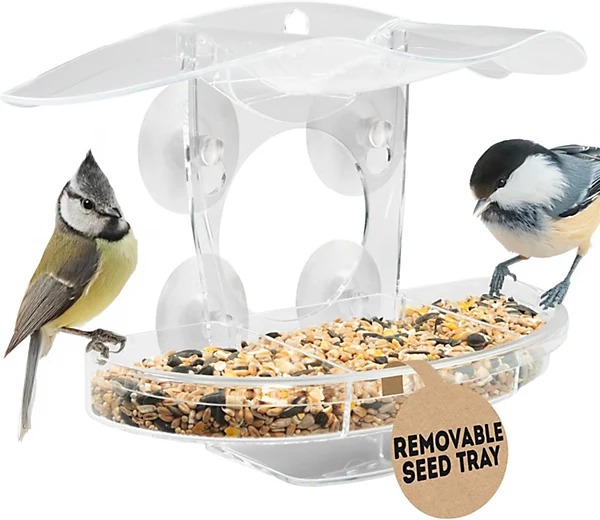
A large hopper feeder may not fit into a household sink. An outdoor washing container or a utility sink gives you room to clean its parts without bringing dirty equipment into a food-preparation area.
Some feeders tolerate a dishwasher. Others have plastics, seals, finishes, or metal parts that do not, so check the manufacturer’s instructions before using a hot cycle. Cornell advises against designs you cannot wash thoroughly, including wooden feeders that hold grime in surfaces you cannot reach.
When to disinfect: bleach, vinegar, and chemical safety
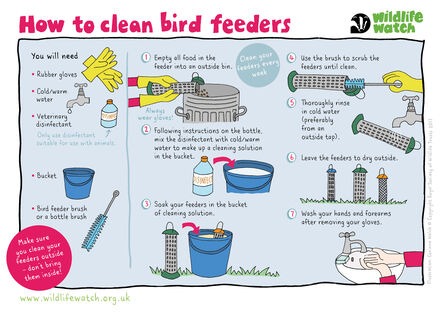
The Ornithological Council separates lightly soiled feeders, which need soap scrubbing or a 10-minute soak in a 10% bleach solution, from feeders with heavy debris or feces, which need both scrubbing and a bleach soak.
| Approach | Use in feeder care | Limit to remember |
|---|---|---|
| Warm water, dish soap, and scrubbing | Routine removal of food residue and dirt | Rinsing alone can leave stuck material behind |
| Bleach solution after cleaning | Disinfects compatible parts when needed | Follow the protocol and contact time, then rinse and dry |
| White vinegar and water | A cleaning alternative described by UNH Extension | Not shown to disinfect as well as bleach |
Cornell’s bleach procedure
Cornell FeederWatch describes an optional soak for parts you have already cleaned: mix one part regular household bleach with nine parts water, immerse compatible parts for 10 minutes, rinse carefully, and let them dry completely. Check the feeder’s material and the bleach label first.
University of New Hampshire Extension gives its own 1:9 bleach procedure with a 15-minute soak, plus a separate 1:1 vinegar-and-water cleaning option.
In a 2018 experiment by Feliciano, Underwood, and Aruscavage, debris interfered with measured Salmonella enterica reduction on experimental feeders, and bleach-based approaches generally cut bacterial counts more than soap alone. The study measured bacteria on lab-contaminated feeders. It did not measure how many infections in wild birds were prevented.
Chemical safety
Never mix bleach with vinegar, ammonia, dish soap, or other cleaning products. The CDC’s bleach safety guidance warns that mixing bleach with other cleaners can release dangerous vapors. Ventilate the area, wear suitable protection, follow the product label, and skip formulations that don’t suit the job.
If the feeder has surfaces you cannot reach or materials that cannot take the treatment, replacing it is safer than reaching for harsher chemicals.
Hummingbird feeders: spoiled nectar and hidden ports
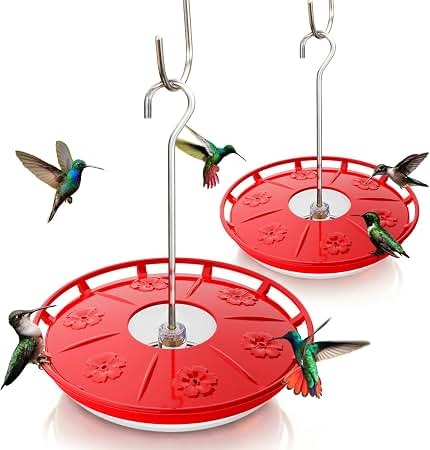
Cloudy nectar or black mold means you should pour out the sugar solution and clean the equipment right away. Nectar goes bad faster in warm weather.
After you replace the nectar and wash the bottle, check the flower-shaped feeding ports, the narrow bottle neck, the seals, and the small recesses around each opening. Residue collects there. Use a narrow brush on any crevice you can reach, and look closely at parts that detach from the base.
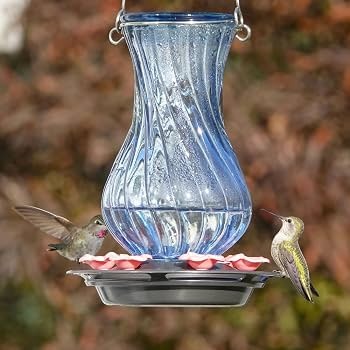
Cornell’s guidance on detergent differs. Its August 2024 All About Birds instructions advise against soap for hummingbird feeders, while Project FeederWatch allows warm soapy water followed by thorough rinsing.
If you cannot reach those ports, retire the feeder. For sugar-water preparation and handling, see preparing and managing hummingbird nectar.
What to do when mold keeps returning or parts are damaged
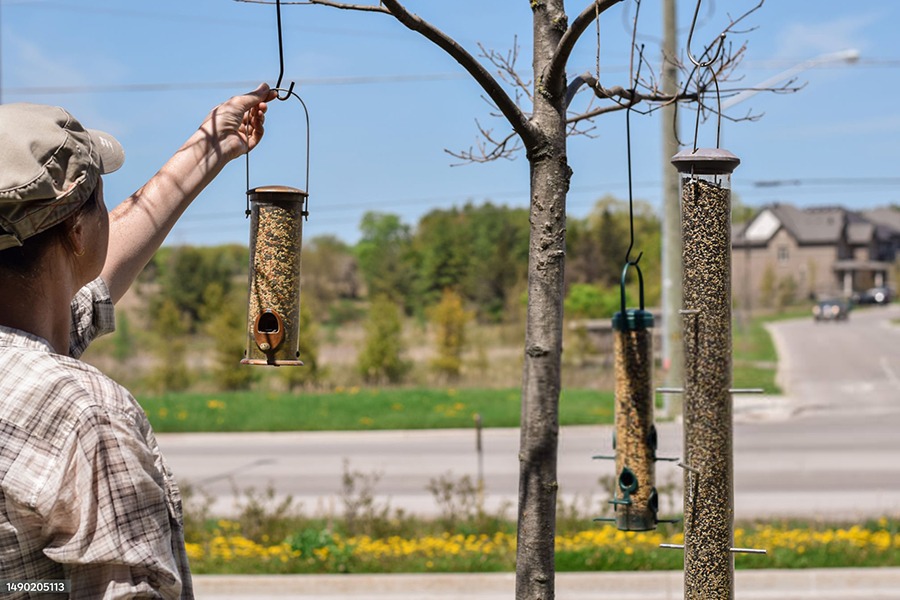
Mold that keeps coming back after cleaning means water is getting in or staying in. Cracks, poorly fitting lids, and joints you cannot reach can make a feeder unfit for further use.
- Water-entry points: Look for cracked plastic, loose lids, separated seams, or holes that let rain into the food compartment.
- Trapped moisture: Check the base, feeding ports, and joints where water stays after washing or rain.
- Unreachable debris: Ask whether a brush can reach every surface that touches food.
- Drainage: Watch whether wet material keeps settling in a tray or at the bottom of a tube.
- Food before loading: Check whether the seed was already damp in storage, which is a separate cause.
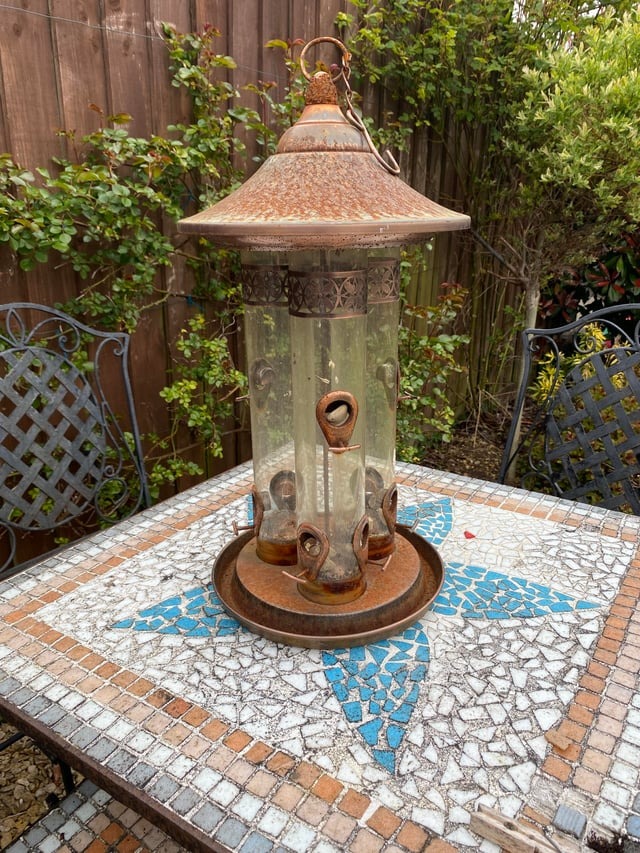
A feeder with cleanable surfaces and good drainage can stay in use. A damaged feeder that keeps admitting water, or one whose food-contact areas you cannot reach, should be replaced. For siting choices that affect rain exposure, see safe bird feeder placement.
Clean the ground beneath the feeder, not just the container
Spilled food, papery hulls, and droppings pile up under an otherwise clean feeder, and birds still pick through them, especially wet debris after rain.
One backyard feeder owner replaced a hard-to-clean feeder and then found sunflower skins collecting beneath the new one.
I had a birdfeeder that I really liked, and I occasionally found that it was growing mold inside it. I when I saw the mold was starting I would dump it and clean it out as best I could, but the design made it very difficult to clean so I got one that is easy to take apart and clean thoroughly. The birds love it, I love it. I use a no-mess blend of cracked sunflower and peanuts, but it turns out that the papery skins from the sunflower is the thing that was causing the mold in the feeder to begin with. The skins are now falling to below the new feeder and causing mold on the ground below it. I like that the mold isn’t IN the feeder anymore, but now I have to figure out how to prevent it on the ground where they are hopping around.
Cornell FeederWatch recommends wearing a mask when you rake or sweep beneath feeding stations and birdbaths. The Ornithological Council advises collecting and disposing of accumulated debris at least monthly. Use a rake or broom to gather wet seed, fallen hulls, and droppings, and do it sooner after rain or heavy spills.
Do not spray bleach on soil or grass. The bleach soak is for feeder parts only. If the seed was damp before it went into the feeder, see bird seed storage and spoilage for that separate problem.
What changes when a bird at your feeder looks sick?
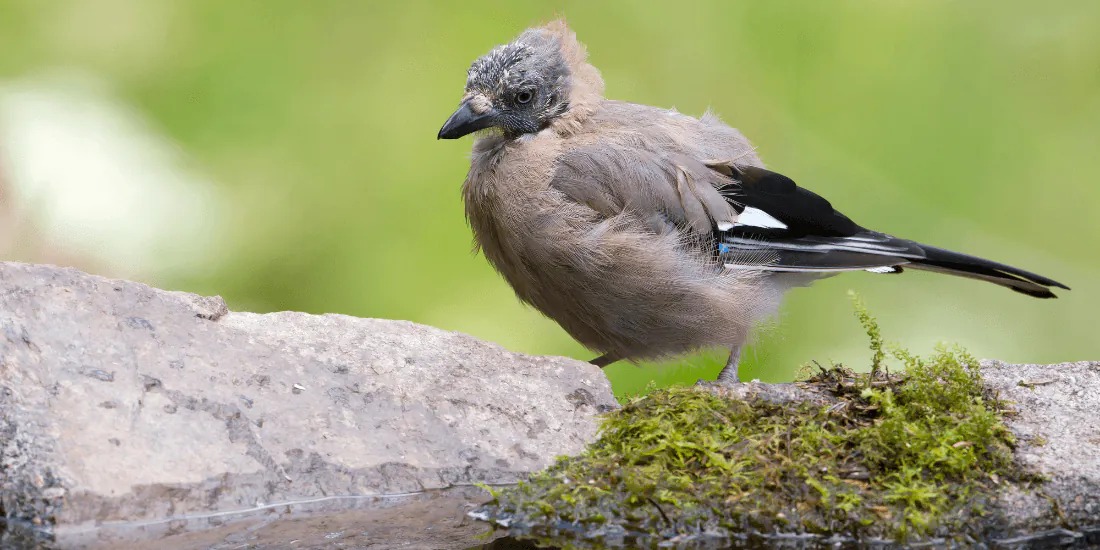
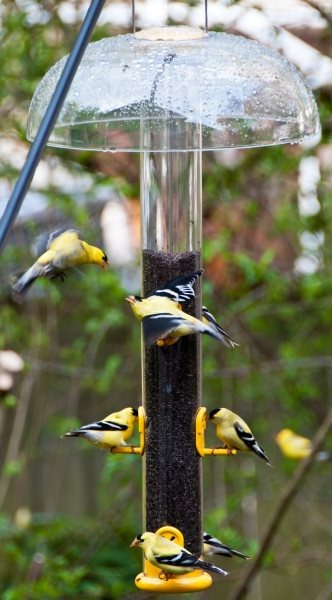
A lethargic bird or one with crusty eyes means you should take more care with your feeding equipment. Cornell FeederWatch also lists fluffed feathers and abnormal growths as warning signs. Appearance alone cannot tell you which disease a bird has, if any.
How a disease spreads changes what you do to the feeder. Cornell recommends extra attention to cleaning and disinfecting tube-feeder ports when you see conjunctivitis. Where a fecal-oral disease has been identified, Cornell advises considering retirement of tray feeders that can collect droppings.
Should the feeders come down?
The Ornithological Council suggests pausing feeding for a couple of weeks when birds show signs of disease. Cornell FeederWatch adds a neighborhood factor: where many neighbors run feeders, taking yours down can push birds to another crowded feeding station, and where few do, removal can reduce crowding.
If you suspect illness or an outbreak, check guidance from your state wildlife or public-health agency, especially if it has issued an advisory. For the wider response to an unwell bird, see sick birds at feeders. For the separate decision about stopping and resuming supplemental feeding, see when to remove bird feeders.
Cleaning equipment is preventive maintenance. It does not treat a sick bird.
A bird feeder routine you can maintain
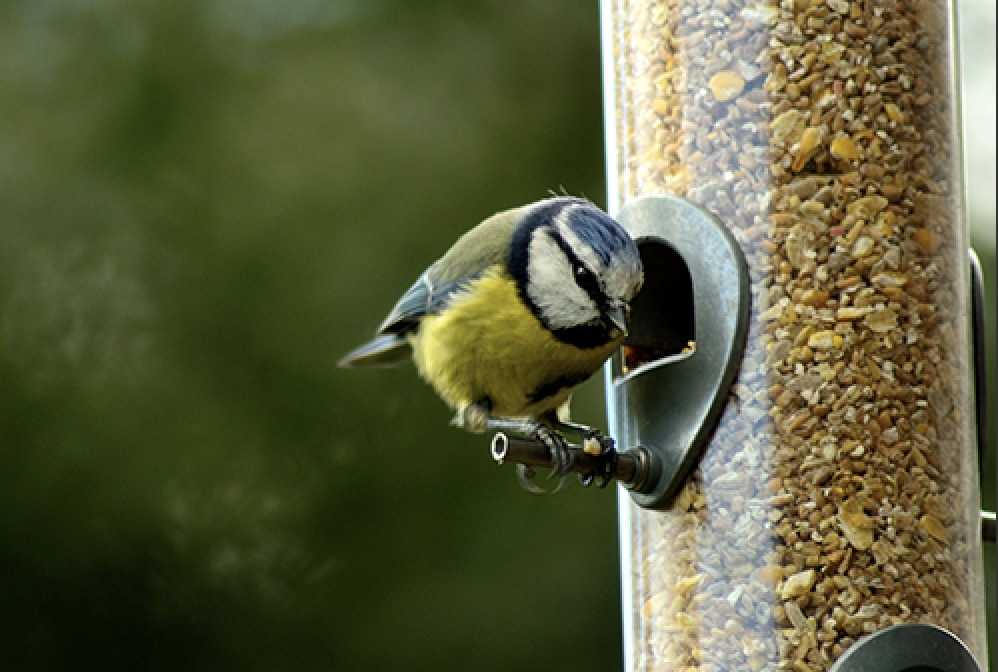
University of New Hampshire Extension suggests putting out only what local birds can eat in a day. Cornell FeederWatch supports seasonal feeding when constant upkeep is impractical, and locally native plants are another option.