For most U.S. households, feeding backyard birds in winter is optional, but it helps most during prolonged snow, ice, or severe cold, as long as you can keep the station safe. Pause or skip the feeder if wildlife hazards, illness, local restrictions, or nearby poultry make it a bad idea.
Do Backyard Birds Need Supplemental Food in Winter?
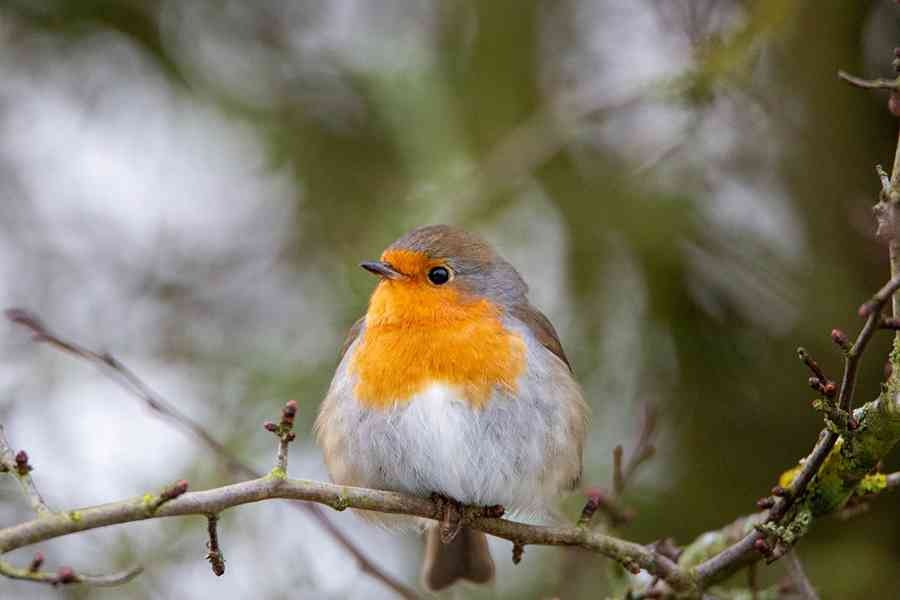
Most wild birds find their own food all winter. Even the seed-eaters that visit feeders treat yours as one source among many. It matters most when ice covers natural food or a long cold spell makes foraging hard.
A mild yard with standing seedheads and berries can give birds plenty to eat without a feeder. Where snow or ice buries those for days, the food you put out matters more.
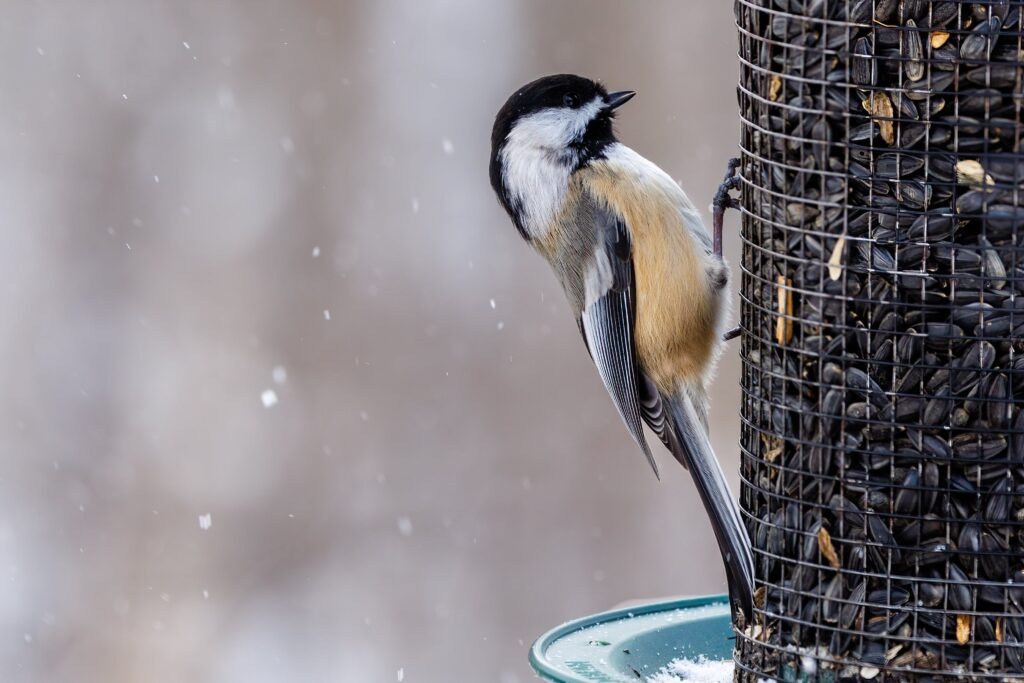
In a 1988 study published in Ecology, Margaret Brittingham and Stanley Temple followed Black-capped Chickadees in Wisconsin over the winters from 1982 to 1985. The research included 418 birds with supplemental food access and 158 controls.
Overwinter survival was 69% for the supplemented group and 37% for the controls. The difference showed up mainly in months with more than five days below approximately 0°F (−18°C).
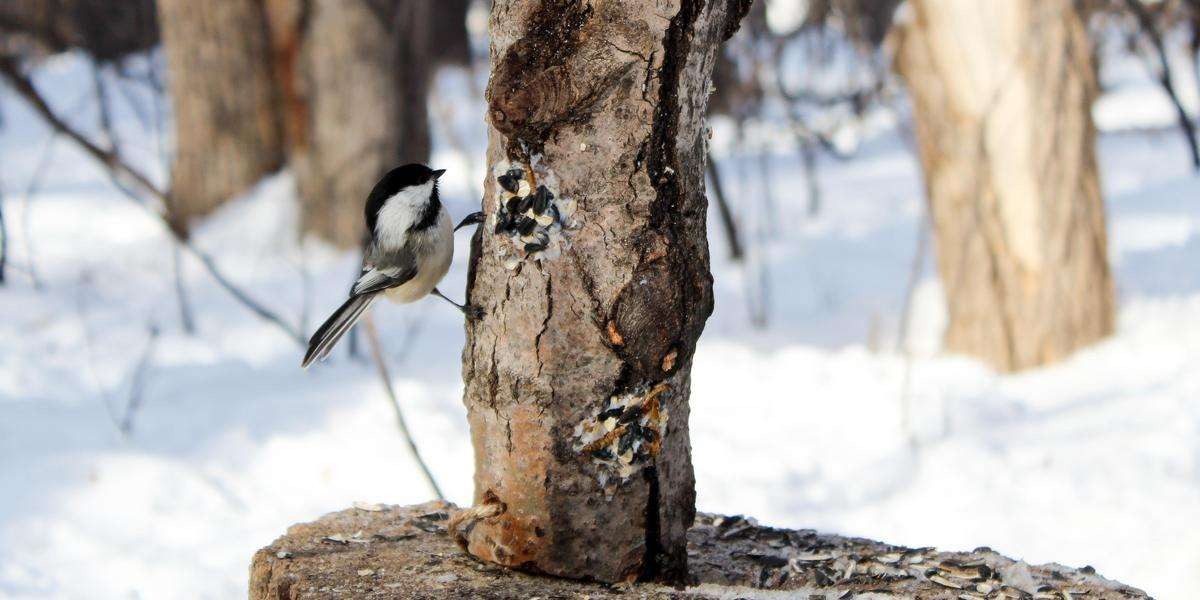
These numbers come from one species in one Wisconsin climate, so they won’t predict survival in your yard. The published chickadee study still shows when feeders count most: long cold spells.
Native plants with persistent seeds or berries, standing vegetation, and leaf litter also help, including birds that never visit a seed feeder. Plant choices depend on your region; the guide to native plants for backyard birds covers that longer-term approach.
When Should You Start Winter Feeding, and When Should You Stop?
No single date works across the United States. Snow and ice can linger in northern states while a southern yard still offers natural food. Weather, local species, and wildlife activity decide whether feeding is useful and safe.
Audubon treats feeders as one of several food sources for typical seed-eaters. University of New Hampshire Extension puts more weight on keeping an established feeding program going through a hard late winter.
In a routine spring transition, reduce or end feeding once conditions moderate and natural food is readily available. If you must stop while natural food is still scarce, UNH advises cutting back gradually. A new hazard changes that: bear access or a local wildlife restriction can call for removing feeders right away, even mid-season.
In Connecticut, guidance updated in March 2024 describes mid-December through late March as a possible feeding window in areas with low bear activity, although bears may remain active in winter. The Connecticut winter-feeding guidance applies to that state alone.
Check your state wildlife agency’s seasonal and bear guidance before you set opening and closing dates, and adjust when local conditions change.
Which Food and Feeder Should You Choose for Winter Birds?
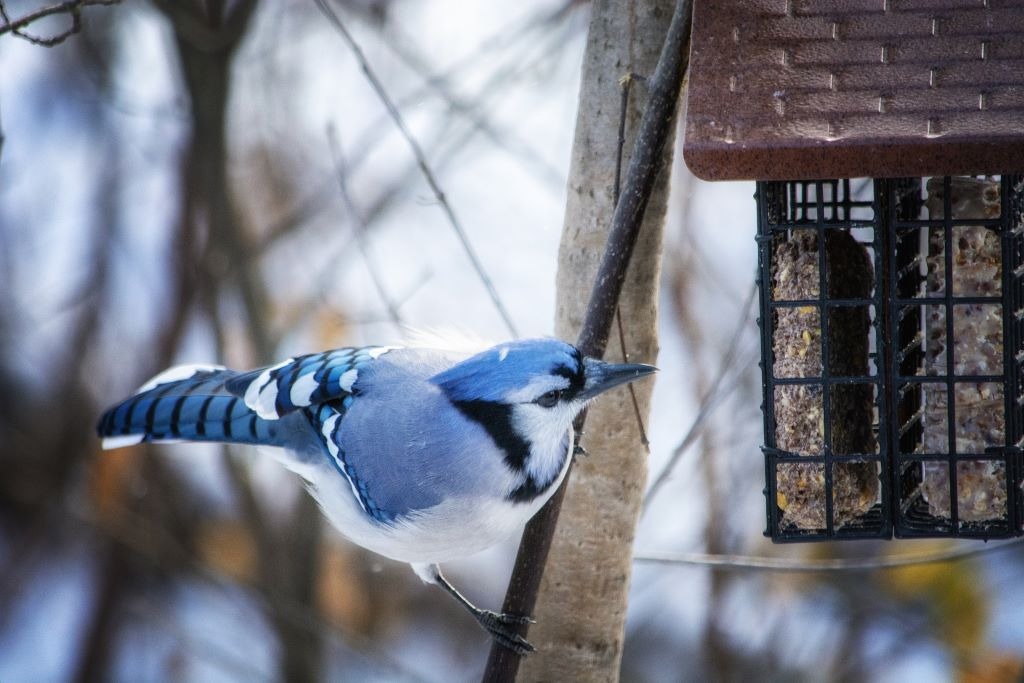
Start with the birds that visit your area, then match food and feeder to them. Black-oil sunflower seed in an easy-to-clean feeder is a good first choice for many familiar seed-eaters. Specialized foods make sense once their intended visitors show up.
| Food | Likely visitors | Feeder | What to watch |
|---|---|---|---|
| Black-oil sunflower | Cardinals, chickadees, and other seed-eaters | Tube, hopper, or platform | Keep seed dry |
| Nyjer | Some finches | Small-port nyjer tube or sock | Check that finches visit |
| Suet | Woodpeckers, nuthatches, and some other visitors | Suet cage | Check condition as temperature and moisture change |
| Millet and small seeds | Some sparrows, juncos, and ground-feeding birds | Tray or controlled feeding area | Don’t let spilled food build up |
Cornell Project FeederWatch documents these preferences in much greater detail, and the guide to choosing bird seed goes through each food.
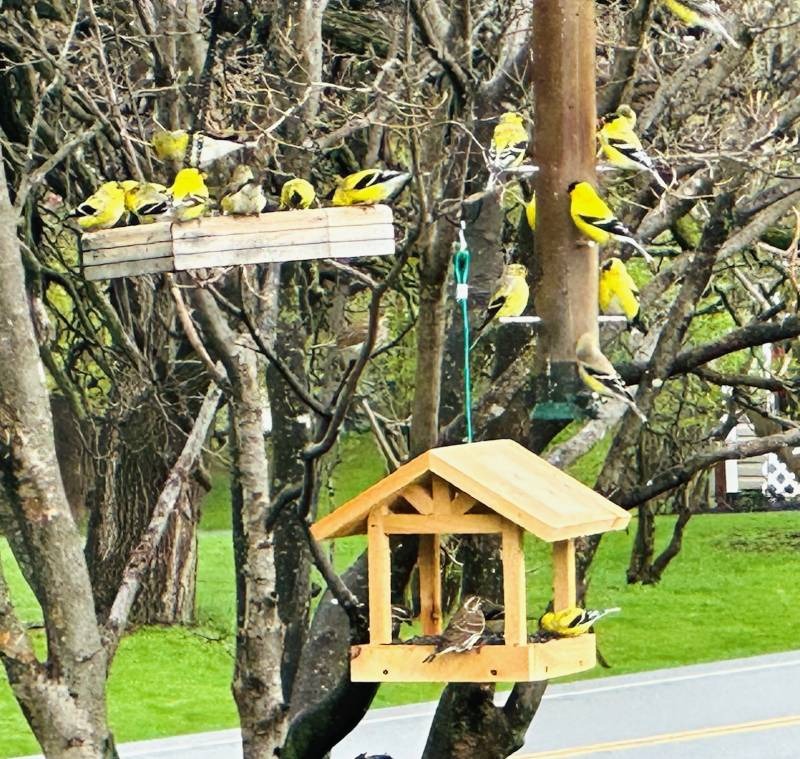
Hulled sunflower seed has its outer shell removed, while black-oil sunflower is usually sold with the hull on. Hulled seed leaves fewer shells but spoils faster when damp because the kernels are exposed.
A broad tray serves birds that avoid narrow feeder ports, though the food sits exposed to weather and spills. A suet cage holds food that can’t pass through ordinary seed ports.
Where Can You Place a Winter Feeder Without Adding Hazards?
Placement affects collision risk, predators, and how much food lands on the ground. The right seed in the wrong spot is still a hazard.
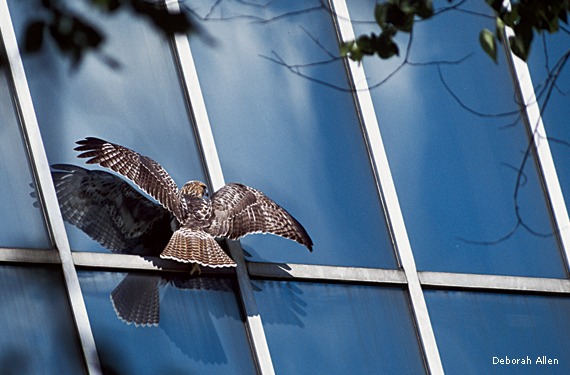
Windows are a particular concern. Birds moving between shelter and food can mistake reflective or transparent glass for open space. A common guideline puts feeders within about 3 feet (0.9 m) of glass, or more than 30 feet (9.1 m) away. Up close, birds have less room to build speed before a collision, though dangerous glass may still need treatment.
Visible exterior dots or tape help birds see a window as a barrier. Cornell recommends patterns with elements no more than about 2 inches (5 cm) apart. Put the markings on the outside surface, where they break up misleading reflections.
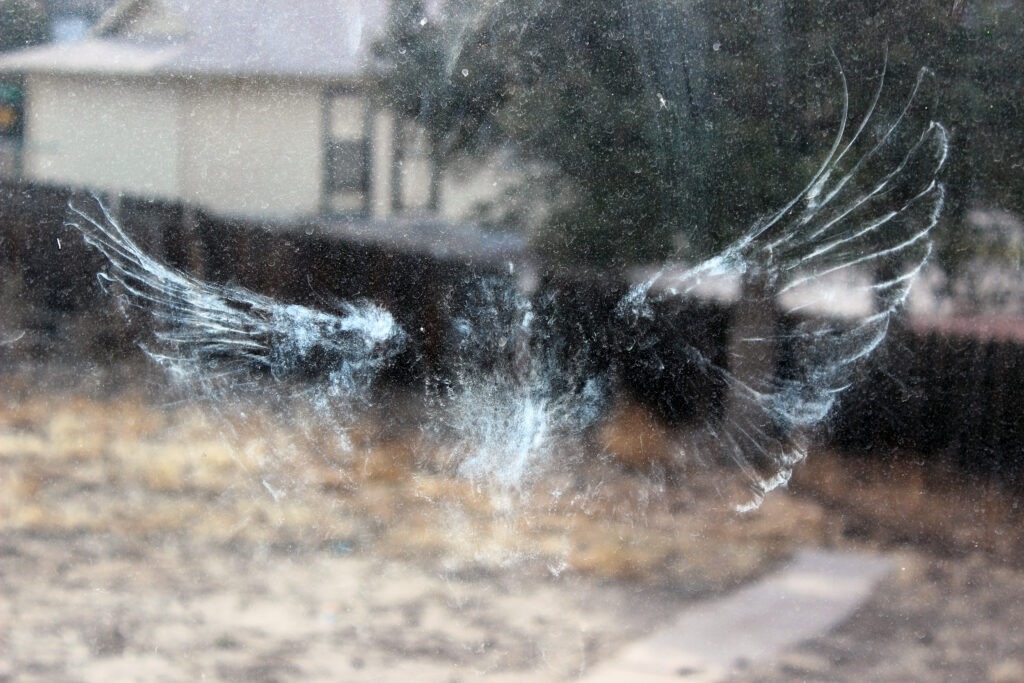
Look at what lies below and beside the feeder. Dense cover gives cats a place to ambush visitors, and hawks may hunt birds gathered at a feeding station. Seed, hulls, and droppings piling up under a tray attract rodents, especially when ground cover hides the mess.
How Do You Keep Winter Feeders Clean and Food Dry?
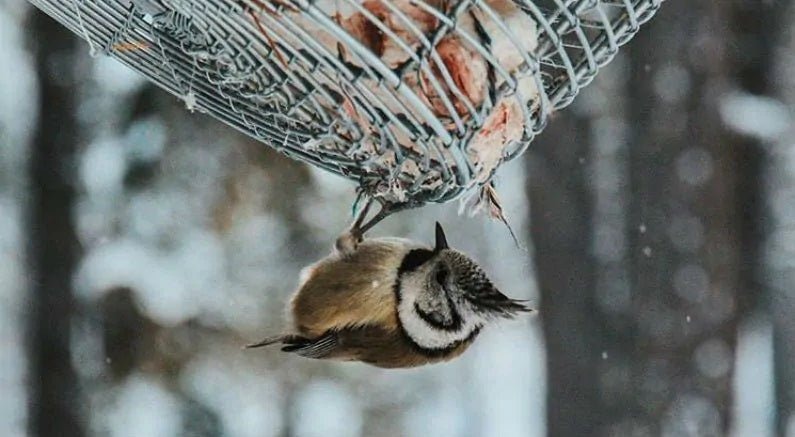
Clean winter feeders even when freezing weather makes it a chore. Cornell Project FeederWatch recommends cleaning seed and suet feeders about every one to two weeks, more often with heavy use or wet conditions.
- Empty: Discard spoiled, wet, or visibly contaminated food right away and remove accumulated seed hulls.
- Disassemble: Open removable trays and ports so feeding surfaces are accessible.
- Wash: Scrub with warm water and soap, paying attention to openings and corners.
- Rinse and dry: Remove washing residue and let the feeder dry fully before refilling.
- Clear the ground: Remove substantial seed waste and droppings beneath the station.
Protect yourself while you work. Cornell recommends gloves when handling feeders and washing your hands afterward, plus a mask when sweeping or raking debris beneath the station.
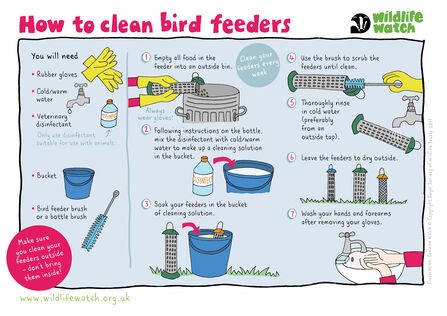
A frozen outdoor faucet makes cleaning awkward. Bring a removable tray or disassemblable tube feeder to an indoor cleaning area.
Feeding stations gather birds in one place, where infectious material can build up. The Cornell FeederWatch cleaning instructions cover disinfection and more detailed procedures. For a full cleaning and disinfection routine, see the guide to cleaning bird feeders safely.
What Should You Do With Feeders Before, During, and After a Snowstorm?
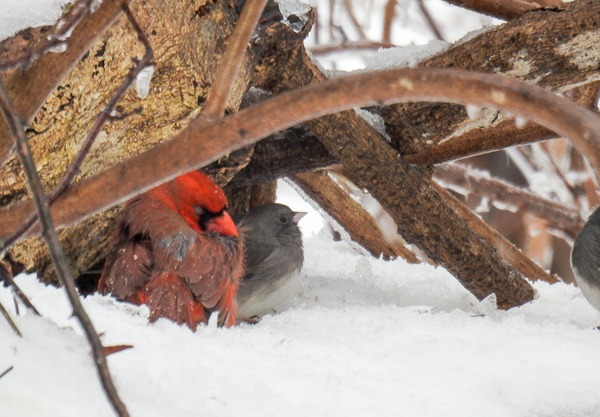
A winter storm changes what food birds can reach and whether you can safely reach the feeder. Before dangerous weather, set out a small, secure station. That beats scattering a large amount of food that may get wet or buried.
One r/birdfeeding poster planned a feast ahead of a blizzard:
So we’re getting a blizzard over the next couple days with a possibility of 2 feet of snow(60cm) and 50mph winds. I’ve currently loaded my bird feeders like it’s the last meal and threw peanuts, suet and mealworms around like confetti essentially to make sure everyone gets nice and fat. I’ll do the same tomorrow morning as it will be snowing but the winds won’t start till late Sunday night. Due to the wind I’m thinking of taking all of my bird feeders down and doing a deep clean Sunday night. I’m thinking the birds will not be out in a literal blizzard with the winds so crazy Monday morning. I don’t think there’s anything else I can really do for this so I was wondering if anyone else on here is getting hit with this and what their plans are?
| Stage | Feeder decision |
|---|---|
| Before the storm | Secure a feeder and offer a small amount of food |
| During the storm | Stay inside. Skip feeder upkeep until it is safe. |
| After the storm | Check the feeder, ports, and food for wet seed, blocked openings, damage, and ground waste |
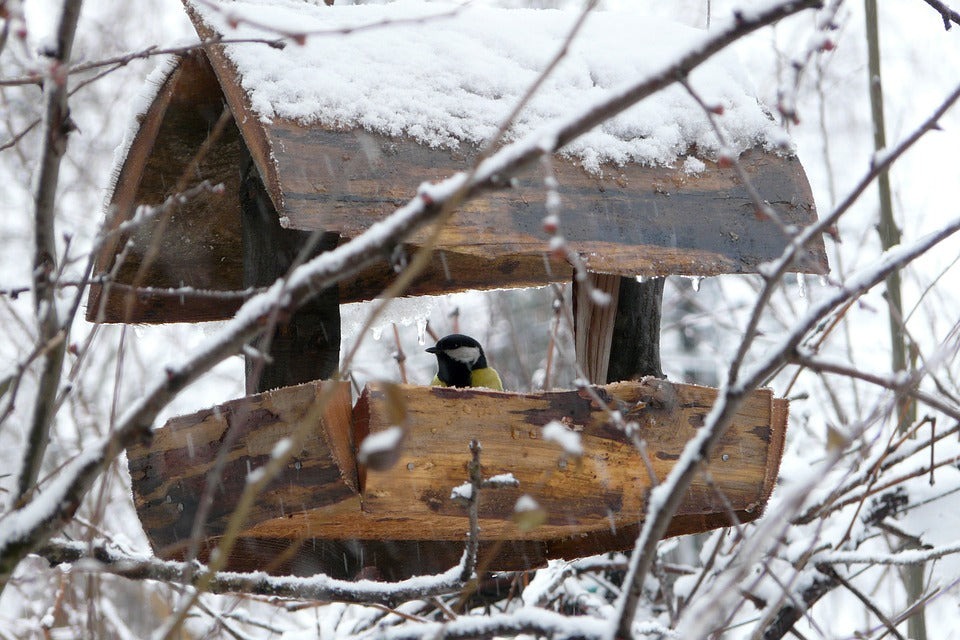
A feeder can look full after the storm even when packed snow blocks the openings birds use to reach the food.
Do You Need a Heated Birdbath or Open Water in Freezing Weather?
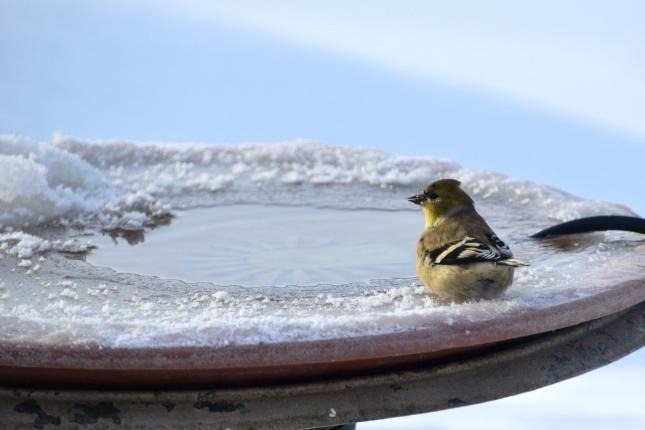
Ice-free water helps winter birds, but a heated birdbath is optional. Some birds get water from snow or natural sources, and if you have no safe outdoor power you can use a removable shallow bowl or skip the bath.
Where a heater makes sense, use purpose-built, thermostatically controlled equipment rated for outdoor use and plug it into a GFCI-protected outlet, following its instructions.
| Choice | When it fits | What you do |
|---|---|---|
| No added birdbath | Natural water is available or upkeep is impractical | Skip it rather than run a station you can’t maintain |
| Shallow removable bowl | Occasional water in freezing weather | Refresh the water and bring the bowl inside when it freezes |
| Purpose-built heated bath | Consistent open water with safe outdoor power | Keep the water clean and the equipment protected |
Cornell recommends about 1 inch (2.5 cm) of water at the edges, deepening to no more than 2 inches (5 cm) near the middle. Stones or other places to stand give small birds secure footing. Replace the water daily or every two days, depending on conditions.
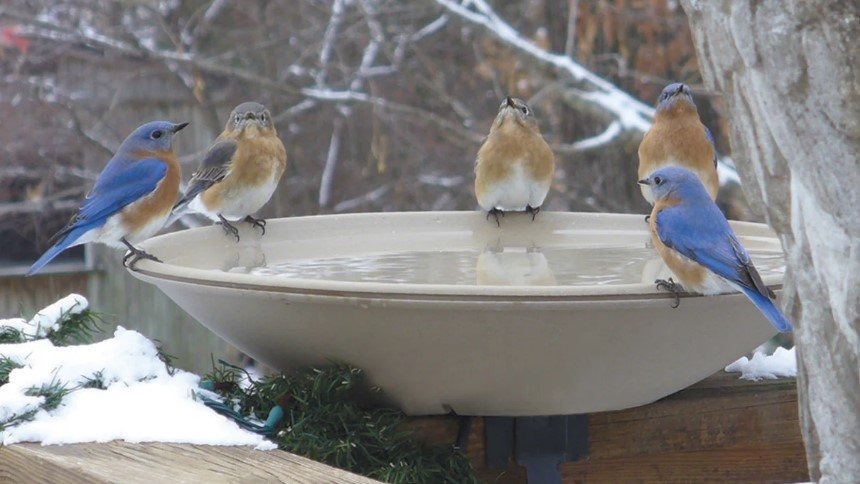
Another r/birdfeeding poster tried melting a frozen birdbath with very warm kettle water, then watched birds splash in it:
The water in my bird bath had frozen over night. This morning, I decided to add hot water from my electric kettle to try to melt some of the ice temporarily. When I came inside and looked out the window, the birds had swarmed the bath. It honestly looked like a wild hot tub party with the vapor coming off the water. They were drinking a lot, but they were also going crazy splashing around in it. Is it okay to put out warm water for them this time of year? I know fresh water can be hard to come by when it’s below freezing, but I don’t know if I’ve ever seen a bird bathe itself when it’s cold outside. I guess I’m worried that all those birds flew off and froze to death 5 minutes later. I only heated the water up to 140f + poured it on top of a brick of ice.
The author used 140°F water and worried afterward. The post shows no resulting injury, but it sets no safe temperature for pouring hot water into a birdbath.
Never add antifreeze or glycerin to birdbath water, and don’t improvise an electrical heater. Cornell’s birdbath guidance is the basis for these precautions. For the broader equipment decision, see the guide to safe birdbath choices.
Why Aren’t Birds Eating the Winter Food You Put Out?
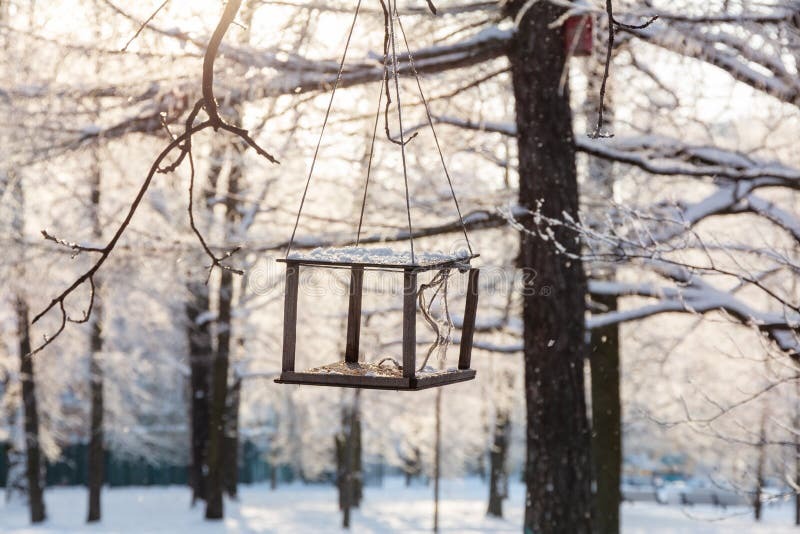
An untouched feeder can mean the birds nearby prefer other foods, have plenty of natural food, or are visiting elsewhere as conditions change. Nyjer suits some finches, so a nyjer feeder can sit untouched where those birds are absent. Watch which species visit on several occasions, then check that the food is fresh and reachable for them. If birds still ignore it, the guide to why birds avoid a feeder covers other causes.
When Should You Pause or Remove Bird Feeders for Safety?
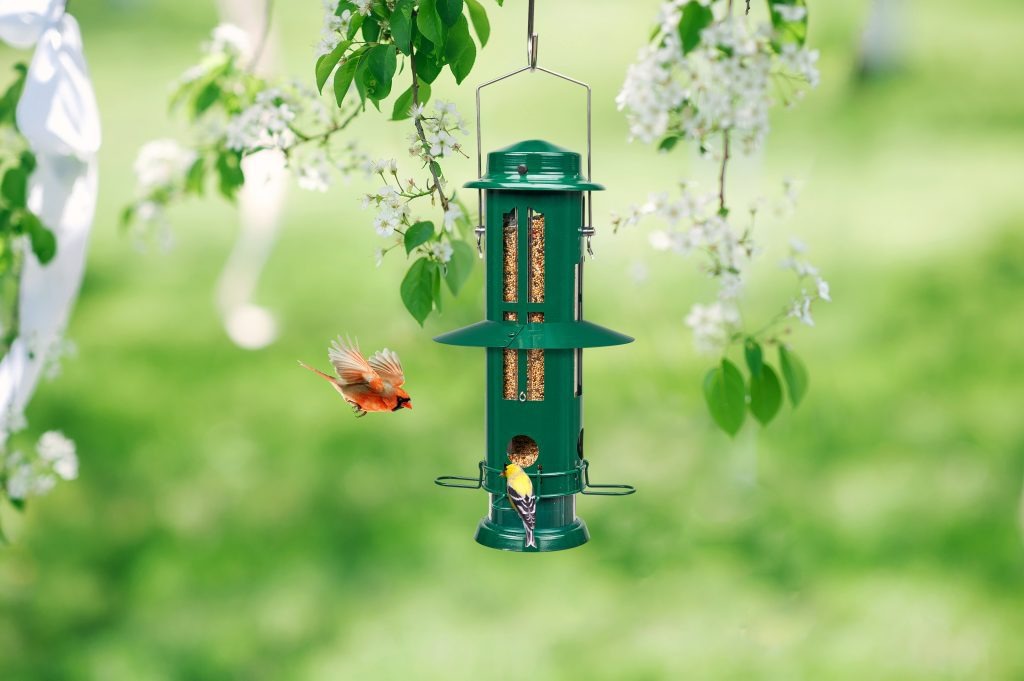
Bears are the clearest case. Connecticut DEEP warns that bears can remain active during winter and visit backyard feeding stations. Wildlife rules vary by state.
A lethargic bird or one with crusty eyes may be sick, though you can’t tell the cause by looking. Cornell’s sick-bird guidance recommends taking down feeders that sick birds have visited for about two weeks.
Cornell’s broader FeederWatch guidance notes that removal can disperse birds where nearby feeders are scarce but could concentrate them at the remaining feeders in neighborhoods with many stations. Eye disease can spread at shared feeder ports, and droppings are another route of exposure.
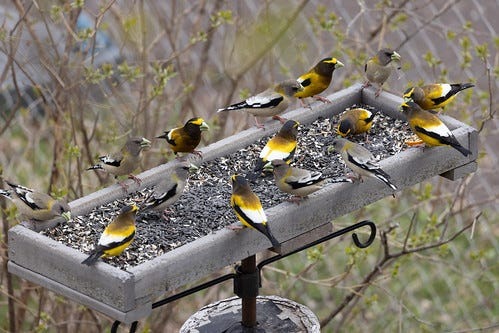
Avian influenza is a separate case. Cornell guidance dated January 2026 described typical seed-feeder songbirds as relatively low-risk for highly pathogenic avian influenza, while domestic poultry needs extra precautions. Backyard chickens can be exposed when wild birds reach poultry feed or water. Local wildlife and public-health advisories can change the response.
Hawks hunting birds around a feeder are behaving as wild predators. Don’t harm them, and don’t try to medicate sick birds through their food.
| Problem | Action |
|---|---|
| Bears at the feeder | Stop feeding and follow local guidance |
| Birds showing possible illness | Clean and disinfect; follow disease-specific or local guidance on temporary removal |
| Domestic poultry nearby | Protect poultry feed and water; follow poultry-health precautions |
| Repeated predator visits | Move the feeder or pause feeding if needed |
| Persistent rodents or hazardous glass | Fix the problem or stop feeding |
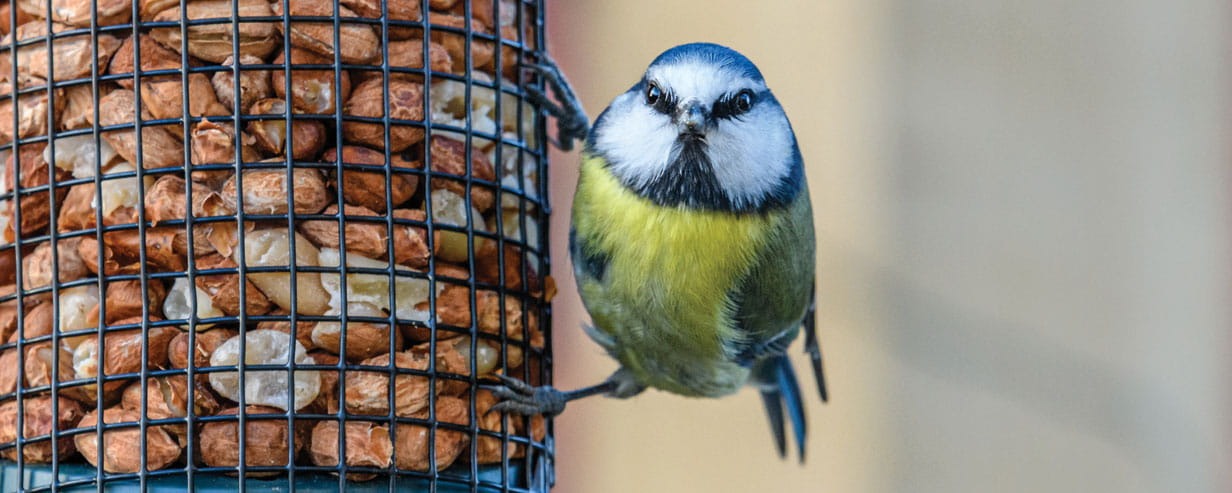
If you suspect illness or a wildlife incident, your state wildlife agency, a public-health office, or a qualified rehabilitator can advise. The guide to sick birds at feeders covers the steps in more detail.