For most U.S. yards, offer a shallow, grippy birdbath that is easy to clean and positioned so birds can spot approaching predators. Aim for water about 1 inch deep at the edge and no more than 2 inches at the center. If roaming cats have a concealed approach or the water cannot be kept clean, move or rethink the bath. Check its depth, your yard’s sightlines, and a cleaning routine you can keep up.
How Deep Should a Birdbath Be, and What Makes a Basin Safe?
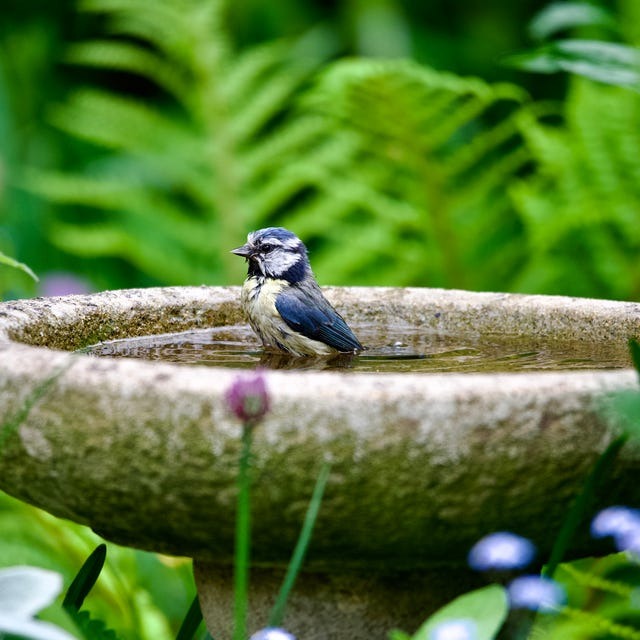
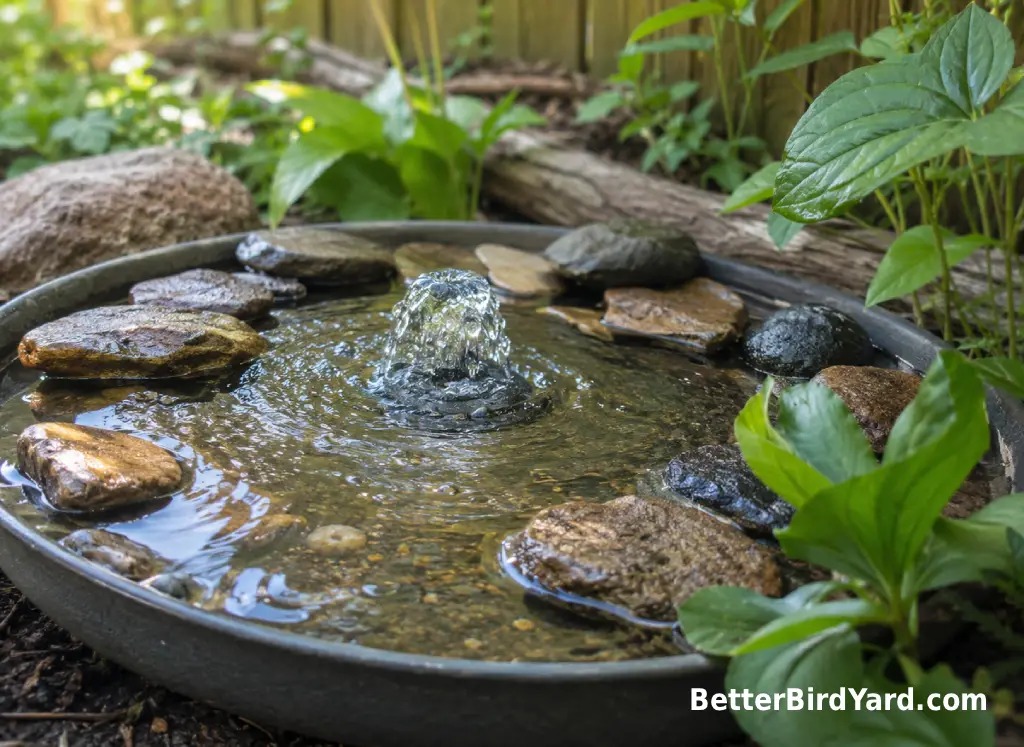
A good backyard benchmark, from Cornell Lab’s birdbath guidance, is about 1 inch (2.5 cm) of water at the outer edge, sloping gradually to no more than 2 inches (5 cm) in the center. The sloped edge lets birds wade toward deeper water without an abrupt drop.
An attractive bowl can have a steep rim, a deep center, or a glazed finish that turns slippery when wet. A shallow tray with a rough surface gives birds better footing and is easier to clean. Audubon’s DIY birdbath instructions call for roughly 1 to 1.5 inches of water, with pebbles or a flat rock for footing.
| Basin type | Good for | Problem | Verdict |
|---|---|---|---|
| Shallow tray or flower-pot saucer | Gradual, accessible water; easy to remove when lightweight | Instability, slick material, or a deep middle | Fine when the filled basin is stable and grippy |
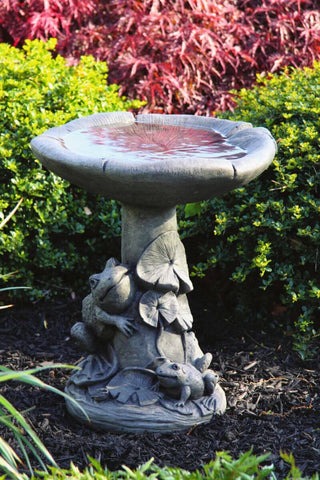
| Decorative pedestal or glazed bowl | An elevated, visible water source | Abrupt sides, slippery finish, awkward cleaning | Check the wet interior, the slope, and where birds stand |
| Multi-tier fountain | Can include a shallow landing area | Deep tiers birds can reach; hard-to-clean corners | Every tier birds can reach needs safe shallow access and parts you can clean |
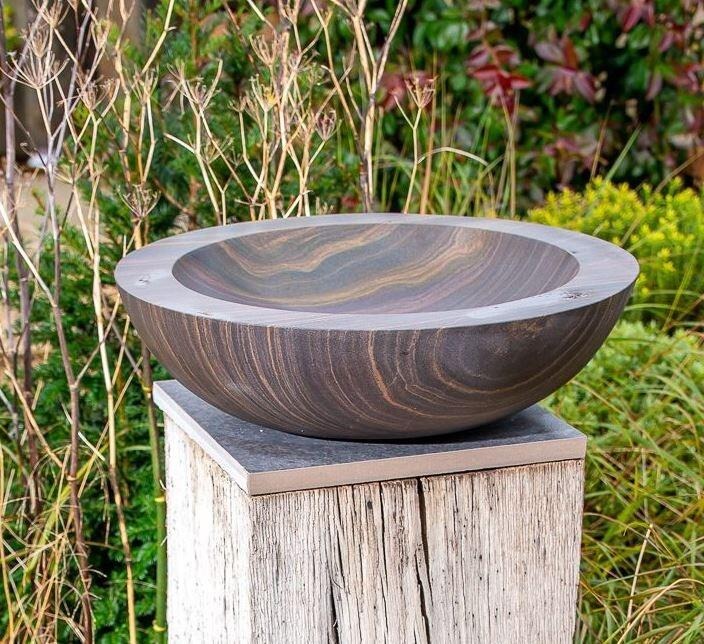
Measure the filled water at the edge and center with a ruler. Check the slope, the grip of the wet surface, and whether stones sit securely without tipping the basin. A stable shallow insert improves a deep or slippery bowl, and a simpler basin is another fix.
The Oklahoma Department of Wildlife Conservation lists a clean garbage-can lid among inexpensive birdbath options. Check its stability, texture, and water depth as you would for a store-bought basin.
Where Should You Place a Birdbath? Shade, Cover, and Cats
A good spot has some shade, perches nearby, and an open enough approach for birds to see a stalking cat coming. Vegetation shelters birds but also hides predators.
A nearby tree gives birds somewhere to retreat or preen after bathing. Low, dense shrubs pressed against a ground-level bath make the approach dangerous when cats wander through the yard. Cornell recommends leaving open ground between the bath and thick shrubbery in that case. Audubon suggests level ground and nearby shrubs, but where cats roam, keep the bath clear of dense cover.
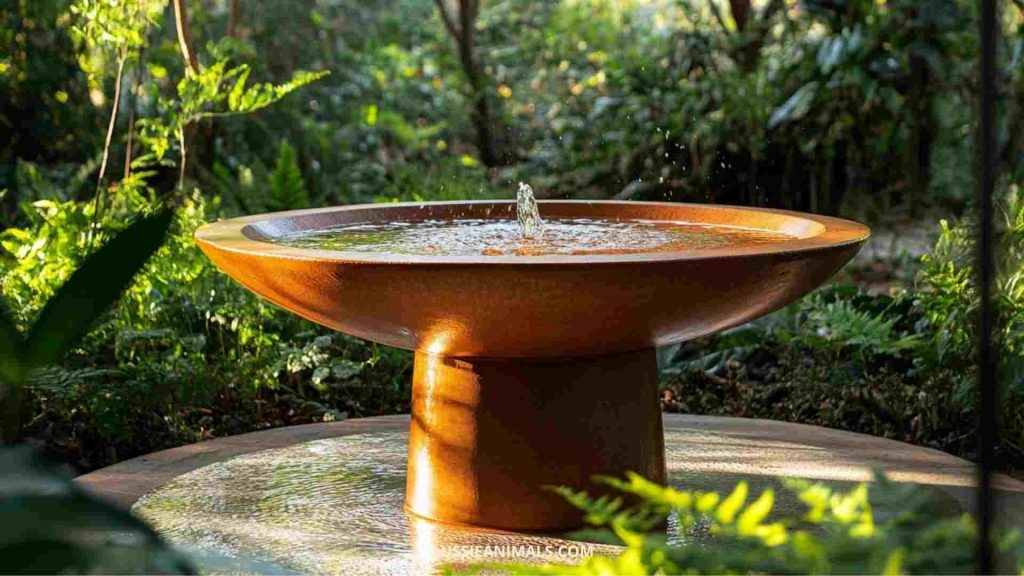
Walk the proposed spot at ground level and look for routes a cat could take through bushes or behind containers. Check where a bird could land, leave the water, and reach a branch. A pedestal changes access to the water, but height alone does not make a bath cat-proof.
Look overhead too. Under a busy feeder, seeds, droppings, and debris fall into the bath. Pick a spot that stays shaded in hot weather and lets you refill and scrub without stepping into dense plants.
In a small yard visited by free-roaming cats, every available position may leave a hidden approach. Moving the water to a safer spot, or waiting, is then the wildlife-friendly choice. For native plants, shallow water, and feeder upkeep, see how to make a backyard more attractive and safer for birds.
How Often Should You Change and Clean Birdbath Water?
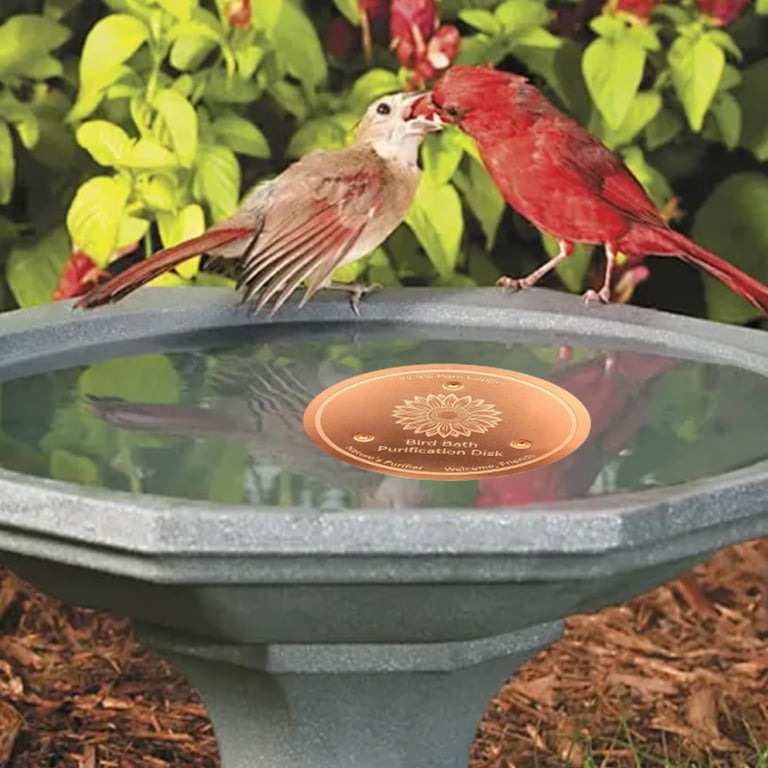
A birdbath needs frequent water changes, regular scrubbing, and quick attention when it gets fouled. Topping up leaves sediment and droppings in place. A removable pan is simpler to empty and scrub than a basin with fixed stones or hard-to-reach recesses.
| What you find | Response | Reason |
|---|---|---|
| Ordinary use, with clean-looking water | Empty and replace the water every day or two above freezing | Removes old water and loose debris |
| About a week since the last full scrub | Scrub the emptied basin and stones with a plastic scouring pad or suitable brush; rinse and refill | Matches the CDC’s weekly mosquito-control guidance |
| Droppings, cloudiness, mold, or visible buildup | Empty and scrub right away, then rinse and refill | Visible fouling overrides the routine schedule |
| Heavy use or sick birds observed nearby | Add a disinfection step after ordinary cleaning | Project FeederWatch describes this as an optional extra |
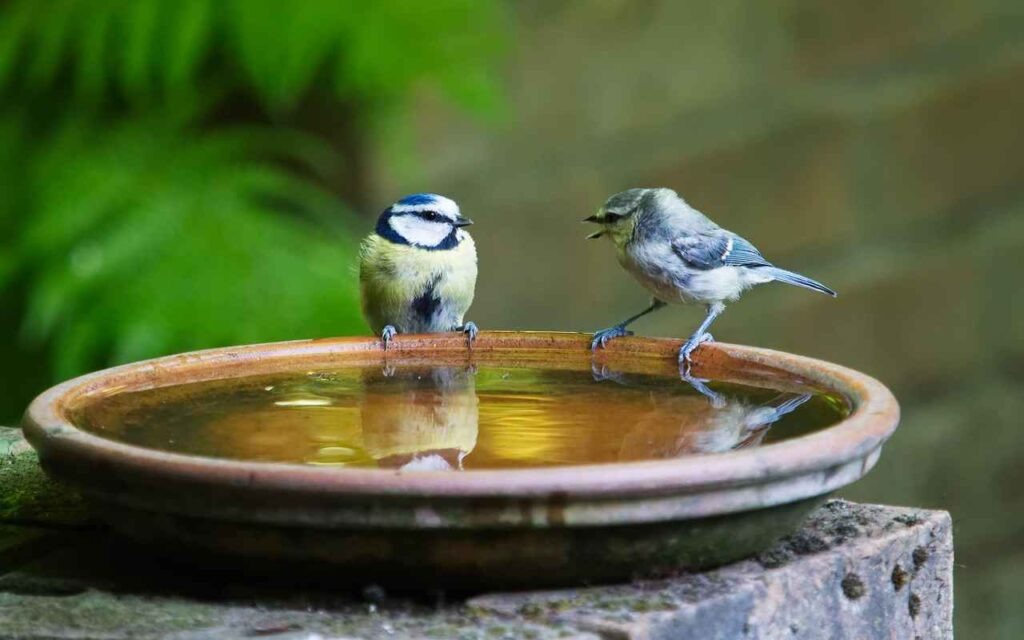
For extra disinfection, American Bird Conservancy gives a birdbath-cleaning solution of one part bleach to nine parts water. Rinse thoroughly and let the basin air-dry before adding fresh water. FeederWatch also covers optional disinfection, but its soaking instructions apply to feeder parts. For feeder surfaces, droppings, and cleaning intervals, see how to clean bird feeders without spreading disease.
Never put bleach into water offered to birds, and never mix bleach with vinegar or another cleaner.
Vinegar removes some deposits but does not disinfect the way a proper disinfecting procedure does. Copper pennies do not replace cleaning. Scrubbing and fresh water keep contamination down, though a shared birdbath is never sterile.
Is Moving Water Worth Adding to a Birdbath?
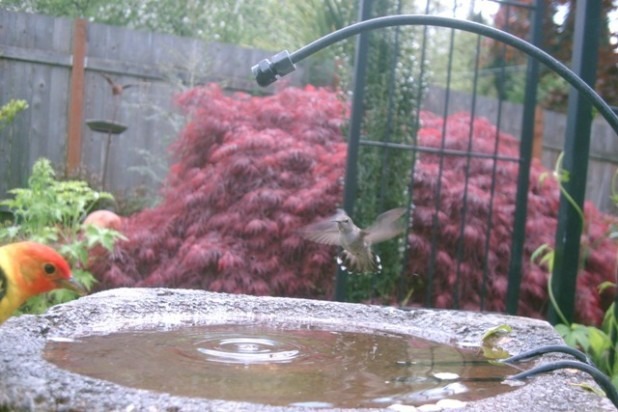
A gentle dripper, mister, or bubbler makes water more noticeable through sound and motion, though a shallow still-water basin works fine too. A pumped fountain adds tubing, stones, or tiers that complicate cleaning, and it needs a suitable power arrangement. Circulating water does not sanitize the bath. Add moving-water equipment only if it leaves shallow footing for birds and every wet part stays reachable for emptying and scrubbing.
Why Aren’t Birds Using the Birdbath?
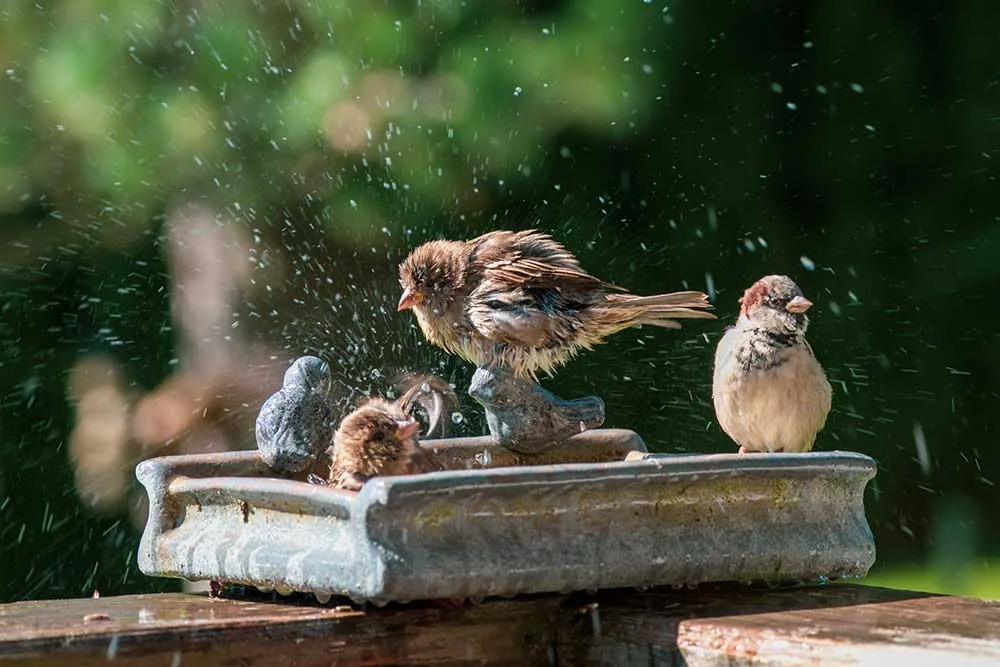
A birdbath that looks unused may get visits outside the hours you watch. If you are away much of the day, start with what you have actually seen: birds approaching, landing, bathing, or avoiding the water.
A bird lingering on the rim points to a different problem than a bird fleeing past dense cover. Note recent rain, nearby water sources, and any visible fouling during a run of quiet days.
| What you observe | Likely cause | What to do |
|---|---|---|
| No birds seen during your usual viewing hours | Visits outside that window | Watch at other times and record approaches |
| Birds approach the rim but hesitate to enter | Depth, slope, or wet footing | Compare the basin with the depth and grip checks above |
| Birds approach and then flee | Predator activity or a hidden route | Move the bath or open up the approach if it looks unsafe |
| Initial sightings followed by quiet days | Changed weather, rainfall, or alternative water | Keep observations comparable before changing the setup |
Change one variable at a time and watch the result.
What Changes in Hot Weather or Freezing Weather?
In summer, shade limits warming and evaporation, and dirty water needs attention sooner. Adjust the routine above for heat, debris, and visible fouling in your yard. For feeders, plants, and the rest of your yard, see the backyard-bird habitat guide.
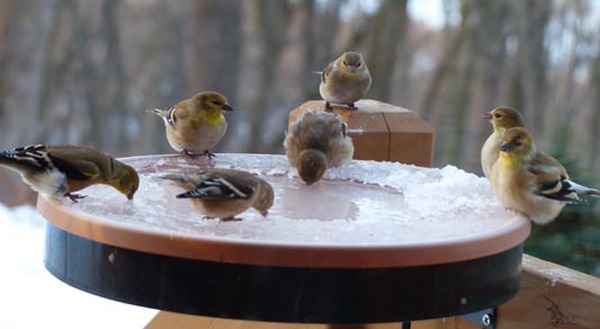
Cornell notes that keeping a birdbath constantly ice-free is not essential for every bird, particularly where snow or other water is available. A removable plastic bowl set out during daytime hours and brought inside before freezing avoids electrical equipment altogether.
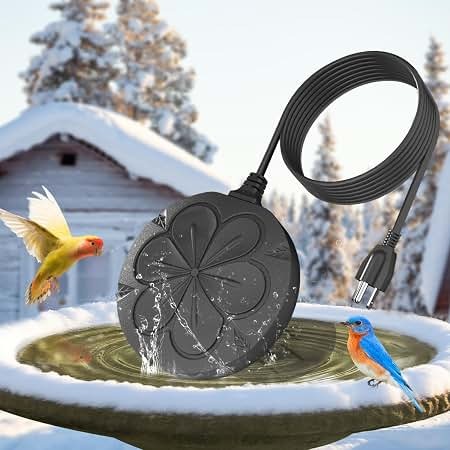
A compatible thermostatic birdbath heater keeps water liquid in freezing conditions. Follow the manufacturer’s instructions and use a ground-fault-protected electrical circuit. Some concrete baths crack when water freezes, so check your bath’s material.
Never add antifreeze or glycerin to birdbath water. Antifreeze is poisonous to animals, and glycerin can interfere with feather function.