For a feeder that can stand clear of nearby trees, fences, and buildings, start with a pole-mounted feeder and a correctly positioned baffle. If that clearance is impossible, choose a weight-activated or caged feeder that suits your birds and prevents squirrels from reaching the ports from another support.
A squirrel climbs a pole, springs from a fence, drops from a tree, or stretches over from a railing. Each route needs a different barrier. Buy a second baffle without finding the route and you leave the real access point open.
Find the route squirrels use to reach the food
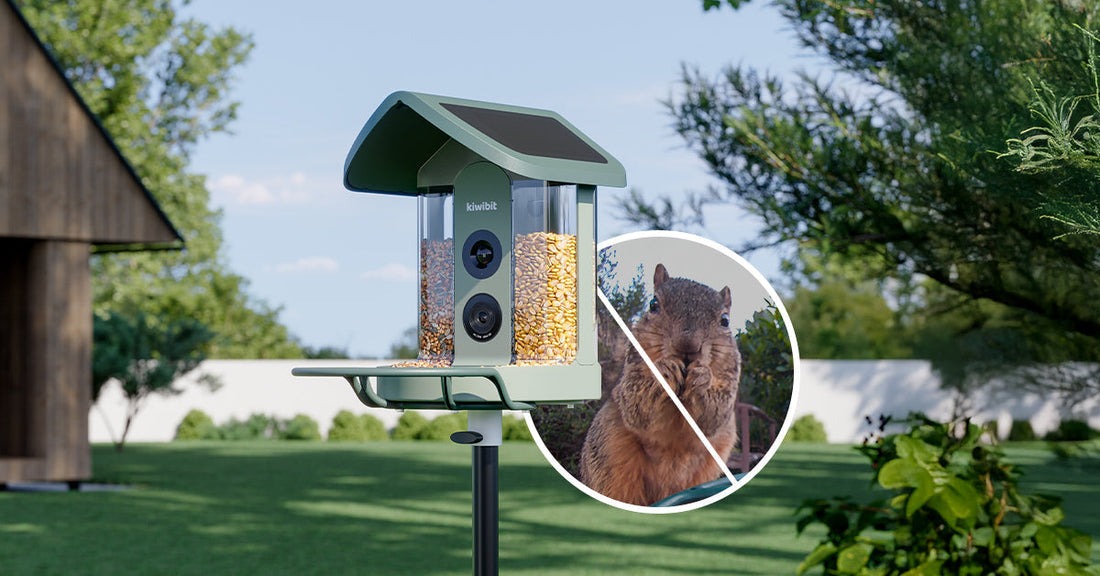
Watch what the squirrel touches on its way to the seed. Sometimes the problem starts several feet away, at a fence or an overhanging branch. A squirrel sitting under the feeder may never touch a port. It’s eating what the birds dropped.
- Climbing from below: The squirrel goes up the pole, post, hanging support, or mounting hardware.
- Jumping sideways: A fence, tree trunk, roof edge, or deck railing serves as the jump-off point.
- Dropping from above: An overhanging limb puts the squirrel on top of a hanging feeder.
- Reaching from a support: The squirrel sits on a branch or bracket and stretches to a port, which bypasses a weight-activated shroud.
- Eating from the ground: Seed that birds drop or discard draws squirrels even when the ports are protected.
One camera-feeder owner had two baffles on the mounting post. Squirrels still ate the seed and disconnected the solar-panel cable.
We had installed a bird feeder with camera and then we had problems with the squirrels getting up and eating the bird food and unplugging our solar panel usb c wire to the back of the camera so I installed one baffle that is on the mailbox post but then we noticed that the squirrels are still getting to the bird feeder somehow, so I added another baffle above the 1st baffle on the bird feeder post. We’ll for some reason the squirrel is still able to get on the bird feeder and eat the seeds and knock the solar panel wire out of the back of the camera. I am at a loss, does anyone know of any solutions to prevent the squirrels from climbing up to the bird feeder?
The post doesn’t say which route the squirrel took. Find yours by watching a full approach from a safe distance, or by replaying feeder-camera footage. Name one of the five routes before you change any hardware.
Give a pole baffle enough clear space
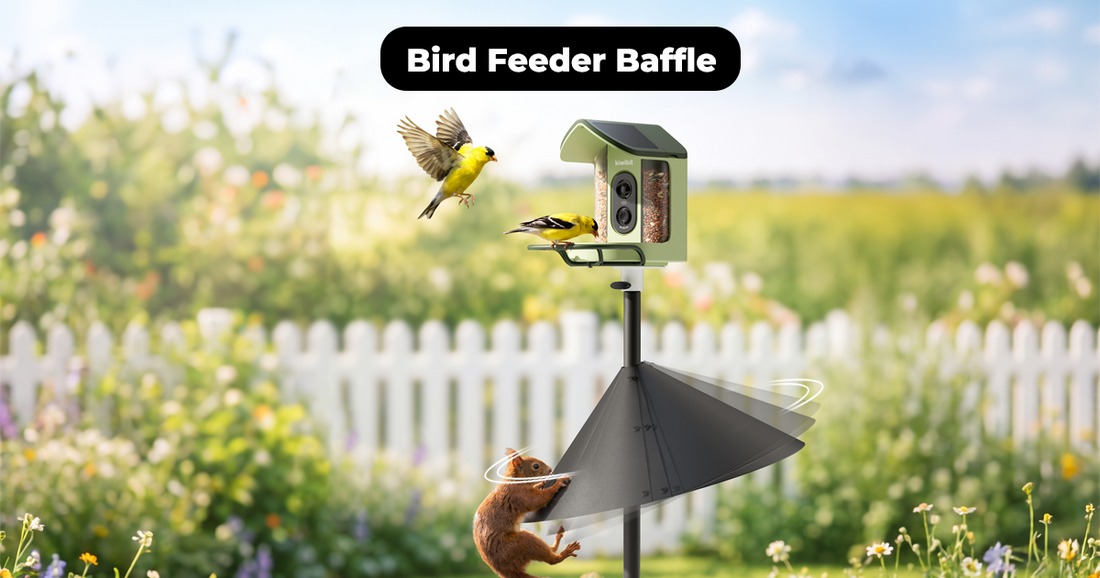
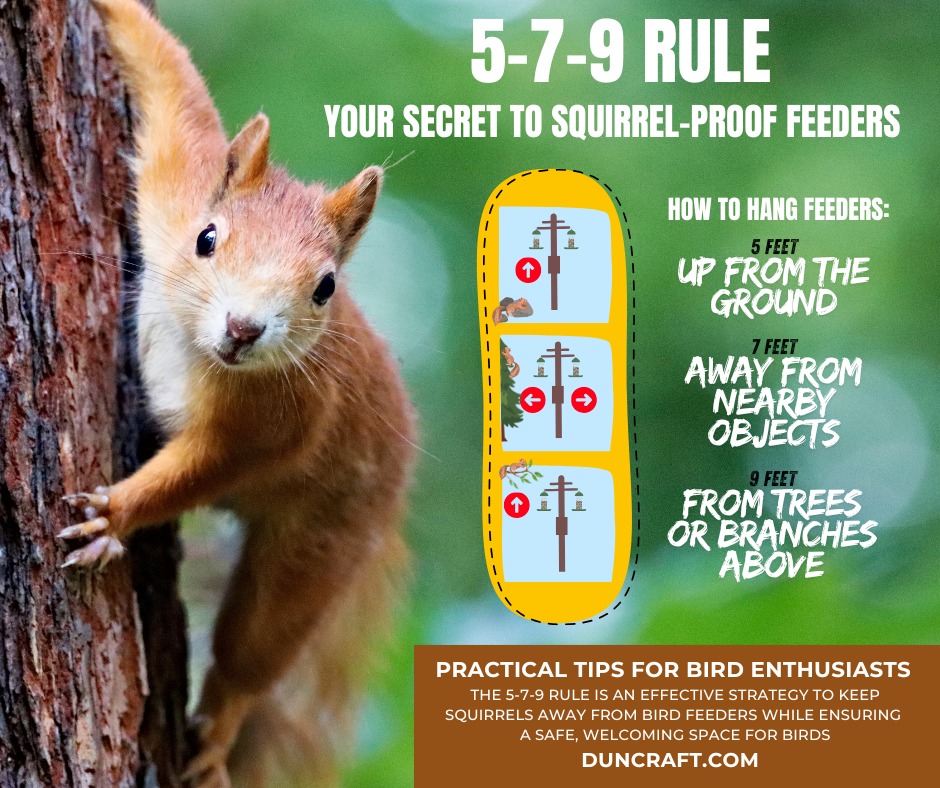
A baffle on a freestanding pole interrupts a squirrel’s climb. Where you put it matters as much as its shape, because a branch or fence within jumping range gives the animal a way around.
National Audubon Society, Cornell FeederWatch, and University of Florida IFAS Extension each give numbers for different layouts.
| What to measure | Published guidance | Applicable situation |
|---|---|---|
| Distance from solid jump-off objects | Audubon: 8 to 10 feet | Freestanding pole and baffle |
| Height of the pole baffle | Audubon: 4 to 5 feet above ground | Blocking climbs up the pole |
| Distance from jump-off points | Cornell: about 10 feet | Practical balance with nearby bird cover |
| Tree trunks and overhanging limbs | UF/IFAS: 10 to 15 feet away | More conservative tree clearance |
Measure from the feeder to the nearest fence, roof edge, rail, or branch.
Moving a feeder changes bird safety too. Cornell’s window-collision guidance describes placement within about 3 feet of glass or farther than about 30 feet as safer, alongside treating hazardous windows. Factor in cats and the cover birds use for protection. To judge window reflections, glass markings, and collision risk together, see how to prevent birds hitting windows.
One backyard owner replaced a tree-mounted feeder with a shepherd’s pole and baffle and reported that squirrel visits stopped while sparrows, juncos, cardinals, and grosbeaks came to feed.
Sorry for the poor quality pic. Sure enough the squirrels absolutely demolished my feeder when it was in the tree so I ended up getting a Shepards pole with a squirrel baffle and I’ve not had a single squirrel since. Also since then the birds have found my feeder and the sparrows and juncos absolutely love it. I’ve seen a few cardinals and grosbeaks also stop by.
In a later reply, the owner said the squirrel-free stretch lasted two days. For the wider yard, plants and habitat included, see the backyard-bird habitat guide.
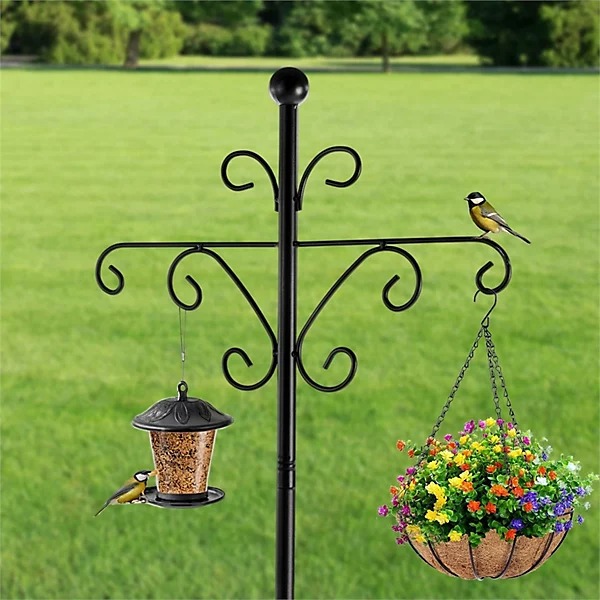
Match the barrier to the route
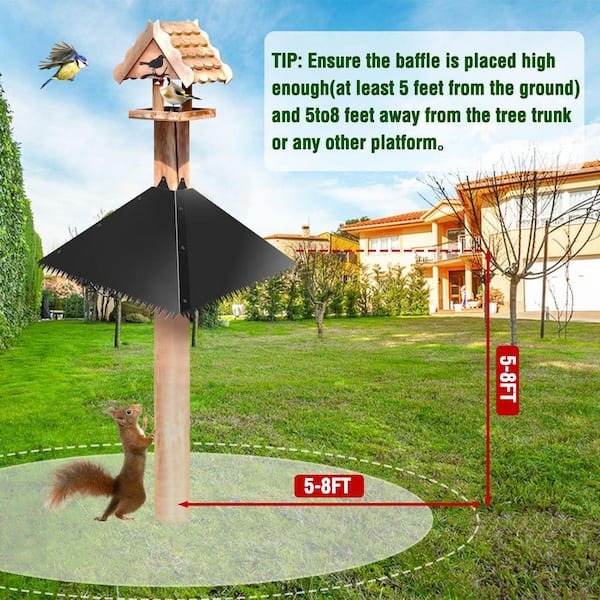
Pick the mechanism that fits how the squirrel gets in.
| Route or problem | Solution | Installation test |
|---|---|---|
| Climbing an isolated pole | Cylindrical or wraparound baffle | Check pole fit, height, and nearby clear space |
| Dropping onto a hanging feeder | Tilting overhead dome | Cornell describes an overhead baffle at least 18 inches in diameter |
| Reaching a port | Weight-activated shroud | The squirrel must put its weight on the moving shroud |
| Small birds at a guarded station | Caged or mesh feeder | Check the cage openings |
| Repeated raids on the ports | Rotating or motorized feeder | Check compatibility and maintenance needs |
The Brome Squirrel Buster Plus uses a weight-activated shroud. Brome’s installation guidance calls for 18 inches of clearance from nearby supports, so a squirrel has to put its weight on the feeder to reach the ports.
A horizontal hanging cable needs spinning tubing, which Cornell describes as a barrier to travel along the line. Pole baffles and overhead domes cover different approaches. UF/IFAS adds that metal seed ports and perches resist chewing better than plastic or wood.
Rule out any design that fails the mounting test in the table, then read the maker’s installation requirements for your model.
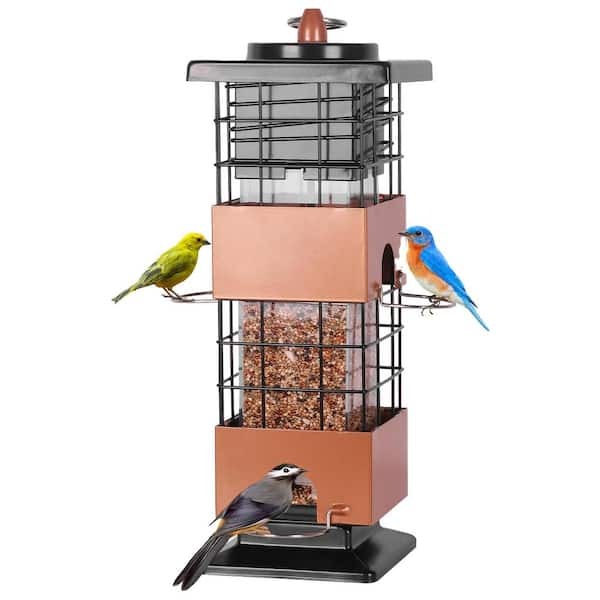
When trees and fences leave no clear spot
In a small or heavily planted yard, squirrels can have a jump route from nearly every side. A second baffle on the same pole leaves every one of those jump-off points untouched.
One Birdfy camera-feeder owner faced exactly that, with two large trees and a fence around the feeding area.
Have a Birdfy feeder in our backyard! Baffle on the bottoms of the pole, but the issue is there’s I no point in our backyard that the squirrels can’t jump to make it on the feeder due to a fence and two large trees. I have used spicy seed and now they are just ignoring and it’s gotten to the point that they tore a hole in my feeder. Any thoughts on how to prevent the squirrels??
The chewed hole is a second problem. Cover exposed camera cables and plastic parts, and make sure the cover can’t tangle a bird.
A different hanging point or mounting arm can reduce access. A caged feeder is another option. Sketch the nearby trees, fences, rooflines, and rails, then compare your mounting options. Some sites can’t give a pole and baffle the clearance they need. At those sites, the safest choice is to stop supplemental feeding.
Why squirrels keep coming after the feeder is protected
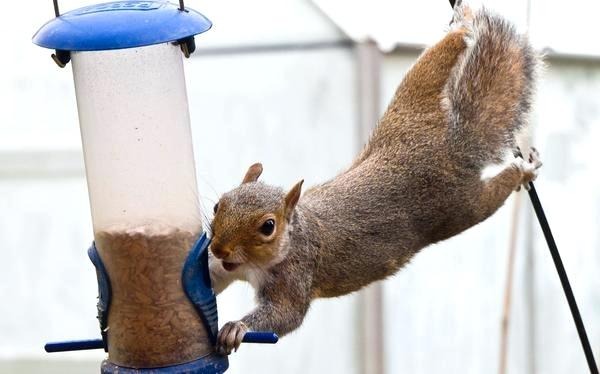
Squirrels can keep coming for different reasons, and each needs its own fix.
- Seeds vanish from the ports: The squirrel is jumping past the pole barrier from a fence or branch. Watch where it makes contact.
- A weight-activated feeder stays open: A nearby support takes the squirrel’s weight, so the shroud never closes.
- Plastic ports or cables are damaged: Look at which parts squirrels can reach, then consider metal guards or a less exposed mount.
- Squirrels remain underneath: Find where the seed falls. It comes from the feeder or from birds discarding unwanted pieces.
Mass Audubon notes that birds sometimes scatter mixed seed while searching for the pieces they prefer. A mix the visiting birds readily eat cuts that waste. UF/IFAS also recommends clearing seed and debris from beneath feeders, where unwanted animals feed and spoiled seed causes problems.
Even a motorized feeder can keep squirrels off its ports and still leave food beneath it. Fix the source of the spilled seed before replacing hardware that already blocks direct access.
Keep the birds you want at the feeder
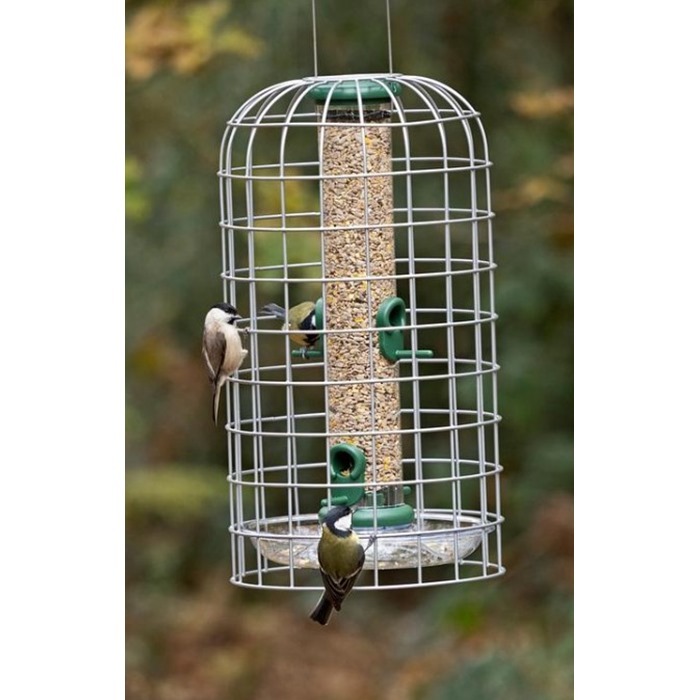
A cage discourages squirrels and also restricts larger birds, a tradeoff Audubon notes. A chickadee can enter a guarded feeder that a cardinal or blue jay can’t comfortably use, depending on the opening and perch layout. Weight-activated designs and a move to a more exposed spot can change which birds visit too. Decide which birds you want, then check that the new setup still lets them feed.
Food changes and deterrents have limits
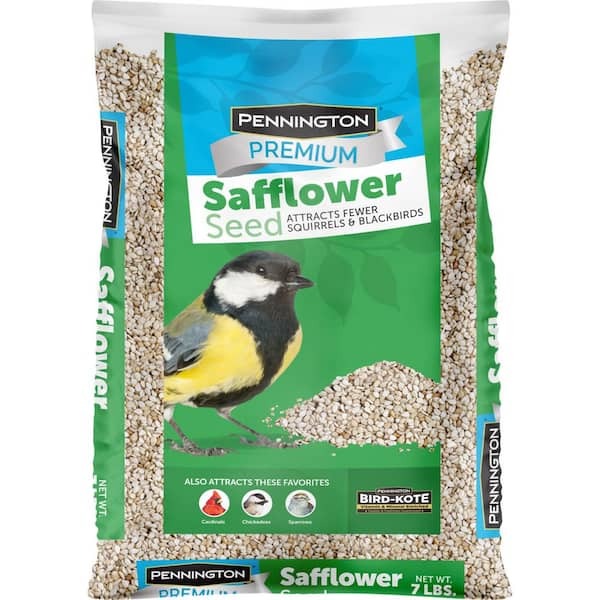
Audubon explains that safflower seed appeals less to some squirrels, though Mass Audubon notes that squirrels may learn to eat it. Your birds have their own preferences, and a pricier seed isn’t worth it if they waste it. For matching seed to birds and feeders, see choosing bird seed for backyard birds.
Cornell FeederWatch suggests setting out peanuts or corn for squirrels, farther from the bird station, as a diversion. That adds a second food source and an ongoing expense. Where bears or other large mammals may visit, drawing more wildlife to food near your home is a real safety concern.
Avoid hazardous shortcuts
Cornell FeederWatch cautions that high-dose capsaicin exposure in birds has not been adequately studied, so homemade hot-pepper mixtures have no established safe dose.
The National Wildlife Federation warns against putting grease or petroleum jelly on feeder poles, since both can coat mammal fur and bird feathers. Also skip mothballs, toxicants, sticky substances, sharp barriers, and any device that could injure or entangle wildlife.
How to tell if it’s working
A squirrel-resistant station should reduce squirrel access and keep feeding birds. Check three things: the ports, the birds, and the ground.
- Squirrels at the ports: The setup works if you see no access to the seed ports. Change something if squirrels still open or reach them. If no squirrel shows up during your check, you have no answer yet.
- Birds: The setup works if the birds you want feed normally. Change something if guards or ports exclude them. After a move, wait for the birds to return before you judge.
- Seed on the ground: The setup works if little avoidable food piles up. Change something if repeated spillage supports ground feeding. If you can’t tell where the seed disappears, find that out first.
Note these three observations before and after each change, using a few notes or an existing camera. Recheck when conditions around the feeder change. A quiet stretch without squirrels is encouraging, but it doesn’t guarantee they won’t return.
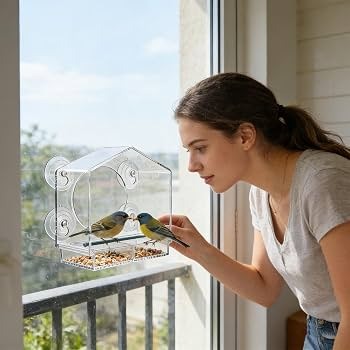
For feeder placement, nearby windows, and predator cover, see where to place a feeder to reduce window strikes.