Choose plants that are native where you live and fit the light, soil and space you have. Mix plants that host insects, bear seeds or fruit, and give cover. Take a short list of species names to the nursery and confirm the stock before you buy.
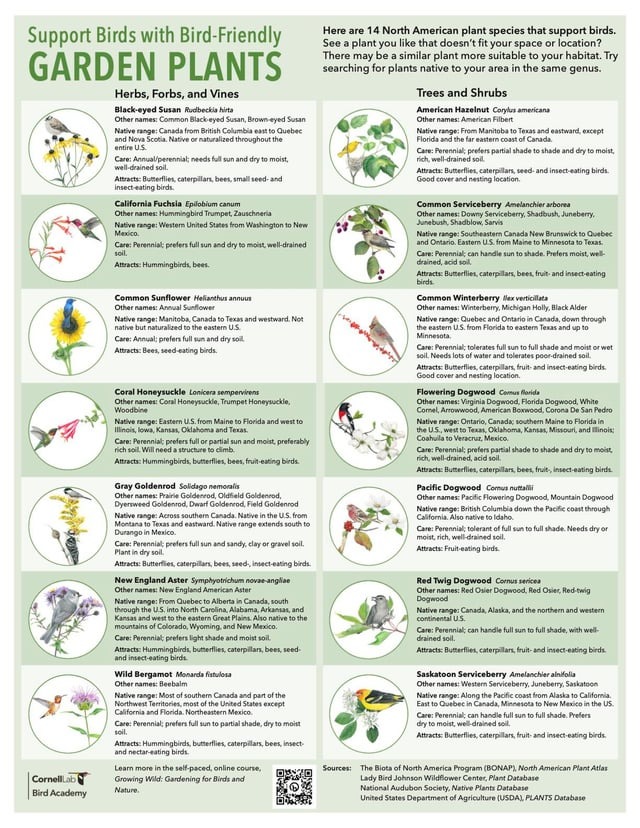
White oak foliage feeds caterpillars that birds gather for their young. Serviceberry bears fruit, and a dense evergreen gives shelter when deciduous branches are bare. Each does a different job, and none suits every U.S. yard.
Start with the place: your region, the light, the soil and what already grows there. Then pick plants for whatever your yard lacks.
Start With Plants Native to Your Area
Work at the species level and check its natural range. A label saying “native to North America” tells a homeowner in Arizona, coastal Oregon or western New York very little. Scientific names matter because one common name can cover different species.
Two national plant finders are a good way in. They use different data and do different jobs:
| Where to check | What it tells you | What to write down |
|---|---|---|
| Audubon Native Plants | ZIP-based search using BONAP-derived distribution data and a selection of bird-beneficial plants | Full scientific name and regional range |
| NWF Native Plant Finder | Historic county-based native ranges and plant groups tied to caterpillar hosts | Species or genus shown, and any geographic uncertainty |
| Local native plant society or extension service | Knowledge of local habitats and of introduced or naturalized populations | Confirmation for the exact species and locality |
Audubon’s Recommended results are a curated selection of bird-beneficial plants. Full Results covers a broader set from its ZIP-based database. Nearby-county results need care because historical ranges and introduced populations complicate the map. Confirm them with your native plant society or extension service before you rely on them.
Check the Plant Against the Space You Have
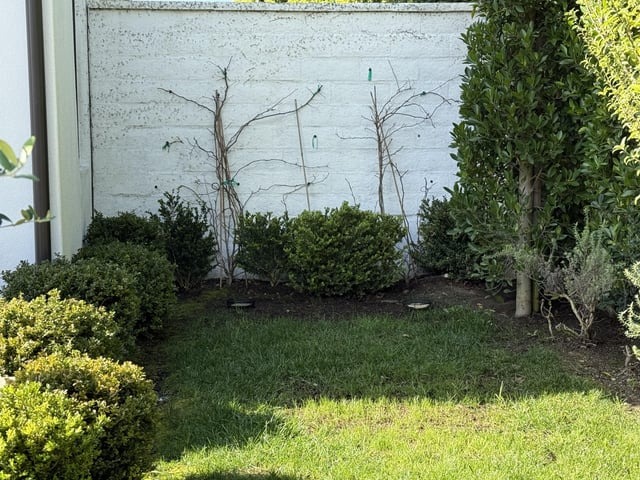
List the conditions at each planting spot: sunlight, soil type, moisture and drainage, existing canopy, and the height and spread a mature plant will need. A locally native species still fails in a shaded understory, in persistently wet soil, on a narrow patio or under property rules that clash with its needs. The USDA Plant Hardiness Zone Map gives average annual extreme minimum winter temperatures from 1991 to 2020 weather data. That is your cold-climate reference. Light, drainage and footprint decide the rest.
Choose Plants for Food, Insects, and Cover
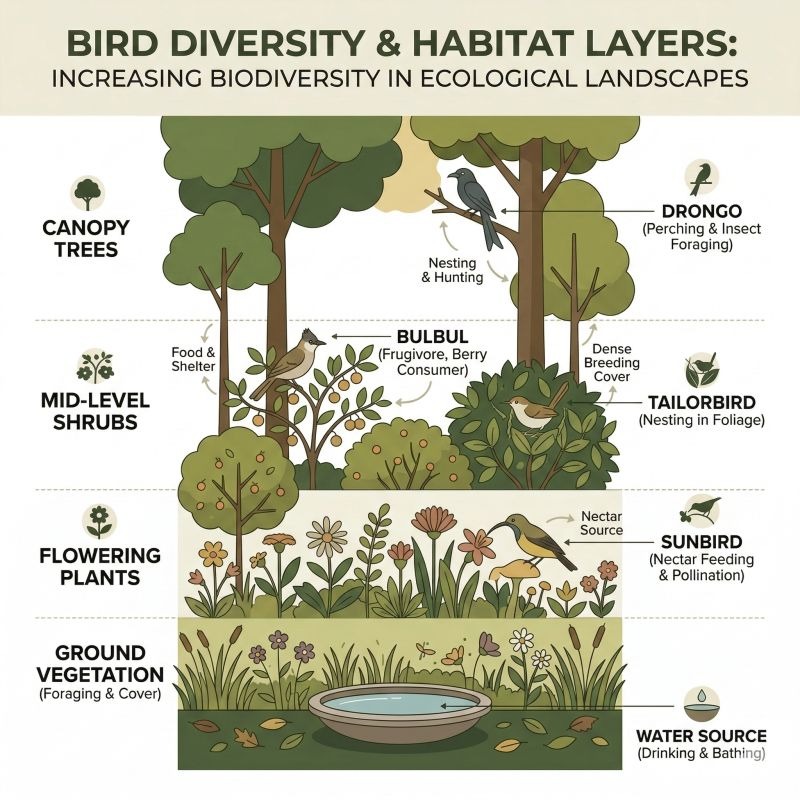
Much of the best bird food starts as an insect feeding on a plant. Caterpillars develop on suitable host foliage, and insect-eating birds carry them to their nestlings. Flowers, seeds and fruit add other food, while woody growth and low vegetation give birds places to hide and forage.
In a 2018 residential landscape study, Desiree Narango, Douglas Tallamy and Peter Marra examined Carolina Chickadees. Sites with more nonnative plant biomass had fewer arthropods and poorer chickadee reproductive outcomes. The comparison involving more than 70% native plant biomass reflects that residential population and its modeling conditions. The original research paper covers the methods and limits. For native plants, shallow water and feeder maintenance together, see how to make a backyard more attractive and safer for birds.
Mixing plant functions supports birds through the year:
- Host foliage: Native trees, shrubs and herbaceous plants feed caterpillars and other arthropods that birds eat.
- Nectar: Suitable native flowers feed hummingbirds while they bloom.
- Seeds and fruit: Seedheads and ripening fruit offer food at times that differ among plants and regions.
- Cover: Evergreen branches, dense shrubs and lower vegetation provide shelter and places to forage.
Patches of fallen leaves and old plant stems also shelter insects through winter, adding to the food and cover living plants provide.
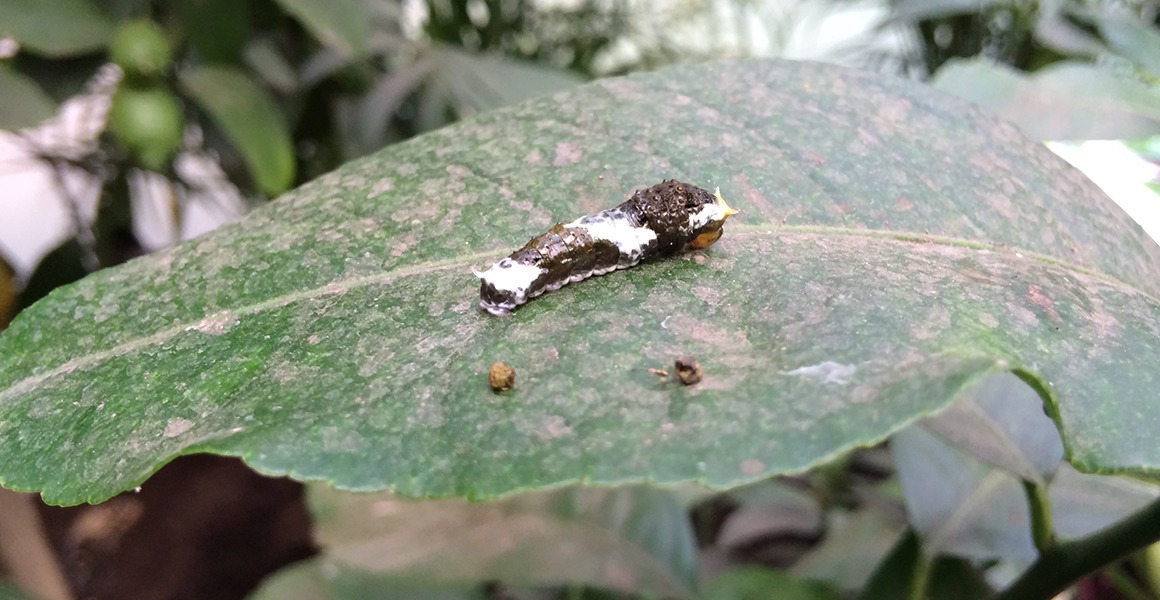
A gardener in northeastern Oklahoma worried about planting an American plum roughly 15 feet from a young pollinator bed, where butterflies and moths were expected to develop:
Zone 7A. NE OK USA. I discovered the American Plum tree (in love with them) and want one in my backyard. I know this tree will attract birds. Last year I planted a small pollinator garden, about 16′ x 24′. It’s still new and plants aren’t huge. I also have a small yard, so the tree would only be like 15 feet away from the garden. Would this be a death sentence to the larva and caterpillars that my garden attracts? I know local wildlife is used to birds, but I wasn’t sure if the vicinity with a new garden would hurt them. If it matters, I have lots of host plants like grama grasses, milkweeds, frog fruit, golden alexander, etc but they’re small right now.
The poster hadn’t planted the tree yet, so nothing went wrong. Birds eating caterpillars is part of the food web that host plants help support. Ask what your yard already offers and what the new plant adds.
See What Different Native Plants Contribute
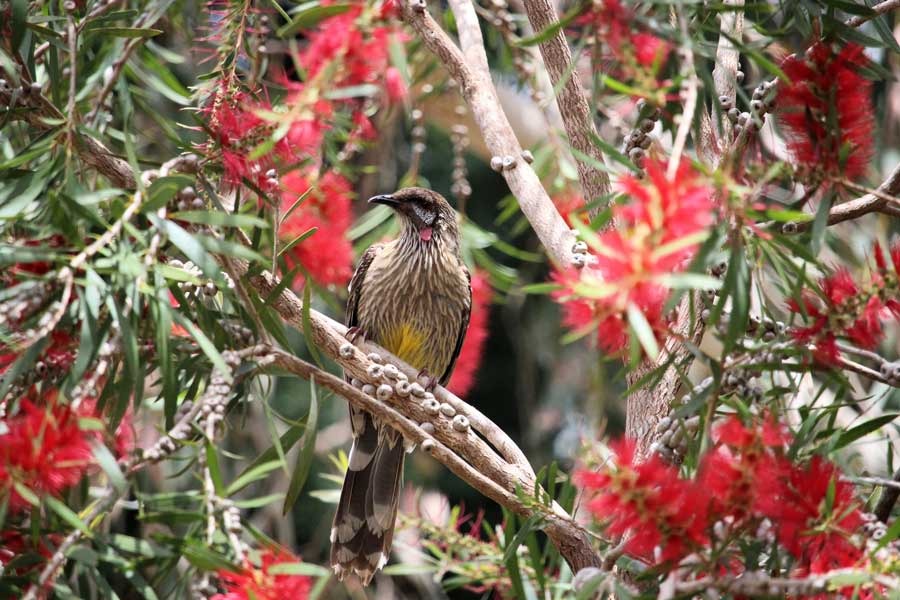
The best addition depends on the habitat you already have. The plants below appear in institutional bird-gardening guidance.
| Plant example | Useful resource | Season or layer | What to watch |
|---|---|---|---|
| White oak, Quercus alba | Caterpillar-host foliage and tree habitat | Spring foliage; mature canopy | Range; plenty of mature space |
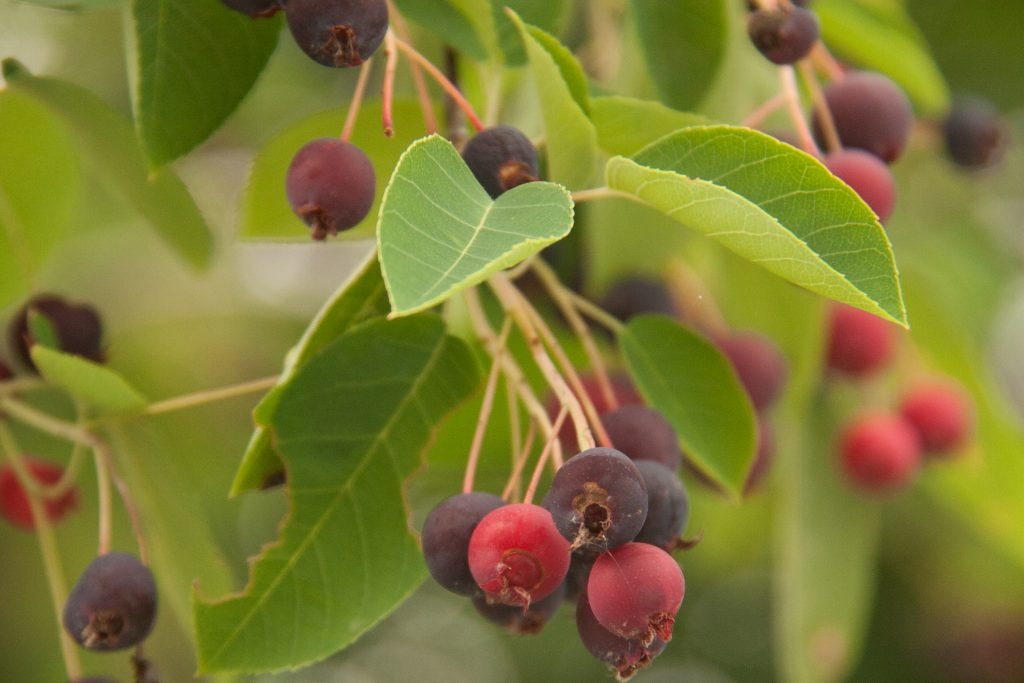
| Serviceberry, Amelanchier arborea | Fruit for birds | Small tree or woody understory | Exact species; regional fruiting period |
| Eastern red cedar, Juniperus virginiana | Evergreen shelter and berry-like cones | Winter cover; evergreen layer | Female plants bear cones; range and space vary |
| American plum, Prunus americana | Fruit and protective growth | Woody cover; fruit when ripe | Space, range and growth habit |
| Black cherry, Prunus serotina | Host foliage and fruit | Tree foliage; seasonal fruit | Regional suitability; mature size |
| Cardinal flower, Lobelia cardinalis | Nectar for hummingbirds | Herbaceous blooms | Growing conditions; native range |
| Native black-eyed Susan or sunflower species | Seeds held in flower heads | Fall seedheads | Pick the locally native species |
Spring insect prey, later seedheads and winter evergreen cover meet different needs. A shaded yard with established trees needs lower flowering plants or shrubs. An open yard may have room for a new tree. For feeders and backyard habitat more broadly, see the backyard-bird habitat guide.
Serviceberry (Amelanchier arborea) fruit ripens in June, according to Missouri Botanical Garden’s regional bird-plant guidance.
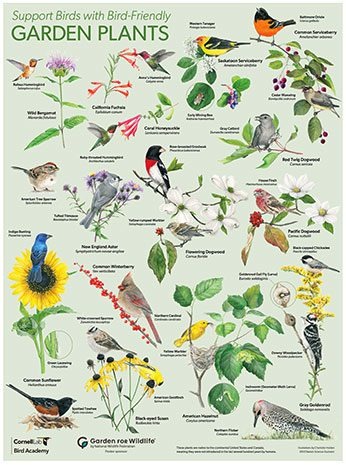
Swap in regional substitutes that do the same job. Cornell names California fuchsia as a western hummingbird nectar plant, and Missouri Botanical Garden covers woody species for its own region.
Check the Exact Nursery Plant
Look past the common name on the sign. A plant sold under a familiar name can be a different species, a named cultivar or a hybrid. Match the full botanical name to your list first.
Straight species, cultivars, and stock history
A straight species is the unselected botanical species. A cultivar is a selected form that can differ in flower shape, color or foliage. Some cultivars keep valuable wildlife traits, while changes in flowers or leaves can alter ecological usefulness. Judge each plant’s traits against the job you want it to do.
Provenance means where the plant material originally came from. Local or regionally appropriate propagation can matter for an ecological planting, though no fixed maximum sourcing distance applies to every garden.
- Exact identity: Ask for the complete scientific name and whether the stock is a straight species, a named cultivar or a hybrid.
- Origin: Ask where the plant was propagated or grown, especially when regional provenance matters to your goal.
- Treatments: Ask whether systemic insecticides, including neonicotinoids, were used and whether the supplier can document the treatment history.
- Establishment: Confirm the initial watering and protection the plant needs at your site.
Replace Existing Cover in Stages
Removing established vegetation takes shelter away from birds while the replacements are still small. This matters most when you’re clearing extensive invasive growth and waiting for young native trees or shrubs to fill the space.
One homeowner described that gap on a suburban half-acre:
I have planted literally scores of tree and shrub seedlings on my ½ acre suburban plot as I pull out massive sections of invasive vines and shrubs. As I remove all the junk I am leaving a pretty substantial void in biomass and protective cover. The seedlings are tiny by definition. It will probably be 10 years before my new plantings are mature enough to support any of the species that could potentially benefit from the new additions. I do have some herbaceous stuff as well, but that will also take some time to spread and fill in, I know that native plants are more effective than bird feeders. For the folks here who say you shouldn’t use bird feeders, what are you doing when you are starting from scratch?
The immediate problem is lost cover before the new plants fill out. Herbaceous plants and young shrubs start contributing before they reach full size, at a pace that varies by plant and location.
Identify invasive species with local guidance and remove them in phases. Keep suitable, noninvasive vegetation while new layers develop. Some infestations still need prompt control. A simple sketch of existing cover and planned replacements shows where birds will have shelter during the change.
When the Expected Birds Do Not Show Up
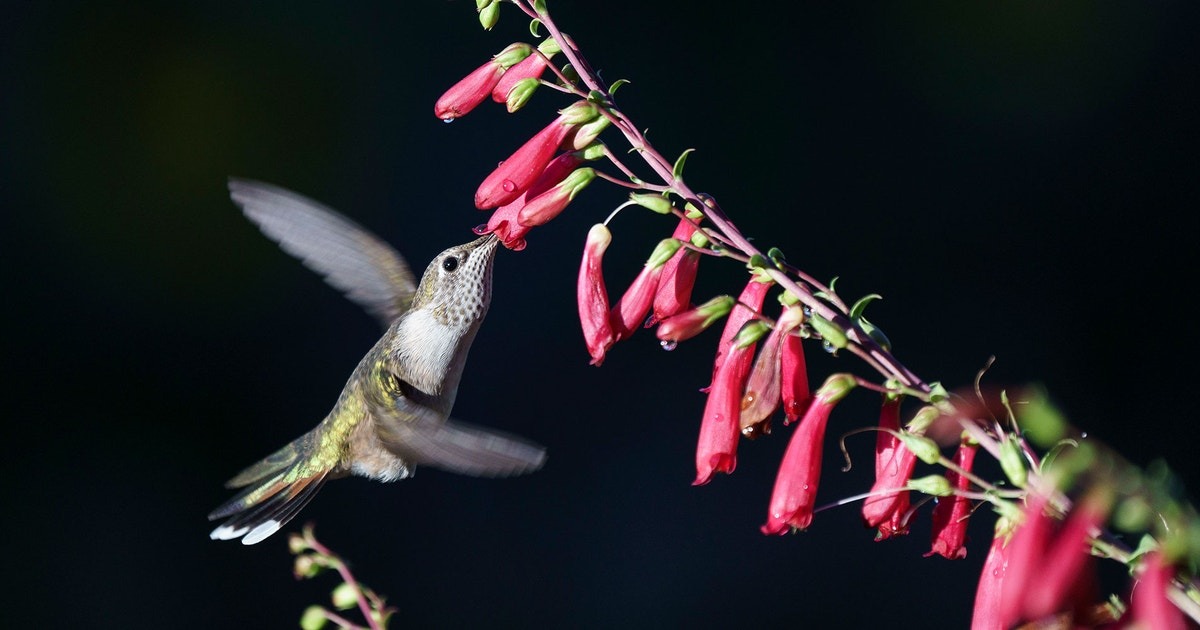
Even a suitable native plant can draw fewer visible visitors than you expected. Flowering stage, season, nearby habitat and the birds present locally all affect what you see.
A Wisconsin gardener reported frequent hummingbird visits to several flowering species, while a red flower often recommended for hummingbirds drew little attention in that yard:
(Zone 5 WI) This year I’m having an incredible amount of hummingbirds in my garden. I’m talking daily, minimum. Often several or many throughout the day. I’ve never experienced this before in my 5 year old garden. The plants they go to for nectar are overwhelmingly 4 specific plants: – Royal Catchfly (silene regia) – Cardinal Flower (lobelia cardinalis) – Great Blue Lobelia (lobelia siphilitica) – Obedient Plant (phylostegia virginiana) All of these plants have tubular centers. Royal catchfly has a star shaped flower with quite sticky sepals (literally catches flies) that’s impossible to retrieve nectar from unless you have a hummingbirds beak. It’s also the red plants that they seem to adore. However I have red monarda didyma that they largely ignore. What are you guys growing to attract the hummingbirds?
These are one garden’s observations, with the contributor’s original plant spellings. Visible visits can differ a lot among flowers in the same place.
A North Carolina gardener described more birds and rabbits but fewer visible pollinators in the second year of native planting. Rabbit browsing delayed some flowers, so several explanations fit the drop in insect activity.
Keep dated notes on weather, flowering, seed set, browsing damage and bird or insect visits. Comparing similar periods shows whether a plant hasn’t bloomed yet or is flowering without visitors. It can still supply host foliage or cover between visits.
Turn Your Research Into a Planting Shortlist
Record each plant with its full scientific name, local-range evidence, site fit, wildlife job, and exact nursery identity and treatment history. Mark the whole entry by its weakest field, so an unresolved critical item stays visible.
| Decision | Local range | Site and mature size | Wildlife job | Nursery stock | Next step |
|---|---|---|---|---|---|
| Replace | Confirmed outside the local native range, or another hard check fails | Any | Any | Not needed | Choose a different species |
| Hold | Range or scientific name still unconfirmed | One key requirement unknown, such as drainage or mature space | Intended job recorded | Identity or treatment history unchecked | Finish the missing checks before buying |
| Ready | Full scientific name recorded; native status verified | Conditions and mature space confirmed | Food or cover job recorded | Identity and treatment history confirmed | Add to the purchase shortlist |
Once every plant on your list has a status, the Ready ones are your shopping list.