If American Crows already visit your neighborhood, start with a quiet yard where they have room to land, forage, and watch their surroundings. If local rules allow it and you can keep the area clean, try a small amount of food. If feeding brings pests, unsafe conditions, or complaints, stop and watch crows where they gather naturally.
First, check whether your yard is a good place for crows
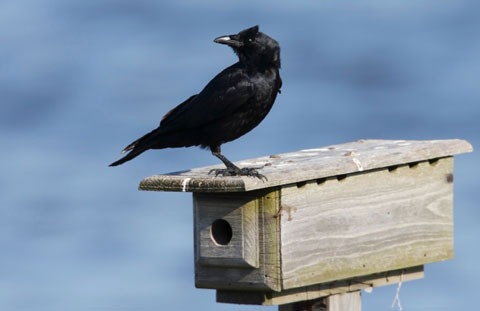
Crows on your neighbor’s roof only tell you that they use the neighborhood. Whether one visits your yard depends on the space it finds there.
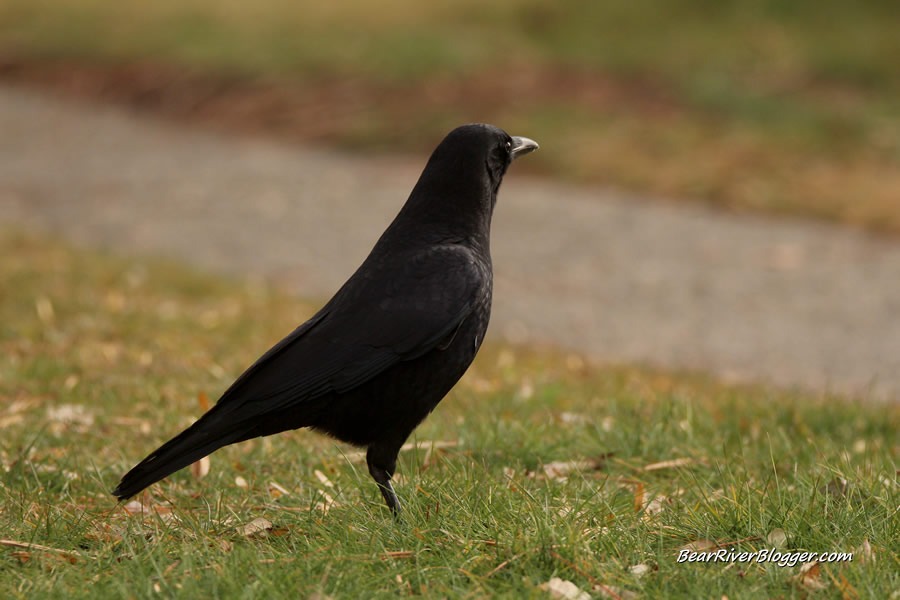
American Crows (Corvus brachyrhynchos) forage on open ground, watch their surroundings from trees and other elevated places, and eat a wide range of foods. A quiet yard with room to land is the kind of place they investigate.
The Cornell Lab’s American Crow guide notes that these birds rarely use conventional feeders. A small songbird feeder has little to offer a crow.
Start by watching the birds already in your neighborhood. Are they walking across lawns, calling from nearby trees, or gathering on rooftops? If you are unsure of the species, compare size, silhouette, calls, and range using a guide to American Crow behavior and field marks. Ravens and other corvids can complicate identification in parts of the United States.
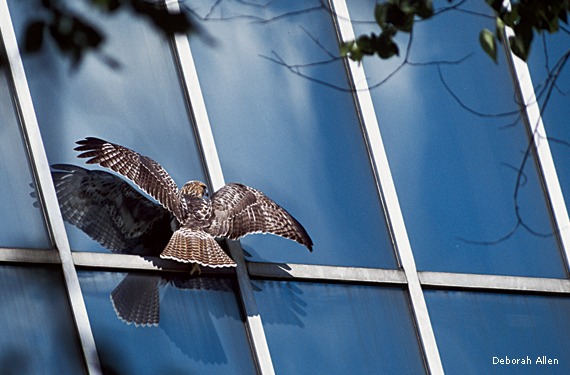
Then look at the yard itself. A dog that chases wildlife, frequent activity on the patio, or hazardous glass can rule out attracting crows on purpose.
Before you put out any food, check these:
- Nearby crow activity: Look for birds you regularly see or hear in the surrounding area.
- Accessible ground: Make sure a large bird can approach, land, and move around somewhere in the yard.
- Human disturbance: Make sure people and pets can use the yard without chasing or repeatedly approaching the birds.
- Hazards: Check for glass, traffic, and outdoor cats nearby.
- Local rules: Check municipal, property-management, rental, and neighborhood restrictions.
New York City’s WildlifeNYC guidance advises residents against feeding wild animals. Rules differ elsewhere.
Make the space usable before trying to lure a crow
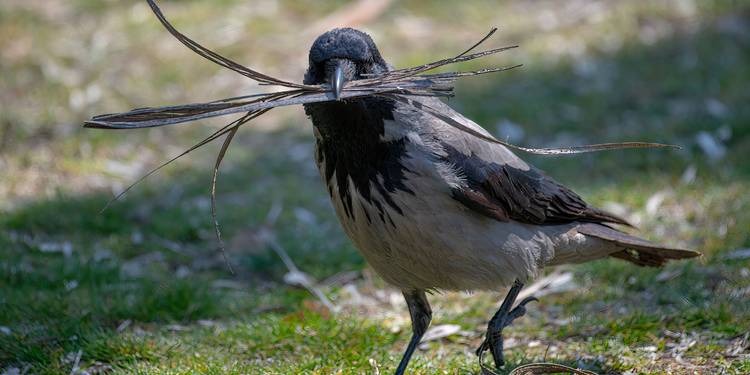
Open ground gives a crow somewhere to forage, and nearby trees and sturdy perches give it vantage points. Keep the shrubs and other habitat around that open space.
| Yard feature | Reason | What to keep in mind |
|---|---|---|
| Accessible open ground | American Crows often forage on the ground | Avoid cramped or obstructed access |
| Trees or existing perches | Provide places to observe the area | Preserve useful habitat and avoid disturbing nests |
| Clean water | Gives visiting birds a resource | Needs upkeep and safe placement |
| Small hanging seed feeder | Suits many smaller feeder birds | Poorly matched to a crow’s size and foraging habits |
If you have room for water, choose a container you can clean. Water gives visiting birds a resource without any feeding routine.
A suburban lawn bordered by trees gives a crow more landing options than an exposed apartment terrace.
For habitat choices that benefit several species, see making a backyard more welcoming to birds.
If feeding makes sense, keep it simple and temporary
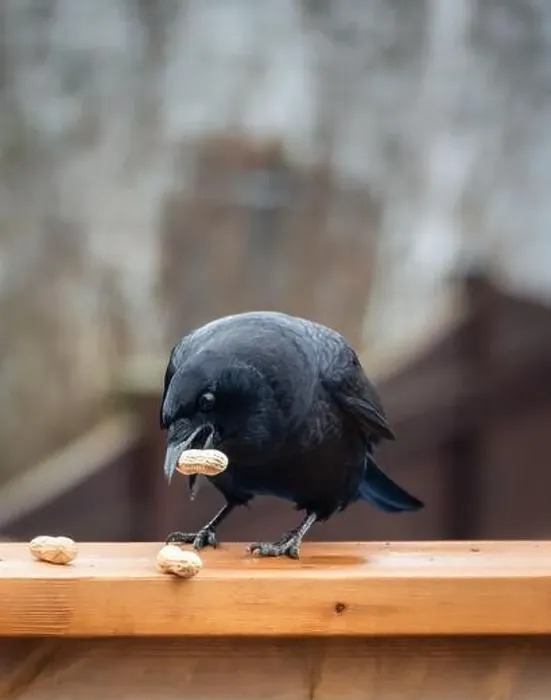
Cornell identifies peanuts as a food you can offer American Crows. Where rules and yard conditions allow feeding, try plain, unsalted peanuts in the shell in an open spot a crow can reach. They add a little to the bird’s natural diet.
Skip spoiled or contaminated food, and keep the offering temporary.
The US Fish & Wildlife Service’s guidance on feeding wild birds lists disease, predation, and collisions among the risks of feeding.
- Location: Put the food where a crow can reach it.
- Quantity: Offer only what you can remove if it goes uneaten.
- Upkeep: Clean the feeding area and equipment regularly.
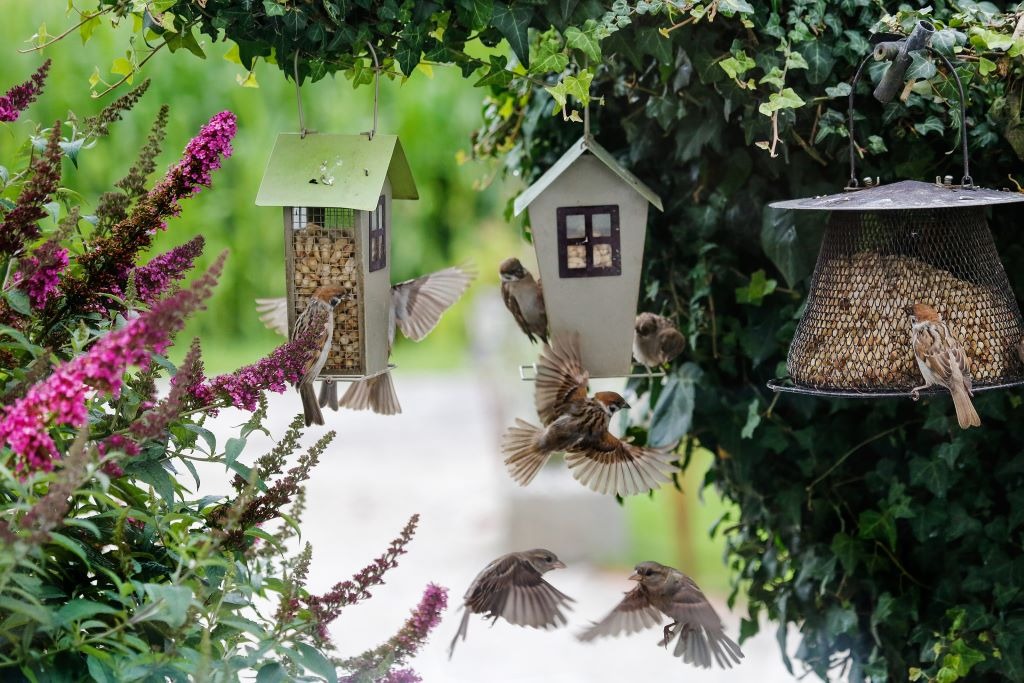
Squirrels and smaller birds can find the peanuts first. Untouched peanuts, or peanuts taken by another animal, do not count as a crow feeding in your yard.
Cornell’s Project FeederWatch explains how to clean bird feeders, and a bird feeding station cleaning guide covers the rest of the maintenance.
Why crows ignore a feeder even when other birds come
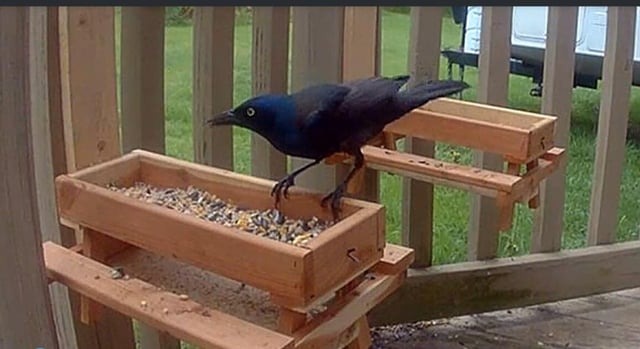
Smaller birds can empty your feeder while crows keep watching from across the street.
One person in r/crows put out raw in-shell peanuts, and smaller birds came while crows stayed in surrounding yards.
My partner and I have been trying to attract crows to our yard with very little success. We have a feeding station that is inaccessible to squirrels and chipmunks, and have been leaving raw in-shell peanuts out that we dust with cayenne pepper beforehand. While this approach has brought all kinds of birds to our yard, we seem to be getting pretty much everything except crows. I’m curious if there are any other food items we might try that would be more enticing to the local corvids. They are definitely around – we see them in our neighbor’s yards and out on the street by our house – and while we may see one of them at a time loitering out in our yard, they don’t seem to want to come to the feeder, at least not when we’re around. Any help is appreciated. Thank you!
The user also dusted the peanuts with cayenne pepper.
| What you see | Likely cause | What to check |
|---|---|---|
| Smaller birds take the food, but crows do not approach | The station is unsuitable for larger birds | Whether crows can reach the feeding area |
| Crows use neighboring trees but avoid your yard | Your yard offers less comfortable access or more disturbance | Landing space and nearby activity |
| A crow approaches but refuses food | It is watching and does not want the offering | How it approaches and leaves |
| Crows leave when a door opens | Your appearance affects their behavior | Whether visits differ when the area is quiet |
| Food disappears while nobody watches | Another animal is eating it | Which species is taking the food |
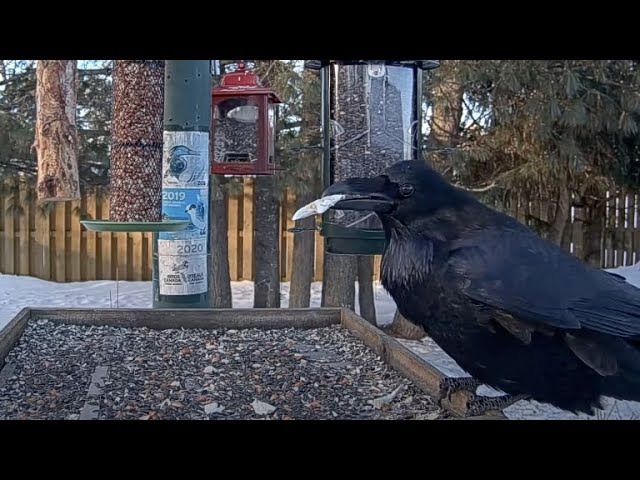
Test one factor at a time. If a crow cannot reach the food, change the access point first and watch what follows. Adding several unfamiliar foods at once makes the results hard to compare.
Note which species approaches, where it lands, and whether you see it eat. If peanuts vanish while you are indoors, you still need to identify the visitor.
For problems with several species at one feeder, read why birds avoid a feeding station.
What a crow’s visit and its recognition of you mean
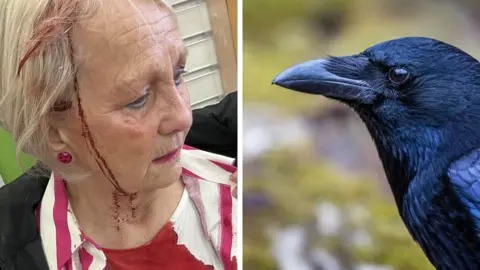
A crow watching you from a railing gives you things to record: its distance, whether it approaches, and when it flies away. Its motives remain uncertain.
In one Reddit account, a crow repeatedly appeared on a terrace, sat roughly two to three meters from the observer, and declined several offered foods.
I noticed a pattern whenever I go to my terrace, this crowbro shows up and sits about 2 – 3 meters away from me. I tried feeding it a little to befriend it, but it never takes the food. I’ve tried almonds and cooked rice with water in a cup, but nope. most of the time it just comes, sits there, watches me for a minute, then flies away.
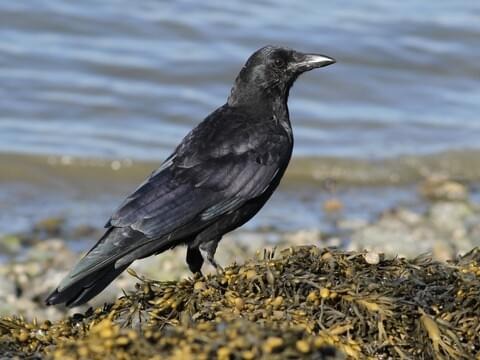
In a 2010 experiment, American Crows learned to recognize a person associated with a threatening experience and responded to that face later. Related work showed how information about a threatening person can spread among crows through social learning. Brain-imaging research has also examined responses to familiar threatening and caring human faces.
These experiments establish recognition under particular conditions. They give no timetable for earning a backyard visitor’s trust.
Stay far enough away that the crow can keep behaving normally. If it leaves, let it go.
Crow calls, decoys and shiny objects: skip the shortcuts
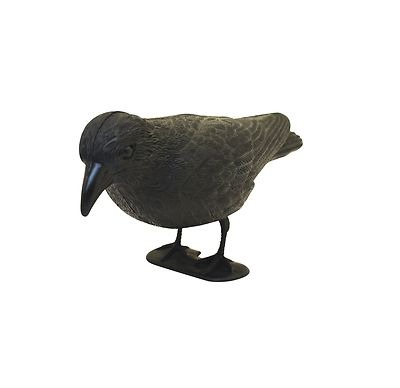
Recorded calls can disturb birds, and the American Birding Association’s ethics code encourages restraint with audio lures. Some attraction guides recommend decoys, but their value for an ordinary backyard attempt is uncertain. The shiny-object experiment involved Eurasian Magpies, so its findings do not apply directly to American Crows. Skip these shortcuts.
Know when attracting crows is causing more trouble than joy
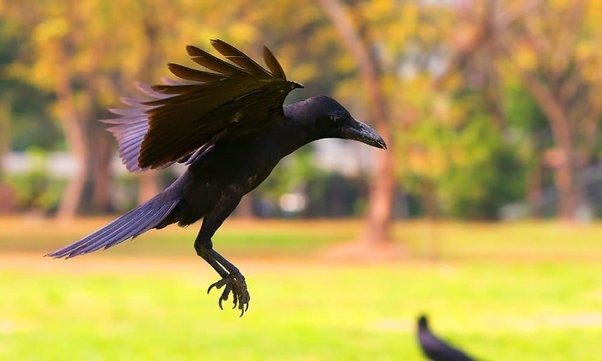
Regular feeding can change where birds gather and how much activity your neighbors notice. You may enjoy the visits, but a neighbor whose car is parked underneath may not.
A user in r/crowbro fed around 20 crows on daily dog walks for roughly a year. The birds began following the person toward home, and a neighbor eventually objected.
I feed about 20 crows in my neighborhood every day (peanuts) when I’m walking my dog. I’ve been doing this for probably a year at this point and have never had anyone approach me about it. Recently the crows started following me home for seconds and so I throw them off my balcony into the alley. Today my neighbor in the ally came out and just stared at me, so I waved at him with a big smile on my face (because I’m hanging with my crowbros, it’s a good time). He then said that the “birds poop on people’s cars, but you’ve already fed them so…” and shrugged. Fair enough, but I’m a socially awkward person and my knee-jerk response was to scan the cars in the alley – and no poop was to be found.
The neighbor’s complaint was droppings on cars, and the user saw none. The user told the neighbor they would stop feeding in the alley and use a side street.
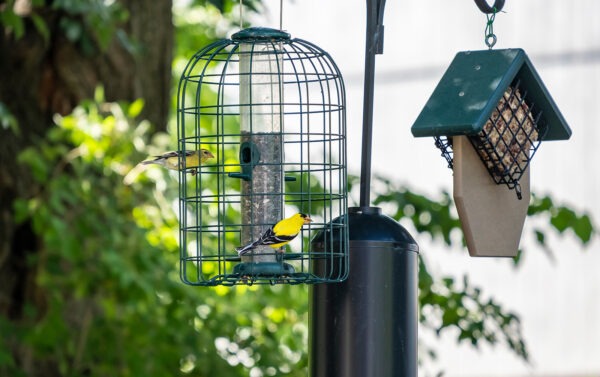
A poorly maintained feeding station can create disease risks, and unsuitable placement can expose birds to predators or collisions. If a feeding spot gets crowded, tell an ordinary gathering apart from signs of illness.
| Warning sign | Reason | What to do |
|---|---|---|
| Spoiled food or accumulating leftovers | Food and waste create sanitation problems | Stop supplying food and remove the waste |
| Birds showing signs of illness | Feeding can contribute to wildlife-health problems | Clean equipment and seek local wildlife guidance on whether to suspend feeding |
| Rodents or other unwanted wildlife | The feeding is affecting more animals than intended | Remove the food source and fix the conditions attracting them |
| Dangerous window or predator exposure | Visits put birds at risk | Fix the unsafe arrangement and do not keep feeding there |
| Neighbor complaints or property concerns | The activity affects people beyond the feeder | End the disruptive feeding practice |
| Local restrictions or guidance against feeding | Feeding may be inappropriate or prohibited | Follow the local guidance |
FeederWatch notes that temporarily removing feeders may help with illness concerns, but in neighborhoods with many feeders it can concentrate birds at the remaining sites. For glass and predator exposure, see safer feeder placement near windows and cover.