Yes. Wild American Crows can learn and remember particular human faces, especially those associated with danger. Controlled experiments demonstrated recognition for at least 2.7 years. A crow that follows you, calls at you, or swoops past you can also be reacting to food, a routine, or a threat.
What experiments show about crows recognizing human faces
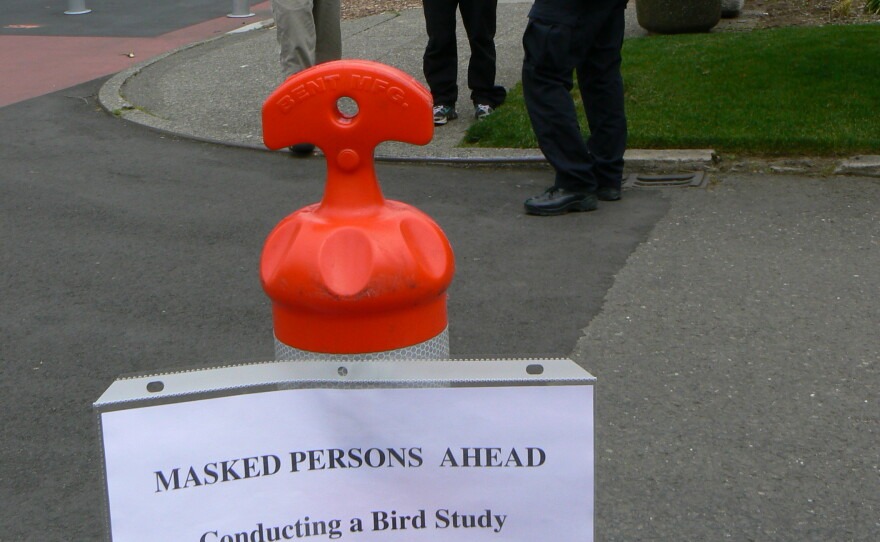
Wild American Crows learned to single out a human face worn during an unpleasant encounter. Even when a different person wore the mask later, the birds kept responding to it.
Near Seattle, John Marzluff and his colleagues captured and banded American Crows (Corvus brachyrhynchos) while wearing distinctive masks. They then approached the birds with the threatening face and a neutral comparison face, listening for scolding calls and watching for mobbing.
Before trapping, few birds scolded the threatening mask. Scolding rose after the trapping experience. In the 2010 Animal Behaviour study, the researchers reported capturing 7 to 15 birds at each of five sites.
How did researchers separate a face from other clues?
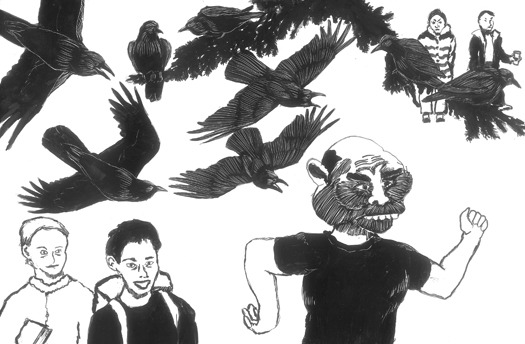
Different people wore the same threatening mask, and they varied in age, body shape, sex, and gait. The crows kept reacting to the face. So they weren’t just reacting to one researcher’s build or walk.
A neutral face served as another control. Birds could meet a masked person without that face being tied to capture. Comparing the reactions isolated what the birds had learned.
For the University of Washington campus experiments, Marzluff used a Dick Cheney mask as a neutral comparison face. The crows had no trapping history associated with it.
Photographs are a different test. In a 2017 visual-discrimination task, two captive Carrion Crows (Corvus corone) lacked the face-specific inversion effect seen in tested humans, meaning the drop in recognition when a face is upside down.
Outdoors, faces rarely appear in isolation. A neighbor may arrive with the same dog, at the same hour, wearing similar clothes. A crow can react to any of those cues, and your face is only one of them.
How long do crows remember a human face?
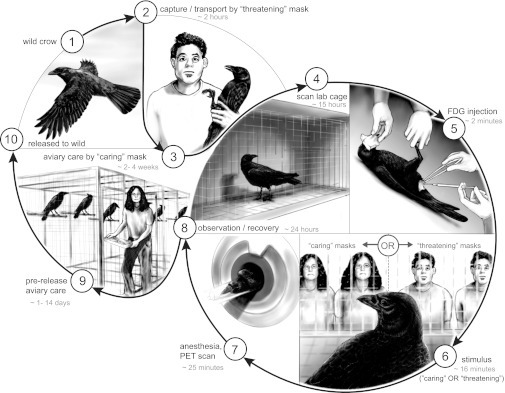
The controlled field experiments established that recognition of a threatening face can persist for years. Later research tracked both the response to the mask and how that response spread among birds.
| Research | Period | Measured outcome |
|---|---|---|
| Marzluff and colleagues, Animal Behaviour | 2010 publication; at least 2.7 years | Recognition of the face associated with capture |
| Cornell, Marzluff, and Pecoraro, Proceedings of the Royal Society B | 2011 online / 2012 print; five years | Changes and spread in scolding behavior across birds |
| Marzluff’s retrospective | 2025 account; observations through years 12 and 18 | Persistence, then decline, of scolding toward the threatening face |
These periods measure different things: individual recognition in the first study, social transmission in the second, and how often birds scolded in the long-running campus observations.
In a 2025 retrospective, Marzluff reported that through year 12, roughly four in ten encountered crows scolded the threatening mask, about twice the rate for the neutral mask. By year 18 he observed little apparent reaction. The last crow captured in his original campus work had died the previous year.
These figures count outward behavior only. Changes in the population, motivation to scold, and chances to learn socially all affect the decline, and no one measured an individual bird’s unexpressed memory at year 18.
Long absences make that distinction personal. One Reddit contributor described trying to reconnect with crows after moving to a nearby condominium.
I can actually see my old place and saw them sitting out there waiting for me and it was so heartbreaking, so I tried everything I could to get their attention. After a couple months, I started playing videos of them cawing on a loud speaker when I saw them below. One finally came up to check it out and recognized me! It was so cool to see they hadn’t forgotten me and within a couple days I had 10+ of them again all hanging out on my new balcony and they come every day.
The author took it as a reunion, though the playback is what drew the birds to the new balcony.
Can crows warn other crows about a person?
A dangerous face can become familiar to crows that were never captured. Researchers found individual learning, and information spreading among birds and between generations.
- Individual learning: Crows caught during a masked researcher’s visit later scolded the face associated with capture.
- Learning from other birds: Uncaptured crows sometimes joined the immediate response near a trapping event, which could reflect conditioning to that scene. Lone crows that had never been captured later recognized the face too, which fits learning from other crows (horizontal social learning).
- Learning from parents: Offspring of adults familiar with the threatening mask later scolded it, supporting vertical social transmission, where the response passes down from parents.
In the Cornell, Marzluff, and Pecoraro social-learning study, scolding frequency doubled at one site and the response spread at least 1.2 kilometers over five years. Birds with direct capture experience also distinguished the threatening and neutral masks more precisely than birds informed socially.
Does a crow approaching or following you mean it knows you?
A crow that keeps approaching you may recognize you, the place, or a mix of cues. Imagine sitting on the same park bench each week and bringing food. Your timing, clothing, movements, and the bench itself all arrive together.
A contributor to r/crowbro described feeding Hooded Crows at a park where many other visitors also fed birds. The poster tried to remain recognizable through clothing and location.
I try to feed them every other day but sometimes life gets in the way. In my park, there are LOTS of people who feed the pigeons and squirrels, so the crows get fed too, or they look around in the trash. I am curious if crows are able to tell people apart. Every time I go, I sit on the same bench and wear a bandana so as to be consistent in my appearance and location, and I feed exclusively the crows (sorry pigeon lovers, no hate). I bring them peanuts, walnuts and cashews.
These are Hooded Crows, outside the United States.
In a 2013 field study, American Crows left sooner and more urgently when an approaching human looked straight at them. The researchers found no difference in response to smiling versus scowling expressions.
What different encounters can suggest
| Observation | Possible cues | What to check |
|---|---|---|
| A crow appears at the same bench each morning | Place, timing, expected food, regular visitor | Is it the location or the person? |
| A crow follows someone walking a dog | Person, companion animal, walking route, past encounters | Does it react to the dog or the route on separate visits? |
| Birds appear after someone moves nearby | Familiar visitor, calls, food, nearby territory | Do they come for the person, the calls, or the food? |
| A crow approaches very closely | Habituation, food expectation, learned familiarity | Is it used to a routine or to one person? |
If you turn up without the dog or the food, watch whether the crow still comes to you.
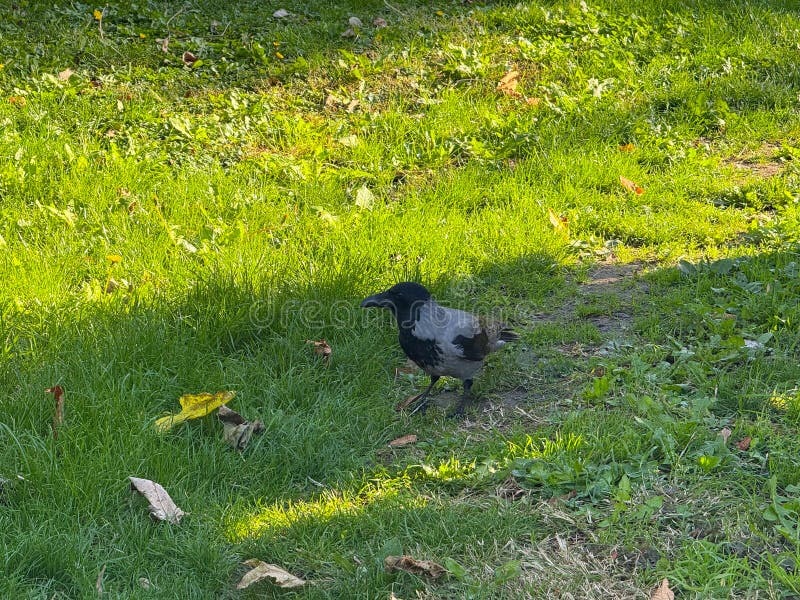
A small field notebook keeps what happened separate from what it seemed to mean:
- Time and setting: Record when and where the bird appeared and what it was doing before you arrived.
- Familiar cues: Note food, companions, clothing, and whether the route was the usual one.
- Bird identity: Record visible features that tell one individual from another, and note it when several look alike.
Why might a crow scold, swoop, or react differently to one person?
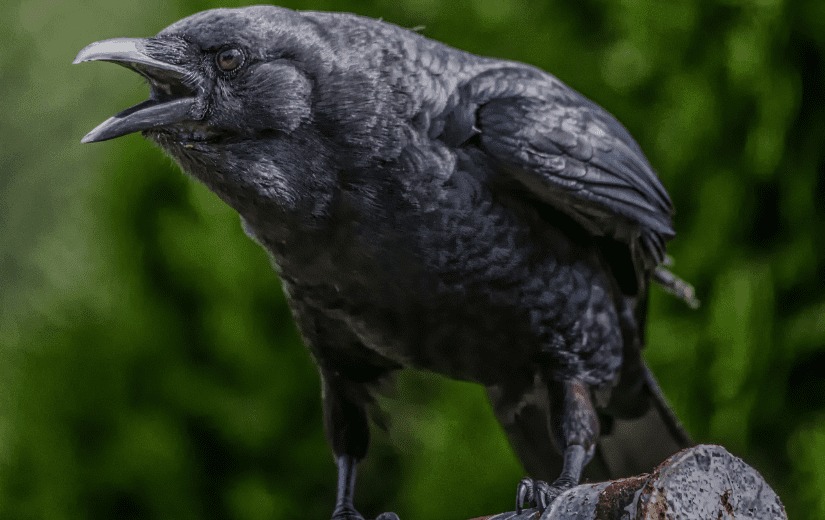
Scolding and swooping can be defensive responses to perceived danger, particularly around nests or fledglings. Group alarm calls can follow a predator’s appearance. A bird used to being fed may treat a familiar visitor differently from someone who just shares the route.
The mask experiments tied scolding to one learned threat. A neighborhood encounter has many more variables. One Reddit contributor reported that crows approached her on morning walks but swooped near her husband when he took over the dog walking.
Every now and then my husband takes over the morning dog walking duties. When he does, he says the crows “swoop” his head. This morning he told me that he actually felt their claws touch the back on his head. My guess is that the crows recognize my little dog, expect treats from the accompanying human, and then try harder to get his attention when he ignores them. That said, today I visited our park without my dog to test if they would recognize me. They saw me from a tall building across the street as soon as I entered and flew right up to me.
The story has two people, a dog, a feeding history, and a reported close pass, so it supports more than one explanation. Getting swooped is unsettling either way.
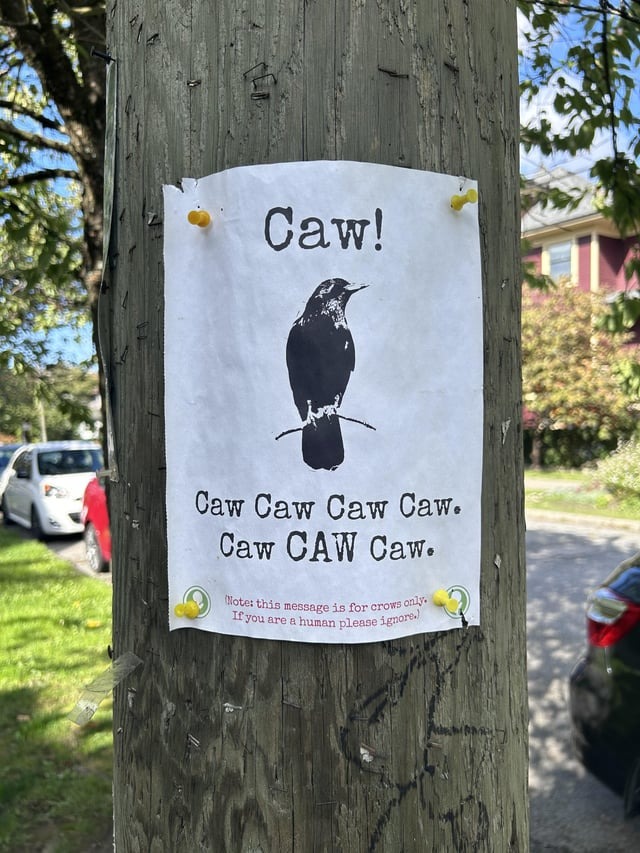
If a crow repeatedly swoops close to your head, move away calmly and give it more space, especially when young birds may be nearby. Avoid chasing the bird or offering food to encourage another close approach. Persistent problems in a managed public area may warrant guidance from local wildlife staff.
Do crows remember kindness or become friends?
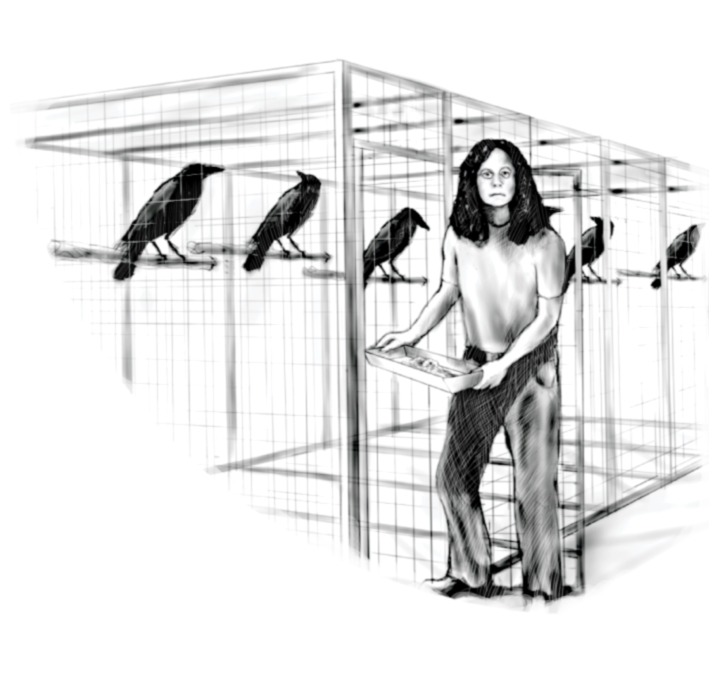
In a 2012 PNAS brain-imaging study, wild-caught crows showed different neural activity for faces linked to earlier capture or caretaking, consistent with learned associations about people.
A crow that appears when a familiar feeder opens the door is likely expecting food or reading a safe routine. What it feels is unknown.
In Audubon’s Summer 2026 reporting, behavioral ecologist Anne B. Clark describes young crows carrying objects and potentially dropping them while taking food, a plausible explanation for some apparent gifts.
How to observe a familiar crow without disturbing it
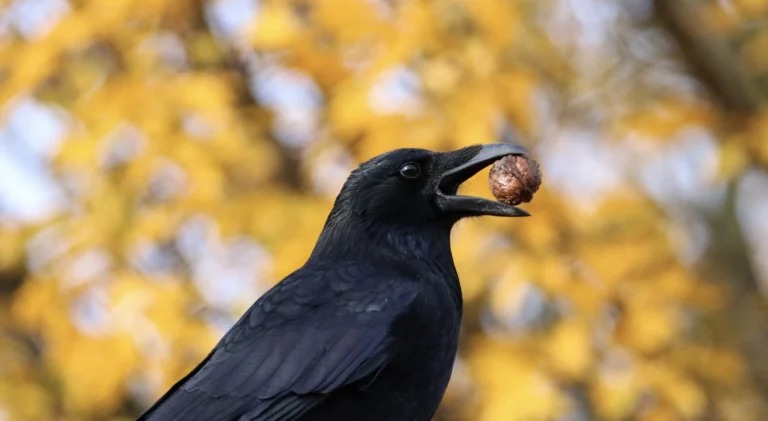
The mask experiments used controlled procedures. Casual observers should not frighten a bird on purpose, broadcast alarm calls, or try to trigger mobbing, because each disturbs the animal.
The American Birding Association’s Code of Birding Ethics emphasizes respect for birds, their habitats, and other people watching them. To weigh crow feeding behavior, backyard habitat, and potential hazards, use how to attract crows to a yard responsibly as a cross-check. Let crows go about their business around nests, fledglings, and feeding areas, and watch from a respectful distance.