Leave an in-use nest of a protected wild bird where it is and change how you use the porch. If the location is a real safety emergency, contact your state wildlife agency and a qualified professional before you move the nest or anything in it. Once nesting has ended, check the rules and change the site before the birds try again.
A nest in a front-door wreath is a different problem from one under a fixed eave. A swinging door can jolt the nest. A porch light raises questions about heat and electricity. A hanging planter still needs watering.
Four things decide your next step: whether the nest is in use, which bird built it, what the nest is attached to, and whether the spot creates a real hazard or blocks your access. Start with what you can learn without touching the nest.
Is the Porch Nest Still Being Built, In Use, or Inactive?
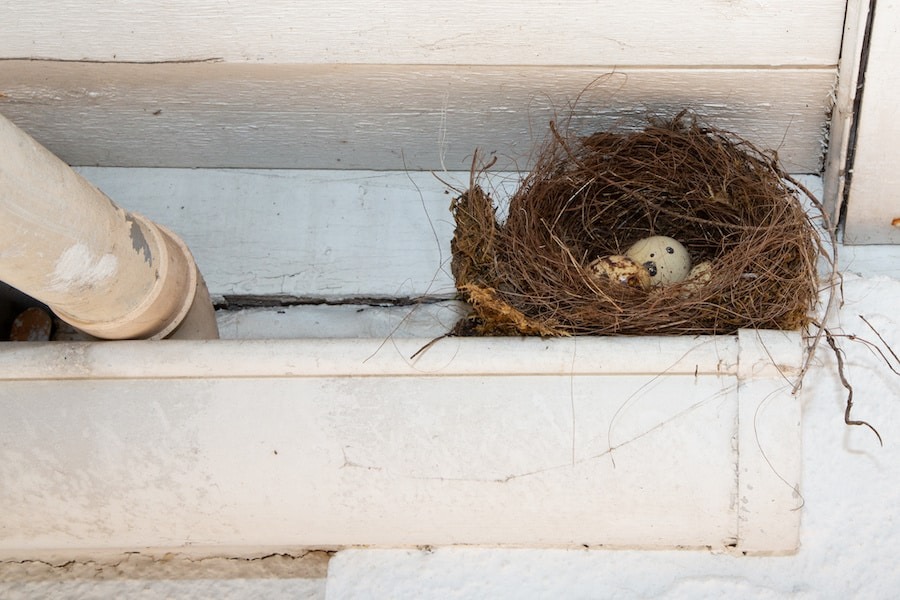
A few fresh twigs in a wreath call for a different response than a nest with eggs or dependent chicks. You may see an adult carrying material but have no view inside the finished nest.
The U.S. Fish and Wildlife Service uses the term in-use for a nest with viable eggs or young that still depend on it. Its January 15, 2025 memorandum also defines inactive nests, including construction before egg laying and nests whose breeding use has ended.
| What you can establish | What it means | Ordinary response |
|---|---|---|
| Only new nesting material is being added, before eggs are present | Early construction | Remove newly added material to discourage building, without harming birds |
| Viable eggs or nest-dependent young are present | In-use nest | Leave the nest in place and keep disturbance low |
| Eggs or chicks can’t be seen, or the stage is unclear | Status uncertain | Treat it as in use until you know |
| Breeding use has ended and no viable eggs or dependent young remain | Inactive nest | Consider site work under the handling rules |
Judge the stage from a distance. Watch whether adults are collecting material, sitting on the nest, or visiting young. If a fixture is too high or a wreath too deep to see into, or the nest simply looks quiet, treat the stage as uncertain, since a developing clutch may be inside. Don’t climb up, turn the wreath, or flush an adult off the nest to check.
Can You Legally Move or Remove a Nest From Your Porch?
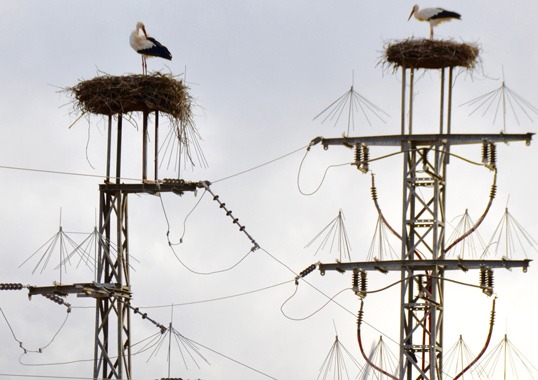
For a bird protected by the Migratory Bird Treaty Act (MBTA), destroying an inactive nest, relocating a nest, and collecting a nest are three different legal actions. Moving the whole wreath can count as moving the nest.
The USFWS nest memorandum, MBPM-2-02, explains the agency’s policy on nest destruction and relocation.
| Action involving an MBTA-protected nest | Federal distinction |
|---|---|
| Leave the nest in place | Nothing is removed or relocated |
| Destroy an inactive nest without taking possession | Does not require MBTA authorization if no birds, viable eggs, or dependent young are unlawfully taken. Other laws may still restrict the action |
| Relocate an inactive or in-use nest to another site | Requires authorization, because relocation involves collection or possession |
| Destroy an in-use nest | Requires authorization |
| Opportunistically salvage an inactive nest | Certain salvage is authorized under 50 CFR 21.16, subject to its conditions, including donation or destruction within seven calendar days |
| Keep a protected nest as a souvenir or decoration | The inactive-destruction and salvage rules do not give general permission for personal possession |
On January 15, 2025, USFWS replaced earlier memoranda on nest destruction and relocation of nest contents. Keep that date in mind when you read older advice about moving a porch nest.
The salvage authorization in 50 CFR 21.16 covers qualifying opportunistic collection of inactive material for disposal or donation. It does not let you pick up a nest with eggs and install it elsewhere for the birds to keep using.
Unhooking a wreath and carrying it a couple of feet can disrupt a nesting attempt. Cornell NestWatch warns that relocated nests may be damaged or hard for adults to find. A short distance does not make the move legal or safe for the birds.

A separate authorization under 50 CFR 21.14 covers specified nest situations inside buildings. USFWS explicitly excludes exterior locations, so a front porch, outdoor eave, or wreath on an exterior door falls outside it.
Species and jurisdiction matter. House Sparrows, European Starlings, and feral Rock Pigeons are covered differently under the federal MBTA than many native migratory birds. State, Tribal, and local requirements can still apply, and eagles and species covered by the Endangered Species Act have additional protections.
If you’re considering physical intervention and aren’t sure of the bird’s protection status or the authorization you need, identify the bird by watching from a distance. Then consult your state wildlife agency or the USFWS Migratory Bird Permit Program. The federal program lists [email protected] for non-eagle permit inquiries.
What if the Nest Is in a Front-Door Wreath or on Your Only Door?
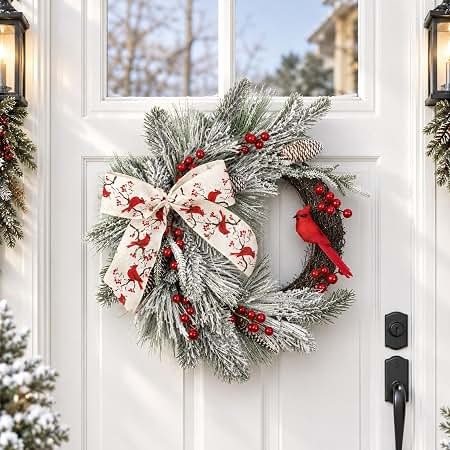
An occupied wreath on a busy door needs an access plan.
Cornell NestWatch’s guidance for inconvenient nesting sites covers both homes with an alternate entrance and those with only one practical door.
A wreath moves, which makes it especially awkward. An inward-opening front door and an outward-opening storm door can jolt the nest again and again, even when everyone is careful.
- Choose the least disruptive entrance. Use another door if you have one. If not, keep necessary movements calm and don’t open and close the door just to watch the birds.
- Give delivery drivers clear directions. Leave a note away from the nest asking them not to knock, or naming another drop-off spot.
- Tell everyone in the home. A visitor who hasn’t noticed the nest may swing the storm door open.
- Keep essential access. A nesting bird is no reason to block a required exit or make entering and leaving unsafe.
A parent that flies off when someone opens the door may return once things are quiet. Opening the door repeatedly to test its reaction causes the disturbance you’re trying to avoid.
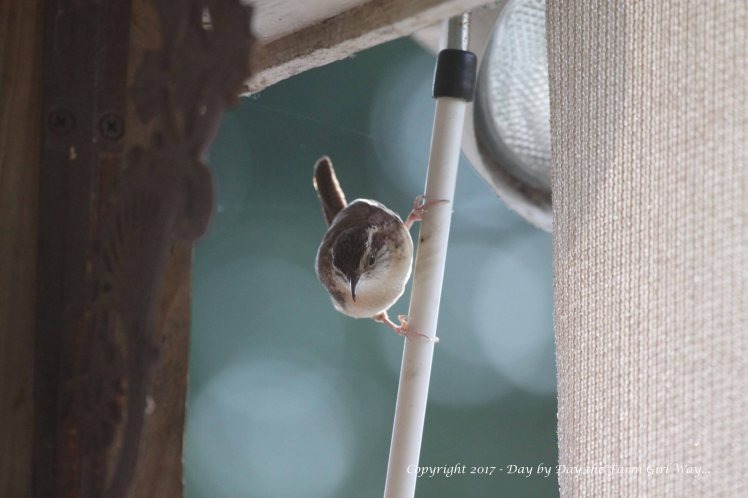
If the door is your only safe exit and the nest blocks it, get help before you move anything.
What if I’m renting and my lease ends before the birds leave?Tell the landlord or property manager about the nest before move-out cleaning or exterior work is scheduled. Coordinate access and any work affecting the nesting site under the applicable wildlife rules. A lease deadline does not itself authorize relocating a protected nest.
Does the Answer Change on a Porch Light, Planter, Beam, or Eave?
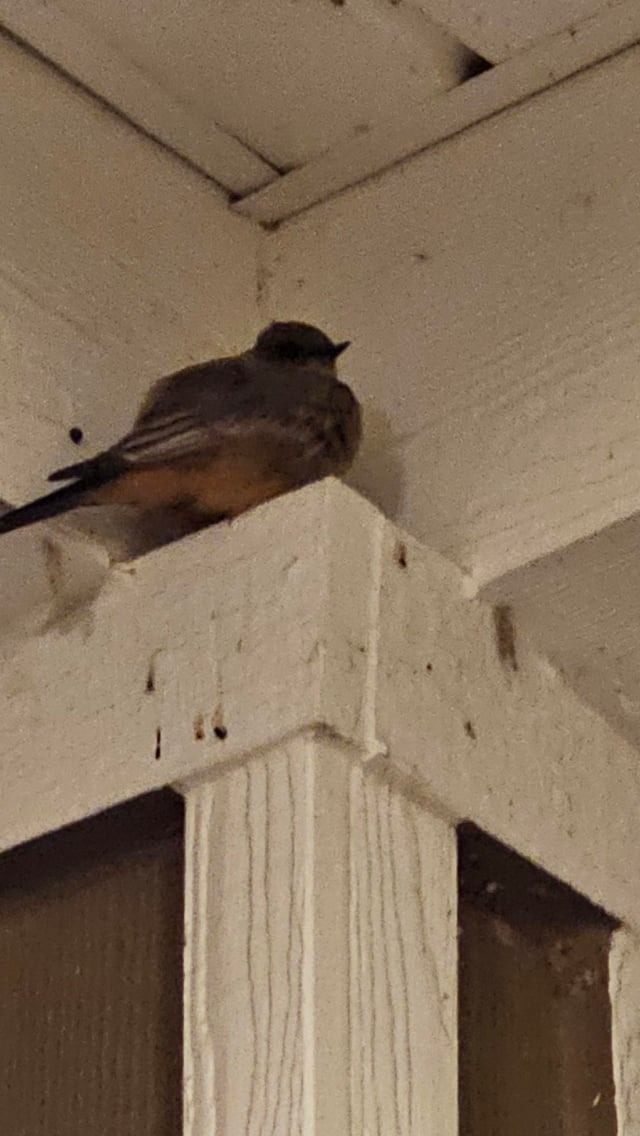
The nest’s attachment point changes the problem. A light can create an electrical or heat concern. A hanging basket needs water. Birds on a fixed ledge can nest while people walk below without touching the structure.
| Location | What makes it difficult | Useful response |
|---|---|---|
| Wreath or moving door | Repeated vibration and sudden movement | Follow your entry plan and don’t move an occupied support |
| Porch light | Fixture heat, electrical condition, or obstruction | Skip optional use of the light |
| Hanging planter | Watering can soak the nest or disturb adults | Change how you water so the nest stays undisturbed |
| Fixed beam, ledge, or exterior eave | Close passage or planned maintenance | Keep routine activity at a distance and reassess any work that would affect the site |
A nest on a damaged or hot light fixture is a bigger problem than one on a solid ledge.
New Hampshire Audubon discusses nesting around porch lights as a possible heat or fire concern. If a fixture looks unsafe, have a qualified electrician and the wildlife authority decide the response before anyone takes equipment apart around the nest.
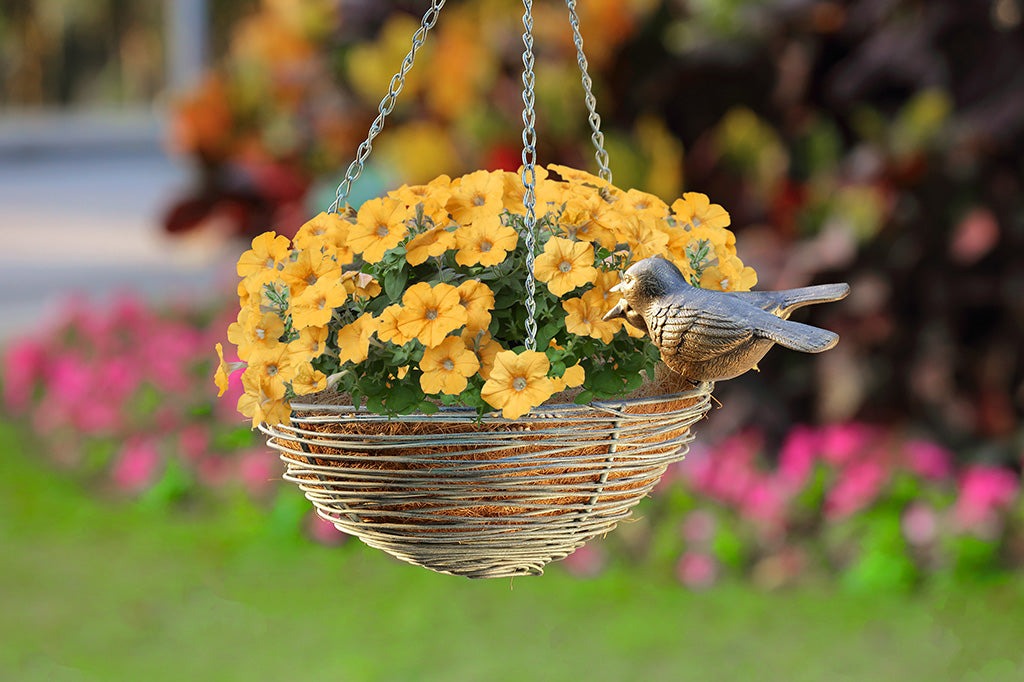
For a hanging basket, Cornell NestWatch suggests changing your watering so you don’t soak or disturb the nest. How you do that depends on where the nest sits in the plant. If you can’t water the basket without reaching into an occupied nest, you need a different arrangement.
Location can hint at the species. Audubon describes House Finches using wreaths, eaves, and hanging planters, American Robins nesting near entrances, and Barn Swallows nesting on structures. Placement alone doesn’t identify the bird.
Could leaving the porch light on help keep the eggs warm?No. A household light is not a controlled incubator. Do not use the fixture to warm wild-bird eggs or attempt electrical modifications around an occupied nest; a displaced or exposed egg calls for qualified wildlife advice.
How Do You Manage Pets, People, and Curious Children?
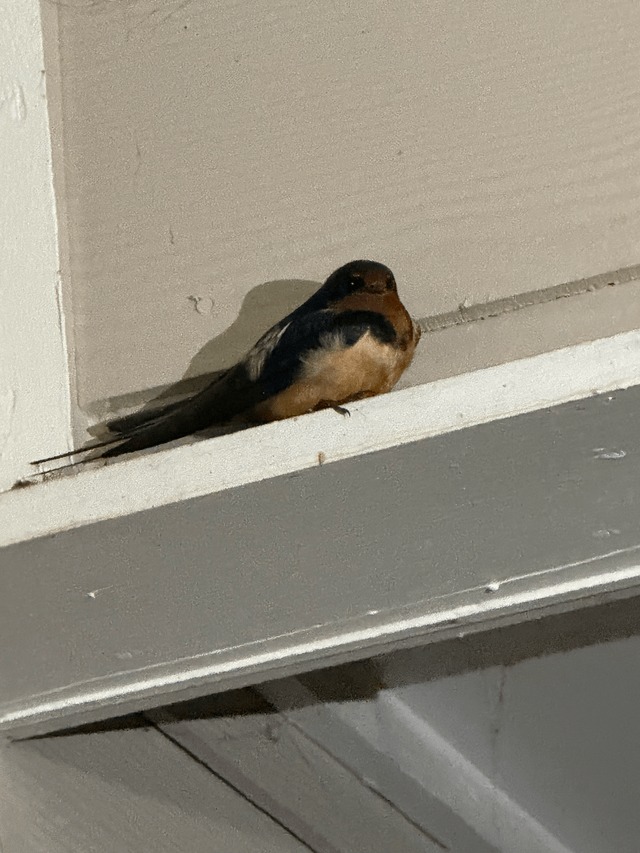
Keep cats and dogs away from the nest whenever you use the doors, especially when a door opens inward and a young bird could get into the house. Tell children and visitors which part of the porch to avoid, and don’t invite them to get a closer look. Cornell NestWatch warns that frequent nest visits and close photography can disturb adults or young and attract predators.
Have the Parents Abandoned the Nest, or Are Their Visits Hard to See?
Not seeing a parent for several hours doesn’t mean abandonment. During egg laying, a female may visit the nest only once a day, according to Cornell NestWatch. After hatching, food deliveries can be too brief to catch from a nearby window.
Regular incubation begins once the clutch is complete. If you only check the nest when you leave for work, you can miss most of the activity. An adult frightened by a door may come back once the porch is quiet.
For apparently unattended eggs, Cornell gives two observation periods:
- Suspected abandonment of an unchanged egg nest: NestWatch describes waiting about four weeks from the last observed adult visit, longer for some species, before concluding anything from continued absence.
- Eggs that have not hatched when expected: Its separate guidance says to wait four weeks beyond the expected hatch date before concluding that the clutch will not hatch.
The first period runs from the last adult sighting, the second from the species’ expected hatch date. Neither is a legal deadline for removing the nest.
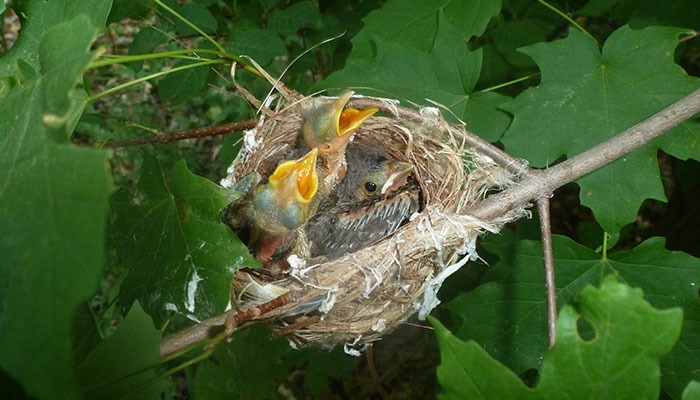
Don’t stand beside the nest waiting for a parent or open it to check the eggs.
What if an Egg, Chick, or Whole Nest Falls?
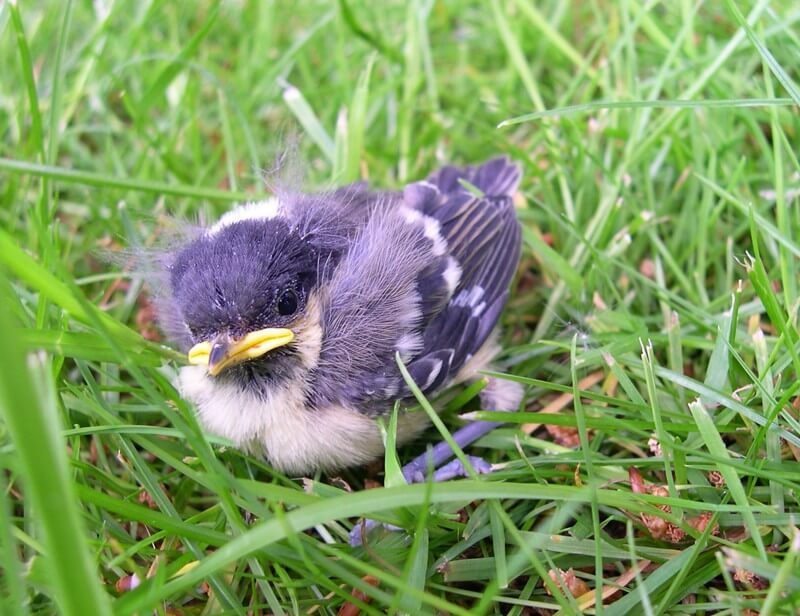
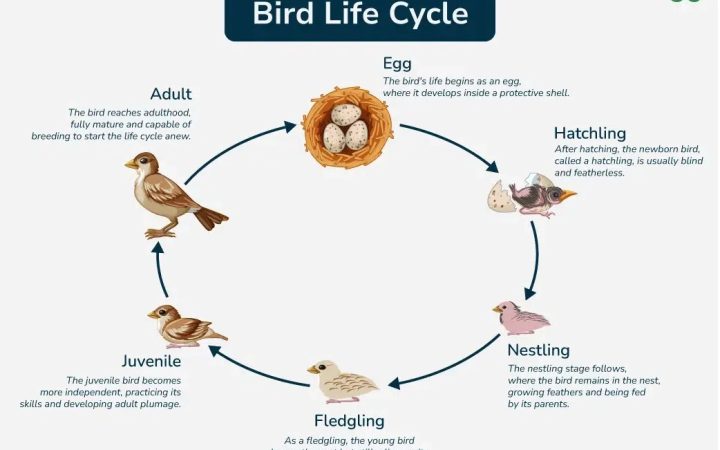
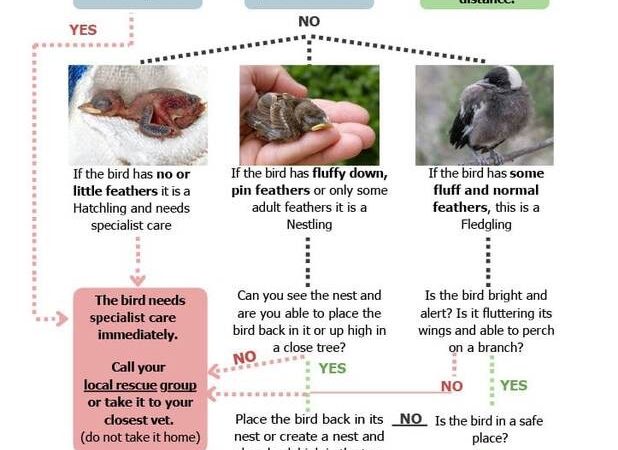
A bird on the ground doesn’t always need to go back in a nest. A fully feathered, alert fledgling may spend time outside the nest while its parents keep feeding it. A less-developed nestling has different needs. For help judging nestlings, fledglings, and parental care, see what to do after finding a baby bird on the ground.
To tell the two apart, see how to tell a nestling from a fledgling. Cornell NestWatch cautions against force-feeding food or water to young birds.
A displaced egg or fallen nest is a different problem. You can’t tell from an intact shell whether the egg is viable. Don’t improvise incubation or assemble a replacement nest as a general rescue measure.
Who to contact depends on what happened:
- Injured or clearly distressed bird: Contact a licensed wildlife rehabilitator or wildlife veterinarian. The guide to finding help for an injured wild bird covers this referral in detail.
- Immediate electrical or structural danger: Call the electrician or emergency service that fits the hazard, and follow wildlife law for any work involving the nest.
After a storm dislodges an egg or destabilizes an occupied nest, a qualified responder can assess the damage and any living birds.
How Long Will the Porch Be Occupied?
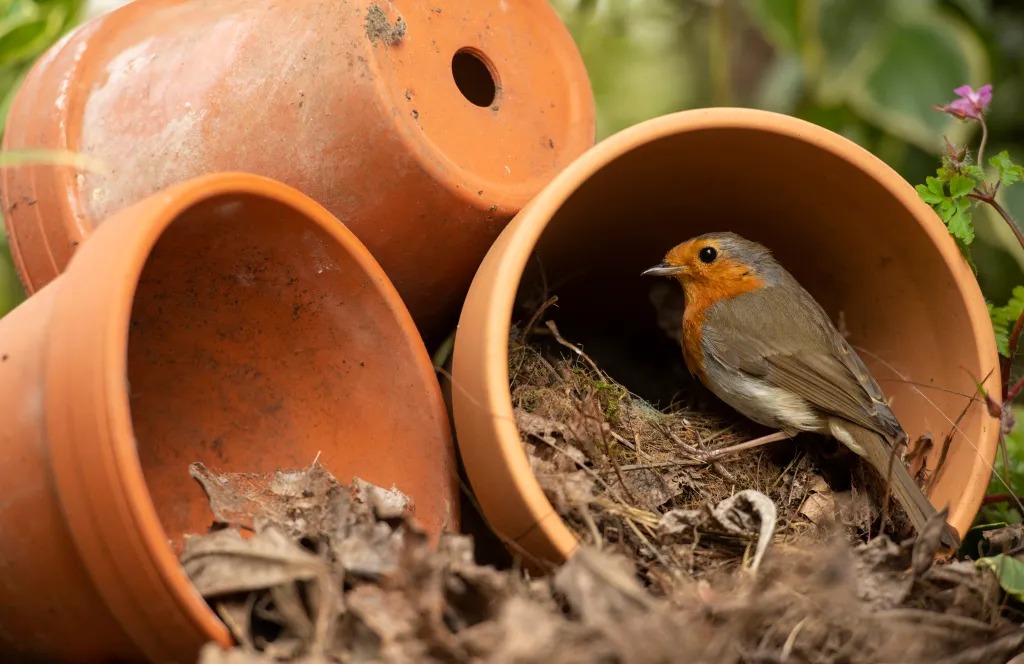
Many small songbirds spend roughly a month incubating eggs and raising young until they leave the nest. Species and stage vary considerably.
For an American Robin, New Hampshire Audubon gives approximately 12 to 14 days of incubation and another 14 to 16 days from hatching until the young leave the nest.
Cornell’s Eastern Phoebe account lists 15 to 16 days of incubation and a nestling period of 16 to 20 days. With ranges like these, you can’t predict when an unidentified porch bird will leave from the day you first notice twigs.
Leaving the nest isn’t the same as independence. Young birds may keep getting parental care away from the nest, and some adults start another breeding attempt nearby.
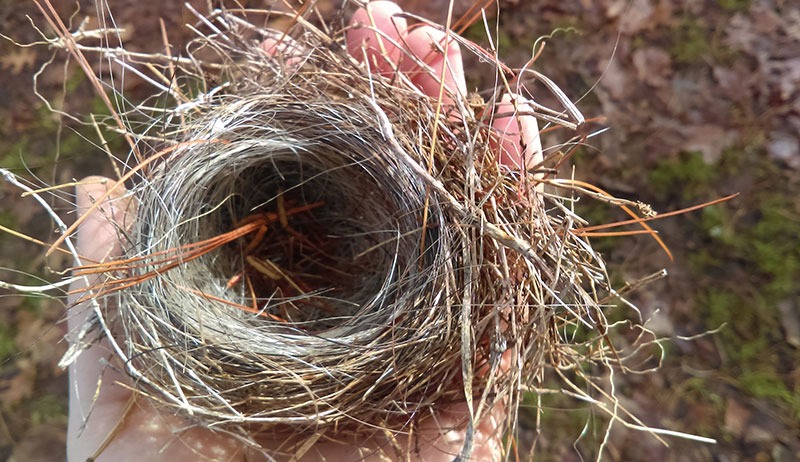
Before you treat the site as finished, use the species timeline and your own observation to confirm that no viable eggs or nest-dependent young remain. One empty-looking moment, or one chick leaving, doesn’t settle the nest’s status.
For the broader seasonal picture, see bird nesting seasons in the United States.
After the Birds Leave: Preventing Another Porch Nest
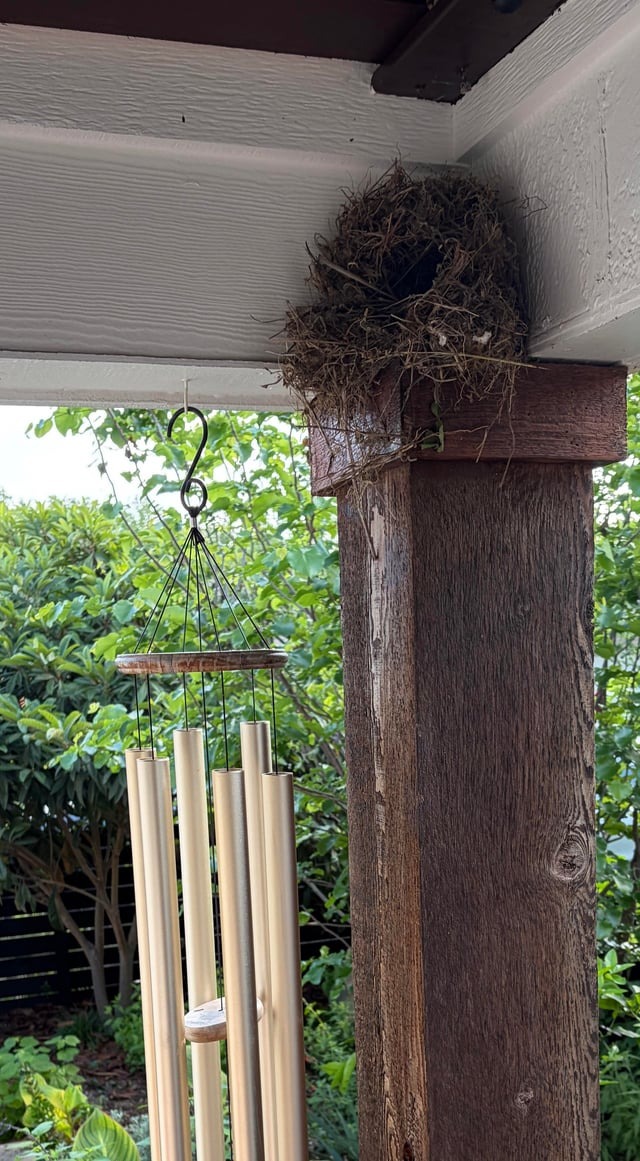
Prevention works best before the next nesting attempt begins. Once breeding use has ended and any work is lawful, you can change the features that attracted the birds.
A wreath on a busy door creates a recurring access conflict. A sheltered ledge or hanging basket needs a different fix, because its fixed position, cover, or plant care may be the attraction.
- Frequently used doors: Move decorative wreaths away from daily door movement before birds start building.
- Planters and decorative supports: Move or rethink them where watering or foot traffic keeps colliding with nesting.
- Fixtures and sheltered corners: Do necessary maintenance or site changes once nesting has ended and the rules allow the work.
Pick modifications that don’t trap or injure wildlife or compromise a fixture’s ventilation and electrical safety. Don’t improvise with adhesive products, loose netting, spikes, or chemicals around nesting birds. A new clutch can also begin before planned work takes place.