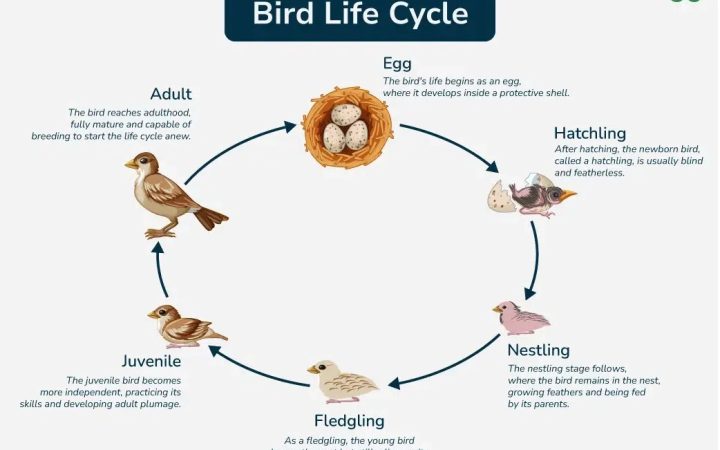
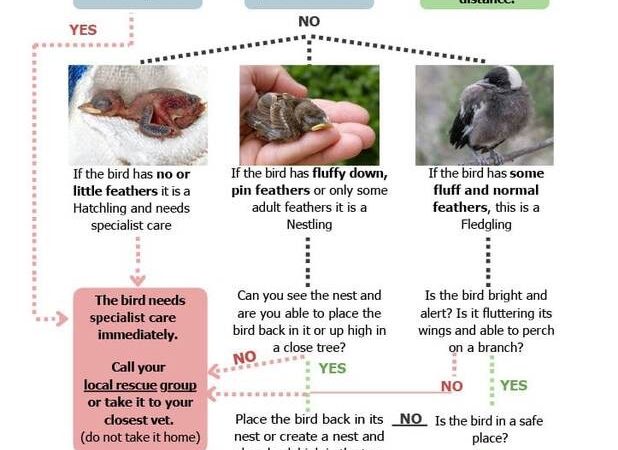
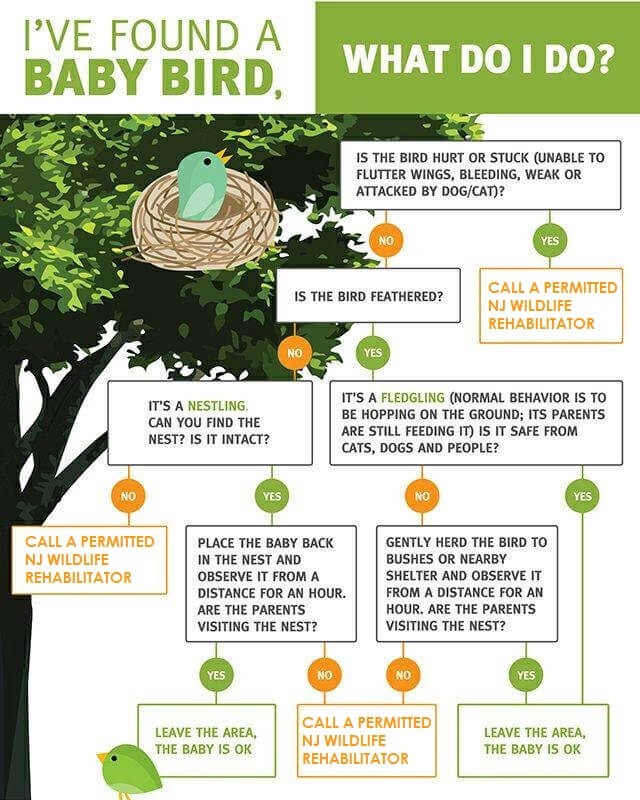
If a young bird is injured or has had known contact with a cat, call a licensed wildlife rehabilitator, whatever its age. A healthy, mostly feathered bird that hops or perches is a fledgling and should stay near its parents. A sparsely feathered bird that can’t move or perch is a nestling. Put it back in its correct nest or get professional guidance.
First, check whether the young bird needs urgent help
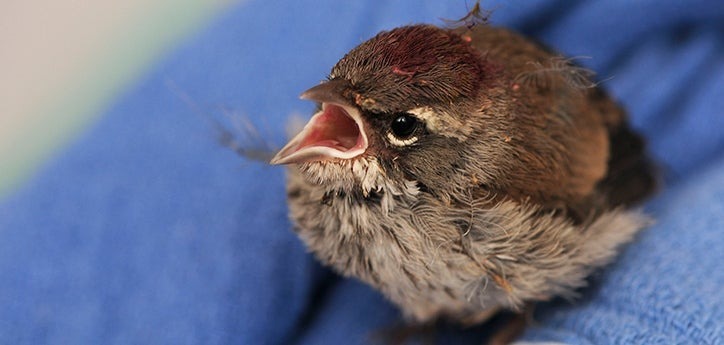
Before you look at feathers, check the bird’s condition from a distance. If it is bleeding, has a visible wound, holds itself oddly, seems very weak or struggles to breathe, call a wildlife rehabilitator. An injury outranks the age question.
Known contact with a cat is reason enough to get help, even if the bird looks alert. The Wildlife Center of Virginia names cat contact as a significant exception to the usual leave-alone advice. The Bi-State Wildlife Hotline also advises seeking help when a young bird has been in a dog’s mouth.
| What you notice | Why it matters | Next response |
|---|---|---|
| Known cat contact | Its appearance can hide an injury | Contact a licensed wildlife rehabilitator |
| Bird has been in a dog’s mouth | Possible physical injury | Describe the mouth contact when you ask for advice |
| A cat is merely nearby | Environmental hazard; contact is unconfirmed | Assess the bird without assuming a bite |
Nestling vs. fledgling: compare feathers and movement
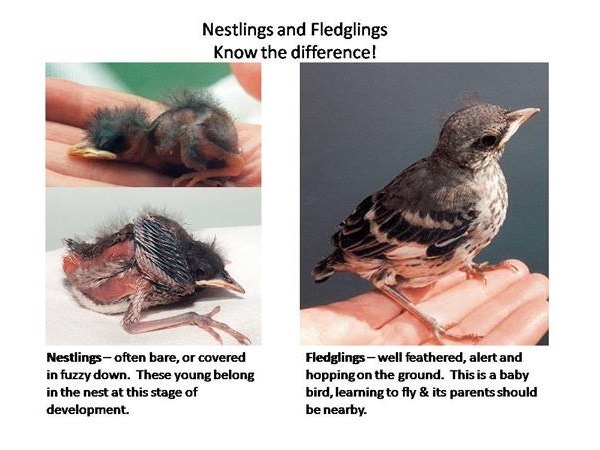
A nestling is still growing the feathers and strength it needs outside the nest. A fledgling is past that stage, though it may fly badly, flutter only short distances or get around mainly by hopping.
For common backyard songbirds, the Cornell Lab’s baby-bird guidance recommends judging feathering and movement together. A short tail or a loud call alone won’t tell you the stage.
| Clue | Nestling | Fledgling |
|---|---|---|
| Feathers | Bare, downy or growing pin feathers | Mostly feathered |
| Standing and moving | Weak or unable to move on its own | Stands, hops or flutters |
| Gripping a perch | Often can’t hold on | Grips branches or low vegetation |
| Flight | Not ready for independent flight | Short, awkward flights |
| Nest | Still needs the nest | Has left the nest |
A mostly feathered bird that can’t stand or grip needs a closer look before you treat it as a fledgling.
Two young American Robins sit under a hedge. One has sparse down and can barely support itself. The other has developed feathers and hops through the grass.
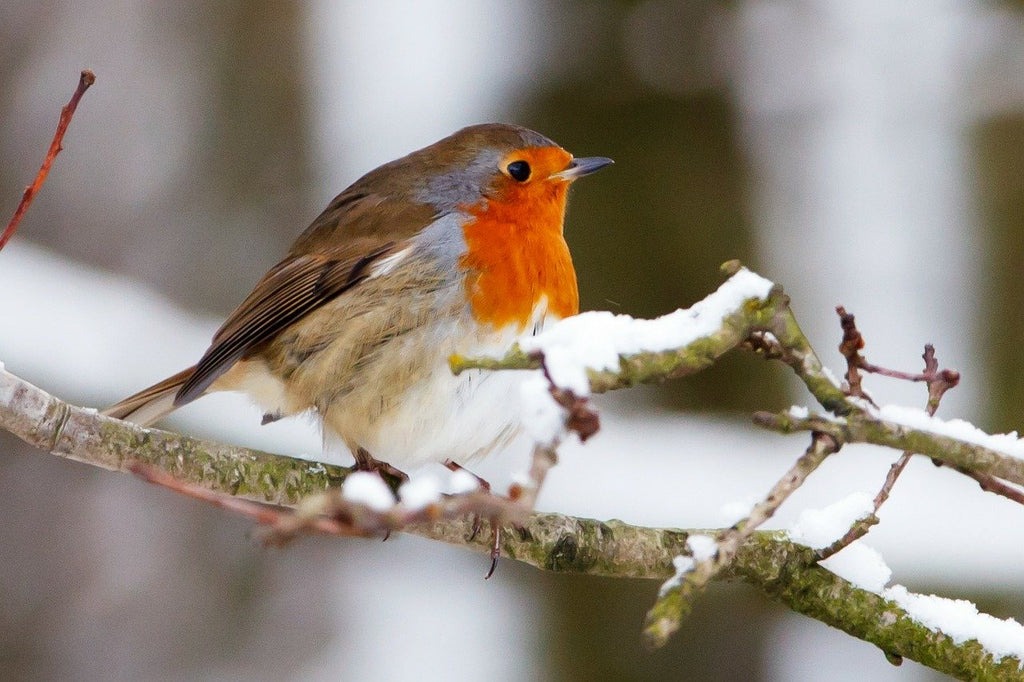
A newly fledged bird can miss a landing or struggle with sustained flight while it learns to maneuver. Poor flight alone doesn’t mean it’s injured.
The hard case: a partly feathered older nestling
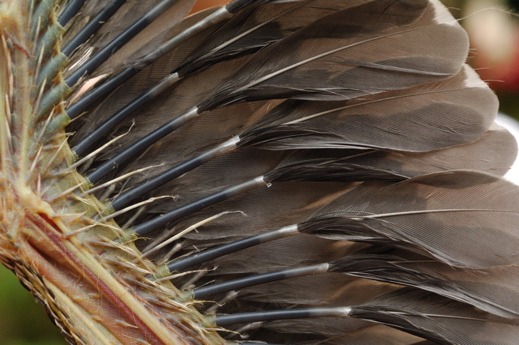
An older nestling may have many feathers and still lack the strength or coordination to perch, so a quick look at plumage can mislead.
A partly feathered Mourning Dove near a nesting area is one hard example. Weigh feather growth and movement together. Appearance alone doesn’t give the bird’s exact age or condition.
| Observation | What it suggests |
|---|---|
| Emerging feathers or visible sheaths | Feathers are still developing |
| Short tail | Recent growth |
| Hopping | Fledgling-like movement |
| Cannot stand or grip | Nest dependence or weakness |
| Nest directly overhead | A displaced chick |
| Possible wound or unusual posture | An injury |
When the clues conflict, check whether the bird is alert, supports its weight and moves in a coordinated way. A bird with developing feathers that can’t stand is a different case from one that hops and grips vegetation despite a short tail.
What to do if it is an uninjured nestling out of the nest
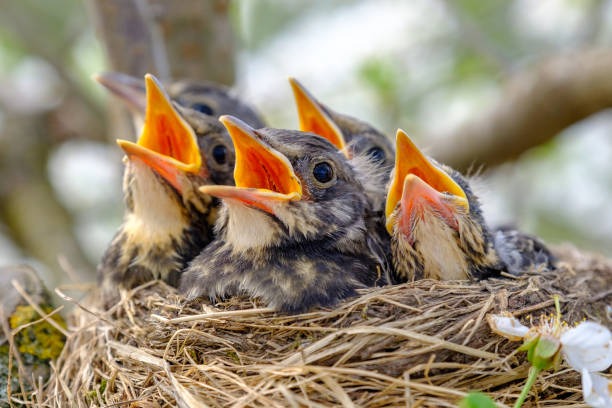
A nestling found beneath its nest can go back to its parents if it looks uninjured and you can clearly identify the correct nest and reach it safely. Another nest in the same tree won’t necessarily do. If the bird is hurt, see how to find appropriate help for an injured wild bird.
Check the chick’s condition before you return it. The Wildlife Center of Virginia advises checking whether a nestling is warm and briefly warming a cold chick in cupped hands before re-nesting. If the chick looks weak or unwell, or you can’t handle the situation safely, ask a qualified professional.
Brief human contact doesn’t make parents reject a chick over human scent. That applies to a necessary return to the nest, not to repeated handling.
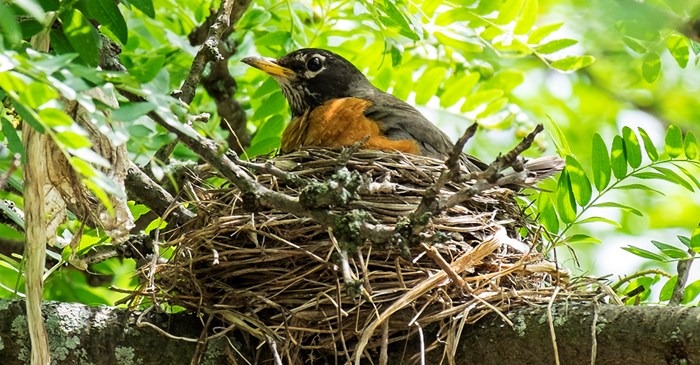
If the nest is destroyed, out of reach or high enough to make reaching it dangerous, leave replacement-nest arrangements to local wildlife experts. Active nests can have legal protections that depend on the species and circumstances, so don’t move another nest because it looks convenient.
What to do if it is a healthy fledgling on the ground
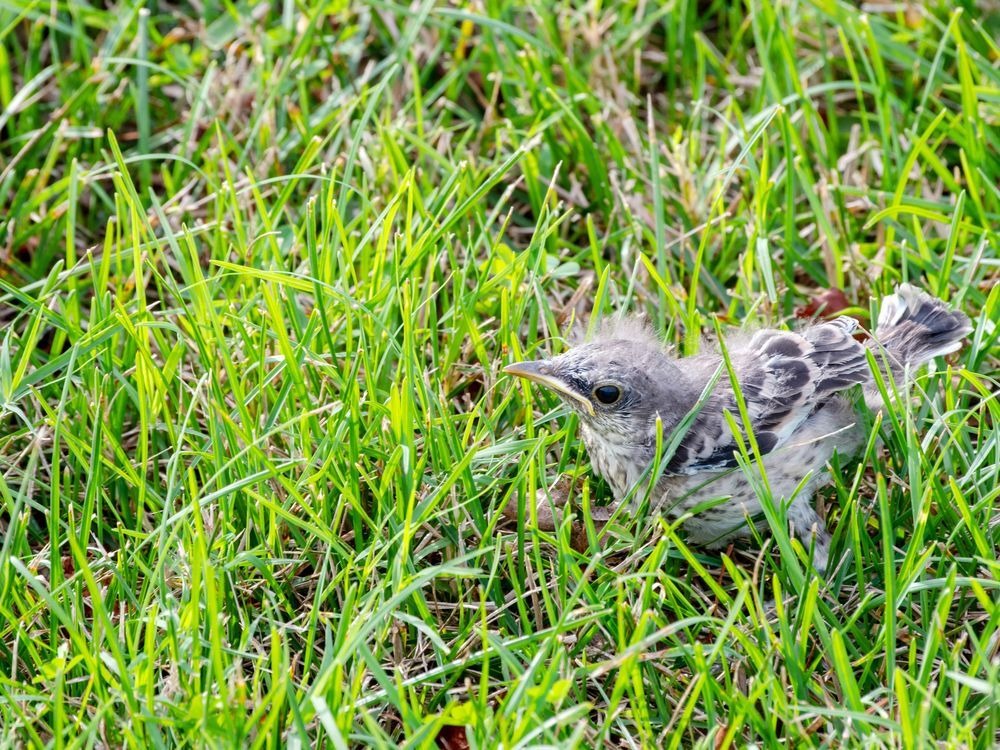
A mostly feathered fledgling hopping under a shrub or standing on the lawn is often exactly where it belongs. Leaving the nest comes before confident flight, and parents keep feeding the youngster outside it. For more, see what to do after finding a baby bird on the ground.
The Tufts Wildlife Clinic explains why a healthy fledgling is usually best left with its parents. Give it space and keep cats and dogs away.
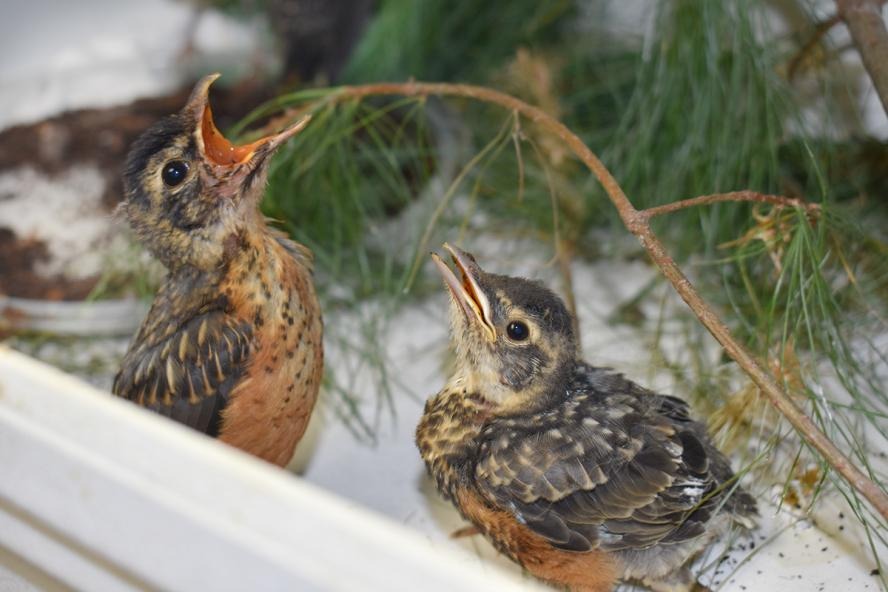
If a healthy fledgling is in immediate danger, such as traffic, you can move it a short distance to nearby vegetation or a low perch where the parents can still find it. Keep the move local. Taking it home interrupts the care it may be getting.
How to tell whether the parents are still caring for it
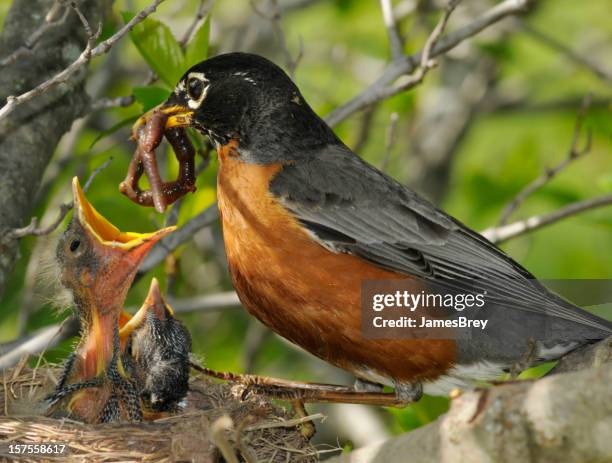
Adults may feed a fledgling and then vanish into nearby trees or shrubs. A youngster alone between visits can still be getting normal parental care.
Watch from a distance that lets the adults approach. A parent arriving with food is stronger evidence of active care than another bird merely being nearby. If you stand too close, an adult may not come down to its chick.
After you return an uninjured nestling to its correct nest, watch the same way to see whether a parent resumes care.
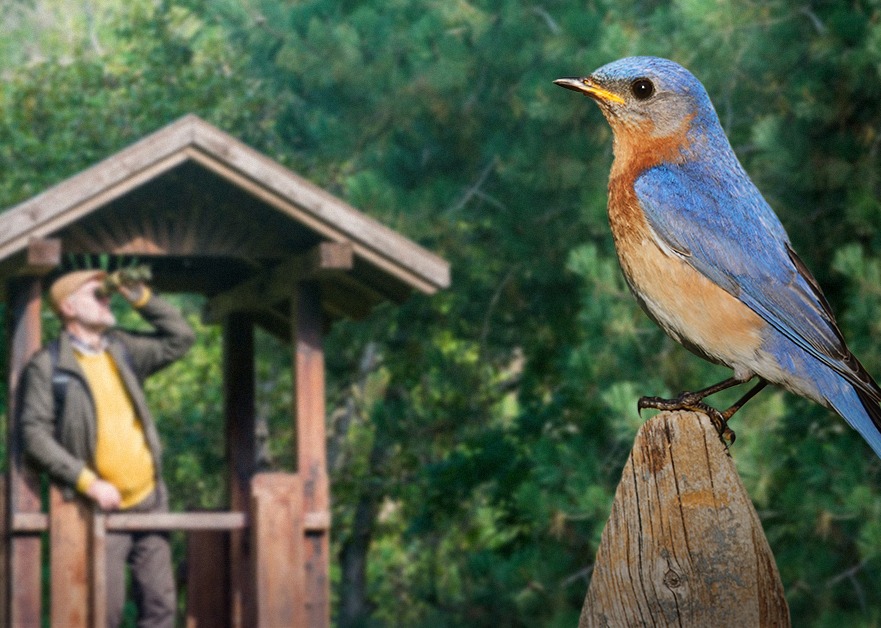
Parents can stay out of sight for a while, so judge by the chick’s condition and behavior, not by whether an adult is in view.
Exceptions: ducklings and other precocial young
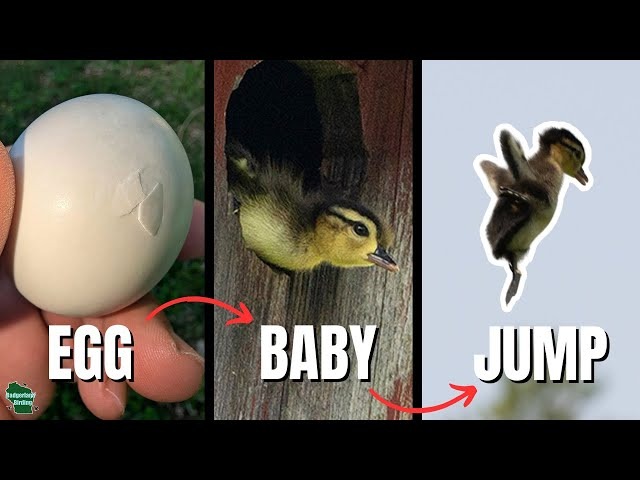
The feather-and-movement comparison above applies mainly to altricial birds, whose young stay nest-dependent early on. Precocial young follow a different pattern: Wood Duck chicks can leave a tree-cavity nest soon after hatching and move about while still covered in down. If the youngster is a duckling or another precocial bird, work out its developmental pattern before you apply the songbird nestling-versus-fledgling rule. For nests, eggs and young birds in general, see the bird-nesting guide.
When the answer is uncertain: find qualified wildlife help
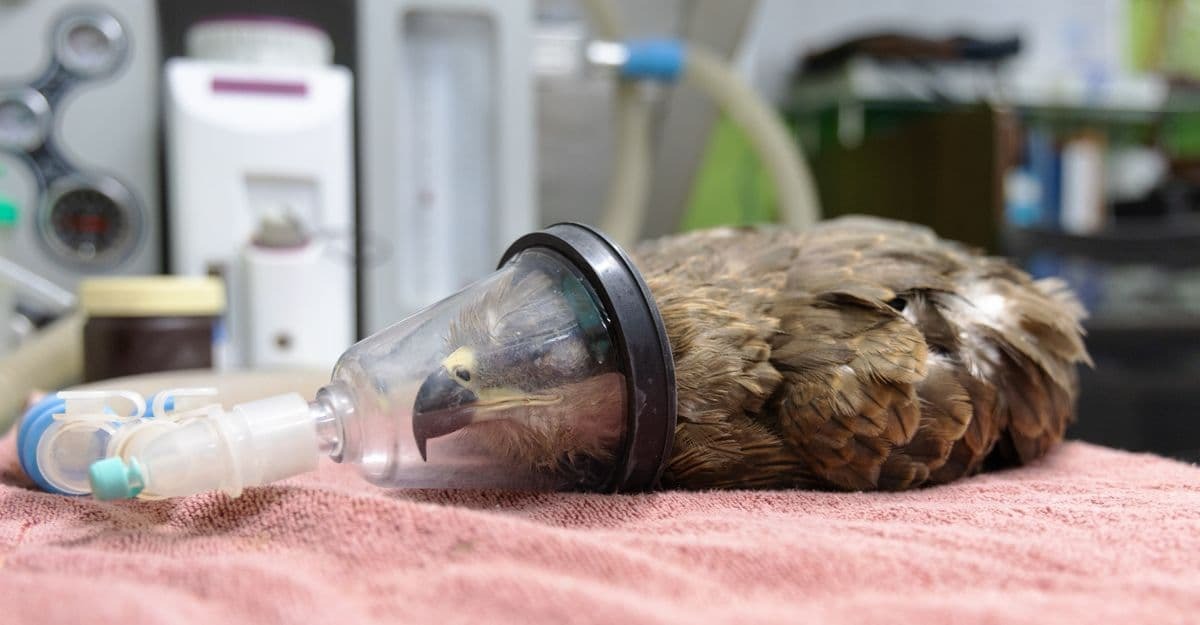
Call a licensed wildlife rehabilitator if the bird is injured, has had contact with a cat or dog, stays weak, sits under a nest you can’t reach, or fits neither stage.
In the United States, Animal Help Now offers a location-based route to wildlife assistance. Contact a listed provider to confirm the service is available and can accept the species involved.
Tell them what you saw:
- Location: The city or general area where you found the bird.
- Appearance: Visible down, exposed skin or emerging feathers, and the species if you know it.
- Movement: Whether the bird stands, hops, grips, flutters or can’t support itself.
- Nest context: A nearby nest, and whether the bird was beneath it.
- Condition: Wounds, weakness or contact with a cat or dog.
- Parental activity: Feeding visits you actually saw from a distance.
- Earlier handling: Whether anyone moved or temporarily contained the bird.
If one service can’t help, ask about another local wildlife contact. Don’t feed, give water to or medicate an unassessed wild chick while you wait for guidance.