For U.S. backyard birdwatchers, the safest default is to leave clean, untreated local plant materials available rather than offer yarn, lint, pet fur, or unidentified nesting kits. If you can’t tell what a material contains or how it was treated, skip it. Keep leaf litter and twigs in place, refresh any optional clean supply after rain, and leave active nests undisturbed.
A handful of grass clippings seems harmless. So does the soft fur left in a pet brush, or the fluffy stuffing in a packet sold for nesting birds. Once woven into a nest, though, those materials face rain, movement and growing chicks, and they behave very differently.
Which Nesting Materials Are Safe to Offer?
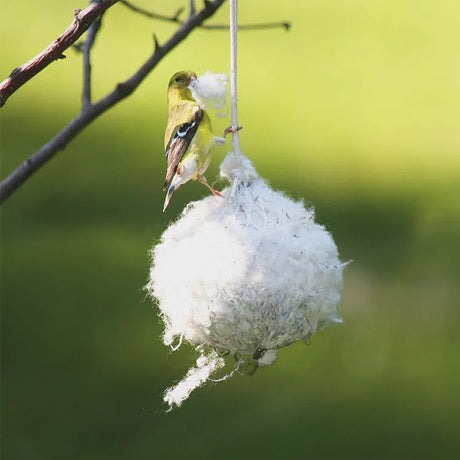
Dry, untreated vegetation is the place to start. Birds build with twigs, grass, leaves, moss and other natural materials, depending on the species.
| Material | Recommendation | What matters |
|---|---|---|
| Dry twigs and small sticks | Generally suitable | Clean, local and untreated; birds select the sizes they need |
| Fallen leaves and leaf litter | Generally suitable | Natural, untreated material left accessible |
| Dry grass and rootlets | Generally suitable | Suitable for various cup-nesting birds; avoid chemically treated lawns |
| Moss, lichens, bark and pine needles | Suitable for some species | Natural and untreated, with use depending on nesting habits |
| Cottonwood or cattail fluff | Suitable for some species | Naturally shed plant down used by particular birds |
| Mud and damp earth | Situational | Used in nest construction by some birds, including robins and phoebes |
| Untreated domestic poultry feathers | Conditional | Mentioned for some species; do not collect protected wild bird feathers |
| Yarn, string, twine, ribbon and long human hair | Avoid | Flexible strands can entangle or constrict birds |
| Dryer lint | Avoid | Falls apart when wet; can contain synthetic fibers or laundry residues |
| Plastic, tinsel, cellophane and foil | Avoid | Artificial debris creates physical hazards |
| Pet fur and other potentially treated animal hair | Avoid offering | Veterinary products and grooming residues; fiber length adds risk |
| Coconut coir and processed cotton products | Uncertain | Composition, processing and treatment need checking |
| Preserved moss and commercial nesting mixes | Uncertain | Can contain dyes, preservatives or unidentified fibers |
This classification draws on guidance from Cornell NestWatch and the U.S. Fish & Wildlife Service.
Match Natural Materials to the Birds Around You
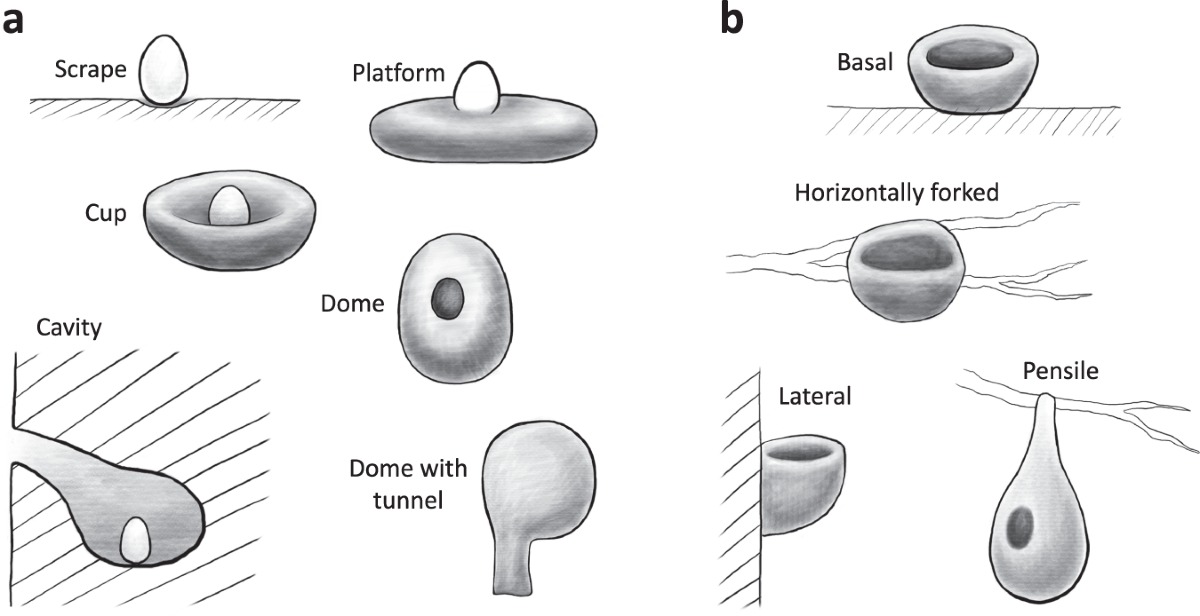
A grass-lined cup, a cavity nest and a mud-supported nest each call for different building materials.
| Bird or bird group | Nesting materials | Use |
|---|---|---|
| Chickadees | Moss | Forms part of the nest |
| Bluebirds and American Robins | Grass and strawlike vegetation | Flexible stems shape the nest |
| Some warblers | Cottonwood or cattail fluff | Plant down serves as lining |
| Robins, phoebes and some swallows | Mud | Damp earth helps build the nest |
An American Robin gathering grass may also use mud to reinforce its nest cup. A chickadee collecting moss is working with another set of materials. Watching from a distance shows what the birds in your yard are gathering, and you never have to look into the nest.
Why String, Yarn, Hair and Dryer Lint Are Poor Choices
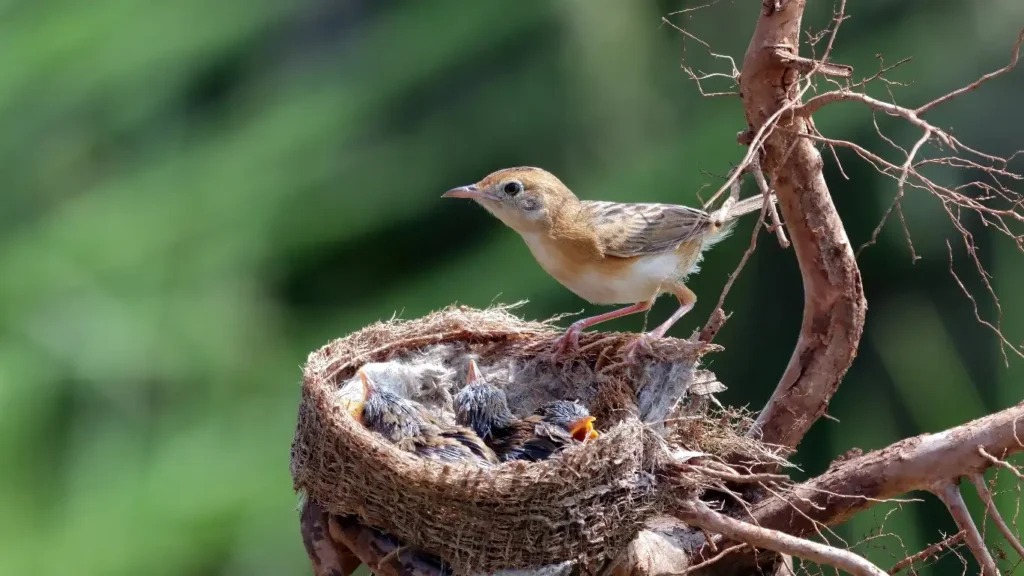
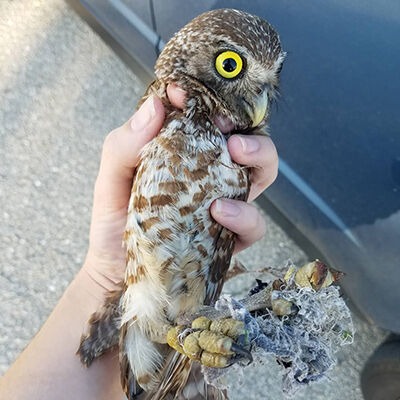
Long, flexible fibers can wind around a bird’s feet, wings or neck. A strand that feels soft between your fingers can tighten when a bird pulls against it, or catch inside the nest.
Yarn, twine, string and loose thread are the worst offenders.
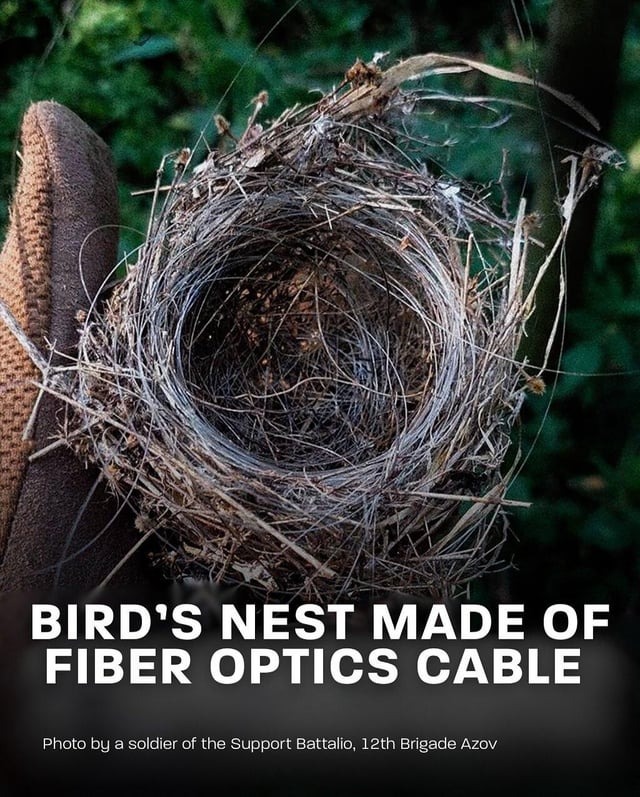
One backyard observer found a bird tangled in nesting thread and asked for urgent help:
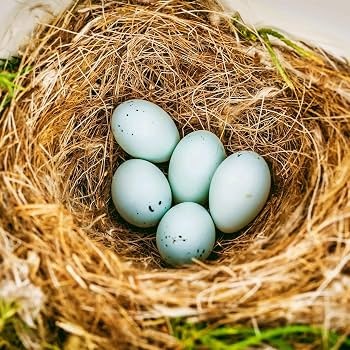
I found the bird in a tree in my yard. Its foot was wrapped in thread from its nest. No clue how long it was there. The foot that was caught doesn’t seem to move anymore. It hops around. It cant fly. It has 4 eggs in its nest. What do I do with it? I have it in this cart with a little bit of water. Im worried about crows getting it. I have a pic of the nest and eggs but i can only attach one picture.
Cornell specifically warns against human hair longer than an inch. Shorter hair and yarn aren’t validated as safe, and cutting craft fibers into little pieces doesn’t fix the problem.
Dryer lint has its own problem. Fresh from the machine it looks useful, but Cornell notes that lint turns crumbly after exposure to moisture. It can also contain synthetic fibers and laundry-product residues.
What the 2025 and 2026 Studies Mean for Pet Fur
Brushed dog or cat fur looks like ideal nest lining. The concern is that it can carry substances from pet care, including veterinary parasite treatments.
The U.S. Fish & Wildlife Service advises against offering pet hair because of possible exposure to flea treatments and shampoos. Research on fur-lined wild bird nests gives more detail.
In 2025, Tassin de Montaigu and colleagues examined 103 fur-lined nests belonging to blue tits and great tits in the United Kingdom. They screened for 20 compounds and detected 17 across the sample. Each nest contained between two and 11 detected insecticides. The study reported these detection frequencies:
- Fipronil: detected in 100% of the sampled nests.
- Imidacloprid: detected in 89.1%.
- Permethrin: detected in 89.1%.
The researchers also found that greater insecticide contamination went with poorer reproductive outcomes, including dead young and unhatched eggs. The findings appear in the 2025 study on veterinary drugs in birds’ nests.
On April 21, 2026, researchers published a follow-up study of veterinary parasiticides in nests. Using the same UK nest collection, they examined matched subsets of 24 nests with unhatched eggs and 35 nests with dead chicks, reporting positive relationships between residues in nest-lining fur and residues in the eggs or chicks.
The follow-up links residues in the lining fur to residues in the eggs and chicks. Both studies looked at UK blue tits and great tits, so the figures don’t describe American backyard species.
Are Coconut Coir, Cotton and Store-Bought Nesting Kits Safe?
Judge a manufactured nesting product by its actual contents and processing. Coconut fiber, preserved moss and cotton products differ in composition and treatment.
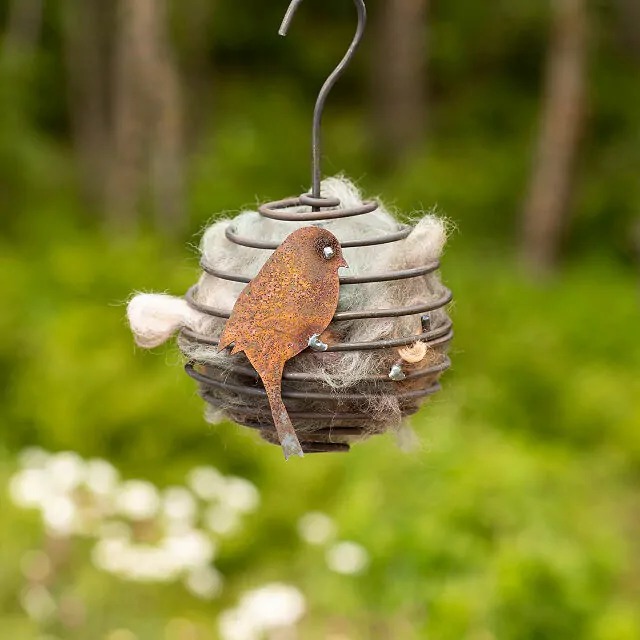
A Reddit user described receiving a purchased nesting-material kit, rejecting its supplied fibers and substituting coconut husk material:
I bought this from Amazon and while I like the holder, the actual nesting material it came with was junk. It was some plastic fibers pretending to be alpaca fur. I noticed the reviews after I received it. I threw away the nesting material and put some coconut husk fiber that I had in my shed from a previous experiment. They were all cut to about 1.5 inches and loosened up. Is this safe for birds?
The plastic claim is the buyer’s impression, and 1.5 inches is simply what that person tried.
With coir from a hanging basket, what you need to know is that liner’s composition and treatment. Preserved Spanish moss raises the same questions about preservation or decorative finishing. Unknown fluffy yarn adds the risk of loose strands.
Cotton works the same way. Naturally occurring cottonwood down is an identified plant material. A purchased cotton ball, batting sheet or dyed wool mix needs its contents and treatment checked separately.
Check the label for fiber content, dyes and preservatives before you put out a kit or basket liner. No label, no use.
How to Put Out Suitable Materials and When to Refresh Them
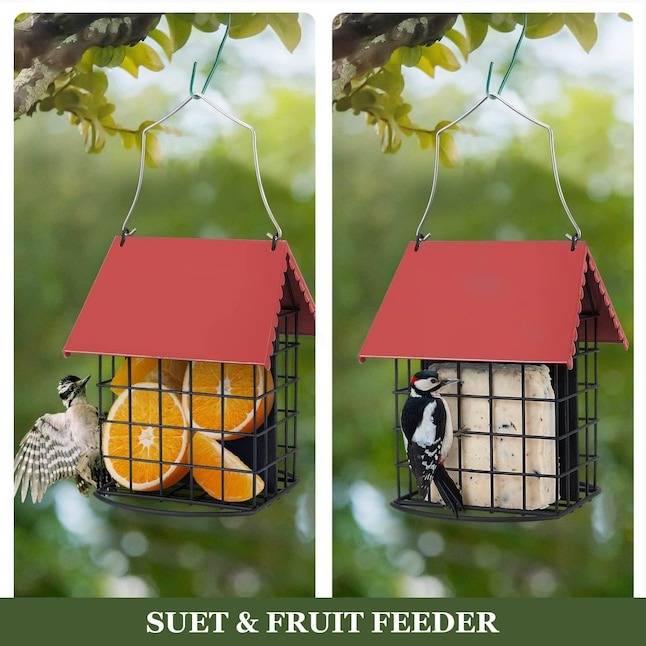
A modest, accessible supply is enough. Cornell NestWatch suggests simple options: a loose pile in the yard, a spot on a deck railing, or a clean, empty suet cage filled with suitable plant materials.
You don’t need a dispenser. Containers with loose threads or snagging parts add hazards of their own.
- Keep it away from active nests. Put a small amount where birds can reach it without approaching a nest.
- Keep the holder clean. Wash an empty suet cage thoroughly before filling it.
- Check after wet weather. Discard damp, mildewed or moldy material.
Why Birds Sometimes Use Risky Materials or Ignore Safe Ones
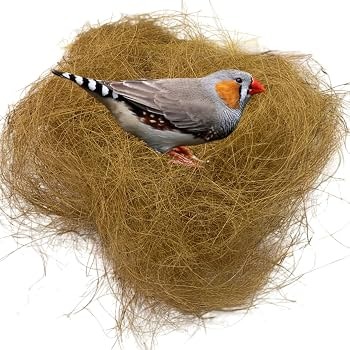
A bird carrying a fiber shows only that it picked the fiber up. It tells you nothing about dyes, other treatments or later effects on nestlings.
In another yard, birds helped themselves to the lining of hanging baskets:
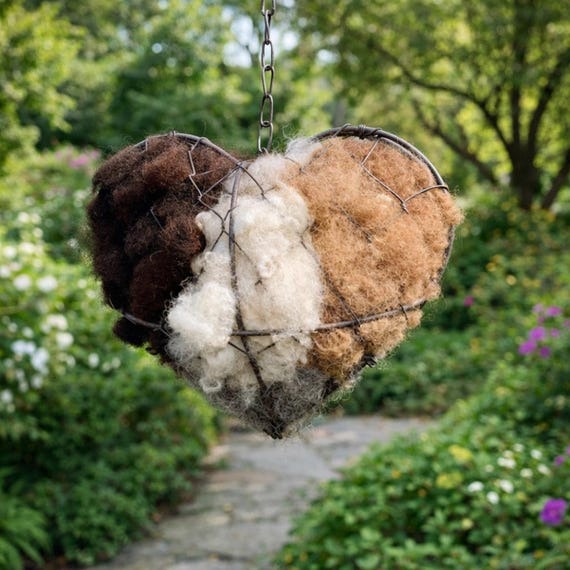
I use coco fiber liners in wire hanging baskets for various plants including Phal orchids and several species of birds love pulling the fibers out when building nests. Mockingbirds, wrens, house finches especially. Enough gets removed over the spring and summer that I have to reline the baskets or the soil/orchid bark starts falling out.
A pile of grass can also sit untouched because local birds gather other materials or aren’t building yet. Watching what they carry tells you what is nesting nearby. For nests, eggs and fledglings, see the bird-nesting guide.
Do Birds Need Extra Nesting Materials From People?
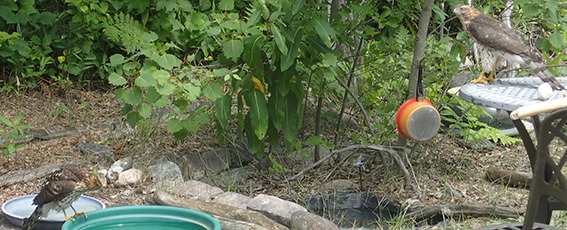
Wild birds generally gather nesting materials on their own, as the U.S. Fish & Wildlife Service explains. In an ordinary backyard, a modest patch of untreated fallen leaves, twigs and native vegetation gives them what they need. Heavily altered habitats and species with special nesting requirements are the exception. To decide what to do about a nest, eggs or fledglings, see birds nesting on your porch: what to do at each stage.
Leave Active Wild Bird Nests Alone
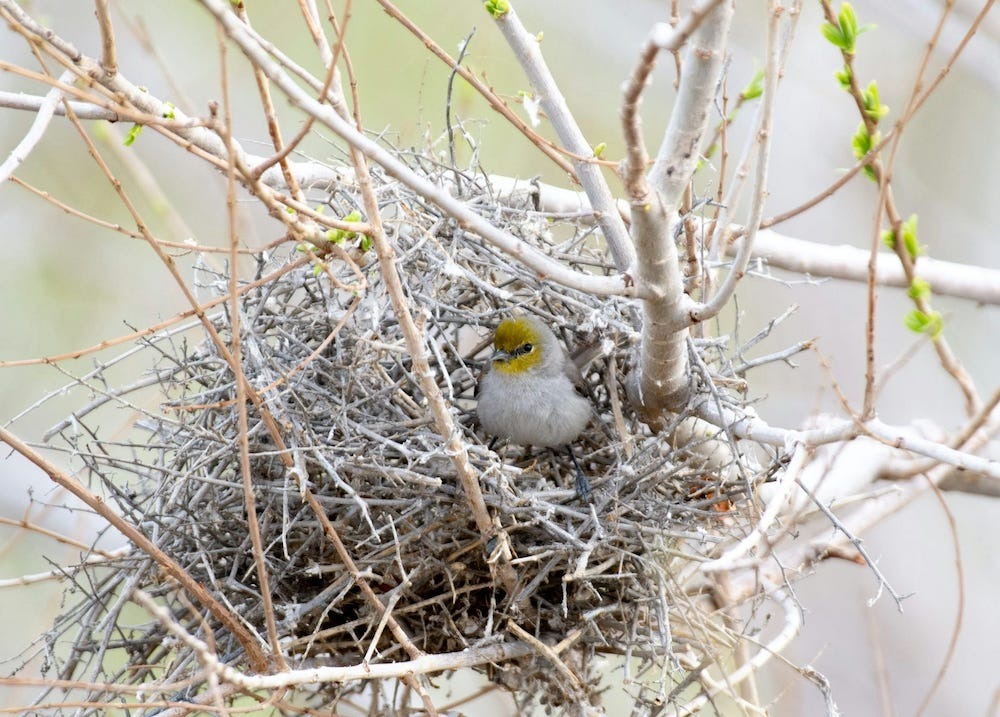
Don’t insert new fibers, pull out existing material, repair the structure or rearrange its contents while the nest is active.
The Migratory Bird Treaty Act protects many native wild birds and restricts actions involving their nests, eggs and young. Bald and golden eagle nests have additional protections, even when inactive.
If you spot a hazardous item in a nest, especially with an injured bird or eggs present, contact a licensed wildlife rehabilitator or the relevant wildlife authority. Untangling a bird or changing a nest without qualified guidance adds risk. For injury signs, licensed rehabilitation and safe handling, see how to find appropriate help for an injured wild bird.