Ruby-throated Hummingbirds reach the Gulf Coast around early March and northern areas in late April or early May. Many head south from late summer into fall. Rufous Hummingbirds follow a western route, and Anna’s often stay year-round. If a visitor lingers, keep clean nectar out while you can maintain the feeder.
When Do Hummingbirds Migrate in the United States?
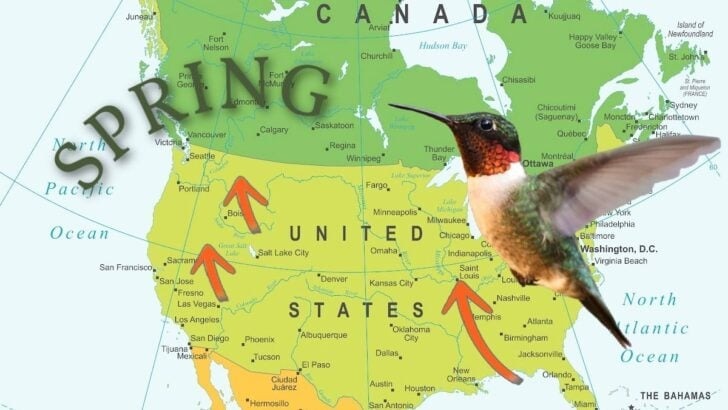
Hummingbird migration follows several calendars because the birds take different routes. Ruby-throated Hummingbirds are the main eastern breeding species. Rufous Hummingbirds move through western North America with the seasons. In parts of the West, Anna’s Hummingbirds are often there all winter.
| Region and likely birds | Spring arrival or presence | Fall or winter pattern |
|---|---|---|
| Gulf Coast and Southeast: Ruby-throated | Birds become numerous around early March | Southbound movement begins during summer and continues through fall |
| Northeast and northern eastern US: Ruby-throated | Arrivals extend into late April or early May | Many leave in late summer and early fall, and later migrants still pass through |
| Pacific Coast and Northwest: Rufous | Birds travel north along the Pacific lowlands and reach northern breeding areas by spring, around May | Southbound movement can begin in late June, along an inland mountain route |
| Pacific Coast and other western areas: Anna’s | Often present throughout the year | Many remain in winter, with some shorter seasonal movements |
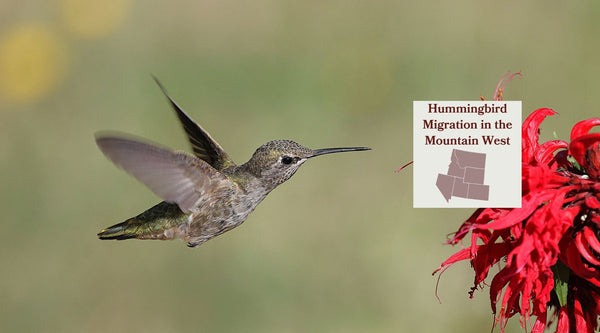
| Mountain West: several migratory species, including Black-chinned, Broad-tailed, Calliope and Rufous where their ranges apply | Some appear near the Mexican border in early March; arrivals reach northern Rocky Mountain areas by early to mid-May | Varies by species and locality |
The south-to-north progression is clearest for Ruby-throated Hummingbirds in the East. Audubon’s regional spring guide covers Mountain West timing for several species.
When Do Hummingbirds Arrive in Spring?
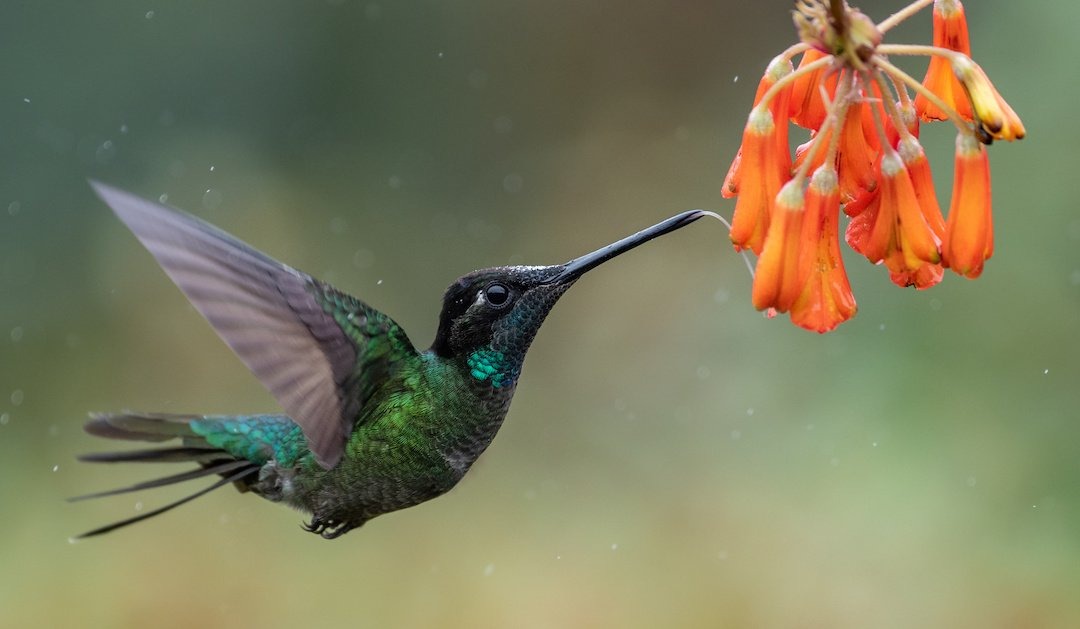
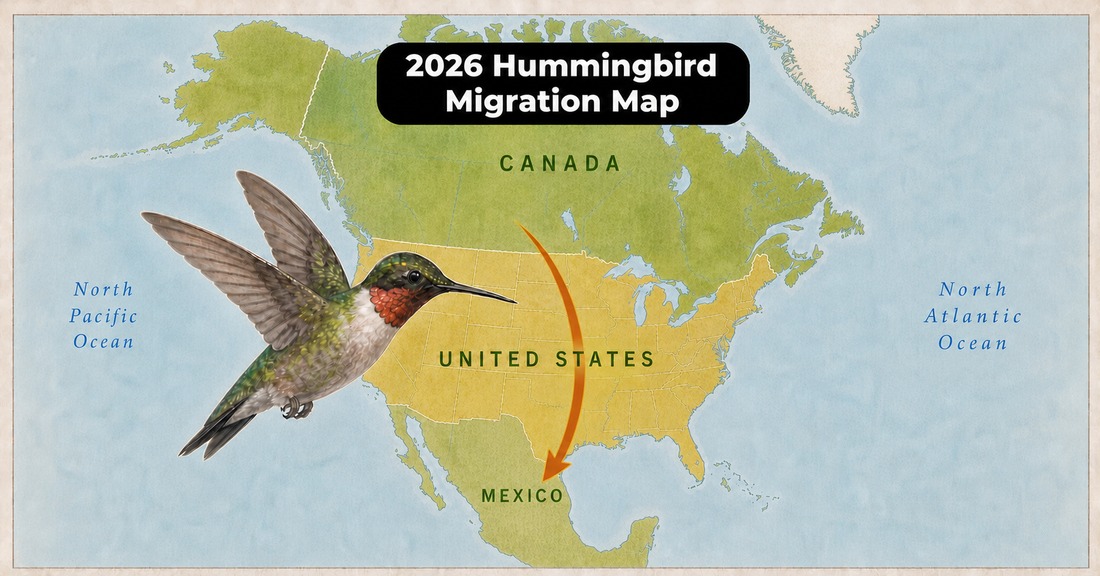
Ruby-throated Hummingbirds work their way north through the eastern US in spring. They become noticeable along the Gulf Coast around early March, and northern states and southern Canada see arrivals through late April or early May.
Audubon reports that males often arrive about one week before females.
Rufous Hummingbirds follow the Pacific lowlands north and reach northern breeding areas in spring. If you live in Washington or the Pacific Northwest, the eastern Ruby-throated calendar is a poor guide.
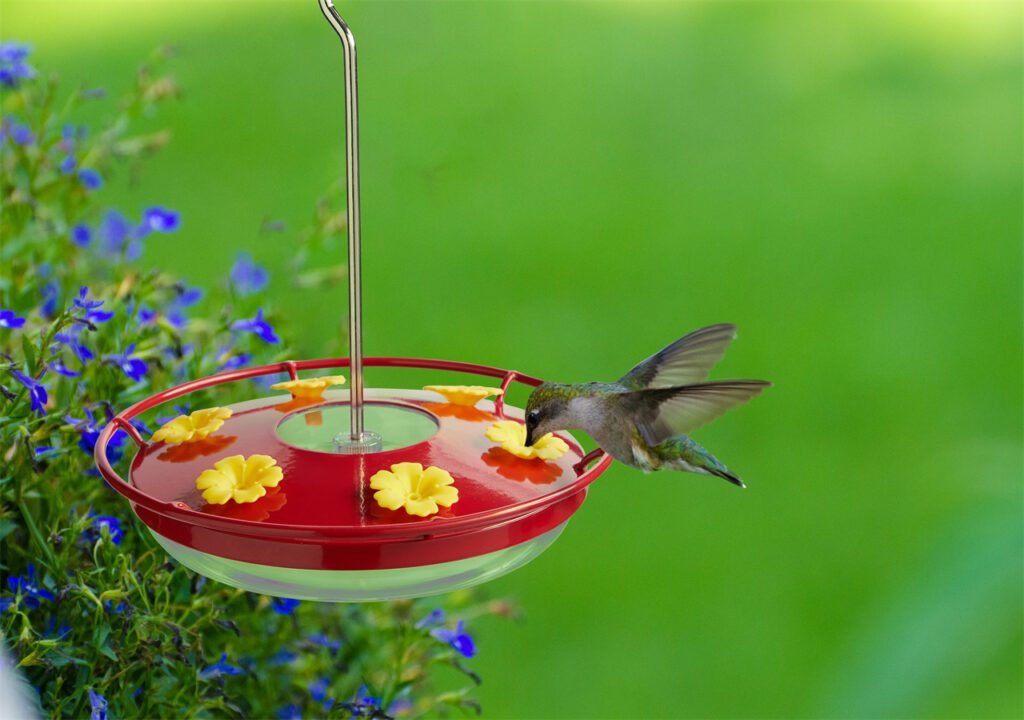
The date of your first feeder visit depends on when the birds find the feeder, what is flowering nearby and how often you look. It tells you about your yard. The regional arrival window tells you about the whole area.
When Do Hummingbirds Leave in Fall?
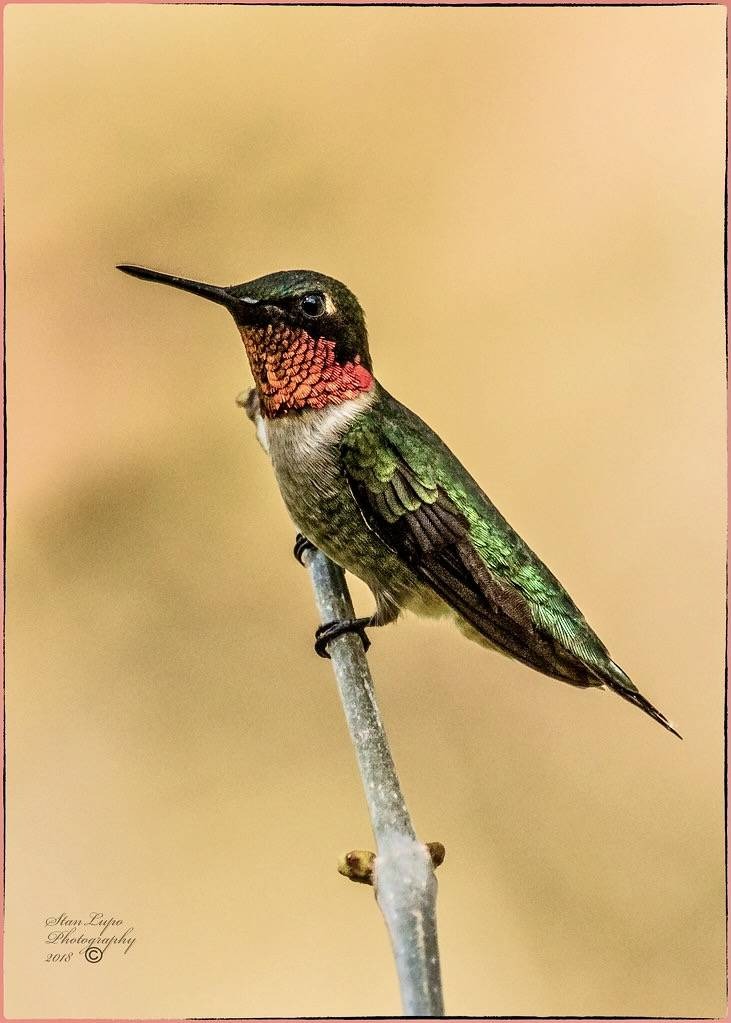
Fall migration starts before autumn weather reaches much of the eastern US. Some adult Ruby-throated Hummingbirds begin heading south in mid-July, and many leave in late August and early September, according to American Bird Conservancy. For fall dates, flyways and weather, see fall bird migration: when and where to watch in the u.s.
Birds leave at different times. A hummingbird that defended a yard all summer can vanish while others are still passing through. In Tennessee, the Tennessee Wildlife Resources Agency reports adult males leaving as early as July and relatively few hummingbirds remaining into October.
An Ohio birdwatcher asked how to tell when the birds are gone:
So first year hummingbird feeder here. I’ve got 5-6 birds feeding in my backyard feeder. Was reading up on migrations as it’s getting to be the end of summer. When should I consider taking my feeder down? Because I don’t have a huge population, I’ll only see them occasionally. How will I know if they’re gone? How will I know if they are a species that stays through the winter? Thx in advance.
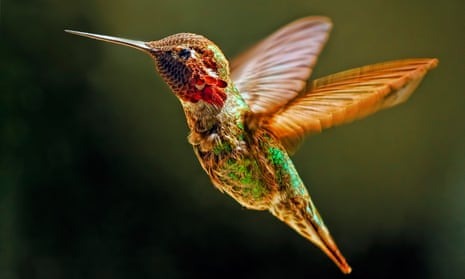
Occasional visitors can be birds at different stages of migration. Write down the date and appearance of the last hummingbird you see, and compare that date with reports from elsewhere. Cornell suggests waiting several weeks after the last sighting before taking a feeder down, to allow for later migrants. The Tennessee Aquarium gives a local East Tennessee guideline of at least two weeks.
Where winter hummingbirds are unusual, visits thin out as fall goes on.
Which Hummingbirds Migrate, and Which Stay Year-Round?
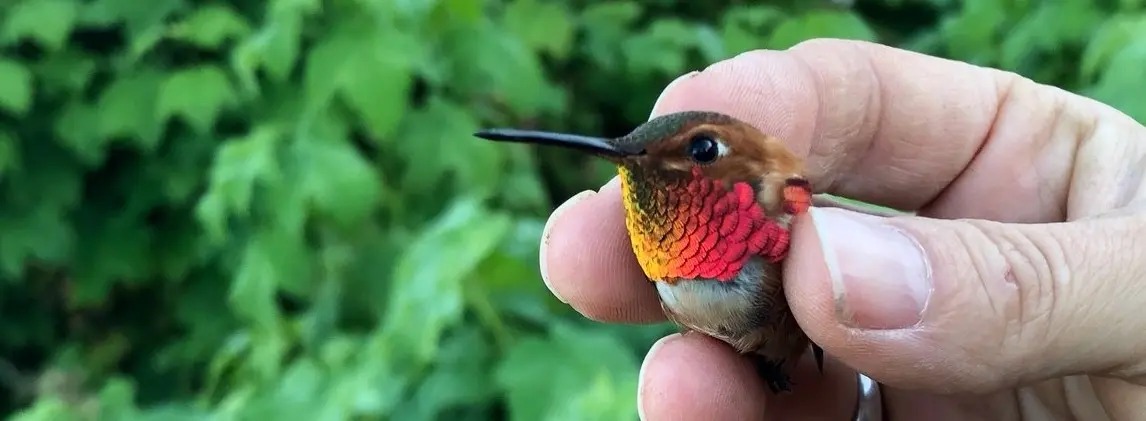
A winter hummingbird can be a normal resident in one part of the United States and an unusual visitor in another. Four species show the range.
- Ruby-throated Hummingbird (Archilochus colubris). The main hummingbird across much of the eastern breeding range. Most migrate south for winter, with a few exceptions.
- Rufous Hummingbird (Selasphorus rufus). Travels north mainly along Pacific lowlands and south through the Rocky Mountain region. Some individuals show up far from that route in winter.
- Anna’s Hummingbird (Calypte anna). Often resident in Pacific coastal and other western areas. Some make shorter seasonal moves, including moves up and down in elevation.
- Black-chinned Hummingbird (Archilochus alexandri). Breeds in the western US and generally winters in Mexico.
In the Southeast, winter hummingbirds can include Rufous and other western species.
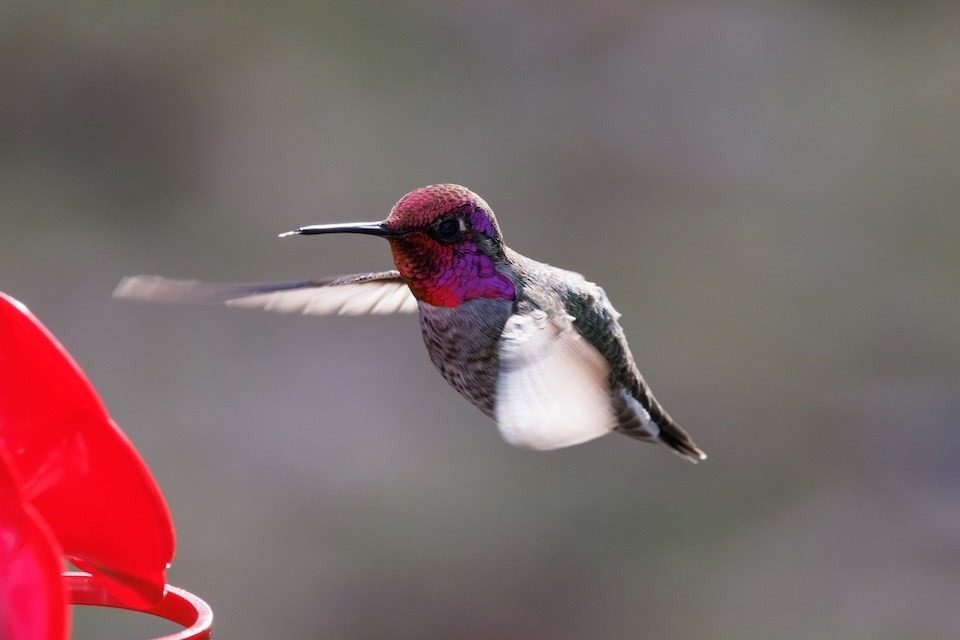
A feeder owner in Charleston, South Carolina, wondered whether to keep feeders up through winter:
Are there any Redditors in the sub living in Charleston, South Carolina? And if so, have you ever kept your feeders up through winter? I’ve been feeding hummingbirds since July 2024 and I’ve always gone by the advice I’ve seen in this sub, that it’s safe to take down the feeders when you haven’t seen a hummingbird for two weeks. But recently, out of curiosity, I googled “when do hummingbirds leave Charleston, South Carolina?” And the results said that some may hang out here throughout the winter? so it was advised to leave the feeders up all year. Our winters are moderate compared to the Midwest, but it can get quite cold. It’s hard to imagine hummingbirds surviving that! Then again, I know there are some hummingbirds in Canada that stay year-round. Although I am sure they have acclimated to that overtime.
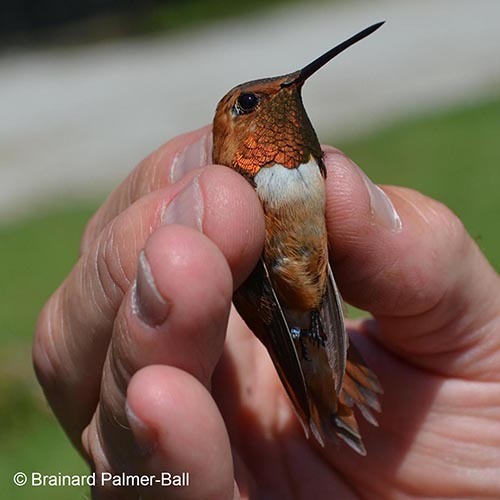
A winter bird in Charleston can be one of those western visitors. To name it, compare bill shape, plumage, behavior and location against a reliable identification guide. If those details don’t settle it, record it as an unidentified hummingbird.
A hummingbird in winter isn’t automatically stranded or injured. If you see a visible injury, contact a wildlife professional.
Why Did Hummingbirds Stop Visiting the Feeder?

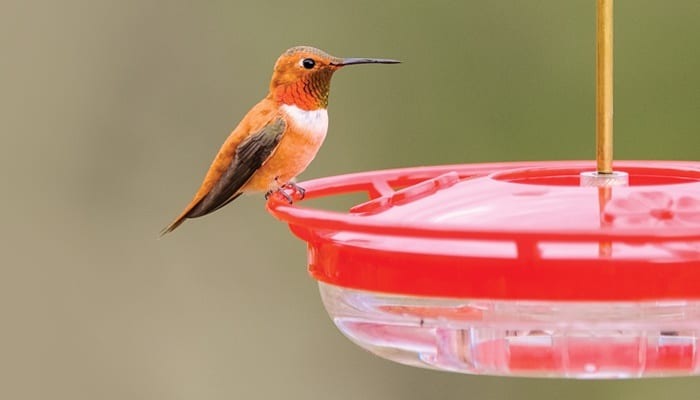
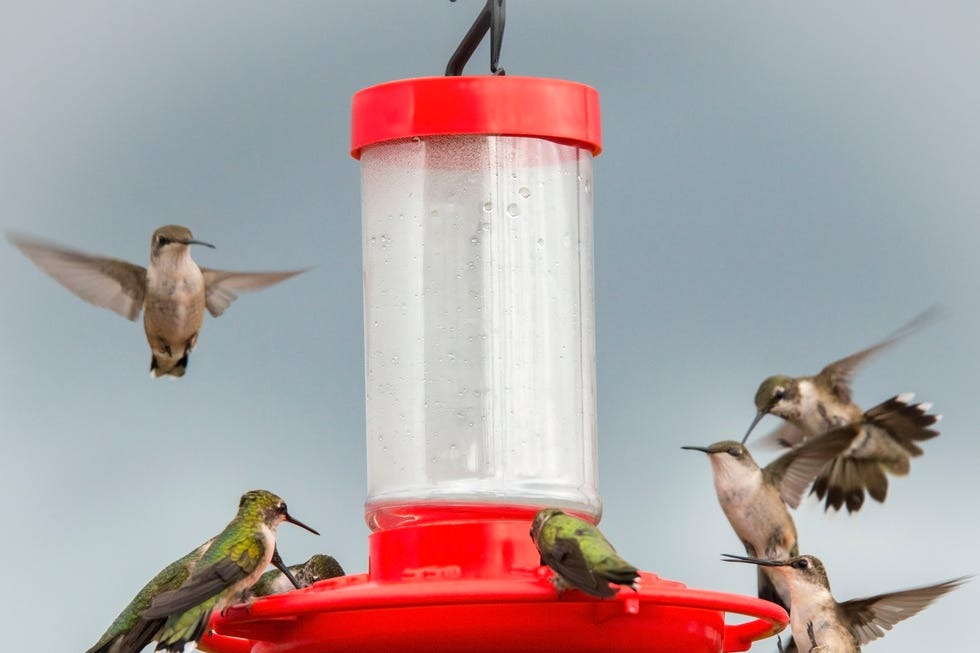
Hummingbirds can stay nearby while the feeder goes quiet. Territorial chasing and breeding activity change how often birds come. So do flowering plants, insects, weather and habitat. Spoiled, leaking or empty nectar also cuts visits. Check the feeder and the natural food nearby before you assume the birds have left.
How to Check Hummingbird Migration Near You
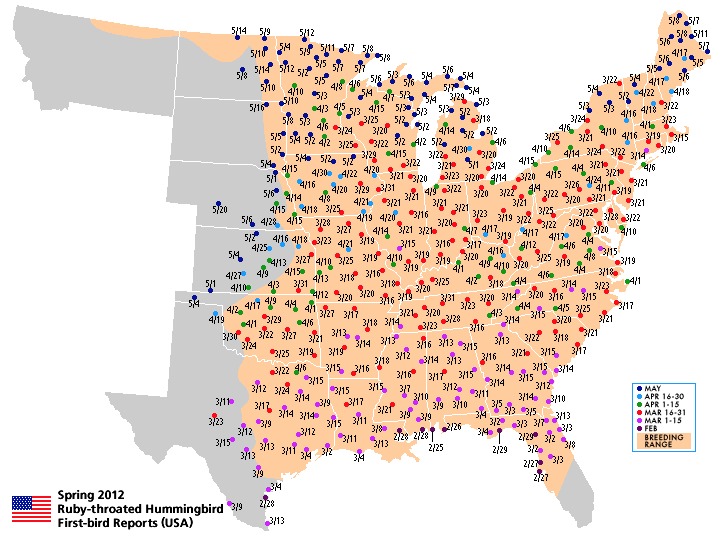
Journey North collects reports submitted by observers. eBird Status and Trends gives modeled estimates of seasonal occurrence and relative abundance. For eBird hotspots, habitat and dated sightings, see how to find useful birding hotspots.
| Evidence type | What it records | What you can conclude |
|---|---|---|
| Your dated backyard observation | A bird seen at a specific place and time | Activity at your location |
| Journey North observations | Submitted sightings with dates and places | Where birds were reported during the season |
| eBird weekly relative abundance | Modeled expected detections under standardized survey conditions | Broader seasonal patterns for the species |
For first arrivals, Journey North’s hummingbird tracking maps show reports across a region. They reflect where people watch and submit records, so a nearby report documents a sighting even when your feeder is quiet.
The eBird Ruby-throated weekly abundance map estimates seasonal abundance. Cornell defines relative abundance as the estimated number of birds detected on a standardized one-hour, two-kilometer traveling checklist at the optimal time of day for that species.
The 2023 model draws on observations from 2009 through 2023. The map shows modeled seasonal patterns. It doesn’t track individual hummingbirds live.
The linked map covers Ruby-throated Hummingbird. For western birds, pick the eBird Status and Trends product for your species when one is available. For plumage, range and song, see Ruby-throated Hummingbird identification and field marks.
A local check in three steps
- Identify the likely bird. Use field marks and regional range to choose a species. If the view was too brief, keep the unidentified label.
- Review dated reports. Find nearby Journey North sightings for the season and note where and when they were reported.
- Read weekly occurrence. Compare the species’ eBird relative-abundance pattern across the weeks around your sighting.
In the Northeast, you might see April reports appear nearby while you wait for your first yard visitor.
Should You Put Up or Take Down a Hummingbird Feeder During Migration?
Cornell’s fall-feeding guidance explains that seasonal cues, especially changing day length, help regulate migration. A clean nectar feeder does not stop a healthy migrant from leaving.
In northeast Tennessee, a birdwatcher worried about a late-season visitor after getting conflicting advice from a neighbor:
I’m located in NE Tennessee and the shift to fall temperatures has definitely happened. Daytime is still warm but the night temps are quite chilly. I have 1 female hummingbird that did not leave with the rest of the group 😞. My neighbor told me to take my feeders down because some “won’t leave a good food source”. But I read on here not to do that. Will she be ok? Will she leave before it gets too too cold for her? Edit – thanks to all you lovely people!! I refreshed all of my feeders this evening so she has plenty until she’s ready to leave. As well as any others who happen to fly through here on their journey 😊
While a bird is still visiting, keep clean nectar out if you can maintain the feeder.
| Situation | Action |
|---|---|
| Spring migration is approaching where winter residents are unusual | Prepare a feeder about a week before the usual local arrival window, following Audubon’s guidance |
| Winter residents or irregular winter visitors occur | Keeping a feeder up makes sense. When nights regularly freeze, keep the nectar from freezing |
| You cannot keep the feeder clean and serviced | Take it down |
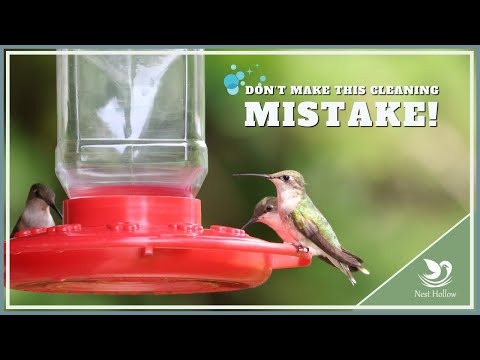
Audubon recommends cleaning daily or every other day in hot weather, about every three days in temperate weather and twice weekly in cooler conditions, and dealing with mold promptly. Standard nectar uses one part plain white sugar to four parts water, without red dye.
Why Migration Dates Disagree, and What a Late Bird Means
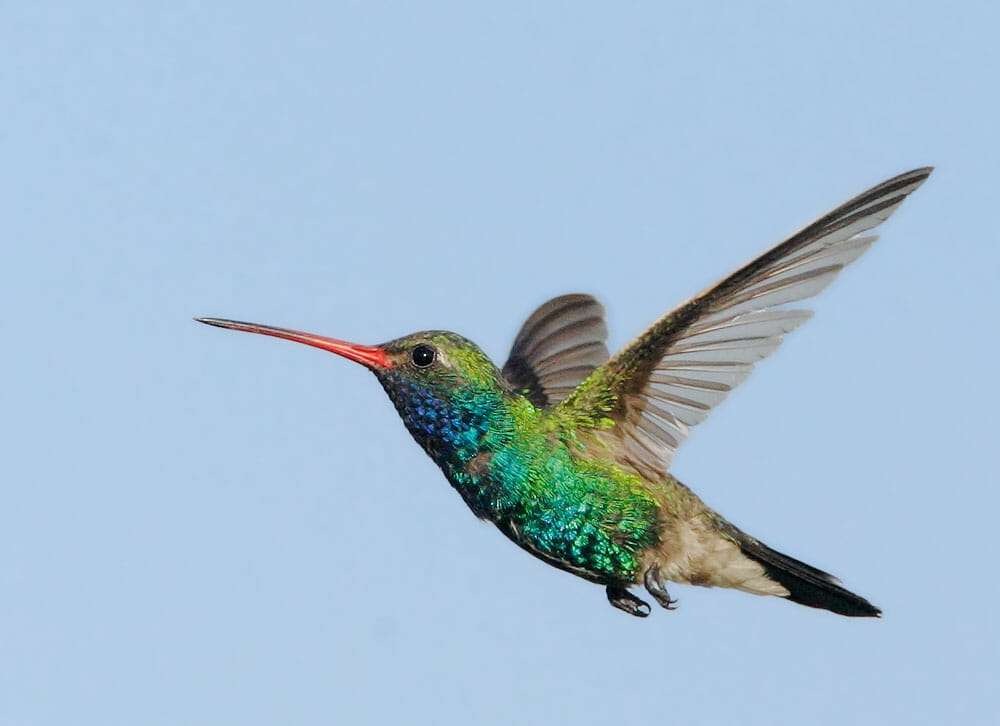
Migration calendars disagree because their dates refer to different species, places and events. A first reported spring arrival, a last feeder visit and passage through a scientific sampling site each capture a different part of migration. For migration timing, flyways and habitat, see the bird migration guide.
At Fort Morgan, Alabama, researchers studied 150 juvenile Ruby-throated Hummingbirds during 2010, 2011 and 2014. They used feather hydrogen isotopes to infer where each bird hatched, and that latitude was linked to when the bird passed through the Gulf Coast stopover.
Juveniles from more northerly hatching areas tended to arrive later. Zenzal and colleagues reported this association in a 2018 study (p less than 0.001). The study concerned that stopover, age class and migration corridor.
Mean first arrivals of Ruby-throated Hummingbirds came 11.4 to 18.2 days earlier in 2001 through 2010 than in 1880 through 1969, with geographic variation. Courter and colleagues reported this in 2013, analyzing 36,457 first-arrival observations.
A 2024 study by Tonelli and colleagues examined 88,965 site-specific arrival dates across 222 Nearctic bird species over 21 years. Links with temperature and snowpack differed among locations and species.
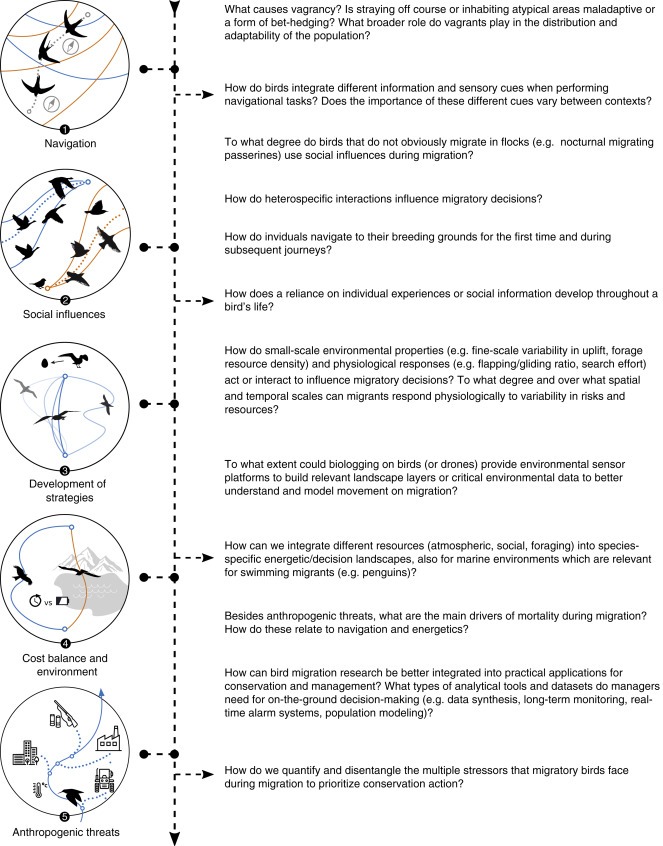
A late visitor can be a migrant moving through, a wintering bird or a bird you haven’t identified yet.