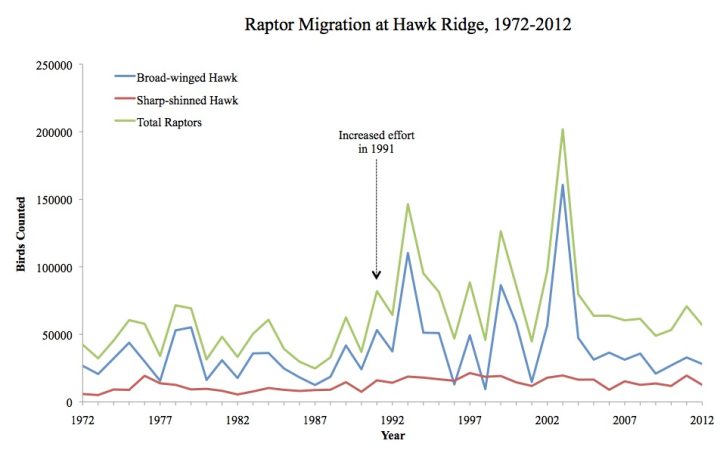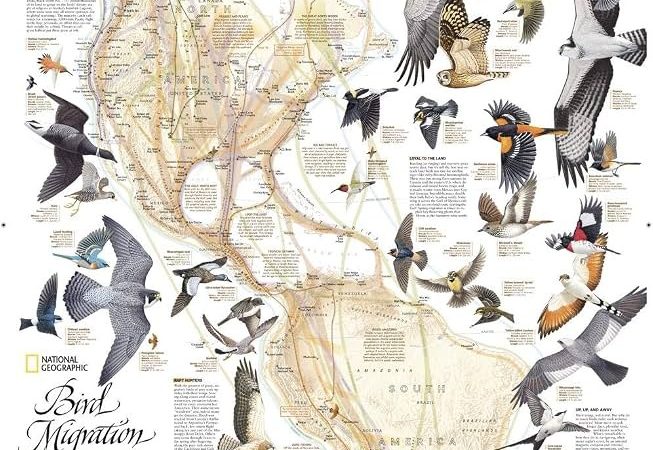
Start with your county’s historical migration window and the season of the birds you want to see. If you can choose among the next three nights, use BirdCast and recent local observations to pick a day. A busy forecast means birds are flying overhead. Whether they land in your park depends on weather and habitat, so choose good habitat, go when you can, and record what you see.
Spring gives you weeks of chances to catch birds on the move. When to go depends on your county, the birds you want to see, and how far ahead you have to book.
When Does Spring Bird Migration Peak in the U.S.?
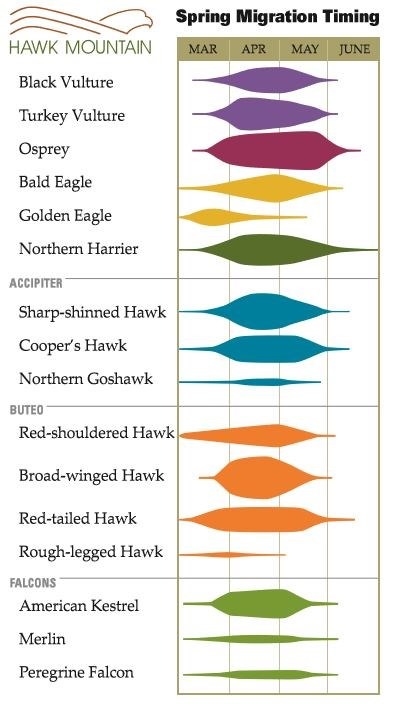
Across much of the contiguous United States, most heavy nighttime spring migration falls between mid-April and mid-May. The full season is wider: some migrants return in February or March, others pass through in April and May, and some keep coming into June. For flyways, habitat and timing basics, see the bird migration guide.
Scientists measure a migration peak in different ways. BirdCast’s historical county map identifies the shortest seasonal interval containing 50% of recorded nocturnal migration traffic. Cornell has also analyzed the time of highest average bird density in the air. The two use different datasets and different geographic detail.
| Timing reference | What it measures | Best use |
|---|---|---|
| Broad spring season | Many bird groups moving from roughly February into June | Choose the part of the year to consider |
| BirdCast county peak | Shortest window containing 50% of historical nocturnal traffic, based on 1995 to 2018 radar records | Find the locally concentrated migration period |
| Cornell aerial-density analysis | Peak average airborne density across 143 radars during 2013 to 2022 | Understand broad regional differences |
The BirdCast historical peak map gives you that county-level interval for planning. A county window often falls earlier or later than the national peak, depending on which migrants dominate local traffic.
Does this timing guide cover Alaska and Hawaii?No. BirdCast’s historical and short-range radar products cover the contiguous Lower 48, so don’t use them as an Alaska or Hawaii migration calendar.
Why the Best Weeks Shift by Region and by Bird
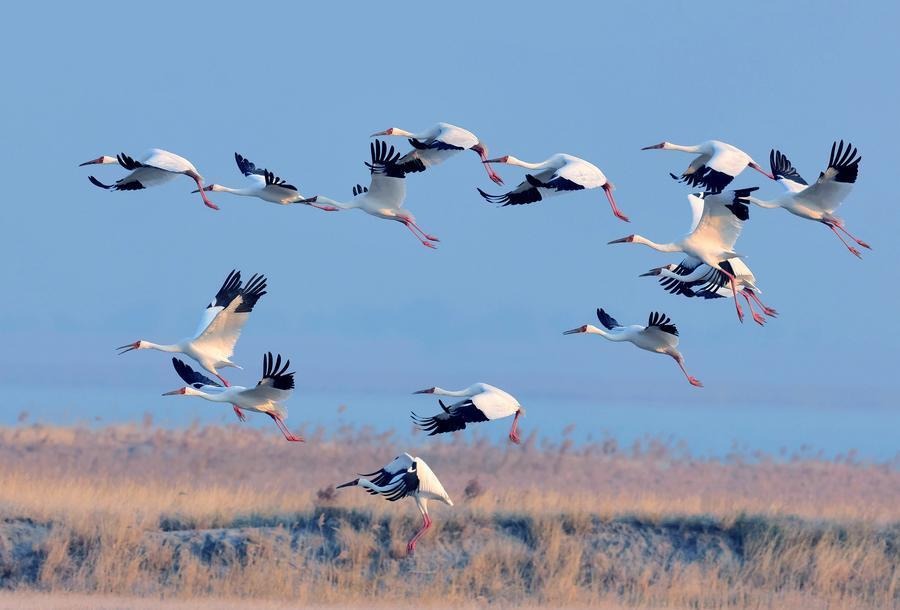
Cornell’s 2013 to 2022 aerial-density analysis puts many western migration peaks in late April or early May. The Northeast and Upper Midwest often peak later. The western Gulf, including Texas, can peak after parts of the eastern Gulf because the two regions receive different mixes of migrating species. Red-winged Blackbirds, Tree Swallows, and Killdeer return early in spring. American Robins may already be around all winter in some areas. Match any national date to your own region and target birds first.
Find Your Local Spring Migration Window with BirdCast and eBird
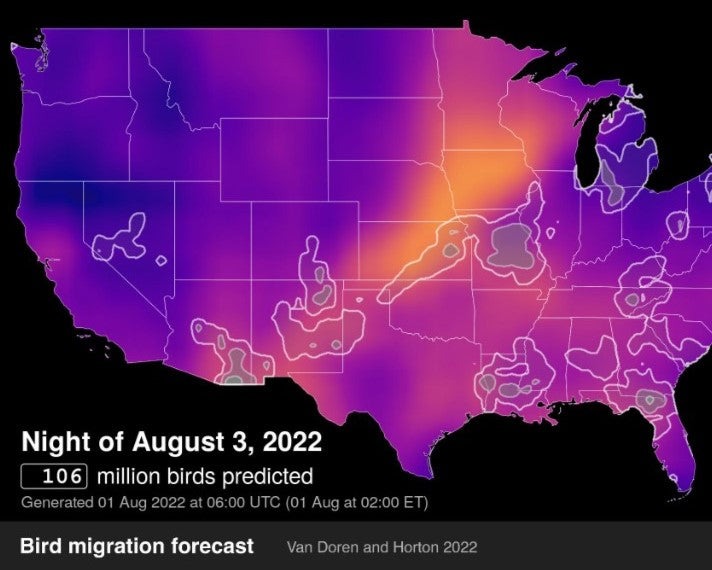
For a trip several weeks away, start with your county’s historical nighttime migration window. If you have a target bird, local species reports refine the timing.
- Locate your county’s historical peak. Use BirdCast to find the interval when nocturnal migration has historically concentrated in your county.
- Compare a target bird if you have one. Open the regional eBird Bar Chart and find when that species appears on complete checklists.
- Choose your dates. For general birding, start from the county window. For a target species, go with the species’ dates if they differ.
For example, NYC Bird Alliance places peak warbler migration in New York City from late April through mid-May. If you’re planning a city-park warbler walk, check that window against your county’s BirdCast history and the Bar Chart for the warbler you want. For eBird hotspots, habitat and dated sightings, see how to find useful birding hotspots.
Bar Chart frequency is the share of relevant complete checklists that reported a species. A value of 0.4 means the bird appeared on 40% of those checklists for that location and time period. It reflects a reporting sample, so observer effort and site coverage shape it.
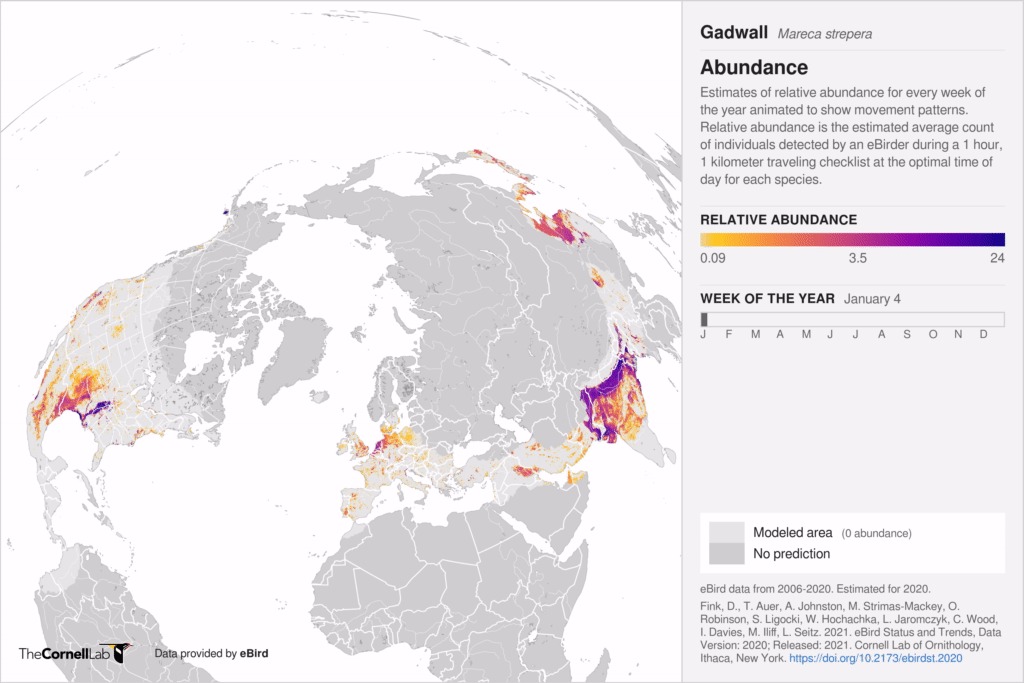
eBird’s weekly relative-abundance maps give a separate, modeled view of certain species through the season. They use a different method from Bar Chart reporting frequency. No single map settles it, so read them alongside BirdCast forecasts and seasonal range. For help with the maps, see how to interpret bird migration maps.
| Planning question | Source | What you learn | Time horizon |
|---|---|---|---|
| When has my county seen concentrated passage? | BirdCast historical peak | Seasonal nocturnal traffic window | Weeks or months ahead |
| When do birders record my target species? | eBird Bar Charts | Complete-checklist reporting frequency | Advance species planning |
| How does a species’ distribution change? | eBird weekly relative abundance | Modeled species-specific seasonal pattern | Seasonal comparison |
| How active might migration be soon? | BirdCast three-night forecast | Predicted airborne movement | Next three nights |
| What moved overhead last night? | BirdCast dashboard | Radar-estimated migration already observed | After a migration night |
Book Ahead or Choose Among the Next Three Nights
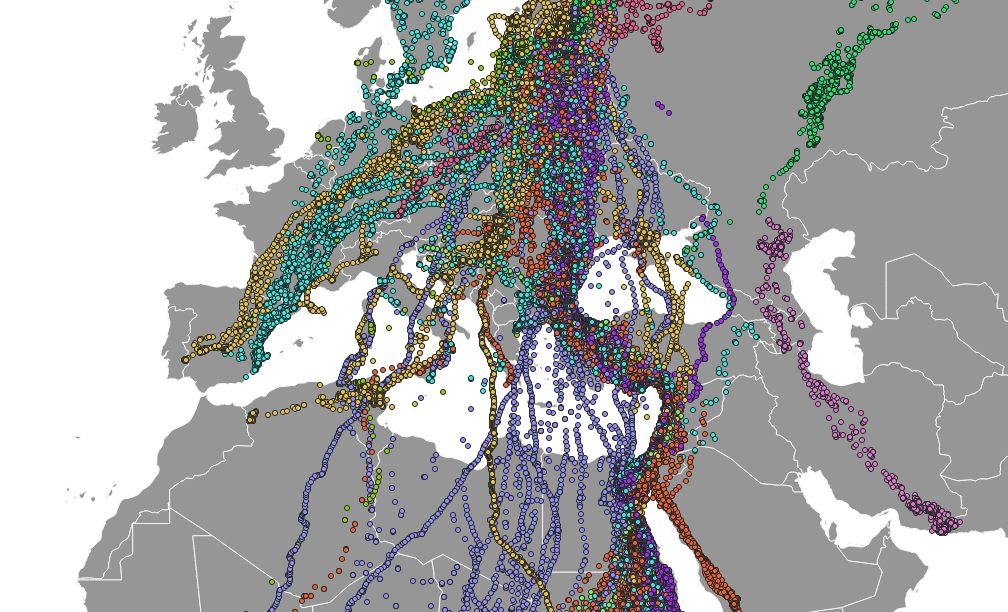
A trip booked months ahead calls for a seasonal interval. An outing you can move among several mornings can use the next three nights of BirdCast forecasts.
Say you’re booking a spring week in Port Aransas on the Texas coast. Choose dates from regional migration history and your target birds’ season, then spend the days across different habitats.
For an outing close at hand, BirdCast’s forecast and migration tools give a shorter view. The three-night forecast models movement that may occur. After a night passes, the live map and county or state dashboards show movement radar detected, including direction, speed, and altitude.
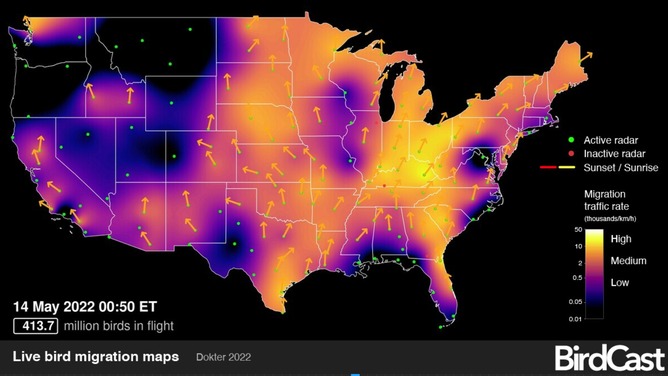
Cornell’s April 15, 2026 guide describes active-night map updates at approximately ten-minute intervals. Its Expected Species feature uses eBird records and modeling to suggest potential migrants for a place and date, adding species context to the radar traffic estimates.
Once your outing falls inside the forecast window, compare your available mornings using the three-night forecast, the last completed night’s activity, and dated local sightings. Then pick the morning you can actually make.
Why a Big Migration Night Can Leave Your Park Quiet
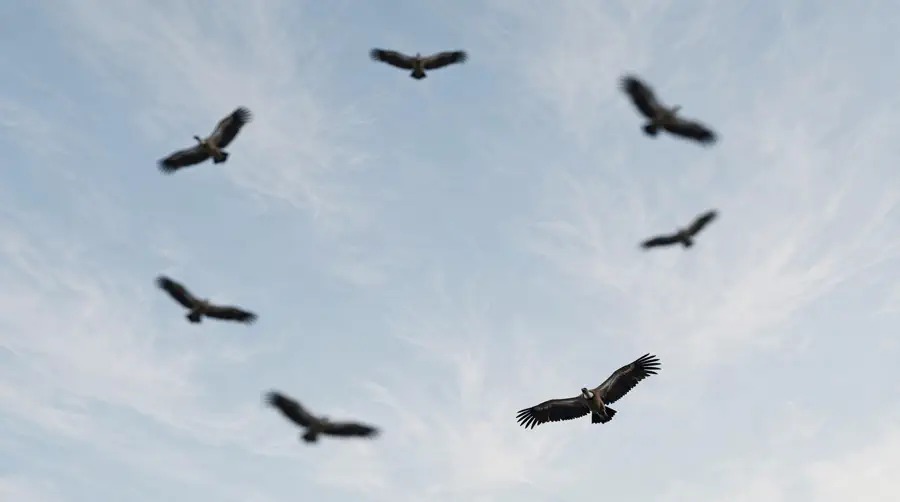
A strong regional flight can pass over a park and leave few migrants on its paths the next morning. Radar measures birds in the air across a broad area. What you find on the ground depends on which birds stop, which species are passing through, the habitat, and local conditions.
Wind, rain, and weather fronts affect migration and the choices birds make along the way. Sometimes birds pile into one patch of stopover habitat, which birders call a fallout. Wooded urban parks, sheltered patches, and coastal habitat give migrants food and rest, though each supports different birds.
During the night of May 3 to 4, 2026, BirdCast estimated nearly 858 million birds aloft across its U.S. coverage shortly after 1:10 a.m. EDT.

BirdCast’s spring 2026 recap reported approximately 18 billion migration detections over the season, against a separate estimate of roughly 4 to 5 billion individual birds. The detections include repeats, since the same bird can be counted on multiple nights.
Where and What Time of Day to Look for Spring Migrants

For many migrating songbirds, morning is the time to listen for song and watch feeding. Look for a wooded stopover with trees, shelter, and food. A city park can offer all three close to home.
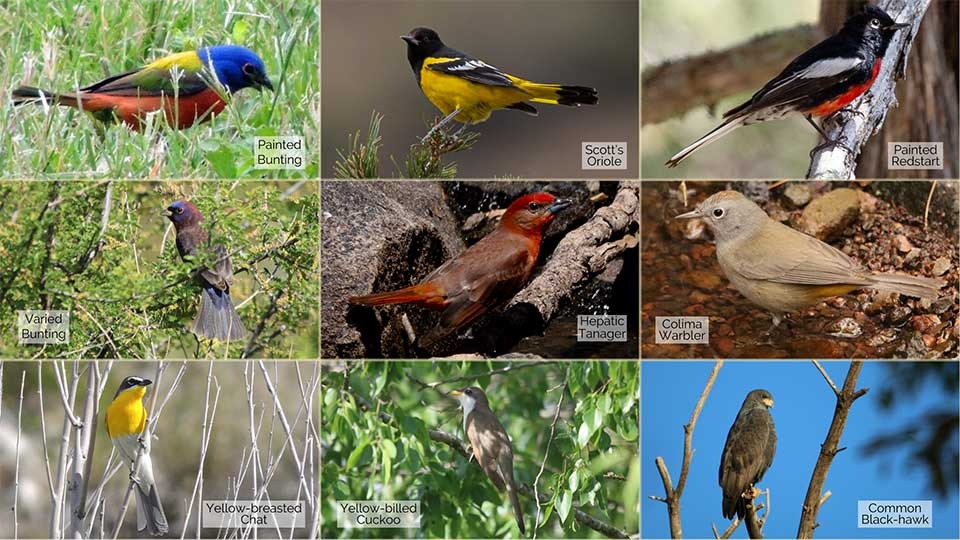
Timing varies by bird group, and your available hours matter. For coastal shorebirds, habitat and the tide shape what you see. A woodland songbird walk calls for different conditions.
One r/birding participant found it hard to identify individual birds amid a crowded dawn chorus:
It’s true that more birds are active at the crack of dawn, but frankly I find that can make it harder to pick out and ID individual birds! When there are dozens of birds singing at once it can be quite overwhelming. So, just go out at whatever time works for you. There’s almost always some birds active and you never know when you’ll see something exciting. It’s part of the joy of birding for me!
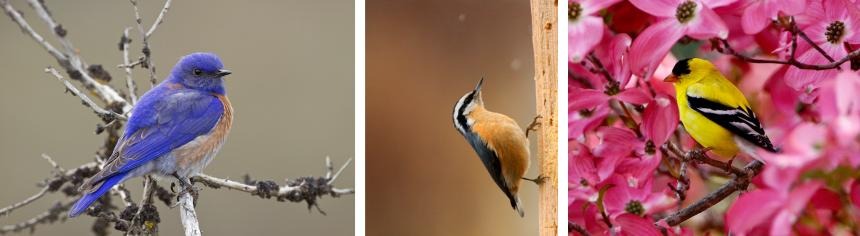
If you have only an hour at 10 a.m., pick a place with good habitat and use it. On another day, try dawn and compare the sounds and movement.
Three Ways to Plan a Spring Birding Day
| Your situation | What’s set | What to check | What you can still choose |
|---|---|---|---|
| Gulf Coast trip, such as Port Aransas | Travel booked ahead | Historical regional passage and target-species season | Site and observation day within the trip |
| Flexible day in the Northeast or Upper Midwest | A few available days | Local seasonal history, followed by near-term forecast | Which available morning to use |
| Short neighborhood-park visit | Limited free time | Local habitat and species reporting | Park route and time within the available period |
One birder described how traveling to places with unfamiliar birds changed their willingness to leave before sunrise:
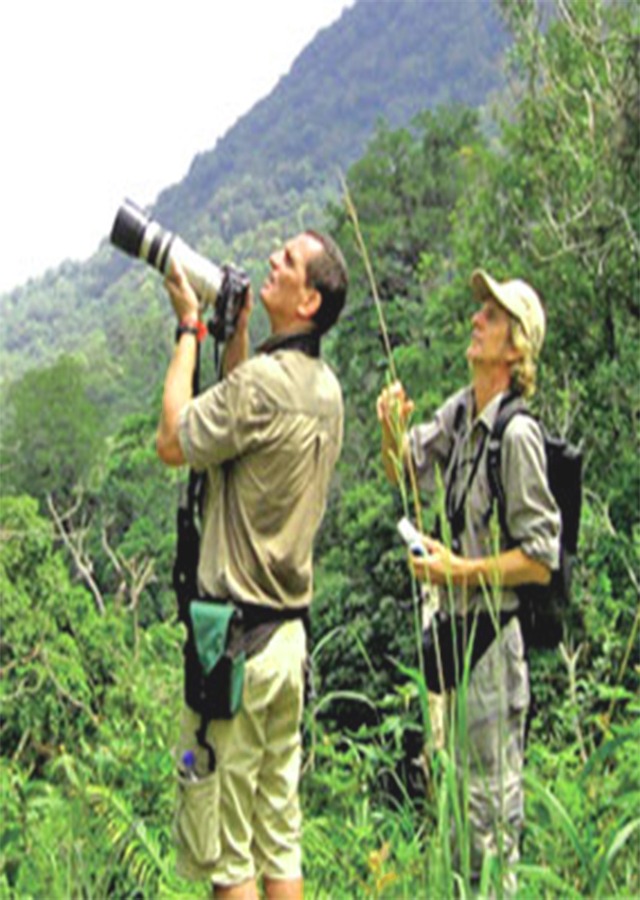
I just think it depends on how serious you are, where you are and what you want to see. At home where I bird often only something special is getting me up at the crack of dawn. If I am traveling and there is tons of stuff I have never seen we are up before sunrise, sometimes spending hours driving to get where we need to go. For the most part passerines are up really early. Midday is super quiet especially in the tropics. So try to fill midday with waterfowl/shorebirds or just go have a beer and a nice lunch.
Keep Migrating Birds Safe and Learn from What You See
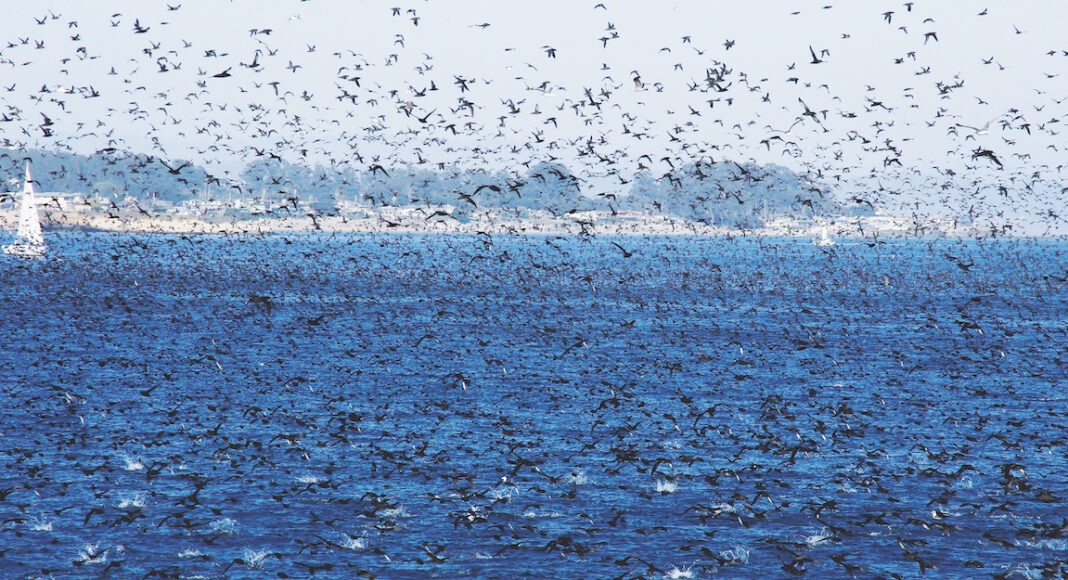
Migrating birds need places to feed and rest. The American Birding Association’s Code of Birding Ethics calls for minimizing disturbance, respecting access rules, and restraint around sensitive birds and sites. A closer photograph or an extra round of recorded calls isn’t worth crowding a feeding bird, a roost, or a nest.
Take notes while the outing is fresh: date, location, observation period, weather or other field conditions, and the species you identified. Mark any tentative identification as uncertain. An eBird checklist or a field notebook keeps the record, including familiar resident birds on a day when your hoped-for migrants never showed.
For radar forecasts, migration intensity, and weather, see how to read birdcast migration forecasts.