For a fall songbird outing in the contiguous United States, start with mid-September through mid-October. The best dates shift with your county, target birds, and habitat, so check your local migration period, recent bird observations, and the weather before you pick an accessible place to watch. Early shorebirds and later waterfowl run on a very different schedule.
When does fall bird migration peak in the U.S.?
Most nighttime fall bird migration across the contiguous United States runs from about mid-August to mid-November. The broad peak falls between mid-September and mid-October, according to Cornell Lab’s BirdCast project.
BirdCast defines a historical county peak as the shortest period containing 50% of estimated nocturnal migration traffic. The calculation draws on weather-radar observations from 1995 through 2018.
The BirdCast historical peak migration tool gives county-level date windows, which turns that nationwide average into something you can plan around.
Shorebird migration starts while summer is still underway, and later migrants keep moving after the main September songbird passage.
Which birds migrate earlier or later in the fall?
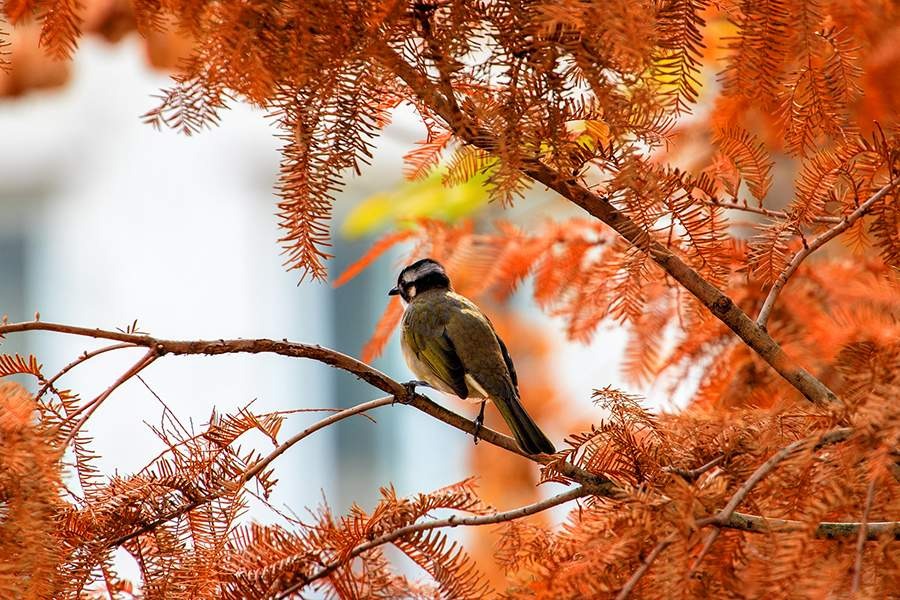
Different groups of birds move through the United States on overlapping schedules. A July shorebird outing, a September warbler walk, and a November waterfowl visit all count as fall migration birding.
The calendar below draws on Black Swamp Bird Observatory in Ohio and NYC Bird Alliance. Treat it as a pattern, not as arrival dates for every state.
| Period | Bird groups worth considering | Regional evidence and habitat context |
|---|---|---|
| Late June to July | Early southbound shorebirds | Ohio shorebird movement can begin in late June or early July; wetland and shoreline habitat |
| August | Shorebirds, early warblers, flycatchers, other songbirds | Ohio’s early and developing fall movement |
| September | Warblers, thrushes, other songbirds, some raptors | Important Ohio warbler movements; NYC songbird passage and developing raptor activity |
| October | Later songbirds, sparrows, kinglets, raptors, waterfowl | NYC songbirds and raptors; later Ohio migrants |
| November | Raptors, waterfowl, remaining later migrants | NYC raptor window continues; Ohio waterfowl movement remains relevant |
| December | Some late migrants and wintering waterbirds | Late-season Ohio examples; depends on locality |
The Ohio migration calendar from Black Swamp Bird Observatory documents the early shorebird movement and the later waterfowl season.
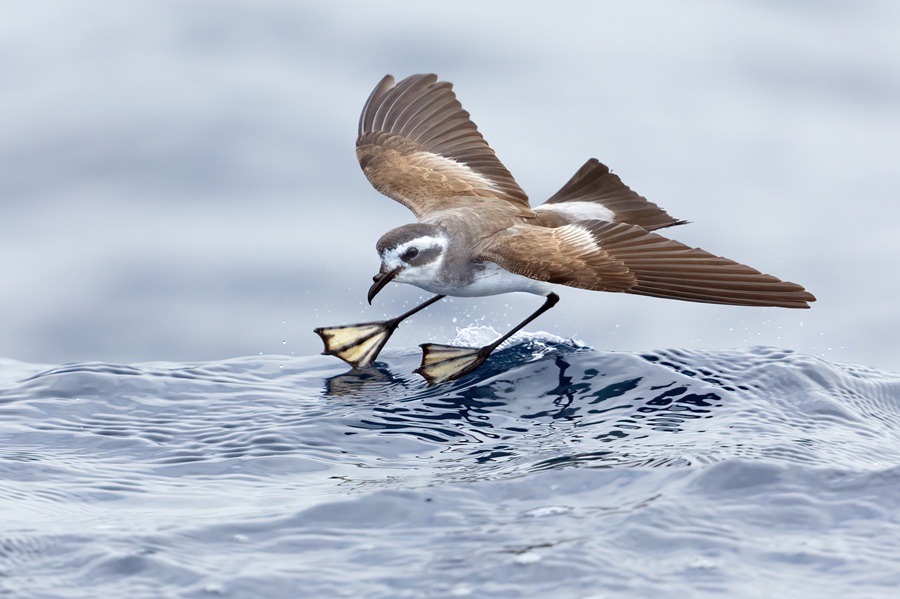
Some shorebirds finish breeding and head south by late June or early July. Exposed shorelines give them feeding room well before the familiar September songbird period.
Later in autumn, the focus shifts to sparrows, kinglets, ducks, geese, and other waterbirds.
Why migration dates change by region and habitat
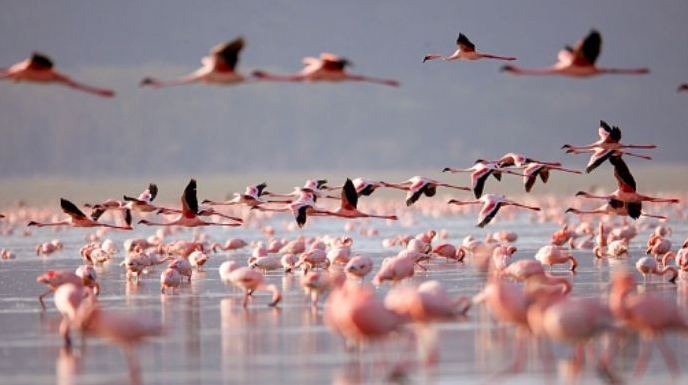
Location decides which birds you can expect. Habitat decides which of those birds have a place to stop, feed, or stay visible.
The United States is commonly described through four broad migratory flyways: Atlantic, Mississippi, Central, and Pacific. Individual routes and stopover sites vary within them.
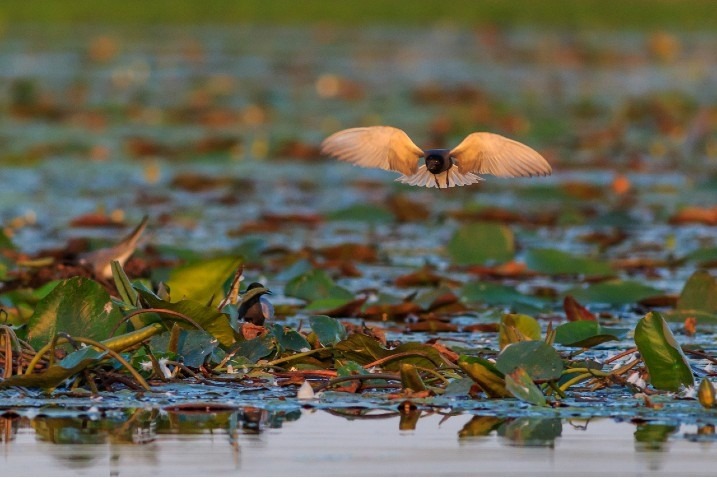
An open shoreline suits a shorebird observer. Small songbirds call for trees. A ridge or established hawk-watch point works best for migrating raptors, and wetlands and open water become useful for waterbirds later in the season.
NYC Bird Alliance places songbird passage in September and October and raptor watching into November. An Arizona desert outing requires its own local calendar.
What BirdCast can tell you about a migration night
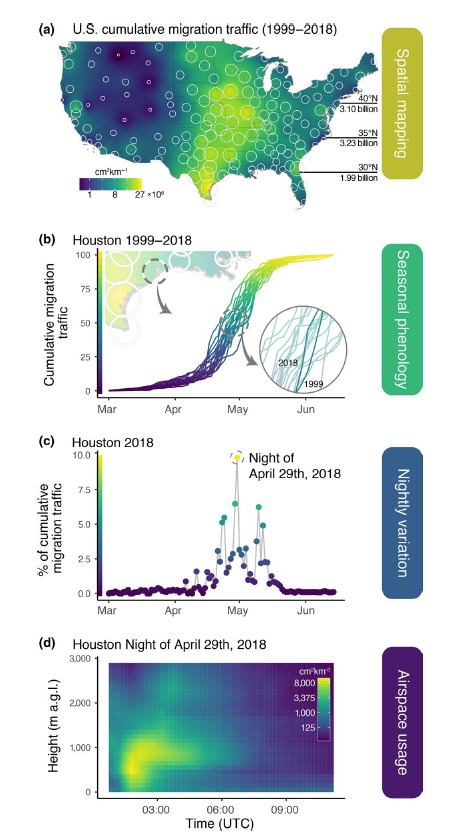
A strong night of overhead migration can leave the park quiet the next morning. BirdCast uses weather radar and models to estimate nocturnal movement, but a bird on the ground only counts once an observer detects and identifies it.
Historical timing, forecasts, and observations
| Information source | What it provides | Best use |
|---|---|---|
| BirdCast historical peak | County-based period containing half of estimated historical nocturnal traffic | Choose a broad seasonal window |
| BirdCast migration forecasts | Predictions of nighttime migration movement | Evaluate a possible migration night |
| BirdCast live radar maps and dashboards | Radar-derived movement estimates during monitored periods | Understand movement occurring across a region |
| eBird observations | Bird sightings submitted by observers, associated with locations and dates | Identify plausible species and places to investigate |
| Your own field observations | Birds detected and identified during a visit | Document the birds you personally encountered |
On BirdCast live maps, migration traffic rate estimates how many birds cross a one-kilometer line perpendicular to their direction of flight in an hour. The unit is birds per kilometer per hour, measuring passage through the air. To read the signal well, compare eBird abundance, BirdCast forecasts, and seasonal range using how to interpret bird migration maps.
Weather-radar echoes do not identify individual species. BirdCast’s expected-species lists come from models built on bird-observation data.
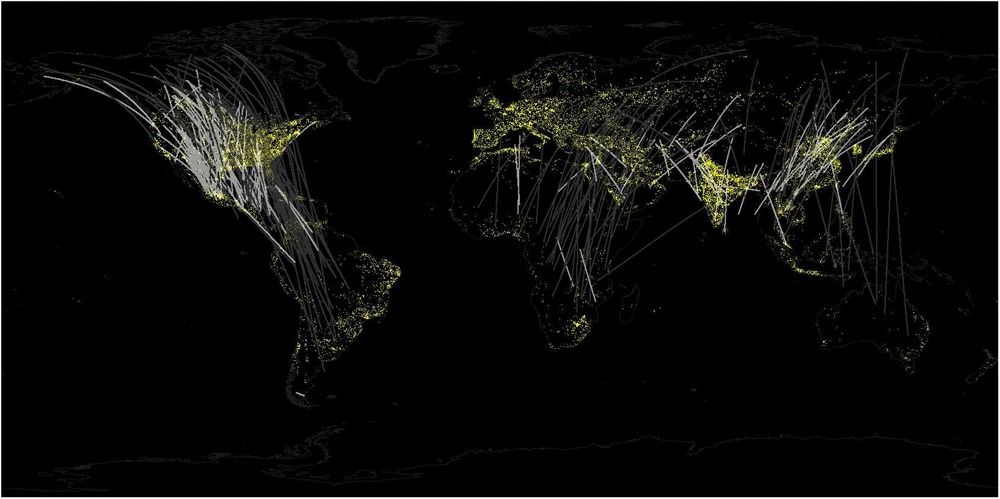
Many songbirds fly at night, high above the places people visit by day. Whether a migrant lands depends on habitat, food, weather, and how far it still has to travel. Even birds that land hide in dense vegetation.
Some raptors and swallows migrate during daylight, outside the main nocturnal monitoring focus. BirdCast’s U.S. migration graphics cover the contiguous 48 states, so don’t assume the method applies to Alaska or Hawaii. For radar forecasts, migration intensity, and weather, read how to read birdcast migration forecasts.
Heavy precipitation and uneven radar coverage, including some mountainous terrain, complicate interpretation.
When does weather help fall migration?
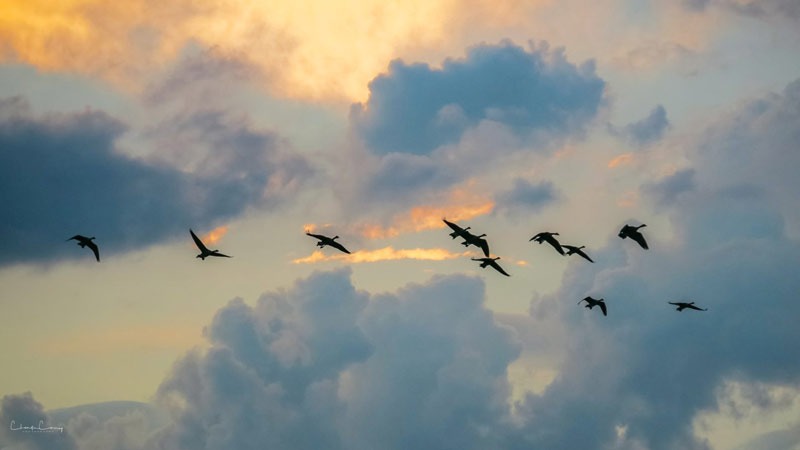
Weather affects when birds travel and where some of them stop. Favorable winds, cool air masses, and high pressure after a front encourage autumn migration, as Texas Parks and Wildlife’s migration guidance describes.
Rain, storms, and fog change movement and sometimes decide where migrants come down. They also muddy radar readings, and they make the outing itself harder and less safe.
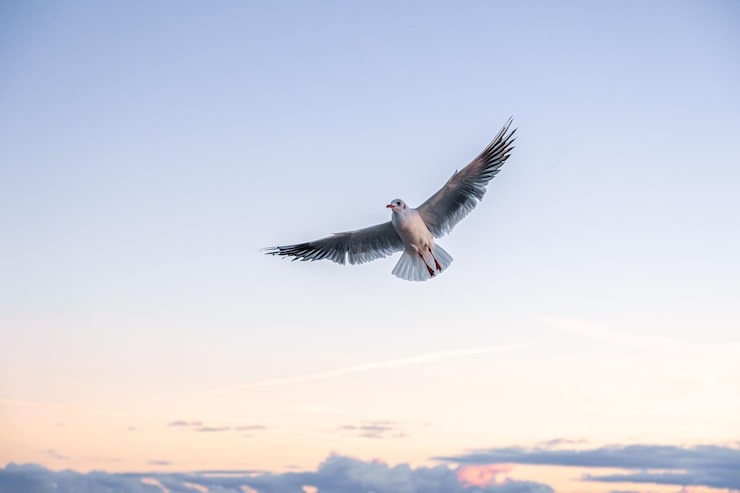
A clear night with favorable winds can still end in a quiet morning. After unsettled weather, some migrants rest in sheltered vegetation.
How to choose a birding site and plan one fall morning
NYC Bird Alliance gives dawn through about 11 a.m. as the productive birding period, especially in spring and early summer.
Fall hawk watches follow a different daytime schedule in New York City. The same guide suggests roughly 10 a.m. to 4 p.m. and names Fort Tilden in Queens as one site.
A six-step plan for your next outing
Choose a county or local region. Pick an area you can realistically visit. The county is BirdCast’s starting unit for historical timing.
Select the bird group. Decide whether you mainly want songbirds, shorebirds, raptors, or waterfowl. That sets the season and the habitat.
Set a likely period. Narrow the dates with the county’s historical migration peak and the local season for your chosen group. Early shorebird and later waterfowl outings can fall outside the broad nocturnal peak.
Review the near-term conditions. Read migration forecasts next to ordinary weather information, and keep radar movement separate from daytime visibility.
Choose an accessible habitat using local observations. The eBird Explore Regions and Hotspots guide shows how to find a county or state page. From that page, use Bar Charts to compare seasonal reports for likely species, then check the dates on recent hotspot checklists. Pick a woodland edge, marsh, shoreline, or watchpoint that fits your birds.
Observe and record. Note the location, date, habitat, identifiable birds, and any uncertain observations. An accurate record of a few species beats guesses made to fill a checklist.
For example, a July shorebird outing in Ohio fits the early southbound movement in the regional calendar. Look on an accessible shoreline, check the county eBird Bar Chart and dated hotspot checklists for reported shorebirds, and let the forecast and access conditions pick the morning.
Walking or waiting?
A long walk covers several habitats but can carry you past a productive area too fast. Pausing near a woodland edge gives you time to notice movement, calls, and birds feeding in the vegetation. Binoculars and field notes get a closer look in your First Birdwatching Walk: What to Do and Notice.
Slow down near a tree or edge where migrants are moving or calling. If the habitat stops suiting your target species, move on to another promising area.
Why fall birding can feel quieter than spring
Spring brings conspicuous breeding-season song, while some autumn migrants are quieter. Changed plumage, seasonal behavior, and vegetation also affect how easily you notice or recognize birds.
Indiana Audubon notes that feeders go quiet in autumn. A slow feeder or trail describes that place and visit, not a regional population decline.
A quick diagnosis after a disappointing walk
| Observation | Explanation | One useful adjustment |
|---|---|---|
| Few target birds during the visit | Their main local movement falls outside the chosen period | Compare the date with that group’s local season |
| Migration activity shown overhead, little activity in the park | Birds passed over or stopped elsewhere | Consider another suitable habitat |
| Birds seem present but difficult to locate | Vocal activity and visibility differ from spring | Spend more time observing movement and field marks |
| One familiar feeder is quiet | Seasonal feeding and movement patterns have changed | Compare activity beyond that single feeding station |
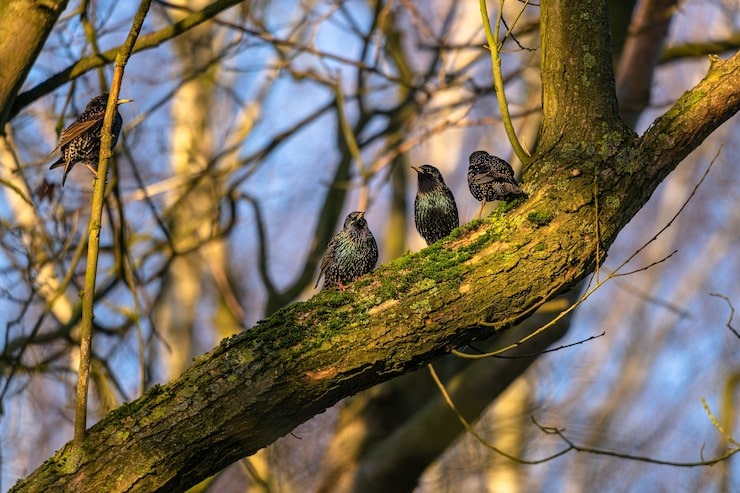
After a sparse outing, change one factor next time: the habitat, or the time you spend at a productive edge.
How fall plumage and quieter calls affect identification
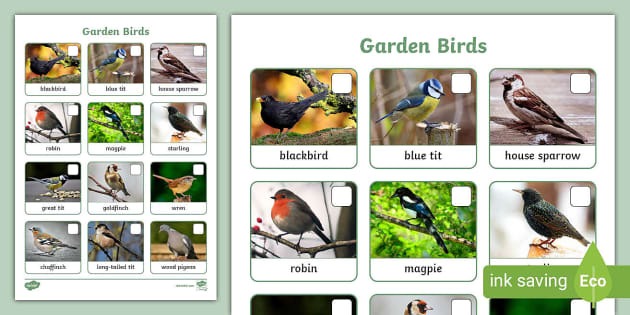
Fall identification gets hard when age, sex, molt, and nonbreeding plumage change a bird’s look. Song also drops off compared with the breeding season, so some species give fewer vocal clues. New Hampshire Audubon’s September field notes stress the same challenge.
A birder separating buntings, tanagers, or grosbeaks in the Southeast may get only a brief view of a moving bird. Color alone can mislead when the bird’s age or seasonal plumage is uncertain.
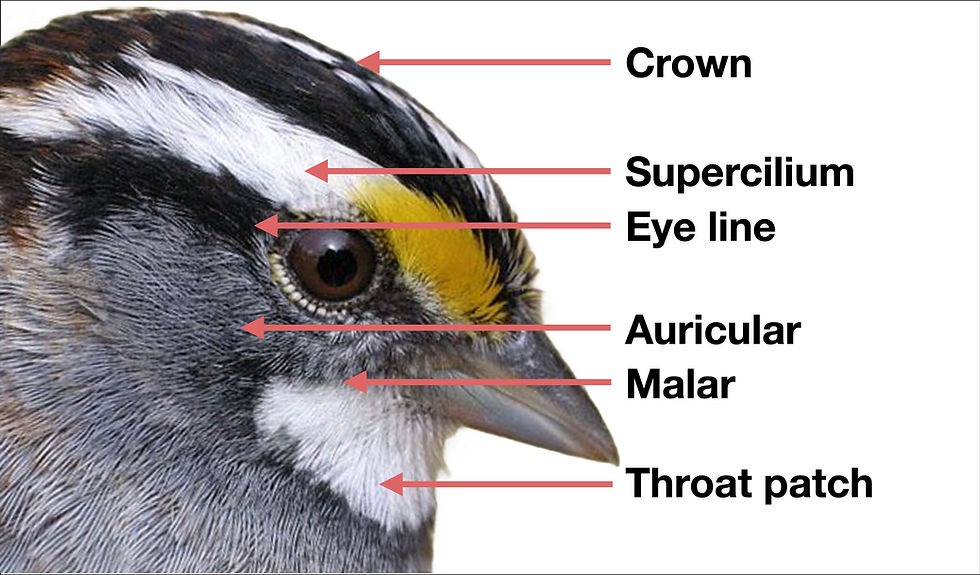
Look at structure, bill shape, facial pattern, wing markings, behavior, and habitat together. Location and date narrow the options, because similar species differ in distribution and seasonal occurrence.
If a bird vanishes before you know what it is, record what you saw and leave the identification open.
Is birdwatching still worthwhile after the fall peak?
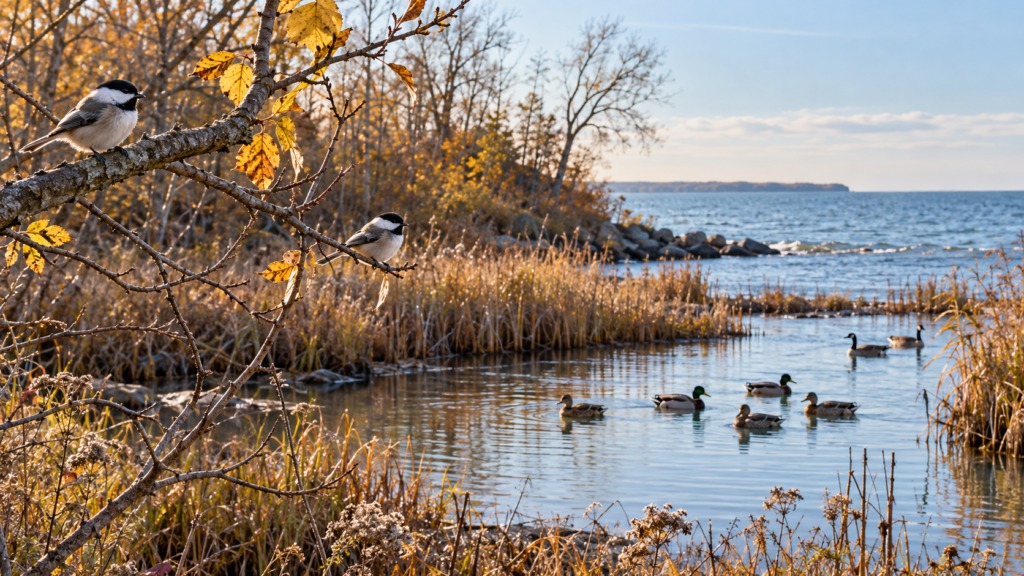
Yes. Once the main warbler passage ends locally, you can still watch sparrows, later raptors, waterfowl, and wintering birds. In the Ohio and New York City calendars, ducks and other waterbirds matter most later in autumn and into winter, though the mix differs by locality. In the Lower Hudson Valley, late-season wetlands with ducks or sparrows give a beginner a change from September woodland warblers.
Watch fall migrants without making their journey harder
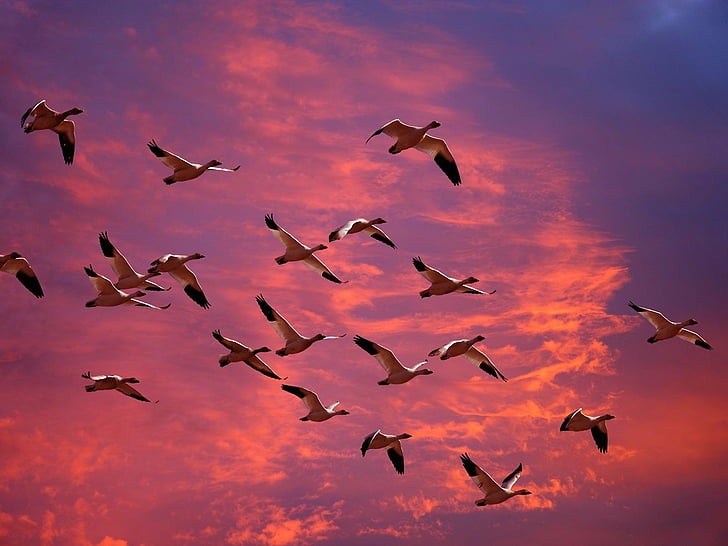
Migration carries risks beyond weather and the strain of flight. Birds moving at night collide with brightly lit buildings and glass.
The U.S. Fish and Wildlife Service explains these hazards in its guidance on bird collisions and nighttime lighting.
BirdCast’s Lights Out guidance sets an autumn conservation period from about August 15 through November 30. That schedule is separate from the dates its migration dashboards operate.
On migration nights, turn off unneeded exterior lights and keep essential security and emergency lighting. For windows with repeated bird strikes, look up authoritative bird-safe glass guidance, since a decorative bird silhouette alone does not make a surface safe.
In the field, don’t crowd feeding or resting birds, respect posted access boundaries, and leave active nests alone. For an injured bird, contact a qualified wildlife rehabilitator or local wildlife agency.