Most wild American Robins live one to two years, according to the Smithsonian. The oldest banded robin in the USGS records reached at least 13 years and 11 months. Both figures are right: one describes a typical bird, the other a single exception. If you can read a band safely, report it to USGS.
How long do wild birds usually live?
Lifespans in the wild vary by species. Some birds die within a year, others live many years, so no single average fits them all.
Take the American Robin. The Smithsonian National Zoo describes its typical lifespan in the wild as roughly one to two years.
Captive birds live under different conditions, so this article uses wild-bird figures only.
Why a two-year lifespan and a 13-year record can both be true
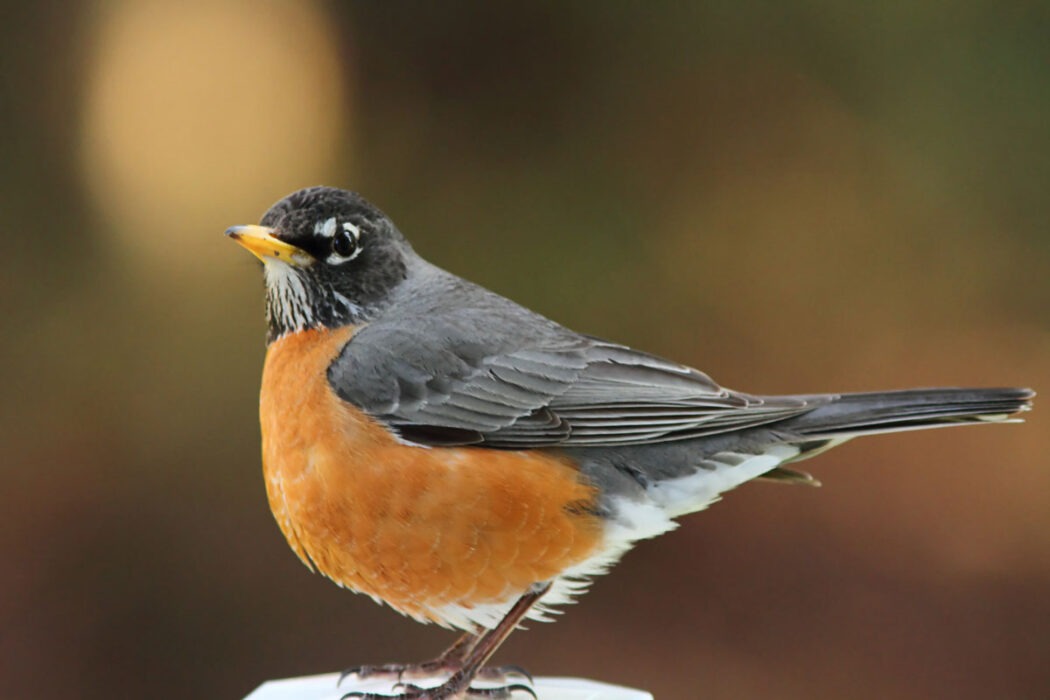
The Smithsonian describes the American Robin as typically living one to two years in the wild. The U.S. Geological Survey’s Bird Banding Laboratory lists a robin whose documented minimum age reached 13 years, 11 months. The first is a description of an ordinary robin. The second is one bird’s recorded extreme.
| Measurement | What it describes | Example |
|---|---|---|
| Typical wild lifespan | A species-specific description of ordinary longevity | Robin: one to two years (Smithsonian) |
| Typical lifespan conditional on breeding age | Expected total age among birds that survived to breeding age (BTO definition) | Leaves out birds that died before breeding age |
| Annual survival probability | The proportion of a defined group of birds surviving over a one-year interval | Robins after the first year: roughly half survive each year (Cornell) |
| Minimum documented longevity | An age established through a recorded recapture or sighting of a marked bird | Robin: 13 years, 11 months (USGS) |
People say average without saying where the count starts. A figure that includes birds that died young looks very different from one that starts at breeding age.
Hello. I’m a beginner Bird watcher and I was wondering about birds lifespans in the wild (I know this will depend on a great many factors) The American Robin for example, is said to have been recorded as living up to 15 years of age but is stated to have an average lifespan in the wild as 2 years. Does this lower number take into account infant mortality, so say, a Robin reaching adulthood can often expect to live past 2?
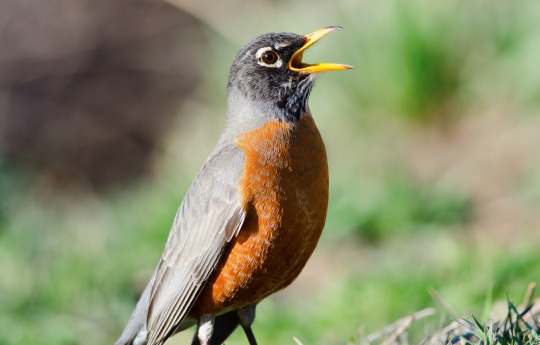
The post cites a 15-year robin; the USGS record used here is 13 years, 11 months.
Early deaths explain the gap. Many birds die young while a few survive for years. If nobody knew the bird’s age when it was banded, the record shows only a minimum age at the later sighting.
In the United States, the American Robin (Turdus migratorius) is a different species from the European Robin (Erithacus rubecula). See the American Robin field guide for identification.
Longevity records for familiar birds in the United States
The USGS Bird Banding Laboratory publishes minimum documented ages of individually marked North American birds. These records come from Longevity Records of North American Birds, Version 2025.1, updated in December 2025.
| Wild bird species | USGS minimum documented age at encounter |
|---|---|
| American Robin | 13 years, 11 months |
| Northern Cardinal | 15 years, 9 months |
| House Sparrow | 15 years, 9 months |
| Ruby-throated Hummingbird | 11 years, 1 month |
| Eastern Bluebird | 10 years, 6 months |
| American Crow | 18 years, 4 months |
| Great Horned Owl | 28 years, 10 months |
Age records: USGS Bird Banding Laboratory.
The USGS longevity records and methods explain how these ages are established. The full list covers more species.
Why a bird’s first year changes the lifespan calculation
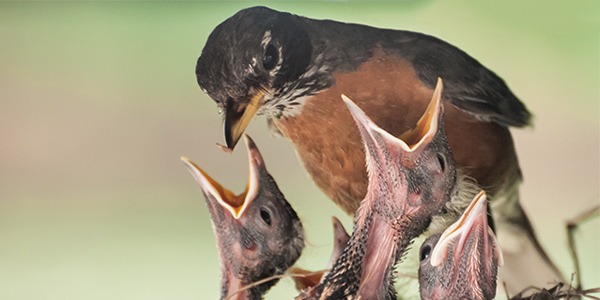
A bird in its first season has a different survival history from one that has reached breeding age. The starting point decides which birds a lifespan calculation counts.
The Cornell Lab of Ornithology reports that about a quarter of fledged American Robins survive until November. Of those, roughly half survive each following year.
A fledgling and a breeding adult face different odds. The adult has already passed the period when many young robins die.
The British Trust for Ornithology calculates typical lifespan only for birds that reached breeding age, so birds that died earlier are left out.
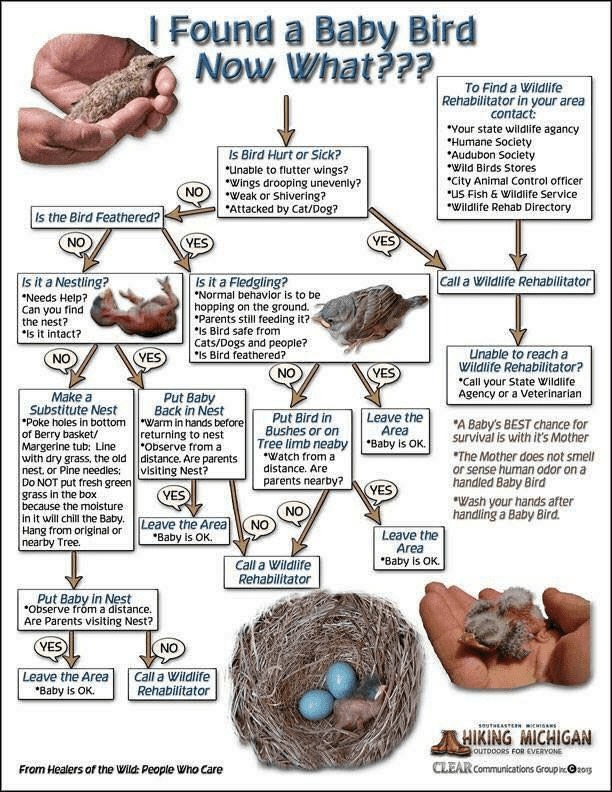
The nestling-versus-fledgling guide helps you tell the developmental stages apart in the field.
Why some bird species outlive others
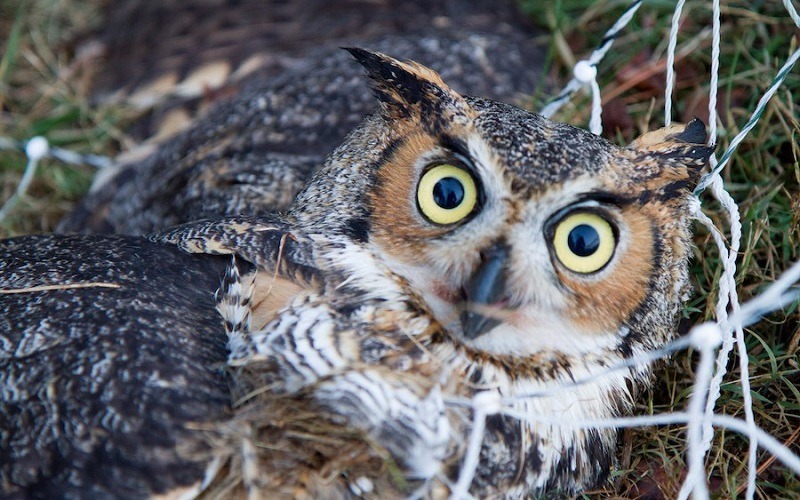
Species grow and reproduce at different rates and face different hazards. Food, habitat, and predators decide whether a bird survives another season. Larger birds tend to live longer: the Great Horned Owl record is 28 years, 10 months, against 11 years, 1 month for the Ruby-throated Hummingbird. Within any species, a bird’s own environment and history still matter.
Records add another factor: how likely researchers are to find an old marked bird.

At Midway Atoll, a Laysan Albatross named Wisdom was about 75 years old in April 2026, according to the U.S. Fish and Wildlife Service.
How researchers know a wild bird’s age
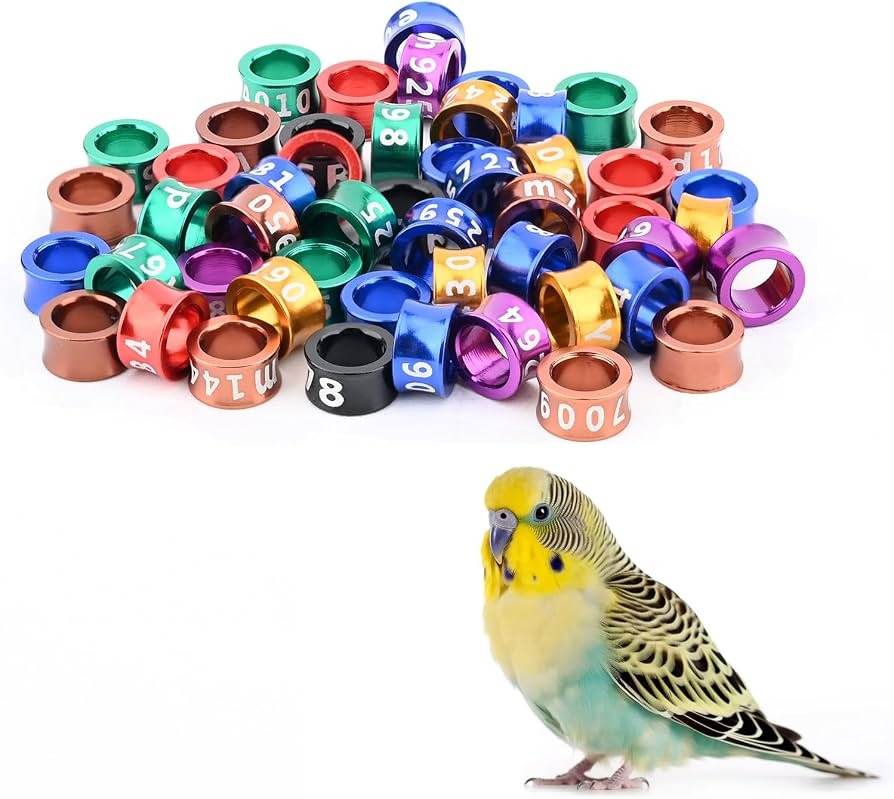
Bird banding ties sightings years apart to the same bird. A band put on at the first capture can be recognized at a later sighting, recovery, or recapture.
- First capture: The bird gets a band, and the bander records its age if it can be established.
- Later find: Someone recaptures, resights, or recovers the marked bird after a known interval.
- Age calculation: The time between the two dates, plus any reliably established age at banding, gives the minimum age.
A bird banded young has a closely known age. A bird banded as an adult has only a minimum age.
In one USGS calculation, a bird classified as second-year when banded in July 1990 was found again in August 1997. With the agency’s assumed June hatch month, its calculated minimum age was 8 years, 2 months.
A surviving bird may leave the monitored area or go undetected, so the apparent return rate of marked birds differs from true survival.
Uneven banding effort, band durability, and unreported finds also decide which extreme ages reach the USGS records. A record is strongest when the marking data and the later find clearly identify the same bird.
Can you tell how old a backyard bird is by its feathers?
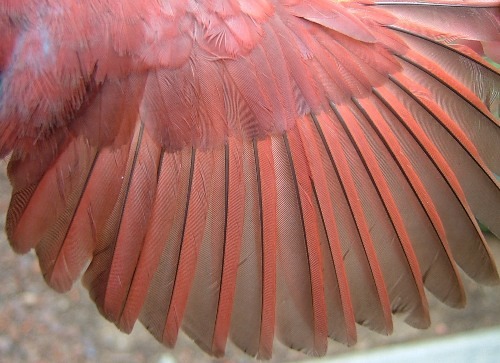
No. A Northern Cardinal with ragged or uneven feathers may just be molting, and plumage condition changes for reasons unrelated to age. Compare plumage, range, and song against Northern Cardinal identification and field marks rather than relying on one clue.
Could the same hummingbird return every year?
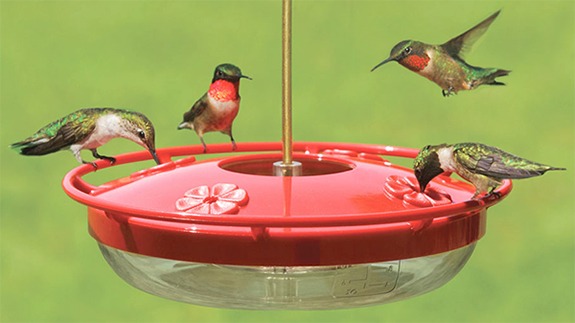
A hummingbird can return to the same yard year after year, but friendly behavior or a favorite feeder doesn’t prove it’s the same bird.
One birdwatcher put the doubt plainly:
Are the regulars that I have this year potentially the same as last year? One female is very friendly and it seems like the same behavior (and size, she’s bigger than the others) as one I’ve had for the last two years. But they all look alike so idk
| What you observe | What it supports | Identification strength |
|---|---|---|
| Similar size, behavior, and feeder preference | A possible returning bird | Weak |
| A distinctive, persistent visible feature | A potentially recognizable bird | Moderate |
| A documented band or marker | A link to a specific marked bird | Strong |
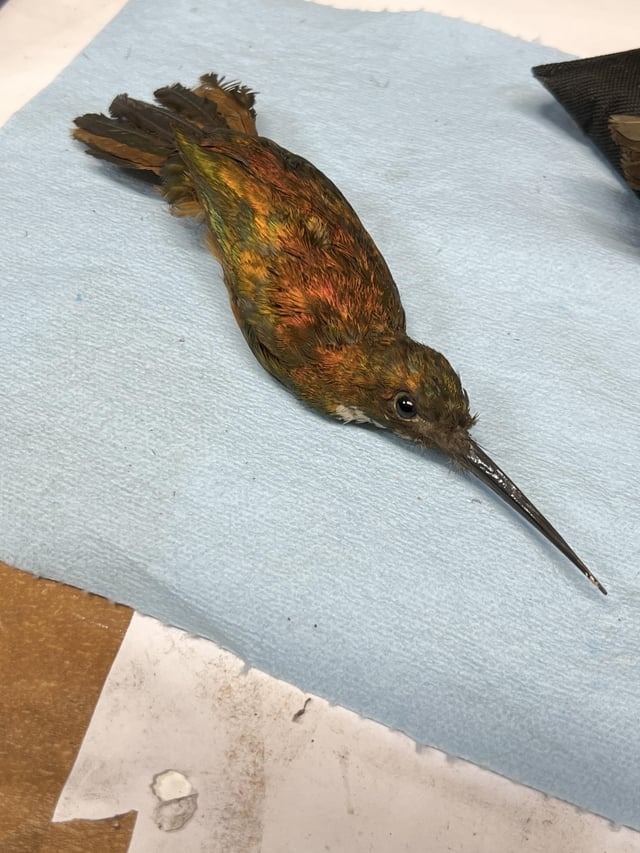
If a regular stops showing up, you can’t tell why. It may have moved on, changed its routine, or gone unnoticed. A refilled feeder doesn’t change that.
A dated bird-sighting record keeps the place, date, visible marks, and behavior of what you saw without disturbing the bird.
What to do when you spot a banded bird
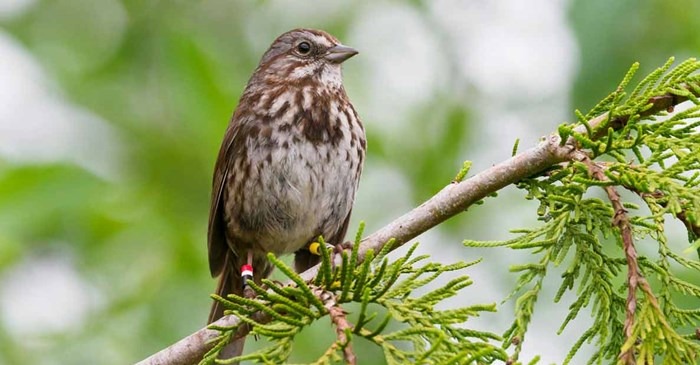
If you can read a federal bird band or an appropriate auxiliary marker, you can connect your sighting to the bird’s earlier record. The U.S. Geological Survey Bird Banding Laboratory explains eligible reports in its bird-band reporting guidance and accepts them through reportband.gov. Other marking schemes may use different reporting routes.
Binoculars or a photo taken from a distance can reveal the band on an American Robin or a marked gull. Some markers are too small or partly hidden to read.
Never approach, capture, or handle a bird to read its band. A missed number is better than a disturbed bird.