Mix one part refined white granulated sugar with four parts drinkable water by volume, and keep the nectar clear in a feeder you can take apart and clean. Change it every other day, sooner in serious heat or when it goes bad, and clean the feeder before refilling with a small fresh batch.
How to make hummingbird nectar: the 4-to-1 recipe
Homemade nectar takes two ingredients: plain refined white granulated sugar and drinkable water. Use one part sugar to four parts water by volume. A measuring cup and a clean pitcher are all you need.
| White granulated sugar | Drinkable water | Batch size |
|---|---|---|
| ¼ cup | 1 cup | Small |
| ½ cup | 2 cups | Medium |
| 1 cup | 4 cups | Large |
Scale the recipe with matching volume units. The finished mixture’s volume can differ from the sum of the measured ingredients.
Measure the sugar and water separately, combine them, and stir until the crystals disappear. If you heated the water, let the nectar cool before filling the feeder. The Smithsonian National Zoo recipe uses the same ratio.
Which ingredients should never go into hummingbird sugar water?
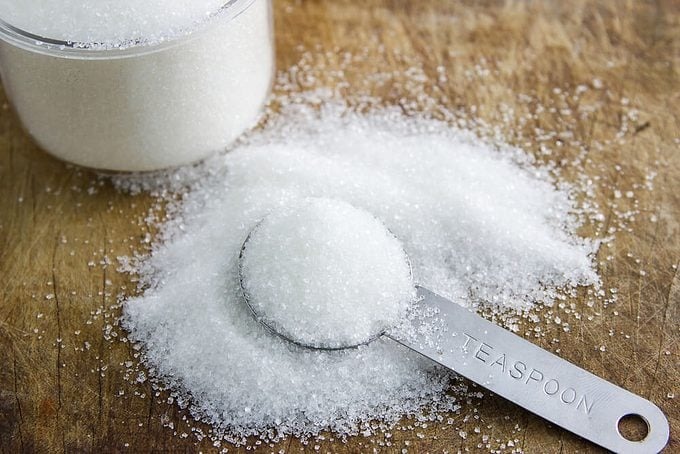
Use plain refined white granulated table sugar. Don’t use honey, corn syrup, molasses, brown or raw sugar, or artificial sweeteners. Powdered sugar can contain additives such as cornstarch, so read the package and buy plain white granulated sugar. Leave the nectar clear: a red feeder attracts hummingbirds without food coloring.
Do you have to boil water for hummingbird nectar?
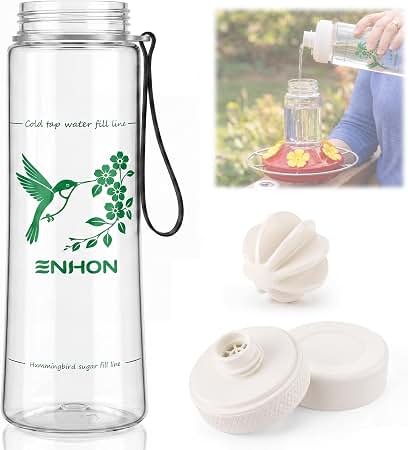
No. With drinkable household water and a fresh small batch, you can dissolve the sugar without boiling. Hot water works too, and some guides recommend it for larger batches you plan to refrigerate.
Smithsonian says plain drinkable tap water is fine. Cornell agrees for small batches you mix every day or two, but heats the water for larger batches kept in the fridge. Audubon’s recipe starts with boiling water. The ratio stays 1:4 either way.
One feeder owner had boiled the whole batch for years and asked about heating less water and finishing with cold water:
I live in the SE USA and have made the 4:1 recipe for years, always boiling all of the water, then adding the sugar, stirring until dissolved and letting it boil for one minute before removing it from the heat. Then I allow it to cool to room temp before filling a feeder and leaving a second serving in the fridge for a few days. Has anyone heard about this method of only boiling 1:1 then adding cold water?
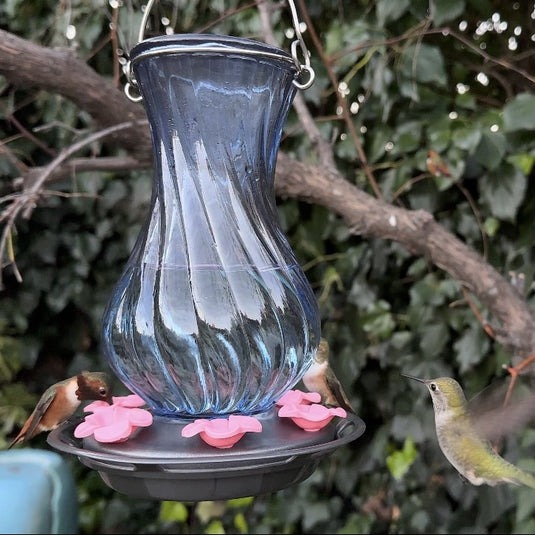
Boiling only part of the water works if the finished batch still has four parts water to one part sugar, and the cold water you add is drinkable too. Boiling won’t keep nectar clean once the feeder hangs outside.
How often should you replace nectar in a hummingbird feeder?
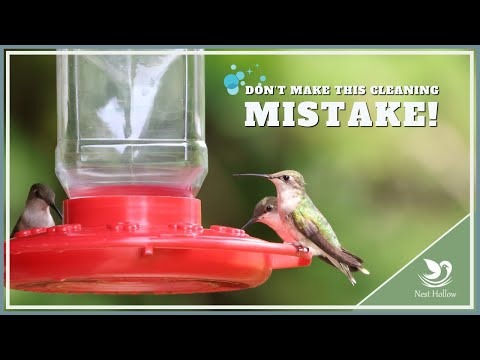
Smithsonian recommends changing the nectar and cleaning the feeder every other day. Hot weather calls for shorter intervals, sometimes daily. Audubon’s hummingbird-feeding FAQs and Cornell give weather-based schedules, shown below.
| Source and condition | Replacement interval |
|---|---|
| Smithsonian routine | Every other day |
| Audubon: hot weather | Daily or every other day |
| Audubon: temperate weather | About every three days |
| Audubon: cooler weather | About twice a week |
| Cornell: very hot weather | Daily |
When the guidance differs, follow the shorter interval. Every other day works as a default even in cool weather. Cornell also advises against leaving nectar outdoors for more than two or three days.
At each change, empty the old nectar completely. Topping off leaves previously exposed sugar water in the feeder. Mold, insects in the nectar, or a sick bird visiting are reasons to clean and refill early, however recently you filled it. For signs of illness and disease precautions, see what to do when birds appear sick at feeders.
How much nectar should you make, and how long does it keep in the fridge?
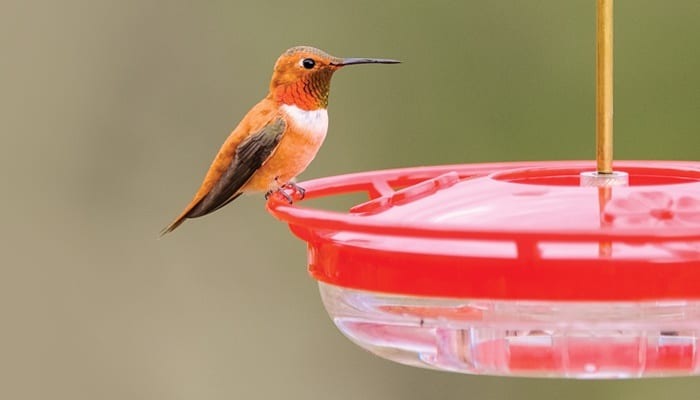
Fill the feeder with what the birds drink between changes. A large reservoir doesn’t help if you pour most of it out, and a smaller fill is easier to use up while it’s fresh.
Say you have a 12-ounce feeder visited by a few hummingbirds. If most of the nectar is left at the next change, fill it less. The birds can still reach the ports as long as the feeder design allows a partial fill.
The Southeastern Arizona Bird Observatory discusses feeders in the 6 to 12 oz range as practical examples.
Store extra nectar in a clean, covered container in the indoor fridge for no more than one week, following Smithsonian guidance. Discard it sooner if it goes bad, and write the preparation date on the container.
How to clean a hummingbird feeder, including the parts you cannot see
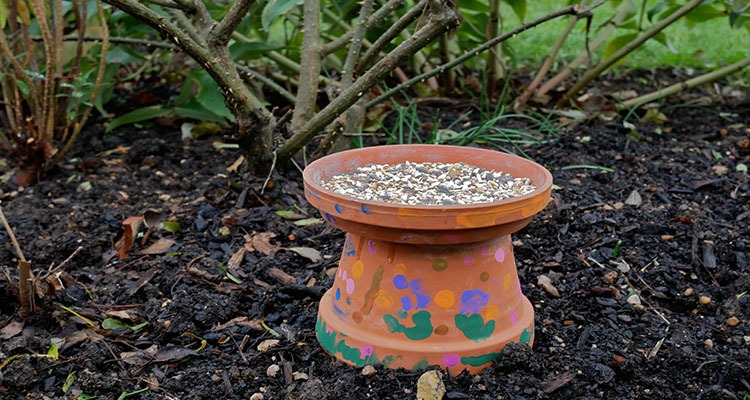
A feeder can look clean through the reservoir while sugar-water residue sits in the flower inserts, narrow feeding ports, bee guards, or base seams. You need to reach every surface the nectar touches.
- Empty the reservoir. Remove all old nectar before washing.
- Take apart removable pieces. Open the base and remove flower inserts or guards where the design allows.
- Scrub with two brush sizes. Use a bottlebrush for the reservoir and a slim port brush for narrow openings and crevices.
- Rinse thoroughly. Flush every part so no cleaning solution remains, then reassemble the feeder.
The U.S. Fish and Wildlife Service supports plain water or a weak vinegar solution. Audubon also discusses hydrogen peroxide. Pick a method that suits the feeder’s materials, follow the manufacturer’s restrictions, and never mix household cleaning chemicals.
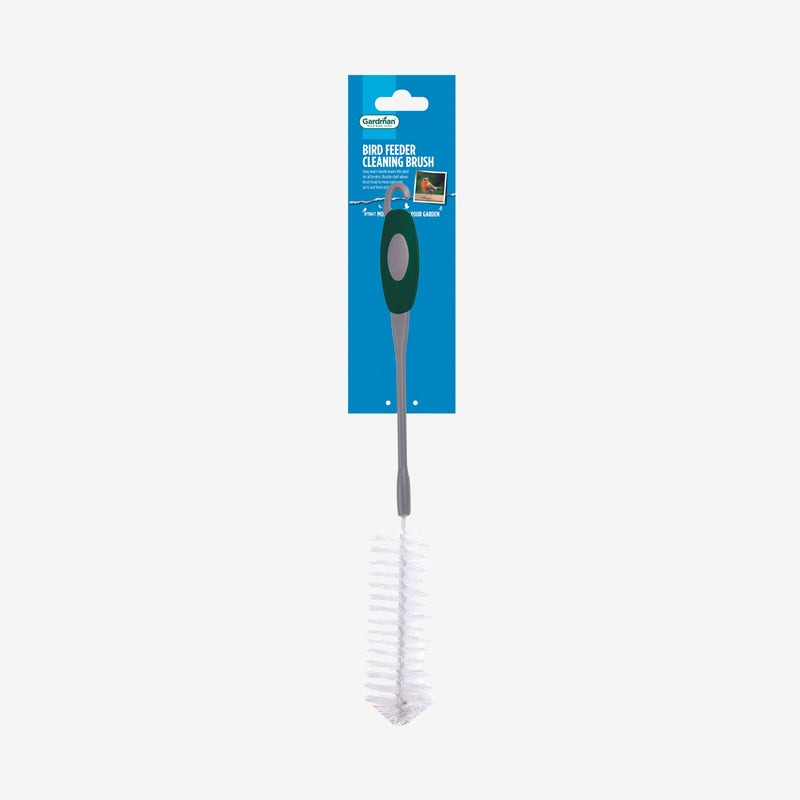
One feeder owner in southeastern North Carolina explained why brush size matters around the little flower ports:
The turquoise collor brush, is silicone, Krumbs Kitchen. Good for cleaning inside of bottle and in and around the flower ports, etc. The smaller brushes by the pen, are nylon. They are great for cleaning inside the feeding ports. Both brushes came from a kitchen product store. May even be able to find them, or equivalent at Walmart.
Cornell emphasizes feeders that come apart and let brushes into the crevices, and its hummingbird-feeding guide explains the design trade-off. If a part can’t be reached or is damaged, replace it or switch to a feeder you can clean properly. Other feeder types are covered in our bird-feeder cleaning guidance.
Cloudy or moldy nectar: when to discard it
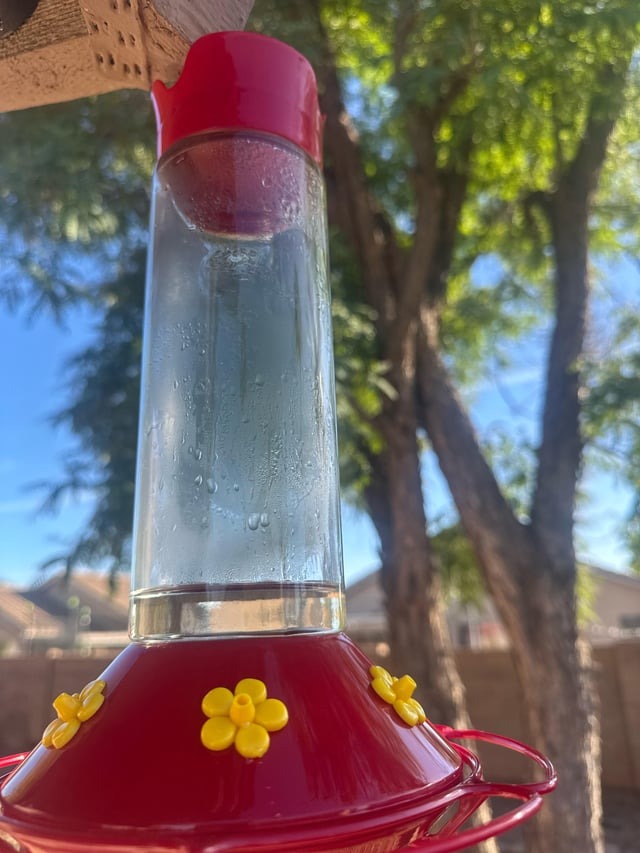
Haze in a fresh batch isn’t automatically mold.
| What you notice | What to do |
|---|---|
| Haze while making a fresh batch | Stir until the sugar dissolves. If it still looks off, discard it and mix a new batch with clean equipment and drinkable water. |
| Cloudy or discolored nectar after time outdoors | Discard the batch. |
| Visible mold, unusual odor, or particles | Discard it promptly and clean the feeder before refilling. |
| Clear nectar at its scheduled replacement time | Replace it on schedule. Microorganisms can be present without a visible change. |
In a 2019 microbial-communities study, Casie Lee and colleagues found that microorganisms built up in hummingbird feeder solutions whether or not birds visited. Visits changed the makeup of those microbial communities, but the study did not determine whether the changes made hummingbirds ill.
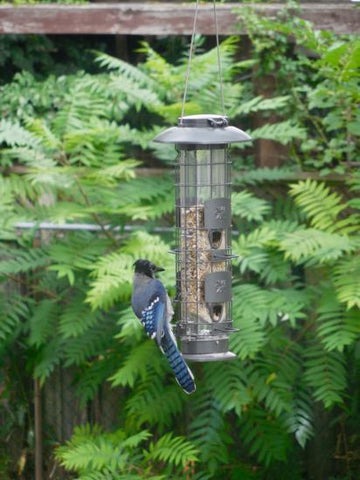
Where to put a feeder, and what nectar cannot replace
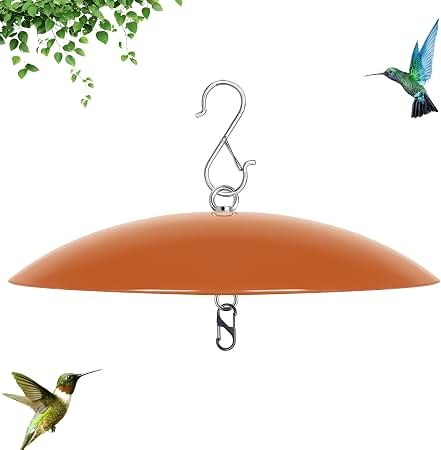
Choose a shaded spot you can reach easily for cleaning. Direct afternoon sun makes sugar water go bad faster, and a spot that needs a ladder makes routine care harder.
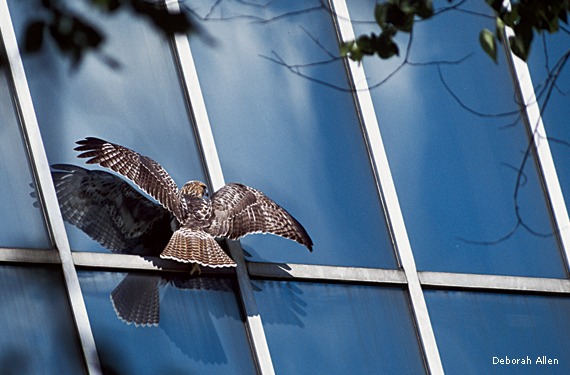
Check the nearest window and where a cat could approach before you pick the spot. Shade is no help if the location is a collision or predator risk. Cornell also notes that warming air in inverted-bottle feeders can cause leaking, so construction matters here too.
Homemade sugar water supplements the hummingbirds’ natural food. Native flowers provide nectar, and small insects supply nutrients that sugar solution lacks. Our guide to native plants for backyard birds covers choosing them.