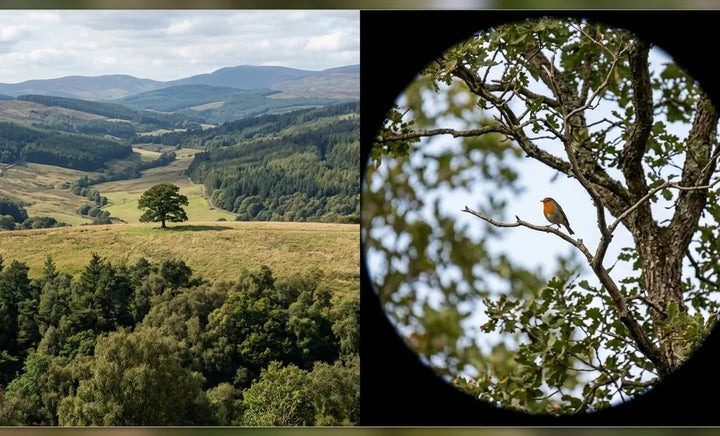
Most birders don’t need a spotting scope for everyday backyard, park or woodland walks. Binoculars are quicker and easier to use. A scope earns its place when you regularly need a steady, detailed view of distant ducks, shorebirds or perched birds and don’t mind carrying a tripod. Try one on your usual outing before you buy. If it doesn’t solve a problem you actually have, keep your binoculars.
Start With the Birds You Miss
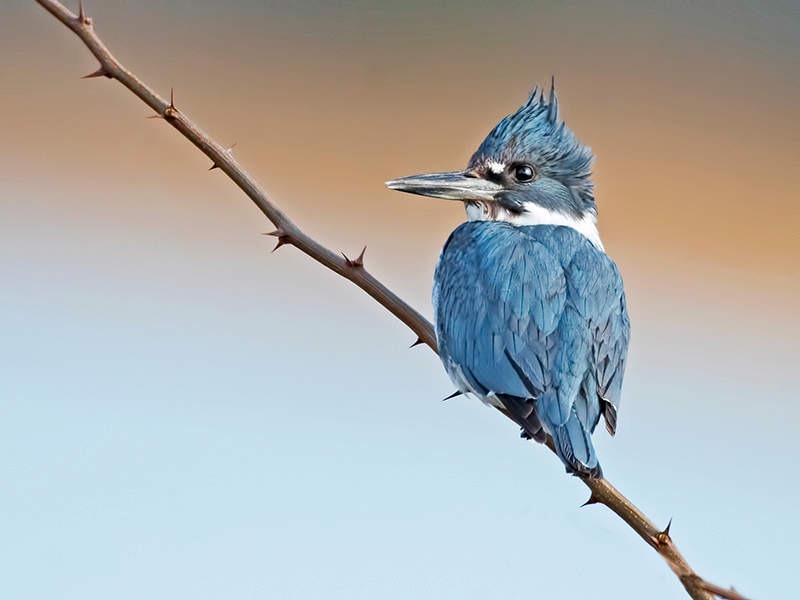
Think of a bird you could see through your binoculars but couldn’t identify. Was the bill shape or a plumage mark too far away to make out, or did the bird vanish before you got a good look? A scope fixes the first problem. Binoculars fix the second.
Where a Spotting Scope Changes What You Can See
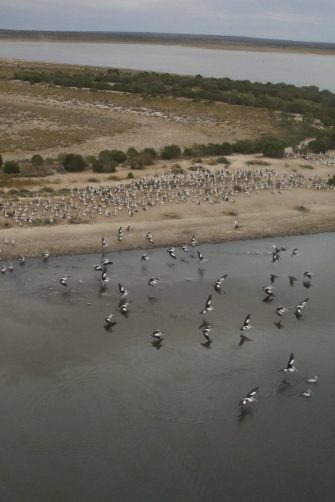
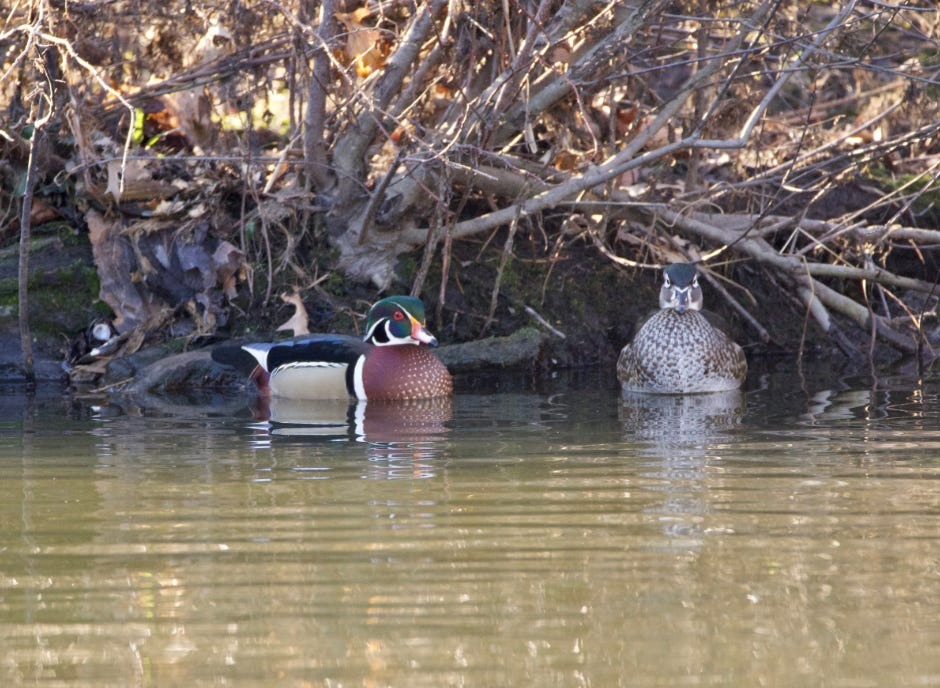
Across a broad lake, ducks can be easy to locate and frustrating to identify. You see the flock through binoculars, yet the marks distinguishing similar species are too small to make out. A scope set on firm ground gives you time to examine those distant birds at higher magnification.
The National Audubon Society’s scope guidance names distant waterfowl, shorebirds on mudflats and perched hawks as good cases. What they share is distance and time for a steady look.
| Usual habitat | What goes wrong | What a scope adds |
|---|---|---|
| Backyard or wooded park | Brief views among branches | Little, except for an occasional still bird too far off for binoculars |
| Lake or river overlook | Ducks too far away to separate by field marks | Repeated looks from one steady spot |
| Marsh or coastal mudflat | Shorebirds feeding at long range | A closer study of shape, bill and plumage while the birds stay in view |
| Open hillside | A distant perched hawk | A long look before the bird moves on |
Your local habitat matters as much as the bird. Review recent outings and note each identification that failed because the bird was too far away. A problem that keeps happening on your home lake counts for more than a sighting you might have someday.
One birder in central Illinois ties scope use to seasonal birds and a nearby river:
Wait a year or two and see if end up really wanting one for the kind of birding you like to do. Scopes are for birds far away that aren’t moving around much. In central Illinois that means winter ducks, and migrating shorebirds. If I wasn’t close to a big river, I wouldn’t have one at all. Lots of folks share at water front or ephemeral ponds, and you can pick their brains about what they like and don’t like about their scopes while getting a feel of what you want in the one you buy. Even birding from the car I’m using binoculars at least 90% of the time
When Binoculars Are the Better Tool
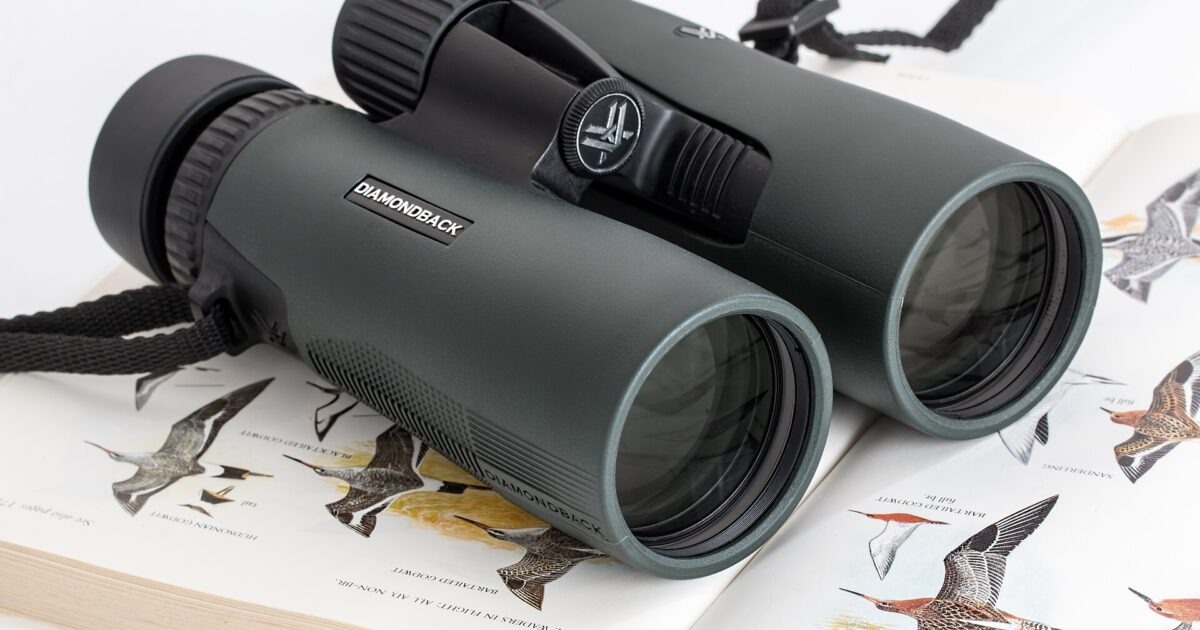
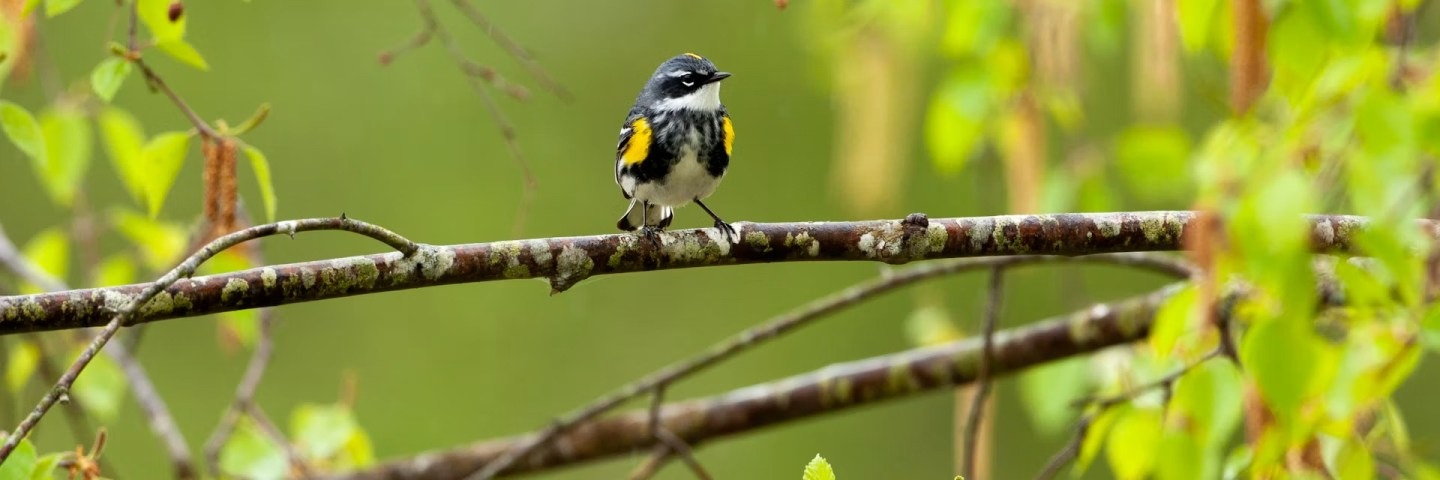
Binoculars are fast. Raise them to a warbler moving between branches, scan a hedgerow or follow a bird that changes direction in flight. Their wide view makes moving birds easier to find and follow than a high-power scope on a mount does.
Many birders start with 8×42 or 10×42 binoculars. The numbers give magnification and objective diameter. The table shows how each tool handles common jobs:
| Task | Binoculars | Scope |
|---|---|---|
| Locate a small bird in foliage | Quick, wide view | Narrower view makes finding it slower |
| Follow a flying bird | Easy handheld movement | Tripod and head restrict quick changes |
| Study a distant stationary bird | Fine for a first look | More power can reveal additional field marks |
| Walk between frequent sightings | Simple to carry and raise | You carry and reposition a mounted system |
Could image-stabilized 20x binoculars replace a spotting scope?Sometimes. Electronic stabilization cuts the effect of hand movement on the view. Detail, field of view, weight and comfort vary by model, so test one on the birds you watch.
What the Scope and Tripod Add to Your Day
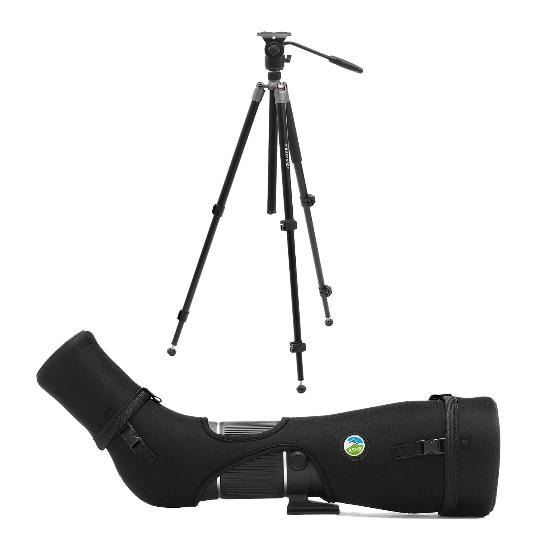
A scope needs a firm support to hold and aim it. The Missouri Department of Conservation notes that spotting scopes need sturdy tripods and get cumbersome to carry over distance. The head matters as much as the legs: it has to move smoothly and stay put.
At a lakeside pull-off, the scope and tripod stay mounted for a long watch. On a long wooded trail, you carry the same kit, unpack it, aim it and move it again. Add up the weight of the scope body, tripod, head and carrying case, then compare it with the route you normally walk.
Another birder uses a scope for seasonal ducks and shorebirds:
I use my scope in the winter for ducks and such, in the summer for shorebirds, and otherwise if I’m leading a walk so that folks can get a better view of distant things that are perched. So not all the time, but it’s well worth it for when I do use it. I have a Leica scope that I bought used, and a carbon fiber tripod to make up for the weight of the scope.
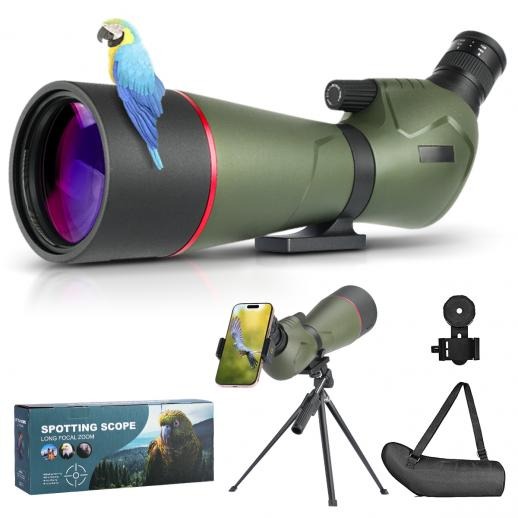
Sharing a steady view can justify the weight. On a group walk, beginners can take turns at the same scope while a perched bird stays put. A support other than a full tripod can work in some situations, as long as the view stays steady at your magnification. For habitat, field notes and binoculars, read your First Birdwatching Walk: What to Do and Notice.
Why More Magnification Doesn’t Always Mean More Detail
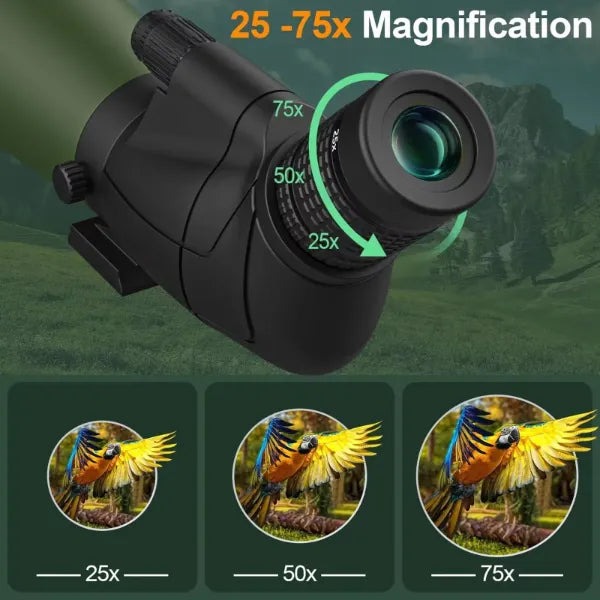
Once the bird is in the scope, zooming in makes it look larger. It also narrows the field of view, amplifies vibration and exposes distortion from heat shimmer. At moderate power, sharp focus makes bill shape and plumage marks easier to tell apart. Binocular magnification, close focus and field of view are covered in how to choose binoculars for birdwatching.
Cornell Lab’s spotting-scope guide covers scopes spanning roughly 15 to 60x and recommends finding the bird at lower power before you zoom in. Both Cornell and Audubon name roughly 20 to 30x as the useful range for many birding situations. Clear, steady conditions make higher power worthwhile.
Over a sunlit mudflat, a distant shorebird shimmers at the edge of your view. Moderate magnification keeps its bill and outline distinguishable through the moving air. For a side-by-side look at binocular power and field of view, see 8×42 vs 10×42 binoculars for birdwatching: which fits your birds.
Exit pupil in numbers: A 65 mm objective at 20x produces a 3.25 mm exit pupil (65 ÷ 20). At 60x it produces about 1.08 mm (65 ÷ 60). The exit pupil is the diameter of the light beam leaving the eyepiece.
Compact or Full-Size, Angled or Straight?
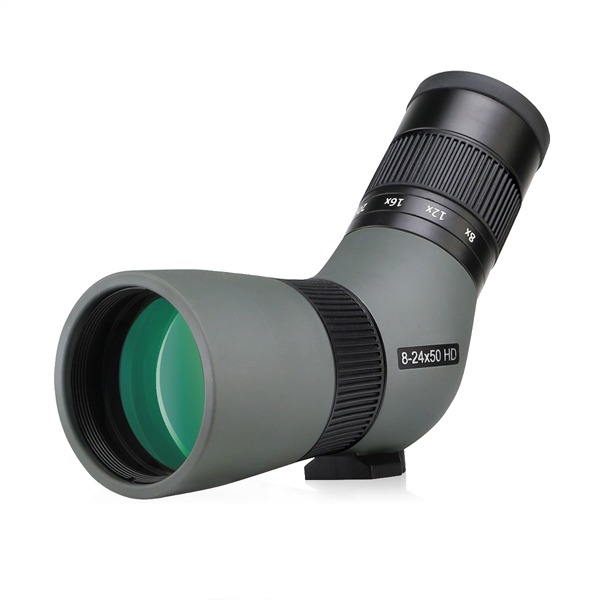
Small scopes pack easily. Larger objectives gather more light and add bulk. Manufacturer data show how much the package varies.
| Model example | Magnification / objective | Body weight | Configuration |
|---|---|---|---|
| Kowa TSN-55A PROMINAR | 17 to 40x / 55 mm | 965 g (approximately 34.0 oz) | Angled |
| Vortex Diamondback HD | 16 to 48x / 65 mm | 50.4 oz | Straight |
| Vortex Diamondback HD | 16 to 48x / 65 mm | 49.8 oz | Angled |
The Kowa body weighs 34.0 oz, about 16 oz less than either Vortex body. All weights are manufacturer-reported and exclude the tripod.
Kowa lists the TSN-55A body at 255 mm long.
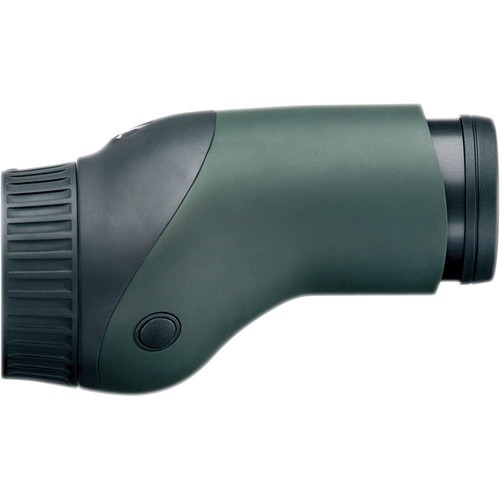
A straight eyepiece sits in line with where the scope points, which feels natural when finding a bird. An angled eyepiece lets you look down into the body, which helps with elevated subjects and with sharing among observers of different heights.
What should a birder wearing glasses check?Use your usual glasses while assessing eye relief, eyecup adjustment and whether the entire field remains comfortable across the intended zoom range.
What You Only Learn After Buying One
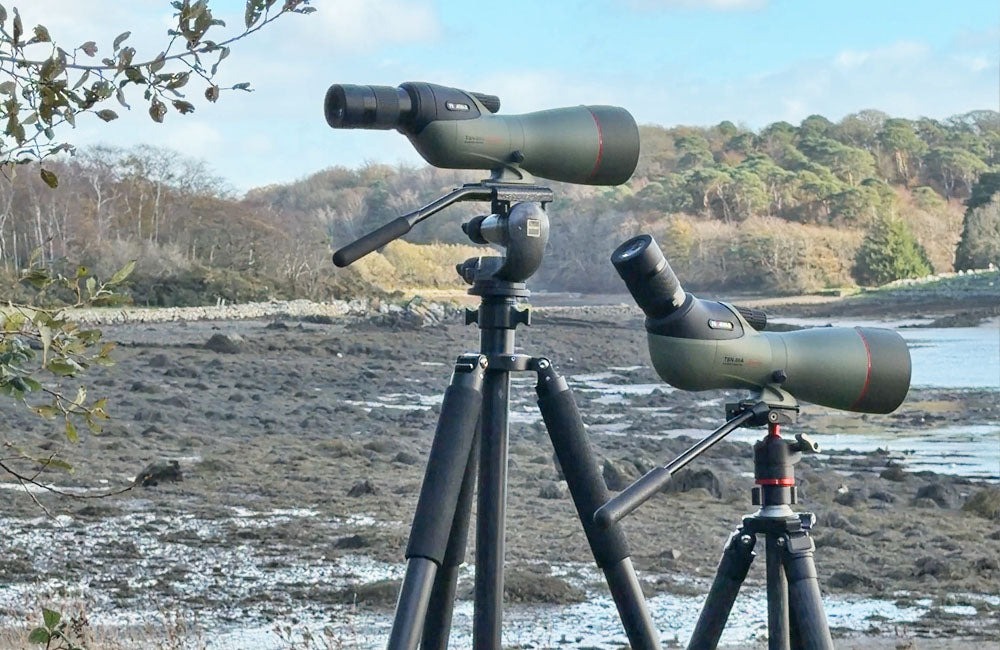
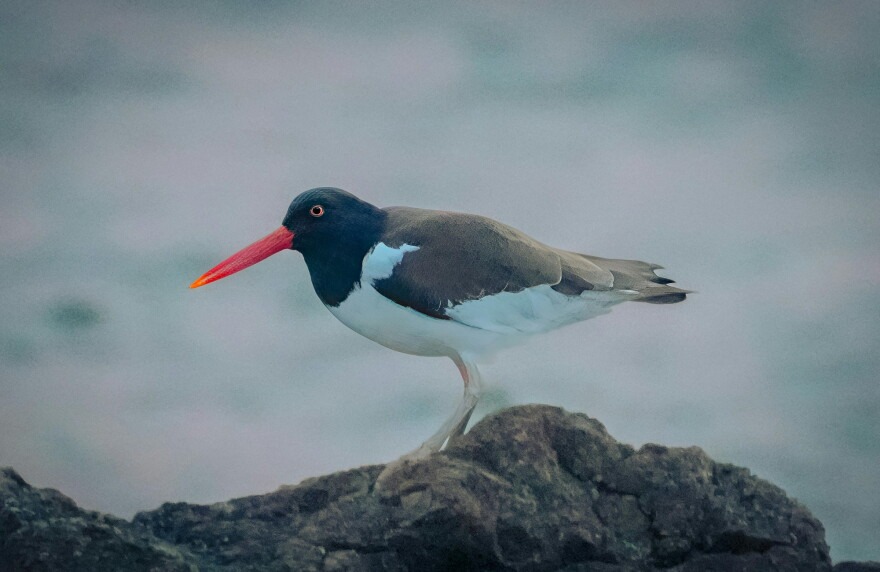
A scope’s narrow high-power view makes a distant bird hard to locate. Find the bird in your binoculars first, then switch to the scope for a slower, steadier look. On a brief sighting, the bird can be gone before it appears in the scope.
The second inconvenience is service and parts. One owner enjoyed a Celestron scope for years, then ran into unexpected costs and delays when it needed repair.
I have a celestron 20-60 x 80 Regal HD and have really enjoyed it for the last 7-8 years. Tripod is almost as important as the scope, if the tripod wobbles you can’t see anything when magnified. Had an issue with the eye piece being frozen. Sent it in for a free repair,but had to send the whole scope in which cost over 100$. Keep the box if they provided it. Ordered a new lense cap in 2024 and it took about 3 months with getting the wrong part and going back and forth with service. Overall I’m pretty happy with it and I’ve found a lot of good birds I would have missed with just bins. Enjoy it!
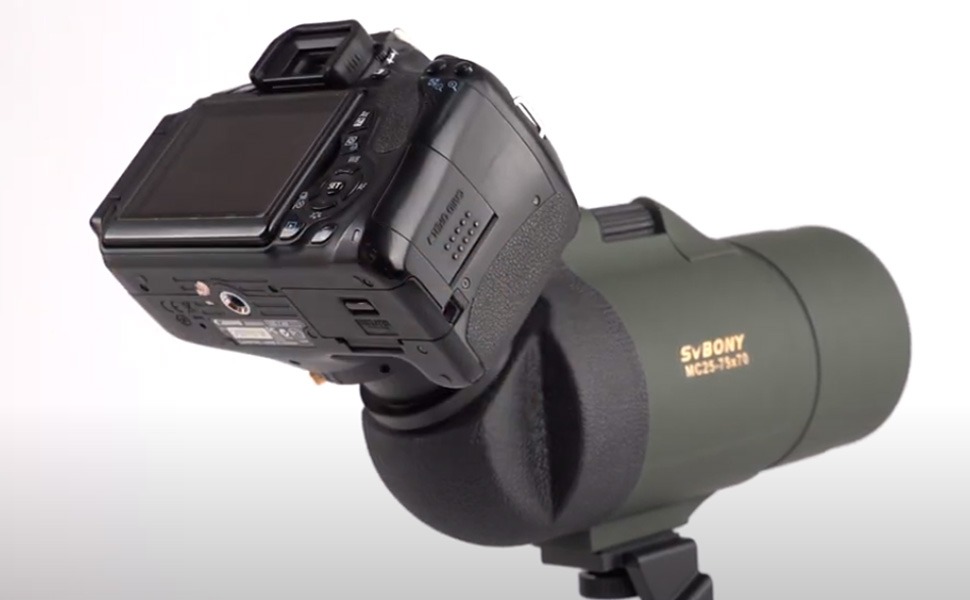
Before you buy a model, check its return conditions, warranty exclusions, who pays repair shipping and whether replacement caps and eyepieces are available. Confirm the mounting interface and that your tripod head can support and control the body.
Try a Scope Before You Buy and Make the Call
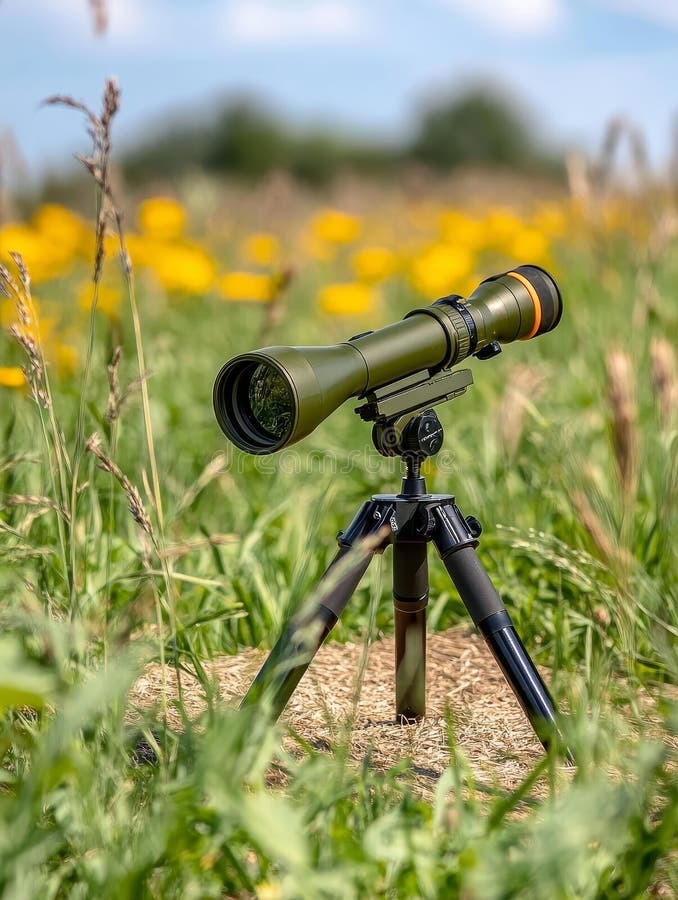
The best comparison uses a bird you would normally watch. A birding walk, festival, optics store or friend with a scope can get you one to try. B&H’s field guide to spotting scopes recommends trying equipment before buying.
A store visit shows how comfortably you focus and look through a scope. A field outing adds what matters in birdwatching: wind, how long a bird stays visible and the work of setting up the full kit.
- Pick a typical bird. Choose a distant, fairly still bird, such as ducks on a lake, in a place like those you visit.
- Start with binoculars. Find the bird and note which identifying detail you can’t resolve.
- Compare through a supported scope. Raise the power gradually and stop where the bird stops showing new detail. See whether the extra view resolves the detail that prompted the test.
- Weigh the handling. Set carrying, setup, focusing and viewing comfort against the optical gain.
Your result points to one of three moves:
- Buy: The same distance problem keeps recurring, and the scope resolves useful detail while staying practical to carry.
- Borrow: Extra reach helps on occasional outings, such as seasonal shorebird trips or guided walks.
- Postpone: Your normal birding rarely presents distant, still birds that a mounted scope would help with.
For magnification, field of view and eye relief, go to the birdwatching gear guide.