For most first-time US birders on a $50 to $200 budget, a comfortable 8×42 is the format to try first, because usable field of view, steady handling, and fit matter more than the largest magnification number. If it fails your eyeglass, weight, or real-bird test, compare a lighter 8×32 or another suitable pair, then check the exact model and return terms before paying.
A bird lands in the branches across a park path. You find it with your eyes, raise your binoculars, and spend the next few seconds staring at a blur of leaves. By the time the image snaps into focus, the bird has gone.
A useful first pair should help you find a bird quickly, hold it comfortably in view, and show the markings you came to see.
Set a Real Ceiling: Under $100, Around $150, or Up to $200?
Set one maximum for the full purchase, including tax, shipping, and any accessory you need. The working range here is about $50 to $200.
Four things can rule out an attractive bargain: an incomplete or uncomfortable view, poor focus at the distances you watch birds, trouble following a moving bird, or purchase terms that make a failed choice too costly.
A Washington beginner shows the under-$100 version of the problem:
Just getting into birding and realizing my eyes aren’t going to cut it for anything beyond the obvious stuff. Been mostly spotting birds around local parks and trails here in Washington, but I’d like to start identifying them a bit more seriously. Trying to stay under $100 for now. Any decent beginner options you’d recommend?
With under $100, you have three options:
- New pair: Buy it if it passes the viewing checks below and the return terms are fair.
- Used pair: Buy it if you can inspect the actual condition and the seller offers a remedy when something is wrong.
- Wait: Hold off if no pair under the ceiling passes.
At $150 to $200 the decision is the same, with more models to compare. Cornell Lab placed its budget full-size review tier at $130 to $240 MSRP in work first published in 2022 and updated in 2024.
Match the Binocular Format to Your Birds and Your Shoulders
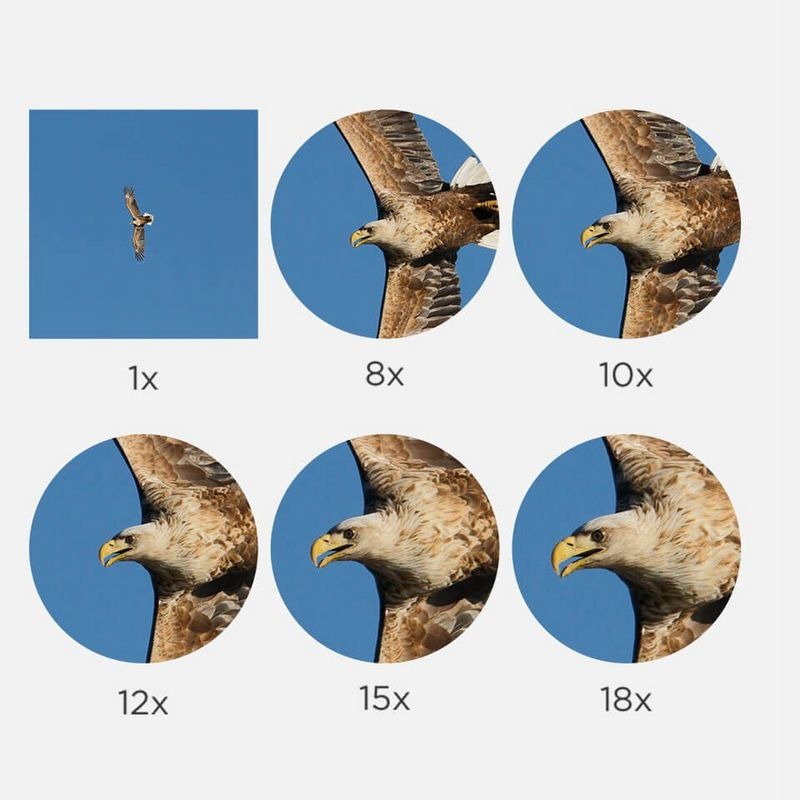
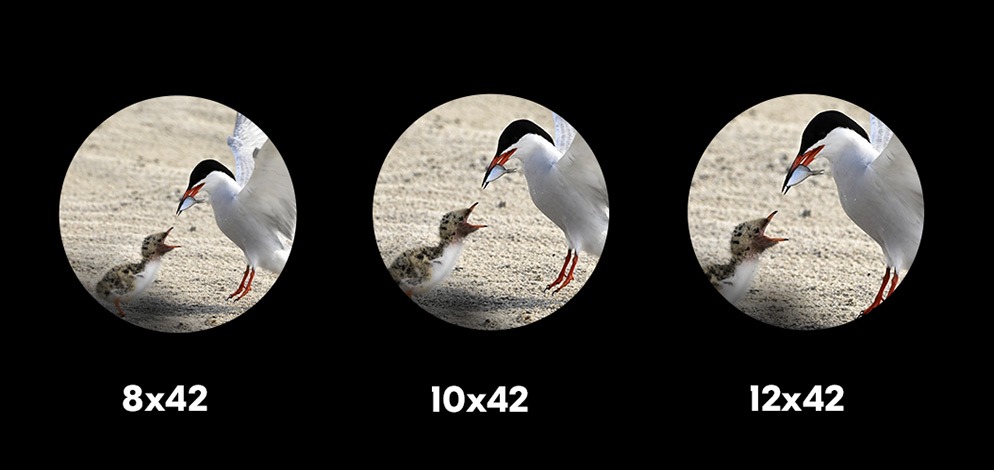
An 8×42 is a good general-purpose format to start with. The first number is eightfold magnification; the 42 is the objective-lens diameter in millimeters.
An 8×32 keeps the same magnification in a smaller body that suits long walks and travel. A 10× view makes a distant bird larger but is harder to hold steady and can show a narrower field. For moving birds among leaves, ease of finding the bird counts most.
| Typical birding situation | Format to compare | Deciding feature | Reason to reject |
|---|---|---|---|
| Nearby feeders | 8×42 or compact 8× | Close focus and easy handling | Cannot focus at the usual viewing distance |
| Woodland birds in motion | 8×42 | Field of view and tracking | Bird repeatedly escapes the visible field |
| Travel or long walks | 8×32 | Carrying weight and grip | Uncomfortable to carry or hold |
| Distant shorebirds or open water | 8×42 compared with 10× | Steady detail at the needed distance | Extra magnification makes the image too shaky |

Pick your main birding environment and take two plausible formats into the trial below. Cornell Lab’s binocular selection guidance adds handling and magnification context.
Read the Specifications That Change the View
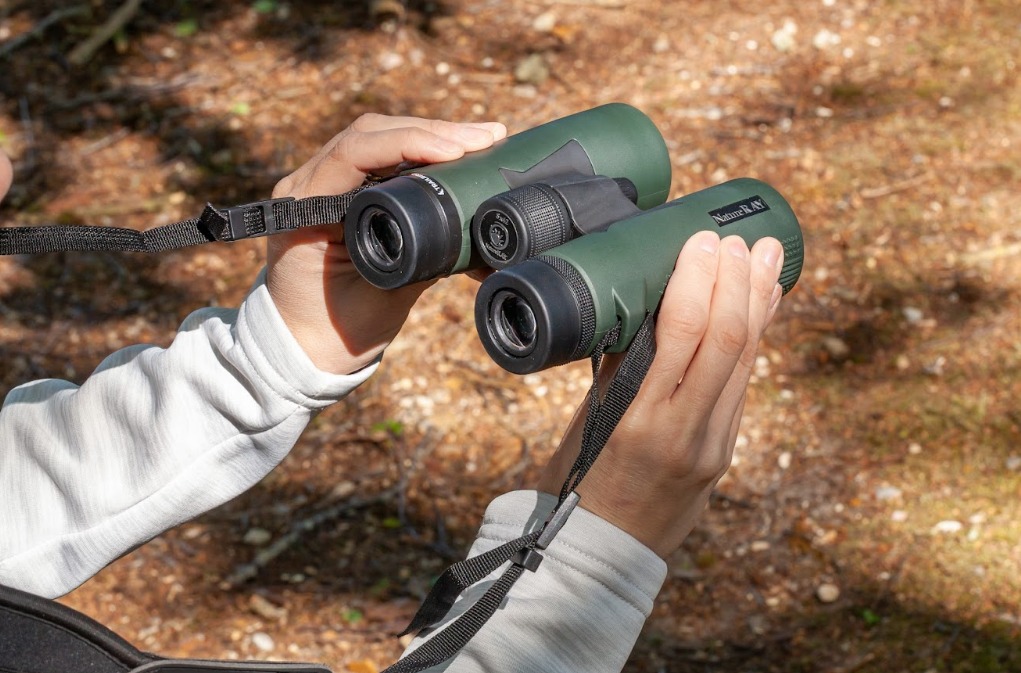
Field of view, close focus, eye relief, and weight answer four different questions, so read them together for the exact model you are considering. For a broader comparison of magnification, close focus, and field of view, see how to choose binoculars for birdwatching.
Field of view is how much of the scene you see, usually in feet across at 1,000 yards. More scene helps you find a restless bird. Close focus is the nearest distance the binoculars can focus, which matters at feeders and for nearby subjects.
Eye relief, in millimeters, governs eye position and matters most if you wear glasses. Weight affects carrying and holding, though grip and balance count too. As a scale reference, Cornell gives about 420 feet at 1,000 yards for an 8-degree field, 368 feet for 7 degrees, and 315 feet for 6 degrees.
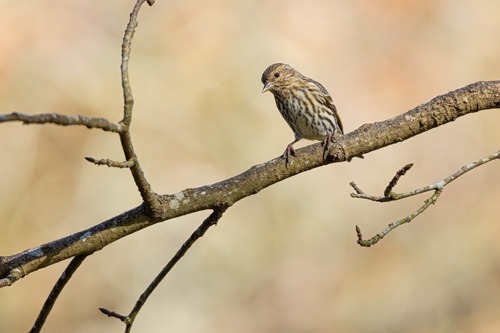
These are manufacturer-listed figures for three named 8×42 models:
| Exact model | Field at 1,000 yd | Close focus | Eye relief | Weight |
|---|---|---|---|---|
| Nikon PROSTAFF P3 8×42 | 377 ft | 9.8 ft | 20.2 mm | 20.3 oz |
| Celestron Nature DX 8×42 | 388 ft | 6.5 ft | 17.5 mm | 22.2 oz |
| Vortex Crossfire HD 8×42 | 393 ft | 6.0 ft | 17.0 mm | 23.8 oz |
The Celestron Nature DX ED 8×42 is a separate model from the standard Nature DX. The standard model is item 71332 and carries the 22.2 oz specification; the ED model, item 72332, is listed at 24.9 oz.
Vortex lists the Crossfire HD 8×42 at $209.99 MSRP. If its checkout price lands within your $200 ceiling, it still qualifies.
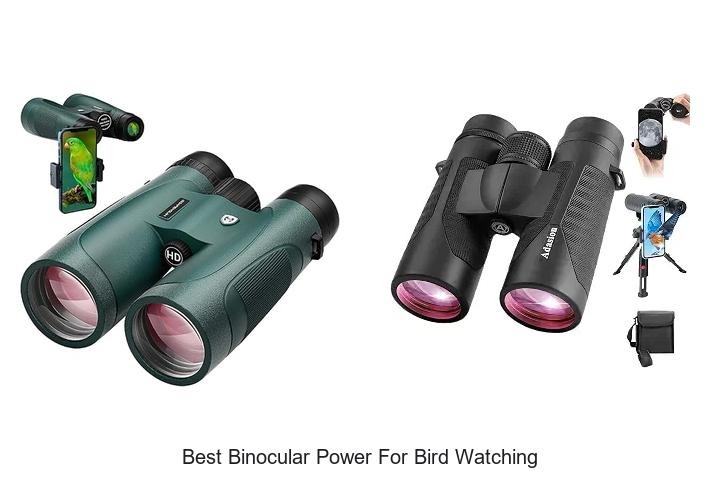
When you compare listings, check all four specifications for the exact model, in consistent units.
Try the Fit With Your Glasses, Hands, and Eyecups
You should see one full, comfortable circular field while holding the binoculars naturally. That is the fit standard, especially when glasses or limited grip comfort change where your eyes sit. For magnification, field of view, and eye relief in more depth, see the birdwatching gear guide.
Retract the eyecups for glasses and extend them without. The hinge sets interpupillary distance (IPD) and merges the two fields. Eye relief helps you shortlist, but the eyecup position and your actual eyewear decide whether you reach the full field.
One new birder described a pair that was uncomfortable to hold, with eyecups that would not stay down:
Hi all. New to birdwatching. Can anyone recommend a decent make of binoculars that a glasses wearer can use comfortably, not too heavy (arthritic hands) but will do the job well. Hubby got me a pair on Chinese website but they are a bit heavy and I can’t fold down the rubber cups to make them better while wearing glasses. Even though the instructions say I can. They just won’t stay down.
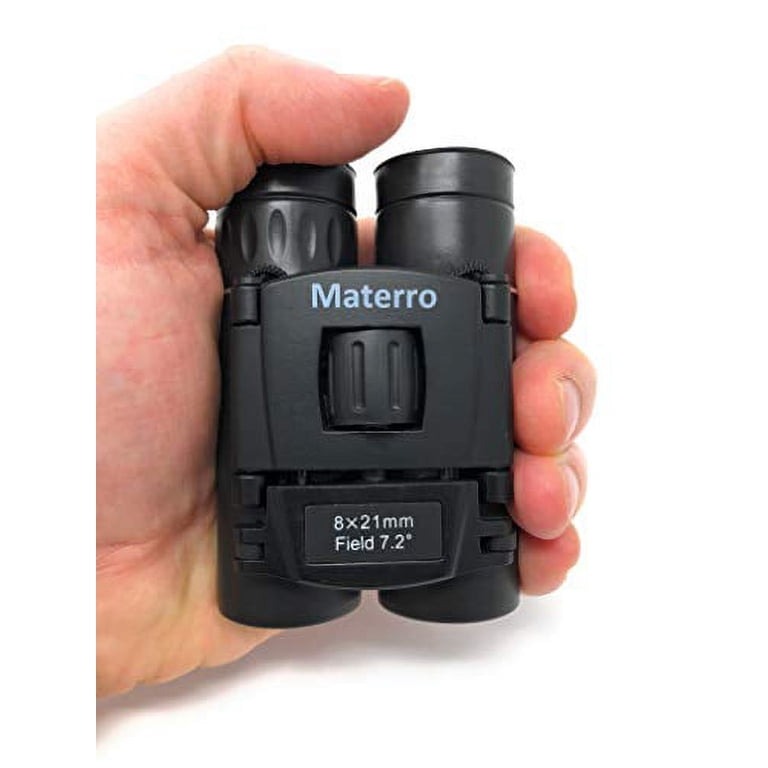
Put on your normal glasses, then adjust the eyecups and hinge until you see one complete circle. Hold the binoculars long enough to judge grip, focus-wheel reach, balance, and steadiness. A strap or harness eases carrying without changing the optical fit.
Set Up the Image Before Deciding the Binoculars Are Bad
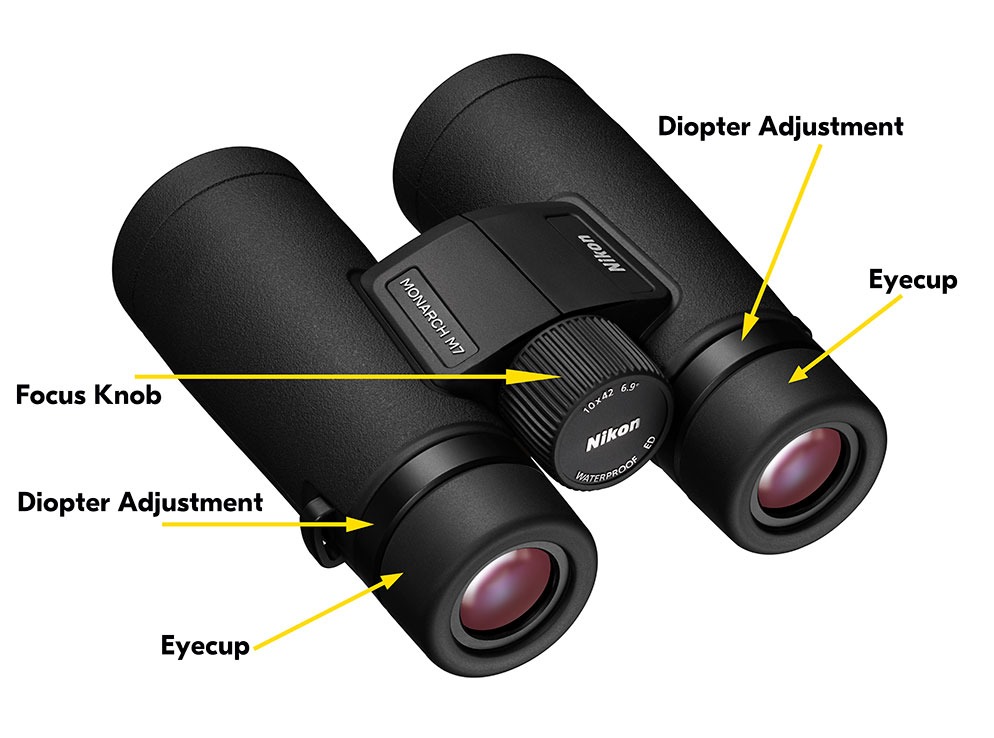
With the hinge already set for your eyes, pick a stationary subject and follow your model’s instructions:
- Cover the objective on the diopter-controlled side and focus the uncovered view with the center wheel.
- Switch the covered objective and sharpen the second view with the diopter.
- From then on, use the center wheel when the viewing distance changes.
If double images or discomfort persist, stop using the pair. A diopter cannot fix internal misalignment or diagnose the cause of symptoms.
Try Three Real Scenes Before Committing
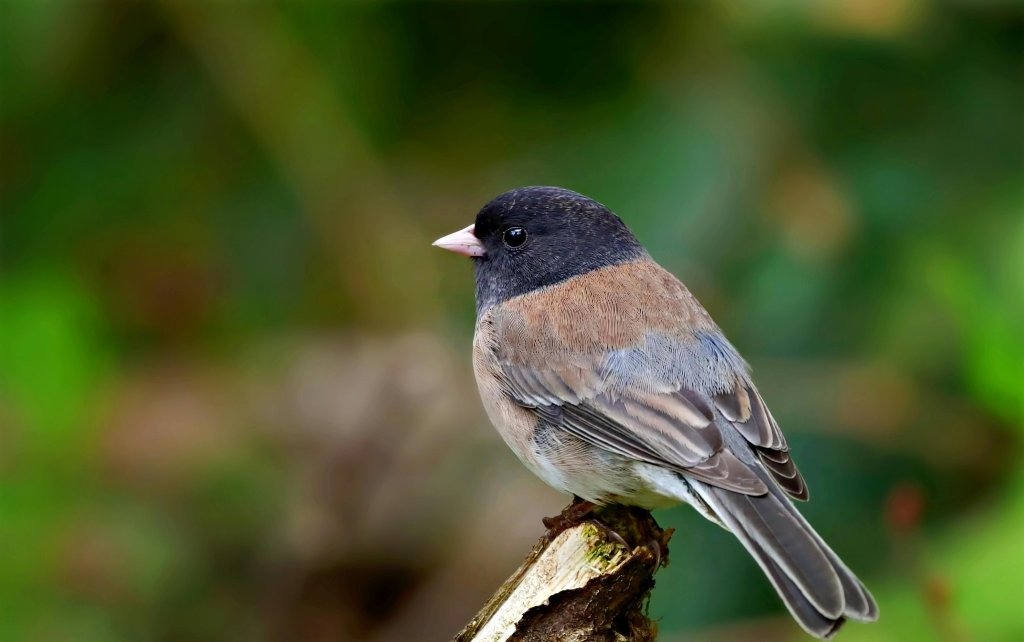
Three everyday scenes expose different strengths and weaknesses. Pick scenes close to your own birdwatching. Never point binoculars at the Sun.
- Nearby and stationary: Focus on a feeder or similar close subject. You need a sharp image at your normal distance.
- Moving through cover: Follow a bird that is moving naturally, or a safely chosen moving subject. Note how fast it enters the field and whether focus keeps up.
- Backlit and difficult: Watch a naturally backlit bird or branch. See whether the shapes, colors, and field marks you need for identification survive.
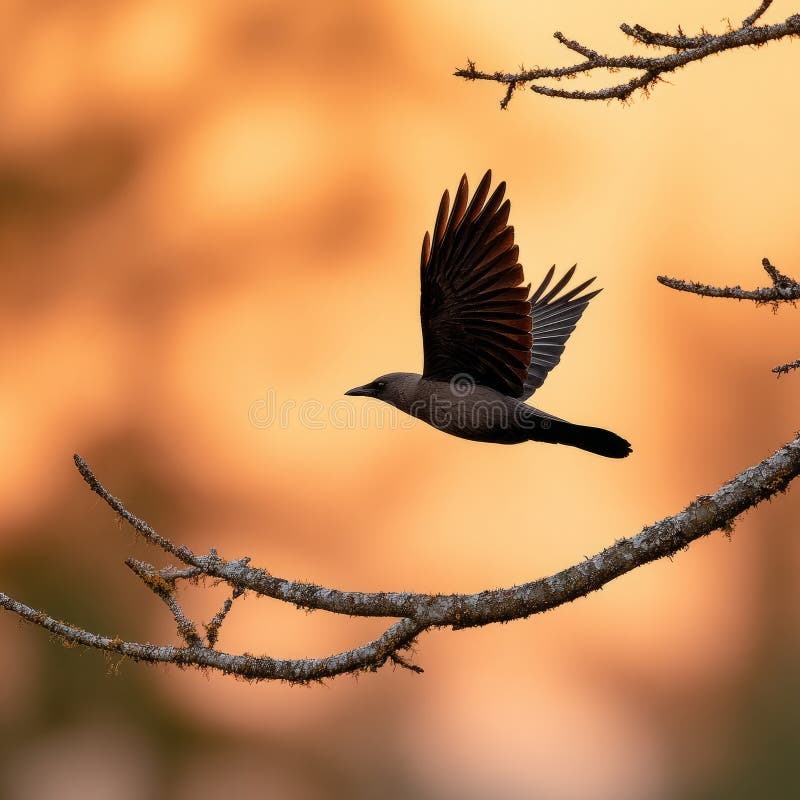
One daily Nature DX user found the eyecups easy to adjust but lost detail on backlit flyovers:
I saw that someone already suggested the Celestron Nature DX 8×42 Binoculars and thought I would add information based on my experience with them. I have owned a pair since August 2025; and, they do an adequate job for me. I bird everyday so they get heavy use. I wear glasses and found adjusting them easy. You just turn the eye cups out for regular viewing and in for when wearing glasses. There is one area where they are not as good as they could be. They can lose detail and color on backlit images. This comes into play while watching flyover birds.
If flying birds against bright skies are a regular part of your outings, weigh that scene heavily.
Mark each scene pass, caution, or fail. A store return policy that allows a trial lets you test familiar conditions, subject to the seller’s restrictions.

New, Used, or Refurbished: Inspect the Actual Deal
A lower secondhand price is attractive when the specific binoculars are sound and the terms are fair. New, refurbished, and privately sold listings protect you very differently.
Inspect a used pair for scratches, cloudiness or fungus, a loose hinge, uneven focus movement, or an image that stays doubled after normal adjustment. Check that the strap, caps, and other advertised accessories are included. When you buy remotely, the listing description and the seller’s return conditions decide how much risk stays with you.
- Seller: Who is selling the actual binoculars, and does the manufacturer require an authorized dealer for the advertised warranty?
- Return period: What condition must a returned pair be in, and is your intended trial allowed?
- Warranty category: Read the terms for a new, used, or refurbished purchase of that exact product, and who can claim.
Celestron’s US limited-lifetime warranty terms for eligible new binoculars require the original purchaser and an authorized channel. They exclude used purchases and subsequent owners, and the claim window for optical collimation or alignment is 30 days from purchase.
Nikon USA’s warranty program also separates new-product and refurbished-product terms. When an ad says “lifetime warranty,” find out exactly who is covered, for which product, bought where.
Decide When an Upgrade Earns the Money
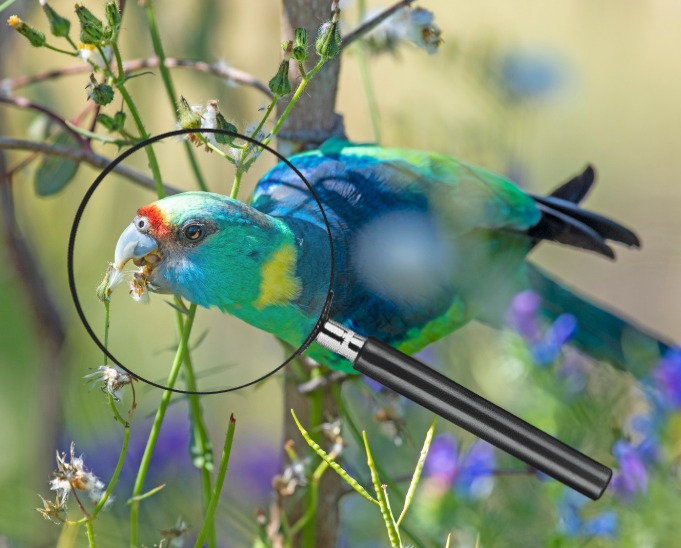
Extra spending pays off when it fixes a limit you have met in your own birdwatching. Feeder birds in good light suit an inexpensive pair; warblers among branches or shorebirds at a distance demand more.
One birder who moved from cheap 7×35s to Vanguard ED II found more visible field marks, plus a lighter feel and better grip:
Better depends on your needs and available income. The key things to take away though is the water proofing, weight, form factor in your hand factor into use in the field. Lens dispersion, glass coating, field of view, magnification, and pupil diameter all impact how the light is recieved by your eyes. Honestly used to have a cheap pair of 7x35s and upgraded to a vanguard ed II. The lightness and grip allowed me to be in the field for hours and not stress about a little rain or fog early in the morning. Many warblers and shorebirds went from being near impossible to distinguish to possible because tiny field marks could finally be seen and didn’t blur together.
Cornell Lab’s affordable full-size 8×42 comparison covered 30 models, with 75 participants and 280 head-to-head comparisons, plus more than 50 hours of field testing by the authors.
Before you pay, confirm three things:
- The total cost is within your ceiling, and you know the exact model and its specifications.
- The binoculars fit your glasses and hands, show one clean image, and pass the three scenes.
- The seller’s terms and return period are acceptable.