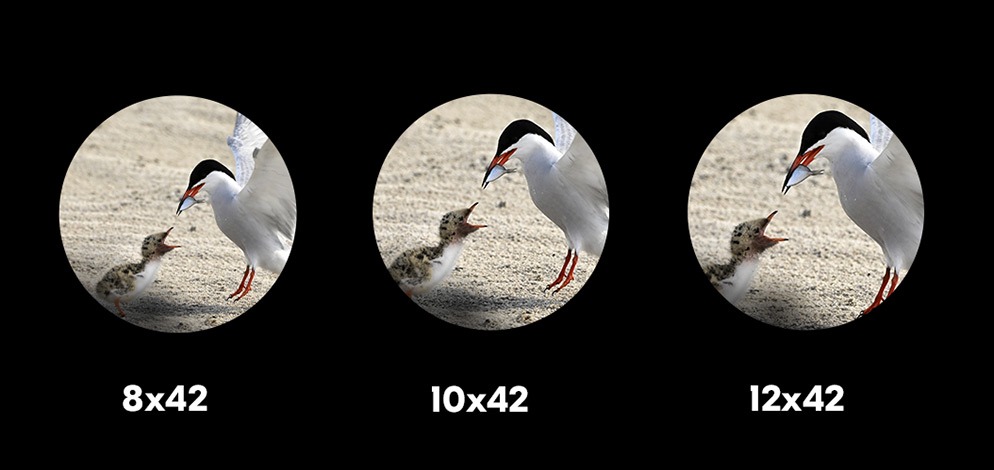
For mixed handheld birdwatching, 8×42 is the safer starting choice. Choose 10×42 if you regularly watch distant birds that sit still and can hold the binoculars steady enough to gain useful detail from the extra magnification.
8×42 or 10×42? Match the binoculars to the birds
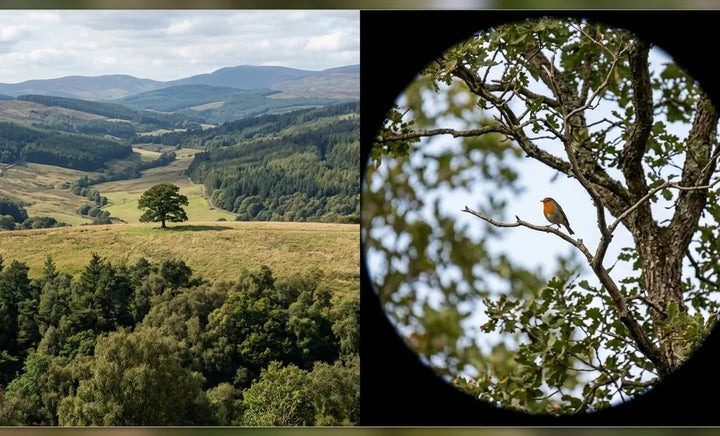
Picture a small warbler moving through a tangle of branches. You catch a flash of movement, raise your binoculars, and have perhaps a moment to find the bird before it disappears. A wide viewing field makes that search easier. A duck sitting far across a lake is a different case. It is already in sight and barely moving, so a larger image helps you examine its markings.
| Your usual birdwatching | Configuration worth considering | Deciding factor |
|---|---|---|
| Woodlands, feeders, parks and moving birds | 8×42 | Find and follow the bird faster in a wider view |
| Distant ducks, shorebirds or other birds that hold still | 10×42 | More detail at a distance, if you hold the image steady |
| Mixed habitats and changing viewing distances | 8×42 as the starting option | Easier to find birds, comfortable for general handheld use |
| Open water viewed from a moving boat | Compare both carefully | Boat motion reduces the benefit of higher magnification |
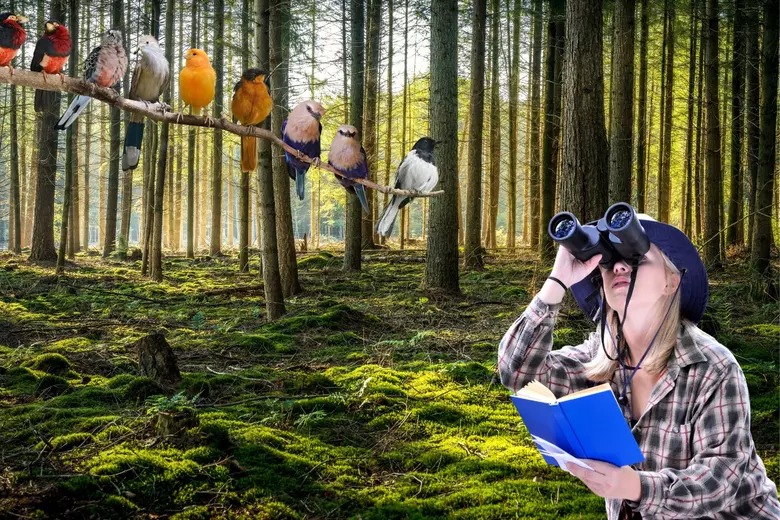
Even on one stretch of coast, a shorebird running along the waterline and one resting on a distant sandbar call for different binoculars.
Decide how you bird most often: nearby moving birds, a mix, or distant resting birds. Pick for that, not for the occasional rare sighting.
What the 8×42 and 10×42 numbers mean
The first number is magnification. An 8×42 magnifies the bird eight times, a 10×42 ten times. The second number is the objective lens diameter in millimeters. Both have 42-mm objectives.
Dividing 10 by 8 gives 1.25, so the 10x provides 25% greater nominal angular magnification. Whether the larger image shows an extra field mark depends on steadiness, contrast and viewing conditions.
| Optical property | 8×42 | 10×42 |
|---|---|---|
| Magnification | 8x | 10x |
| Objective lens diameter | 42 mm | 42 mm |
| Nominal exit pupil | 5.25 mm | 4.2 mm |
| Relative angular magnification | Baseline | 1.25 times 8x |
The exit pupil is the diameter of the light beam leaving the eyepiece. Divide the objective diameter by the magnification to get it.
A larger exit pupil makes eye positioning more forgiving and helps in low light, when your pupils are wide open. At midday your pupil is smaller, so the gap between 5.25 mm and 4.2 mm matters less. Lens transmission, optical design, contrast and your own eyes also affect perceived brightness.
Field of view: getting a moving bird into the image

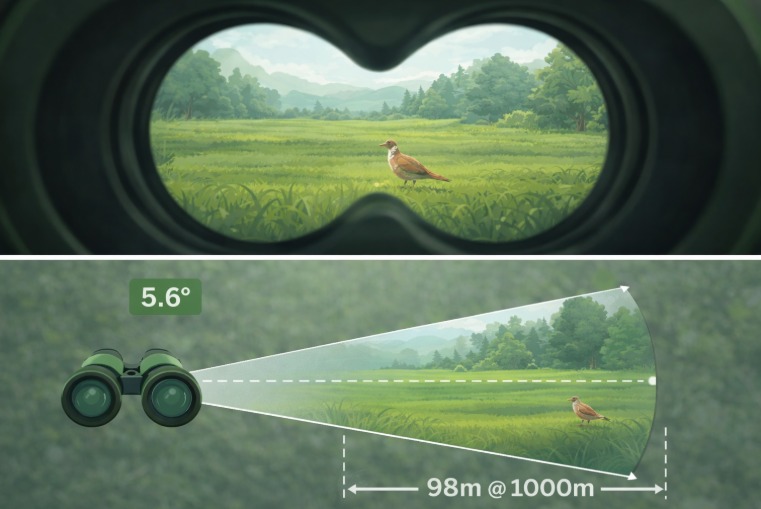
Field of view is the width of the scene you see at a stated distance. Manufacturers usually give real linear field of view in feet at 1,000 yards. A wider field shows more of the surrounding habitat while you search for a bird. For more on magnification, field of view and eye relief, see the birdwatching gear guide.
Cornell Lab’s binocular guidance stresses this advantage when you look for birds among leaves or follow them in flight. A small bird can leave the visible area while you are still centering it. More branches or sky in view give you a better chance of picking it up again.
Both the Nikon MONARCH M7 and Vortex Diamondback HD families have a wider real field of view in their 8×42 versions: 435 ft against 362 ft for the Nikon, 393 ft against 330 ft for the Vortex.

Compare real fields at a common stated distance. Apparent field describes the visual angle of the image through the eyepiece, which is a different measurement from the width of the scene.
Optical design also changes absolute field width across families. Nikon’s M7 10×42 offers 362 feet at 1,000 yards, while the M5 8×42 offers 335 feet at the same distance. A 10×42 from one family can therefore show a wider field than an 8×42 from another.
When distant birds make 10x worthwhile
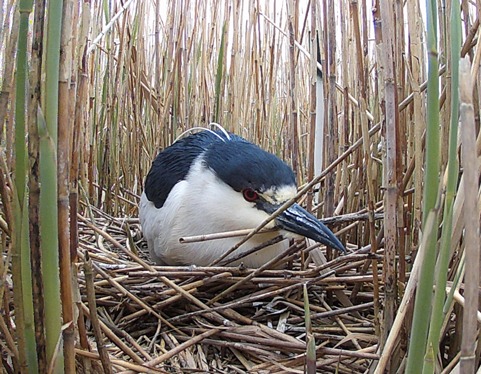
A bird standing on the far side of a marsh is a different problem from one darting through nearby foliage. Once you find the distant bird, the greater image scale of 10x makes its features larger and easier to inspect.
This works best when the bird sits still and you stand on stable ground. Ducks resting on open water, shorebirds along a distant bank and birds perched across a field all fit.
One birder chose higher magnification after spending time around lakes, ponds and marshes:
Edit: I got some Vortex Diamondback HD 10x42s and I love them. Really glad I didn’t get the 8x because 10x seems barely enough to spot the birds I’m looking at. Highly recommend 10x for birders who will be looking at birds on or across water.
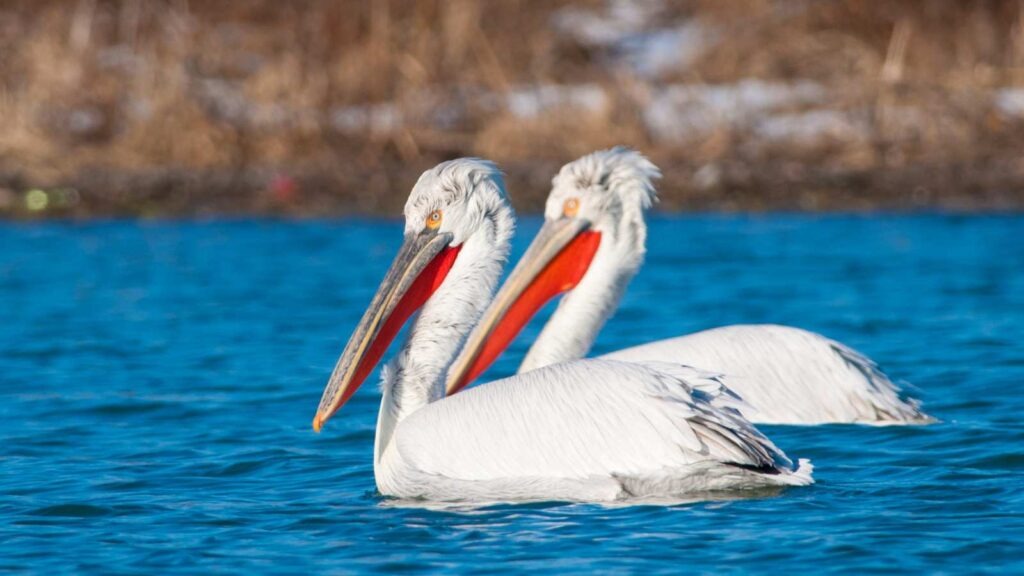
Water adds complications. A quiet shoreline gives you a steadier position than a rocking boat. A bird moving across the water also takes more tracking than one resting in place.
How shake, terrain and air affect usable detail
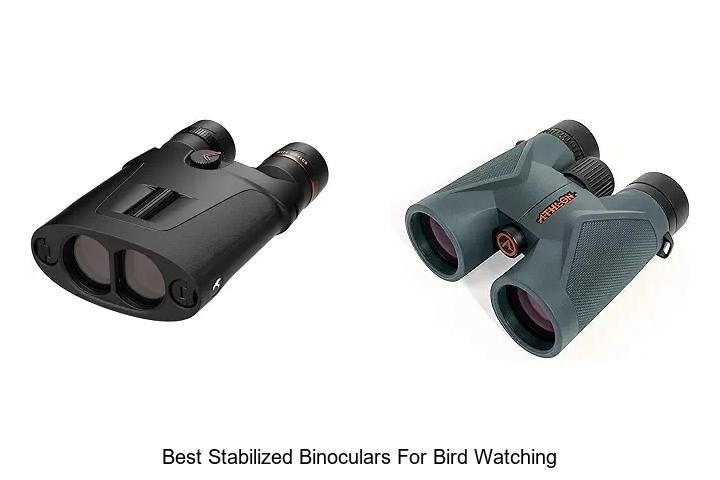
Higher magnification makes every movement more noticeable. If your hands move slightly, the bird seems to bounce across the image and small field marks get harder to inspect. A larger image that keeps moving tells you less than a smaller, steadier one.
Conditions change how steady you are. A relaxed birder on level ground has an easier job than someone holding binoculars after a long climb, balancing on uneven terrain in the wind, or looking upward with a heavy backpack.
Balance and grip matter as much as weight. Two pairs with similar published weights can feel different when you raise them repeatedly or hold them for a long time, depending on shape and how they sit in your hands.
Air limits detail too. Heat shimmer over warm ground or water distorts distant detail however large the bird looks. Extra magnification makes that distortion easier to see without giving you a more reliable field mark.
Eye relief and eyecups: seeing the entire field
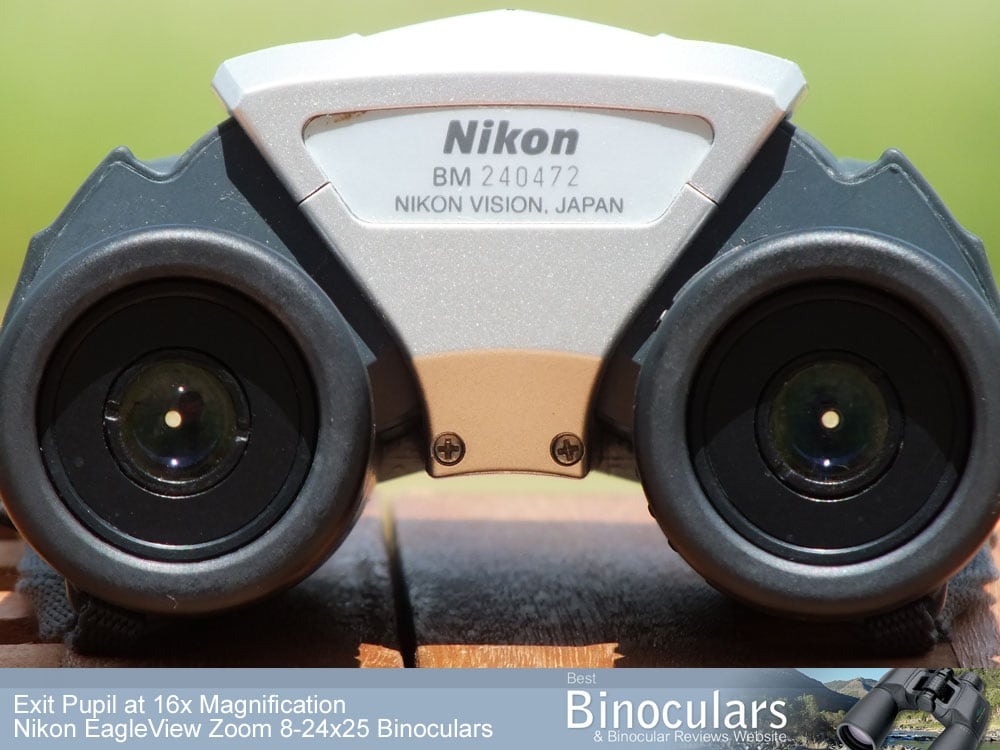
How much of a binocular’s published field you can use depends on your eye position and eyecup fit. Eye relief is the designed distance between the eyepiece and your eye. Eyeglasses and eyecup position change how much of the field stays visible.
The Vortex Diamondback HD 10×42 has shorter published eye relief than the 8×42 in the same family: 15.0 mm against 17.0 mm. Eyeglass lens thickness, facial shape and eyecup position decide how comfortably you reach the designed eye position.
Poor eye placement causes blackouts, dark edges or a squeezed view. If you cannot see the full circle, you lose part of the usable field.
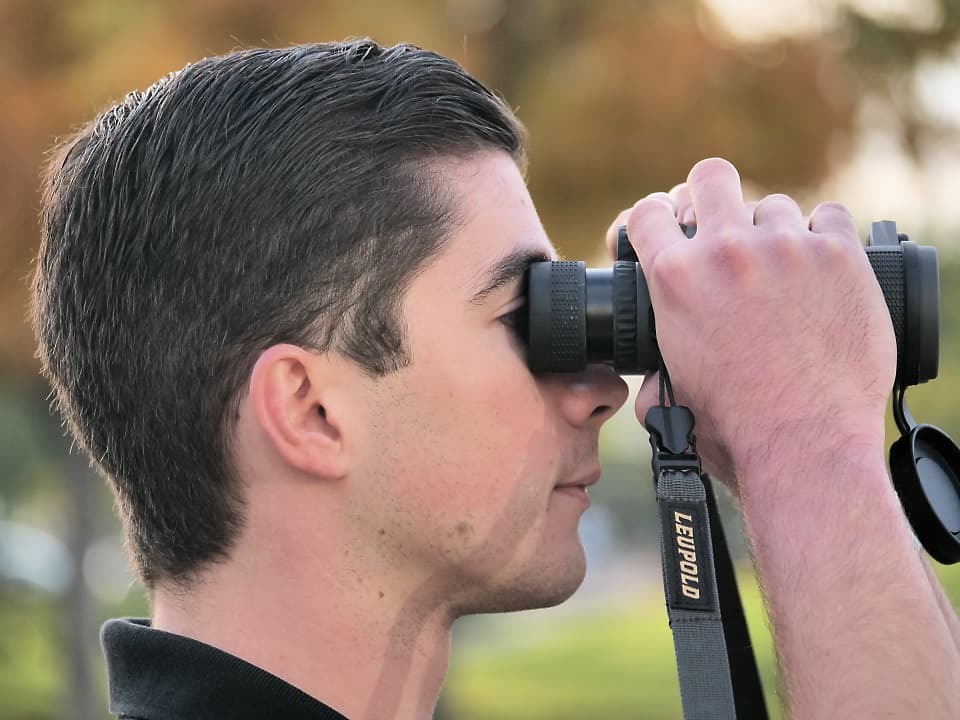
With your usual glasses on, adjust the eyecups and interpupillary spacing until you see one full circular field. Move the binoculars slightly in their natural viewing position and watch whether the edges disappear or blackouts keep interrupting the view. The right fit lets you raise the binoculars and see the whole image without hunting for the eye position.
What two actual binocular families reveal
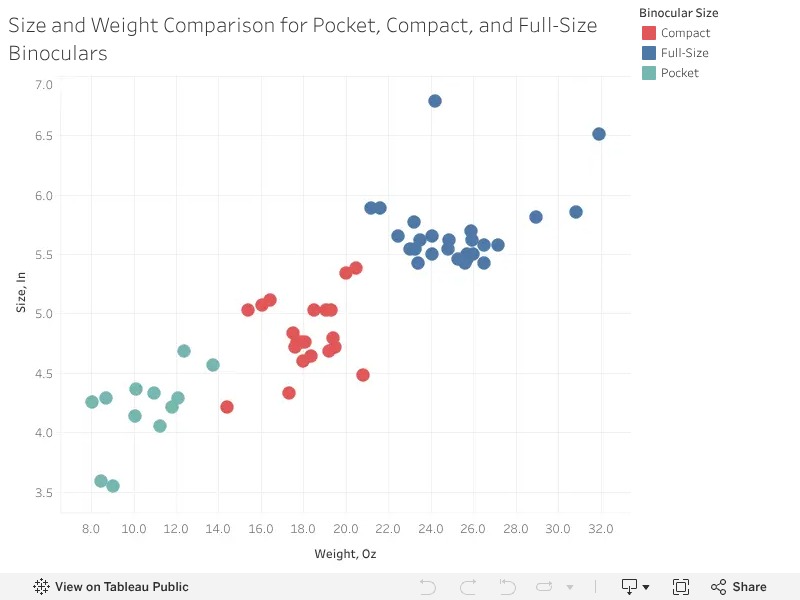
Comparing two magnifications within one model family isolates the published trade-offs without changing the whole product. The manufacturers report these figures for the Nikon MONARCH M7 and Vortex Diamondback HD pairs:
| Specification | Nikon M7 8×42 | Nikon M7 10×42 | Vortex HD 8×42 | Vortex HD 10×42 |
|---|---|---|---|---|
| Real FOV at 1,000 yd | 435 ft | 362 ft | 393 ft | 330 ft |
| Real angular FOV | 8.3° | 6.9° | 7.5° | 6.3° |
| Eye relief | 17.1 mm | 16.5 mm | 17.0 mm | 15.0 mm |
| Close focus | 8.2 ft | 8.2 ft | 5.0 ft | 5.0 ft |
| Weight | 23.6 oz | 24.0 oz | 21.8 oz | 21.3 oz |
Specifications: Nikon’s 2021 MONARCH M7 announcement, and the Vortex Diamondback HD 8×42 and 10×42 product specifications.
Both families publish identical close-focus distances for their 8×42 and 10×42 models. That matters for butterflies and nearby birds, so check close focus on the exact model you plan to buy.
If your choice involves price tiers, warranties or a longer shortlist, the guide to choosing birdwatching binoculars covers that wider choice, including field of view and focus.
Should an 8×42 owner switch to 10×42?
If you already own a comfortable 8×42, a second pair should solve a specific problem you hit often.
A buyer who had just bought Fujinon 8×42 binoculars described a familiar uncertainty:
It appears I have reached the age where I want to spend some free time looking at Birds. Admittedly up to a few weeks ago I know absolutely zero about binoculars and after trying some out at shops I ended with a pair of Fujinon ones. I went with the general advice and got 8×42 but find myself wanting more magnification when looking at more distant birds. So a couple of questions if anyone can help: Would 10×42 be better, or not a massive step up? If not do people pair bins with a stronger pair when stationary? Like a 12×50 / 15×50 on a tripod? Thanks!
Work out what bothers you about your current pair. If distant birds look small but clear and steady, the extra scale is worth pursuing. If the image shakes, you lose moving birds, the eyecups hurt or the focus feels rough, 10x fixes none of that.
Your 8×42 may also work well for most outings. Someone who mainly watches birds among nearby trees would give up a familiar wide field for image scale they rarely use.
How to compare both binoculars before buying
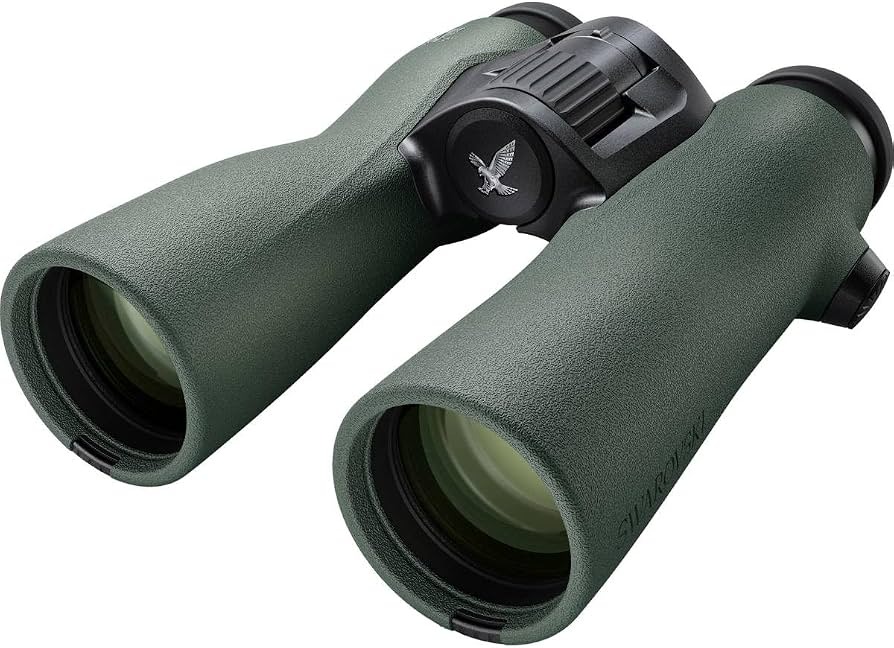
A fair comparison gives both pairs the same tasks. A good trial includes a nearby moving bird, a distant resting bird and enough normal handheld viewing to show differences in comfort and steadiness.
Cornell Lab’s binocular-testing guidance also says to handle real binoculars, judge the viewing experience and consider fit alongside optical specifications.
One birder who had tried both could barely tell them apart:
I want to upgrade my binoculars. I currently have some nikon pro staff 8×42. I know what brand i’m upgrading too but I can’t decide between 8×42 and 10×42. I’ve tried both and I can barely tell the difference. But if i’m going to pay a lot of money for new ones I want to make the right choice. Can anyone share some insight? I do most of my birding in the woods but i’m moving close to the ocean and will be birding on the ocean often if that makes a difference! Thanks!
- Choose comparable pairs. Take an 8×42 and a 10×42 from the same model family and quality tier. A retailer demonstration, birding event or permitted outdoor trial works.
- Find a nearby moving bird. Follow an ordinary moving target against a busy background and notice how easily each pair finds and keeps it. Don’t disturb wildlife to get one.
- Use a distant resting bird. See whether the 10x image shows an extra feature you can identify confidently. Shift focus between a nearer object and the distant bird, and note how smooth the wheel feels and how precisely it reaches a sharp image.
- Check handheld steadiness. Hold each pair naturally for about ten seconds and see how quickly the image settles. If your outings involve walking, repeat after a short walk.
- Keep conditions equal and take notes. Use similar viewing distance, lighting and body position, and swap the order at least once so the first pair doesn’t get a fresh-impression advantage. For each pair, jot down how easily you found the moving bird, how much distant detail stayed visible, whether the view settled, and how focusing and eye position felt. Check the retailer’s return conditions if a longer trial is possible.
When a spotting scope is the better next decision
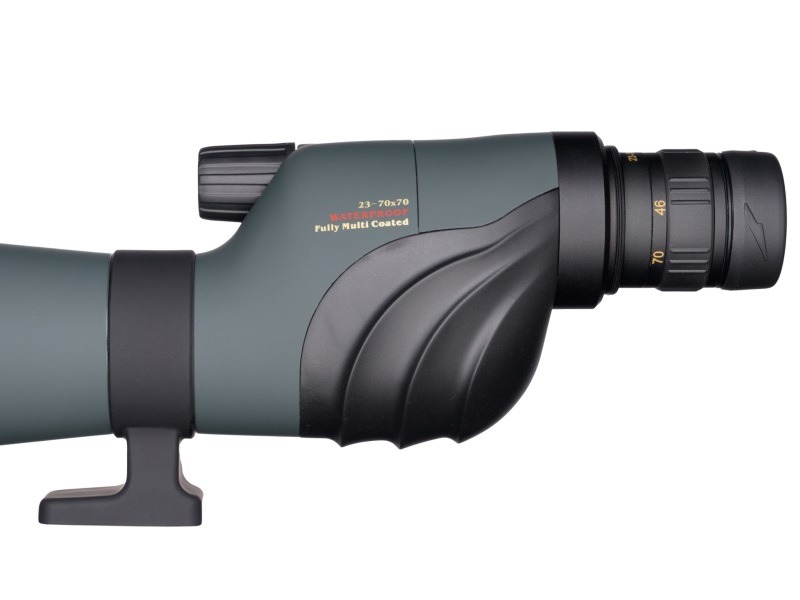
When handheld binoculars leave too little detail on very distant birds that sit still, a spotting scope on a sturdy tripod is the better setup. It also adds equipment, weight and setup time, so the spotting-scope decision is a separate one.