To spot more birds, match your search to the habitat. For nearby birds hidden in trees, watch gaps in the foliage and look for movement before raising your binoculars. In open fields, across water, or along a distant skyline, scan likely perches and habitat edges systematically, using binoculars to find faraway birds. If a bird stays hidden, change your viewpoint safely or move on without disturbing it.
You can hear a bird from a few feet away and still not see it. Then you spend several minutes studying a leafy tree and notice another bird sitting plainly on a fence post across the field.
Finding birds gets easier when you treat the landscape as a set of places to search. A moving leaf, an exposed branch, a gap in the canopy, or the edge of a pond gives your eyes somewhere to settle.
Choose Where to Look: Trees, Edges, or Open Country
How you search depends on how far away the bird is and how much vegetation is in the way. A small bird hopping through nearby branches is a different job from spotting a distant hawk crossing an open skyline.
Take in the whole scene first. Is it dense foliage, a gap between trees, exposed perches, water, or a broad stretch of sky?
| What you’re looking at | Where to look | How to start |
|---|---|---|
| Nearby leafy trees | Gaps, branch tips, moving leaves | Wide view, unaided eyes |
| Forest edge or hedgerow | Exposed branches, shrubs, openings | Watch movement across the boundary |
| Distant field or mudflat | Fences, snags, margins, small silhouettes | Methodical binocular scan |
| Lake or open sky | Shorelines, distant treetops, horizon bands | Slow binocular sweep |
Keep a wide view when you hunt for quick movement close to you. Save magnification for birds too far away to pick out against the landscape.
Picture a woodland edge beside an open field. Movement gives away a songbird in the outer branches, while a bird on a distant fence may need binoculars before you notice it at all.
Cornell’s bird-finding field routine covers deliberate scanning of habitat edges, open spaces, and sky.
Find Birds in Leafy Trees and at Forest Edges
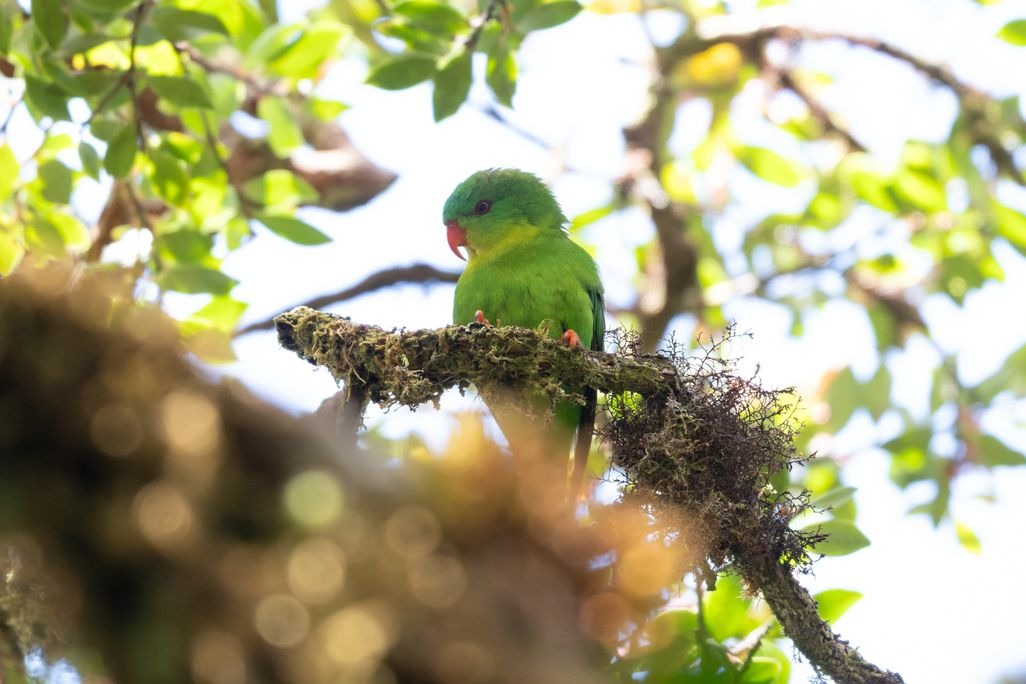
A leafy tree can hide a bird only a few branches away. Watch the small openings where it might cross your view.
Start at the outer edges of the foliage, where single leaves and branches stand apart from the background. A flicker between twigs or a quick silhouette in an opening tells you which part of the tree to watch.
Then work through the tree in layers: trunk and bark, lower shrubs, the branches in the middle, the upper canopy. Birds use each layer differently, and the layers keep your search organized without tying any species to one height.
A nuthatch working along bark pulls your eye to the trunk. A small songbird moving between branches gives a different clue. Either way, motion shrinks a large tree to a small area.
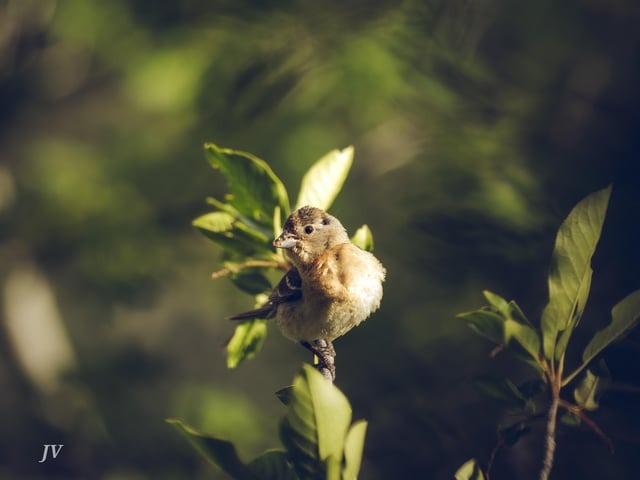
Shaking leaves point you to a spot, but wind does the same. Keep watching the gap until a bird crosses it or lands on a nearby branch.
Your angle matters too. A bird visible through a narrow space between leaves from one position can be completely hidden from another.
Dense foliage can block a clear sighting altogether. In full leaf, openings are hard to find, while bare branches expose more of the tree. Deep shade or backlighting hides detail even when you can make out a bird’s outline.
Help another birder find the same bird
Name a precise landmark when you describe a bird’s position in a large tree.
Say a bird sits high in an oak. Describe the thick trunk, the first major fork, and the bare branch extending to the right. Anyone following those steps starts from the same fixed point.
In a complicated canopy, add a clock-face direction from a visible fork or branch.
Scan Fields, Marshes, Water and Open Sky
Open landscapes reward systematic searching. Birds sit far apart, far away, motionless, or the same color as the ground beneath them.
Start with features that break up the open view: fence posts, bare snags, lone treetops, shorelines, and the boundaries between vegetation and water.
Check the perimeter, then divide the open interior into strips. Sweep across the first strip, shift to the next, and scan back the other way. Keep alternating rows across the area, slowly enough to catch distant silhouettes.
| Habitat | What to anchor on | Search pattern |
|---|---|---|
| Open field | Fence posts, isolated trees, field margins | Follow the boundary, then inspect the interior |
| Marsh or mudflat | Waterline, exposed mud, vegetation edges | Sweep along transitions between surfaces |
| Pond or lake | Near and far shoreline, open water | Inspect margins, then scan across the water |
| Distant sky | Treeline, horizon, prominent distant tree | Search adjacent horizontal bands |
A shorebird blends into mud until its outline or movement gives it away. Across a lake, a distant waterbird shows up as a small shape that is hard to separate from the water with unaided eyes.
In these situations, binoculars become your main search tool. David Sibley’s guide to finding birds with binoculars covers inspecting distant perches and searching the sky in successive bands.
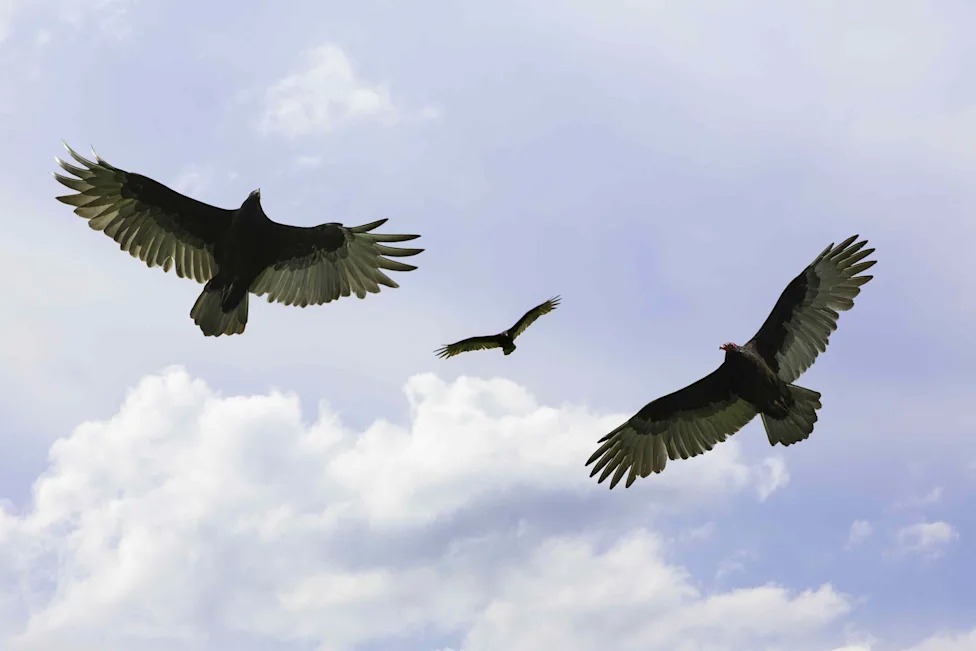
Use a prominent tree to set your focus near the distance you plan to search.
For a distant treeline, follow the horizon through your binoculars. At the end of the sweep, move up slightly and scan back across the adjacent band. Keep going through the part of the sky you want to cover. Never point ordinary binoculars at the Sun: magnified sunlight can seriously injure your eyes.
Once you find a bird, check the area around it and the direction it is heading. Another shape may appear nearby, or the bird may cross a clearer part of the sky.
You Hear a Bird but Cannot See It: What Now?
A call tells you which part of a tree to watch, not the exact perch. Note the direction, then focus on openings and branches where movement could show.
One person described the frustration in r/birding:
I’m pretty new to birding, and a common problem I have while bird watching is being able to hear a lot of birds but not see any of them. I know a lot of bird calls can be heard from pretty far away, but I swear sometimes a call is coming from right in front of me, and I still can’t find the bird. Most of the birds I do see aren’t even making any noise; I just see them when they fly or are sitting somewhere very conspicuous. Does anyone here have any tips on how to spot a bird when you can hear it?
Sound gives you a general direction, but your eyes need a small target. Several birds may be calling in the same area.
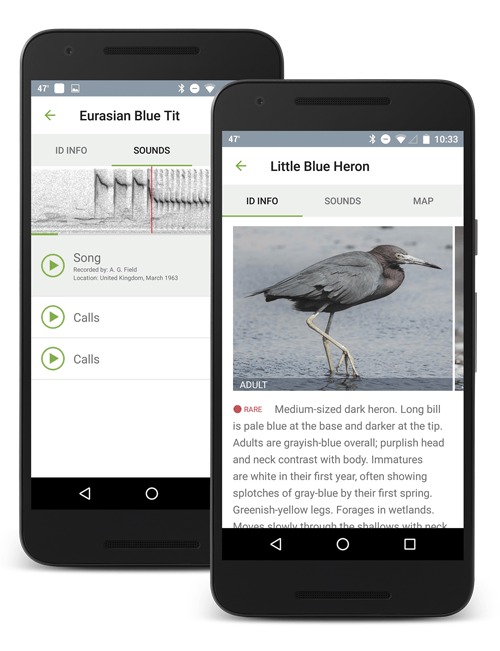
Say a repeated call seems to come from the upper branches of a nearby tree. Watch the gaps in that direction.
If you catch a flicker, follow that spot. If the leaves stay still, keep listening and watch a different opening in the same general direction. A bird may stop calling or move while concealed.
Get the Bird into Your Binoculars and Keep It There
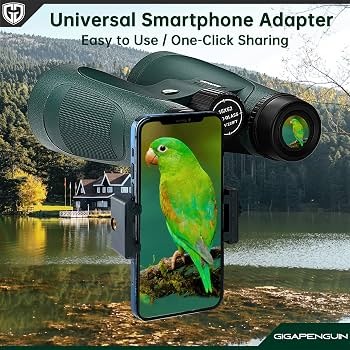
A nearby bird can slip out of view as you raise your binoculars. The narrow magnified image makes it easy to land on the wrong branch, especially if you glance down or turn your head while lifting them.
Keep your eyes on the bird or the landmark beside it as the binoculars rise. Bring the eyepieces into your line of sight, then adjust the focus once the target is in view.
If you land on empty foliage, lower the binoculars, find the landmark again, and repeat the movement. Searching aimlessly through a magnified canopy makes it harder to find the bird again.
Once the bird is in view, follow its movement through the binoculars. If it leaves the field, look over the eyepieces to find it before trying again.
Practice on something that stays put
A stationary target lets you learn the movement without chasing a bird at the same time.
- Choose a recognizable object. A flower, stump, bare branch, or distinctive cluster of leaves works.
- Set approximate focus. Adjust for the object’s general distance before lifting the binoculars.
- Keep your gaze fixed. Raise the binoculars while looking at the object, then check whether it sits in the center of the view.
- Progress to a familiar bird. Once the movement feels natural, try an easy-to-see local bird before faster subjects.
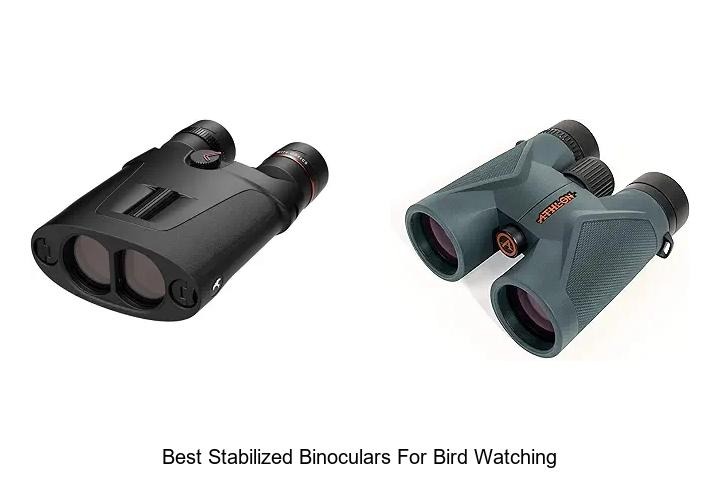
Field of view matters too. A wider view takes in more of the scene, so a moving bird has more room to stay visible as you follow it. A narrower view demands precise alignment.
Cornell’s field-of-view illustration compares an 8° view, about 420 feet wide at 1,000 yards, with a 7.5° view, about 394 feet wide at the same distance. For magnification, close focus, and field of view, see how to choose binoculars for birdwatching.
When a Bird Vanishes: Wait, Reposition, or Move On
When a bird drops out of sight, you have three options.
- Wait at the last visible opening. If the bird just crossed a gap or landed near a recognizable branch, staying still may give you another look.
- Change your viewpoint. If overlapping branches are the problem, a small step along a permitted path can open a clearer line of sight.
- Move on. If the bird has gone deeper into cover, stopped calling, or the attempt has become tiring, turn to other activity in the habitat.
Let Merlin Suggest, Then Check the ID
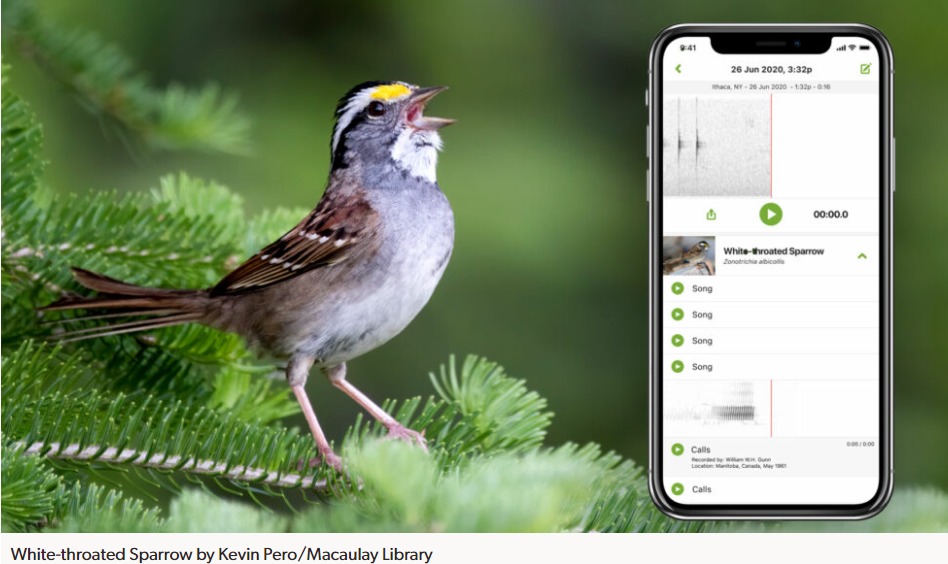
Merlin Bird ID gives real-time Sound ID suggestions for a bird you hear, even when the singer stays hidden in the trees. Treat the name as a lead: compare it with reference recordings, what you heard, and any visible movement or habitat clues. If the evidence conflicts, leave the identification open.
Spot Birds Comfortably and Without Disturbing Them
You can birdwatch from a seat, an accessible overlook, a window, or any suitable stationary spot. Long walks are only one way to meet birds.
A bench facing a woodland edge, for example, shows shrubs, exposed branches, and open ground without repeated trips through dense vegetation. Birdability’s accessible-birding guidance covers adapting observation to different abilities and circumstances.
Looking high into a canopy for long stretches gets uncomfortable, especially with the extra weight of binoculars or camera equipment. Choose a position that keeps you comfortable and able to watch the scene. For gear and setup basics, see the birdwatching basics guide.

Park only in a permitted, safe location, and check for restrictions on overlooks and trails.
Wild birds need room to behave normally. The American Birding Association’s Code of Birding Ethics emphasizes minimizing disturbance and respecting habitat, other people, and land-access rules.
Do not approach an active nest, flush a concealed bird, enter restricted habitat, or repeatedly use attraction sounds just to get a clearer view. No sighting is worth causing a bird avoidable distress.