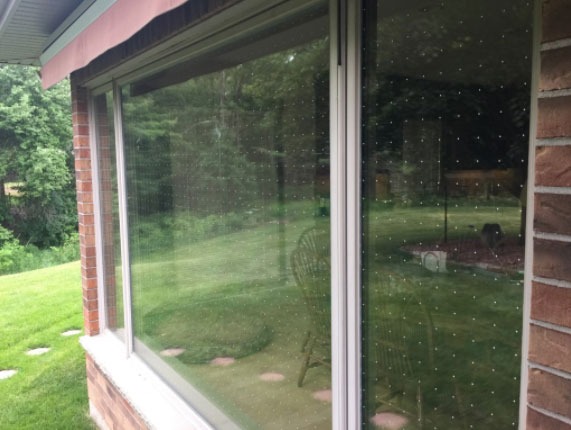
If a small wild bird hits your window and looks stunned or injured, move it out of immediate danger. If you can handle it safely, gently place it in a closed, ventilated box in a dark, quiet spot. Contact a licensed wildlife rehabilitator right away through Animal Help Now. Give it no food or water. If handling isn’t safe, get trained help.
A thud against the glass can leave a bird lying motionless beneath a window. Sometimes it breathes heavily, blinks, or tries to stand. Sometimes it gets up and flies off a short distance.
What to check immediately after a bird hits the window
Before you touch the bird, check what’s around it and how it looks. Danger nearby and visible injury tell you how fast to move.
Cars moving through a parking lot or people walking through a doorway can threaten a bird that can’t escape. Don’t step into moving traffic or climb somewhere unsafe to reach it.
Look for these signs without touching the bird or startling it into flight:
| What you see | What it means |
|---|---|
| Lying on its side or back, barely responding | The bird is badly impaired and can’t protect itself. |
| Head hanging, eyes closed or swollen, or an uneven wing position | Wildlife rehabilitation guidance identifies these as warning signs. |
| Heavy breathing, bleeding, or little response to nearby activity | Get professional help promptly. |
| Hopping, fluttering, or repeatedly failing to fly | The bird can be injured even though it moves. |
| Harsh weather or other danger nearby | Protect the bird right away. |
The International Wildlife Rehabilitation Council (IWRC) also counts a bird that hasn’t recovered after 30 minutes as a warning sign. If you can already see trouble, call without waiting.
What if I found a bird beneath a window but didn’t see it hit the glass?It may have hit the glass, but it could also be a grounded young bird, sick, or hurt another way. Go by what you see: its condition and any danger nearby.
How to safely contain a stunned small bird
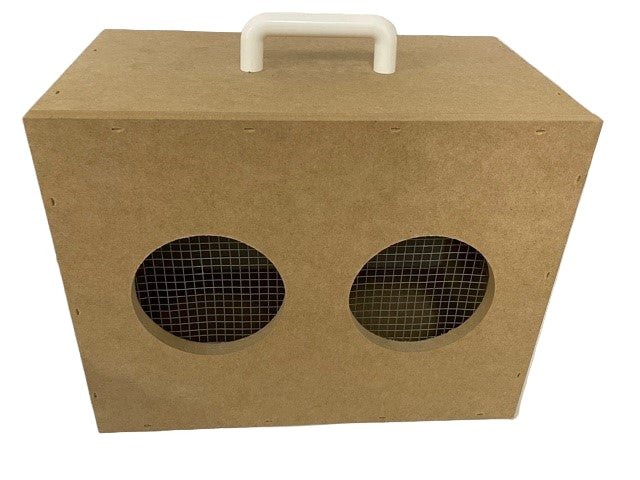
For a small bird you can approach safely, a dark, ventilated container gives temporary protection while you arrange professional help. A cardboard box with air holes and a securely closing lid works well. The IWRC also describes paper-bag containment.
- Approach quietly. Come from behind if you can and move slowly, so the bird is less likely to startle toward glass or traffic.
- Keep your grip gentle. Lift the bird with its wings held close to its body, and don’t squeeze its chest or body. Handle it only long enough to put it in the container.
- Secure the container. Use a ventilated, opaque box or a breathable paper bag, closed so the bird can’t escape.
- Choose a sheltered spot. Put it in a dark, quiet, comfortable place indoors, away from pets, children, and noise.
Avoid a wire cage or clear display container, which invites struggling. Skip loose fabric too: NYC Bird Alliance warns that talons can catch in towel fibers.
Once the container is closed, leave the bird alone. Repeatedly opening the lid to take pictures, offering a hand as a perch, or testing its ability to fly adds handling when the bird is most vulnerable.
What not to give or do while the bird is in the box
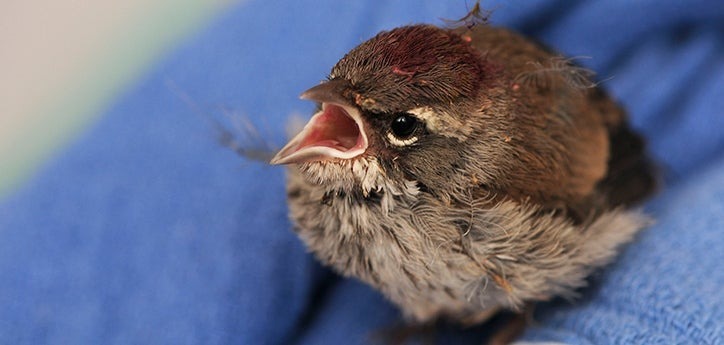
Don’t offer food, water, or medication to a stunned or injured bird awaiting care, including liquids dripped from a straw or forced into its mouth. An impaired bird can’t swallow safely, and feeding adds stress. Skip bathing, massage, creams, improvised splints, heating pads, and other home treatments. Leave medical care to qualified people. Wash your hands after handling the bird.
How to find a licensed wildlife rehabilitator in the United States
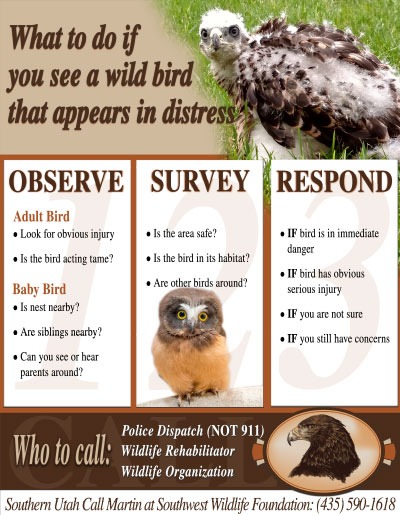
Use Animal Help Now’s US injured-wildlife directory or your state wildlife agency’s listing to find a qualified rehabilitator. Enter a city, state, ZIP code, or location, then call to confirm that they’re available and can take the kind of bird you found.
When you call, give a short account of what happened:
| Information | What to tell the rehabilitator |
|---|---|
| Location and time | Where you found the bird and when it hit or when you noticed it. |
| Bird description | Approximate size and species, if known. |
| Observed condition | Posture, breathing, eye or wing problems, bleeding, and movements. |
| Incident circumstances | Whether you saw the strike and whether a pet or vehicle touched the bird. |
| Current situation | Whether the bird is contained and whether you can transport it. |
An accurate description matters more than the exact species. A photograph can help if you can take it without extra handling or disturbance. Ask where to bring the bird and follow the rehabilitator’s transport instructions.
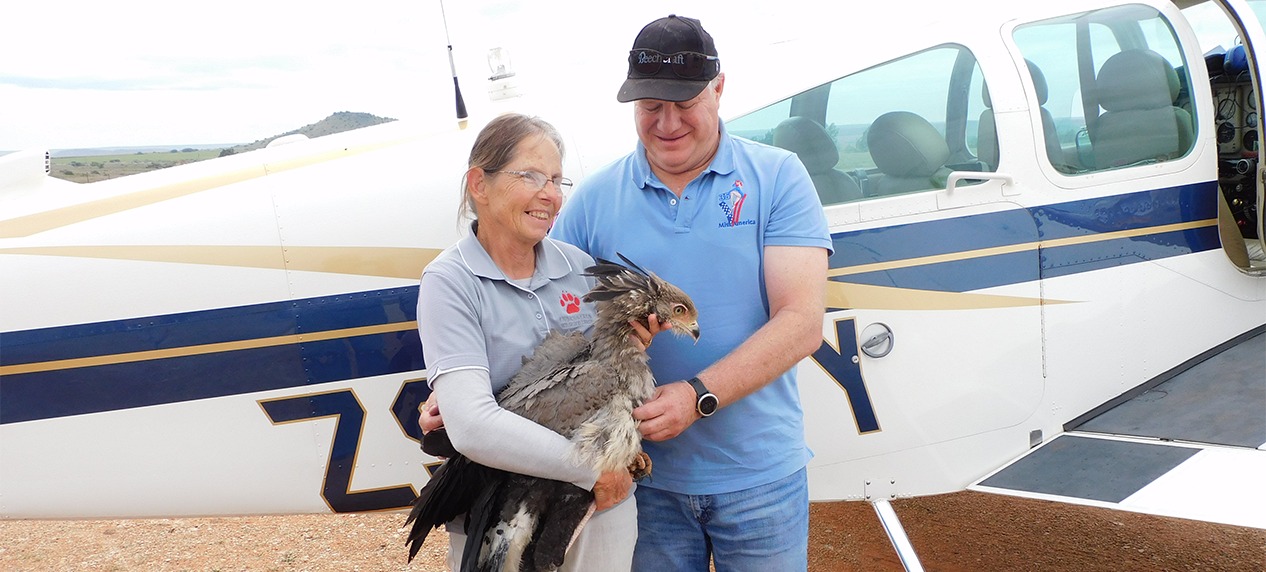
Federal rules separate immediate rescue transport from wildlife rehabilitation. Under 50 CFR §21.22(a), anyone who finds a sick, injured, or orphaned migratory bird may possess it without a federal permit to transport it immediately to a licensed veterinarian or federally permitted rehabilitator. Rehabilitation itself is regulated separately under 50 CFR §21.76, and state rules may add restrictions.
For injuries that have nothing to do with a window strike, see the injured wild bird guide.
What if no wildlife rehabilitator calls back?Try another contact in the directory or your state wildlife agency. Keep the bird in its box while you wait, and don’t try to rehabilitate it at home.
What if the bird looks better or flies away?
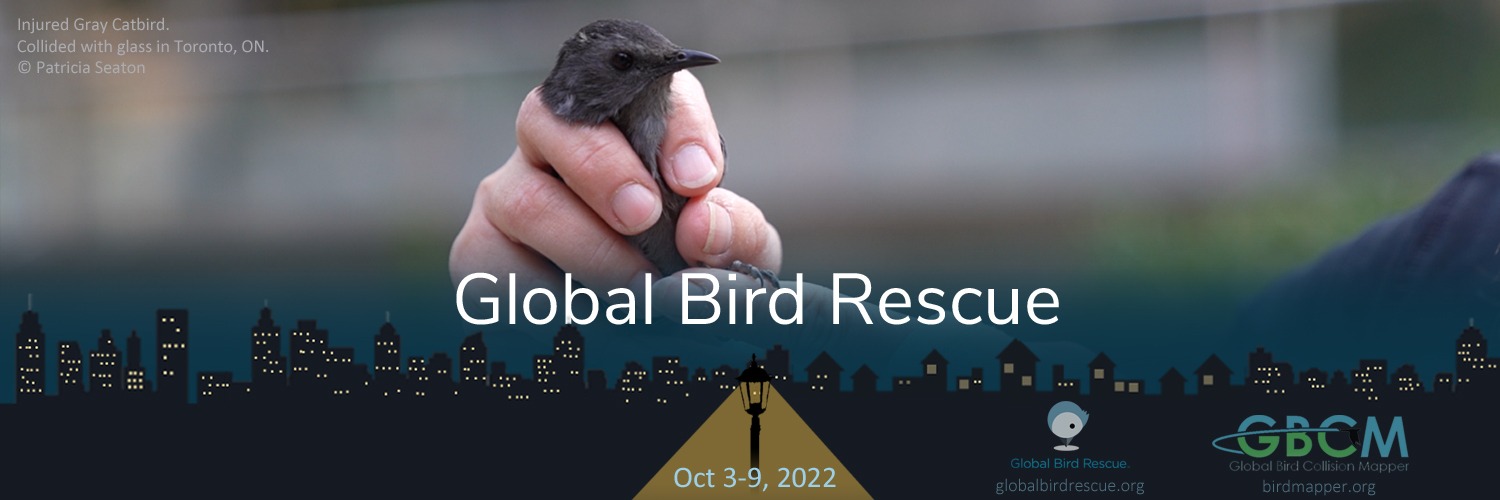
A bird that stands, flutters, perches, or flies after hitting glass can still be injured. Cornell Lab and the IWRC describe head, eye, beak, and other damage that stays hidden even when a bird moves normally. A bird that looks recovered isn’t cleared, so have a rehabilitator assess it.
Institutional guidance differs. Cornell and the IWRC favor professional evaluation after a collision. The US Fish and Wildlife Service’s Turnbull refuge and Audubon describe watching some stunned birds and releasing them once they appear to recover.
A bird thrashing in its container can also be harmed by prolonged confinement. The IWRC names two cases where you can open the container outdoors and let the bird leave at its own pace: no rehabilitator is readily available, or an active bird risks hurting itself in the box. Where you can, consult a rehabilitator before you decide to release it. No set waiting period makes every struck bird safe to release.
A 2024 study in PLOS ONE examined 3,159 birds admitted for rehabilitation after building collisions, spanning 152 species. Among birds that were not dead on arrival, roughly 60% died or were euthanized in care. These were rehab admissions, so the figure doesn’t represent every window collision.
One account in r/WildlifeRehab shows how uncertain it feels when a bird suddenly leaves its shelter:
I went to check on him after the hour and saw he had pooped a bit but didn’t appear shakey or off-balance like when I first found him. So I went to cover him again for a bit just to be sure and he swooped under and flew into the tree in our front yard. It’s been about 30 minutes and he’s still chilling there on the branch (as pictured). Is there anything I should do next? Do we think he’s alright or should I monitor him and contact local wildlife rescue if necessary? I don’t know if that’s an overreaction but I just want to make sure he’s alright because I do care about the local wildlife in my area.
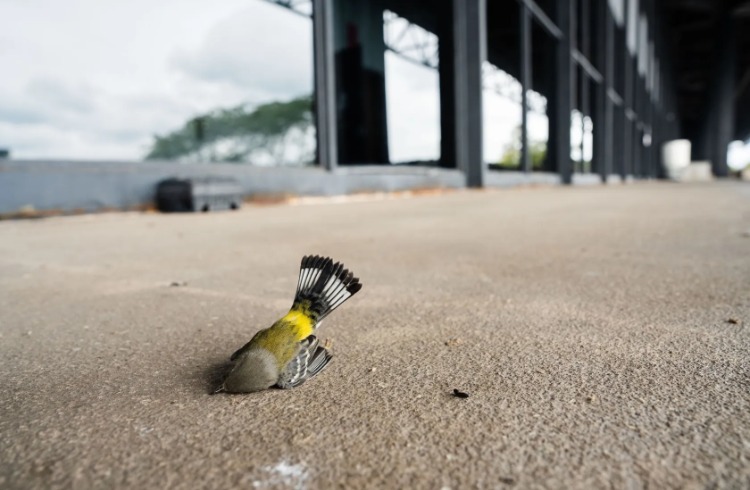
If the bird has already flown into a tree or vanished, don’t chase it into traffic or another dangerous place.
When the usual small-bird steps are unsafe
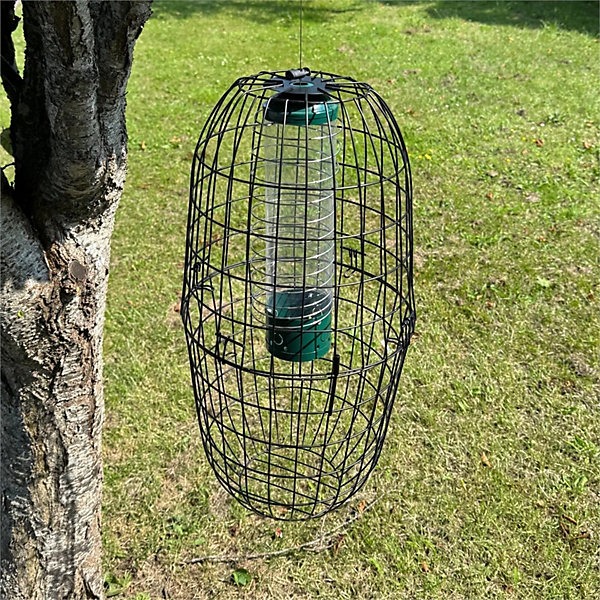
Large birds, birds of prey, and birds with powerful beaks or talons can injure an untrained rescuer. If handling is unsafe, keep your distance and get trained help.
- Large birds and raptors: Keep back and find someone trained to capture and handle that kind of bird.
- A cat or other predator nearby: Keep it away from the bird if you can do so safely.
- Confirmed cat or dog capture: If a pet actually caught or injured the bird, report the contact and get a prompt professional assessment, even with no visible wound.
- An apparently dead or unusually sick bird: Avoid direct contact without protection and follow wildlife or animal-health reporting advice.
- Several sick or dead birds: Contact a wildlife or public-health authority. Appearance alone can’t tell you the cause.
The CDC’s bird flu prevention guidance advises precautions around sick or dead wild birds that may be infected. A witnessed collision alone doesn’t mean the bird has an infectious disease.
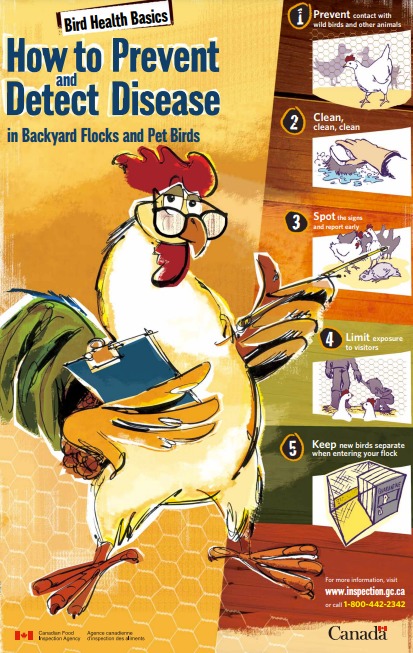
A young bird found on the ground with no witnessed strike may be a different rescue situation. The baby bird on the ground guide covers that case.
Never attempt improvised euthanasia, even if the bird looks like it’s suffering. Only trained professionals should make that decision.
After the bird is helped, prevent another window strike
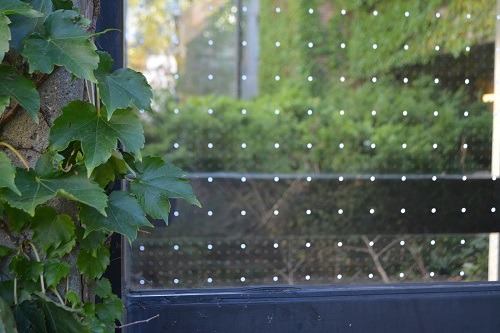
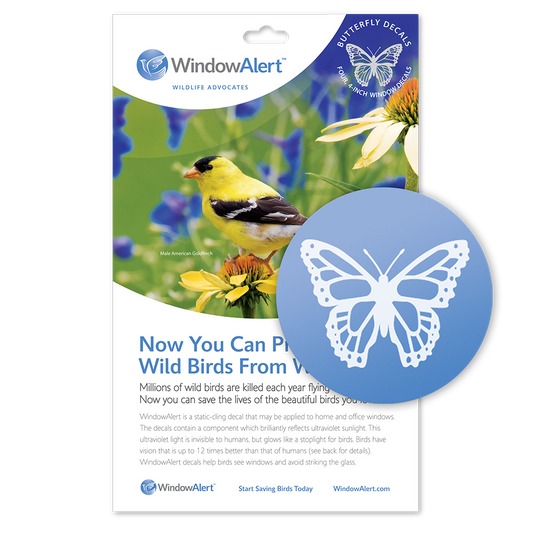
Glass can reflect trees and sky, or look like a clear route through a building. The pane involved in one collision can stay hazardous to other birds. American Bird Conservancy recommends visible exterior patterns with gaps generally no larger than about two inches. A single decorative sticker leaves most of the glass unmarked.
Once the immediate incident is over, inspect the pane and use the window-strike prevention guide to choose a treatment.
For more on window glass, feeder placement, and wildlife hazards, see the bird-safety guide.